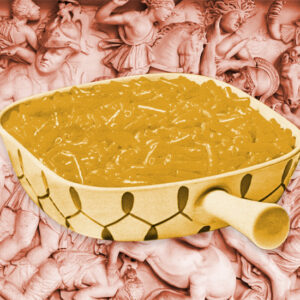







This Week in Literary History: How to Make Macaroni and Cheese like the Ancient Romans
And Other Highlights From Lit Hub’s Year in Food
This first appeared in Lit Hub’s Literary History newsletter—sign up here.
This week, we’re cooking. More importantly, we’re eating. And as usual, we’re reading. To celebrate the beginning of the feasting season, here’s a selection of some of the best food writing published on Lit Hub this year:
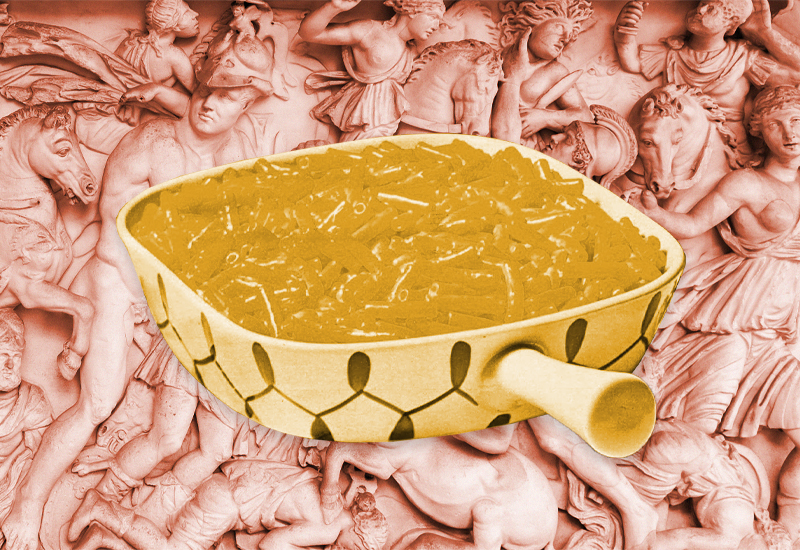
On the Ancient Roman version of macaroni and cheese (and how to cook it yourself) • Historian Katherine Harvey takes us through a few odd medieval ideas about food (no wet fish!) • A brief and essential history of the most important food ever invented—that’s right, the pickle • On the crops that created America (which mostly came from Africa) • The science behind why roast chicken tastes so good • A deep dive on the undisputed king of cheese: Parmigiano Reggiano • On the urgent need to dismantle food apartheid in the United States • How a cup of tea might change the world • On food as love in Nigerian culture • How to make a perfect poached egg • Or just bake some really good banana bread.
If that’s not enough—and in case you need some menu inspiration this week—here’s a selection of classic recipes from literary history:
Maya Angelou’s Momma’s caramel cake • Leo Tolstoy’s macaroni and cheese • Beatrix Potter’s gingerbread • Ntozake Shange’s “Collard Greens to Bring You Money” (and more) • Alice B. Toklas’ Haschich Fudge • Emily Dickinson’s “lawless” cakes, breads, and doughnuts • Kathy Acker’s Christmas custard • H.P. Lovecraft’s Boston baked beans.
Happy eating!