







The Fall of China’s Last Emperor
Paul French on Puyi and Wanrong, the Imperial Couple Who Experienced a Tumultuous Transition Away From Monarchy
Spring 1923: The Imperial Garden, Forbidden City, Peking
A Peking spring is always brief but can be glorious. Temperatures rise after a long, deep winter, the skies are blue and cloudless, the distinctive citrusy scent of magnolia perfumes the air in the hutongs, or alleyways. Peking residents shrug off their padded greatcoats and feel the sun on their skin once again.
Dominating the heart of Peking is the Forbidden City, a walled citadel surrounded by a wide moat, home to China’s emperors since 1420. A complex of great halls, elaborate pavilions and formal gardens, at 178 acres the imperial palace is roughly twice the size of Vatican City. The northern portions, known as the Inner Court, were traditionally the preserve of the emperor and his immediate royal family, assorted concubines, dowagers, close relatives and clan members, as well as the most trusted servants and palace eunuchs. Within the Inner Court, the Imperial Garden (Yu Huayuan) lies in the shadow of the Palace of Earthly Tranquility (Kunning Gong), where traditionally the Qing dynasty held weddings and other imperial ceremonies. The gardens themselves are not overly extensive but are private; secluded pathways twist and turn alongside small streams traversed by miniature footbridges.
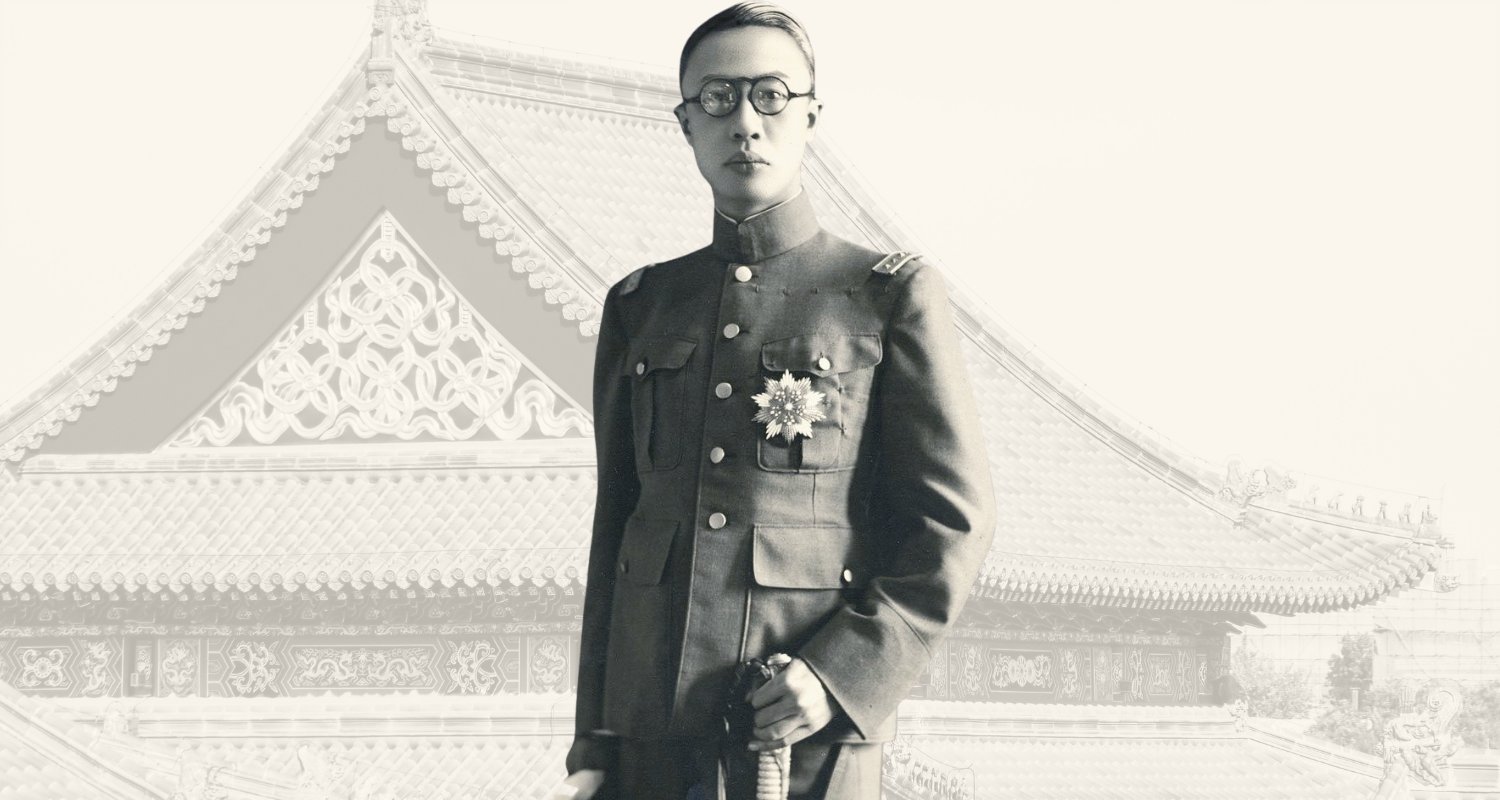
It was here, in the fine spring of 1923, that four very different but intimately connected individuals gathered for midday picnics. Of the four, two were Manchu royalty, the Emperor Puyi and his new Empress Wanrong, fated to be last in the line of the Manchu Qing dynasty. Accompanying them were Reginald Johnston, the young emperor’s tutor, and Isabel Ingram, the empress’s English teacher.
They were a seemingly unlikely group: a Manchu emperor who would never rule his kingdom, his arranged bride, a fifty-year-old Scottish colonial official and a young American woman, who was the daughter of pious Pennsylvania missionaries. Yet Johnston, a highly capable sinologist and a linguist with a deep appreciation of Chinese tradition, was a broad-minded and affable man who, thanks to Puyi’s regard, had risen to great importance within the imperial household. Ingram, from the start of her employment the previous year, had become a close friend of the empress. She was nearer to the royal couple in age and brought a refreshing vitality and modernity to the ritualistic and hidebound Forbidden City.
*
Puyi and Wanrong were, in 1923, cognizant of their position as the end of the Qing royal line. China had been a republic since 1912, just over a decade. Puyi had been anointed in December 1908 at barely two years of age and forced to abdicate at six when he was demoted to emperor in name only, confined within the high walls of the Forbidden City ever since. In 1922 the couple’s wedding was celebrated; it was to be the last burst of imperial pageantry Peking would ever see. Thousands lined the streets at dawn to see Wanrong enter the Forbidden City to become empress. They were both just sixteen.
That night, for the first time in over five hundred years through Ming to Qing to republic, the Forbidden City closed its gates without China having an emperor.
Puyi and Wanrong were forced to live a sequestered existence in the gilded cage of the so-called “Great Within” (Da Nei). Only the noises of the city breached its ramparts, but Puyi knew little of its tumultuous society, or his country’s cacophonous mix of fractious politics.
Since then the young couple had sought to build a life together, isolated but for the remnants of the imperial family—Puyi and Wanrong’s brothers, some aging dowagers who had been concubines of long-deceased emperors and Puyi’s own consort, Wenxiu. Serving them were their closest courtiers, a detachment of the palace guard, approximately a thousand palace eunuchs and the two royal tutors. It was a strange, cloistered life while outside China’s young republic sought to establish and consolidate itself against foreign interference and the internal chaos of warlordism.
*
That spring of 1923 the impromptu picnics in the Imperial Garden were a new pastime. Wanrong spent hours dressing Ingram in Manchu costume, styling her hair in the traditional liangbatou (a two-handed headdress), where two bunches of hair were arranged over a frame to create a wing-like structure. Puyi and Johnston would join them for tea and dim-sum, often both clad in classical scholar’s robes. They ordered in cream cakes from a German bakery in the nearby Legation Quarter of Peking, where the city’s foreign population clustered. When Peking’s notorious humidity kicked in they would sip barley water instead of tea. They posed for photographs, a hobby Johnston had introduced to Puyi and which became a shared passion among the four. They snapped each other constantly and took group photos too, often joined by consort Wenxiu. They appear at ease, comfortable, taking what pleasure they can despite their isolation and political impotence.
Johnston termed the years between 1919, when he started to tutor Puyi, and the emperor’s expulsion from the Forbidden City in 1924 “the twilight period.” He related his version of events at length in the oft-reprinted memoir Twilight in the Forbidden City (first published in 1934). Johnston was brought to life in a sympathetic portrayal by Peter O’Toole in Bernardo Bertolucci’s film The Last Emperor (1987), which placed him at the heart of the story of the young Puyi. However, in the light of his previously unpublished personal correspondence with Ingram, Johnston’s recounting of events in his book might be viewed as somewhat vainglorious. He presents himself as the only foreigner close to the emperor and empress, whereas this was clearly not the case. Reticent and rather pedantic in his memoir, Johnston is familiar, chatty and affectionate in his letters to Ingram, the pretty, vivacious and well-educated missionaries’ daughter, with whom he was clearly smitten.
As we shall see, their relationship was evidently far more important to him than its absence from Twilight in the Forbidden City might suggest. It becomes apparent that they met regularly outside the Forbidden City, either at Johnston’s Western Hills retreat just beyond the city walls, or for tiffin at the Grand Hôtel des Wagons-Lit in the Legation Quarter, where they would discuss the welfare of their charges, plan guest receptions and organize garden parties in an attempt to ease the claustrophobia of life in the Forbidden City.
*
Just two years after their wedding, Puyi, Wanrong and Wenxiu were expelled into a harsh world of feuding warlords and a weak Republican government, and into the arms of Japan, which was already actively planning to conquer and rule China. Their tutors were also cast out, their relationships with the royal couple severed overnight. Cut off from Johnston and Ingram, their only contacts with the world outside the Forbidden City, the naive and politically unsophisticated Puyi and Wanrong were destined for disaster.
Warlord fighting all around Peking escalated in the autumn and winter of 1924. There was a mass of competing factions and fragile alliances, a combustible coalition of warlords who had controlled Peking since 1912, initially held together and led by Yuan Shikai. One warlord had replaced the previous one as they plotted, deceived or assassinated one another. To cut a long and twisted tale of machinations and disloyalties short, the warlord Feng Yuxiang, known correctly as the “Betrayal General,” staged a coup and seized Peking in the midnight hours of October 23, 1924.
Feng immediately ousted the widely disliked President Cao Kun, known as the “Bribing President” (having basically bought the job though massive bribes), and placed him under house arrest. Cao Kun’s brother committed suicide at the news. Warlord soldiers blocked access into the Legation Quarter to prevent their enemies seeking sanctuary in the foreign embassies. They blockaded the main roads leading out of Peking in all directions and cut the telegraph cables to Tianjin, meaning that effectively all communications out of the city were dead. The Peking Leader described it as “unquestionably one of the most extraordinary coup d’états in Chinese history.” Johnston wrote that the Forbidden City was in “consternation.”
Foreigners and wealthy Chinese boarded up their homes, hired private guards and checked into the city’s foreign hotels—the Grand Hôtel de Pékin, the Grand Hôtel des Wagons-Lits, the Hôtel du Nord. Alternatively, they made for their weekend villas in the nearby Western Hills or at Paomachang just outside the city to wait out the chaotic interregnum, fully expecting a degree of bloodshed as there would inevitably be some revenge killings given all the betrayals and switching of sides among the warlords.
What Feng might do to Puyi, Wanrong and the Little Court was of paramount concern. Rumors swirled along the hutongs: Feng’s bloodthirsty troops would storm the Forbidden City and slaughter all inside; they would ransack the treasure cellars of the Great Within; they would do to the Aisin-Gioro clan what the Bolsheviks had done to the Romanovs. It wasn’t hard to be convinced by such rumors. Feng believed that the persistence of the monarchy in the Forbidden City was a block in the road to a full and proper Chinese Republic. He had good contacts with the new Soviet Union and the Bolsheviks. He had long opposed the Articles of Favorable Treatment and he had absolutely no time for monarchy in any form.
*
Puyi was immersed in the mourning ceremonies and funeral for Lady Tatara, the Dowager Imperial Noble Consort Duankang. Lady Tatara had famously criticized Puyi’s mother Youlan in 1921, prompting her suicide, yet the emperor was still expected to lead the elaborate and long-running grieving for her.
Johnston was summoned to the palace on November 2 for a conference with Puyi, Prince Chun, Zheng Xiaoxu and Wanrong’s father, Rongyuan. They were nervous that General Feng would decide to invade the Inner Court. Indeed his troops were already positioned on Coal Hill overlooking the Forbidden City. Johnston suggested evacuating the emperor and empress to safety in the Legation Quarter, but Zheng assured them all the gates of the citadel were closed and guarded by Feng’s troops on the outside facing the small band of Imperial Guards on the inside. Puyi handed Johnston a suitcase of ornate rings and jewelery—all Lady Tatara’s, he claimed. He told Johnston to deposit them at a bank as “they would all be stolen if left in her palace.”
Johnston returned to the Inner Court on November 3, noting “it presented a ghostly and forlorn appearance.” He found Puyi looking up towards Coal Hill at Feng’s troops through his telescope. “Many of the staff were in hiding or had disappeared. Others were engaged in carrying out the ceremonies connected with Tuan Kang’s [Duankang’s] funeral, and flitted about in the white garb of mourners.” He stayed overnight at the Lodge of the Cultivation of Nature and lunched the following day with the emperor. They then visited the empress in the Palace of Gathered Elegance. Johnston says they all, with Zheng Xiaoxu, discussed a plan to smuggle the emperor and empress wearing disguises out of the Forbidden City the following day.
As Johnston wrote: “The long twilight in the Forbidden City was deepening into darkness.”
But the plans came to nought. The following day, Wednesday, November 5, 1924, the telephone lines into the Forbidden City were cut. Feng’s troops surrounded the citadel, disarmed the Imperial Guards, marched into the Forbidden City’s Inner Court and occupied it. Johnston heard the news while having breakfast at Zhangwang Hutong. He immediately headed to the Forbidden City. At the gates he flashed his imperial pass but was prevented from entering by Feng’s soldiers.
*
Inside the Inner Court that morning the expulsion had been both swift and chaotic. They had all been expecting the axe to fall for so long that when it finally did Puyi and Wanrong seemed entirely stunned. Though servants had deserted, Imperial Household Department officials had not been showing up for work and troops had hauled cannon up onto Coal Hill facing down into the Inner Court, it was as if nobody thought it would ever actually happen. Puyi later admitted that he was scared and realized the situation was potentially mortally dangerous for the couple. When the troops arrived Puyi was chatting with Wanrong and peeling an apple for her in the Palace of Gathered Elegance. They were escorted out to the courtyard to await a decision on their fate—it was far from clear to them if they would survive the morning. Warlord troops took a photograph of Puyi’s hastily abandoned bedroom, the expulsion so swift “the imperial apartments were left in a state of disarray, with juvenile works of fiction, kung-fu novels and toys scattered around the formerly august dwellings.”
*
Forbidding him to contact Johnston, his father or Zheng Xiaoxu, General Feng’s officers dictated terms to Puyi: the final abolition of the title of emperor, a greatly reduced allowance of $500,000 a year, a factory to be established in Peking to employ any Manchu noblemen down on their luck, while Puyi’s person and private property were to be guaranteed by the Republic. The negotiation was effectively conducted at the barrel of a gun: Puyi had till midday to accept, or Feng threatened to fire the cannon on Coal Hill at the Forbidden City and destroy the palace. Puyi felt compelled to sign. The royal couple and Wenxiu were given three hours to leave the Forbidden City. They were not allowed to take more “than what a servant or two could carry.”
[Puyi] had hoped leaving would open a new world for him. It only passed him from one set of captors to another.
On hearing that Puyi had signed the revisions, effectively rendering the 1912 Articles of Favorable Treatment null and void, and that the royal couple had already left the Forbidden City, it is said that Prince Chun pulled off his hat with the peacock feather that distinguished his high rank, threw it on the floor and said, “It’s all over, it’s all over, I won’t need this again.”
Puyi left for his father’s house, the Northern Mansion. Feng’s troops provided five cars for the royal entourage. An officer in charge of the expulsion sat in the first, Puyi in the second, Wanrong and Wenxiu followed behind in the third, with two cars of armed guards making up the rear as they drove to the Beifu. As they prepared to leave the Forbidden City, General Feng’s commanding officer, Lu Zhonglin, shook hands with Puyi and asked him:
“Mr. Puyi, do you intend to be emperor in the future, or will you be an ordinary citizen?”
Puyi replied: “From today onwards I want to be an ordinary citizen.”
“Good,” Lu replied, “then we shall protect you.”
The procession left through the Gate of Divine Prowess into the Great Without.
*
Ingram later recalled that on the morning of November 5 her rickshaw had arrived as normal to take her for her daily lessons with the empress. But when she arrived at the Gate of Divine Prowess, she found the walls of the Forbidden City surrounded by grim-faced troops armed with bayonets pointing outwards. Concerned for Wanrong’s safety, she tried to face down the soldiers, demanding they stand aside and allow her in. She declared, “My business is with the Empress.” The soldiers laughed nervously, continued to point their bayonets in her direction and told her the empress was already gone from the Forbidden City. Their commander told her that Wanrong had departed “hatless, coatless and baggageless.” Ingram had no choice but to return home to Dengshikou and await news of Wanrong, Puyi and their fate. She later told the Philadelphia Record, “That day was the end of my beautiful China…”
Eventually, the historic day over, darkness fell on Peking. That night, for the first time in over five hundred years through Ming to Qing to republic, the Forbidden City closed its gates without China having an emperor.
*
Late that evening Johnston went to the Northern Mansion. He recalled in his memoirs that he found Puyi calm and resigned and Prince Chun typically floundering and chaotic. Johnston could think of little practical to do. He would not see Puyi again for over three weeks.
Then on November 29 Johnston arranged for Puyi to leave the Northern Mansion and travel the short distance to the Legation Quarter to seek sanctuary. Wanrong and Wenxiu remained behind; the plan was to smuggle them out to the Legation Quarter later once the emperor was secure.
Johnston sought sanctuary for Puyi, first with Willem Oudendijk at the Dutch Legation, but Oudendijk was not in residence and couldn’t be reached. Then at the darkly Gothic Japanese Legation on the eastern side of Canal Street, but Ambassador Kenkichi Yoshizawa was also out for the night and unavailable. Johnston rapidly crossed the road to the British Legation, the largest of all the foreign legations, with two over-sized stone lions at the gates. But it was a futile mission, and Johnston knew it. The ambassador, Sir Ronald Macleay, unequivocally told him that the legation did not accept political refugees. Johnston went back across the road to try the Japanese again, who historically had accepted Chinese political refugees and offered asylum (generally when it suited their political ends).
If there was a moment when Britain could have offered sanctuary to Puyi then that hope ended late that evening of November 29 with Macleay’s refusal to accept Puyi. A young man tutored by a Scotsman, who longed to be a student at Oxford, who adopted the name Henry after an English king and whose wife had taken the name Elizabeth after an English queen, was pushed back towards the Japanese—a fateful and tragic decision.
Ambassador Kenkichi Yoshizawa arrived back at the embassy. He accepted Puyi on November 30. The Last Emperor of China’s long years of exile began.
*
It was to be the end of an era for Reginald Johnston and Isabel Ingram too. Johnston, who shortly after the expulsion returned to his Colonial Service duties with the British government in China, was to keep in erratic touch with Puyi over the coming years. He visited him in his exile in the foreign concessions of Tianjin and Japanese-occupied Manchuria. They corresponded, though the letters are lost. Ingram was never to see the empress again.
Puyi had always maintained that he wanted to leave the Forbidden City, but the final expulsion was the beginning of the end for the royal couple. He had hoped leaving would open a new world for him. It only passed him from one set of captors to another.
Could a marriage that relied on joint support in internal exile, the curious persistence of the imperial household despite abdication and a decade of the Chinese Republic survive? The answer is it could not. It never stood a chance after the royal couple’s expulsion from the Forbidden City. From the day Puyi and then Wanrong left through the Meridian Gate for the final time, from the Great Within to the Great Without, they were both doomed.
___________________________
From The Last Emperor of China: Twilight of the Forbidden City by Paul French. Copyright © 2026 by the author and reprinted by permission of St. Martin’s Publishing Group.

Paul French
Paul French was born in London and lived and worked in Shanghai for many years. His book Midnight in Peking was a New York Times Bestseller and a BBC Radio 4 Book of the Week. He received the Mystery Writers’ of America Edgar award for Best Fact Crime and a Crime Writers’ Association (UK) Dagger award for non-fiction. His book City of Devils: A Shanghai Noir received much praise with The Economist writing, "…in Mr French the city has its champion storyteller." Both Midnight in Peking and City of Devils are currently in development for film.