The Crops That Created America (Mostly Came From Africa)
Michael Carter Jr. on How People of African Descent Have Shaped American Agriculture
When we talk about the formation of America, farming, and the history of people of African descent in this country, Virginia is at the core of it all. My family history goes back to the oldest plantation in Virginia, the Shirley Plantation, settled in 1613 in what is now Charles City.
The history of the Shirley Plantation—which is the oldest family-owned business in America—and its owners demonstrates the sheer wealth and power that some colonist planters accrued. At one time, for example, Robert “King” Carter, whose son John Carter married into the Shirley Plantation, owned almost 300,000 acres of land. Carter used his position in the House of Burgesses to snatch up the best land for his children and grandchildren. King Carter’s descendants include other burgesses, a Virginia governor, an ambassador to Italy, and the Confederate general Robert E. Lee. Thirty-ninth president Jimmy Carter is a descendant as well.
The final fruits of their lives in Africa and the first leaves of our existence in these lands of our initial captivity are generally not well known.
Shirley Plantation at one time was the biggest farming operation in the state. The Carters have owned it since the 1720s, with Hill and Shirley being the other names attached to the property over the years. Carter and Shirley are two of my family’s surnames, as well. I believe some of my ancestors were enslaved at the Shirley Plantation, although as I’ve mentioned before, it is near-impossible for families like mine to find accurate records tracing our roots through this period. But my uncle Charles Shirley shared with me that the family used to receive correspondence from the Shirley Plantation back in the 1970s and ’80s, inviting them down for cookouts. Gran and others would throw away the invitations; they didn’t want to deal with it. Imagining the type of overtones or microaggressions that kind of gathering would have entailed, it was best to protect the emotions of the descendants of the enslaved as well as the emotions of the descendants of the plantation owners.
I try to go to Shirley Plantation every year; I’ve talked to some members of the Carter family, and it’s been cordial. One thing the family clearly stated was, “We don’t have any money.” But I’ve never sought financial reparations. I just want to know the history.
Individual wealth acquisition, greed, exploitation, family, and nation building were the foundation of the plantation society—all constructed on the labor and knowledge of the Indigenous and the enslaved. This is how North American, Caribbean, South American, and European nations were built. At the same time the continent of Africa was robbed of its greatest wealth: its people and their creative genius. The final fruits of their lives in Africa and the first leaves of our existence in these lands of our initial captivity are generally not well known.
These first leaves, called the seed leaves or cotyledons, are just as vital to a newly migrated, kidnapped, or captured people as they are to a plant newly emerging from the soil. Cotyledons support the next stage of growth, the formation of the plant’s true leaves, which are capable of photosynthesis and supporting a healthy, mature plant. The first leaves of the kidnapped African and captured Indigenous citizens was the agricultural knowledge of how to grow food and sustain themselves.
Were my ancestors enslaved at Shirley, and what did they help grow there? How did their skills help create that family’s wealth—and the country itself, as those who profited from my ancestors’ labor became leaders in the government and the military?
It all circles back to food. In the Americas, like most of the world, food production in the 1600s was hyperlocal, and most cultures revolved and evolved around their food, crops, and agriculture. The growing season in the colonies that started the North American colonial experiment spanned six to nine months. Indigenous peoples grew the three sisters—corn or maize, a bean/legume that fed the soil, and a squash.
And rice is still big today—it’s the fourth-largest cereal crop in the United States.
Across the pond in the land mass that would be known as Africa, the food culture was as wealthy as the empires of Wagadu (Ghana), Mali, and Songhai. The Wagadu Empire started in the eighth century and lasted through the thirteenth century, when a drought forced its complete decline. It occupied the area in what is presently southeast Mauritania and western Mali, from the Niger River to the Senegal River, and it was the first Western African empire to take advantage of the plethora of gold in the region. Sorghum, millet, yams, cassava, peanuts, legumes, and rice, along with a wide variety of fish and a cacophony of herbs and spices, made this region wealthy in food culture.
This wealth would spread throughout the Western world for the next 500 years. A macro perspective of the crops that made America economically successful and viable to the British empire reveals that the plants that built the early colonial economy were sourced from Africa. A closer examination reveals that the people with the ancestral knowledge necessary to grow those crops were of African descent. The innovations that made some of these crops profitable and able to be grown on a mass scale are the work of Black inventors and genius teachers. And not only did African plants and people build this country, more than once they saved it.
Rice
Let’s start with rice. It might not be the first crop you think of when you think of plantations in the South, but don’t worry—cotton is coming along soon. Rice has a long history along Africa’s western coast from Senegal to Liberia and Cote d’Ivoire, where people have been growing and eating native and Asian strains of rice for 4,000 years.1Indonesians who populated Madagascar around1,200 years ago also brought rice with them and made it a central part of the Madagascan culture and economy. This was a major crop and trade item, and a staple ingredient in African dishes such as jollof rice, which is rice flavored with tomatoes, a multitude of herbs and spices, and a few secret ingredients. The name jollof is a variation of the Wolof, Djolof, or Jolof Empire and its people, who first created this delightful delicacy. The Mende people, who live in Sierra Leone and Liberia, grow rice as their most important crop, as well as a spiritual crop, and women are mostly in charge of planting and threshing the rice. Rice mixed with palm oil is used as offerings at Mende ancestors’ graves.
There’s a legend about a ship from Madagascar blown off course in 1685 that landed in Charleston, South Carolina. In gratitude for aid given by the colonists, the ship’s captain gave some seed grain to the colonial governor. That might not be the literal truth about how South Carolina’s rice industry got started, but it’s for certain that rice turned into a powerhouse cash crop. It was colossal in the early economies of South Carolina and Georgia. South Carolina’s rice industry grew fiftyfold between 1700 and 1720. By 1839, it had tripled again. And rice is still big today—it’s the fourth-largest cereal crop in the United States.
Both African and Asian varieties of rice were grown in the colonies, helping to boost the economies of Charleston, Georgetown, and Savannah on the Southern coast. But it was African workers who, even more than the seed itself, were essential to rice production. Planters knew they needed agricultural masters who had experience not just in growing rice but also in building and sustaining nations.4All West African nations and empires had agricultural genius at their core, though most modern historians rarely acknowledge this. Advertisements touted slave ships carrying “a choice cargo of Windward and Gold Coast Negroes, who have been accustomed to the planting of rice.”
Many African citizens—especially women, the primary rice experts in their homelands—were turned into commodities and shipped across the Atlantic to power the new rice-powered economy of the American Southern coast and marshlands. As Leah Penniman shared in her book Farming While Black, some of them may have braided sacred rice grains into their hair before the journey, bringing with them the seeds of a beloved staple and spiritual crop along with their ancestral knowledge of how to grow and use it.
When you read about what it takes to grow rice, you can understand why colonial planters needed professional help. Rice grows in wet, marshy river deltas. Dikes are needed to hold water in the planting area, and a sophisticated irrigation system is essential for handling the fresh water that’s mixing with the salt water during the tidal flows, and it has to be adjusted depending on the growth stage of the crop. In addition to this expertise, the master farmers of the Wolof and other dynamic West African empires knew how to polish the rice after harvest and even how to make rice-winnowing baskets from sweetgrass.
Not only is rice farming very taxing physically, it also requires intuitiveness and intelligence to grow it well, which is rarely considered, especially as related to enslaved or sharecropping agriculturalists. Everything was accomplished with hand tools alone—hoeing, plowing, milling. Workers stood ankle deep in mud, muck, and water while working the rice fields with the sun leaning on them from sunrise to dusk. Elders would sing soul-stirring, bone-chilling words such as “I’ll be so glad when the sun goes down. . . I ain’t all that sleepy but I wanna lie down. . . .”
Let’s not even begin on what Ghanaians refer to as ntumtum, the dreaded mosquito that causes pain and irritation if you are lucky, and malaria or yellow fever if you aren’t. In the Carolina and low-country bayous and marshes, it was also quite common to find alligators and venomous snakes that were not too discriminating about what they bit, chased, or tried to devour. Working in marshy water conditions, without what we would describe today as proper footwear, laborers suffered from foot diseases caused by fungi and waterlogged boots. Up to a third of these workers died within a year of arriving at the low-country rice plantations. Gullah chef and culture-bearer Mr. B. J. Dennis shared with me that at Gowrie Plantation on Argyle Island near Charleston, in Jasper County, 90 percent of the enslaved children died before their sixteenth birthdays. Historian Edda Fields-Black’s account of Harriet Tubman finding enslaved workers toiling in the rice fields of South Carolina at 3:30 in the morning during the Civil War is a testament to the maniacal unrelenting business of rice.
King Cotton in the 1800s was the equivalent of the tech or oil industry today.
The death rates didn’t really matter to the plantation owners—by the1770s, rice was profitable enough that the rice a single worker could produce in one year was six times as valuable as that person’s worth on the slave market. Even if a huge proportion of workers died every year at a plantation, that didn’t mean the operation was a failure. This is the logic enslavers applied as they turned both plants and people into raw commodities.
The farm owners used this same sort of logic to deplete the soils in the low country along the East Coast, and rice production eventually shifted over to the Mississippi Delta, Texas, California, and to the rice capital of America, Arkansas. But rice had already left its mark on Southern culture, in the form of dishes including red rice, red beans and rice, rice and peas, pilau, hoppin’ John, rice pudding, and jambalaya, developed by chefs of African descent, enslaved, indentured, and free, holding on to the memory and more importantly the taste of African cuisine. These are the American derivatives of jollof rice and other African foods.
Rice is about a $7 billion industry in America in the 2020s. As a profitable commodity, it’s been helping to build America for more than 300 years, and in its formative stage, its production was powered by the skills and back-breaking labor of Africans.
Cotton
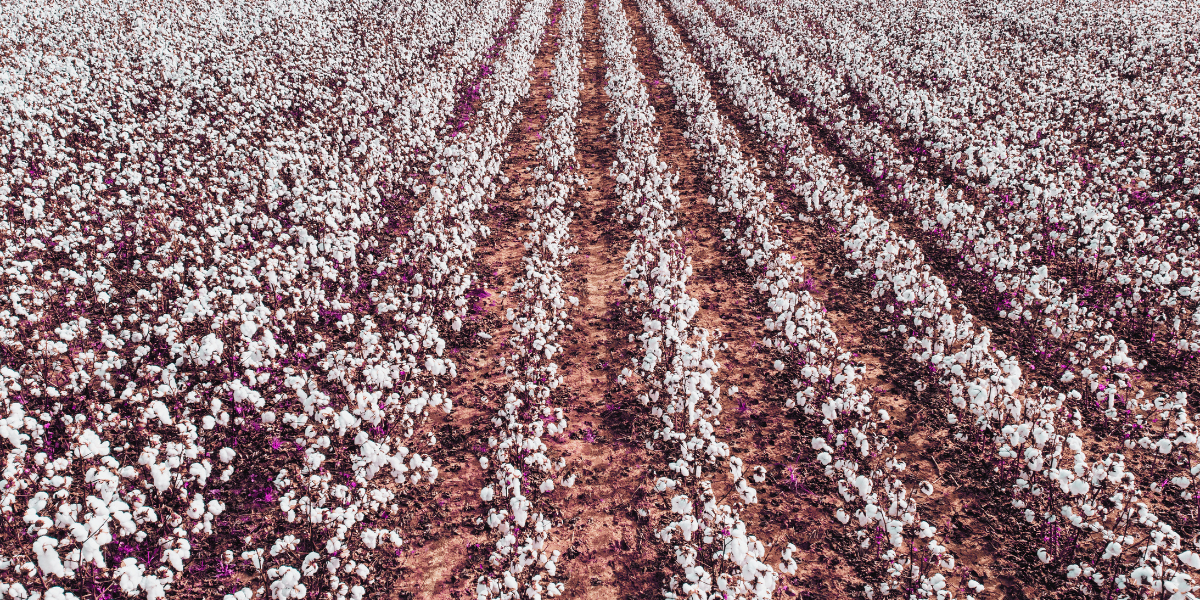
Now we get to cotton—the king. King Cotton in the 1800s was the equivalent of the tech or oil industry today.
Read about the history of cotton and you’ll find that most sources say cotton is native to subtropical regions on several different continents, and it was independently domesticated in the Americas, India, and eastern Africa. The Kingdom of Kush, in eastern Sudan on the Nile River, may have domesticated the cotton plant 7,000 years ago. Fragments of cotton cloth have been found in Meroe and Lower Nubia (ancient Sudan), and an Aksumite (Kingdom of Axum in Ethiopian region of Africa) king boasted about destroying cotton plantations there when he invaded the region.
In America, cotton seed may have been planted as early as 1556, in the Florida colony, and in Virginia in 1607.9Along the James River, where the first English settlements took hold, it was growing by 1616. Cotton preceded the enslavement of Africans in the colonies. It’s symbolic of slavery because of its massive connection to the plantation system before the Civil War, but we don’t think of cotton as being symbolic of Africa.
If not cotton, they would have found something else to commodify.
European greed created a necessity for an enslaved class of people just to cultivate this crop. Colonizers had an understanding that they could make a business selling cotton, but they didn’t have the labor force to grow it on a scale that would be profitable. The Europeans who migrated to the Americas were primarily people looking for opportunities to live in their concept of freedom, and they weren’t necessarily the best farmers. As historian Howard Zinn recounted in A People’s History of the United States, the early colonists almost starved to death in 1609–10. This time period was labeled the starving times, with the colonists “beefing” or “having opps,” that is, not playing well together, with the original residents, citizens, and preservers of this land.
The colonists grew more tobacco than cotton—cotton production stayed relatively small until the late 1700s, but then the picture changed. The British wanted American cotton for their textile industry, which was growing fast due to the new technologies of the Industrial Revolution. The first US citizens saw an opportunity to steal the vast open lands of the Western frontier for cotton production with a built-in management system (the surviving colonizers) and, most important, the enslaved labor that the colonies possessed, the solid stem of the colonies and the nation.
About 700,000 enslaved people lived in the United States in the early 1790s, when Eli Whitney invented the cotton gin. With that invention, the industry was suddenly positioned to spread like COVID-19, literally around the world, with similar deadly effects for those not fully vaccinated against whiteness. The enslaved population grew at a breakneck pace. Over 3 million enslaved people were in the United States by the time the Civil War started, and meanwhile the country had become the world’s largest producer of cotton. In the states that produced the most cotton, half of the residents were enslaved. Their “masters” were some of the richest people in the country.
By the end of the Civil War, the cotton industry employed or enslaved roughly 20 million people around the world. Cotton fabric had become the standard for people in China, India, and Africa, as well as in Europe and North America. Cotton was critical—the fabric of our lives, like the commercials used to say.
The cotton plant had a greater impact on the lives of people of African descent than we will ever understand. I can recall hearing relatives and elders tell someone, generally not in kindness, “Get your cotton-pickin’ hands off of that!” We have had a love-hate relationship with cotton. It wasn’t the plant’s fault that so many of us were commodified and abused in order to grow it. The plant was also exploited and commercialized. Its mass exploitation led to our mass exploitation. We were both victims of the same mindset, attitude, and spirit. Can you or should you blame something that’s part of the commodification of you? Do we blame the belt for our childhood spankings, whippings, or beatings? (For those of us who are familiar with such corporal punishments.)
If not cotton, they would have found something else to commodify. Devoted and dedicated colonizers put on themselves the moniker of conquistador, entrepreneur, explorer, missionary, or tourist, and they traveled all around the Earth to find people, places, resources, and philosophies to colonize. Trying to create as much profit as possible with as little effort as possible was the primary goal for many of them, in addition to seeking a new life. When you have this ideal of cheap labor producing profitable and popular goods, that becomes the foundation of capitalism.
__________________________________
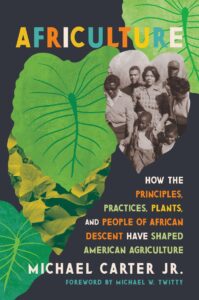
The following is an excerpt from Michael Carter Jr’s new book Africulture: How the Principles, Practices, Plants, and People of African Descent Have Shaped American Agriculture (Chelsea Green Publishing May 2026) and is printed with permission from the publisher.

Michael Carter Jr.
Michael Carter Jr. is an eleventh-generation farmer in the United States and is the fifth generation to farm at Carter Farms, his family’s century farm in Orange County, Virginia, where he gives workshops on how to grow and market ethnic vegetables. In addition, he runs Africulture, a nonprofit dedicated to educating and expounding upon the principles, practices, plants and people of African descent that have contributed to agriculture. He sits on the board of directors of the Montpelier Descendants Committee, Orange County African American Historical Society, Virginia Food Systems Council, American Climate Partners, and Virginia Agrarian Trust. He also serves as a fellow for the Center for Food Systems and Community Transformation. Michael was recognized as a 2020 Audubon Naturalist Society Taking Nature Black Regional Environmental Champion, the 2020 VSU Small Farm Outreach Agent of the year and Future Harvest Casa Farmer of the Foodshed for 2021. He acquired an agricultural economics degree from North Carolina A&T State University and has worked in Ghana, Kenya, and Israel as an agronomist and organic agricultural consultant. He presently consults with numerous governments, organizations, institutions, and individuals throughout the region and nation on food access, food security/insecurity, market outreach, social and economic parity/equity/evaluation programs, racial understanding, immersion, history, and cultural training, among other areas. Michael also teaches and expounds on the contributions of Africans and African Americans to agriculture worldwide and trains students, educators, and professionals in African cultural understanding, racial literacy, empathy, and implicit bias recognition. He teaches his course on Africulture at the University of Virginia in the school of Environmental Thought and Practice.