70 Great Contemporary Novels Under 200 Pages
Or, 70 Afternoons Well Spent
Contemporary novels tend to fit into a certain range: around 300 pages is typical. A little more, or a little less, depending. But I have a particular fondness for the extremes: books over 500 pages, or books under 200. It is the latter category which draws us together today.
For our purposes here, the “contemporary” of the headline means published (in English) after 1970. (See here for a list of classic novels under 200 pages that you should also read.) NB that I’m not making a distinction between novellas and novels—I’m not sure there really is one—but I’m not including short story collections, or books that include a novella and stories. Finally, as ever, “great” is subjective, and this list is limited by time and space and the literary tastes of this editor. As always, feel free to add your own favorites in the comments below.
*
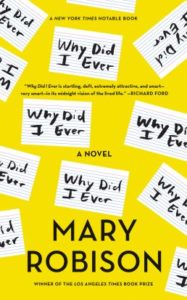
Mary Robison, Why Did I Ever (200 pages)
Probably the best fragment novel on the block: the saga of Money Breton, errant script doctor, mother of two, obsessive obssesser, is funny, irreverent, and weirdly moving. Not for nothing, but this novel is my own personal ultimate coolness test, because yep, I am an adult who judges other people’s coolness, and I do it based on the books they read.
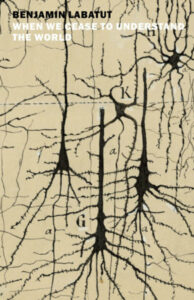
Benjamín Labatut, tr. Adrian Nathan West, When We Cease to Understand the World (192 pages)
Translated from the Spanish (Labatut is Chilean) by Adrian Nathan West, reading the first few paragraphs of When We Cease to Understand the World is like encountering a new intoxicant, with all its attendant thrills and shivers—and the uncertainty about where, exactly, things might lead.
In what is essentially a fictionalized account of the real lives of a miscellany of 20th-century scientific giants (some famous, some less so), Labatut wades through the murky waters of human genius, finding there the darker implications of discovery, for society and scientist alike. Reading the inner lives of the likes of Fritz Haber, Werner Heisenberg, and Erwin Schrödinger—rendered by Labatut with the same kind of metaphorical heuristic so often employed to reveal truths about theoretical physics—one is left almost breathless by the grim consequences of all our endless wonder. There’s a reason this hybrid novel-biography has left its mark on nearly everyone who’s taken a taste. –Jonny Diamond (One of Lit Hub’s favorite books of 2021)
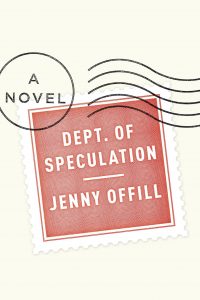
Jenny Offill, Dept. of Speculation (177 pages)
My other candidate for the best contemporary fragment novel—not to mention one of the best novels of the decade, full stop—is of course Offill’s luminous, eye-wormy (this is a term I have just now invented for the literary version of ear-wormy, you’re welcome, and sorry), and consistently wise modern classic, which is ostensibly the story of a marriage but is more importantly the story of a mind.
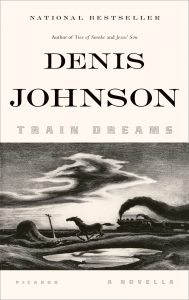
Denis Johnson, Train Dreams (116 pages)
Johnson’s novella is a shibboleth among a certain kind of reader (and, typically, writer). In our list of the best novels of the decade, editor Dan Sheehan described it as “the incantatory story of a turn-of-the-century logger and railroad laborer, Robert Grainier, who loses his family to a wildfire and retreats deep into the woods of the Idaho panhandle as the country modernizes around him. Johnson’s spare, strange, elegiac prose conjures a world that feels both ancient and ephemeral, full of beauty and menace and deep sorrow. . . . An American epic in miniature, Train Dreams is a visionary portrait of soul untethered from civilization, a man stoically persevering on his own hermetic terms in the face of unimaginable tragedy. A haunted and haunting reverie.”
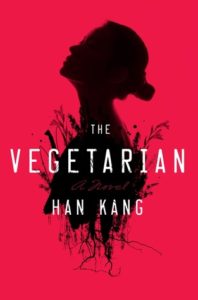
Han Kang, tr. Deborah Smith, The Vegetarian (188 pages)
The Vegetarian has come under scrutiny for its translation, and the accuracy thereof, but since I can only read English, all I know is that whatever came out of the union of Kang and Smith is very, very good. In our list of the best debut novels of the decade, editor Molly Odintz wrote, “Han Kang’s tale begins with a description of a dutiful wife, unusual only in her refusal to wear a bra, whose sudden decision to stop eating meat sends her partner and family into a spiral of confusion, where forcible consumption of meat quickly becomes a metaphor for violation. The vegetarian begins a slow transformation into vegetable itself—first, she stops eating meat; gradually, she stops eating everything. Her withdrawal from culinary delights is mirrored by her withdrawal from the world. She basks in sunlight, is painted all over with flowers by her sister’s husband (a not-so-successful artist), and for all intents and purposes, attempts to become a plant. Is she onto something, or is she out of her mind? Is she denying the world, or is she fully embracing it? Han Kang leaves the answers to these questions deliberately vague, and the sign of a great work is its ability to be read by many people and interpreted differently by each one.”
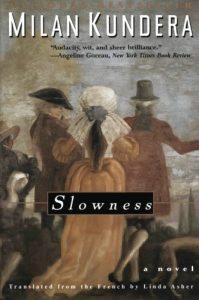
Milan Kundera, Slowness (176 pages)
A metafictional meditation on modernity and memory—and on “the dancer,” showing off for the abstracted “everyone,” the concept of which gets more relevant every day.
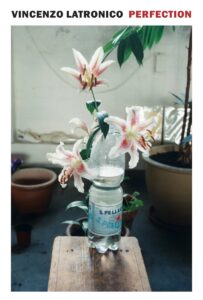
Vincenzo Latronico, tr. Sophie Hughes, Perfection (136 pages)
Some novels are mirrors, and this is one of those, and some novels are hit jobs on a certain kind of fantasy, and this is one of those too. It is a reworking, and updating, of George Perec’s Things: A Story of the Sixties, and might itself have been subtitled A Story of the 2010s, the “things” replaced by, broadly, the “internet,” which directs the lives and identities of Anna and Tom, ex-pat “digital nomads” living in Berlin. Nothing happens, which is the point. Anna and Tom are just like you and I, neither more or less reprehensible, which is the point. Instead the book is a collection of images and ideas and ordinary moments and banal successes and disappointments that slowly becomes much more than the sum of its parts. (One of Lit Hub’s favorite books of 2025)
Kazuo Ishiguro, A Pale View of Hills (192 pages)
Ishiguro’s debut, first published in 1982, takes shape through the recollections of an aging Japanese woman, living in England, now alone after her husband’s death. But as she reflects, the memories become less secure—or at least less restricted to the past. Like everything Ishiguro writes, it’s beautiful, subtle, and not a little shadowy.
Clarice Lispector, tr. Alison Entrekin, Near to the Wild Heart (194 pages)
I register that this is something of a cheat, since Lispector’s first novel was originally published in Brazil in 1943—but considering that it wasn’t translated into English until 1990, I’m going to sneak it in here. After all, it is too glorious to ignore: evidence of a mind on fire. We follow Joana through her life in this short novel, but it’s really the sentences you should read for: sometimes inscrutable, sometimes wild, sometimes transcendent.
Marie NDiaye, tr. Jordan Stump, The Witch (144 pages)
In the French novelist’s latest to be translated into English (though published in France some 30 years ago), a woman decides to initiate her twelve-year-old daughters into their heritage: witchcraft. They are not impressed. “No offense, Mama, but it’s really all just so lame,” one of them tells her. But as the girls gain power, their family begins falling apart.
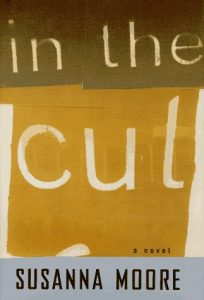
Susanna Moore, In the Cut (179 pages)
Okay, I’m hereby warning you: this novel is not for the squeamish. My best friend recommended this book to me not too long ago and didn’t tell me anything about it except that it was amazing, and it was totally a replay of that time she made me go see Hard Candy with her and told me it was going to be an indie comedy. And look, it is amazing, in the sense that you will have physical reactions reading this book, and in the sense that Moore perfectly captures a range of emotions and impulses rarely committed to paper. But like . . . you’re not going to feel good at the end. So just know that.
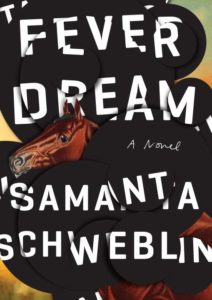
Samanta Schweblin, tr. Megan McDowell, Fever Dream (189 pages)
This is a weird and terrifying, almost suffocating novel that kept me up for an entire night. In our list of the best debut novels of the decade, our editorial fellow Eleni Theodoropoulos wrote that in this novel, “detail is dramatized through dialogue, and Schweblin knows just what to pick and what to leave out so that characters and readers alike are obsessed with the story about the poison. Everyone is at the mercy of someone: David is at the mercy of Amanda, Amanda at the mercy of David, and the reader at the mercy of both of them. The only way to find out the truth in Fever Dream is by trusting someone else’s narrative. Even in being swept away in the horrific progression of the novel, and simultaneously, the disease, the reader identifies with Amanda, a mother who realizes she cannot protect her child. In just under 200 pages, Schweblin has delivered a poignant, tragic tale of a fear come true.”
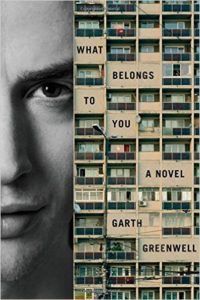
Garth Greenwell, What Belongs to You (191 pages)
If you’ve been reading Lit Hub for any amount of time, you know how much we love Garth Greenwell’s debut, which is, after all, one of the best debut novels of the decade. It’s an exquisite book, both on the sentence and the story level, a mesmerizing work of art.
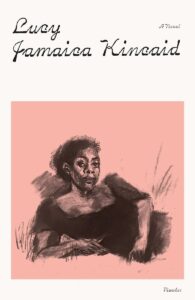
Jamaica Kincaid, Lucy (164 pages)
Kincaid’s semi-autobiographical, intertextual coming-of-age story follows a teenager from the West Indies who travels to the US to work as an au pair and to escape the life she has always known. A stranger in a strange land, and somewhat contemptuous of it, while also in a kind of love, she nonetheless finds her way, in spare but evocative prose, exploring her own sexuality and developing her own interests as the relationship between her employers unravels.
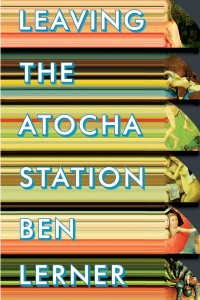
Ben Lerner, Leaving the Atocha Station (181 pages)
I still love Lerner’s debut, which is basically about a poet not writing poetry in Madrid, but is actually very good, despite that. In our list of the best debut novels of the decade, our editor Jessie Gaynor described it as one of the “most subtly hilarious novels around” and wrote that “Lerner invites the reader to laugh with his protagonist as well as with him. The novel feels propulsive rather than meandering, as if the reader is the one whose fellowship is quickly running short.”
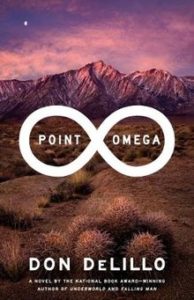
Don DeLillo, Point Omega (117 pages)
DeLillo’s the rare writer who excels in both the long and the short form. This one, his fifteenth, is a destabilizing, compelling portrait of grief refracted through art. According to me, at least—it’s also one of DeLillo’s most polarizing novels, so you might as well read it, at least to have an opinion on the matter.
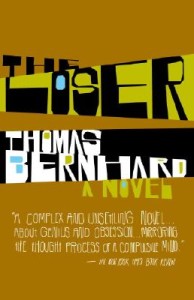
Thomas Bernhard, tr. Jack Dawson, The Loser (190 pages)
Possibly the best ill-tempered 190 page monologue in contemporary literature, if you’re into that sort of thing.
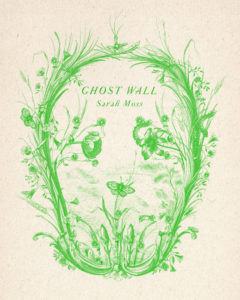
Sarah Moss, Ghost Wall (144 pages)
There is a particular male obsession with life in “purer” times, a nostalgic yearning for the independence of the old frontier, say, or the freedom and adventure of the high seas. This longing, of course, is in fact a very self-interested desire for the absolute power of patriarchy, for a time when men were as sovereigns over their families, their decisions questioned at great risk of violence. And thus the main character of Sarah Moss’s Ghost Wall, Silvie, finds herself cast in a slow summer pantomime of Iron Age life, led by her domineering father—an amateur anthropologist—into the rural wilds of southern England alongside her timorous mother and a few student volunteers. But this is no pastoral idyll. Underslept, underdressed, and underfed—as might happen when one is forced to adhere to a 5,000-year-old lifestyle—Silvie drifts along on eddies of dread, the doomed heroine of some endless folk song, each verse tinged with more horror than the last. Moss is a master of coiled and uncoiling tension, and the ancient England she lets surface here is anything but pure. –JD (One of Lit Hub’s favorite books of 2019)
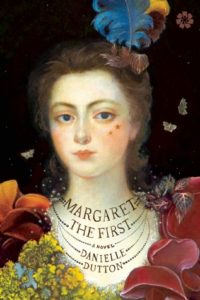
Danielle Dutton, Margaret the First (160 pages)
This lucid gem is the first-person tale of Margaret Cavendish, a real-life 17th century Renaissance woman and writer whose story would be captivating enough on its own, even without Dutton’s elegant, winking treatment. But the winks do not go unnoticed, of course (nor does that gorgeous cover). In our list of the best novels of the decade, editor in chief Jonny Diamond described the book as a “glinting dagger of novel” and wrote that Dutton “realizes the outsize ambitions of this remarkable book with virtuosic efficiency, braiding first- and third-person perspectives with passages from Cavendish’s original writing. I will be recommending this book for the next decade.”
Leonard Michaels, Sylvia (123 pages)
Michaels’ autobiographical novel is a matter-of-fact retelling of his marriage to his first wife, the “abnormally bright” but depressed and volatile Sylvia Bloch. Reading it feels like looking, through Michaels’ clear eyes, at a moment in his life in his early 20s that has been hermetically sealed, so by the time he tells the story, it’s become a sort of still-water legend. You can discern pretty much right away that this relationship is doomed, but it still feels essential to watch it unfold.
Renata Adler, Speedboat (193 pages)
If you’re a certain kind of woman living in a certain kind of city, this is a bible. If you’re a certain kind of writer with a certain kind of sensibility, it’s a bible too. Adler’s wry, discursive novel is a brilliant portrait of New York and of a singular, elliptical mind—the kind of book that, if you’re a certain kind of person, will have you looking at everything around you a little bit more carefully and taking notes like mad.
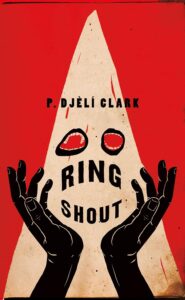
P. Djèlí Clark, Ring Shout (192 pages)
For the horror fans: a terrifying novel that imagines The Birth of the Nation as a spell that summoned literal demons to our world: Ku Kluxes, who joined the other members of the Klan in their reign of terror. A deft reframing of history that also winds up being relentlessly timely.
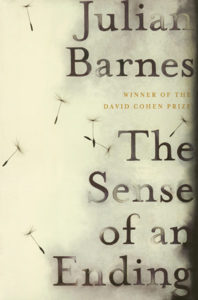
Julian Barnes, The Sense of an Ending (163 pages)
The winner of the 2001 Man Booker prize is a wonderful if melancholic novel about memory, aging, and what it is to live a good (or at least not a bad) life.
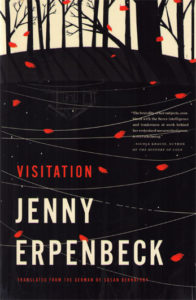
Jenny Erpenbeck, tr. Susan Bernofsky, Visitation (150 pages)
This is another book that I feel like I carp on about all the time on this website, but I don’t actually feel too sorry about that. As I wrote in our list of the best translated novels of the decade, this is a book about a house on a lake outside of Berlin—a house that is as much the subject, as a place in time, as the people who move through it. “There are little human dramas within this grander and colder scheme, ones that secretly hook us in, however minor they seem, so that we are devastated when time passes, so that we mourn the ones we barely knew, for their fixations, their tragedies, their trying. Elegiac, often astoundingly gorgeous, sometimes strikingly brutal, this is one of the most wonderful novels of any sort that you could hope to read.”
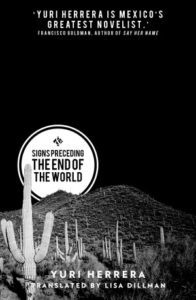
Yuri Herrera, tr. Lisa Dillman, Signs Preceding the End of the World (128 pages)
As I wrote in our list of the best translated novels of the decade, this book “is almost fable-like, both in length and tone: when you begin reading it, you’re not sure (or at least I wasn’t) whether you’re in our world or another—it begins with a sinkhole, a curse, and a quest. Soon it becomes clear that this is our world, or almost, sliced by the border between Mexico and the United States. Borders in this novel—between worlds, between words, between people—are both dangerous and porous, messages meaningless and profound in equal measure. It is an intense, indelible book, an instant myth of love and violence.”
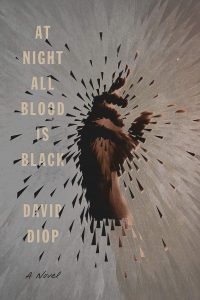
David Diop, tr. Anna Moschovakis, At Night All Blood is Black (160 pages)
The winner of the 2021 International Booker Prize is a hypnotic, harrowing narrative of a young Senegalese soldier, fighting for France in WWI, who sees his childhood friend fall in on the battlefield and soon descends into a murderous madness.
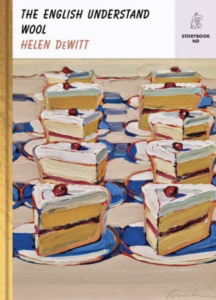
Helen DeWitt, The English Understand Wool (64 pages)
DeWitt’s sly, delightful little novella, part of New Directions’ Storybook Series, is an absolute snack, in all senses of the word. It is a satisfying, and sometimes thrilling, satire about taste and manners, both good and mauvais ton. Best of all is the voice of our heroine. Otherwise, it’s best to go in blind.
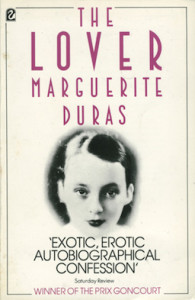
Marguerite Duras, The Lover (117 pages)
I love this novel so much I once made a playlist for it. And I’m not the only one who is obsessed with this assured, severe book, which Duras originally planned as an annotated photo album of her youth. “Through the years, I have come to think of The Lover as a lake without a bottom, or perhaps more accurately with a bottom that is ever-shifting: each dive yields an altered and enriched understanding of the topography, and there is the sense that you could dive forever and never grasp that topography absolutely,” wrote Laura van den Berg. “In every reading, I have been stunned still by language that is at once crystalline and enigmatic: ‘The light fell from the sky in cataracts of pure transparency, in torrents of silence and immobility. The air was blue, you could hold it in your hand. Blue.'”
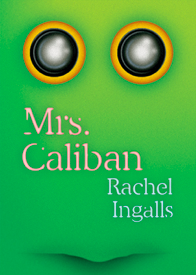
Rachel Ingalls, Mrs. Caliban (125 pages)
I think at this point, every single person on the Literary Hub staff has read Mrs. Caliban—the deceptively simple tale of a housewife who falls in love with a mysterious creature escaped and on the run from a government lab—after its reissue by New Directions during the Autumn of Sea Monsters, we just kept passing it around, one to the other. Our editor Dan Sheehan, who interviewed Ingalls before her death, described it as “an intoxicating mix of sensuality, sorrow, and supernatural horror, and a damn-near perfect novella.”
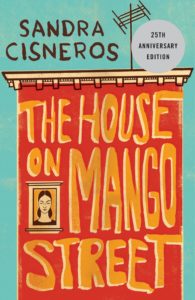
Sandra Cisneros, The House on Mango Street (101 pages)
The forever classic of a girl growing up in Chicago.
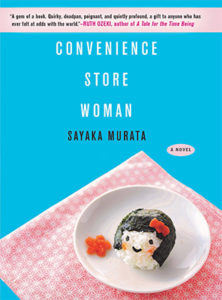
Sayaka Murata, tr. Ginny Tapley Takemori, Convenience Store Woman (176 pages)
A dry, funny novel about, well, a woman who works in a convenience store. In our list of the best translated novels of the decade, editor Jessie Gaynor writes that “it reads, by turns, like a love story (woman meets store), an unusually charming employee handbook, and a psychological thriller—but somehow, it never feels disjointed. It was interesting to read this novel in the midst of a glut of English books about the dehumanizing nature of underemployment. Convenience Store Woman doesn’t, in my reading, take a stance on the Value of Work. Instead, it presents Keiko in all her glorious strangeness, and invites the reader to delight in it.”
Adania Shibli, tr. Elisabeth Jaquette, Minor Detail (105 pages)
If you came to Minor Detail without any prior knowledge of the historical context, you would still find yourself mesmerized, but to read it against the backdrop of Israel’s ongoing genocide in Gaza, the turbocharged assault on the West Bank, and the renewed interrogation of the individual atrocities that were carried out during the Nakba, is to feel a chilling relevance that, for me, lifts the book to the very top of the ND podium right now.
Adania Shibli’s spare, devastating novella is divided into two parts. The first tells the story of the Nirim affair—the real-life gang rape and murder of a teenage Arab Bedouin-Palestinian girl by Israeli soldiers in 1949—from the perspective of the Israeli platoon’s coldly sadistic commander. The second (often bleakly humorous) part follows a somewhat eccentric Palestinian woman in modern-day Ramallah as she searches for information about the crime. Her quest should be a simple one, but navigating the dark labyrinth of the occupation makes every move, every checkpoint and inquiry, fraught with menace.
There’s little hope to be found in these pages, just as there’s little hope to be found in Palestine right now, but as an act of witness, and as a work of art, Minor Detail is a remarkable achievement. –Dan Sheehan (As previously recommended here)
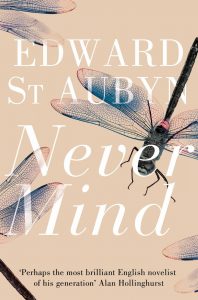
Edward St. Aubyn, Never Mind (197 pages)
A harrowing work of genius—and for the uninitiated, consider this the entry point for many, many hours of literary enjoyment.
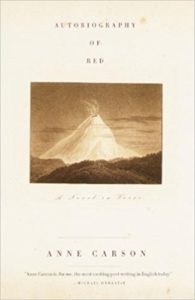
Anne Carson, Autobiography of Red (149 pages)
Carson’s novel in verse, a retelling of a classic Greek myth, is one of those books that retrains your mind, erasing all the rules about what novels should—or even can—be. Ocean Vuong lists it among the books he needed to write his celebrated debut On Earth We’re Briefly Gorgeous, writing “perhaps what’s most inspiring to me about this book is Carson’s refusal to enact her protagonist’s development via a false and forced inhabitation of heteronormative ideals. Geyron, a quiet, small, artistic mama’s boy, does not become a masculinist hero in order to “solve” his outcast position. Instead, he bravely embodies his otherness, or “monstrosity,” as Carson writes, through emotionally-informed aesthetic vision. It’s a book that insists on the necessity of alterity as agency instead of succumbing to the readily assimilative.”
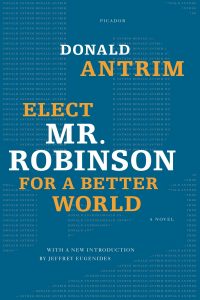
Donald Antrim, Elect Mr. Robinson for a Better World (164 pages)
Antrim’s stucco-pink, subtropic suburban nightmare concerns a town gone mad and the schoolteacher determined to get everything back to normal—albeit with highly suspect methods. This surreal mini-masterpiece is one of my favorite novels of all time, and one of the funniest, in the darkest possible way.
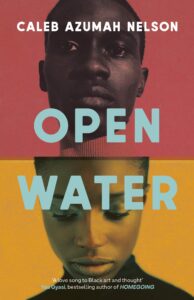
Caleb Azumah Nelson, Open Water (160 pages)
It is not so much the story—two young Black artists fall in love, challenges ensue—but the prose that makes this debut novel so extraordinary: sensual and painterly, its effect enhanced by the daring hybrid second person perspective. It is also a rewarding meditation on masculinity and Blackness, art and artistry, and what it feels like to be young in South London.
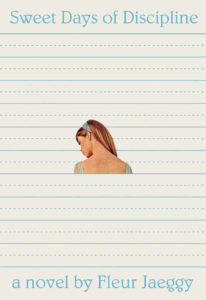
Fleur Jaeggy, tr. Tim Parks, Sweet Days of Discipline (101 pages)
An actually perfect novel, which elsewhere I ranked as the fourth best campus novel of all time (give me a book, I’ve ranked it somewhere). It’s set in a boarding school in the Appenzell; when disdainful, mysterious new girl Frédérique, our narrator is enthralled—and determined “to conquer her.” Everly line is ice cold in its deliberation, and yet the whole thing feels hot. Which is not even to mention the incredible new cover designed by Oliver Munday, who I daresay agrees with me about the merits of the book.
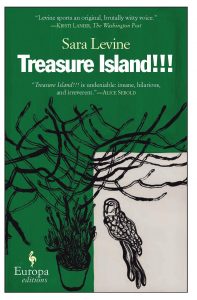
Sara Levine, Treasure Island!!! (172 pages)
A truly insane novel about a young woman who decides to live her life by the principles of Robert Louis Stevenson’s Treasure Island, those principles being Boldness, Resolution, Independence, and, of course, Horn Blowing. One of the most fun reading experiences I can remember.

César Aira, tr. Chris Andrews, Ghosts (141 pages)
Many of Aira’s books could be candidates for this list—Ghosts is a personal favorite: a builder’s family squats in an unfinished apartment building, also populated, for those who can see them, by ghosts. That said, Mark Haber also makes a very good argument for Ema the Captive here. We can just call this the Aira spot.
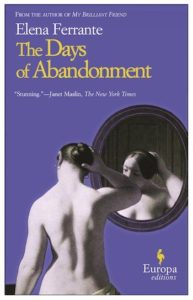
Elena Ferrante, tr. Ann Goldstein, The Days of Abandonment (188 pages)
Psst. This is the real Ferrante. I mean, look, I love the Neapolitan series as much as everybody (well probably not as much as everybody but I admit they’re good), but in my opinion, this short novel about a woman unraveling is her true masterpiece.
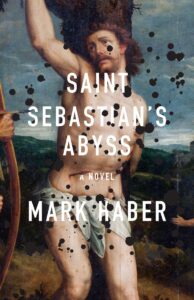
Mark Haber, Saint Sebastian’s Abyss (160 pages)
This is a novel about obsession, and about the nature of art—the only two things that I truly feel are worth reading (or writing) about. Our narrator is en route to visit his onetime best friend and current bitter rival Schmidt on his deathbed in Berlin, having been summoned by a “relatively short” nine-page email, of which he has printed out three copies. In a purposefully, hilariously circuitous fashion, begins to describe their shared life and parallel careers, both centered on the discovery and criticism of a single painting by a previously unknown artist.
It’s very, very funny, especially if you are an artist, or if you know any. The barbs—which mostly come from Schmidt, and are mostly hurled toward things like America and modern art—are outlandish and glorious. But it’s not only a farce about ill-placed obsessions—this novel, short as it is, asks profound questions about the nature and value of art and art criticism, and also manages to be a moving account of a friendship. (As previously recommended here)
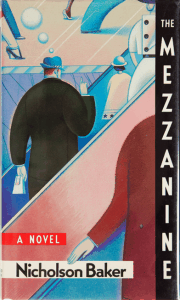
Nicholson Baker, The Mezzanine (145 pages)
Baker’s hilarious, cerebral debut takes place over the length of a single escalator ride, but turns out that a single escalator ride can actually contain multitudes. It is about as packed as a book can be with witty observations, cultural criticism, and human behavior. And milk cartons. (Sorry, but this is one of those books you can’t explain to people, you just have to trust me and give it a try.)
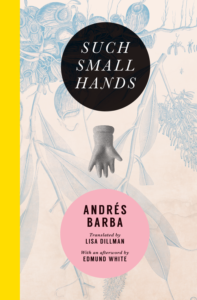
Andrés Barba, tr. Lisa Dillman, Such Small Hands (94 pages)
It is my solemn duty to proselytize this vicious little book—in which a girl is sent to an orphanage after her parents are killed in a car crash, and I can’t tell you anymore—everywhere I go. One recent victim was Katie Yee, who wrote in our list of the best translated novels of the decade that the book “reads like logic breaking, like a melon dropping on the ground. It is the unexpected word choice (the seatbelt had become severe!) that makes this work simultaneously sinister and a joy to read. . . . At only 94 pages, Such Small Hands is a cruelly quick read that makes you feel, in the best way, like the walls of language are closing in on you.”
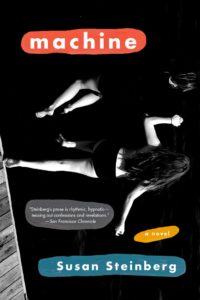
Susan Steinberg, Machine (149 pages)
Steinberg is an undersung genius, and her elliptical novel about one tragic summer—a girl, a drowning—should be a modern classic in the vein of Jenny Offill and Maggie Nelson.
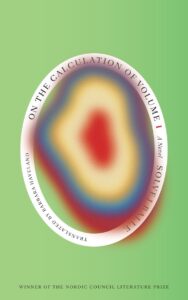
Solvej Balle, tr. Barbara Haveland, On the Calculation of Volume (Book I) (176 pages)
The first volume in the celebrated Danish septology (though all of the books published in English so far have been under 200 pages) is as wonderful as everyone says; it concerns a woman who can’t escape the 18th of November, but is less a science fiction caper than a deep meditation on human nature and consciousness. Stellar.
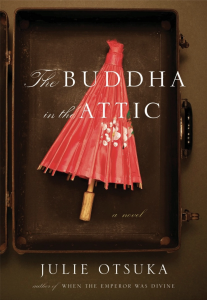
Julie Otsuka, The Buddha in the Attic (144 pages)
Otsuka elegantly employs the first person plural to tell the story of a group of Japanese “picture brides” who come to California to meet their husbands. In our list of the best novels of the decade, our editor Katie Yee writes that “the collective first person narration matches the subject matter beautifully; it mimics the immigrant experience, the way “others” are often seen as the same and the automatic camaraderie and safety we might find among those who share our stories. . . . I’ve re-read this novel many times, trying to understand how it can encompass such a wide scope of things. What Julie Otsuka has accomplished here is both an artful, intimate portrait of individual lives and a piercing indictment of history.”
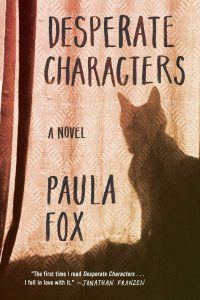
Paula Fox, Desperate Characters (180 pages)
Scraping through with a 1970 pub date, one of my all-time favorite novels about a woman who may or may not have rabies.
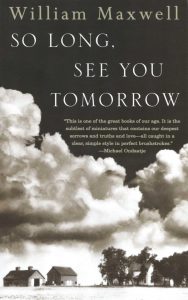
William Maxwell, So Long, See You Tomorrow (145 pages)
Though he’s better known for being the fiction editor of The New Yorker during its glory days, Maxwell also wrote short stories and several novels—the last of which, a slim autobiographical novel which won a National Book Award in 1982, was shortest and greatest.
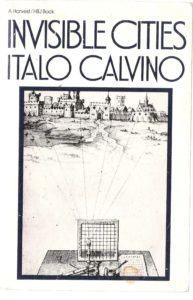 Italo Calvino, Invisible Cities (165 pages)
Calvino’s postmodern classic is framed as a conversation between Marco Polo and Kublai Khan, in which Polo describes over 50 imaginary cities—or perhaps over 50 versions of Venice. Gorgeous, complex, esoteric: the book that launched a thousand art projects.
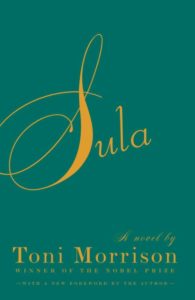
Toni Morrison, Sula (192 pages)
Morrison’s Sula features one of the most enduring (and convincing) female friendships/rivalries ever committed to literature: that of Sula and Nel, living in “the Bottom” in Ohio. As Mira Jacob put it, “what I particularly love about Sula is the full complexity of her female characters. It’s like reading those characters when I was younger was seeing, for the first time, who centered dark women. Who centered, who whole-heartedly said this story is hers, and hers, and hers, and they—we are allowed to be as complex as we need to be, and hold the ground in the story. . . . This is the book that I keep by my bed because when things don’t make sense, I will turn to a single paragraph and just meditate on it. Because I feel like everything is very deftly placed, but even within that, I feel a sense of wonder in here. A real curiosity about people and how they work and what they’re willing to settle for and what they’re not willing to settle for, and the real friction of what that looks like.”
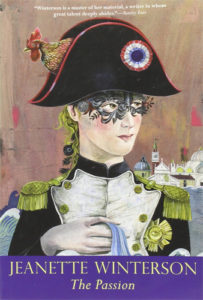
Jeanette Winterson, The Passion (160 pages)
A sly little historical fairy tale, in which a web-footed Venetian pickpocket named Villanelle has lost her heart (literally) to a noblewoman, and a stumbling soldier named Henri will try to get it back.
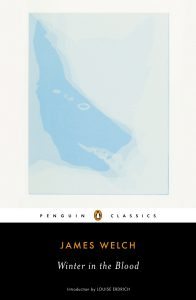
James Welch, Winter in the Blood (160 pages)
In Welch’s brutal, celebrated first novel, our unnamed narrator, a young man living on the Fort Belknap Reservation in Montana, seeks both connection—to his tribe, his history, his culture, his fractured family—and independent self-actualization. As Reynolds Price wrote in The New York Times Book Review, “the story it tells, the knowledge it contains, has as much to say of the bone‐deep disaffection and bafflement, the famous and apparently incurable psychic paralysis of several million Americans of varied origins now in their twenties, early thirties, as of any smaller group. Permafrost in the blood and mind—why and how and what to do?”
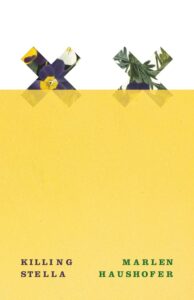
Marlen Haushofer, tr. Shaun Whiteside, Killing Stella (80 pages)
I loved this brutal little novella—as quick (80 pages!) and sharp as a kitchen knife. It’s a story about domesticity, about silence, about love, and yes, about how Stella died. For fans of Fleur Jaeggy and “(picnic, lightning)” and feeling uncomfortable in someone else’s skin. (One of Lit Hub’s most anticipated books of 2025)
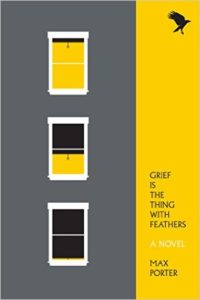
Max Porter, Grief is the Thing with Feathers (128 pages)
A lovely, surrealist novel, and one of the most convincing stories about grief I have ever read.
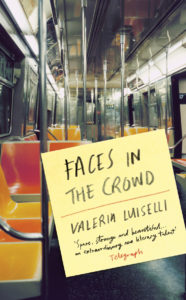
Valeria Luiselli, tr. Christina MacSweeney, Faces in the Crowd (162 pages)
Though she’s published a lot of wonderful work since then, I’m still partial to Luiselli’s debut novel, originally published in 2011 and translated into English in 2014, a fresh and compelling portrait of the artist as a young translator taken askance and doubled back on itself.
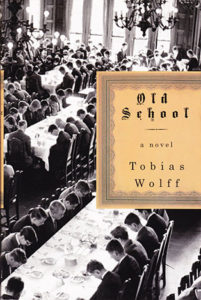
Tobias Wolff, Old School (195 pages)
An unnamed senior, an unnamed boarding school, a literary world so close you could almost offend it. As Michael Knight put it last year, this is the perfect campus novel (I ranked it twelfth on my list of the best), both fulfilling and transcending the expectations of the genre. “Here we have the musty but beautiful buildings, the arcana of campus customs, the rivalries and ambitions of the students at his all-male academy, all rendered in Wolff’s spare and lucid prose. We even have a plagiarism case, hardly exotic to the genre. The novel is rich in familiar ways throughout, but it’s not until Wolff shifts point of view in the last section, away from first person and into third, away from student life to an English teacher burdened by a secret of his own, that the book lifts up and out of the boarding school tradition and into something altogether more devastating.”
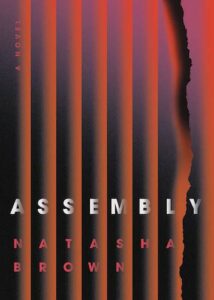
Natasha Brown, Assembly (112 pages)
By all accounts, the protagonist of Natasha Brown’s debut novel is a success story: she’s a Black British woman who’s managed to climb the ranks of her finance job, acquiring wealth, status, and a loving boyfriend. But her siloed position in her workplace and relationships—and her diagnosed but untreated cancer—is killing her. The novel’s main event: an extravagant and cringe-inducing garden party at the narrator’s boyfriend’s family estate in the English countryside, told in short vignettes of sparse, tightly wound sentences. The narrator’s general reticence recalls Sophie Treadwell’s Machinal, and especially when a surprising word usage snakes out, Garielle Lutz comes to mind. But Brown’s voice is her own, and in Assembly, form mirrors content. “I try to consider events as if they’re happening to someone else,” the narrator tells us. “To protect myself, I detach.” And: “Even in the ostensible privacy of my own thoughts I feel (still) compelled to restrict what I say.” In relatively few words, Brown gives us both a biting sendup-meets-diagnosis of the narrator’s white colleagues and a portrait of a woman carefully considering—and then opting out of—her life. –Walker Caplan (One of Lit Hub’s 22 novels you need to read in fall 2021)
Lorrie Moore, Who Will Run the Frog Hospital? (160 pages)
In Moore’s indelibly observed, sneakily devastating second novel, a discontented woman on a trip to Paris with her husband looks back at the summer she was 15, dragged along by her luminous friend Sils, when everything was still possible and exciting—but soon, like all things, to end.
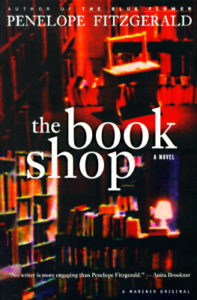
Penelope Fitzgerald, The Bookshop (118 pages)
A perfect jewel of a novel about a woman who opens a bookstore in a small town in Suffolk, fights with a local bigwig, and ultimately (spoiler alert) gets evicted.
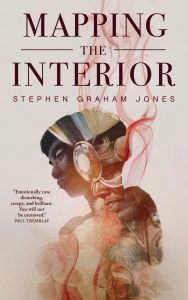
Stephen Graham Jones, Mapping the Interior (112 pages)
Jones is an extraordinarily prolific writer, and he’s an expert at genre manipulation; no surprise then that Mapping the Interior is both a coming-of-age story and a horror story, a book about menace, memory, and hope.
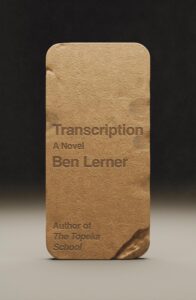
Ben Lerner, Transcription (144 pages)
Ben Lerner has the strangest skill for making a novel feel both like an intellectual exercise and somehow like a window to your deepest fears. His latest is a poetic, genre-less meditation on mortality, technology, and whether truth exists anywhere in between.
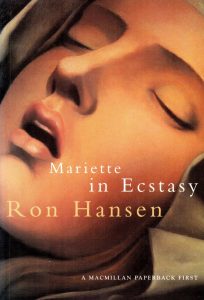
Ron Hansen, Mariette in Ecstasy (192 pages)
Hansen’s gorgeous, precise little novel is set in a Roman Catholic convent in upstate New York in 1906. In The Times, Patricia Hampl called it “a novel whose language is so exquisite that the book runs the danger of being praised only for its diamondlike prose, which is often as pleasing as the most crystalline poetry. And yet Mariette in Ecstasy is not solely a novel of sensibility, a mere esthete’s exercise. For while its descriptions dazzle, they never preen or degenerate into overblown virtuoso riffs. The greatest beauty—and the fundamental success—of this gripping novel is that its author has managed to find a voice that is entirely at the service of its strange and elusive subject.”
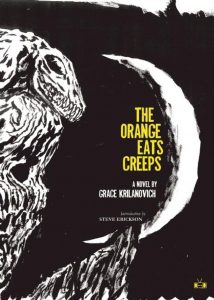
Grace Krilanovich, The Orange Eats Creeps (172 pages)
I remember reading this novel when it came out in 2010, and gasping audibly at the audacity of its rule-breaking: this was a novel unlike any I had read before, and boy was it fun, and weird, and gross, and punk. I never hear people talking about it these days, but they should be: it’s a careening, side-elbowing nightmare of a book that you should definitely read if you liked Samanta Schweblin’s Fever Dream.
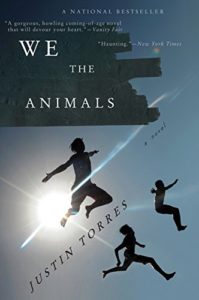
Justin Torres, We the Animals (125 pages)
Another skinny novel that made our list of the best debuts of the decade—a barbaric yawp of a book that celebrates and sings boyhood in all its grimy glory.
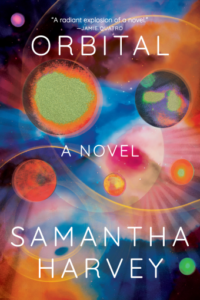
Samantha Harvey, Orbital (136 pages)
A contemplative novel about humanity set in space—or more specifically, on the International Space Station, from whence six astronauts (and/or cosmonauts) from almost as many countries circle the planet they all call home. A lovely little book.
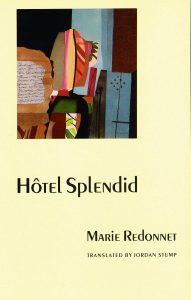
Marie Redonnet, tr. Jordan Stump, Hôtel Splendid (113 pages)
Allow me to use this space to recommend not just Hôtel Splendid, a weird and charming novel about three sisters maintaining a hotel that seems determined to sink back into the earth, but the whole of the loose trilogy of which it is a part, the other two books being Forever Valley, in which a teenage girls digs holes looking for the dead, and Rose Mellie Rose, in which another young girl in a decaying landscape tries to outline her life.
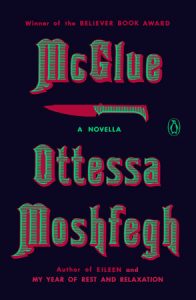
Ottessa Moshfegh, McGlue (160 pages)
Moshfegh’s debut novella won the Fence Modern Prize in Prose and the Believer Book Award, but it still seems like no one has read it—a shame, but understandable. Rather than explain, I’ll direct you to the opening of the review that made me want to pick it up, which goes like this: “Ottessa Moshfegh’s first novel reads like the swashbuckled spray of a slit throat—immediate, visceral, frank, unforgiving, violent, and grotesquely beautiful. McGlue, a transient drunk with a crack in his head, beats (at times quite literally) against his own possibility with overconsumption, nihilism, self-destructiveness, and utter depravity.” You’re either into that kind of thing or you aren’t.
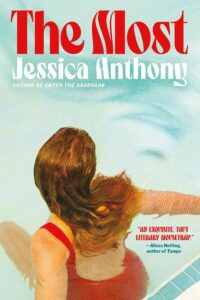
Jessica Anthony, The Most (144 pages)
A Cheeveresque story of a marriage, told in captivating back-and-forth omniscient narration. Does anything happen in it? Not really, but as is the case with any set of lives, a lot has happened, and Anthony deftly teases out the years and lies between the two stymied spouses. More than anything, the novel creates an indelible mood that lingers long after one gets out of the pool, as it were. (One of Lit Hub’s Favorite Books of 2024)

Nnedi Okorafor, Binti (95 pages)
For the science fiction fans: the first book in Okorafor’s Binti series won both the Hugo and the Nebula for best novella when it was published in 2015; in it, a young Himba woman named Binti is accepted into a prestigious intergalactic university—only to have her ship attacked by aliens before they get there, leaving only Binti alive, five days away from her destination. Can she broker some kind of peace (or at least keep herself safe)?
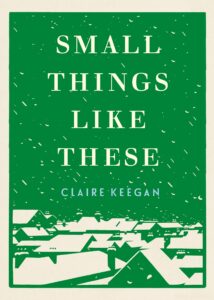
Claire Keegan, Small Things Like These (116 pages)
There is a recognizable “Claire Keegan story”: small-town Ireland, a dark secret, a man with a burden to bear. Keegan’s new, slim novel, Small Things Like These begins with one such man: Bill Furlong, born out of wedlock to a young mother, a man who has worked his way up: now, in 1985, in rural Ireland, he has a good business, a good wife, five good daughters. His deliveries of coal and timber throughout New Ross bring him to the Church-run convent outside of town where he discovers something terrible is happening. The choices he must make—what to say and whom to tell—will have repercussions for every aspect of his life and the future of his family. It is a story about choice, societal pressure, and morality. Of course, it’s not difficult to make the story of the Magdalene Laundries emotionally wrought. These institutions have become news-worthy in recent years; their true, horrific history revealed with exposes uncovering children’s mass graves (it was only in January of this year that the Irish government issued an apology for their role in perpetuating the institutions.) But in Keegan’s hands, the political is personal. She writes with expansive empathy, not only for people but for the natural world. Plus—and this might just be a requirement of Irish authors—the descriptions of weather are pretty spectacular. –Emily Firetog (One of Lit Hub’s novels you need to read in fall 2021)
This article was updated on May 20, 2026.

Emily Temple
Emily Temple is the managing editor at Lit Hub. Her first novel, The Lightness, was published by William Morrow/HarperCollins in June 2020. You can buy it here.