Lit Hub’s Most Anticipated Books of 2026, Part Two
258 Books We're Looking Forward to Before the End of the Year
NOVEMBER
***
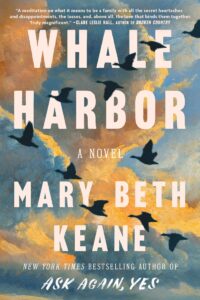 Mary Beth Keane, Whale Harbor
Scribner, November 3
Maureen Corrigan called Mary Beth Keane’s Ask Again, Yes “unpretentious and profound,” which perfectly sums up my feelings about her work. She writes deeply satisfying novels about the complexity of family life. Whale Harbor is a family saga that follows the eleven sons of an Irish family in the wake of tragedy. In her hands, I expect this sprawling multi-generational novel (one of my absolute favorite micro-genres) will be, to borrow a phrase from every overburdened blurber in history, compulsively readable. –JG
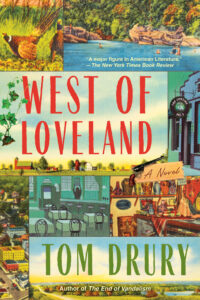 Tom Drury, West of Loveland
Grove Press, November 3
A new Tom Drury novel calls for celebration among anyone who loves extremely funny, arrestingly beautiful novels (and if that’s not you, why?). To anyone who’s heard me fervently recommend The End of Vandalism over the last year or so: here you go. You’re welcome. –JG
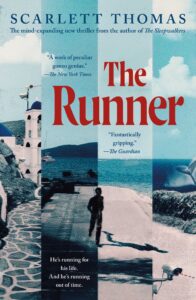 Scarlett Thomas, The Runner
Simon & Schuster, November 3
Scarlett Thomas remains, on this side of the Atlantic anyway, one of fiction’s best-kept secrets. Her brain-bending early work (The End of Mr. Y, PopCo) has matured into equally ambitious thrillers and The Runner—about a man on the run who meets another targeted woman—should, if there’s any justice, break her out in the States. –DB
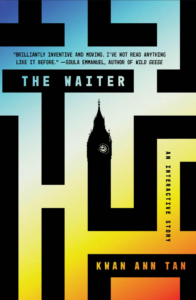 Kwan Ann Tan, The Waiter
Union Square, November 3
This one had me at “choose-your-path novel for grown-ups.” Eleven possible endings! A dystopian future where people’s identities can disappear! Let’s have some fun, yeah? –DB
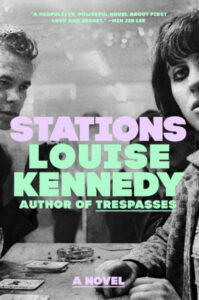 Louise Kennedy, Stations
Riverhead, November 3
In the follow-up to Trespasses, her beautiful, intimate novel of a forbidden love affair during The Troubles, Louise Kennedy returns to the subject of romance tinged with regret. Stations tells the story of Róisín and Red, who bond as teenagers in 1980s Ireland and reunite years later, only to drift apart again. I can’t wait to inhale it. –JG
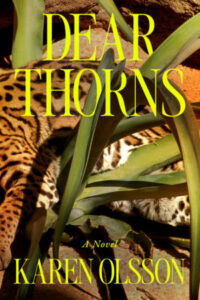 Karen Olsson, Dear Thorns
Astra House, November 3
Lora works at a wildlife refuge in Texas studying the Texas ocelot. She’s always put her career before everything else—until a younger man starts interning at the refuge. Lora becomes fascinated with him, and as the two become closer, Lora’s understanding of the world begins to change. Part cli-fi, part character study, Dear Thorns promises to be as sharp as its title suggests. –MC
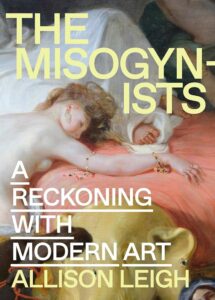 Allison Leigh, The Misogynists: A Reckoning with Modern Art
Abrams Press, November 10
It should come as no surprise that the early history of modern art was not a friendly place for women. But as Leigh’s deeply researched cultural history of the careers of six art world giants—Delacroix, Courbet, Degas, Renoir, Gauguin, and Picasso—reveals, it was, in fact, absolutely awful. The misogynistic exploitation endured by women at the hands of these still revered icons was shocking even to their contemporaries, showing us once again just how awful the man behind the art we love can be. –JD
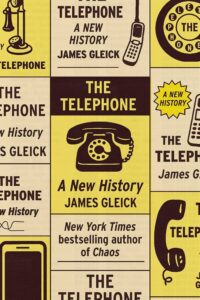 James Gleick, The Telephone: A New History
FSG, November 10
These are my favorite sort of biographies: stories of objects and tools that are so ubiquitous we rarely stop to consider their origins or appreciate their true significance. Yet as James Gleick’s engaging new book shows, the legacy of Alexander Graham Bell’s 1876 experiments is both long and incredibly far reaching, not just yielding up a new invention—the telephone—but seeding a “continuous revolution” in the way humans communicate. Gleick recounts the coining of the new words ‘hello’ and ‘goodbye,’ the creation of a class of professional operators, the minting of the largest monopoly in history, and the transformation of social life in innumerable ways, from wiretapping to booty calls. Along the way, he has something profound to say about “the primacy of information and the need for connection.” –EF
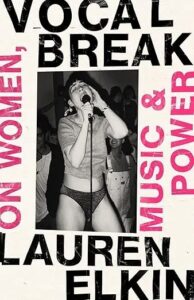 Lauren Elkin, Vocal Break: On Women, Music, and Power
FSG, November 10
Elkin, long a favorite around these parts, brings her personal perspective as a former soprano to this fascinating cultural history of women’s voices. With a look at the lives and careers of icons like Édith Piaf, Maria Callas, PJ Harvey, Beyoncé, and Billie Eilish, Elkin examines the power of a woman’s voice to reclaim space and defy a patriarchal system that for so long has demanded silence and obedience from half the planet. –JD
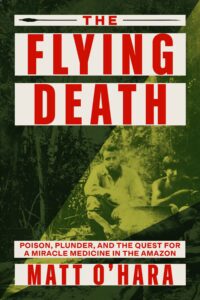 Matt O’Hara, The Flying Death: Poison, Plunder, and the Quest for a Miracle Medicine in the Amazon
FSG, November 10
An American explorer racing his Russian counterpart to acquire a rare poisonous plant deep within the jungles of the Amazon that may hold the cure to countless diseases? On the eve of WWII? For someone like me, this tale of swashbuckling botany, and the pharmaceutical breakthroughs it led to, is absolutely the beach read we need. –JD
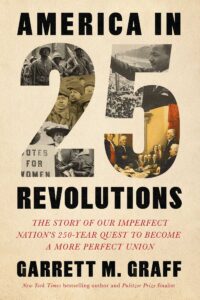 Garret M. Graff, America in 25 Revolutions: The Story of Our Imperfect Nation’s 250-Year Quest to Become a More Perfect Union
Avid Reader Press/Simon & Schuster, November 10
The United States’ early dream of itself—as a revolutionary, egalitarian nation built on principles of universal justice—has always been deeply detached from reality. But even as it’s easy to catalogue the systemic iniquities at the heart of the American experiment, historian Garett M. Graff reminds us that the story of this nation is filled with courageous individuals—from the labor movement to Civil Rights—who’ve sacrificed so much to actually see its principles realized. –JD
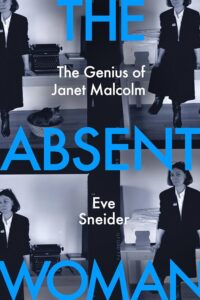 Eve Sneider, The Absent Woman: The Genius of Janet Malcolm
W.W. Norton, November 10
“Every journalist who is not too stupid or too full of himself to notice what is going on knows that what he does is morally indefensible,” Janet Malcolm wrote in her book The Journalist and the Murderer. Always interested in the ethical questions involved in the creation of true-to-life profiles, Malcolm herself is a fascinating subject for a biographer. In her new book, Sneider (who wrote of her experience with Malcolm’s archives for Lit Hub) uses manuscript drafts, photographs, correspondence, and interviews with those who knew Malcolm to paint a portrait of the notoriously private writer and show the ways in which she understood herself through her writing. If you also love books about writers, definitely one to add to your TBR. –EF
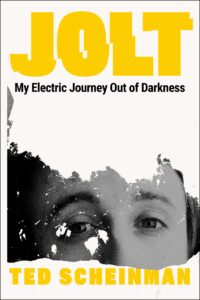 Ted Scheinman, Jolt: My Electric Journey Out of Darkness
Scribner, November 10
As highlighted in our first half preview: While nobody owes us the hard truths of their experience, it’s always an enormous gift when someone has the courage to share the trials and tribulations they’ve endured. So it is with Ted Scheinman’s Jolt, in which the Smithsonian magazine editor and author of the delightful memoir/travelogue Camp Austen, reveals his long and harrowing struggle with depression, and the steps he took to reckon with it. Namely, and as a last resort, Scheinman decided to undergo electroconvulsive therapy (ECT); and though the ECT worked—much to Scheinman’s relief—it came with a cost to his memory. Not only does Jolt provide an important window into the darker realities of mental illness, Scheinman’s willingness to share his story will no doubt help others who might be struggling. [Full disclosure: I once had a lovely experience with Ted Scheinman as an editor for a magazine feature of mine.] –JD
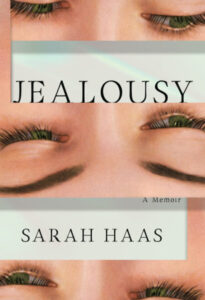 Sarah Haas, Jealousy: A Memoir
Catapult, November 10
I have to be honest: my initial interest in this memoir was based entirely on the title. Sarah Haas’ memoir follows the unraveling of a relationship, and the self, amid a “the history of the recorded image and its consequences.” Sounds both gripping and deeply uncomfortable—immediately sold. –JG
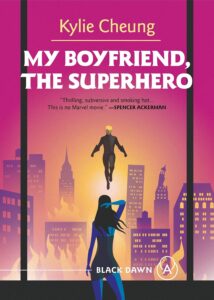 Kylie Cheung, My Boyfriend, the Superhero
AK Press, November 10
AK Press continues their Black Dawn series of speculative fiction with this deconstruction of the superhero genre that also doubles as a steamy romance novel. Cheung, who has written extensively about gender and politics, makes her fiction debut here and early reads are suggesting a hot time indeed. –DB
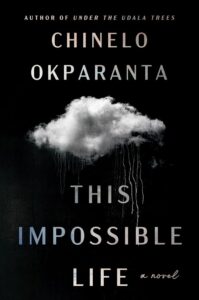 Chinelo Okparanta, This Impossible Life
Mariner Books, November 10
Siblings Alohan and Ivie are orphaned when their rainmaker father can’t hold back the rain on a wedding. Alohan has to provide for and protect Ivie, and the two are bound together—although they forge very different paths. A story of loss, power, privilege, crime, and betrayal that travels from Nigeria to the United States, Okparanta’s beautiful new book is the work of a writer with a keen eye for the emotional bonds between family. –EF
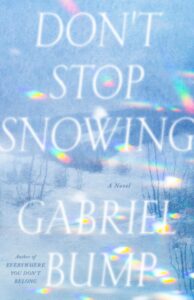 Gabriel Bump, Don’t Stop Snowing
Algonquin, November 10
Two cousins must take care of one another in cold snowy Buffalo in the latest from Bump, who is carving out a space for himself as one of our finest chroniclers of the modern age. –DB
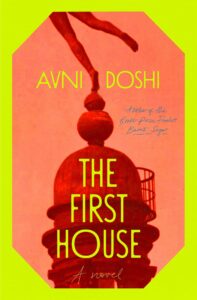 Avni Doshi, The First House
S&S/Summit Books, November 10
Avni Doshi’s debut novel Burnt Sugar was probably my favorite novel I read in 2020 (it was also shortlisted for the Booker), so I’m thrilled that she’s back. Her sophomore effort follows a woman after her husband of thirteen years leaves her with no warning, but is no mere tale of despair: instead it is a sharp, surreal investigation into the details and delusions of being a person—a wife, a mother, a daughter—that promises to leave you somewhere completely different from where it picked you up. –ET
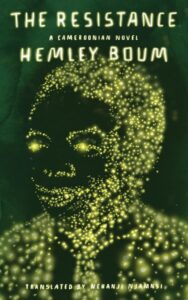 Hemley Boum, The Resistance
Two Lines Press, November 10
A Cameroonian novel that spans years and traces the path of a revolution, The Resistance is going to be the historical fiction novel of the fall. Beginning at the advent of WWII, the novel follows a pair of young lovers whose paths diverge—one goes to fight for France in the war while the other becomes an important priestess. Years later, their daughter returns to the place where her parents met in order to plan a revolution. A meditation on freedom and community, The Resistance is heartbreaking and powerful. –MC
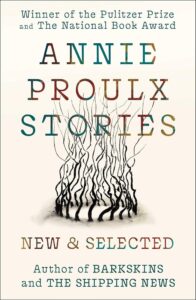 Annie Proulx, New and Selected Stories
Scribner, November 10
Perhaps (definitely) most famous for her iconic short story “Brokeback Mountain,” Proulx has long been one of our most tender realists, depicting at once the vivid, lived details of American life, often in the West, while also granting her characters a particular kind of grace that redeems us all. This collection gathers her most beloved stories alongside new work. –JD
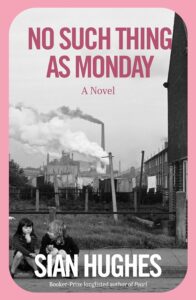 Siân Hughes, No Such Thing as Monday
Henry Holt and Co. November 10
I love how complicated sibling relationships lend themselves so well to stories about asking for forgiveness and making amends, and they tend to draw out the best and worst in all characters involved. No Such Thing as Monday looks at two sisters whose relationship was fractured by an abusive father, and what happens between them after his death. –OS
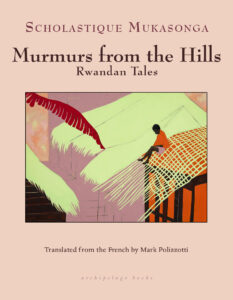 Scholastique Mukasonga, tr. Mark Polizzotti, Murmurs from the Hills: Rwandan Tales
Archipelago, November 10
I like the idea of looking at the future by considering the past, and the stories in Murmurs from the Hills reach deep into pre-colonial Rwandan history. How can distant times inform a nation and a people? Through connections to stories told over centuries, both real and fantastical. –OS
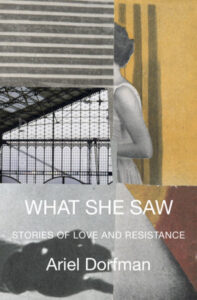 Ariel Dorfman, What She Saw: Stories of Love and Resistance
Other Press, November 10
This latest collection from the legendary Chilean American novelist, playwright, academic, essayist, and human rights activist is about “human connection in the face of cruelty, injustice, and uncertainty” and contains a story set in a witchcraft trial during the 100 Years War, another in the present-day United States, and even one narrated by a bullet. How’s that for range? –DS
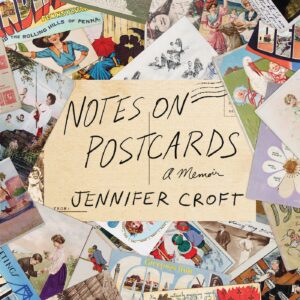 Jennifer Croft, Notes on Postcards: A Memoir
Catapult, November 10
As highlighted in our first half preview: There are far worse ways to measure out a life than by postcards. Though as a medium they may necessarily limit the depth and intimacy of what we write, they in turn free us of our writerly pretensions, and force us to get to the point. So as someone who once sent 300 postcards (over as many days) to someone very dear and very far away, I am eager to read novelist and translator Jennifer Croft’s memoir in very small parts, as she shares her collected postcard correspondence—with her grandmother, her husband—and muses on the medium itself, equal parts anachronism, archive, and analog delight. –JD
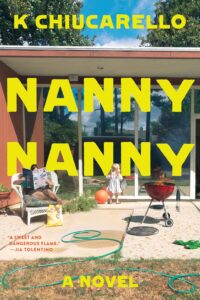 K Chiucarello, Nanny Nanny
Ecco, November 17
When a single woman in her 30s who has been working as a professional nanny decides to have a child of her own, she starts by taking stock of everything that’s led her to this point—her childhood, her abusive ex, the rich people she works for, and more. Surprisingly funny, tremendously thoughtful, this is a debut to watch out for. –DB
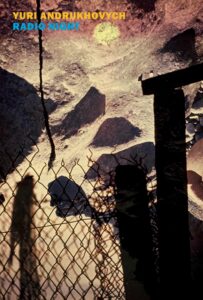 Yuri Andrukhovych, tr. Mark Andryczyk, Radio Night
New York Review Books, November 17
Does anything confer more instant credibility than a release from NYRB? Beyond my faith in the publisher behind Radio Night, the promise of a character whose job during the revolution was “barricade pianist” is enough to get me fired up; ditto the menacingly-capitalized Regime and criminal Mob the hero is fleeing from. The description sounds unlike anything I’ve ever read—I’m not entirely sure how a novel can be said to be “enveloped in music”, but I’m looking forward to finding out. –CK
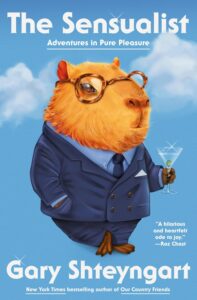 Gary Shteyngart, The Sensualist: Adventures in Pure Pleasure
Random House, November 17
It’s kind of hard to believe that this is Gary Shteyngart’s first essay collection! Expect humor, expect pathos, expect watches and martinis probably. You’ve undoubtedly read some of these essays (he’s been in Best American Essays nine times) but some of these are brand new and should be a hoot and a half. –DB
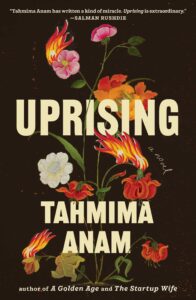 Tahmina Anam, Uprising
Scribner, November 17
Love a novel about revolution and solidarity! Uprising considers its action from multiple angles: the experiences of children, women sex workers, the threat of ecological disaster. There’s so much happening, and seeing all of it come together feels exciting. –OS
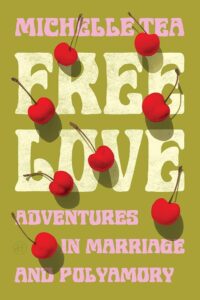 Michelle Tea, Free Love: Adventures in Marriage and Polyamory
Harper One, November 17
On the outside, polyamory can seem like a liberating and fun-filled existence (sex! flirting!) but as Tea’s deeply researched and immersively (ahem) reported narrative reveals, it also takes a lot of work, and levels of gut-checking honesty that don’t come easily to most of us. As someone who has lived the lifestyle herself Tea is uniquely qualified to investigate the good, the bad, and the ugly of the polyamorous experience. –JD
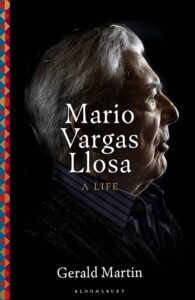 Gerald Martin, Mario Vargas Llosa: A Life
Bloomsbury, November 17
I’m fascinated by figures who, like Mario Vargas Llosa, undergo dramatic shifts in politics, and this book is (to my knowledge) the first English-language biography of the complicated Nobel Laureate, drawing from his archives and papers. –OS
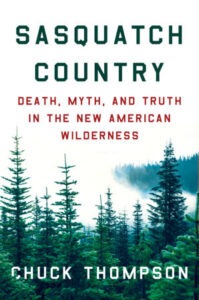 Chuck Thompson, Sasquatch Country: Death, Myth, and Truth in the New American Wilderness
Counterpoint, November 17
Billed as Twin Peaks meets Into the Wild, this latest true crime wilderness narrative tells the story of two dead hikers discovered deep in the forests of Washington State around Christmas 2024, in an area common to so-called Tenderfoots, inexperienced Bigfoot enthusiasts in search of everyone’s favorite furry cryptid. But is that what happened to Dean Pommerville and Eric Straughter, whose families were obviously devastated by their loss, or was something else going on? –JD
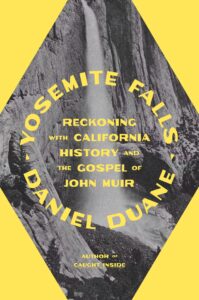 Daniel Duane, Yosemite Falls: Reckoning with California History and the Gospel of John Muir
North Point Press, November 17
John Muir, who famously walked all over this country, eventually falling in love with the California wilderness, is something like a saint to American nature-lovers, revered for his reverent and awe-filled accounts of life under the stars. So it was for Daniel Duane and his family, whose secular devotion to Muir was ritualized in regular visits to Yosemite National Park, as close to a cathedral of the American west as you can get. But as Duane reveals, through a mix of personal memoir and historical research, Muir’s Victorian worldview was far from perfect, dismissing as it did the generations of First Nations people who’d called California home for millennia. An engaging and necessary corrective to the hagiographic record. –JD
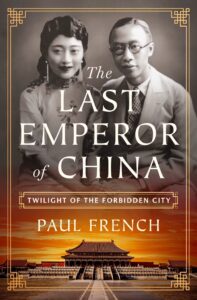 Paul French, The Last Emperor of China: Twilight of the Forbidden City
St. Martin’s Press, November 17
If I’m curious about a region of the world or a particular era I’m largely unfamiliar with, a biography is often the most compelling entry point into that period of history. And if the description of that biography includes the key words “previously unpublished” or any indication that the author has been in the archives, it’s a good sign that the work is going to produce new insights instead of retreading previous histories on the same topic. The Last Emperor of China ticks both those boxes, which is why it’s high on my list when it comes out later this year. –CK
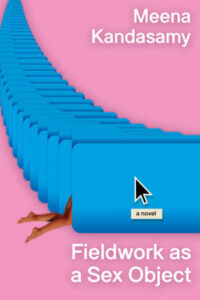 Meena Kandasamy, Fieldwork as a Sex Object: A Novel
Soft Skull, November 24
An Indian woman living in London tries to repair her reputation (and her life, really) after a deepfake sex tape explodes it all. Everything about this screams Soft Skull, so I’m betting on a sharp wit and explosive prose. –DB
 Bob Woodward, Secrets: A Reporter’s Memoir
Simon & Schuster, November 24
Reporter Bob Woodward clearly knows how to get people to talk—even when they should know better. Watergate, his most famous reporting work, changed a nation and set the bar for generations of investigative journalism to come. As Woodward turns his reporter’s eye on his own life, and the vocation he’s pursued for over 50 years, readers learn—among other things—the fine (and disappearing) art of cultivating sources not over months or years, but decades. We could use more courageous young Woodwards these days. –JD