Lit Hub’s Most Anticipated Books of 2026, Part Two
258 Books We're Looking Forward to Before the End of the Year
OCTOBER
***
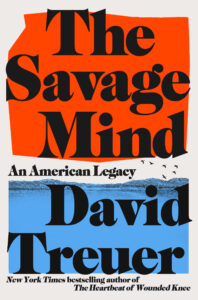 David Treuer, The Savage Mind: An American Legacy
Little, Brown, October 6
Following up on The Heartbeat of Wounded Knee, his incredible, far-ranging history of this country’s treatment of Indigenous First Nations, Treuer’s latest is a personal and historical exploration of America’s tradition of frontier violence, that bloody legacy of settler-colonialism that continues to manifest in the 21st century, from the streets of Minneapolis to the tent cities of Gaza. –JD
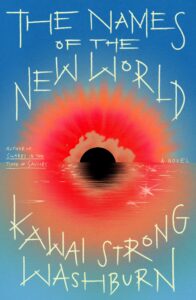 Kawai Strong Washburn, The Names of the New World
MCD, October 6
I loved Washburn’s debut novel Sharks in the Time of Saviors for its stirring evocations of Native Hawaiian myth. This time, we’re in Minneapolis, where a mythically large, climate-induced superstorm brings together Hawaiian-born lawyer Naomi, MMA fighter Amaré, investment banker Raheem, and a blue-collar mechanic who’s been injured in the storm. From D.C., where policy can be made, to the Pacific Islands, which faces the most immediate threat from ignoring our climate reality, Washburn writes a story of “ambition, migration, family, and survival in modern America.” –EF
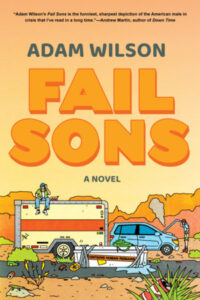 Adam Wilson, Fail Sons
Soho Press, October 6
Scott and Nick must retrieve their father’s body from the soon-to-be-shuttered Cryo Center, where it has been frozen since the nineties. But the brothers aren’t exactly on the best of terms, and Scott is pretty focused on his wife, who’s about to go into labor, and wearing his KN95 mask as they pilot the U-Haul through every red state in America. Wilson always knows how to frame satire and grief, the high and the low, and this 21st-century version of As I Lay Dying promises to be both clever and heartfelt. –EF
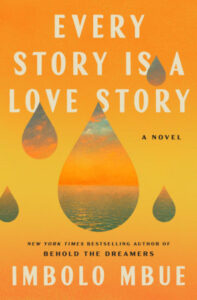 Imbolo Mbue, Every Story is a Love Story
Random House, October 6
Three years after Wolo’s pregnant wife is killed in a car accident, he recieves a letter from the woman who was behind the wheel of the other car—the woman who killed his wife and changed his life forever. His family wants him to ignore it, but he can’t help himself; he agrees to meet with her. The latest from the author of Behold the Dreamers promises to be a complicated, moving novel about the nature of grief, and of love. –ET
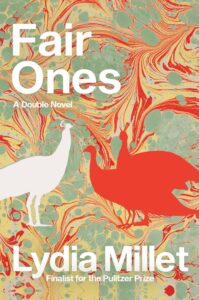 Lydia Millet, Fair Ones: A Double Novel
W.W. Norton, October 6
Millet’s latest novel Fair Ones is in fact two novels: Fair, in which Mara and her friend Jen reel in the immediate aftermath of the death of a close friend, and Ones, in which Jen and her friend Mara continue to wrestle with it a year later. Millet’s a weird, wry genius; can’t wait to read. –ET
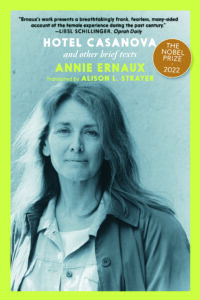 Annie Ernaux, tr. Alison L. Strayer, Hotel Casanove: And Other Brief Texts
Seven Stories Press, October 6
Sometimes a book comes into existence because the mind behind it is unique in their perspective, intellect, and ability to give voice to both. Ernaux’s forthcoming Hotel Casanove promises to be the kind of book you pick up during an idle moment at a friend’s house or bookstore, read a few pages of it, and realize you have to finish the whole thing—not because of a propulsive plot, but because you feel like you’ve just introduced to a smart, interesting friend, and you want to hear the rest of what they have to say. Plus, I always enjoy a collection of stories and nonfiction that hang together without a unifying theme; would that more writers could publish their best work and trust readers to parse it themselves. –CK
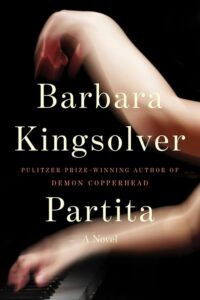 Barbara Kingsolver, Partita
Harper, October 6
Kingsolver’s post-Pulitzer novel sounds right in her wheelhouse: a woman gets a request from a former lover, asking to meet, and the call (not to mention the question of whether or not she’ll say yes) throws her back into her past as a concert pianist. Beauty is guaranteed. –DB
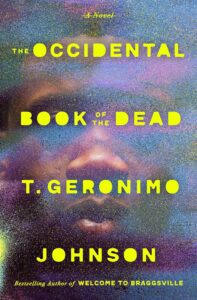 T. Geronimo Johnson, The Occidental Book of the Dead
William Morrow, October 6
The name alone thrills me, but I think this could be one of the big conversation books of the year, about a Black cop in Atlanta whose “façade of white alliance” falls apart in the late 90s and early 00s. Johnson’s first, Welcome to Braggsville, got plenty of comps to Paul Beatty and Percival Everett—but I think this one will plant Johnson firmly in their company. –DB
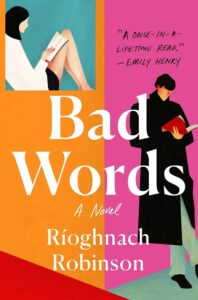 Rioghnach Robinson, Bad Words
St. Martin’s Press, October 6
This romance novel is already causing quite a bit of chatter in the literary world, not least because it happens to be about the literary world (yes, thank you, Lit Hub is mentioned): things kick off when a disgruntled author confronts the critic he believes has ruined his career (at Cipriani, no less)—and someone catches it on video. Cue the firestorm (and some uncomfortably close-to-home subplotting about the Death of Literary Media). Luckily, they’re both good looking, which rather takes the edge off. –ET
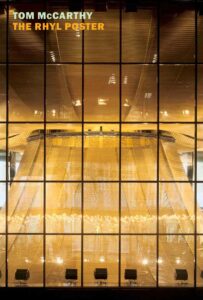 Tom McCarthy, The Rhyl Poster
New York Review Books, October 6
I love Tom McCarthy’s weird, glitchy brain (ask me about Remainder sometime), and will read pretty much anything by him. But I am particularly curious about his latest novel, a political thriller described by its publisher as “a hallucinatory landscape in which the literary descendant of Dostoevsky’s Raskolnikov and Conrad’s Razumov is cast adrift in the gamespace of Grand Theft Auto, the spirit of Kafka’s Franz or K. amidst the environs of Bad Lieutenant.” Can’t miss that. –ET
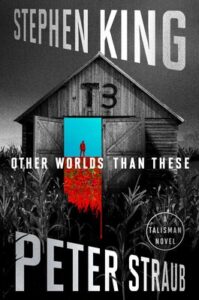 Stephen King & Peter Straub, Other Worlds Than These
Scribner, October 6
The fact that King and Straub not only wrote one novel together (The Talisman) but came back together years later to deliver the equally thrilling Black House is astounding. Even more astounding: their long-rumored third collaboration is here, despite Straub having passed in 2022. Word on the street is that it is fully a return to Mid-World, the universe of King’s titanic Dark Tower sequence, for perhaps the last time. I am so very seated. –DB
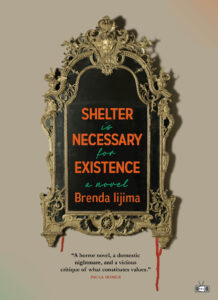 Brenda Iijima, Shelter is Necessary for Existence
Two Dollar Radio, October 6
I would’ve looked forward to this release even if I hadn’t recently caught a screening of Do The Right Thing, but following that up with a satire focused on the gentrification of Brooklyn, and the social unrest those changes cause feels thematically appropriate. That the brownstone at the center of the novel is itself haunted—both metaphorically and literally—should make this an excellent read when it’s out this October. –CK
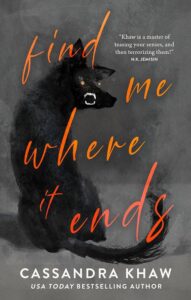 Cassandra Khaw, Find Me Where It Ends
Tor Nightfire, October 6
You might be familiar with the black dog from folklore, or from Churchill’s coining of it as a metaphor for depression—maybe you have your own black dog haunting your days. I know I do. So what do you do when they show up at the door, waiting to take you away? Life is a choice, one we must make consciously, and we can trust Cass Khaw to deliver an elegy for just how hard—and necessary—that choice can be. –DB
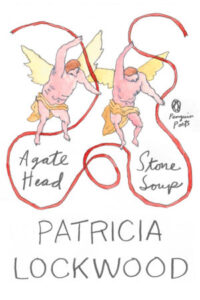 Patricia Lockwood, Agate Head/Stone Soup
Penguin Books, October 6
Ring the bell! It’s Patricia Lockwood’s first new collection of poetry in over a decade—and I cannot wait for all the people who’ve gotten into her other writing (fiction, essay, memoir, tweet) to discover the joys (and sucker-punches) of her verse. –DB
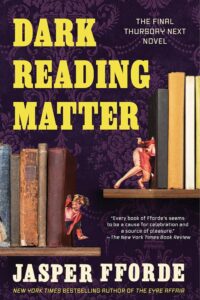 Jasper Fforde, Dark Reading Matter
Soho Press, October 6
It has been almost fifteen years since we last saw Thursday Next! I’ve loved Fforde’s alternate England (pet dodos, an ongoing Crimean War, the ability to jump into books and travel to a world populated entirely by literary characters) since I was a teenager and can avow: if you’re a reader of this website and like British humor, this series is for you. Pick up The Eyre Affair as soon as you read this, so you’ll be done with book 7 by October. –DB
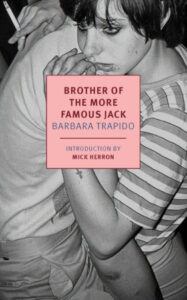 Barbara Trapido, Brother of the More Famous Jack
NYRB Classics, October 6
Brother of the More Famous Jack could be the book I recommended most often last year. It’s one of those magic finds, a happy curse. A bookseller at Three Lives pressed it onto me, infecting me with the mission to press it on to others. Now the fine folks at NYBR have taken up the cause—and given her a hip new cover.
Following a young woman who falls into mid-century bohemia’s lap thanks to a charismatic professor and his charismatic family, this gem captures a quick-witted woman’s coming-of-age. For fans of Helen Garner, Deborah Levy, Tessa Hadley, maybe Susie Boyt—all the brilliant bards of chosen mid-century squalor, in thrall to the erotic intellect. –BA
 Nathaniel Philbrick, The Rush: California Gold, the Civil War, and the Making of the Modern World
Viking, October 6
As someone who grew up in Alaska, I’ve always been very interested in the Gold Rush—which means I’m really looking forward to this decisive history of the California Gold Rush. Philbrick explores this foundational event in great detail, exploring the myriad ways in which America was changed by gold fever. From antebellum political tensions to labor disputes to stolen land, The Rush is a book that recharts a trigger point in American history. –MC
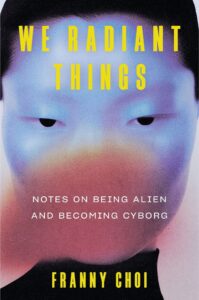 Franny Choi, We Radiant Things: Notes on Being Alien and Becoming Cyborg
Ecco, October 6
The debut essay collection from celebrated poet Franny Choi is full of cyborgs. Choi looks at the film Ex-Machina and the Japanese maid/robot Kyoko, unpacking what these stories about beautiful and obedient representations of Asian women in sci-fi reveal about “race, gender, sexuality, disability, labor, technology, and language.” –EF
 Tracy Daugherty, Cormac McCarthy: A Legacy Revisited
St. Martin’s Press, October 6
Having already won a Pulitzer for his biography of that other great chronicler of the American west, Larry McMurtry (who is grossly underrated as a “literary” writer, whatever that means, exactly), Daugherty, who’s also written about luminaries like Donald Barthelme and Joan Didion, is one of our best literary biographers. So why not tackle the one of our best writers, a man whose life of hardscrabble literary devotion mirrors some of the tougher characters in his novels? –JD
 Luiz Schwarcz, tr. Alison Entrekin, The First Reader: On Writers and Editors
Penguin Press, October 6
I love talking about the collaborative nature of writing. People think it’s such a solitary act, but (much like everything else) it really does take a village! The First Reader offers a special insight into the relationship between writers and editors from celebrated literary publisher Luiz Schwarcz, founder of Brazil’s Companhia das Letras. Schwarcz’s book promises to be an insightful, inspiring, and unique look at the nature of creative collaboration. –MC
 Eric C. So, The Collision: What AI Does to Us
W.W. Norton, October 6
It is hard at this point to find an industry untouched by AI (we here at Lit Hub are, so far, relatively lucky in our freedom to not use it, intentionally at least). In a dizzyingly rapid timeframe a majority of Americans have taken up the daily use of AI; and a majority of them are doing so in a completely passive, unthinking way. For So, a professor of global economics and behavioral science, this is bad, very bad. But rather than preaching abstinence, which is impossible for just about any white collar worker, So suggests we learn how to “reinvest the cognitive surplus” AI creates, rather than letting our brains turn to slop. (I am personally sticking with abstinence, though, thank you.) –JD
 David Byrne, Sleeping Beauties: Why Good Ideas Go Dormant and How They Wake Up
Penguin Press, October 6
David Byrne (yes, exactly) explores the phenomenon of stalled innovation across disciplines, from technology to art. A fascinating premise on its own, but the real draw here is getting inside the mind of one of our most curious and creative contemporary artists. –JG
 Laura Fernández, tr. Alexis Almeida, There’s a Monster in the Lake: The World as a Fantastical Place
Graywolf, October 6
As Lit Hub’s resident monster expert, it’s my duty to put this book on your radar. Fernández’s book-length essay explores the many lives of the Loch Ness monster. Fernández travels to Scotland to meet the monster at the source. While there, she considers the meaning of monsters in pop culture, literature, and history. There’s a Monster in the Lake is a playful investigation into the human imagination, full of tenderness and wonder. –MC
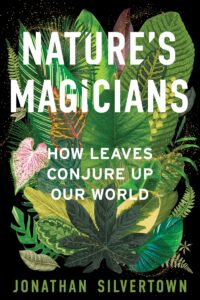 Jonathan Silvertown, Nature’s Magicians: How Leaves Conjure Up Our World
Scribner, October 6
Did you know that more water is transpired through the planet’s leaves than flows in all its streams and rivers? Yes, leaves are a kind of magic—as Silvertown, an evolutionary biologist tells us—responsible for what we eat and the air we breathe. Oh, and they’re also “a solar panel, rainmaker, lunch box, chemistry set, shapeshifter, soil maker, and geometric designer.” It’s past time leaves got their due. –JD
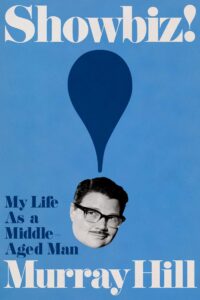 Murray Hill, Showbiz! My Life as a Middle-Aged Man
Gallery Books, October 6
Murray Hill is a fixture of New York cabaret-comedy nightlife scene (triangulated to Joe’s Pub), and starred on one of the funniest and tenderest shows in recent memory, Somebody Somewhere, so I have no doubt he has lived a life full of memoir-worthy anecdotes. If you’re a sucker for an unconventional career path story told with the charm of a showman, this one’s for you. –JG
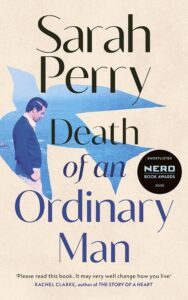 Sarah Perry, Death of an Ordinary Man
Mariner Books, October 6
Sometimes everything is fine until suddenly it isn’t. One day you see a loved one, and a few weeks later, he’s dying. There’s a specific type of grief that comes with watching death come so abruptly, and Perry explores it in real time. –OS
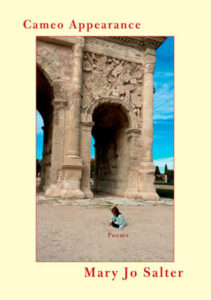 Mary Jo Salter, Cameo Appearance
Knopf, October 6
Salter, one of our great recorders of life’s details, small and beautiful and imperfect though they may be, returns here with her ninth poetry collection. As ever, she brings her signature mix of profundity and humor to these poems, some brief and lyric, others long and narrative-driven. May she publish nine more collections. –JD
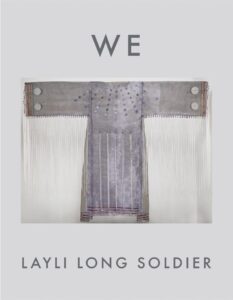 Layli Long Soldier, We
Graywolf, October 6
I plan to celebrate America’s 250th birthday by re-reading Long Soldier’s Whereas…, perhaps the great poetic excoriation and interrogation of this country’s fundamentally violent and oppressive spirit—but I’m even more excited to read this new collection, which focuses on community. “A war of language,” she promises, and that’s exactly what we need. –DB
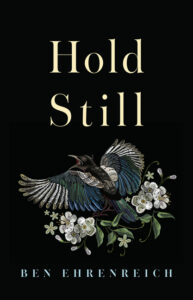 Ben Ehrenreich, Hold Still
City Lights, October 13
After his mother—the celebrated writer and activist Barbara Ehrenreich—died in 2022, Ben Ehrenreich set a goal to deal with his grief: he would write a story every day. This project forms the basis of this book, part short fiction, part memoir, about dealing with the loss of a parent while becoming one yourself. –ET
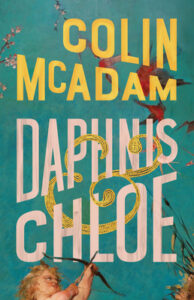 Colin McAdam, Daphnis & Chloe
Biblioasis, October 13
A retelling, perhaps, of the titular myth—but spun through a modern Kelly-Link-sounding lens. Bring me myth, bring me love, bring me beauty! Plus, it has a Max Porter stamp of approval. –DB
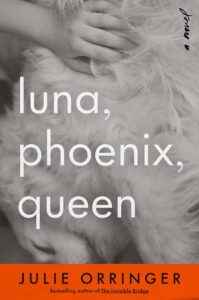 Julie Orringer, Luna, Phoenix, Queen
Knopf, October 13
Orringer’s multi-perspective story of marital and artistic betrayal across decades features academics, a stolen manuscript, and a dog—all elements of a perfect novel. Dava and Barr are married professors, but Dava is in love with Svetlana, the Russian Studies professor, and spends her evenings writing a novel about two women in love. After her devastating diagnosis, Barr, alone in the house, finds her manuscriypt and suspects his wife’s affair as described in the novel. He, in turn, rewrites her novel and publishes it as his own to wide acclaim. It’s a stori with reverberations from a writer everyone should read. –EF
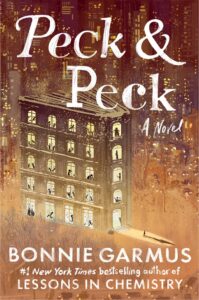 Bonnie Garmus, Peck & Peck
Scribner, October 13
Lessons in Chemistry remains one of the most common books I witness people reading in public spaces, even four years after it was released. I take that to mean that the people love a zingy, feminist historical novel, but that they are also hungry for another Bonnie Garmus hit. Thankfully Peck & Peck is here to feed those gaping mouths. This time, the book is set in New York City in a current day landscape, revolving around a young man working to find himself. Batter Gray is a misfit who’s never quite known his true path, and finds himself where so many like-minded people before him have: working in publishing. As the myriad hardships of his life swirl around him, the fact of his brother’s death, and his careening doubt about his existence in the world, the poetry that he publishes through his company, Peck & Peck, remind him of the meaning that can always be found in darkness. With the trappings of the literary world, and the heart of a bildungsroman, Peck & Peck vows to fill the void in all our hearts with a needed dash of wit and poignancy. –JH
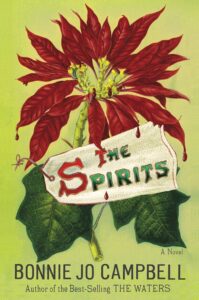 Bonnie Jo Campbell, The Spirits
W.W. Norton, October 13
In Bonnie Jo Campbell’s own words, she set out to write a happy book. So she began writing a sweet little book about Christmas, but, unfortunately, it was all quite out of her hands, she found that the daughter in her story had murdered her own father. What to do next? In this retelling of the Christmas Carol, Campbell has orchestrated a symphony of human personality and inter-family dynamics that strike the heart with their realism, their dread, and their eventual hard-won resolution and salvation. It all comes to a head at a dreaded Christmas dinner, where the daughter and her family members must come to terms with the histories they’ve absorbed and the futures they’ve wrought. Campbell manages to find a way to make this story both things: hard and brutal, and yet with a gleam of salvation in its linings. –JH
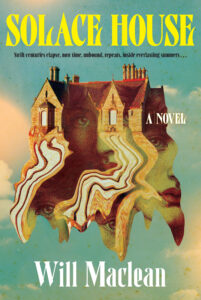 Will Maclean, Solace House
Grove Press, October 13
Haunted houses are one of my favorite literary subjects, and Solace House promises to be a very cool entry in the haunted house genre. In 1993 a group of college students is cleaning out a dilapidated Victorian mansion. But when the students find the previous owner’s journals, they learn that there was more going on in the house than they previously believed. An eerie gothic tale of obsession and other realms, Solace House sounds like the perfect book to start your autumn reading off right. –MC
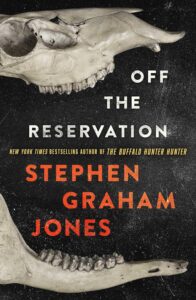 Stephen Graham Jones, Off the Reservation
S&S/Saga Press, October 13
Hot off his Stoker and Nebula wins for The Buffalo Hunter Hunter, the modern king of horror returns to the characters and location of his breakout hit The Only Good Indians. This time, an attempt at repatriating the bones of a child from the notorious (and real!) Carlisle Indian Industrial School brings something horrible to a Blackfeet reservation in Montana. –DB
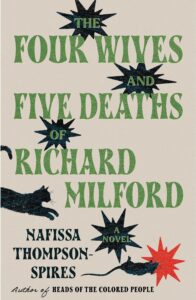 Nafissa Thompson-Spires, The Four Wives and Five Deaths of Richard Milford
Scribner, October 13
This is another novel I’ve been jonesing for, basically ever since I set down Thomson-Spires’ debut story collection in 2019. Heads of the Colored People is easily one of my favorite reads of the last decade. So it’s no small treat to bask again in the author’s powerfully witty sensibility.
This novel plops us into a Black Oklahoma township at the tail end of reconstruction, where a tyrannical farmer has been found dead—possibly thanks to his coven of four disgruntled wives. With a rotating cast of saucy narrators and a finely wrought sense of place, the mythic-tinged setting calls up Toni Morrison or Brit Bennett in places, but via a razor-sharp voice all its own. –BA
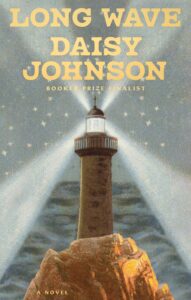 Daisy Johnson, Long Wave
Riverhead, October 13
A girl named Ori is found abandoned on an island. She’s too young to remember who left her, and why, but she will wonder, always. When Ori has her own child, that wondering turns into something else entirely: through her sleeplessness, her panic, her questioning of her roots, she begins to travel in her mind, back to that original island where she was abandoned by her mother. She has visions of her mother, visions of her grandmother, of the layered and devastating heritage that has coursed through her and into her own offspring. She wonders if she will be able to break the spell that winds its way through mother and daughter. Primordial and powerful, Long Wave is a spellbinding journey through the depths of motherhood. –JH
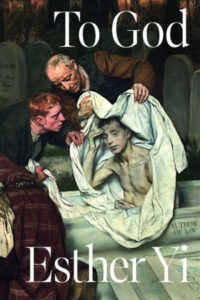 Esther Yi, To God
Astra House, October 13
Esther Yi’s much-feted debut novel about the universal longing for transcendence took up fan-fiction and celebrity culture with a Kafkaesque spirit that turned out to be uniquely suited to these unhinged subjects. Her follow-up is similarly interested in the bonkers contradictions inherent to modern life, and her ear for the odd is still (and happily) just plain…bonkers.
The absurd, philosophical stories in this collection are set against a backdrop of urban decay. From this electric and original new voice, we can expect missives from a marionette city, a condor commune, and a horny boxer. –BA
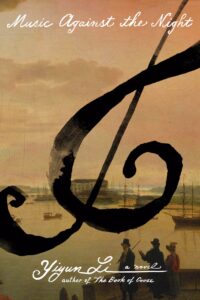 Yiyun Li, Music Against the Night
FSG, October 13
Pulitzer prize-winner Li’s new novel starts in 18th-century Dublin. John Field could be the next Mozart. Meanwhile in Pondicherry, Adelaide Percheron’s only hope of escaping her un-aristocratic life is the pianoforte. The novel follows these two aspiring musicians, who are destined wed, in a story featuring “rival prodigies, irate tutors, begrudging guardians, and the true-to-life masters of the trade,” and along the way explores what it means to live a life fueled by art. Li’s historical fiction is especially vivid, emotionally stirring, and a must read. –EF
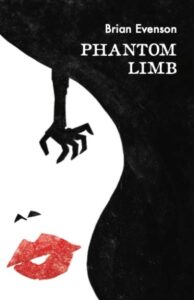 Brian Evenson, Phantom Limb
Coffee House Press, October 13
Last Days is one of the best novels of the century so far, a perfect noir-horror—and now, quite unexpectedly, Evenson returns to his hardboiled detective Kline and the strange mutilation cult he thought he’d finished off. But there has been… another schism and nothing is quite what he’d believed. What ensues is even stranger than what came before, and very very Evenson. –DB
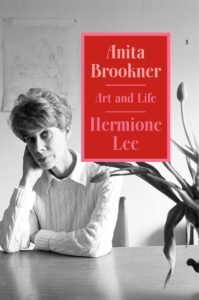 Hermione Lee, Anita Brookner: Art and Life
Knopf, October 13
Dame Hermione Lee is sort of the biography wizard, at least where continental literary citizens are concerned. I adored her close reads of Tom Stoppard and Edith Wharton, and have designs on her Virginia Woolf doorstop. (Someday!) But first, let me pause to geek out about this upcoming Anita Brookner bio. The famously private novelist and art historian behind three of my favorite novels didn’t leave a lot of personal material behind after her death in 2016. But with Dame H on the case, a fresh portrait of the artist—origin story and all—is in the offing. I’m glad for the excuse to revisit two incredible writers for the price of one. –BA
 Wendy S. Walters, A Dead White: An Argument Against White Paint
Scribner, October 13
I loved Walters’s last essay collection, Multiply/Divide (published in 2015, in what seems like a truly different era) and said as much at the time, marveling at her “mode of impressionistic observation that can be both broadly political and deeply personal.” So I am eager to read A Dead White, in which one of our best essayists sets her keen eye to the seeping ubiquity of white paint, from art and architecture to politics and pop culture… What does its constant coloring (or uncoloring) of our lives say about how we see ourselves (or don’t, as the case may be). –JD
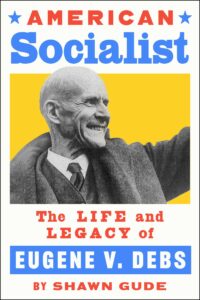 Shawn Gude, American Socialist: The Life and Legacy of Eugene V. Debs
Simon & Schuster, October 13
Socialism is back, baby, and it’s sweeping the nation. A recent Gallop poll found that Democratic voters favor socialism over capitalism 66% to 42%, and DSA candidates just stormed to victory up and down New York City. But before Zohran crushed Cuomo, before AOC ascended, before Bernie ran in Burlington, the godfather of US socialism, Eugene V. Debs was showing Americans that a better world is possible. The man who was handed down a decade-long prison sentence for opposing WWI, and who then received almost one million votes for president from behind bars, deserves a magisterial biography, and Gude’s book certainly looks like one. –DS
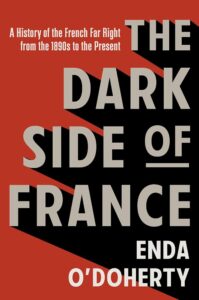 Enda O’Doherty, The Dark Side of France: The History of the French Far Right from the 1890s to the Present
Liveright, October 13
You don’t actually have to dig that deep to reveal the toxic roots of fascism and xenophobia in France: from the antisemitism of the Dreyfus Affair and the fascism of Vichy collaborators, onward to the white nationalism of the Le Pen family and the widespread Islamophobia of the nation’s institutions. O’Doherty mines this grim history showing how quickly “France for the French” can turn into the worst kind of hateful politics. –JD
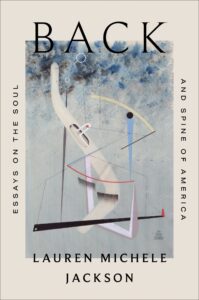 Lauren Michele Jackson, Back: Essays on the Soul and Spine of America
Amistad, October 13
My interest in Lauren Michele Jackson’s brain verges on the parasocial. Every time I see her byline in The New Yorker, where this audacious critic is on staff, I have to stop what I’m doing and go worship for a few grafs. (See also: the Letterboxd reviews; always a pleasure or provocation.)
A Northwestern professor, Jackson’s musings on everything from cultural appropriation to the end of humor tend to scan as rowdy/intellectual. She’s a voicey critic with a mind of her own in an era when this figure is tragically endangered. Her latest collection takes the human back as synecdoche for a suite of subjects, ranging from America’s bodybuilding obsession to Gone With the Wind. Call me seated. –BA
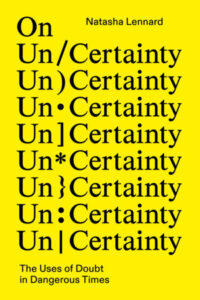 Natasha Lennard, On Un/Certainty: The Uses of Doubt in Dangerous Times
Verso, October 13
Lennard, a public intellectual and critic who teaches at the New School and writes an excellent column for The Intercept, returns with a sophomore essay collection. On Un/Certainty seeks to name and so unseat “pernicious certainty in action,” and call for a different paradigm around the “truths” we take for granted–specifically as they pertain to what pundits are calling the “polycrisis.”
To abet this rangy exploration, Lennard enlists dead philosophers like Wittgenstein, and alive sociologists like Melinda Cooper. But if I’m making the book sound dry, I’ve failed. Lennard’s got a knack for making the heady feel approachable, even to a layperson. This promises to be a most topical intervention for the thinking human. (Bonus: it’s slim enough to take on the subway.) –BA
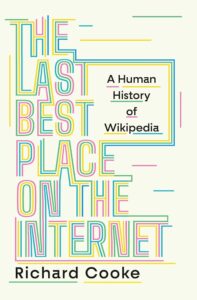 Richard Cooke, The Last Best Place on the Internet: A Human History of Wikipedia
W.W. Norton, October 13
I’m old enough to remember when Wikipedia was decried as an untrustworthy and corrupting outlet of misinformation… Oh how the internet has changed (for the worse). As outlined in Cooke’s lively history of the first digitally crowd-sourced encyclopedia, Wikipedia has evolved into a vital bulwark against the AI-powered bots of the online hellscape, relying on legions of dedicated editors to sift through fact, fiction, rumor, and speculation, creating the largest repository of human knowledge in the history of the world. Let’s just hope it can survive… –JD
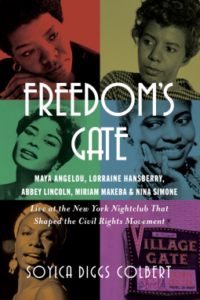 Soyica Diggs Colbert, Freedom’s Gate: Maya Angelou, Lorraine Hansberry, Abbey Lincoln, Miriam Makeba, and Nina Simone Live at the New York Nightclub that Shaped the Civil Rights Movement
W.W. Norton, October 13
If you’ve ever heard a single Nina Simone song, you already understand why learning about her early days as a performer is compelling. But to find out that all of these luminaries developed their craft alongside one another feels more like the stuff of fanfiction than a civil rights history; how fortunate for all of us that it actually happened. –CK
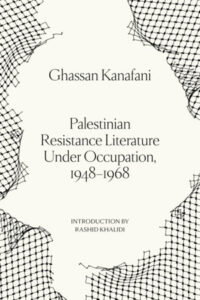 Ghassan Kanafani, Palestinian Resistance Literature Under Occupation, 1948-1968
Verso, October 13
Ghassan Kanafani was a Palestinian resistance writer and revolutionary politician who produced some of the Arab world’s most celebrated works of fiction before he was assassinated by Mossad in 1972. In this seminal extended essay, published in English for the first time, Kanafani expands on his theory of literature as an act of resistance and gives a powerful account of life under Israeli occupation. –DS
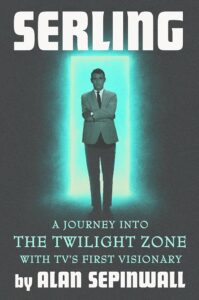 Alan Sepinwall, Serling: A Journey into The Twilight Zone with TV’s First Visionary
Grand Central Publishing, October 13
Serling was a professor at my alma mater long before I was a student there, but his presence still loomed large roughly a half-century after he last graced the premises. So monumental was his cultural impact that, decades later, a college where he once briefly taught was still bragging about having employed him. The original Twilight Zone is probably the oldest TV show that still feels somewhat modern; try watching any other programming from the same time period to see how stark the contrast is. And though the Twilight Zone has been endlessly aped and remade over the years, Serling himself is somewhat less well-chronicled than his counterpart in groundbreaking genre television, Gene Roddenberry. If it’s surprising that it took this long for a “definitive” biography to be written, I expect the wait will be well worth it. –CK
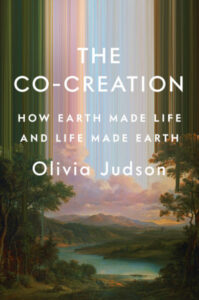 Olivia Judson, The Co-Creation: How Earth Made Life and Life Made Earth
Penguin Press, October 13
With a title destined to enrage America’s good Christians, Judson’s fascinating natural history of the world—and all the life on it—suggests that Earth’s many lifeforms have had a reciprocal impact on the evolution of the planet: insofar as it seems miraculous that the conditions for life manifested on Earth, the resulting lifeforms themselves have in turn changed the very planet that brought them into existence. Divided into historical eras of rock, light, oxygen, flesh, and fire, Judson’s hypothesis offers a new way of thinking about how we got here, what came before, and why the incredible ecosystems that sustain us are so very important. –JD
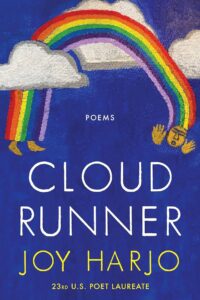 Joy Harjo, Cloud Runner
W.W. Norton October 13
Joy Harjo, one of our great writers and poets, lost her daughter to cancer in 2023. This collection, though it covers a wide range of topics and themes, is a tender and heartbreaking example of how art can help us process grief, that we might at least move forward and carry it with us. From the title poem:
I am Cloud Runner, you whispered, as I rinsed dishes and looked
out the window, the sun flaring dusky gold through our story. I
dried my hands and went outside to read the clouds.
Remember me in my children and their children, you sang.
Remember me in poetry.
Remember me when it rains, when the plants rise up in
green to drink.
Remember me in butterflies.
And then, you were gone. –JD
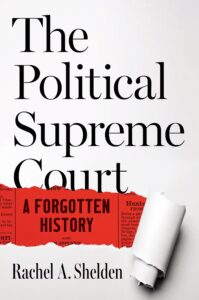 Rachel A. Shelden, The Political Supreme Court: A Forgotten History
UNC Press, October 20
Given the recent actions of the Supreme Court and the possibility that issues like court packing gain more steam in the near future of American politics, this forthcoming history of the Court is especially timely. The facts implied in the title of the book—that the Court and its justices were previously openly political, and the increasingly-thin patina of neutrality was introduced in the 20th century—were new to me, which makes for a promising read. –CK
 Zaina Arafat, Our Arab: On Longing, Belonging, and Hope
Little, Brown, October 20
The author of You Exist Too Much turns her keen eye to the essay in this heart-forward collection, which seeks to diagram a diasporic Palestinian experience up to and during the ongoing genocide. Taking up the question of what it means to be witness, survivor, and victim all at once, these personal essays are frank, earnest, and often wrenching. Certain contributions, like “Angry American Woman” and “Witnessing Gaza Through My Instagram Feed,” hold the moment’s contradictions in a welcome cauldron of rage and nuance. –BA
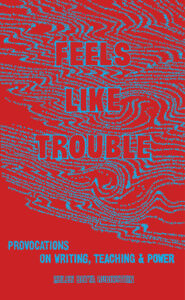 Helen Betya Rubinstein, Feels Like Trouble: Provocations on Writing, Teaching & Power
University of New Orleans Press, October 20
I think writing on writing works best when it forces you to question the methods writers as a group commonly accept as process. In short, I want the kind of discourse we would have included on our What Was Literary Twitter Bracket, especially when the cover design is so slick. –OS
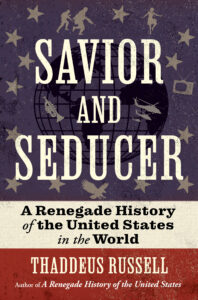 Thaddeus Russell, Savior and Seducer: A Renegade History of the United States in the World
Atlantic Monthly Press, October 20
The never boring Thaddeus Russell, best known for A Renegade History of the United States, is back with a sweeping and provocative account of American Empire, arguing that the export of American culture—the good, the bad, the weird—has had more global impact on human freedom than any of the nation’s overtly imperial designs. For Russell, it is the destabilizing and subversive power of US pop culture that makes and unmakes nations, not the unrivaled power of its massive military. (I don’t know if I agree but what a fun thing to debate!) –JD
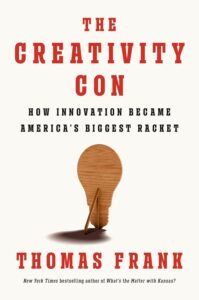 Thomas Frank, The Creativity Con
Penguin Press, October 20
I’m so glad that Thomas Frank has turned his old-fashioned American skeptic’s eye on the “move fast and break things” crowd. Long one of this country’s finest critics of the demography of power, Frank applies his well-earned erudition and acid wit to the endless post-war gallery of conmen and hucksters who’ve used “innovation” as cover for a quick-fix, cliche-ridden approach to progress that siphons wealth from the bottom to the top, and leaves most of us worse off than before. –JD
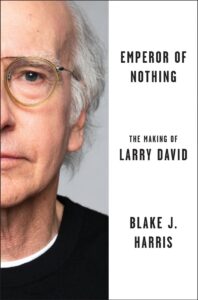 Blake J. Harris, Emperor of Nothing: The Making of Larry David
Dey Street, October 20
Who is Larry David? We all think we know him because we’ve watched his fictionalized self for years on the small screen, saying the wrong things, acting like a selfish asshole… but also really trying to do the right thing in the end. Well, Harris’s authorized biography, based on five years of research and multiple interviews with the man himself (and the people around him) should help us understand where the character stops and the real man begins. (Also, don’t get mad but: Larry David for president? IT COULD BE WORSE.) –JD
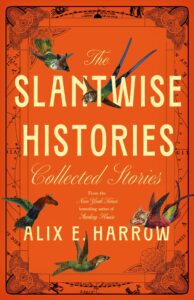 Alix E. Harrow, The Slantwise Histories
Tordotcom, October 20
The author of my favorite novel of 2025 keeps the streak going with her first story collection, which contains some of her best-known stories (like “The Six Deaths of the Saint” and “A Witch’s Guide to Escape: A Practical Compendium of Portal Fantasies”) alongside brand-new tales. Harrow’s imagination dazzles and delights and this collection is no exception. –DB
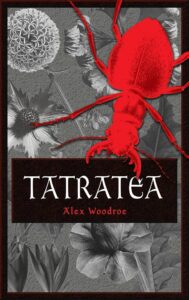 Alex Woodroe, Tatratea
CLASH, October 20
The editor-in-chief of the upstart weird-fiction outlet Tenebrous Press delivers an eco-horror novel for the ages, set in the Transylvanian countryside with Area X-esque flora and a ticking clock. Woodroe’s taste at Tenebrous is unerring; I can’t wait to see how this chills me. –DB
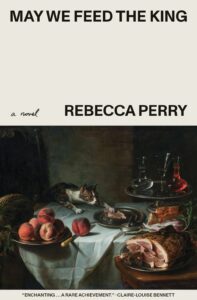 Rebecca Perry, May We Feed the King
Transit Books, October 20
This might be my favorite book of the year? Definitely top three. A curator works on staging a palace with the life of a footnote of a king—and then the novel conjures up, perhaps, that king’s life. A hypnotic novel about obsession, art, history, story… it’s got everything, in a trim and flowing package. I’ll go even further out on a limb and put this in Booker contention, too. –DB
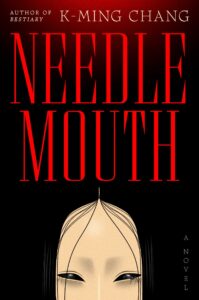 K-Ming Chang, Needlemouth
Simon & Schuster, October 20
New K-Ming Chang!!! I’m so excited for this lush and unsettling girlhood horror novel. When three cousins spend the summer at their grandmother’s unusual old house, they anticipate boredom. What they get instead is a hungry demon who drags them into the demon realm and forces them into a plot to kill a man. Chang is the queen of strange girlhood and I’m personally very grateful for her reign. –MC
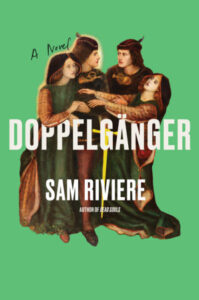 Sam Riviere, Doppelganger
Catapult, October 20
I loved Riviere’s debut novel Dead Souls and have become a tremendous fan of his poetry since. All of that alone makes this an auto-read for me, but this would’ve caught my eye anyway: a near-future campus novel about art students finding themselves doubling one another, intentionally or not, sounds like a tricksy delight. –DB
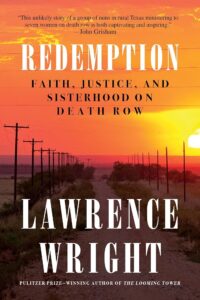 Lawrence Wright, Redemption: Faith, Justice, and Sisterhood
Knopf, October 20
Lawrence Wright is one of the great narrative journalists of our time so it is fitting—and important—that he now turns his attention to one of America’s most urgent moral issues: capital punishment. Writing about the unlikely relationship between a group of nuns and the women on death row at a prison in Gatesville, Texas (the former seeing to the spiritual and emotional needs of the latter) Wright, among other things, reveals the contradictions and injustices at the heart of the American legal system. –JD
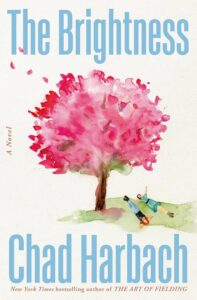 Chad Harbach, The Brightness
Little, Brown, October 27
Gosh, remember when The Art of Fielding was THE Book of 2011? For a whole minute there, Harbach’s luminous debut got me into baseball. (Of all things!) I digress, but fans should note The Brightness is a long-awaited follow up. Harbach’s been cooking this semi-sequel, which returns us to the world of Wisconsin’s Westish College, for fifteen years.
But, plot twist! Rather than the baseball team, The Brightness follows the artsy girls at this tiny liberal arts school as they navigate a tumultuous political climate in 2016. With prose that is characteristically assured, detailed, and wise, this doorstop (brace for 600+ pages, friends) is sure to be the Big Cozy Read of the autumn. You heard it here first. –BA
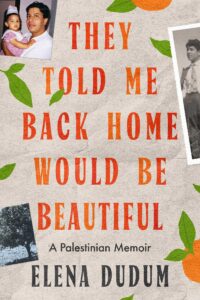 Elena Dudum, They Told Me Back Home Would Be Beautiful: A Palestinian Memoir
Atria/One Signal, October 27
In this thoughtful memoir of the Palestinian diasporic experience Dudum examines her stark awakening, as a second-generation American, to the realities of the Occupation of Palestine. Raised on her father’s stories of a lost Palestinian homeland, Dudum captures the unique pain of seeing the destruction of one’s heritage livestreamed and rendered forever out of reach by the intractable forces of empire. –JD
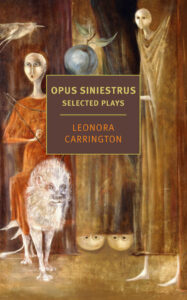 Leonora Carrington, Opus Sinestrus
NYRB Classics, October 27
The Carrington renaissance continues as the NYRB brings yet another work back into print—this time, a collection of Carrington’s surrealist plays. Read more plays! Plays are literature too! –DB
 Yoon Ha Lee, Code and Codex
S&S/Saga Press, October 27
Imagine if Alan Moore wrote The Locked Tomb books and you might start to approach the insane word-drunk joys of Yoon Ha Lee’s latest, about a space-faring empire that functions by using language itself—to change history, to subjugate its people, to lock away a prisoner whose very gaze could send stars supernova. –DB
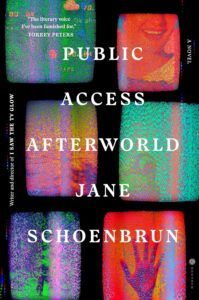 Jane Schoenbrun, Public Access Afterworld
Hogarth, October 27
I’ve been a fan of Jane Schoenbrun’s since their surrealist, allegorical film I Saw The TV Glow blew my Millennial mind last year. Their debut novel appears to pick up where that movie left off, in a realm that may be spiritually familiar to nerdy/queer/suburban latchkey kids who grew up in the 90s, nurtured on Buffy marathons and inchoate yearning.
Following two basement teens who experience an extra-strange analog-to-digital transition—care of the pirate TV network that gives the novel its name—this one looks thrillingly original. And Torrey Peters, one of the novelists I most admire today, compared its genre-bending hijinks to those of David Mitchell. You’ll find me this fall bouncing between this page-based adventure and Schoenbrun’s latest film: the slasher homage, Teenage Sex and Death at Camp Miasma. –BA
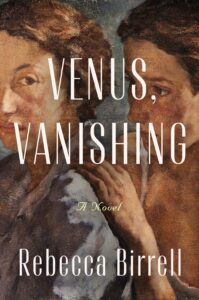 Rebecca Birrell, Venus, Vanishing
Henry Holt and Co., October 27
It’s Berlin in 1929, and Hannah Sherman is leading a subtly revolutionary life: she is not a mother, a wife, or anything close. She’s decided to be an artist, and has left her previous life behind to do it here, in raucous and dynamic Berlin, where she’s allowed to work and exist in the way she longs to. When she is hired to do a series of portraits for a wealthy woman in town, her relationship to her muse, her art, and her name, all begin to merge and shift into something stronger. That feeling is desire, for ambition, for fame, for love: all the things a young woman is told she should never dream of. Other-worldy, compelling, and quietly virtuosic, Venus, Vanishing promises to be a meditation on queer desire, the kernel of artistic ambition in a young woman’s heart, and how to survive one’s own life. –JH
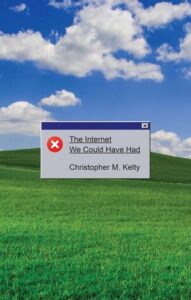 Christopher M. Kelty, The Internet We Could Have Had
Polity, October 27
If you were not a regular internet user prior to the first George W. Bush administration, go find someone who was. Ask them about their time online: the way they communicated with people, the connections they were able to make, and information they were able to find. It was a more primitive technology then, certainly, but it held boundless possibilities. Crucially, far fewer corporations had their hands in what users had access to. It’s not for nostalgia’s sake that I’m looking forward to The Internet We Could Have Had, but for looking at the ways things went wrong and the possibility of carving out a better internet in the future. –CK
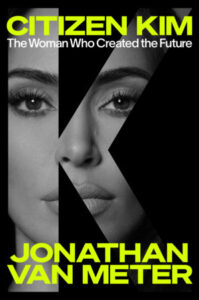 Jonathan Van Meter, Citizen Kim: The Woman Who Created the Future
Viking, October 27
An event for the ages: it’s the official, authorized biography of Kim Kardashian. At this point, we’re all well acquainted with the name Kim Kardashian and the various current-day businesses and media ventures she’s involved in—there sure is a lot of footage! But for the first time, we’re treated to the journalist’s gaze on the comprehensive, meaty backstory of the Kardashians, without the filter of their Kardashian-produced television show and social media posts. Citizen Kim reveals the full context of the Los Angeles that Kim and her siblings grew up within, and the myriad, juicy-as-hell controversies and dramas to which they were at times central, and at other times, tertiary. It wasn’t their choice that their father was embroiled in the biggest murder trial the world has ever known; it wasn’t their doing that their mother had affairs, and married America’s favorite athlete who then later transitioned. The drama has followed them, and then they started following the drama. The biography is fascinating and immersive: it’s best-case scenario, combining behind-the-scenes conversations with the woman who has masterminded her own jaw-dropping success with an objective look at the world that made her. –JH