5 Book Reviews You Need to Read This Week
“The truth about Life of M is that the book isn’t really about Natalie Portman at all.”
Our quintet of quality reviews this week includes Lauren LeBlanc on Téa Obreht’s Sunrise, Jane Hu on Chang-Rae Lee’s A Tender Age, Stephanie Burt on Marlon James’s The Disappearers, Laura Miller on Rachel Cusk’s Life of M, and Julia Case-Levine on Daniel Poppick’s The Copywriter.
Brought to you by Book Marks, Lit Hub’s home for book reviews.
*
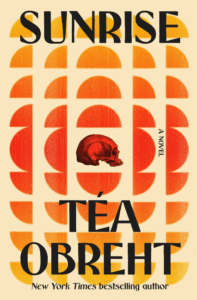
“Obreht flexes her skills as a literary writer who deploys a thriller’s pacing, the vivid description crucial for realistic historical fiction, and the steady, calm voice of a central narrator, our entry point into a multifaceted tale of abuse and generational trauma. Much of this country was founded by men who seized fortunes at any cost, and we find it hard to shake the lasting repercussions of those actions. As a conniving man states to a dying gunman late in the novel, ‘Inheritance…is a matter of spirit.’
Obreht is a writer who doesn’t rush into easy patterns of storytelling but seizes control from the jump. Sunrise begins with a plane crash in 2024. Rather than build up to an intense moment like this, Obreht opens the novel with a catastrophe. It’s a bold choice; after the fact, she must establish character, stakes, backstory, and the connective tissue of all these elements. She earns our confidence with flinty characters who escape easy moral stances. She is a writer who asks the reader to follow a complex examination of the truth through overlapping narratives: a survival narrative, a historical novel, an interview transcription. Confronted with loose ends, she asks herself what these desperate characters are searching for: ‘Peace, relief, rest?’ Beyond glory or gold, Obreht mines a tale about legacies of betrayal in the American West to discover what’s truly at the heart of western expansion.
…
“What may feel like a puzzle in these pages is in many ways an accordion. Obreht allows the stories of both the past and the present to speak for themselves as connections surface throughout the course of the book. We see how the crimes committed in one moment overlap with those of a later time. Women’s voices are overlooked and dismissed. Men barrel ahead, truth be damned, in accordance with what they see as a larger goal—power, status, money, authority. And it’s control that remains elusive for the men in Obreht’s novels. Hers are often broken, disappointed men, some facing death. Each struggles to see beyond his own concerns and petty grievances. And it’s generally a woman who attempts to set the story straight. It’s a thankless task.
But isn’t that so often the fate of the novelist? To reconcile the past through the guise of a story? Obreht distinguishes herself as a spellbinding writer who recognizes the ways that mythologies bend the truth to dazzle us with stories that capture a larger history. Sunrise is a blistering look at the mythologies we just can’t shake. Far be it from me to ever underestimate the pull of Western tales again.”
–Lauren LeBlanc on Téa Obreht’s Sunrise (Alta)
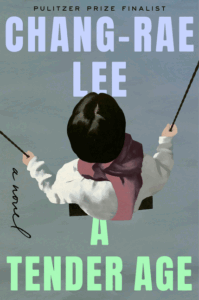
“Whereas Lee’s prior novels are largely transnational in scope, A Tender Age is a far more insular affair. In some ways, the book feels like a return to Native Speaker, in that it emphasizes the American of Korean American assimilation. The young age of Lee’s protagonist further limits the range of experience. Much of the novel is set in playgrounds and apartment courtyards, juvenile intervention meetings, and, finally, the Christian Korean summer camp to which Jeon-Gi’s parents send him in a final attempt at rehabilitation. These contained spaces function as microcosms of the broader social world, controlled theaters for children to play out the dramas of adulthood. But they’re also powder kegs, where even the slightest shift in mood or atmosphere might prove disastrous.
Lee’s novels often end with an abrupt instance of violence, working like a release valve for narrative pressure. And as Jeon-Gi’s time at summer camp unfolds, the reader is made persistently aware of some fatal crisis to come. It’s a testament to Lee’s craft that, despite such frequent and furious foreshadowing, the actual event still arrives as a shock. I had to read the scene a few times over to make sure I understood what was happening.
…
“The pathos of A Tender Age lies in its young protagonist’s waning ability to hold the realities of the adult world at bay. When the novel begins, Jeon-Gi is already middle-aged—his own children having recently left home—though his narration rarely strays from that delicate year leading up to his 11th birthday. What seems to make this age so tender, for Jeon-Gi, is the malleability of the self, the rawness of experience and seemingly endless capacity to be wounded. ‘I still think about those times,’ he reflects, ‘more often than makes any sense in the wider context of my life.’ For most of the book, Jeon-Gi’s first-person voice remains suspended in the uneasy space of his childhood consciousness, re-enacting the uncertainty and confusion of adolescence.
Looking back, the aging Jeon-Gi seems to encounter his past as a distant land, and his younger self as a kind of uncanny stranger. He confesses that his 10-year-old self existed as a kind of cipher, trying on different personas through a steady drip of small, seemingly inconsequential lies. At camp, he recounts, the fibbing ‘went on and on, so much so that it became a tic, a compulsion from deep within me that was bent on dark invention.’
In this way, the novel is an exploration of a theme threading through all of Lee’s books: that people, especially the displaced children of immigrants, often look to find versions of themselves in other people. Lee shows how a young boy’s search for how an immigrant should be can easily slip into the uneasy terrain of projection and overidentification—especially, and often hazardously, through the channels of fiction.”
–Jane Hu on Chang-Rae Lee’s A Tender Age (The New York Times Book Review)
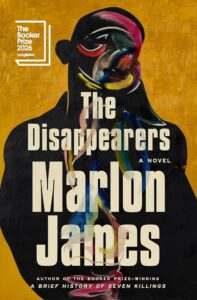
“Brief History looks at power in a place of violence and examines what secrets it hides. Now James has written a book about people whose whole lives feel like secrets. And he has a thesis: Those who grow up learning that they are bad and do not deserve to exist—people who might get raped, maimed, or murdered for trying to be themselves—almost inevitably organize their life around attempts to disappear, escape, or else retreat to the margins, becoming (like Eddy) figures who observe others, themselves unseen, or (like Jordan) agents of vengeance who stick to the shadows.
…
“Like Brief History, The Disappearers offers a big, modernist assemblage of contrasting styles, personas, and points of view. It, too, is a work of classic realism, touring the social layers in a changing Kingston as its characters earn and lose money, rise and fall. But unlike Brief History, which includes gay characters but mostly isn’t about them, The Disappearers also belongs with those earlier chronicles of gay America that Jordan and Eddy name-check, especially John Rechy’s The Sexual Outlaw. And so it’s full of gay sex: ecstatic, conflicted, reluctant, a desperate secret or an open secret. James acknowledges occasions of sweet, mutual, that’s-how-it-should-be sex—but those happen largely offstage. Most of the on-page couplings instead mix, alarmingly, sex with violence. Some people seek humiliation; some want to inflict it. Some get hurt by their tricks. James manages not to kink-shame anyone, but he’s less interested in kink education than in displaying a sexual world where every hookup comes with scary risks: assault and battery, for example, or public exposure, or HIV in the age before retrovirals. Living in fear of ‘the AIDS’ entails its own ‘long set of disappearing acts’—not just sickness and death, but shame and denial and an inability to mourn.
…
“The novel opens up many pleasures for literary readers, in its pacing, in its observations, and especially in the ventriloquism of Havelock’s old-school prose (he even writes one letter in the obsolescent gay slang Polari). But it’s not, mostly, a book about pleasure: These lives are often—realistically—scary or sad. We should not label them tragedies, though, because that implies a controlling divinity, or at least a fixed fate. As Havelock insists, ‘We need to stop calling atrocities tragic.’ The Disappearers is, among other things, one novel responding to many atrocities.
…
“The Disappearers ends up as a violence-driven protest, a scream of rage—like Nirvana’s final album—against a world that keeps trying to kill people like him and then pretends that they asked for it, or that they never existed. The novel is a superbly fashioned instrument for showing what felt wrong, what went wrong, in Jamaica in the late 1980s and ’90s, and what’s still wrong in other places, too, where people who grow up marginalized get blamed for their own persecution, or else celebrated as brave exceptions when, against the odds, they succeed.”
–Stephanie Burt on Marlon James’ The Disappearers (The Atlantic)

“Do you want to know the real scuttlebutt about Natalie Portman and Rachel Cusk’s new novel, Life of M, the book that is supposedly based on Portman herself? You can read about the ‘uncanny’ similarities between Portman and Cusk’s title character, M, all over the internet, and about how the novel apparently amounts to a ‘literary assassination,’ so I won’t summarize those points here. Since the rumors about M’s inspiration have made their way from publishing-circle dinner parties to online hearsay, commenters have barely been able to contain their thrilled titillation over the idea that an acclaimed novelist is dishing the dirt on her movie-star friend, a supporter who has previously recommended Cusk’s titles. But, for those hungry for juicy morsels of gossip within the pages of the novel, I have disappointing news: The truth about Life of M is that the book isn’t really about Natalie Portman at all.
…
“Until the final chapter of the novel, M and the narrator won’t meet again. Instead, Life of M alternates between scenes from the lives of both the narrator and ‘M.’ That’s ‘M’ in quotes because by the time the reader gets to that last chapter, it has become increasingly apparent that the passages describing M’s life are, for the most part, mere speculation on the narrator’s part. After the first chapter, the narration switches from first-person singular to first-person plural, as the narrator moves through obsessions familiar to readers of Cusk’s previous novels: frustration over the inauthenticity of contemporary life, the instability of identity, and a sort of neurasthenic aestheticism that makes simple activities like going to a museum distressing if the other visitors respond to the art in a too-boisterous manner.
…
“The narrator of Life of M mostly seems interested in M’s hopeless desire to make contact with ‘reality,’ her unsureness about who she truly is, the impossibility of ‘sincerity,’ and her abiding sense that she is mere performing herself. Anyone who prides herself on the refinement of her taste as much as Cusk does would know that making observations like these about an actor is banal, as is a line comparing M’s home in the city to a ‘big doll house, with her as the doll inside it.’ And anyone who has read even a little of Cusk’s previous work will recognize that these concerns map suspiciously closely to Cusk’s own preoccupations with artificiality.
…
“Life of M is a narrative hall of mirrors that only a fool would confuse with a thinly veiled roman à clef about a celebrity. To my mind, only one true mystery remains: Was Portman in on it? Is she just pretending to be offended for a lark, or in a bid to drive interest in her friend’s book? As of this writing, neither woman has made a public statement on the matter, but I’m not sure if we can believe either one of them when they do.”
–Laura Miller on Rachel Cusk’s Life of M (Slate)
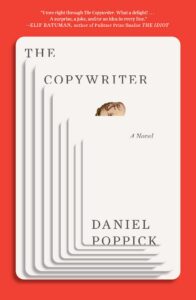
“‘Money is a kind of poetry,’ Wallace Stevens, the insurance executive better known as a poet, once wrote. As metaphors, money and poetry might be improbably alike; they can both transform one thing (time) into something else (a hairclip, a frozen lake). But for Stevens, maybe this equation had a special import. How could someone who wrote that he had ‘no life except in poetry’ explain the incongruous fact that he spent most of his day parsing surety, risk, and fidelity bonds? Another way to ask this question: If most American poets are required to work at another job (such is the condition of an economy that assigns poetry almost no market value), what tools can be marshaled to make that situation tenable—what fantasies get us through the day?
…
“Stevens never wrote about his work, giving the impression of its ephemerality and unrelatedness, as if it were completed in a vacuum-sealed container and excised from his inner life. And yet the office—its smells and politics, its grievances petty, existential, or edifying—must have made an impression. Perhaps Stevens chose to locate those conflicts elsewhere, in a snowy field. Poppick takes a different approach: The Copywriter is part office satire but also part poetics of absurdity, making use of the corporate world’s vacuous jargon and ugly furniture. The question becomes: What can poetry do to transform or remake the dull day job—to make it bearable, make it interesting, or simply make it mean something else?
…
“It’s not that D__’s poetry is equivalent to his copywriting, but that they have something important in common. And if D__ understands his presence at work to be a form of playing pretend, his writing suggests that the division between art and work might not quite hold up. More unnerving than the requirement to perform a false self at work may be the knowledge that we carry something of ourselves between places, that the choices we make in one arena of our life will eventually affect our expression in another. The day job is never just a day job.”
…
“And yet this moment also suggests the ways in which money and poetry are not alike. If corporate work asks us to conflate ourselves with our job, to merge our ambitions and standards with those of the office, poetry urges us to take this situation less literally, to ask: What else could this be? What could be substituted for it? And what does that look like, sound like? It’s the poet, not the good employee, who imagines a way to wriggle out of a tricky bind. Which is to say, when it comes to money and poetry’s likeness, a line of verse can do what a line of credit does not: It can make the normal relation between things less standard. It can create the distance necessary to look again, and to respond to the circumstances of our life in our own language. To make the next word not the obvious link but one that undoes the sentence, clearing the path for something else on its way.”
–Julia Case-Levine on Daniel Poppick’s The Copywriter (The Nation)

Book Marks
Visit Book Marks, Lit Hub's home for book reviews, at https://bookmarks.reviews/ or on social media at @bookmarksreads.