Lit Hub’s Most Anticipated Books of 2026, Part Two
258 Books We're Looking Forward to Before the End of the Year
SEPTEMBER
***
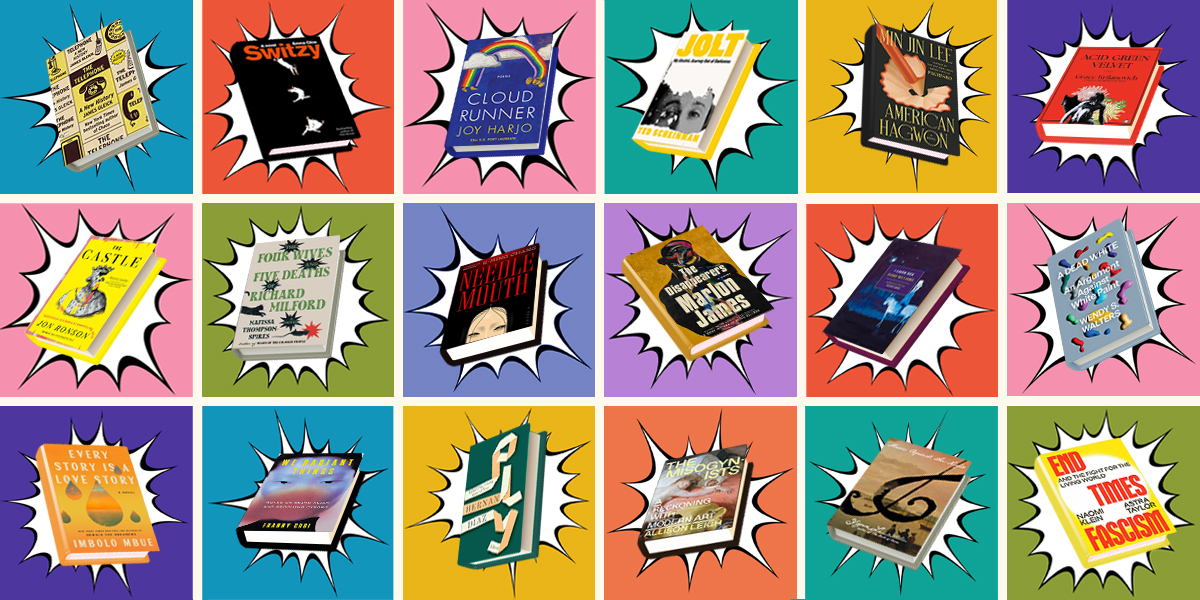
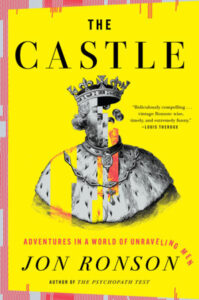 Jon Ronson, The Castle: Adventures in a World of Unraveling Men
Riverhead September 1
I think Jon Ronson’s So You’ve Been Publicly Shamed is one of the defining texts to explain the 2010s—and I’ve been waiting to see where his puckish explorations would go next. Turns out, he’s ready to tackle one of the defining crises of our era: what’s up with the men? And while I can’t imagine a concise answer or a particularly soothing one, I’ll bet whatever Ronson digs up will be worth the ride. –DB
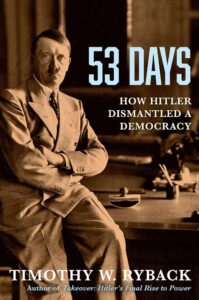 Timothy W. Ryback, 53 Days: How Hitler Dismantled a Democracy
Atlantic Monthly Press, September 1
If you think the second term of Donald Trump has been a dizzying violation of American norms, may we refer you to Germany in 1933 and the eponymous 53 days? As we learn from lauded historian Ryback, immediately upon becoming chancellor Hitler set about destroying the free press, stuffing as many Nazis as possible into the civil service, imposing tariffs on trading partners, demonizing the marginalized, and attacking the judiciary. And it worked. (Sounds familiar, right?) –JD
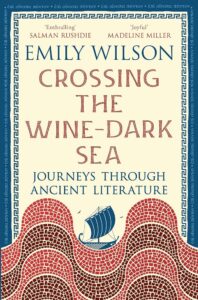 Emily Wilson, Crossing the Wine-Dark Sea: Journeys Through Ancient Literature
Liveright, September 1
The latest book from the pre-eminent classics scholar Wilson—a MacArthur and Guggenheim Fellow whose bestselling translation of the Odyssey has converted many to the pleasures of the Greek epic—explores both the world of ancient literature the contemporary translator’s craft. Read it after you go see the Christopher Nolan movie? –ET
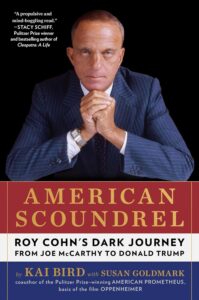 Kai Bird, American Scoundrel: Roy Cohn’s Dark Journey From Joe McCarthy to Donald Trump
Scribner, September 1
You may remember Kai Bird from his gargantuan, Pulitzer Prize-winning 2005 biography of Robert Oppenheimer, American Prometheus, which served as the inspiration for one half of Barbenheimer back in 2023. Bird’s latest doorstopper is a biography of the notorious lawyer, fixer, Donald Trump mentor, and “Zelig of the dark side,” Roy Cohn, whose malign influence on American political life stretched for more than 30 years. –DS
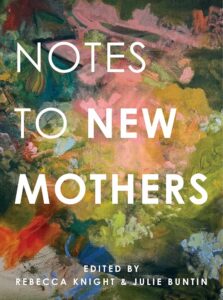 Julie Buntin & Rebecca Knight, eds., Notes to New Mothers
W.W. Norton, September 1
There is nothing more lovely, terrifying, exhilarating, and lonely than new motherhood. In this collection of sixty-five letters, your favorite writers and artists share stories of breastfeeding, career shifts, victories, and insecurities. The anthology features pieces from Julia Phillips, Kirstin Valdez Quade, Liana Finck, Jenny Slate, Naima Coster, and Lit Hub’s own Emily Temple. What a perfect opportunity to revel in the “singular and communal experience” of loving a new human. –EF
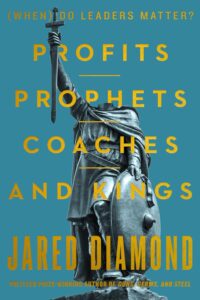 Jared Diamond, Profits, Prophets, Coaches, and Kings: (When) Do Leaders Matter?
Mariner Books, September 1
Diamond, author of the Pulitzer Prize-winning bestseller Guns, Germs and Steel, is back with a study of leadership which seeks to answer the question: can one person truly change the world—for good or ill? I’m almost afraid to find out. –ET
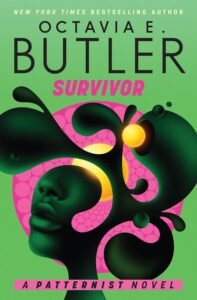 Octavia Butler, Survivor
Grand Central Publishing, September 1
Butler called this installment in her Patternmaster series “my Star Trek novel” [derogatory] and had it taken out of print during her lifetime. There’s absolutely a question of whether or not we should be getting it back, seemingly against the late author’s wishes, but honestly, I cannot wait to read it as I have been trying to find a copy (that doesn’t cost hundreds of dollars) for almost twenty years. –DB
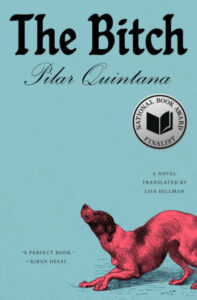 Pilar Quintana, The Bitch
Riverhead, September 1
Like most people, I’m a sucker for stories about humans who find some kind of fulfillment through caring for an animal, but The Bitch also centers on questions of womanhood, motherhood, and a very specific kind of loneliness and isolation. I also love a book under 200 pages, especially when it seems poised to pack so much substance into something so small. –OS
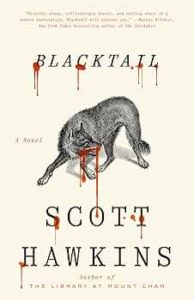 Scott Hawkins, Blacktail
Crown, September 1
There’s a true IYKYK cult following around Hawkins and his decade-old debut novel, The Library at Mount Char, and the cult’s only going to grow with this long-awaited follow-up. It’s the story of a wolf journeying to meet a god, across a very human landscape—and it’s going to change how you think about animals, I guarantee it. –DB
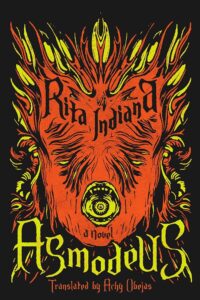 Rita Indiana, tr. Achy Obejas, Asmodeus
Graywolf, September 1
I love a demon novel, especially one that hops point of view. One that’s written by Rita Indiana, taking us along for a demonic ride through Santo Domingo? Fist-pumping rock-and-roll, baby, let’s go. –DB
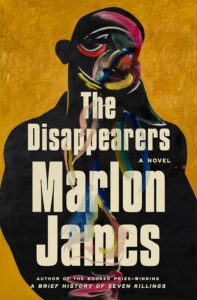 Marlon James, The Disappearers
Riverhead, September 1
Marlon James wowed the world with a previous opus: A Brief History of Seven Killings. His forthcoming novel looks about as ambitious as that Booker winner. Set in the late 80s in Jamaica, The Disappearers follows a group of eight queer actors who are attacked by a savage mob during play rehearsals. I’m alarmed but intrigued, and more than prepared to follow the man known for his incisive social critique, formidable language play, and breathtaking sense of scope back to a pre-Y2K Caribbean. –BA
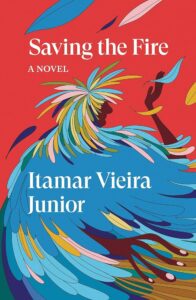 Itamar Vieira Junior, tr. Johnny Lorenz, Saving the Fire
Verso, September 1
Village rumors, religious hypocrisy, and family secrets rank high when it comes to themes I want to read about, and Saving the Fire weaves all of that together with histories of colonization that can’t be separated from nation-states and the people who live in them. –OS
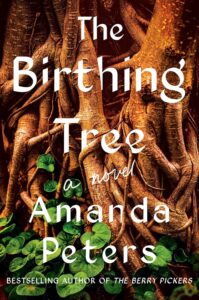 Amanda Peters, The Birthing Tree
Catapult, September 1
On the heels of her wildly successful The Berry Pickers, Amanda Peters is already back to deliver another grounded, glimmering, earthy yet mystical novel. The Birthing Tree is about family, heritage, and the potency of magic and meaning laced into the land. It revolves around a woman named Aliet, a descendant of the Mi’kmaq women who is destined to continue the tradition of Indigenous midwifery that her foremothers engrained in her—until the tradition and her community are ripped apart by prejudice and controversy. Aliet’s life veers down a different path, until years later, she returns home and begins piecing the puzzle of her life back together. Sure to be another satisfying stunner, The Birthing Tree will enchant readers with its resplendent portrait of heritage, tradition, and home. –JH
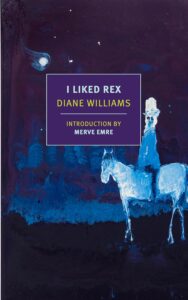 Diane Williams, I Liked Rex
NYRB Classics, September 1
As a huge fan of flash fiction (super short fiction, partway between a story and a prose poem), I’m beyond excited for a new Diane Williams collection! Her stories are little shards of magic, her pieces etched into glass rather than scribbled on paper. Having a copy of I Liked Rex on your bookshelf is a surefire way to impress all your coolest and most literary friends. –MC
 Emily Skaja, Black Lake
Graywolf, September 1
I was a big fan of Skaja’s furious, glorious Brute, a collection, ultimately about rage. Her latest book, seven years later, is instead about grief: about miscarriage, darkness, and despair. But I’d follow her anywhere, and certainly into the abyss. –ET
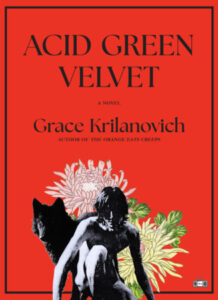 Grace Krilanovich, Acid Green Velvet
Two Dollar Radio, September 1
As highlighted in our first half preview: I was a huge fan of Grace Krilanovich’s bizarro vampire novel The Orange Eats Creeps when it was published in 2010. I kind of can’t believe it’s been over 15 years since then (vampires indeed), but she is finally back with a second novel. I know absolutely nothing about it, but I am lying ravenously in wait. –ET
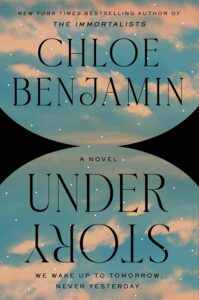 Chloe Benjamin, Under Story
Putnam, September 1
Benjamin’s third book, her first since her bestselling The Immortalists, is an ambitious, heady novel about parenthood, time, and grief. In it, two people attempt to find a way to turn back time after unimaginable tragedy, and find themselves in a curious mirror world, mysteriously connected to yet cut off from the one they left. This is intentionally vague, because there’s a lot going on in this novel, and it’s all best encountered in the reading, not in the reviewing. But I’ll say this: Under Story is a big swing from a talented writer, and I absolutely love to see it. –ET
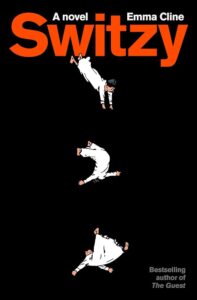 Emma Cline, Switzy
Random House, September 8
Switzy has all the markings of another cool-as-a-cucumber Emma Cline novel. The Guest inaugurated the decisive beginning of her foray into the spare, distanced prose that she continues in spades here: the book begins with a man gliding through the air in his private plane. There is little he understands, few things he knows for sure. He can no longer recognize his handwriting, he can’t remember the small moments of his day, but he knows his final destination, on this trip, in his life, is Zurich. Cline can always be counted on to deliver a sharp portrait of an uneasy mind; Switzy promises to be incisive, empathetic, and searing as it burrows into the last moments of a man suddenly coming to terms with mortality and consequence. –JH
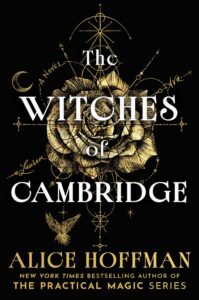 Alice Hoffman, The Witches of Cambridge
Scribner, September 8
Coming out the same week as Practical Magic 2, the great Alice Hoffman kicks off a brand-new witchy series: this time, taking us to Radcliffe and a secret society of witches in the 1950s. This is so deeply my kind of comfort reading and I cannot wait. –DB
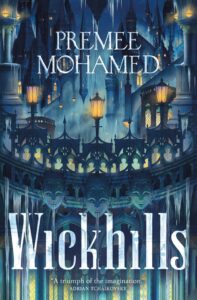 Premee Mohamed, Wickhills
Tor, September 8
One of the absolute best secondary-world fantasy writers working right now, a new Premee Mohamed book is not to be missed. Her latest novel sounds like a fantasy le Carré joint, with defecting scientists and shady intelligence agencies alongside apocalyptic magic. –DB
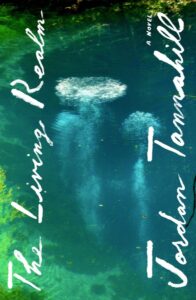 Jordan Tannahill, The Living Realm
FSG, September 8
I met Tannahill as a playwright first. The Canadian writer/director landed on my radar last year, when I got to catch the riveting, vulnerable Prince F*ggot in New York. That play imagined a near future where an openly gay man sits on the British throne. This novel follows a British archaeologist who may or may not cruise his dead ex-lover(s) at a magical forest on the outskirts of Berlin.
We applaud a project this inventive about queer desire across space and time. And if Tannahill’s theatrical work is anything to go by, readers can expect a poetic, sumptuous sensibility. –BA
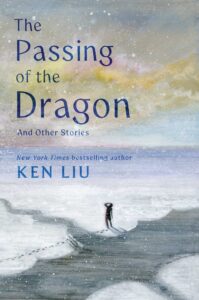 Ken Liu, The Passing of the Dragon and Other Stories
S&S/Saga Press, September 8
Nebula, Hugo, and World Fantasy Award-winning writer and translator Ken Liu’s The Paper Menagerie was one of our favorite short story collections of the last decade; his latest is sure to hold more strange and stirring delights. –ET
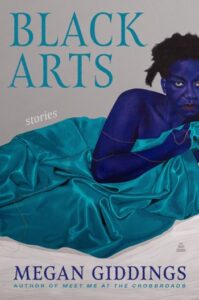 Megan Giddings, Black Arts
Amistad, September 8
Giddings is one of our great living speculative fiction writers. Her novel Lakewood explored America’s history of medical racism through the form of a dystopian, psychological thriller. Stories in her forthcoming collection likewise promise to pair the supernatural with the dismally real in fresh, lucid prose. Longing is on the thematic menu this time. Readers are told to expect husbands that fall apart and ghosts that seduce. (Yikes; yay!) –BA
 Samuel Stein, A Right to Housing?
Verso, September 8
It should come as a surprise to no one that the cost of housing has far outpaced growth in wages since 2000—it’s nothing short of an economic catastrophe for the idea of an American middle class. So, how can we unravel a tangled system that exists at local, state, and federal levels? Stein, a policy researcher and housing advocate writing in the wake of Zohran Mamdani’s historic political victory, has some worthwhile ideas, both practical and aspirational. –JD
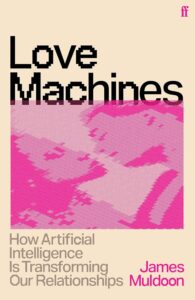 James Muldoon, Love Machines: How Artificial Intelligence is Transforming our Relationships
Faber US, September 8
Like anyone with a soul, I hate AI. I hate every single thing about it, and I think less of you if you use it. I do, however, feel genuine sympathy for anyone us so beaten down or isolated by the techno-curdling of modern society that they turn to large language models as replacements for core human relationships—AI friends, lovers, therapists, and even children. James Muldoon’s “journey to the frontier of human-computer interaction” explores these new forms of love, intimacy, and companionship, and ponders what social conditions gave birth to this brave new world. –DS
 Saul Williams, Songs My Mother Taught Me: Why the Artist Must Take Sides
Haymarket, September 8
Saul Williams has been one of the strongest and most consistent voices calling out the Israeli genocide in Palestine, calling out the overreach of imperial America, calling out injustice wherever it may be found. He’s a sterling example of why an artist can, should—and even must—take sides, so I can’t wait to see how he distills that energy here. (Plus, the polymath has a new album out at the end of August! A killer time to be a fan of Mr. Tardust.) –DB
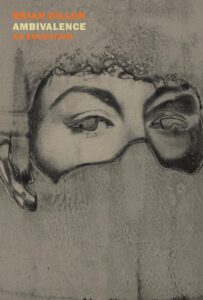 Brian Dillon, Ambivalence: An Education
New York Review Books, September 8
I love the way Brian Dillon’s mind works, especially the way he thinks about language and about art. In his latest book, a memoir, I am looking forward to discovering how he thinks about himself, and how he came to the literary life. –ET
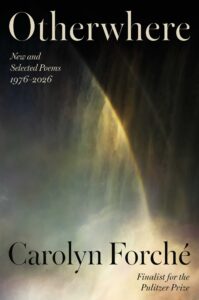 Carolyn Forché, Otherwhere: New and Selected Poems 1976-2026
Scribner, September 8
A half-century of Carolyn Forché’s best poems—gathered here, with some brand new work—is reason to celebrate, and definitely something to look forward to. –JD
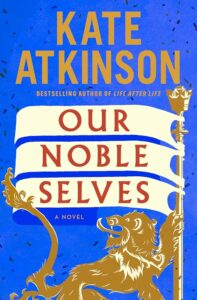 Kate Atkinson, Our Noble Selves
Doubleday, September 15
Harry Flynn returns to Britian in 1945, leaving his war-correspondent role behind for an “ordinary life” with “the Festival of Britain,” a summer carnival aimed at celebrating the nation’s creativity, grit, and ingenuity. But when a woman goes missing, Flynn seems to be the likely culprit, even possibly a murderer. Atkinson is a brilliant historical novelist, with the ability not only to juggle a large cast of characters but also to take the temperature of an entire nation – a country reconstructing its identity in the aftermath of war. –EF
 Kate Zambreno, Foam
Semiotext(e), September 15
Kate Zambreno continues their form-defying, genre-exploding career with what sounds like… well, if Kate Zambreno wrote an Ali Smith novel? Inspired by the art of Eva Hesse (and potentially featuring a great many Eva Hesses), strap in for a brilliantly strange time. –DB
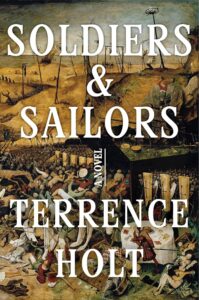 Terrence Holt, Soldiers & Sailors
Liveright, September 15
Maybe I’ve been reading too much mid-century literary criticism, but I feel like a flourishing society needs to produce a certain amount of lush, harrowing fiction about the horrors of war and their devastating aftermaths. Holt is also a medical doctor, which is a (surprisingly robust) sub-category of writers whose work is always made richer for their professional knowledge and experience. In our current era of rising global fascism, it’s good to return to the memory of WWII and remember how that tide has turned back before—and how what remained unfinished after the war has led us to where we are today. –CK
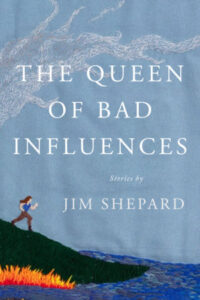 Jim Shepard, The Queen of Bad Influences
Knopf, September 15
Catastrophe fiction isn’t all doom. At its best, it reminds us not only of humanity’s flaws, but also virtues like love, community, and friendship. As these stories span entirely different times and places, and they remind us of how we fail, but also what we can do to fix our mistakes. –OS
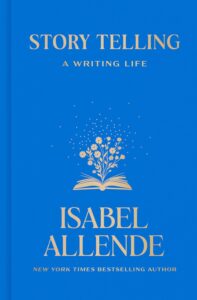 Isabel Allende, Story Telling: A Writing Life
Ballantine, September 15
There is no single way to be a writer: everyone who takes up the craft, for better or worse, has their own daily approach, their own unlikely motivations, and their own weird little quirks, all of it in aid of getting words on the page. Which is why Isabel Allende’s memoir-cum-craft book, Storytelling, is so valuable as a craft-adjacent work: it’s neither proscriptive nor didactic, it shows rather than tells, gifting us with the story of how one great writer happened to make her art. –JD
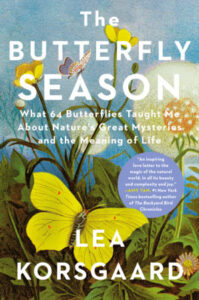 Lea Korsgaard, tr. Sherilyn Nicolette Hellberg, The Butterfly Season: What 64 Butterflies Taught Me about Nature’s Great Mysteries and the Meaning of Life
Knopf, September 15
There’s something so satisfying about a quest memoir, particularly one that blends personal and nature writing. Lea Korsgaard’s story of tracking every native butterfly species in Denmark (despite having no background in lepidopterology) was a number-one best-seller there, and I look forward to discovering what struck such a chord. –JG
 Elizabeth Alexander, Signals Across Vast Distances: Essays and Tales
W.W. Norton, September 15
From examinations of works by June Jordan and Audre Lorde to Alexander’s own experiences of family and creation, these essays center on what we can draw from art and community and how we can use those resources at the service of action and seeking truth. –OS
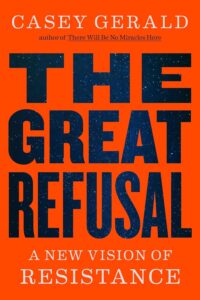 Casey Gerald, The Great Refusal: A New Vision of Resistance
Little, Brown, September 15
Americans know something has gone badly wrong. They might blame different people, and have differing ideas on how to fix it, but we all know things are bad. So too does acclaimed memoirist Gerald, who has written an urgent and lyrical call to resistance, an observed manifesto of sorts that sets out his own deeply personal reflections on surviving the day-to-day of this darkest timeline, while also making space for dreaming of a better world to come. –JD
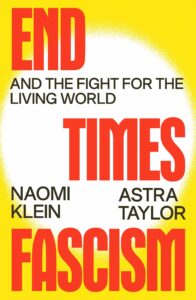 Naomi Klein and Astra Taylor, End Times Fascism: And the Fight for the Living World
FSG, September 15
These two public intellectuals have been some of my guiding stars over the past six years. Klein is a sharp, elegant thinker with deep insight into our current polycrisis. And Taylor, as an organizer, filmmaker, and author, offers a beautiful model for how we can put political education into direct action (and art). They’ve respectively tackled in print the rise of conspiracy theories, debt as an economic structure, the ethics of solidarity, and the psychological origins of reactionary politics. I can’t think of better wizards to weigh in on the subject of end times fascism. (Especially: how we survive it.) –BA
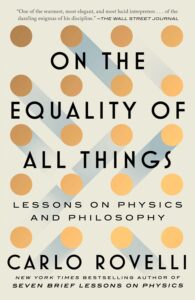 Carlo Rovelli, tr. Simon Carnell, On the Equality of All Things: Physics and Philosophy
Scribner, September 15
Physicist-philosopher Carlo Rovelli (aka the thinking man’s Neil deGrasse Tyson) has long been a thoughtful, ego-less popularizer of profound things, applying a deep knowledge of the very small (quantum physics) and the very large (the origins of the universe) to the meaning of human existence. But as our observed understanding of the universe changes, so too must we reexamine our place in it, as Rovelli undertakes in this latest book. –JD
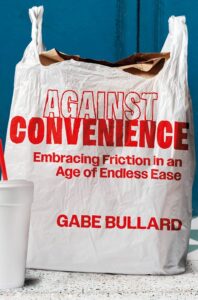 Gabe Bullard, Against Convenience: Embracing Friction in an Age of Endless Ease
Hanover Square Press, September 15
The title of this book is pretty close to my personal these days, so I’m extra excited to read someone else’s carefully considered arguments about why inconvenience is an essential part of the human condition so I can spout the off the next time someone tells me how much ChatGPT helps them tell their kids bedtime stories/find the best place to get a sandwich/write a deeply embarrassing LinkedIn post. (Yes, I’m insufferable!) –JG
 Susan Neiman, Call It Evil: Understanding the Trump Era
W.W. Norton, September 15
Possibly the best book title of 2026, I couldn’t agree more with philosopher Susan Neiman’s rehabilitation of the word evil, a very useful and necessary descriptor for the times we are living through. Setting millennia of moral philosophy against the livestreamed degradations of the 21st century, Neiman calls it as she sees it, and in so doing traces the dark path that has led us to this evil moment in history. –JD
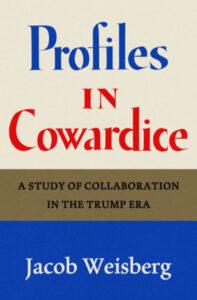 Jacob Weisberg, Profiles in Cowardice: A Study of Collaboration in the Trump Era
Penguin Press, September 15
I’ve long been an advocate for bringing the term “collaborator” back as the dirtiest of epithets so I was happy to see this book’s subtitle, “A Study of Collaboration in the Trump Era.” And this is no cataloguing of the usual suspects, all those camera-hungry grifters who occupy the swampier nether regions of the far right ecosystem; rather, Weisberg looks closely at the rich and powerful Americans who should know better—Jeff Bezos, Stephen Schwarzman, Brad Karp—but have acted out of pure self-interest in abetting a corrupt and senescent authoritarian. These are the real collaborators in the decline and fall of American democracy, and they should wear that label forever. –JD
 Emily St. John Mandel, Exit Party
Knopf, September 15
A futuristic, fluctuating tale of doubleness and disaster: Emily St. John Mandel’s Exit Party is a heart-shuddering dystopic for the ages. One night in California in 2031 (a year disturbingly close to our present) a party is thrown, and the United States government has fallen. There is a crazed joy in the air, in celebration for the absence of active war, but also a corresponding sense of ruin: what has, what will, the world come to? That night, some guests disappear, others, inexplicably, double. It’s a story of shifting structure and ephemeral sturdiness, meanings falter, while glimmers of truth and resolution sparkle in the distance: there’s no one who can write a surrealist and apocalyptic universe so firmly, and horrifyingly, rooted in reality. –JH
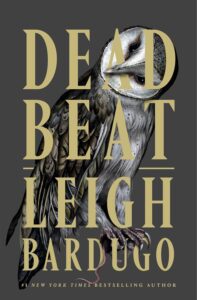 Leigh Bardugo, Dead Beat
Flatiron, September 15
As highlighted in our first half preview: Hell yes: the Alex Stern trilogy, which Bardugo began with Ninth House, will be completed this fall. I know nothing about this book, other than Bardugo promising it will be “a wild one,” but that doesn’t really matter. Personally, as an adult reader of mostly literary fiction—but one raised on fantasy—these books come close to bringing me that childhood thrill of dissolving into another universe. Which obviously I need more than ever/in this economy, etc. etc. etc. –ET
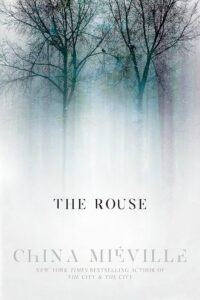 China Miéville, The Rouse
Del Rey, September 15
A titan of speculative fiction (and modern Marxism), Miéville hasn’t written a full-length novel of his own creation since the early 2010s. This one’s tightly under wraps, but it sounds like it’s a globe-hopping conspiracy thriller that takes place in our world? Except it’s probably going to be far more complex and stranger than that. It’s also 1260 pages—and those who were already excited just got even more excited. –DB
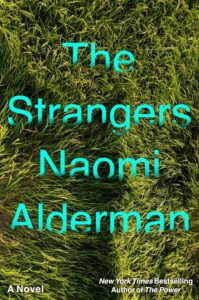 Naomi Alderman, The Strangers
Little, Brown, September 22
Because I’m leading a one-man boycott of all gender-based apocalypse/dystopic fiction, I have to admit that I skipped Alderman’s bestseller The Power. (The boycott will continue until one of those novels is normal about trans people.) With that said, I love a speculative fiction set-up that’s deceptively simple. “What if there was a new animal all of the sudden?” Great question! What if! Considering The Power’s immense popularity, I’m looking forward to reading the result of Alderman’s talents turned to themes not subject to my hyper-niche boycott. –CK
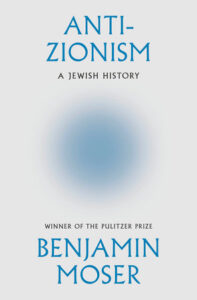 Benjamin Moser, Anti-Zionism
Doubleday, September 22
As highlighted in our first half preview: Benjamin Moser is best known as the Pulitzer Prize-winning author of Sontag: Her Life and Work and Why This World: A Biography of Clarice Lispector, but he has also been, for many years now, one of the literary world’s most fearless and insightful critics of Zionism. Anti-Zionism is a deep dive into the history of this ethnonationalist movement, and an examination of how it came to be one of the defining, divisive quandaries of the last two centuries, told through the personal stories of the Jewish figures who “resisted Zionism at the cost of social exclusion, professional banishment, and even their lives.” –DS
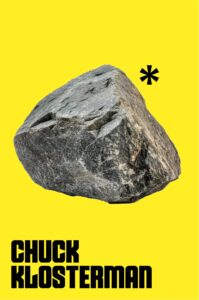 Chuck Klosterman, Rock* A Mainstream Alternative History of Alternative Mainstream Music
Da Capo, September 22
Everybody knows that The Beatles’ Sgt. Pepper is the greatest and most important album of 1967—but what this book presupposes is, what if it was The Velvet Underground & Nico instead? Part alternate history, part genuine exploration of musical culture over the last 60 years, it’s the latest and most intriguing experiment yet in the burgeoning field of speculative non-fiction. –DB
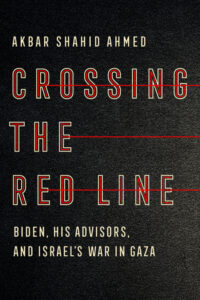 Akbar Shahid Ahmed, Crossing the Red Line: Biden, His Advisors, and Israel’s War in Gaza
W.W. Norton, September 22
The Biden Administration’s aiding and abetting of Benjamin Netanyahu’s genocidal assault on Gaza will long be a deep moral stain on the Democratic establishment; here is the deep reporting that reveals just how bad it was, as Ahmed shows again and again how Biden’s failure to act—at the advice of his inner circle—led to thousands of preventable deaths. –JD
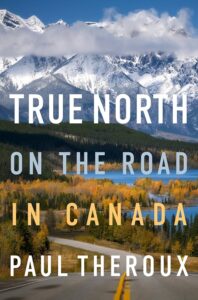 Paul Theroux, True North: On the Road in Canada
Mariner Books, September 22
I’ve now lived outside of Canada, the place where I was born and raised, longer than I did within its borders. Which makes me particularly susceptible to Theroux’s 21st-century version of travel writing, combining history, memoir, and ethnography, as applied to my home and native land. Tracing his 17th-century French roots back to Quebec, Theroux proceeds to travel around America’s large, polite neighbor, from the small towns of French Canada to the suburbs of Toronto and all the way to the beautiful Pacific coast. –JD
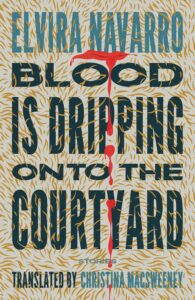 Elvira Navarro, tr. Christina MacSweeney, Blood Is Dripping onto the Courtyard
Two Lines Press, September 22
I trust Two Lines unreservedly: they’re publishing some of the best work in translation around and with a title like Blood is Dripping onto the Courtyard, how can you go wrong? Short stories, and weird ones! –DB
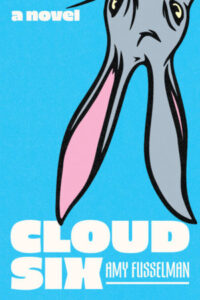 Amy Fusselman, Cloud Six
Catapult, September 22
An original and comic novel about one of the most un-comic of topics: death itself. In this impressively upbeat and hilarious novel, a couple finds that, surprise, they’ve died! Not only that, there’s more bad news. They’ve found themselves in the “lowest tier of heaven”, with a slumlord instead of God, and a skeleton bunny as their only friend and guide. This fresh and unusual premise creates the perfect backdrop for their poignant, humane, and always funny quests through the afterlife, as they try to make peace with their life and its sudden, brutal ending. We’ll laugh, we’ll cry, we’ll wish we had a bunny as our guide through life too: Cloud Six is as divine and rambunctious as the heaven depicted in its pages. –JH
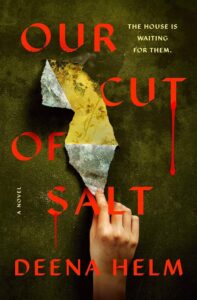 Deena Helm, Our Cut of Salt
Tor Nightfire, September 22
All this pitch needs, really, is four words: Palestinian haunted house novel. Might be my most anticipated horror novel of the fall. –DB
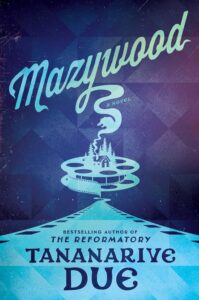 Tananarive Due, Mazywood
S&S/Saga Press, September 22
A thriller set in the mountains of California that’s also a multi-generational family story? Plus it’s sprinkled with plenty with old Hollywood glamor? Count me very, very in. Mazywood is a mountain retreat built by the Black starlet Mazelle Woods during the height of her fame in the 1940s and ‘50s. When her grandson, a filmmaker, visits the home to learn more about his grandmother’s life, he uncovers a dark secret and awakens something in the woods. Mazywood is an eerie, twisting story of ambition, grief, and rage. –MC
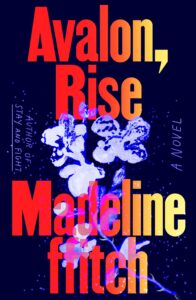 Madeline ffitch, Avalon, Rise
FSG, September 22
The Boygenius-approved author of Stay and Fight is back with another Appalachian punk banger! Avalon, Rise is a novel about a town on the edge of a local revolution, pulled between a rising socialist movement and an influx of white nationalism. Filled with eccentric characters and tangled relationships, this is a community story that invites every member of the collective to join in the telling. –MC
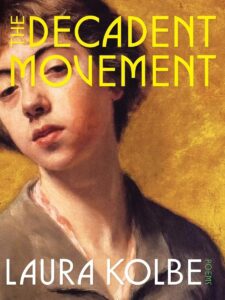 Laura Kolbe, The Decadent Movement
University of Pittsburgh Press, September 22
Laura Kolbe’s debut collection, Little Pharma, traversed the landscape of illness and care (Kolbe is also a medical doctor) with a wit, precision, and compassion that made me hungry for more. In The Decadent Movement, she plumbs the depths of motherhood: a worthy subject for her substantial talents. –JG
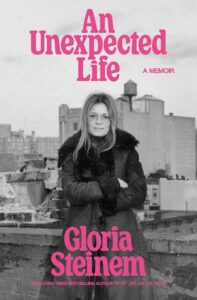 Gloria Steinem, An Unexpected Life
Random House, September 22
Whatever you think of Steinem in 2026 (her CIA connections, her second-wave blindspots in terms of race and class) you cannot deny her historical importance. Nor can you ignore the massive influence she had as the public face of American feminism, and the work she did—and risks she took—to get there. This new memoir is an open and honest accounting of that very public, and political, life. –JD
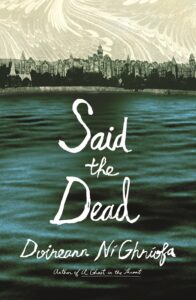 Doireann Ní Ghríofa, Said the Dead
FSG, September 22
Like her genre-bending memoir A Ghost in the Throat, Ní Ghríofa’s new book explores the history of a now-derelict Irish psychiatric hospital that is being turned into modern apartments. The book explores the lives of the patients (mostly women) who lived and died there—a place where she herself might have been sent in a different time. Through the research, imagined realities, and ever-present ghosts—anchored in part by Lucia Strangman, the first woman qualified as a psychiatrist in the British Isles, who joined the asylum—this is a ghost story and a reclamation. –EF
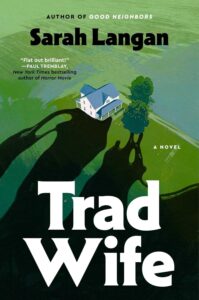 Sarah Langan, Trad Wife
Atria, September 29
Sarah Langan’s Good Neighbors was a deeply unsettling read (complimentary), which is, I think the exact energy a novel about trad wives requires. A journalist is poised to write a profile/takedown of the influencer who helms Black Swan Farm, but when she arrives on the property, she finds more to fear than terrible gender politics. I have no doubt Langan has the chops to balance horror and social commentary. –JG
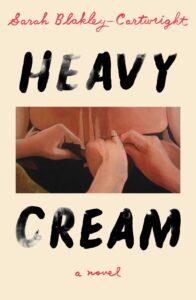 Sarah Blakely-Cartwright, Heavy Cream
Simon & Schuster, September 29
Like her debut novel Alive Sadie Celine, Blakley-Cartwright again brings readers to the world of women—how generations bond together, love each other, and break apart. In her new book, teenage Gerry is abandoned by her mother in New York and finds herself in the care of three different women—her mother’s chic college friend Bonnie; her mother’s estranged sister Nell, an ambitious and successful artist; and old-money socialite Finley. Each woman introduces Gerry to new, possible realities as she copes with questions of love, mental illness, and inheritance. –EF
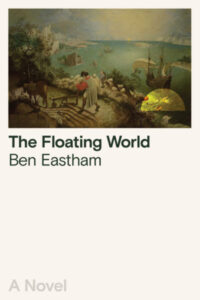 Ben Eastham, The Floating World
Astra House, September 29
I love a novel about art running into the wants of billionaires (Ryan Chapman’s The Audacity, C Pam Zhang’s Land of Milk and Honey) and this debut novel (from an art critic!) should be just the ticket, with comps to Ballard and Bioy Casares. –DB
 Douglas Smith, The City Without Jews: Life and Death in Nazi Vienna
FSG, September 29
We like to think that civilization moves in a straight line, aimed always at refinement and improvement, at the appreciation of what is good in life: art, justice, happiness. But one look back at the fall of cosmopolitan Vienna, from its cultural heyday at the end of the 19th century, when it was home to such luminaries as Gustav Mahler, Stefan Zweig, and Ludwig Wittgenstein, to the eradication of its Jewish population by the Nazis in the 1930s, and you’ll see that’s not the case. We can go backwards. Following the close accounts of a Jewish nurse named Mignon Langnas, Smith shows exactly how a people—and a civilization—can be destroyed. –JD
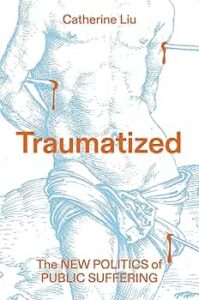 Catherine Liu, Traumatized: The New Politics of Public Suffering
Verso, September 29
In her follow-up to 2021’s Virtue Hoarders, a critique of the faux-progressivism of the professional managerial class, Catherine Liu charts the rise of trauma as a “tool of social control,” which she argues is “surveillance capitalism’s greatest coup.” I’m always seated for a sharp breakdown of any of the many ways powerful people turn the masses against each other (and what we masses can do about it). –JG
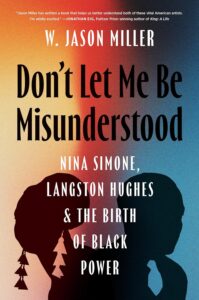 W. Jason Miller, Don’t Let Me Be Misunderstood: Nina Simone, Langston Hughes, and the Birth of Black Power
UNC Press, September 29
In something like a biography of a friendship, Hughes takes a deep, historical look at the relationship between two heavyweights of American culture, Langston Hughes and Nina Simone, and how their virtuosic moral and artistic talents were foundational to the mass-cultural power of the Civil Rights movement. (It should come as no surprise that the term “Black Power” derives from their collaborations.) –JD
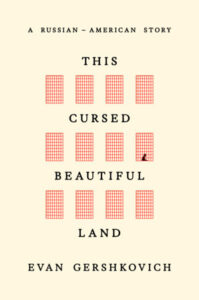 Evan Gershkovich, This Cursed Beautiful Land
Crown, September 29
There was a time when we were seeing Evan Gershkovich’s name and visage almost daily: the grueling, horrific 491 days that the Wall Street Journal reporter was held imprisoned in Russia. There was a stoicism, always, in his demeanor behind glass in the Russian courtroom: one could almost hear the whirring of his journalist’s brain committing it all to memory to lay it all out at a later date. That day has arrived at last, as he releases his memoir about the year he spent in the Russian prison system, as well as his days in Moscow for the years preceding his arrest. Written with empathy and care for the Russian people as well as a sharp critique of the governments that have wreaked havoc on the country, This Cursed Beautiful Land is sure to be one of the most celebrated nonfiction releases of the fall. –JH
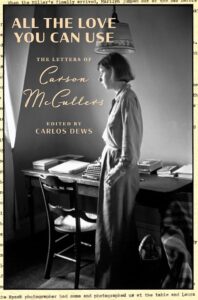 Carson McCullers, ed. Carlos Dews, All the Love You Can Use: The Letters of Carson McCullers
Mariner Books, September 29
I love stories by Carson McCullers, her characters and creations, but something I love even more than those fictionalized narratives, is reading about McCullers herself. She was a true writer, capital W, no other life available than the one she created for herself. As she said once, after remarking that she was fired from every other job she ever had: “I had a perfect record.” She was wry and tortured and obsessed with creation, she was queer, an alcoholic, a woman living outside of her times. For all these reasons, I can’t wait for the release of her letters: to experience the direct rough-and-tumble quality of her writing, witness her friendships, her love affairs, her struggles and triumphs. There’s nothing quite like the potent rawness of a letter, and here we get a whole kaleidoscope trove of them. –JH
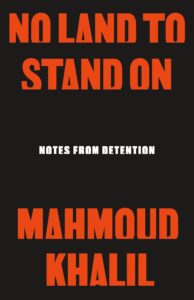 Mahmoud Khalil, No Land to Stand On: Notes from Detention
Metropolitan Books, September 29
It’s a name I wish we didn’t have to know so distinctly: Mahmoud Khalil doesn’t deserve the ire and fixation the government has leveled at him, and the ensuing, relentless media coverage. At the very, very least, he has managed to have his voice heard through the racist, Zionist din: Khalil has always presented himself as an eloquent and empathetic activist, a man with a mission and a message for his fellow young people, immigrants, and Americans. The ICE detention and deportation orders he’s faced have been clearcut cases of a movement against dissent, and his forthcoming memoir, No Land to Stand On, promises to elucidate and inspire those who refuse to accept our current government’s hateful stringency. –JH
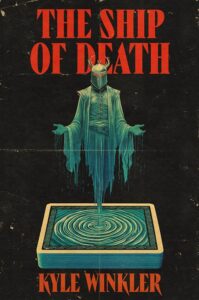 Kyle Winkler, The Ship of Death
Avon a, September 29
I’ve been reading Kyle Winkler since his dinosaur-cosmic-horror novel The Nothing That Is and I’m so stoked to see him jump to a major press—and the book itself sounds like a total blast: mixed-media/found-document horror about a cursed tabletop game?! And just in time for spooky season! –DB
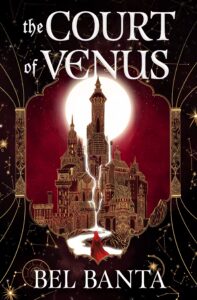 Bel Banta, The Court of Venus
Tor Books, September 29
I loved Banta’s Honey but I love even more that she’s following it up by writing (by her own admission) the fantasy novel she’s always truly wanted to write. Those who aren’t romantasy people, don’t be fooled: this is a truly great palace intrigue novel, sure to delight anybody who loves divination fantasy and Tudor-esque drama. –DB
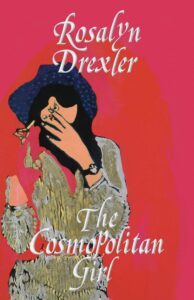 Rosalyn Drexler, The Cosmopolitan Girl
Hagfish, September 29
The latest reissue from Hagfish is their second Rosalyn Drexler and I truly cannot wait to read this. A woman pretends her dog is a man in order to keep him in her apartment… only for them to fall in love. It sounds like a Mrs. Caliban sort of situation, except that this book predates the Ingalls by nearly a decade. I’m expecting wild things. –DB
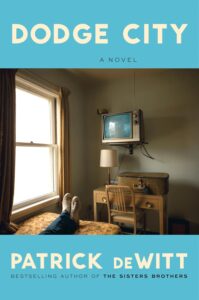 Patrick deWitt, Dodge City
Ecco, September 29
I’m a proud Patrick deWitt superfan and have been ever since that iconic Sisters Brothers cover caught my eye in a Dublin bookstore fifteen years ago. deWitt’s latest is 1960s-set road trip novel about young Los Angeleno Lee Clarke, recently expelled from college, who lights out for Canada to escape the Vietnam draft. With nothing in his possession but a single suitcase and a bag of amphetamines, Clarke endeavors to pay one last visit to each of his four wayward family members before fleeing across the border. –DS
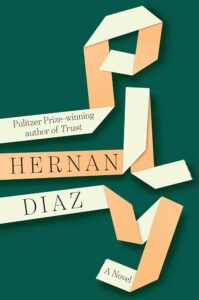 Hernan Diaz, Ply
Riverhead, September 29
The latest novel from the Pulitzer Prize-winning author of Trust and In the Distance promises to be a big, ambitious novel about technology, music, and quantum physics. Ply takes us centuries into the future, where a young woman makes her living as a “pincher,” stealing and selling electricity. But someone is paying too much attention to her… –ET
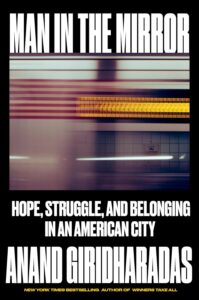 Anand Giridharadas, Man in the Mirror: Hope, Struggle, and Belonging in an American City
Knopf, September 29
Some tragedies are larger than the lives contained within them, as we discover in the case of Jordan Neely and Daniel Penny. In case you’ve forgotten, Penny, an ex-Marine recently moved to New York City, choked Neely to death on a New York City subway car in 2023 when the former, an erstwhile street performer, was behaving erratically (some say dangerously) and could not be restrained. Giridharadas’s deeply researched and reported book sheds new light on the case itself while also examining what it reveals about the politics of fear at the heart of contemporary American society. –JD
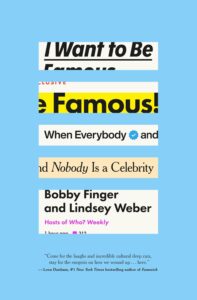 Bobby Finger and Lindsay Weber, I Want to Be Famous
Crown, September 29
As the Lit Hub staff’s premier Wholigan, I am potentially biased in my anticipation for this book, in which Finger and Weber, longtime hosts of the excellent podcast Who? Weekly (tagline: “Everything you need to know abou the celebrities you don’t”) unpack the shifting parameters of celebrity in These Times. Well, is good taste—or bad taste for that matter—bias? (Maybe these two could answer that.) Either way, this good-taste-having-person can tell you with certainty that this book will be guaranteed fun for anyone who cares about pop culture even a little bit. Crunch crunch! –ET
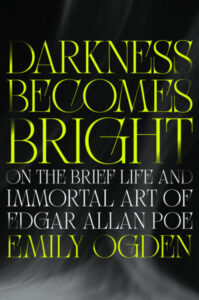 Emily Ogden, Darkness Becomes Bright: On the Brief Life and Immortal Art of Edgar Allan Poe
Viking, September 29
Why do we still love Edgar Allen Poe? Ogden, who taught an introductory course on the macabre poet and novelist at the same university where he himself was once a student, interweaves stories from Poe’s mysterious and tragic life (tortured romances, opium) with those of his most famous readers and translators. –EF
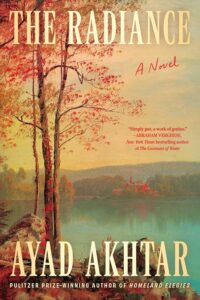 Ayad Akhtar, The Radiance
S&S/Summit Books, September 29
It’s been six years since Ayad Akhtar’s Homeland Elegies, the New York Times bestselling novel about an immigrant’s experience in a post-Trump American, and Akhtar has returned with another piercing look at the culture that surrounds us. The Radiance is set on a campus: after a professor experiences a life-altering car accident, his perception of truth and experience shifts, along with his relationship towards his subject, students, and one colleague in particular. While Homeland Elegies captured the post-2016 political tornado, The Radiance aims to puncture the campus-war, post-MeToo climate. There’s no one I’d trust to do it as much as Akhtar. –JH
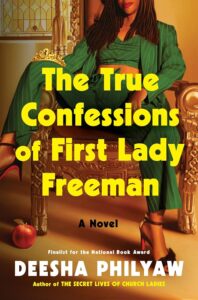 Deesha Philyaw, The True Confessions of First Lady Freeman
Mariner, September 29
This debut novel sits next to Nafissa Thomson-Spires’s on a shelf I have called “The Way I’ve Been Waiting For This Book!” Philyaw, the author of 2020’s excellent collection, The Secret Lives of Church Ladies, here unleashes her insight and ear for dialogue on the wife of a megalomaniacal pastor. Scharisse Freeman, our dubious hero, leads a business empire and runs her husband’s religious ship—but when a scandal threatens her perfect legacy, all hell breaks loose.
I signed a pledge long ago to read everything Philyaw puts on paper. And a good thing, too; this novel looks terribly funny. –BA
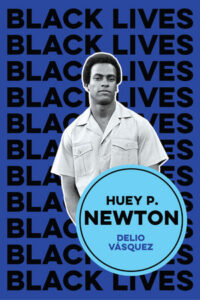 Delio Vasquez, Huey P. Newton: I Am We
Polity, September 29
An intellectual history of the co-founder of the Black Panther Party who left behind dozens of unpublished manuscripts—analyzing politics, feminist thought, education, philosophy, evolutionary biology, and theology—upon his assassination in 1989. Vasquez draws on these texts to expand our understanding of a revolutionary whose legacy and legend has been flattened and distorted in the decades since his murder. –DS
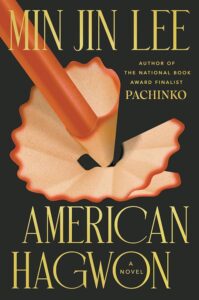 Min Jin Lee, American Hagwon
Cardinal, September 29
Lee’s latest epic follows the Kohs, an upwardly mobile Korean family whose lives are upended by the IMF crisis of 1997. We zing from Seoul to Sydney to SoCal over eleven subsequent years, honing in on the family’s three children. An animating question: will the family regain their economic footing, and in the process redeem their governing faith in education and hard work? Or will that dream prove fallible in America?
Lee’s bestselling Pachinko really took my breath away. But this contemporary novel, her latest entry in a promised quartet about the Korean diaspora, appeals for its smaller aperture. I’m so excited to see how this masterful systems novelist traces epigenetic pain and power through just a few generations. –BA