Lit Hub’s Most Anticipated Books of 2026, Part Two
258 Books We're Looking Forward to Before the End of the Year
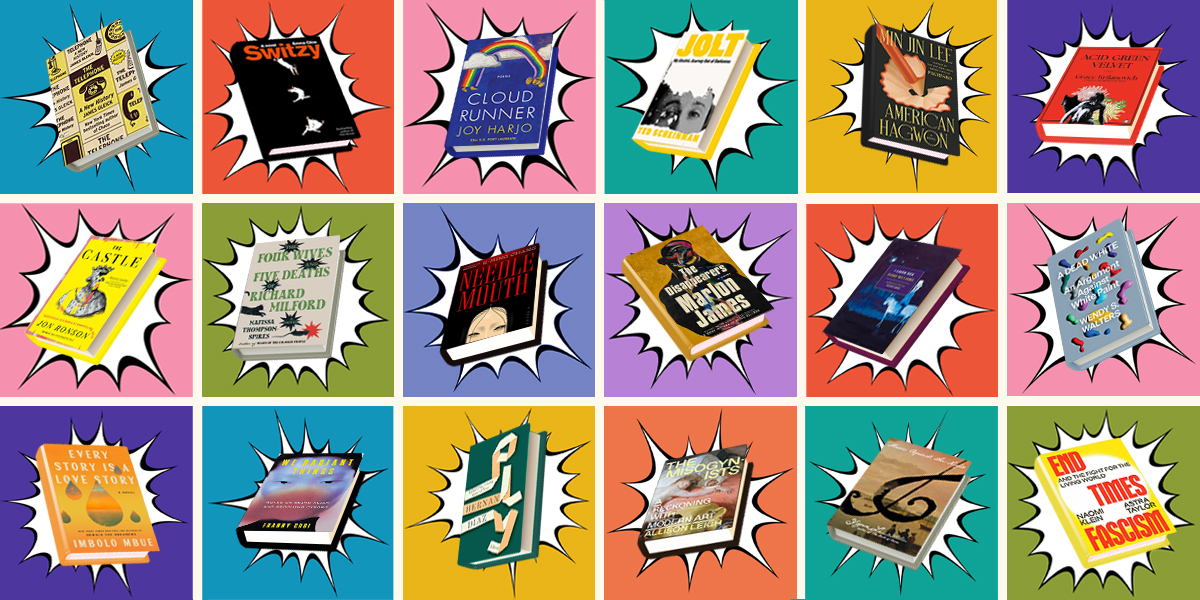
The year is half over, if you can believe it. Time marches ever forward, into the abyss. Books, though, can smooth the passage. If you choose wisely, that is. To that end, here are the novels, collections, and works of nonfiction we’re keeping an eye on for the rest of the year. Let us know what you’re looking forward to most in the comments.
JULY
***
 David Thomson, A Sudden Flicker of Light: A Revisionist History of Movies
Simon & Schuster, July 7
As highlighted in our first half preview: David Thomson has been writing about film for fifty years, so when he argues (as he does in this book ) that “movies have been a destructive force—responsible for creating an alternate reality and fantasyland that has only deepened the isolation and disconnection of our society over the course of a century,” I’m inclined to hear him out. (And not only because movies are too long to watch at night when I could be sleeping.) –Jessie Gaynor, Senior Editor
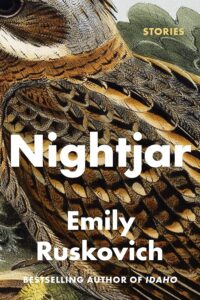 Emily Ruskovich, Nightjar
Random House, July 7
This debut short story collection from the International Dublin Literary Award-winning author of Idaho explores “how unexpected intuitions forever alter the lives of ordinary people.” Set against the lush, eerie backdrop of the Pacific Northwest, Nightjar includes the story “Owl”—about a fur trapper dealing with the terrible origins of his marriage after his wife is brutally injured by four teenage boys—which won an O. Henry Award in 2015. –Dan Sheehan, Book Marks Editor-in-Chief
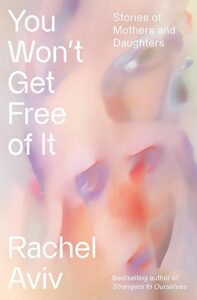 Rachel Aviv, You Won’t Get Free of It: Stories of Mothers and Daughters
Knopf, July 7
As highlighted in our first half preview: Rachel Aviv writes the kind of nonfiction that sucks you in and holds you long after you finish reading. Her last book, Strangers to Ourselves, was one of the most complex and illuminating works I’ve read in recent years. I’d be anticipating this one—which explores mother-daughter relationships—even if it didn’t speak so directly to me. As both a daughter and a mother of daughters, thought, I’m on the edge of my seat. –JG
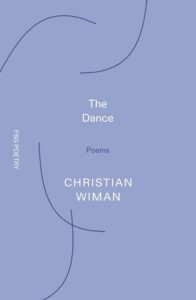 Christian Wiman, The Dance
FSG, July 7
As highlighted in our first half preview: I love Christian Wiman’s poems and read them aloud whenever possible. Though his language is that of the every day his preternatural instinct for rhythm fills his lines with a bursting musicality. And though I am not, unlike Wiman, a man of faith, I share in his wonder of everyday holiness, for that ineluctable light that drags us from our solipsisms into a brighter way of being… even if only for a moment, even if for just the time it takes to read a poem. –Jonny Diamond, Editor-in-Chief
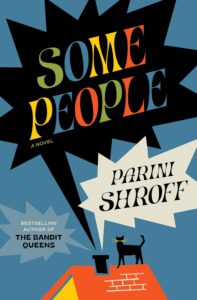 Parini Shroff, Some People
Algonquin, July 7
As highlighted in our first half preview: From the bestselling author of the delightful The Bandit Queens comes a novel that sounds unbearably awkward and just as good: Malti Patel finds herself forced to recuperate for an entire week, under the care of her daughter’s soon to be ex-huband, Nathan. Clearly, both have resentments, and things to unpack, though they will, one supposes, also discover that they have at least one thing in common. Shroff is hilarious and winking and sharp but ultimately large-hearted; I think she will knock this premise out of the park. –Emily Temple, Managing Editor
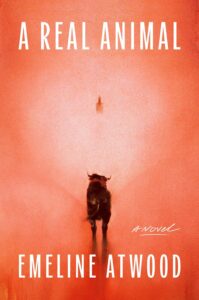 Emeline Atwood, A Real Animal
Catapult, July 7
As highlighted in our first half preview: I’d been hearing about this book through the grapevine for a long time before I got my hands on it, and once I did, I understood perfectly. This is a book that is a caliber above and beyond what we have come to expect from the young-twenties-girl-bildungsroman. There’s men, yes, and sex, a lot of it, and yearning to be understood, and for power and a place in the world, but A Real Animal is about the wild, deep, feral core of those themes. It’s about something subterranean, underneath one’s lived experience, underneath, even, one’s trauma. The book follows the protagonist from college, when she experiences a horrible sexual assault, through the next decade, as she builds and breaks relationships, as she builds and breaks a life. There is no straight line. There is no healing. But the book has this feeling about it, like there’s so much within the pages that’s just bursting to get out: a violent and powerful urge for something, for more survival, for more agency, to express one’s pain, to feel better. A Real Animal is as raw and visceral as an open-mouthed scream: you hear it in your bones. You can see its teeth. –Julia Hass, Book Marks Associate Editor
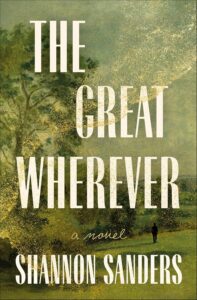 Shannon Sanders, The Great Wherever
Henry Holt, July 7
As highlighted in our first half preview: This book circles one of my favorite riddles for fiction: how do we carry ancestral expectations? When Audrey Lamb, an underpaid gig worker in D.C., inherits family farmland in Tennessee, she goes to claim her birthright—only to discover the property is ruled by four familial ghosts. An epic with supernatural and epigenetic overtones, this debut novel looks like a feast of a story. –Brittany Allen, Staff Writer
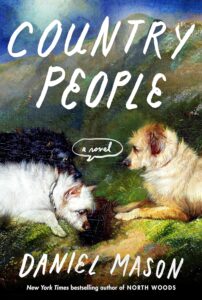 Daniel Mason, Country People
Random House, July 14
The question of how one could possibly follow up North Woods would be a real, pressing conundrum: the bestselling novel from 2023 felt as though it sprang directly from the earth itself, like a story that had been lying dormant, waiting to be told for centuries, until it finally found the way to emerge. But emerge it did, through Daniel Mason’s talents and intellect, and with that, he has earned our trust in all perpetuity. Country People is, albeit, a far more human tale: a (somewhat) realist novel about a family as they embark on a new chapter together in a faraway land totally unlike their accustomed surroundings. That is, Vermont, to their native California. It’s a roving and fairy-tale like story, told through the gaze of an idealist, though career-stymied, father as he raises his children, loves his wife, struggles through his ambitions, and finds solace in the unusual lives of his new eccentric neighbors, the “country people” themselves. Mason’s prose is as fantastic as ever, and it’s a treat to experience the magic in everyday life through his narrator’s rosy and ever curious gaze. –JH
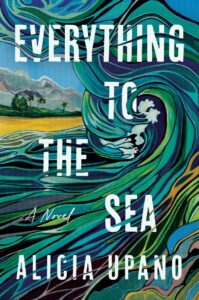 Alicia Upano, Everything to the Sea
William Morrow, July 14
As highlighted in our first half preview: This debut novel hinges on an epic premise. In Hawai’i, two lovers (Kenji and Jane) are drawn together for what’s supposed to be a summer fling. But when a tsunami rocks their island, profound tragedy ensues, and immediately ups the stakes of a brief encounter. This big-souled book considers the costs of leaving and staying, especially where rebuilding is required. Upano’s operatic scope and clean, elegant sentences really swept me off my feet. –BA
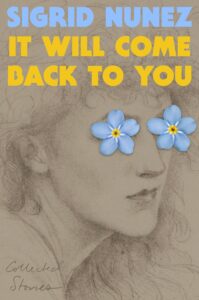 Sigrid Nunez, It Will Come Back to You: The Collected Stories
Riverhead, July 14
As highlighted in our first half preview: New Sigrid Nunez! Her first short story collection! “Moving from an inappropriate teenage crush to a therapist’s second chance at love, in this collection Nunez maintains her irrepressible humor, bite and insight, while exploring the philosophical questions we have come to expect from her writing.” Spanning her career, these stories promise the same brilliant writing from one of our best writers. –Emily Firetog, Deputy Editor
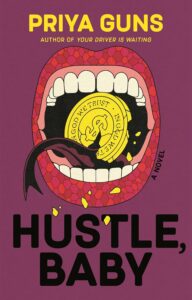 Priya Guns, Hustle, Baby
Doubleday, July 14
As highlighted in our first half preview: This second novel from the author of Your Driver is Waiting follows a family of precariously employed Tamil refugees just trying to make it work on the margins as Y2K looms. When a rizz-y day trader promises the world, it’s hard to say no. But chaos inevitably follows the golden goose. Guns is an actor and writer, known for her razor-sharp observations and riotous voice. This one looks like a thrill ride. –BA
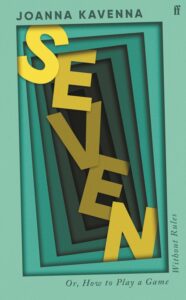 Joanna Kavenna, Seven
Faber & Faber, July 14
As highlighted in our first half preview: The latest novel from British author Kavenna, whose Zed was a Lit Hub favorite, concerns a philosopher seeking an ancient game box in Greece—but “the hunt for this small thing, among the countless lost things, becomes an absurdist quest through time and space: from the earliest human societies to the advent of AI.” Sounds like fun. –ET
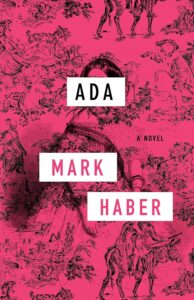 Mark Haber, Ada
Coffee House Press, July 14
As highlighted in our summer reading list: In Haber’s breathless, painfully funny latest, the beleaguered ruler of an obscure realm, whose assassination-minded citizens are either Bavarians or Saxons, awaits the arrival of the eponymous Ada, a woman with whom he spent a single night several years before. Happily, after said night, he fell madly in love with her. Unhappily, she is now married, and approaches his castle (and its safe and useful Sword Closet), with her annoyingly rich husband, if indeed she approaches at all.
Because, after all, as in all of Haber’s novels, the point is not really what is happening in the world but what is happening in the mind—in this case the mind of the pettiest of tyrants. There we find an ecstatic, recursive whir of self-recrimination and stalwart pride, desire and disgust, nascent hope and extreme vexation, and not a few concerns about poisoning. At a mere 90 pages, you can read it in one sitting, and should, for the full effect. Though probably, like me, you will have no choice. –ET
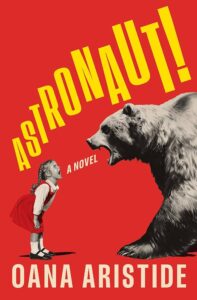 Oana Aristide, Astronaut!
W.W. Norton, July 14
As highlighted in our summer reading list: Set in 1989, in the months leading up to the fall of Nicolae Ceaușescu’s decades-long authoritarian grip over Romania, Aristide’s (almost-)comic novel about a series of brutal deaths (which may or may not be attributable to a bear) and how they intersect with the lives of everyday Romanians trying to survive the cruel absurdities of life in a fully metastasized dictatorship, is both cautionary tale and historical fever dream.
Told through the storylines of two principal characters—one, a world-weary detective who can’t help but follow the clues all the way to the top; the other, an imaginative little girl who gets tangled up in an improbable plot—Aristide’s expert conjuring of the atmospherics of totalitarianism calls to mind the absurdist brilliance and wry humor of dissident Czech writers like Hrabal and Klima. The final year of Ceaușescu’s regime cast an oppressive and paranoid shadow over the people of Romania: neighbors informed on neighbors, the state had total control over the flow of information, and Ceaușescu’s cult of personality was deeply embedded at every level of society. Importantly, what Aristide’s wonderful novel illustrates is that even in the darkest of timelines it is possible to find shelter—and something like freedom—within the vast spaces of the imagination; no matter how bad things get the mind finds a way of surviving what seems like an inevitable (and eternal) state of subjugation.
Astronaut! also reminds us that in all fascist systems of control there is a point when the grip gets so tight the mechanisms shatter and everything changes all at once. Something worth remembering in this long summer of 2026. –JD
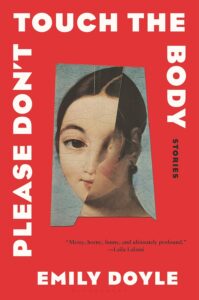 Emily Doyle, Please Don’t Touch the Body
Bloomsbury, July 14
As highlighted in our first half preview: I’ve had the pleasure of glimpsing Emily Doyle’s muscular, heart-forward fiction in a writing workshop, and all I can say is brace yourselves. The body is front and center in these uniquely brewed stories, which range from surreal to poignant. In one piece, a woman fearing fetishization finds agency by writing a sex column. In another, Ronald Reagan is reincarnated as a puppy, and forced to depend on the whims of his queer owners. This debut collection is thrillingly concerned with how we come to feel at ease in—or in power of—our meatsacks. –BA
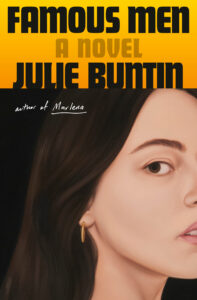 Julie Buntin, Famous Men
Random House, July 14
As highlighted in our summer reading list: It’s possible to feel a certain fatigue at the idea of another age-gap novel. I think the exhaustion I’ve felt is due to the often one-note, hit-you-over-the-head-with-a-hammer vibe of some of these books: older men bad. Young women good. (Which, while I’m here, I obviously usually agree.) But the thing one craves in good fiction is the eye-widening prompt to see things differently. Famous Men is such a book: it’s about an age-gap relationship, yes, and it is simultaneously one of the most subtle, nuanced, and realistic depictions of love, reliance, and power that I have ever read.
The protagonist, Will, is in college when she moves to New York and sets about forming a relationship with a famous poet, Nathaniel Fellow, a man forty years her senior. He is the reason she moved to New York in the first place: he’s one of the few successful writers to emerge from her small midwest hometown, and she also happens to suspect he may be her father. He’s not, thank God, but that suspicion hovers over the romantic relationship that ensues between them: she came to New York looking for a father. She didn’t get that, but what she did get both resembles and bastardizes the pure intent she had in that original urge. Her relationship with Nathaniel begins when she is 20 and he is 60, but it is long, and thus it is many things: she feels real care for and intimacy with him, she wants to protect him, love him, feed him. In fact, she often feels undeniably special for being chosen by the male genius, and yet throughout it all, there is a quiet, bone-deep rage for what he has done to her. Never will she be able to see something without looking at it through his eyes. Never will she be able to be just herself, without the shadow of his person lingering over her. The book beautifully captures the delicate line between love and hate, between victimhood and complicity. Life is never just one thing. Complex, intricate, and at all times realistic and humane, Famous Men is the pinnacle of the attempt to capture this specific and yet, all too universal, formative experience of enmeshment, devotion, and ego-death. –JH
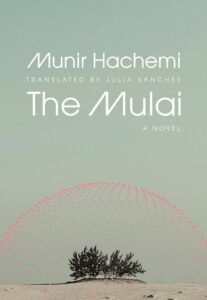 Munir Hachemi, tr. Julia Sanches, The Mulai
Coach House Books, July 14
As highlighted in our summer reading list: I have to be honest with you: I still don’t think I’ve entirely wrapped my head around this book. I don’t know if I ever will? The jacket copy promises “echoes… of Borges, Le Guin, and Calvino” and while those are some lofty comparisons… by god, they’re accurate. If Borges wrote hard science-fiction, it might well look like this; it also bears comparing to some of the lesser-known Le Guin works like Always Coming Home. I confess that I’m a sucker for an anthropological look at fictional civilizations and that’s what The Mulai does: builds and describes an entire civilization, one that left and then lost touch with Earth centuries prior. Some of this is told through the diary entries of the anthropologist sent to restart a connection with the society, but there are also pieces of folklore and interviews and even (quite wonderfully) an exploration of the translation of Calvino’s Invisible Cities (itself a book that I’ll likely never fully wrap my head around, by design) into the language of the Mulai. If this all feels high-flying, well, it often is—but Hachemi (in a lovely and undoubtedly exhausting translation by Julia Sanches) never loses sight of the play that is so important in writing good science-fiction. You can almost feel the author grinning at you as you read, and I daresay you’ll end up grinning back by the end. –Drew Broussard, Podcasts Editor
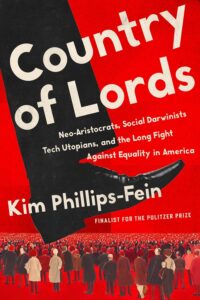 Kimberly Phillips-Fein, Country of Lords: Neo-Aristocrats, Social Darwinists, Tech Utopians, and the Long Fight Against Equality in America
Norton, July 21
As highlighted in our first half preview: From Pulitzer Prize-finalist Phillips-Fein, a book about an American tradition: fighting against equality. You read that right: within are the stories of figures like “John Adams, William Graham Sumner, Andrew Carnegie, journalist Lothrop Stoddard, Henry Ford, Harvard psychologist Richard Herrnstein, Peter Thiel, and others” who “represent this counter-tradition of hostility to democratic government.” You didn’t think it was an accident, did you? –ET
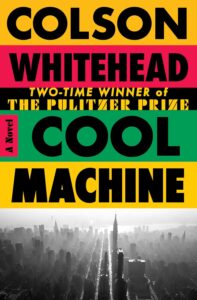 Colson Whitehead, Cool Machine
Doubleday, July 21
As highlighted in our first half preview: Whitehead caps off his Harlem Trilogy by bringing Ray Carney—business owner, former fence, family man—into the 1980s. The blurb promises a one-last-job kind of story, fitting for the conclusion to a modern classic of the crime genre. –DB
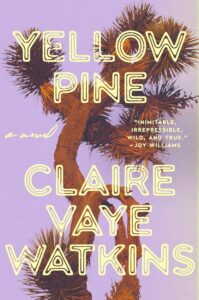 Claire Vaye Watkins, Yellow Pine
Riverhead, July 21
As highlighted in our summer reading list: Nobody writes about the Mojave like Claire Vaye Watkins. The author of Battleborn and I Love You But I’ve Chosen Darkness returns to the cosmic high desert with a story about a Sierra Club fundraiser and aspiring activist—on the cusp of her fortieth birthday—who decides that she wants another child. With a young daughter at school back East, a motley crew of eco warrior pals in her corner, and a long-lost love returned but not ready for fatherhood, Rose embarks upon a novel (and liberating) conception quest while contemplating the doomed majesty of her desert home. A wild, lush, lyrical, torrent of novel—both ode and elegy—that left me reeling. –DS
 Michael Cunningham, Unsayable
Random House July 21
This intimate memoir from the Pulitzer Prize-winning author of The Hours considers a life devoted to the practice of writing fiction. Cunningham plucks small, formative autobiographical moments from decades past and considers how each helped shape the writer, and the man, he became. A quiet, contemplative book about trying to put into words the ineffable experience of living. –DS
 Kohei Saito, tr. Brian Bergstrom, Capital from Zero: Reading Marx in the Age of Climate Catastrophe
Astra House, July 21
Philosopher Saitō brings a pragmatic, eco-socialist’s approach to the problem of climate collapse and its inextricable connection to modern capitalism. Unsurprisingly the thinker behind “degrowth communism” excavates (and reconstitutes) aspects of Marx’s 19th-century ideas as solutions for 21st-century disaster. –JD
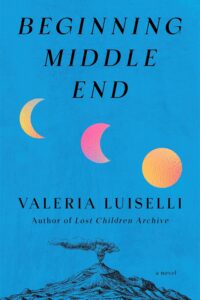 Valeria Luiselli, Beginning Middle End
Knopf, July 28
As highlighted in our first half preview: A mother-daughter duo land in Sicily after the collapse of the former’s marriage, setting off an exploration of their own family line as well as the possibilities (and pitfalls) of a changing world. Luiselli is one of the writers pushing fiction forward and wherever she goes, we would do well to follow. –DB
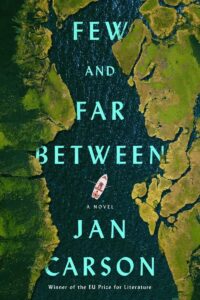 Jan Carson, Few and Far Between
Scribner, July 28
The new novel from the EU Prize for Literature-winning Belfast author Carson (The Raptures, Quickly While They Still Have Horses) has a fascinating premise: in an alternate north of Ireland, a group of people looking to escape the dangers of the Troubles established a utopian community within a drained Lough Neagh (the largest lake in Ireland). Decades later, the few remaining inhabitants of “The Ark” must contend with algae outbreak that is slowly destroying the landscape they love, and government plans to force them back to the mainland for the first time in fifty years. –DS
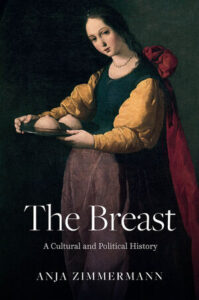 Anja Zimmermann, tr. Nicola Barfoot, The Breast: A Cultural and Political History
Polity, July 28
Boobs are a rich text, so I’m optimistic that art historian Anja Zimmerman’s exploration of the social and political construction of The Breast will be a fascinating read, and will arm me with enough interesting tit facts to make me absolutely insufferable at parties. –JG