Lit Hub’s Most Anticipated Books of 2026
314 Books To Read in the New Year
After the year we’ve had, there’s no predicting anything about the year that’s to come. But whatever else might be fated to happen (to us) in 2026, there will definitely be books, and a lot of them will be good. So in a spirit of hope and joy, here are the works of fiction, nonfiction, and poetry that the Lit Hub staff is most excited to pick up in the (first half of the) year ahead. Happy New Year, friends. Fingers crossed for a good one.
*
JANUARY
***
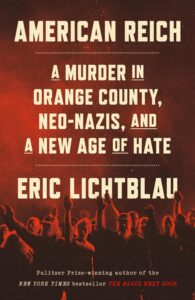 Eric Lichtblau, American Reich: A Murder in Orange County, Neo-Nazis, and a New Age of Hate
Little, Brown, January 6
You could pick a county in just about any state in the union and do a terrifying deep dive into resurgent white nationalism but Orange County California—ancestral homeland of the country club Nazi—might be one of the scariest. While Eric Lichtblau’s American Reich focuses on the murder of Blaze Bernstein—a gay, Jewish Ivy League student who was killed by a former high school classmate who’d become part of a neo-Nazi group—it goes much deeper in examining the far right fringes of California conservatism and its influence on white nationalism all over America. –Jonny Diamond, Editor in Chief
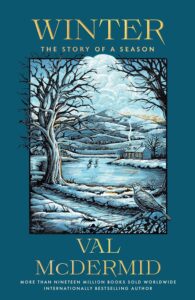 Val McDermid, Winter: The Story of a Season
Atlantic Monthly Press, January 6
As the token “person from Alaska” on staff at Lit Hub, I’m very much looking forward to this book about WINTER! McDermid’s nonfiction meditation on the winter season and all its accompanying traditions and accoutrements sounds like the perfect book to curl up with on a snowy day. Winter is a tough season, but it’s also the perfect time to rest and reflect and gather yourself up after a long year, or prepare yourself for the year ahead. McDermid’s book promises to reflect on all the things that make winter such a strange, difficult, beautiful time of year. –McKayla Coyle, Publishing Coordinator
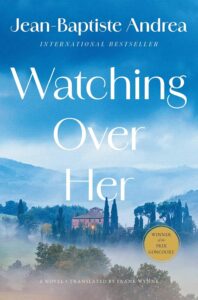 Jean-Baptiste Andrea, tr. Frank Wynne, Watching Over Her
Simon & Schuster, January 6
Andrea’s latest novel Watching Over Her (Veiller sur elle), in which a sculptor dying in an Italian monastery tells the “ribald and hilarious” story of his life, won the 2023 Prix Goncourt, France’s most prestigious literary prize; Frank Wynne’s English translation was published in the UK in 2025 and is finally making its way to the US this year. Read it before it becomes a movie. –Emily Temple, Managing Editor
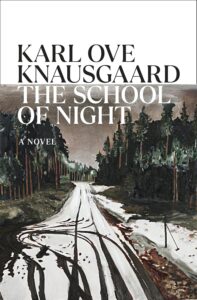 Karl Ove Knausgaard, The School of Night
Penguin Press, January 13
Knausgaard continues his sprawling “Morning Star” epic—which started as a trilogy but now expands to a fourth, with a fifth book already out in Sweden. It’s perhaps his most mystically-inclined novel yet: a riff on Faust that jumps from London in the 80s to the late 00s, following an ambitious photographer who makes a deal with a maybe-devil, an older artist of mysterious intentions. –Drew Broussard, Podcast Editor
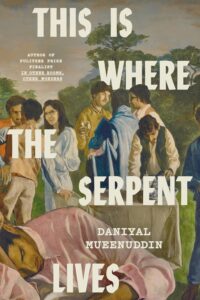 Daniyal Mueenuddin, This Is Where the Serpent Lives
Knopf, January 13
It’s been 17 years since Daniyal Mueenuddin’s debut, In Other Rooms, Other Wonders, which was a finalist for the Pulitzer Prize and the National Book Award, and won the Story Prize. At last, he is back, and with a novel that follows a Pakistani family and their employees through six decades. Sure to be a knockout. –ET
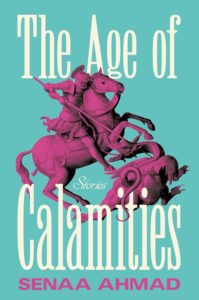 Senaa Ahmad, The Age of Calamities
Henry Holt, January 13
I absolutely loved Senaa Ahmad’s deranged Anne Boleyn story “Let’s Play Dead,” in which Anne Boleyn simply will not die, so I was thrilled to learn that her full collection—which Claire Oshetsky calls “wild, incantatory, upending”—will be coming out this year. I am very much looking forward to seeing where else Ahmad’s bizarre, brilliant imagination might take me next. –ET
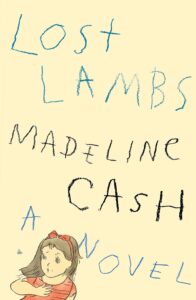 Madeline Cash, Lost Lambs
FSG, January 13
Picking up this book the other day, I meant to simply flip through the first pages to get a quick sense of its tone, and instead found myself reading and reading, utterly absorbed. It reads like a quirked-up Jonathan Franzen or Paul Murray, drilling into each of its characters, the five members of the Flynn family, as they each deal with their own specific, incongruous, very odd personal dilemmas. The dad thinks seriously of driving the minivan into the sea. Because the mother is thinking seriously of sleeping with their neighbor. The eldest daughter, Abigail, just off an affair with a teacher at her high school, is now dating another older man named “War Crimes Wes.” The youngest daughter, Harriet, a genius who can’t seem to stay out of trouble, is desperately trying to evade being shipped off to a wilderness-reform-boarding school. And the middle child, Louise, well, it’s easy to be forgotten about when you’re the middle child. Unfortunately, she’s up to the most disturbing thing of all, corresponding secretly with an online terrorist. Oh well. That’s life in the Flynn family! The plot itself is surprising and wild, but you’ll stay for the extremely specific people that make up this family and town. I was laughing immediately, couldn’t help turning the page over and over again: I didn’t want to be apart from these funny little weirdos even for a minute. –Julia Hass, Book Marks Associate Editor
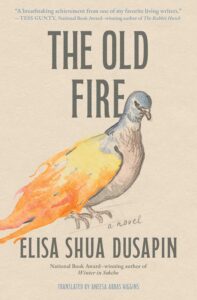 Elisa Shua Dusapin, The Old Fire
Summit Books, January 13
Agathe returns to her family home in the French countryside after fifteen years away. Her father has died, and she and her sister Véra have nine days to clean and empty the home—during which a lifetime’s worth of memories resurface. It’s a really beautiful, quiet novel. A story of secrets and family, asking and answering the question if one can ever really can go home again. –Emily Firetog, Deputy Editor
 Kathleen Boland, Scavengers
Viking, January 13
A hectic and rowdy ride, Scavengers is many things at once: a treasure hunt, a road-trip novel, and a poignant character study of a mother and daughter who have, both as a family, and as individuals, lost their way. Bea is realistic and practical: she had to be, she’s the daughter of Christy, who’s just about as whimsical and head-in-the-clouds as a person can get. Ever since Bea was little, she’s been taking care of her mother: thinking ahead, being the person in charge. But she was fired from her lucrative job in New York, and is forced to move back in with her mother, who lives in Utah in a house that Bea pays for. They clash and collide, trying to reckon with one another, with the unruly chaos that family can wreak on each other’s lives and emotions. Bea incredulously finds out that Christy has been involved in a treasure hunt for years now, believing that there is a million dollars hidden somewhere in the state, planning and plotting her methods of finding it, and Christy is finally setting her plan in motion. She and Bea set off, Christy, to find her fortune, and Bea, to prove her mother is wrong and insane, yet again. Come for the eccentric mother-daughter duo, for the realistic and often frustrating depictions of trying to love one’s family, and stay for the beautiful and desolate scene setting of desert country, the stories of the desperate seekers out there in this hopeless land, and for the gold one can find in this dirt, if you really believe in it. –JH
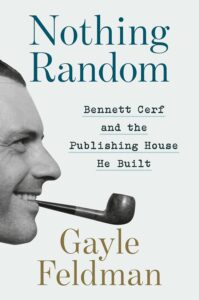 Gayle Feldman, Nothing Random: Bennett Cerf and the Publishing House He Built
Random House, January 13
When we think of the glory days of American publishing, with its domineering, swashbuckling editors and (very) well paid superstar novelists making $2 a word for short stories, we are thinking of a world built by Bennett Cerf. Having co-founded Random House in 1927 Cerf was largely responsible for bringing modernism to the masses, putting the likes of Gertrude Stein, James Joyce, and William Faulkner in front of millions of American readers. But not only does Gayle Feldman’s definitive biography highlight Cerf’s literary instincts it also reveals a canny businessman who understood how to make books a part of America’s burgeoning, mid-century celebrity culture, making the likes of Truman Capote and James Michener into household names. – JD
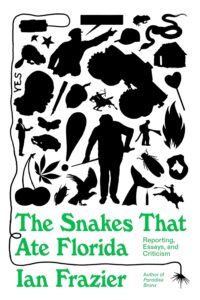 Ian Frazier, The Snakes That Ate Florida: Reporting, Essays, and Criticism
FSG, January 13
Ian Frazier has had an enviable career, forging a seemingly old-school path of humor writing, essays, and long form magazine writing. What bridges all of his work is an attention to jokes and memorably phrased specifics, combined with a keen nose for a funny premise. This new collection coming out at the top of the year gathers writing from across 50 years of curious, funny nonfiction work for The New Yorker. We get to see many corners of the world through Frazier’s eyes, from the personalities behind maraschino cherries, monstrously destructive wildfires, and the titular Everglades-devouring Burmese pythons. –James Folta, Staff Writer
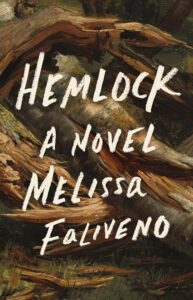 Melissa Faliveno, Hemlock
Little, Brown, January 20
Queer gothic is my favorite genre and Hemlock looks like a particularly cool work of queer gothic! Sam’s finally found some stability in her life when she decides to visit her family’s cabin deep in the woods of Wisconsin—the cabin where her mother vanished years ago. Sam slips back into her addiction and as her alcoholism worsens, so do the visions and apparitions that seem to be haunting the forest. As Sam spirals, it becomes clear that whatever’s in the woods with her is more sinister than she thought. –MC
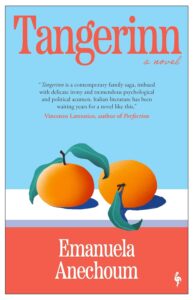 Emanuela Anechoum, tr. Lucy Rand, Tangerinn
Europa, January 20
Mina has been living in London for ten years, but when her father dies she finally returns to the Calabrian coast to help her sister run her family’s bar. But of course, it’s not just a bar—it’s a gathering place, a safe place, a place where outsiders can build a community. As Mina and her sister try to keep the bar running, Mina reexamines her relationship with the place she once called home. Tangerinn is an honest, vulnerable story of home, family, and what it means to find your place in the world. –MC
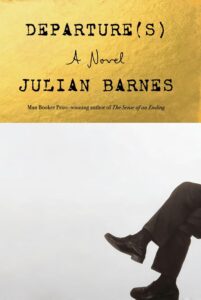 Julian Barnes, Departure(s)
Knopf, January 20
A great novelist of our time, Julian Barnes will celebrate his 80th birthday this year. With 25 books under his belt already, he makes it look easy: spinning out meditative tales with precision and grace, each still hitting just as much as the last. This new venture, entitled Departure(s) may be just that, a “departure,” but probably not too much. He’s written memoirs, and he’s written novels, and now we have a ideal-sounding blend between the two. A narrator named Julian is reckoning with getting older: with illness, with the specter of death, and, as ever, the fallibility of memory, relationships, and time. Barnes is nothing if not consistent: we can trust that we’ll be swept away, both seen and surprised, in this new and evocative work. –JH
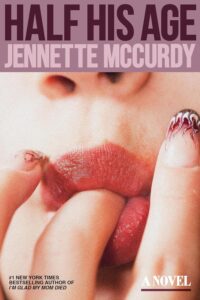 Jennette McCurdy, Half His Age
Ballantine, January 20
Jennette McCurdy blew the literary world away with her bracing and revelatory memoir about her mother, I’m Glad My Mom Died, in 2022. She proved herself, with biting grace, to be more than just a celebrity writing a run of the mill memoir. She led with vulnerability and nuance, revealing an abusive past with her mother, and a shockingly wise approach to getting through her traumas. All to say, McCurdy has earned the title of Writer now, not just a celebrity who writes. This year welcomes her first novel, a story of girl teenagedom and yearning, and an older male professor that takes up the centrality of the protagonist’s obsession. It’s an old story that’s constantly made new again: let’s see how McCurdy wields this knife. –JH
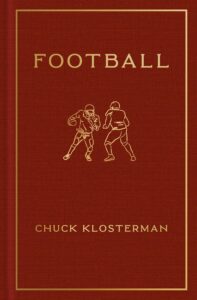 Chuck Klosterman, Football
Penguin Press, January 20
It is not a controversial thing to say that football is America’s game: it is violent, martial, and tribal; it makes billions of dollars and exploits thousands of people; it is brash and jingoistic, clinging all the while to an antiquated paternalism that fetishizes hierarchy and patriarchy. Yes, indeed, it is America’s game. And if you have any doubts, there is no better writer alive than Chuck Klosterman to walk you through all of the above… and much, much more. –JD
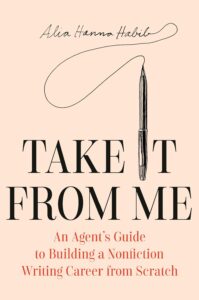 Alia Hanna Habib, Take It from Me: An Agent’s Guide to Building a Nonfiction Writing Career from Scratch
Pantheon, January 20
Habib is a literary agent to some of today’s most notable nonfiction writers including Hanif Abdurraqib, Judy Batalion, Merve Emre, Nikole Hannah-Jones, and Clint Smith. She also has a popular Substack, Delivery & Acceptance, that provides wonderful behind the scenes information on the publishing industry for insiders and outsiders alike. If you’re a nonfiction writer trying to get your book published, this book will no doubt be an essential resource. –EF
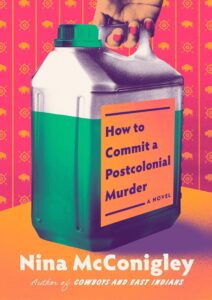 Nina McConigley, How to Commit a Postcolonial Murder
Pantheon, January 20
Twelve years after her magnificent debut short story collection Cowboys & East Indians—which explores the immigrant experience in the contemporary American West—won the PEN/Open Book Award, Nina McConigley is back with a 1980s-set murder-mystery novel about two Wyoming-based, Indian American sisters who decide to do away with their uncle. As a Wyomingite, 80s nostalgic, and long-time McConigley fan, I’ve been looking forward to this one for months. –Daniel Sheehan, Book Marks Editor in Chief
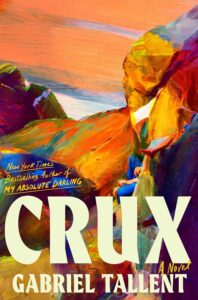 Gabriel Tallent, Crux
Riverhead, January 20
In Tallent’s second novel—after the bestselling My Absolute Darling—two teenagers, unlike in every way except in the difficulty of their home lives, forge a deep bond while rock climbing in the Mojave Desert, but soon must face the real world, which barrels down upon them. I love a good friendship novel, and I particularly love novels that tell me something about the world through an unfamiliar lens (I saw Free Solo but that’s about it), so I’m looking forward to this one. –ET
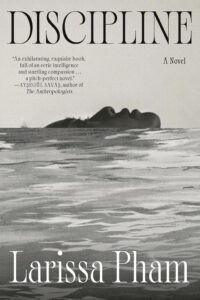 Larissa Pham, Discipline
Random House, January 20
I loved this erudite and surprisingly elegiac novel, in which a woman on a book tour confronts the life—and the person—she thought she had escaped, or perhaps lost. Pham is an art writer—her debut work of nonfiction, Pop Song, was wonderful, and it’s exciting to see her turn her hand and sensibility to fiction, especially fiction this lovely and smart about artmaking, love, ambition, and loneliness. –ET
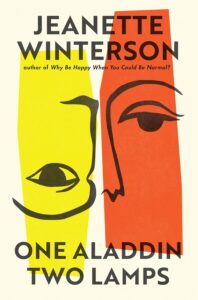 Jeanette Winterson, One Aladdin Two Lamps
Grove Press, January 20
Is it fiction? Is it essay? Is it myth? The latest from Winterson is, fittingly, a little of everything. Loosely using The Thousand and One Nights as framing device, Winterson once again blends genres and modes to deliver an omnivoracious look at modern life through the lens of story. –DB
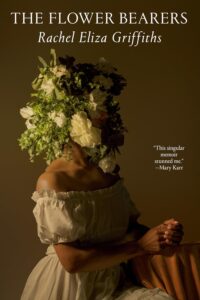 Rachel Eliza Griffiths, The Flower Bearers: A Memoir
Random House, January 20
On the day that Rachel Eliza Griffiths married Salman Rushdie, her closest friend, the poet Kamilah Aisha Moon, died suddenly. Less than a year later, Rushdie was attacked onstage and severely injured. In her memoir, Griffiths writes with deep wisdom and tenderness about both relationships, and about the ways in which grief is inextricably linked with our greatest loves. This is a precise and beautiful portrait of the moments, both excruciating and wonderful, that give life its meaning. –Jessie Gaynor, Senior Editor
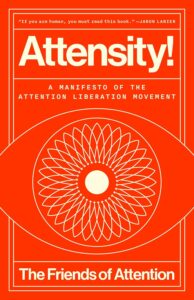 The Friends of Attention, Attensity!
Crown, January 20
If you, like me, are haunted every day by Annie Dillard’s koan/threat “How we spend our days is, of course, how we spend our lives,” then you already understand why a book about how to salvage our besieged attention spans is appealing. Plus, I’m a sucker for collective authorship, especially when the group calls itself something resonant of 19th century utopian movements like “The Friends of Attention.” The tech backlash section of my TBR list is growing precariously tall, but this one seems like it deserves a spot anyway. –Calvin Kasulke, Associate Publisher
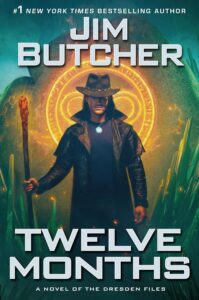 Jim Butcher, Twelve Months
Ace, January 20
Jim Butcher is the granddaddy of modern urban fantasy and he returns to his legendary Harry Dresden series with an unexpected entry, one that serves as much an exercise in grief and healing for the author as it does Dresden and his allies. On the one hand, it’s a big ol’ fantasy novel, following the clean-up after a massive magic battle destroys much of Chicago—but on the other, it is way more interested in how people process grief and depression than you’d expect from book eighteen of a long-running series. Rare is the series that can pull this kind of thing off, this late in the game. –DB
 Ed Simon, Writing During the Apocalypse: Reflections on the Great Unraveling
Bloomsbury Academic, January 22
Lit Hub columnist Ed Simon writes often about the apocalypse, always with an eye to what writers can and should do when the world is suffering, whether that threat is rising authoritarianism, war, or climate change. In his new book, Simon “addresses the wider question of what it’s like to write during what could be the last decades of human civilization, arguing that to craft imaginative spaces through the magic of words isn’t superfluous.” Why would anyone write when the world is on fire? Looking at books from the Bible to Stephen King, this one has an answer. –EF
 Heather Ann Thompson, Fear and Fury: The Reagan Eighties, the Bernie Goetz Shootings, and the Rebirth of White Rage
Pantheon, January 27
Pulitzer Prize-winner Thompson takes a close look at the infamous 1984 New York subway shooting that shook the world, connecting the case to contemporary racial and political divisions. When Bernhard Goetz shot four Black teenagers a few days before Christmas, he became the “Death Wish Vigilante,” a celebrity and even a hero to some across the country. With access to new archival materials and legal files, Thompson looks at the decades-long reverberations of the shooting, from Rupert Murdoch’s New York Post that stoked fear in Americans across the country to the Black boys who were all but forgotten. –EF
 William J. Mann, Black Dahlia: Murder, Monsters, and Madness in Midcentury Hollywood
Simon & Schuster, January 27
While I’m not much of a true crime guy, I appreciate that a splashy Hollywood murder is an attention-grabbing narrative upon which to hang a history of societal changes in the immediate aftermath of World War II. (It’s certainly catchier than titling a book, say, A History of Societal Changes in the Immediate Aftermath of World War II.) If a better understanding of postwar America comes with sifting through a notorious but misunderstood cold case, I’m happy to go along for the ride. –CK
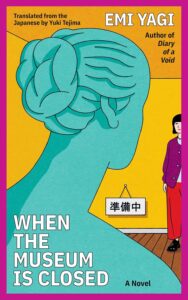 Emi Yagi, tr. Yuki Tejima, When the Museum is Closed
Soft Skull, January 27
I loved Emi Yagi’s surreal office story Diary of a Void, where a woman pretends to be pregnant for nine months to get out of doing annoying tasks in her office. When the Museum is Closed is about a part-time, lonely museum worker, Rika Horauchi, whose job is to converse with a statue of Venus—in Latin—on Mondays, when the museum is closed. A fun and (metaphysical) sexy queer love story, Yagi’s latest tackles love, loneliness, and the role of women’s beauty in society. –EF
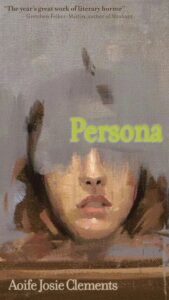 Aoife Josie Clements, Persona
LittlePuss Press, January 27
I pre-ordered this book a few months ago after stumbling on LittlePuss’s excellent social media campaign. What’s the deal with this weird company? How does it tie into the travails of a trans woman who discovers porn of herself that she doesn’t remember making? I don’t know but I’m expecting capitalism is involved, but also terror. Either way, I’m stoked to find out. –DB
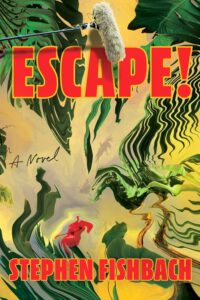 Stephen Fishbach, Escape!
Dutton, January 27
Reality competition shows always transport me to this place of hyperreality and uncannyness, and there’s something so specific about a novel written by a former Survivor contestant about the drama and terror of appearing on a Survivor-esque series, especially when it considers the experiences and motivations of not only of the contestants, but everyone on location. As someone who also used to spend a lot of time behind a camera, I’m such a sucker for anything that takes me back into the weird, often cruel world of production. –Oliver Scialdone, Community Editor
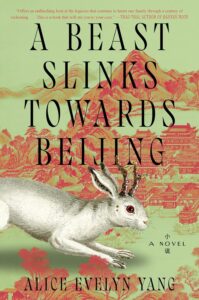 Alice Evelyn Yang, A Beast Slinks Towards Beijing
William Morrow, January 27
This debut is a magical realist family saga of a daughter’s fraught reunion with her father, refracted with the history of 20th century China and the mythical beasts that stalk it. Thao Thai writes that it “sings with artful prose and unforgettable storytelling, reminding us of the promise of redemption, even amid the dark consequences of violence.” Plus, it’s an early contender for the best title of the year. –ET
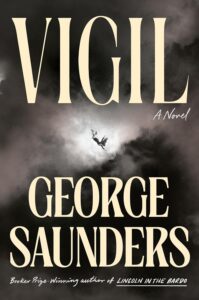 George Saunders, Vigil
Random House, January 27
Is it a long (192 pages) George Saunders story? Is it a short (192 pages) George Saunders novel? It doesn’t really matter—fans of the writer will be pleased to find his irreverent, gee-shucks-with-a-sharp-edge, butt-jokes-with-a-heart-of-gold voice intact in his latest missive (192 pages), which concerns a ghost tasked with “comforting” an oil tycoon on his deathbed—that is, if the other ghosts, both “real” and of the tycoon’s invention, don’t get in the way, and force him to confront the consequences of his actions (read: climate change). Like so much of Saunders’s work, it’s goofy, it’s absurd, and it’s also reaching toward the unfathomable, asking The Big Questions about morality, fate, and what it means to die (and thus, of course, to live). –ET
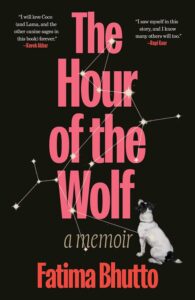 Fatima Bhutto, The Hour of the Wolf
Scribner, January 27
The Hour of the Wolf is a memoir about one of my favorite things in the world: dogs. Technically this book is about just one dog, the little Jack Russell terrier that became Bhutto’s closest companion during one of the most difficult times of her life. It’s in the company of this loyal dog that Bhutto is finally able to examine some of her most profound personal tragedies and the complex relationships that have shaped her life. The Hour of the Wolf is a far-ranging memoir about motherhood, art, family, and the way that a dog’s unconditional love can offer a rare opportunity for healing. –MC
FEBRUARY
***
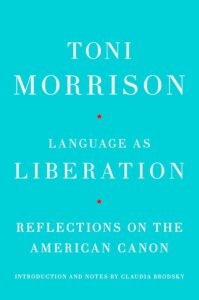 Toni Morrison, Language as Liberation: Reflections on the American Canon
Knopf, February 3
As one of our greatest literary thinkers and speakers, Toni Morrison’s legacy is (almost) as cemented in her lectures and literary criticism as it is in her novels; this series of lectures from her tenure as a professor at Princeton University, collected and introduced by her colleague Claudia Brodsky, centers on Black characters in American literature, and “breaks wide open the American conception of race with energetic, enlivening readings of the nation’s canon, revealing that our liberation from these diminishing notions comes through language.” If you’ve ever wanted to sneak inside one of Morrison’s classes, here’s your chance. –ET
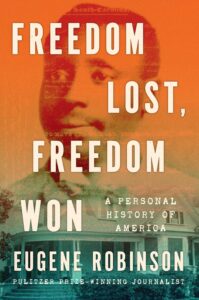 Eugene Robinson, Freedom Lost, Freedom Won: A Personal History of America
Simon & Schuster, February 3
All too often when reckoning with the sheer scale of American slavery—its depravities, its systematized cruelties—one can lose sight of individual stories. And in missing that personal perspective we can fail to understand how the past is intimately connected to the present. Which is why Pulitzer Prize-winning columnist Eugene Robinson’s historical journey is so important, tracing as it does his family’s story all the way back to the purchase of his great-great grandfather Harry (who became Henry Fordham) through the paroxysms of the Civil War, Reconstruction, Jim Crow, and the Civil Rights era. A true—and important—American story. –JD
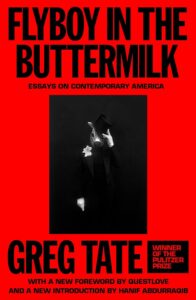 Greg Tate, Flyboy in the Buttermilk: Essays on Contemporary America
FSG, February 3
I use every opportunity these nice people give me to extol the late Greg Tate, whose stylish, crystalline cultural essays cut to the quick of a hundred subjects–from Black Republicans to the Black intellectual, from Bad Brains to Basquiat. This fresh reissue of his excellent, out-of-print collection comes with new front-matter from Questlove and Hanif Abdurraqib. Couldn’t be more excited to see this sacred text find new fans. –Brittany K. Allen, Staff Writer
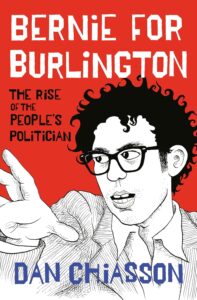 Dan Chiasson, Bernie for Burlington: The Rise of the People’s Politician
Knopf, February 3
Didn’t we almost have it all… Yes, friends, Bernie would have won, and oh what a different country, what a different world, we would all be living in right now if certain DNC power brokers hadn’t made up their minds to anoint Hillary. Still, no sense relitigating all that unpleasantness now. Why torture ourselves? What we can do instead is read a “people’s epic” about the origin story of the most successful and beloved American socialist since Eugene Debs. Poet, literary critic, and proud son of Burlington, Dan Chiasson has written a “portrait of a politician, a place, and a movement that would change America.” –DS
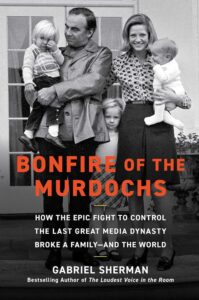 Gabriel Sherman, Bonfire of the Murdochs
Simon & Schuster, February 3
Yup, if you didn’t already know, the saga of Rupert Murdoch’s media empire really was a real-life Succession—except sadder, meaner, and a lot less funny. As in much of Western myth, this is a story of fathers and sons: Rupert himself was driven by a need to impress the malign shade of his own father, and passed that toxicity down to his children, particularly his eldest Lachlan. In pitting his offspring against each other in a battle for the family empire Rupert Murdoch became part of a tale as old as time… A tale well told in Gabe Sherman’s Bonfire of the Murdochs. (Really though, can any story be called mythic if it features cameos by Bill O’Reilly and Donald Trump?) – JD
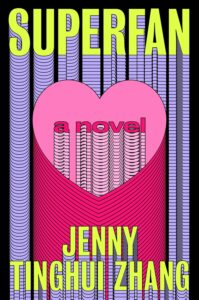 Jenny Tinghui Zhang, Superfan
Flatiron, February 3
I’m obsessed with stories about obsession. And as a former (okay, current) stan of One Direction, I’m extra obsessed with stories about boyband obsession. Jenny Tinghui Zhang’s novel Superfan follows Minnie, a young woman who becomes a fan of the boyband HOURglass, especially the band’s token bad boy Halo. When the fandom turns against Halo and a scandal threatens his standing, Minnie takes it upon herself to save him. This novel sounds equally dark and dazzling, like a spotlight flickering on a dim stage. This is a book I’ll be recommending to all my coolest friends. –MC
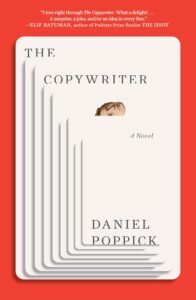 Daniel Poppick, The Copywriter
Scribner, February 3
Some of my favorite novelists are actually poets, and this now includes Daniel Poppick, who has written a stimulating and deeply pleasurable book that made me feel homesick for being a young person in New York and talking about literature with my friends, and also, weirdly, hopeful for the future. It takes the form of a set of notebooks, starting in the summer of 2017, into which a poet called D__, who daylights as a copywriter, dumps his observations, some scraps of poetry, various stories from his life, and his dreams, all with a highbrow sensibility and a winking sense of humor. It’s a little bit Renata Adler, a little bit Ben Lerner (sorry!), a little bit Maggie Nelson. –ET
 Chloe Michelle Howarth, Heap Earth Upon It
Melville House, February 3
I keep seeing comparisons to Shirley Jackson and Julia Armfield alongside the phrase “sapphic yearning,” which is enough to catch my attention when it comes to literally anything. Sunburn’s been on my TBR for a million years (it seems like I never make as big of a dent as I hope, no matter how much I read), but Heap Earth Upon It might just bump it up. I also love a family drama. –OS
 Cristina Rivera Garza, tr. Christina MacSweeney, Autobiography of Cotton
Graywolf, February 3
Garza’s latest (following her Pulitzer-winning memoir Liliana’s Invincible Summer) is a historical novel braided with deep personal narrative and research, creating something unique and almost indefinable—a book about her grandparents, about the US/Mexico border, about José Revueltas and the history of cotton. –DB
 Emily Nemens, Clutch
Tin House/Zando, February 3
Five undergraduate friends find themselves decades later spread across the country, linked by the life-line of a group chat. As they converge on Palm Springs for a reunion, they unpack politics, fertility treatments, addiction, marriage, and aging and absent parents. It’s a big, beautiful novel about what friendship means as we get older. –EF
 Jo Nesbo, Wolf Hour
Knopf, February 3
Murder mysteries are miracles. Despite roughly one billion crime novels having been written—and the average fan of the genre having read well over half of them—authors still manage to write crime thrillers that can surprise you. That this forthcoming Nesbø release promises to be impossible to put down and full of unpredictable twists isn’t surprising; that I expect it to live up to the hype, however, is. –CK
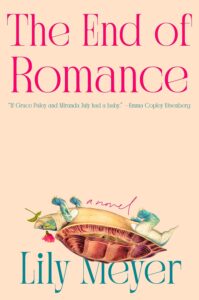 Lily Meyer, The End of Romance
Viking, February 3
My life-long quest is to read every voicey, smart romantic comedy I can get my greedy hands on, and thankfully a new, incisive and world-opening way of looking at this age-old genre is coming down the pike. Lily Meyer’s End of Romance is the anti-rom rom-com of the year. The protagonist has been through the ringer: an emotionally and physically abusive early marriage has contoured her heart and her outlook, as she seeks freedom and a second chapter after leaving her abuser. She does not want love anymore. She does not want romance. She wants sex, and she wants flirtation, and she wants understanding, and intimacy, but her trust in any sort of relationship has been damaged and eroded. She wants something entirely new this time around. The only question is, is it possible to invent a new heterosexual relationship under patriarchy? Meyer is the one for the question, as she wields her considerable intellect and philosophical powers in this heart-warming and thought-provoking book, a romance built for our modern age. –JH
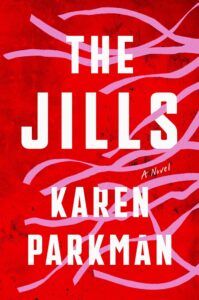 Karen Parkman, The Jills
Balantine, February 10
Parkman’s debut takes us into a familiar-but-unfamiliar subculture: the Jills, also known as the cheerleaders for the Buffalo Bills. When one of the Jills, Jeanine, disappears, her teammate Virginia starts pulling at every thread to find her, until the world as she knows it begins to unravel. Sounds like fun, and also Publishers Weekly called it “the best novel about cheerleaders since Megan Abbott’s Dare Me,” which is saying something. –ET
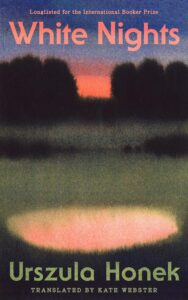 Urszula Honek, tr. Kate Webster, White Nights
Two Lines Press, February 10
Longlisted for the International Booker Prize, this debut short story collection features 13 interconnected stories concerning the various tragedies of the residents of the Beskid Niski region in southern Poland. The Booker judges say, “Honek crafts a narrative mosaic that explores themes of isolation, identity, death, and the longing for connection,” calling it “a dark, lyrical exploration of the ways in which people seek meaning and belonging in a transient world.” Two Lines Press has been publishing incredible literature in translation, and we’re lucky they are bringing this one to the US. –EF
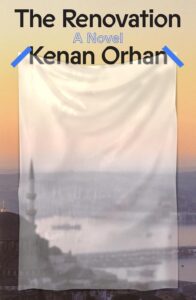 Kenan Orhan, The Renovation
FSG, February 10
In which Dilara, a Turkish woman living in Salerno, renovates her bathroom only to find that it has been, somehow, renovated into a Turkish prison. (Relatable, amirite?) Can’t wait to read this short surrealist novel; sounds just my speed. –ET
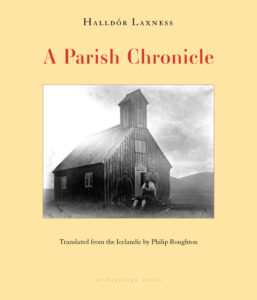 Halldór Laxness, tr. Philip Roughton, A Parish Chronicle
Archipelago, February 10
In the Icelandic Nobel laureate’s tale, Mosfell Church is a small parish fated to be demolished. Known as the ancient burial mound of national hero Egill Skallagrímsson, local farmer Ólafur Magnússon defends the church against the parish priests (he claims to be a descendent of Egill’s). Are artifacts disappearing from the church? Are elf folk taking them? Laxness combines folklore and myth with humble details of the natural world in this delightful novel. –EF
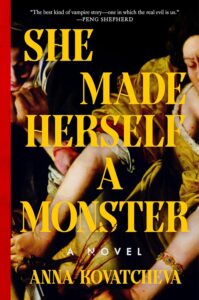 Anna Kovatcheva, She Made Herself a Monster
Mariner, February 10
Me? Reading gothic folk horror about the monsters that live inside all of us? It’s more likely than you think! This book hits almost all of my favorite things to read about. Creatures, autonomy, and a con artist posing as a vampire slayer? Exactly what I look forward to when I open a book. –OS
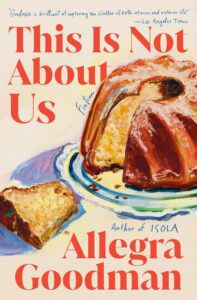 Allegra Goodman, This is Not About Us
The Dial Press, February 10
This is Not About Us is a story of the Rubinstein family across three generations. After the death of their youngest sister, Sylvia and Helen attempt to navigate their grief, but a slight over a slice of apple cake keeps the matriarchs of the family in a decade-long feud. Their children and grandchildren, however, are busy with their own lives and refuse to be involved; in short story-like chapters, Goodman describes their divorces, dates, career failures, college aspirations, dance recitals, and trips… Goodman’s insight into the intimate machinations of a domestic life is absolutely perfect. –EF
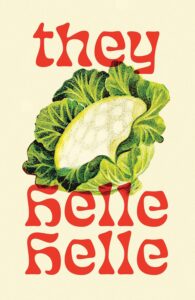 Helle Helle, tr. Martin Aitken, they
New Directions, February 10
I love quiet stories that find meaning in the otherwise mundane, and they is a novel about a mother and daughter so close they’re essentially a single entity, living their regular lives over the backdrop of the mother’s very serious illness. I’m also excited about the form of this novel, and it’s the first book in a trilogy that’s very celebrated in its home country of Denmark. –OS
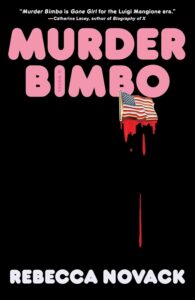 Rebecca Novack, Murder Bimbo
Avid Reader Press, February 10
The title alone has me hooked, but throw in Catherine Lacey calling it “Gone Girl for the Luigi Mangione era” and a synopsis that involves a sex-worker assassin trying to set the story straight (on her favorite podcast, no less) after being sold out in the wake of a political assassination and you’ve got the makings of everything I want this winter. –DB
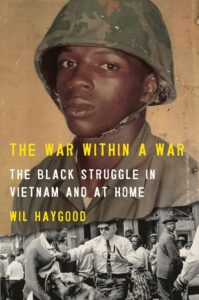 Wil Haygood, The War Within a War: The Black Struggle in Vietnam and at Home
Knopf, February 10
If the Vietnam War was a grim moment in the ongoing collapse of the American dream, it was particularly so for Black Americans. Wil Haygood’s in-depth history explores what amounted to a war on two fronts for Black soldiers, nurses, doctors, journalists, activists, politicians, and celebrities, all of whom had to reckon with both the direct impacts of a brutal war fought for an empire that cared little for them, and a general American populace often unwilling to accept the meager gains of the civil rights era. A hard and important chapter in this country’s history. –JD
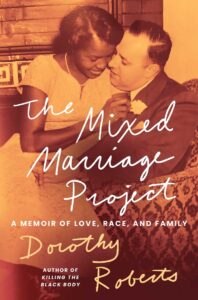 Dorothy Roberts, The Mixed Marriage Project
Atria/One Signal, February 10
From the author of Killing the Black Body, a memoir about growing up in an interracial family in 1960s Chicago, where such a thing was almost unheard of—and also about trying to understand your own parents, complicated and imperfect though they may be. –ET
 Anton Jäger, Hyperpolitics: Extreme Politicization without Political Consequences
Verso, February 10
Really, wtf is going on? Never have we been aware of so much—corrosive politics, daily catastrophes, celebrity banalities—and known so little. This dizzying and ubiquitous unreality, suggests Anton Jäger, is the era of hyperpolitics, made manifest in “a restless, unsteady public sphere where private passions overflow into politics but rarely build enduring power.” Sounds about right. –JD
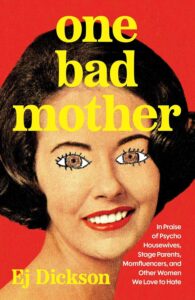 Ej Dickson, One Bad Mother: In Praise of Psycho Housewives, Stage Parents, Momfluencers, and Other Women We Love to Hate
S&S/Simon Element, February 10
What does it mean to be a bad mom? From momfluencers to stage moms to trad wives, NY Mag culture writer of your favorite guilty-pleasure articles Dickson unpacks one of the most polarizing labels: the bad mom. A cultural commentary full of Victorians, influencers, and fictional icons, Dickson places Ballerina Farm next to Mommy Dearest, exposing all our own prejudices for what women are supposed to be and do once they become mothers. –EF
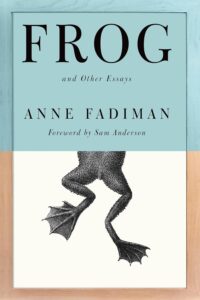 Anne Fadiman, Frog: And Other Essays
FSG, February 10
Fadiman is one of our best personal essayists, and I’ve been excited about her forthcoming collection since stumbling across an excerpt from “Frog” in Harper’s two years back. This poignant chronicle of Bunky, the family’s African clawed frog, is a capacious look at what it means to love a pet. Other pieces in this open-hearted project consider Samuel Taylor Coleridge’s parenthood prospects and bygone printing technologies. –BA
 Richie Hofmann, The Bronze Arms
Knopf, February 10
Richie Hofmann is one of our great poets of the erotic: his last collection, A Hundred Lovers (you know what you’re getting into) somehow managed to balance a formal, almost classical simplicity with a diaristic accounting of sex, lots of queer sex (and the spaces and modes and moods that surround it). With his latest, The Bronze Arms, Hofmann maintains the classical register while moving back further in his life, all the way to a traumatic childhood event, its aftermath and its lifelong symbolism. –JD
 Lisa Siraganian, The Problem of Personhood: Giving Rights to Trees, Corporations and Robots
Verso, February 17
We all know corporations shouldn’t legally be called “people.” That’s crazy. And yet, here we are in the horrible aftermath of Citizens United. But what about unequivocally good things, like trees or rivers? Or even friendly little robots? Should they, too, have the rights of a person? And if so, should we maybe look a little deeper at the unintended consequences? Thankfully we have Lisa Siraganian doing just that in this interdisciplinary investigation of personhood, which examines the political, philosophical, and ethical ramifications of expanding our ideas of personhood. Important reading in the burgeoning age of AI. –JD
 Jon Meacham, American Struggle: Democracy, Dissent, and the Pursuit of a More Perfect Union
Random House, February 17
It’s hard to feel optimistic about the so-called American experiment these days, as two centuries of democratic norms have been pretty much chucked onto the trash pile of history… But historian Jon Meacham’s collection of essays reminds us—covering as it does the full breadth and depth of this country’s past—that there have been countless moments in the history of this republic where all seemed lost. From the colonizers of the early 17th century to the darkness (and light) of the Civil War to the march on Washington, American Struggle reminds us that the founding principles of the United States, as hard as they are to live up to, are still worth fighting for. –JD
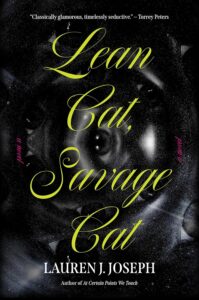 Lauren J. Joseph, Lean Cat, Savage Cat
Catapult, February 17
I love when I read a book that drops me right in the middle of a scene. Not scene as in a piece of a story, but scene as in a scene. A music scene. An art scene. A party scene. The scene that being scene was named after when I was in middle school. But the scene Lean Cat, Savage Cat takes you to is underpinned by a research project centered around iconic Berlin trans nightlife figure (and former lover of David Bowie) Romy Haag. It’s also about an obsession with a present-day Bowie-esque pop star. I’m hoping for something that feels a little like Velvet Goldmine? Even if it doesn’t, I know I’ll find something to love here. –OS
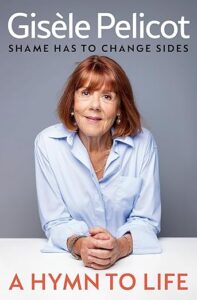 Gisèle Pelicot, A Hymn to Life
Penguin Press, February 17
Contemporary public life seems disproportionately populated by cowardly, self-regarding hypocrites fueled by vanity, insecurity, and greed—which makes the courage of Gisele Pelicot that much more extraordinary. Most are familiar with the horrific crimes of her husband and the men he enlisted to rape her, but in a Hymn to Life, Pelicot, who waived her right to anonymity in pursuit of justice, calls out a society pervasive in its contempt for women, that allows for and often facilitates sexual violence. In telling her own story Pelicot illustrates the urgent need for radical change in how we reckon with abuse and misogyny, both legally and societally. –JD
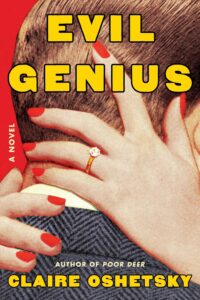 Claire Oshetsky, Evil Genius
Ecco, February 17
I love any books that fall into the Weird Woman genre, and this comic noir about a woman who’s obsessed with the idea of killing or dying for love sounds perfect. The main character of Evil Genius is the natural next step in the evolution of the Weird Woman: the Dangerously Unhinged and Murder-obsessed Woman Who Spends Too Much Time at the Gun Range. You know her, you love her, you want to be her, etc. Oshetsky’s newest novel follows Celia, a young woman whose seemingly idyllic life is upended when a friend of hers is murdered in an affair gone wrong. Celie becomes increasingly fixated on the idea of having her own murderous affair, until nothing can stop her from pursuing her deadliest fantasies. Evil Genius promises to be dark, clever, and razor sharp. –MC
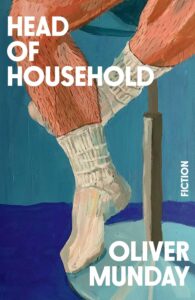 Oliver Munday, Head of Household
Simon & Schuster, February 17
I happen to know that Oliver Munday, who is one of our best working cover designers, has great taste in literature. How annoying that he also has talent in it! Stick to one lane! You can’t be good at everything! Just kidding; I’m excited to read his short story collection, which sounds like a very chaotic portrayal of modern fatherhood. Cover looks great too, naturally. –ET
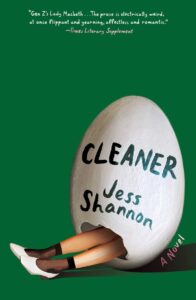 Jess Shannon, Cleaner
February 17
I mean it in the best way possible when I say this book has such a diabolical energy. An artist becomes a cleaner at a gallery and grows obsessed with the work in her post-academia aimlessness, and then begins an affair with another aspiring artist who brings her into the home she shares with her boyfriend by hiring her to clean. What a setup for some incredible drama, and some hard truths about making art under capitalism. –OS
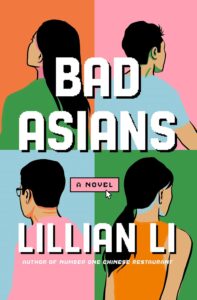 Lillian Li, Bad Asians
Henry Holt, February 17
The second novel from the author of 2018’s Number One Chinese Restaurant follows four Asian-American Millennials who disappoint their parents by graduating into the 2008 recession, and find themselves living at home. Things only get worse when a documentary about the group—by someone who has apparently never ever disappointed her parents—goes viral. Who even are they anymore? Who were they ever? Questions for the ages, in a smart package. –ET
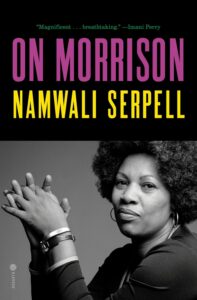 Namwali Serpell, On Morrison
Hogarth, February 17
Serpell is such a delicate critic. And I can’t think of a better reader to conduct this study of Toni Morrison, one of our most feted literary lions. Serpell’s inquiry weighs the consuming mythos around Morrison against the real woman’s complex and thorny output. How do we read, critique, or mourn a monument? –BA
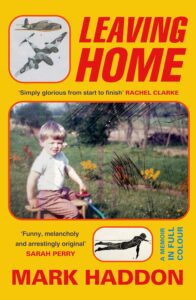 Mark Haddon, Leaving Home: A Memoir in Full Colour
Doubleday, February 17
Booker-nominated English novelist Haddon, best known for his 2003 juggernaut The Curious Incident of the Dog in the Night-Time, is also an acclaimed writer of short fiction and children’s books, but Leaving Home is his first work of nonfiction. An unflinchingly honest, darkly comic, and richly illustrated memoir about Haddon’s unique childhood and how it shaped his view of the world, Leaving Home sounds like a fascinating window into a singular mind. –DS
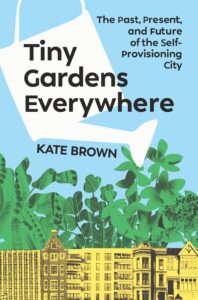 Kate Brown, Tiny Gardens Everywhere: The Past, Present, and Future of the Self-Provisioning City
W.W. Norton, February 17
The phenomenon of the collective urban garden is probably much older than you think. As you will learn in Kate Brown’s Tiny Gardens Everywhere, these hard-won patches of green in the middle of our urban sprawls aren’t just the product of idealistic hippies rolling up their sleeves. In fact, the community garden as we know it is really just an echo of the kinds of 17th-century commons found in London or Paris, or the safety net plots of mid-century Berlin, or the abundant lots of Washington, DC planted by Black southern migrants… Whatever its origin, a community garden represents the best of our collective care, for the land, and for each other. –JD
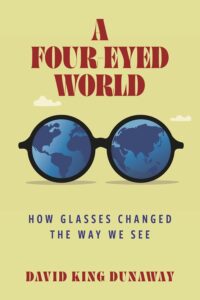 David King Dunaway, A Four-Eyed World: How Glasses Changed the Way We See
Bloomsbury Academic, February 19
Look, I love to learn about the world through the lens—get it?—of some hyper-specific innovation or niche historical figure, but this forthcoming nonfiction title isn’t just about the history of glasses. A Four-Eyed World promises to explore the future of this technology that’s so ubiquitous we forget it’s a form of technology at all. And with ICE agents using Meta’s AI glasses during immigration raids, it’s a crucial time to consider how we integrate glasses into our daily lives. –CK
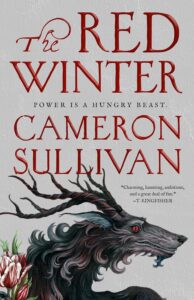 Cameron Sullivan, The Red Winter
Tor, February 24
If a millennial Philip Pullman wrote Jonathan Strange & Mr. Norrell, you might end up with something like The Red Winter. Taking the legends of the Beast of Gévaudan as inspiration, it’s at once a sweeping historical fantasy and a brilliantly playful modern riff on classic storytelling. I hope this is only the first time we get to adventure with Sebastian Grave, because I could’ve hung out in this more-magical version of our world for a thousand more pages. –DB
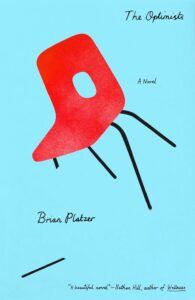 Brian Platzer, The Optimists
Little, Brown, February 24
So many of us had that teacher: the one who inspired us, who lifted us out of our small childhood lives and put us on a track towards where we are now. Imagine if that teacher wrote your story, and in so doing told their own, and you’d have something like Platzer’s latest novel. Plus, he’s a long-time education journalist, so the pedagogy (as it were) is bound to be on point. –DB
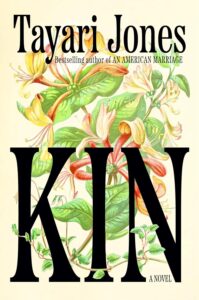
Tayari Jones, Kin
Knopf, February 24
Kin is a novel of mother and daughters, though the two main characters, Vernice and Annie, are motherless themselves. Best friends and neighbors, the girls live radically different lives and grow into very different women. Vernice is raised by her aunt after her mother’s death, and at eighteen she leaves their Louisiana home for Spelman College where she meets strong, connected Black women who open up a new world of possibilities. Annie, who was abandoned by her mother, fixates on the idea of finding her once again. Jones’ American Marriage was a beautiful, emotional story about love and commitment; this new novel is on everyone’s must-read list for good reason! –EF
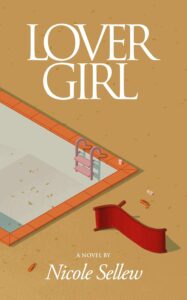 Nicole Sellew, Lover Girl
Clash, February 24
This fresh, freaky picaresque follows “lover girl,” a struggling novelist self-isolating at a rich friend’s house in the Hamptons. When a series of romantic misadventures (in the forms of The Ex and The Host) befall our hero, love takes her miles off course. Sellew is a bold new voice, using sharp, stylish prose to explore the hinterland of contemporary mating. Fans of Halle Butler and Ottessa Moshfegh, please take note. –BA
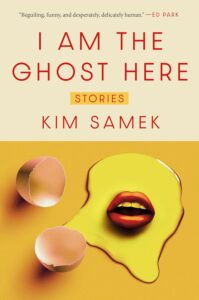 Kim Samek, I Am the Ghost Here: Stories
The Dial Press, February 24
I love reading about the horrors. Big fantastical ones, but also ones that feel so normalized and mundane and get extrapolated to their most dystopian and absurd. I’m always on the lookout for the types of books that remind me a little of those utopian virtual albums about finding artificial happiness in technology and consumerism, and I think I’ve found one in I am the Ghost Here. –OS
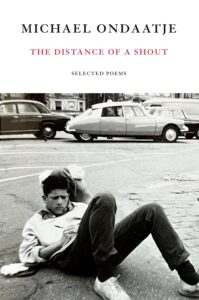 Michael Ondaatje, The Distance of a Shout: Selected Poems
Knopf, February 24
Not that anyone is keeping score (I might be) but Michael Ondaatje remains our very best poet-turned-novelist. For those not familiar with his poetry, Ondaatje has always observed the world with a balanced mix of delight, awe, and humor, deadly serious about matters of the heart without ever taking himself too seriously. With this collection Ondaatje has selected poems from his life in something like a chronological order; from the elation of early loves to the exquisite intensities of fatherhood to the somber meditations of aging, he has created a beautiful memoir in verse, a lasting document of a life lived in wonder and honesty. –JD
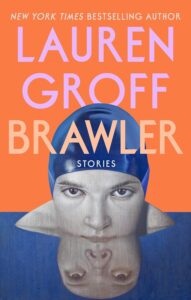 Lauren Groff, Brawler: Stories
Riverhead, February 24
I mean, it’s a new Lauren Groff collection. A friend of mine who primarily reads horror fiction squealed when I told them this was coming in the new year, because she’s that beloved. What more do you need to know? (Okay, okay: nine stories, several of which have seen the light in The New Yorker over the last few years—and every one of them is a true stunner. Morally passionate and beautifully crafted, it’s another excellent collection from one of the best to ever do it.) –DB
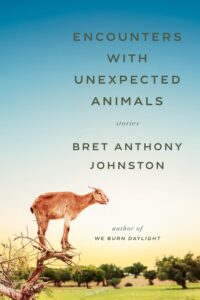 Bret Anthony Johnston, Encounters with Unexpected Animals
Random House, February 24
I remember reading the titular story (or some version of it) from this collection—Johnson’s follow-up to last year’s excellent We Burn Daylight—more than a decade ago, and being deeply impressed by how economically it delivered its punch. I’m looking forward to a whole collection of stuck landings. –JG
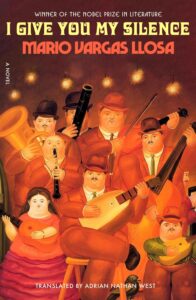 Mario Vargas Llosa, tr. Adrian Nathan West, I Give You My Silence
FSG, February 24
The final novel from the Nobel Prize-winning Peruvian novelist, journalist, essayist, and politician—who passed away in April of last year at the age of 89—is part detective novel, part political allegory, about an idealistic writer who believes that by penning the biography of an elusive musician, he might capture his country’s soul and convince his fellow citizens to lay down their arms. Billed as Vargas Llosa’s “last statement on the revelatory, maddening, and irrepressible belief in the transformative power of art,” I Give You My Silence is the great man’s swan song to his homeland. –DS
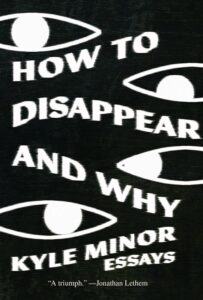 Kyle Minor, How to Disappear and Why: Essays
Sarabande, February 24
I’ve stumbled across so many favorite essay collections thanks to the braintrust at Sarabande. Kyle Minor’s latest looks to be another strange delight. This collection considers the missing. Lyric essays on ghosts and hidden heroes–like Jan Karski, the Polish Resistance fighter–explore the ways and reasons people choose to disappear. This one’s caught my eye especially because Minor deconstructs the essay form, and enlists strange structures to circle his negative space. –BA
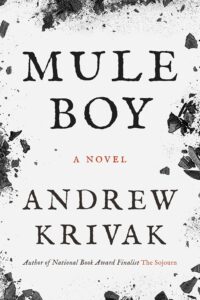 Andrew Krivak, Mule Boy
Bellevue Literary Press, February 24
Andrew Krivak’s 2020 novel The Bear was a quietly riveting masterpiece of post-apocalyptic literature; slyly beautiful and deeply philosophical, it has stayed with me from the moment I turned the final page. So I am eager to get my hands on his newest, Mule Boy, the story of a young mine-worker confronted with an abject tragedy that will shape his life—and those around him—for decades. –JD
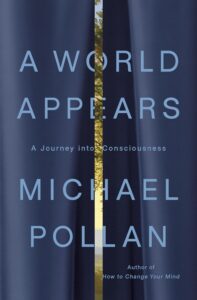 Michael Pollan, A World Appears: A Journey into Consciousness
Penguin Press, February 24
Michael Pollan is at it again. As one of our great nonfiction tour guides Pollan has led us through the complex worlds of co-evolution, agricultural sustainability, psychedelic drugs, and much more. With A World Appears, Pollan is now taking on one of the oldest—and thorniest—questions in the history of human thought: how do we define our own consciousness, and where does it even come from? From the hard materialism of contemporary neuroscience to the fuzzier ideas of our great philosophers to the deeply problematic idea of AI sentience, Pollan explores the many ways we conceive of ourselves as ourselves, and where the idea of consciousness might go from here. –JD
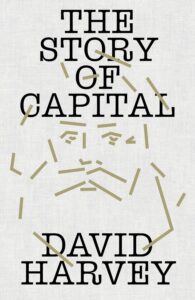 David Harvey, The Story of Capital: What Everyone Should Know About How Capital Works
Verso, February 24
David Harvey is renowned as an academic, but I think he’s probably most widely known as the master Marx explainer—his lectures and analyses have opened up Marx’s work to many new readers, particularly Marx’s massive and complex Capital. Harvey’s ability to entangle the dense work and make it legible is unparalleled, and I’m looking forward to this new book about Marx’s influential economic text, and what Harvey has to teach about its lessons and shortcomings for our contemporary economics and society. –JF
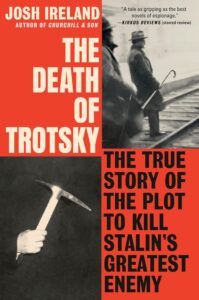 Josh Ireland, The Death of Trotsky: The True Story of the Plot to Kill Stalin’s Greatest Enemy
Dutton, February 24
The famously deadly rivalry between Leon Trotsky and Joseph Stalin gets the historical thriller treatment in this new book, which promises the research of history alongside the drama of true crime. Ireland’s books follows the main players—Trotsky the banished revolutionary, Stalin the ascendant dictator, and Ramón Mercader the Spanish aristocrat and Soviet assassin—as they race towards their historic collision in Mexico City. Ireland’s book leans heavily on detail and tension to bring this story alive, even for the most well-read history buffs. After all, we know where the ice pick of Damocles is going to fall. –JF
MARCH
***
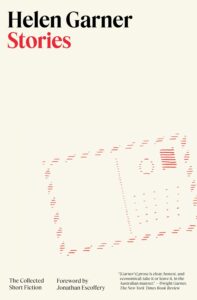 Helen Garner, Stories
Pantheon, March 3
Garner is an Australian laureate, known for capturing the 1970s demi-monde and the minefield of intimate social relationships. I fell for the coolly riveting The Spare Room a few years back and keep returning to the well. In this new collection of short fiction, we can expect the same frank humor and exquisite detail spread across a pantheon of spiky characters. Hometown gossips and lonely girls to the front. –BA
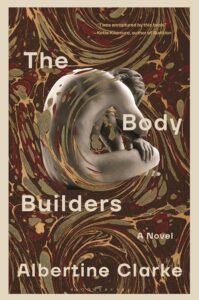 Albertine Clarke, The Body Builders
Bloomsbury, March 3
Is speculative surrealism a thing? If it’s not, I’m making it one to write about why I’m looking forward to The Body Builders. I like reading about isolation and what it does to a person’s sense of self, and what it means to exist between your mind and the physical world. It feels so lonely, but also fantastical. Definitely my kind of niche. –OS
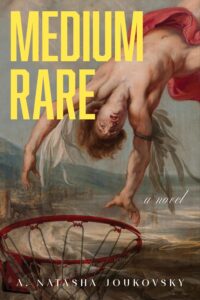 A. Natasha Joukovsky, Medium Rare
Melville House, March 3
I loved Joukovsky’s witty romp The Portrait of a Mirror, and I have to say the premise of her latest sounds perfectly absurd: a mid-level Washington lobbyist fills out a perfect March Madness bracket and faces “spiraling consequences”! It’s a retelling of the Icarus story narrated by an actual Cassandra! I’m going to need some fun in March, and I’m counting on this book to bring it to me. –ET
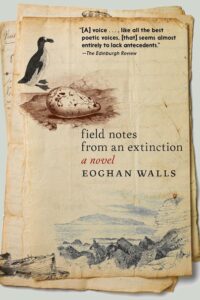 Eoghan Walls, Field Notes from an Extinction
Seven Stories, March 3
Here’s more fodder for the semi-annual call for more poet novels: Northern Irish poet Eoghan Walls’ sophomore novel is narrated via a nineteenth-century ornithologist’s notebook as he lives on a remote Irish island. Ignatius Green, “single-minded and self-righteous, brilliant and bumbling,” must contend with hunger, suspicious locals, and a feral child. A darkly funny literary thriller about research, seabirds, and the terror of parenthood? Absolutely sold. –JG
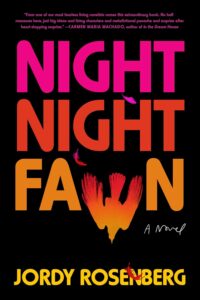 Jordy Rosenberg, Night Night Fawn
One World, March 3
I love when a book has the word “deranged” in the description. That’s how I know a book is for me. Barbara Rosenberg is high on opioids and dying of a terminal illness and, most importantly, writing her memoir. She’s led a complicated life, but she would prefer to write about her thoughts on gender and Karl Marx. Most of all, she wants to write about her relationship with her estranged trans son and her former best friend. But as her condition worsens and her delusions begin to take over, she’s forced to confront these two in a way she never expected. Night Night Fawn sounds smart and funny and messy in equal measure. –MC
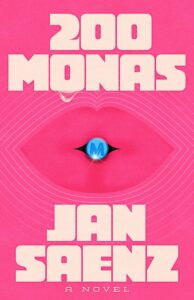 Jan Saenz, 200 Monas
Little, Brown, March 3
I’m a simple man. If you pitch me a book premised on the existence of a made-up illegal drug, I’m intrigued. If the plot promises to be a Coen brothers-esque crime comedy about an unprepared college senior thrust into the role of inept street dealer, I’m interested. If the motivating factor behind the drug dealing is a sort of reverse Brewster’s Millions “sell all these drugs in 48 hours or we’ll kill you”, I am going to pre-order the book. –CK
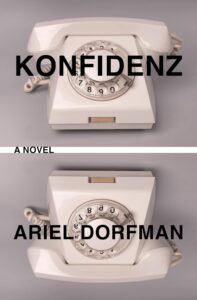 Ariel Dorfman, Konfidenz
Other Press, March 3
Ariel Dorfman has spent a career examining the pain of exile and the horrors of dictatorship in books, plays, and essays, and his latest novel zooms in on the personal and internal stresses of suspicion and mistrust. Told mostly through dialogue, Konfidenz is an intensely psychological tete-a-tete about a woman who receives a phone call from a stranger claiming to be her friend, but soon is revealed to have intimate and dangerous knowledge about her life. Dorfman’s own life was upended after the 1973 coup against Salvador Allende, and he draws on his experiences of displacement in this new novel of paranoia and manipulation. –JF
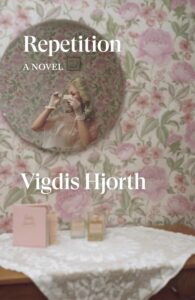 Vigdis Hjorth, tr. Charlotte Barslund, Repetition
Verso, March 3
This slim new translation from Verso is classic Hjorth: a deceptively simple family story unfolds into dark and painful corners. Repetition begins with a novelist experiencing a Proustian moment at the opera when she sits next to a teenage girl and her parents. The evident tension between the family of strangers sends the novelist back to memories of being 16 years old, a year of firsts for her. Her world is also enclosed by her parents: her mom anxiously and judgmentally surveils her, while her dad rarely intervenes from his perch of silent authority. Told in direct in introspective prose, Hjorth is able to conjure the creaky overconfidence of adolescence and all its uncertainties. It’s a great book. –JF
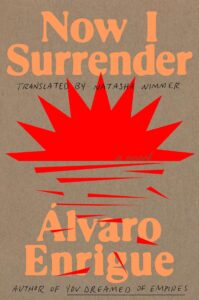 Álvaro Enrigue, tr. Natasha Wimmer, Now I Surrender
Riverhead, March 3
Álvaro Enrigue is a contemporary master of historical fiction and his new book continues his complex explorations of colonialism in the Americas. Billed as an “alt-Western,” Now I Surrender moves north and forward in time from his previous You Dreamed of Empires to the 1830s in the contested land that is now the US-Mexico border. A young woman is kidnapped by Apaches amidst the tribe’s attempt to endure amid the fighting between the U.S. and Mexico that is engulfing their homeland. The book shifts narratively to Geronimo’s anti-imperial resistance a decade later, as well as to a contemporary family’s trip through the area nearly a century later. The title comes from Geronimo’s surrender to U.S. forces, and the book is full of this sense of opposition and loss: of territory, life, and the possibility of a different future. –JF
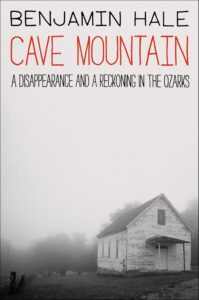 Benjamin Hale, Cave Mountain: A Disappearance and a Reckoning in the Ozarks
Harper, March 3
Benjamin Hale’s cousin, six-year-old Haley, got lost on a mountain trail at the top of Cave Mountain in the Arkansas Ozarks in 2001. After the largest search and rescue mission in the state’s history, Haley was found, but she had a curious account of an “imaginary friend” she met while lost in the woods. Hale connects that story to another tale that took place in the same wilderness twenty years earlier—a story of a cult, brainwashing, teenage prophets, and murder. –EF
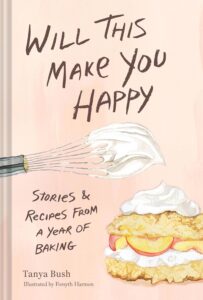 Tanya Bush, Will This Make You Happy: Stories & Recipes from a Year of Baking
Chronicle Books, March 3
Before co-founding Cake Zine magazine and becoming the pastry chef at Little Egg, Tanya Bush was a woman in her early twenties without a job, stuck in a sparkless long-term relationship, who had baked a very poor cake. But the process of baking brought her back to something joyful. This culinary memoir, filled with recipes, follows a year of Bush’s life as she learns what it means to be an adult, a baker, and most importantly, happy. –EF
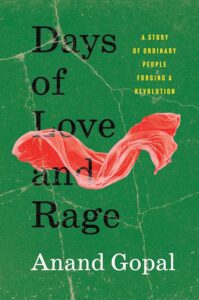 Anand Gopal, Days of Love and Rage: A Story of Ordinary People Forging a Revolution
Simon & Schuster, March 3
In which Pulitzer and National Book Award finalist Anand Gopal brings us an intimate account of six Syrians on the frontlines of the 2011 revolution. This is Gopal’s bread and butter, so it’s sure to be brilliant, and no topic could be more timely. –ET
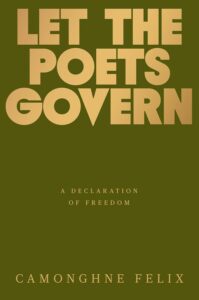 Camonghne Felix, Let the Poets Govern: A Declaration of Freedom
One World, March 3
With political hopelessness at its peak, there’s no better time to read Camonghne Felix, a poet who has also worked extensively as a political strategist, and speechwriter. Felix’s memoir-manifesto draws on Black radical poetic traditions to argue for the pragmatic power of poetry, and for language as a tool for liberation. I can’t think of any writer more equipped to call us to action. –JG
 Deborah Baker, Charlottesville: An American Story
Graywolf, March 3
Future historians will have plenty of awful moments to label as “turning points” in the collapse of the American republic (not to be too pessimistic here), but 2017’s white nationalist take over of Charlottesville, Virginia is definitely in the running for “major” status (recall Trump’s “good people on both sides” reveal, and Biden’s decision to run for president). And as Deborah Baker’s detailed account reveals, the inability of government officials to recognize the Nazi threat would both echo past failures in this country’s capacity to handle extremism, and forecast its refusal to even try. Riveting and important reading. –JD
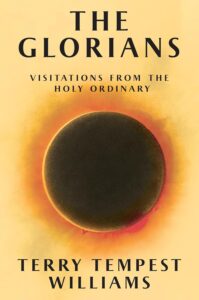 Terry Tempest Williams, The Glorians: Visitations from the Holy Ordinary
Grove Press, March 3
There’s nobody I trust more than Terry Tempest Williams to be able to braid the ordinary with the holy, the divine with the mundane. She’s someone who I’ve always been able to look to, in the need of regaining a faith in the world, a trust in it. Thankfully, at just the right time, The Glorians is coming out this year. A return to the basics that Williams relies much of her thinking upon: “The Glorians” are the small moments, or beings, of majesty, that make up the larger, woven, glittering web of our existence. It can be a coyote running across the desert. A new green growth emerging through a crack in stone. Williams points to these small moments, and poignant visions, as the representations of our hope, our resilience, our bright and gleaming futures. I know I need that now, more than ever. –JH
 Simon Morrison, A Kingdom and a Village: A One-Thousand-Year History of Moscow
Knopf, March 3
If Paris is the city of lights, and Rome is the eternal city, what then is Moscow, a massive near 1,000-year-old conurbation in the world’s largest country? Is it still just a “big village” (as it was dismissed by the cosmopolitan citizens of St. Petersburg) founded as a river fortress by merchants, or is it the megacity at the heart of a would-be superpower? Or is it both? These are among the many questions posed by Simon Morrison’s sprawling biography of place, which seeks to understand a nation through the life of its largest city, tracing Moscow’s evolution via dozens of historical upheavals, from war, famine, drought, and much, much more. –JD
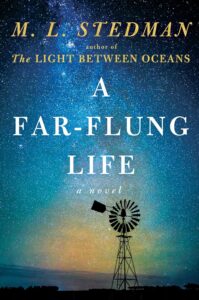 M.L. Stedman, A Far-Flung Life
Scribner, March 3
It’s been almost 15 years since M. L. Stedman’s runaway hit, The Light Between Oceans: her many fans have been patiently awaiting, and are soon to be appeased by a new, masterful epic. A Far-Flung Life is set in the Australian outback, on a plot of land that one family, the McBrides, has held for centuries. In this place that they have loved for generations, a cataclysmic tragedy occurs: it happens, and then it happens again, and again, in the reverberations that utter, soul-searing grief can wreak upon a life. The book asks big questions, and promises big stories, and attempts at answers, in exchange: a return to form for legendary Stedman and her many fans, a gripping and heart-stopping exploration of family, loss, and love. –JH
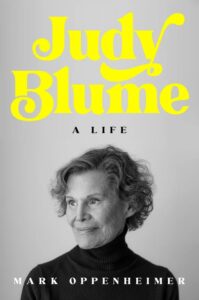 Mark Oppenheimer, Judy Blume: A Life
Putnam, March 10
“For more than fifty-five years her work has done something revolutionary: it rewired the world’s expectations of what literature for young people can be—frank, candid, earthy, and unafraid to show the messier sides of humanity.” Now Oppenheimer brings readers the woman behind the literary empire—through extensive interviews with Blume herself, access to her papers and correspondence, and even analysis of her beloved novels. Detailing her childhood, marriages, heartaches, and “unabashed sexual experiences,” readers will learn more about the beloved author than ever before. –EF
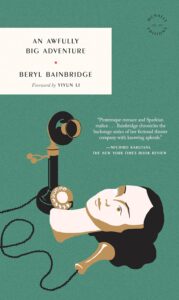 Beryl Bainbridge, An Awfully Big Adventure
McNally Editions, March 10
Frequent Booker-shortlistee Beryl Bainbridge was the author of many brilliant novels filled with clever, witty characters and keen observations on human foibles, In her most famous novel (which is also a dark little film starring Alan Rickman and Hugh Grant), a shabby, scandal-steeped repertory theater company in Liverpool rehearses for their Christmas performance of Peter Pan. There’s young actress Stella Bradshaw, rakish director Meredith Potter, dashing lead P. L. O’Hara, and a whole lot of drama. This reissue, with an introduction by Yiyun Li, is a great introduction to the author. –EF
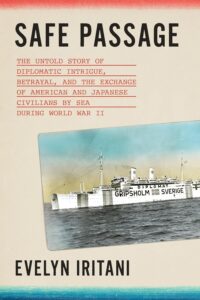 Evelyn Iritani, Safe Passage: The Untold Story of Diplomatic Intrigue, Betrayal, and the Exchange of American and Japanese Civilians by Sea During World War II
FSG, March 10
Evelyn Iritani’s in-depth history recounts the little known story of prisoner exchange in WWII, an excruciatingly delicate, fraught diplomatic undertaking that saved the lives of thousands. In the fall of 1943, as war raged in the Pacific theater, American diplomat James Keeley engineered the return of more than 10,000 Americans caught behind enemy lines in Asia, doing whatever it took (even uprooting Japanese immigrants to the Americas) to secure the safety of his fellow citizens. A testament to what is possible, even in the direst of times. –JD
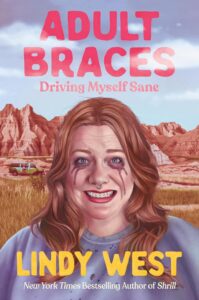 Lindy West, Adult Braces: Driving Myself Sane
Grand Central Publishing, March 10
As Lindy West was finishing shooting the TV series based on her best-selling book Shrill, a beacon of women’s empowerment celebrating women who aren’t thin, straight, and compliant, she was also suffering from depression, dealing with her marriage falling apart, and then decided that just then would be a good time to get braces. In an effort to rediscover herself, West takes a solo cross-country road trip. West is one of our best memoirists, funny and truthful in a way we’re always rooting for her. –EF
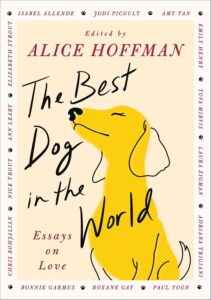 Alice Hoffman, ed., The Best Dog in the World: Essays on Love
Scribner, March 10
This anthology celebrates the best member of the family: the dog! Contributors include Isabel Allende, Bonnie Garmus, Roxane Gay, Emily Henry, Jodi Picoult, Elizabeth Strout, Amy Tan, Paul Yoon, and more. Who wouldn’t love to read these authors on getting a puppy, saying goodbye, and loving everyone’s best friend? –EF
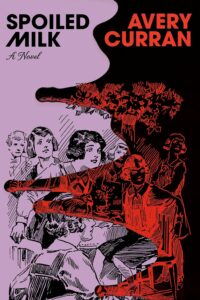 Avery Curran, Spoiled Milk
Doubleday, March 10
I’m never not hyped for some queer goth horror. And it’s a boarding school ghost story? I don’t want to use the words “dark academia” because honestly, I’m a little over it. But this one looks so fun and spooky. –OS
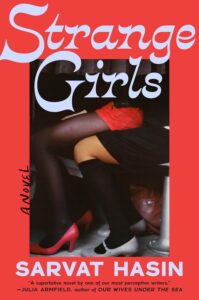 Sarvat Hasin, Strange Girls
Dutton, March 10
A relationship autopsy of a toxic friendship? I am present. I have arrived. I am sitting quietly and politely and waiting for you to tell me more. Strange Girls is about two women who haven’t spoken in a decade being forced back together for a mutual friend’s bachelorette party. As the women try to understand what happened all those years ago, they’re forced to relive their pasts and reexamine what they meant to each other. If you’re an ambitious person and you’ve ever had an equally ambitious but slightly more insane best friend, you know what kind of trouble this can lead to. Hasin’s novel sounds messy and intimate in all the best ways. I’m sitting so quietly and politely waiting for this book and I’m not foaming at the mouth at all. –MC
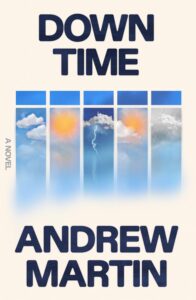 Andrew Martin, Down Time
FSG, March 10
Fans of Andrew Martin, of which I have long been one, will be gratified to find that this is his best and biggest book so far, a clever, rigorous, and relentlessly, unfortunately, accurate portrait of how it is to be alive and in your thirties and trying to make art, or at least love, or at least some kind of a difference to someone, in this godforsaken world and decade. Maybe it’s a better description to say that this is the only novel about the pandemic that I have, to date, truly enjoyed, and it is to Martin’s great credit that he manages to avoid the pitfalls of the genre, and instead use the trappings of the story we all know too well to tell us something very specific about a few imaginary people, and something very universal about our own real selves. –ET
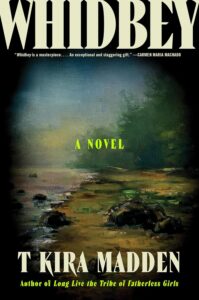 T Kira Madden, Whidbey
Mariner, March 10
T Kira Madden’s debut novel (after her memoir, Long Live the Tribe of Fatherless Girls) opens with Birdie, on a ferry to Whidbey island, where she is going into a kind of hiding after many years of living in fear of the man who molested her when she was a child—a man who is the subject of a new, best-selling book. You think you know where this is going, but you don’t—you really don’t. Quickly, the book opens up, and up, and up, unpicking the long trail of trauma, not just for Birdie, but for a satisfying constellation of characters, all of whom glitter with life.
When I say this is a novel about the many facets of pain, and the way our culture treats the wounded, and the reverberations of sexual violence against children, it makes it sound tough to read, and in places it is harrowing, but mostly the book is simply so good—so well-written, so thoroughly imagined, so full of beautiful sentences and perfect, evocative detail—that you can’t help but keep turning the pages. It is an empathetic, hard-edged, generous, complicated epic, like something Patricia Highsmith might have written if she actually cared about other people, like Rebecca Makkai by way of Dorothy Allison. I loved it. –ET
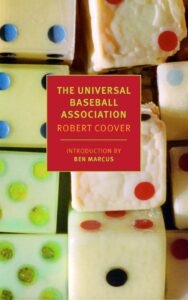 Robert Coover, The Universal Baseball Association
NYRB, March 10
An overdue reissue of maybe my favorite Coover novel, which is about a man and his fantasy baseball game… and the epic reaches to which the story of his one-man league might go. I have loved this book for a very long time and, like most Coover, it can’t quite be described. But trust me when I say you’ll never look at fantasy sports (or TTRPGs) the same way. –DB
 Charlotte Wood, The Natural Way of Things
Riverhead, March 10
This dystopian feminist parable by the much-garlanded Wood (Stone Yard Devotional) won Australia’s Stella Prize upon its original publication a decade ago, and I’ve been hearing reports of its brilliance ever since. The setup is like something from a dark fairy tale: a group of women awake from a drugged sleep to find themselves imprisoned in a compound in the middle of the desert, forced to do hard labor in the sweltering heat. The only thing that links the women is that, in a previous life, each was embroiled in a sex scandal with a powerful man. –DS
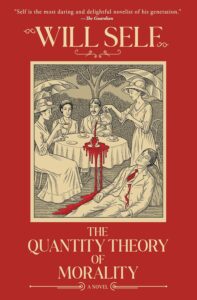 Will Self, The Quantity Theory of Morality
Grove Press, March 10
The English writer Will Self is known for his prolific ephemera and high-concept, avant-garde modernist works. This new satire is a sequel to his first collection, and 34 years in the making. Concerning some “middle-class, middle-English” characters who are trapped in a carousel of dinner party small talk and well on the way to spiritual rot, this sounds like the bourgeois morality tale we’ll deserve in 2026. –BA
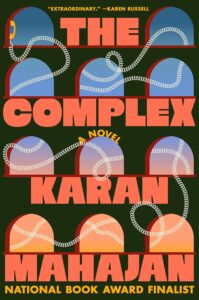 Karan Mahajan, The Complex
Viking, March 10
Long in the works, long anticipated by his fans, Karan Mahajan’s The Complex comes out in March, ten years after his critically-acclaimed The Association of Small Bombs. This, in my opinion, should be a practice shared by more authors: taking their time to weave something intricate and deep, then handing over a sprawling masterpiece, ala Kiran Desai, ala M. L. Stedman. Mahajan has created something savor-worthy: a family epic that takes place in both India and America, as the Chopra family attempts to keep itself together in the face of political unrest and relationship fractures. Mahajan writes with grace and precision, is able to depict both horrors and joys, violence and tenderness in equal measure: the arrival of The Complex is sure to be a literary event. –JH
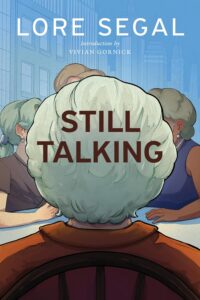 Lore Segal, Still Talking: Stories
Melville House, March 10
The late Segal wrote about unlikely and enduring friendship with dignity, care, and wit. Her last published collection, Ladies’ Lunch, followed a flock of Manhattan nonagenarians who’ve kept the pal flame lit for decades. Still Talking, her final book, will star the same wonderful characters motoring through their days on tides of chat. If you’re the type to pine after future, better seasons of And Just Like That…, I’d place this top of pile. –BA
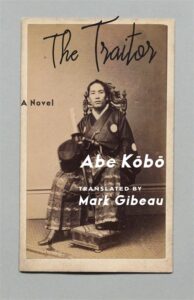 Kōbō Abe, tr. Mark Gibeau, The Traitor
Columbia University Press, March 10
Kōbō Abe is one of my favorite writers, and I’m really looking forward to this previously untranslated book that is “part historical fiction, part detective story.” This novel is Abe’s exploration of loyalty and adaptation in a changing political world, published in 1964 when younger Japanese were starting to ask their parents about the war years. The Traitor unfolds in layers of retelling: a writer meets a military policeman turned innkeeper, who is obsessed with a 19th century admiral named Enomoto Takeaki. The innkeeper is also reckoning with his involvement in a murder during WWII, and how it is reflected in a manuscript about someone betrayed by Enomoto. The Traitor was controversial when it was released for what readers thought it was saying about Japan. All of Abe’s writing, even his strangest and most absurd books, is deeply reflective of his contemporary world. –JF
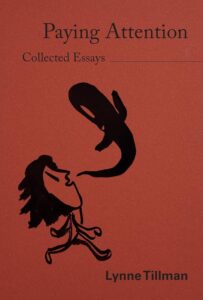 Lynne Tillman, Paying Attention
David Zwirner Books, March 17
I have long been a fan of Lynne Tillman’s delightful short stories, which are always surprising and just the right amount of weird. So of course I’m excited about her new essay collection, which gathers 40 years of her writing about art and culture, from critical perspectives on film, art, poetry, photography and fiction, to thoughts on illness, aging, consciousness, modernity, cultural politics, and much more. –JD
 Mieko Kawakami, tr. Laurel Taylor and Hitomi Yoshio, Sisters in Yellow
Knopf, March 17
New Mieko Kawakami alert! Sisters in Yellow is a novel about four women who open a bar together in 90s Tokyo. It’s an exploration of Tokyo’s underbelly and the nightlife industry that’s more interested in being real than sensationalist: Kawakami’s novel is about the painful realities of a rapidly-modernizing world, the difficulty of creating community on the fringes, and the ways we struggle to care for each other and ourselves. I’d be excited to read about this story from any author, but in Mieko Kawakami’s hands this is sure to be a masterpiece. –MC
 Antoine Volodine, tr. Alyson Waters, The Monroe Girls
Archipelago, March 17
Volodine is responsible for one of the most fascinating and ambitious projects in literature right now: he and several other pseudonyms (if, indeed, Volodine is even his real name) have been crafting an expansive look at something called post-exoticism. There will be a bardo, there will be action sequences rivaling Tarantino (this one features a schizophrenic trying to hunt down the titular paramilitary group), your brain will be bent in new directions—it’s time to discover post-exoticism for yourself. –DB
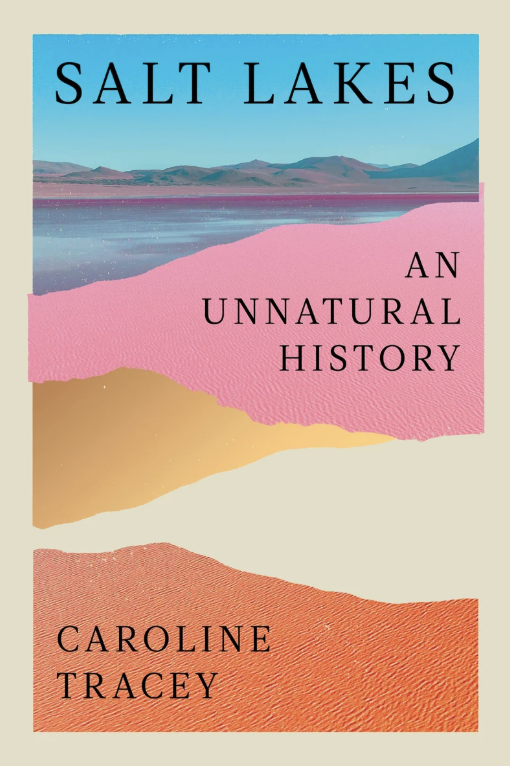
Caroline Tracey, Salt Lakes
W.W. Norton, March 17
Did you know there are over a hundred salt lakes on the Earth’s surface, weird little ecological oddities secreted away in the driest parts of the globe? And did you know they’re disappearing? If you answered no, you’re not unlike writer Caroline Tracey, who became so curious about the phenomenon after encountering it that she decided to write a book. From Kazakhstan to Utah to Australia Tracey takes us on a journey in search of these semi-sacred places, meeting along the way countless people dedicated to preserving them. But as she offers readers the story of the Earth’s disappearing salt lakes, Tracey also shares her own journey of self-discovery, of finding queer love, and of finally making a home. –JD
 Bassem Khandaqji, tr. Addie Leak, A Mask the Color of the Sky
Europa Editions, March 17
In October, after spending 21 years in an Israeli prison, the acclaimed Palestinian novelist and poet Baddem Khandaqji was released and exiled to Egypt, where he was finally reunited with his sister. From his prison cell, Khandaqji wrote two poetry collections, hundreds of essays, and four novels. The most recent of those novels, A Mask the Color of the Sky, won the International Prize for Arabic Fiction in 2024. A story of identity, exile, and resistance, it follows Nur, an archaeologist residing in a refugee camp in Ramallah who discovers a blue ID card belonging to an Israeli citizen tucked inside the pocket of an old coat. Intrigued, Nur assumes the persona of the card’s owner to gain access to excavation sites in the West Bank, and insight into his oppressor. –DS
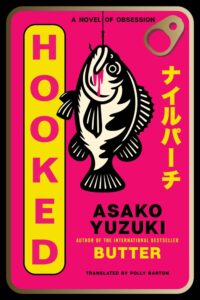 Asako Yuzuki, tr. Polly Barton, Hooked: A Novel of Obsession
Ecco, March 17
The author of the international bestseller Butter, which only made it to English in 2024, is back with an up-to date novel about parasocial relationships, social media, the human hunt for happiness, and yes, of course, obsession. Eriko has a perfect life from the outside, but inside, she’s desperately lonely, and constantly following along with a lifestyle blogger who seems actually happy. When Eriko orchestrates a meeting, she’ll set off a chain of events that will send both women into a tailspin. Don’t meet your heroes! –ET
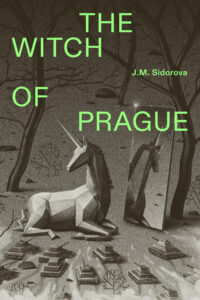 J.M. Sidorova, The Witch of Prague
Homeward Books, March 17
Magical realism set in Czechoslovakia during the Prague Spring? Say no more! (But in case you need more, it’s the first release from Homeward Books, a playful and genre-busting new press—and we can always use more small presses making beautiful and weird books!) –DB
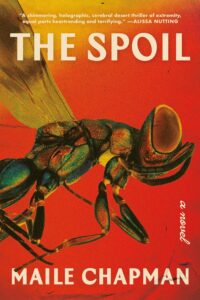 Maile Chapman, The Spoil
Graywolf, March 17
Maile Chapman is an intricate, eerie plotter with a knack for unsettling. Her first book, Your Presence is Requested at Suvanto, brought us to a Finnish convalescent hospital, and left us in the arms of a malevolent surgeon. Her long awaited second novel is another claustrophobic psychological horror with feminist overtones. In 1970s Tacoma, a young girl with a predilection for spooky phenomena is seeing demons. And when these presences follow Mandy, our hero, into a fractured adulthood, they cause fresh chaos. This is a book that takes on the utter strangeness of grief. –BA
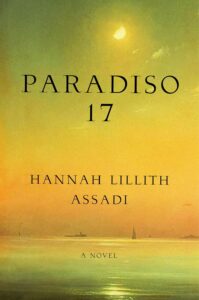 Hannah Lillith Assadi, Paradiso 17
Knopf, March 17
“Like all of our dead, Sufien still speaks.” Born in Palestine on the eve of 1948’s Nakba, Sufien is forced to leave his home, constantly moving towards some other place, unmoored. From Kuwait to a small Italian university town, and then to New York and Arizona, his life spans love and loss, grief and success. Assadi’s novels are lyrical and gorgeously original—this novel reads as poetry. –EF
 Casey Scieszka, The Fountain
Harper, March 17
I can’t wait to read Scieszka’s debut, which Emma Straub calls “Tuck Everlasting for grown-ups,” and which concerns an immortal woman who comes home to the Catskills on a mission to discover the source of her power/curse—so that she can finally undo it. But others may be looking for the source too, and for very different reasons. Sounds utterly delicious. –ET
 Wayne Koestenbaum, My Lover, the Rabbi
FSG Originals, March 17
New work by Wayne Koestenbaum is always something to anticipate: as a poet and a writer (and a reader, if you’re ever so lucky) he is an absolute delight. So it’s pretty exciting that his first novel in 20 years is coming this March, which tells the story of one man’s obsessive psychosexual relationship with, yes, the local rabbi. “Lascivious thrills and uncanny hilarity” have been promised and/or warned of. –JD
 Ibram X. Kendi, Chain of Ideas: The Origins of our Authoritarian Age
One World, March 17
In his latest book, the National Book Award-winning author traces the rise of the “great replacement theory”—the idea that white people (or men, or Christians, or heterosexuals) are under existential threat—and how it has ushered in a newly authoritarian age. Sure to be bracing. –ET
 Thomas Dekeyser, Techno-Negative: A Long History of Refusing the Machine
University of Minnesota Press, March 24
We are, it seems, at the precipice of a new technological dark age; for no other reason than that dozens of billionaires have sunk trillions of dollars into AI, we now seem doomed to outsource much of what makes us human to machines, at a scale and speed hitherto unseen in human history. So, what do we do? Well, even in the face of terrible odds, we resist… BECAUSE WE ARE HUMAN. And if you’re looking for inspiration, please see Thomas Dekeyser’s Techno-Negative: A Long History of Refusing the Machine. We might not win in the end, but even in the attempt to resist, we will salvage some of our humanity. –JD
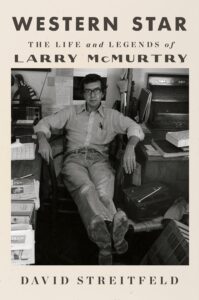 David Streitfeld, Western Star: The Life and Legends of Larry McMurtry
Mariner, March 24
Western Star is being billed as the “definitive” biography of Larry McMurtry—the legendary author of Lonesome Dove who died in 2021—and it looks like it might actually be able to back up that bold claim. Streitfeld, a Pulitzer Prize-winning journalist, was a close friend of McMurtry’s, and the old Texan gave him “the keys to his past” before he died. McMurtry had many personas—rancher, novelist, Hollywood screenwriter, rare book collector, free speech defender—and Streitfeld’s doorstopper biography looks to probe them all. –DS
 Han Kang, tr. Maya West, e. yaewon and Paige Aniyah Morris, Light and Thread
Hogarth, March 24
The first book of nonfiction published in English by Nobel Laureate Han Kang—including her Nobel lecture, along with other essays, poems, photographs, and diaries. As someone very interested in how Kang’s mind works, I’m looking forward to this. –ET
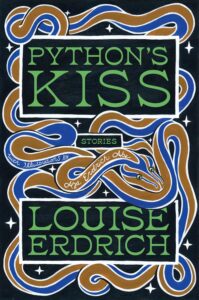 Louise Erdrich, Python’s Kiss: Stories
Harper, March 24
Collecting more than two decades of stories from the Pulitzer-and-National-Book-winning author, this is sure to be a perfect entry place for those new to Erdrich’s humanist oeuvre and to delight her longtime fans. Plus, it features illustrations from Erdrich’s daughter, commissioned for the collection! –DB
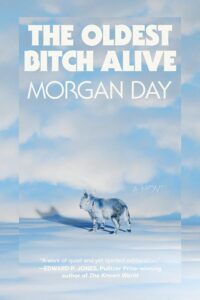 Morgan Day, The Oldest Bitch Alive
Astra House, March 24
I’m a sucker for books narrated by dogs, and this one already has me cracking up from the blurb and cover alone: “Gelsomina is an elderly French bulldog… [who] accidentally ingests an orb of parasitic worms. Approaching death, and filled with new life, she begins to see everything differently.” I have the feeling this is going to be popular in the group chat, if you know what I mean. –DB
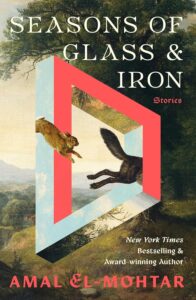 Amal El-Mohtar, Seasons of Glass & Iron: Stories
Tor, March 24
Hand-selling books is a difficult job, so it’s nice to know that most booksellers will barely have finished saying “It’s a collection of fantasy stories from a co-author of This is How You Lose the Time War” before they’ve made the sale. –CK
 Giada Scodellaro, Ruins, Child
New Directions, March 24
Winner of the 2024 Novel Prize, Scodellaro’s debut novel is a mosaic that calls to mind both The Waves and for colored girls…, following six Black women in a decrepit apartment complex sometime in the near future. I loved Scodellaro’s story collection from a few years back and I cannot wait to see what this novel has in store. –DB
 Eka Kurniawan, tr. Annie Tucker, The Dog Meows, the Cat Barks
New Directions, March 24
Eka Kurniawan’s Beauty is a Wound is an epic, polyphonic, multi-genre novel, hyperbolic and maximalist in its description of family and love. New Directions calls this new novel Kurniawan’s most “contemporarily relevant book.” Sato Reang has an idyllic childhood until his father forces into him into a life of Islamic piety. Though he initially obeys his father, his adolescence is full of dissent. It is “a psychologically timeless story—anyone who’s ever had an overbearing parent and resented them will relate.” I’m excited for this realist but no less adventurous book. –EF
 Jake Skeets, Horses
Milkweed, March 24
Navajo Nation poet laureate Jake Skeets’s work has a way of inhabiting space that makes you think differently about language. His second collection, arranged as a quartet, delves into the effects of climate change on the land and all its inhabitants. If your New Year’s resolution is to read more poetry, start here. –JG
 Suzanne Simard, When the Forest Breathes: Renewal and Resilience in the Natural World
Knopf, March 31
Suzanne Simard’s 2018 memoir-cum-scientific treatise, Finding the Mother Tree, is one of my favorite books. In the vein of Braiding Sweetgrass, Finding the Mother Tree somehow blended complex scientific exposition with intimate personal deal, creating a revelatory narrative about the interconnectedness of (arboreal) life. Simard’s latest investigates the many and beautiful ways in which forests regenerate themselves, existing as they do in overlapping cycles of life and death; and as she meditates on the incipient adulthood of her two daughters, just as her own mother’s life is winding down, Simard comes to understand that human life is not all that different. –JD
 Megan Kate Nelson, The Westerners: Mythmaking and Belonging on the American Frontier
Scribner, March 31
American identity was born of myth, forged in fireside tales of frontier heroism and endless abundance. But insofar as that identity was largely and intentionally anchored in whiteness, many of the real stories—just as mythic, just as legendary—went untold or ignored, simply because the heroes didn’t have the right skin color. With The Westerners, Megan Kate Nelson seeks to redress those elisions, uncovering a diverse and magnificent cast of characters whose lives are just as important to the story of the west as any blue-eyed cowboy: from Cheyenne chiefs to biracial fur traders to women ranchers, The Westerners makes room for everyone. –JD
 A.M. Gittlitz, Metropolitans: New York Baseball, Class Struggle, and the People’s Team
Astra House, March 31
Anyone with the misfortune to be born and raised a Mets fan believes that it’s distinct from other sports fandoms. A line from this Hazlitt piece from 2015 has stuck with me for a decade now: “The Mets are not so much a baseball team as they are a long-running dramatic play that has little to do with winning baseball and everything to do with being the living embodiment of endless pain.” They’re a team that wouldn’t exist if the Dodgers hadn’t vacated Brooklyn for greener pastures, eternally playing in the shadow of their crosstown rivals—the winningest team in the history of the sport. Even the Mets’s sole championship in the last half-century was won via the single most tragi-comic fielding error in the history of baseball.
There’s New York sports fans exceptionalism, and then there’s whatever Mets fans have going on. Exceptionalism but for being something worse than cursed—fated, maybe—for a specific brand of suffering. It’s not better than winning, or necessarily nobler, but there’s a kind of comfort in the apparently endless cycle of heartbreak. I’m looking forward to this book confirming all of my priors about my favorite baseball team, and everything they represent. –CK
 Adam Phillips, The Life You Want
FSG, March 31
I don’t know about you, but On Giving Up discourse dominated my 2024. In his previous book, Phillips, a British psychoanalyst, offered a round, well-researched rebuke to the West’s ambition obsession. When is hesitation useful? And why the stigma against dropping the people, goals, and activities that don’t serve?
The Life You Want picks up where that compelling project left off. But this collection unpacks ambition on a personal level. Through literature and his native tongue, psychoanalysis, Phillips considers: where do our deepest desires come from? –BA
 Maria Adelmann, The Adjunct
Scribner, March 31
I’ve been eagerly awaiting new Maria Adelmann since reading her last novel, the spectacular fairy-tale riff that was How to Be Eaten. This one looks like a #MeToo campus tale, about an adjunct running into her old PhD advisor who just so happens to have written a book about his past that might feature the adjunct and their dalliance. I’m expecting something funny, sharp, and a little shocking. –DB
 Tana French, The Keeper
Viking, March 31
“New Tana French” may be all you need to know, but in case you need more, The Keeper is French’s third (and final) Cal Hooper book, and begins in a classic manner: a young woman in a small town (in this case, of course the Irish village of Ardnakelty) mysteriously winds up dead. The tragedy sets the town ablaze, and of course, retired American cop Cal—despite his ongoing desire for the quiet life—finds himself in the middle of it. But really, who cares? New Tana French! –ET
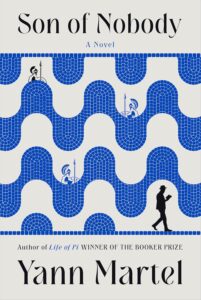 Yann Martel, Son of Nobody
W.W. Norton, March 31
In the latest novel from the bestselling author of Life of Pi, a Canadian academic at Oxford discovers a forgotten Greek epic, about a goatherd who leaves his family behind to go fight in the Trojan War. Since our academic has himself left his family behind, he finds a certain resonance in the story as he pieces it together, fusing together the ancient and modern worlds, and the concerns that unite us all. –ET
 Colm Tóibín, The News From Dublin: Stories
Scribner, March 31
I think Colm Tóibín’s short stories are just as brilliant as his novels. Some of these stories were originally published in the New Yorker, but some are brand new. Featuring families across Ireland, Spain, and America, Tóibín is an author with incredible empathy for the human condition and these stories will be a perfect read for anyone who cares about the short story form. –EF
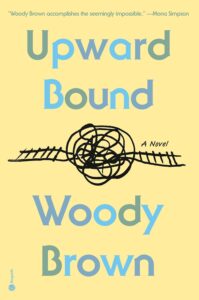 Woody Brown, Upward Bound
Hogarth, March 31
An interlocking, polyphonic portrait of a community often overlooked: Upward Bound is set at an adult daycare community for disabled people in Los Angeles. Each client, and each staff member, is there for a reason: never anyone’s best-case-scenario to have to spend one’s days in such a place, but there they all are. There’s a range of disabilities, and a range of expertise on the part of the staff to take care of its clients: a range of emotions, of histories, of thought-patterns, of ways of being. Each is distinct and immersively imagined by author Woody Brown, himself a non-speaking person. It’s a startlingly unique and fresh perspective on the world: we’re lucky to exist inside Brown’s creation, a deeply heartfelt exploration of humanity. –JH
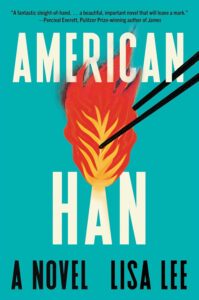 Lisa Lee, American Han
Algonquin, March 31
In this debut novel, two siblings are the perfect “model minorities”—until they aren’t. Viet Thanh Nguyen calls it “a pulsating signal from the liminal zone where the American dream meets the American nightmare,” and Percival Everett calls it “a fantastic sleight-of-hand” and “a beautiful, important novel that will leave a mark,” and these, my friends, are very good blurbs. –ET
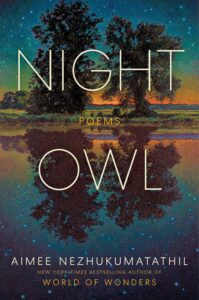 Aimee Nezhukumatathil, Night Owl
Ecco, March 31
Aimee Nezhukumatathil is one of our great nature poets, and reading her work always makes me feel more connected to the outside world in all its textures. (Crucially, she’s also very funny.) Night Owl is a collection of nocturnes that “plumb the depths of nighttime.” I have no doubt that it will be a beacon in the dark. –JG
APRIL
***
 Patrick Radden Keefe, London Falling: A Mysterious Death in a Gilded City and a Family’s Search for Truth
Doubleday, April 7
Patrick Radden Keefe specializes in deeply investigative work on the subterranean aspects of society: on crime, on murder, on spies, on drugs. It is as though he has laced narcotics themselves into the pages of his books, they are so delicious and addictive, no matter the horrors depicted. London Falling is no different. It’s not the genre I would have predicted to be able to accomplish this (densely packed nonfiction) but his books have managed to recreate the feeling I used to have reading as a child. They completely immerse me. While in the midst of one of his books, I feel like I am living more in the pages than in the world I reside in.
This work revolves around the death of a boy named Zac Brettler, who appeared to have thrown himself from the balcony of a luxury building in London. The truth is (of course, it’s a PRK book) far more complicated than it appears. The story zooms in, and telescopes out magnificently, revealing nuanced and precise character studies of the boy and his family, as well as revealing the vast network of history, culture, and individuals that led to this tragic moment. Bright and spellbinding, glittering and dangerous, London Falling scratches every itch while unwinding this morbid mystery. –JH
 Elisa Tamarkin, Done in a Day: Telex from the Fall of Saigon
University of Chicago Press, April 7
On April 30, 1975, Bob Tamarkin, the Saigon burau chief for the Chicago Daily News, took the last helicopter from the rooftop of the US embassy of Saigon, making him the last American correspondent to leave. He filed his report from a naval ship on the South China Sea, when no other telexes were going through. Elisa Tamarkin explores this moment in history alongside the imminent disappearance of war coverage in city newspapers—telling “the paired stories of Saigon’s liberation and the demise of the news… what it means to recognize and to write about endings even as we live through them.” –EF
 Beverly Gage, This Land is Your Land
Simon & Schuster, April 7
I’ve loved Beverly Gage’s previous books The Day Wall Street Exploded and G-Man, which won the Pulitzer. Her history is critical and unsparing, but she always reserves enough hope in the decency and dedication of Americans to see a way forward. Pegged to America’s 250th anniversary, Gage’s new book is a tour of U.S. history as seen through historic sites and museums where our history is preserved and litigated. In another author’s hands, I would worry that this road trip through our national legacy might be too schmaltzy and saccharine, but Gage has always been honest about America’s legacy, so I trust her hand at the wheel. –JF
 Anne Enright, Attention: Writing on Life, Art, and the World
W.W. Norton, April 7
Enright is one of my favorite novelists, so a collection of her nonfiction essays—even if most have been published in the New York Review of Books, the London Review of Books, and the Guardian—will be one of my most anticipated books of the year. Enright explores Irish culture—from writers like Edna O’Brien and John McGahern to cultural touchstones like the Catholic Church, the graves at Tuam, and the 2018 Irish abortion referendum—with incredible thoughtfulness and care. She truly always is paying attention, and providing us with new and better ways to understand the world. –EF
 Chanda Prescod-Weinstein, The Edge of Space-Time: Particles, Poetry, and the Cosmic Dream Boogie
Pantheon, April 7
The universe is a weird, weird place filled with unseen (unseeable?) energies and exquisite inconsistencies—insofar as we can even observe any of it, our cosmos is as beautiful as it is vast and unknowable. Nonetheless it is worth trying to take it all in, and if you’re game, there’s probably no more compelling guide than Dr. Chanda Prescod-Weinstein. A cosmologist and particle physicist who also happens to be a great writer with wonderful cross-cultural fluencies, Prescod-Weinstein seems possessed of an off-kilter and roving curiosity ideally suited to answering all the bigger questions about where we are, why we’re here, and where, exactly, are we going. –JD
 Leslie Fiedler, Love and Death in the American Novel
NYRB, April 7
First published in 1960, this reissue from NYRB examines the works of writers like Cooper, Poe, Twain, Melville, Hawthorne, and Faulkner. In it, “Fiedler makes the audacious—and compelling—argument that the American novel differs from its European counterpart in its inability to deal with sexuality between men and women, and its obsession instead with violence, escape, and death.” Fiedler was one of the most influence critics of the 20th century and this book is an education for anyone who cares about the American novel. –EF
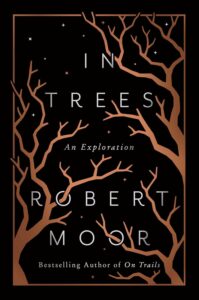 Robert Moor, In Trees
Simon & Schuster, April 7
Robert Moor is an erudite and delightfully meandering writer (see his On Trails for what I mean) who invariably chooses the more interesting of two possible narrative paths. A contributor to this website (this is one of my favorite essays) I am of course very excited to get my hands on In Trees, his expansive treatise on the underexamined phenomenon of… climbing a tree. Having set out to do just that a decade ago, Moor unknowingly began a long journey into the nature of the arboreal world, and our complicated relationship to it. From giant sequoias to the tree-houses of Papuan tribesmen to an actual chimpanzee nest, Moor makes his way to the tops of trees everywhere, the better to find some perspective. –JD
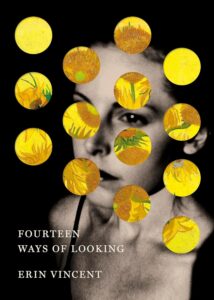 Erin Vincent, Fourteen Ways of Looking
A Strange Object, April 7
Some publishers, you just know you’re gonna give a shot to everything they put out. So it is with A Strange Object, the form-busting arm of Deep Vellum—and Fourteen Ways of Looking promises a blend of memoir, history, and poetry as Erin Vincent unpacks the uncanny repetitions of the number 14 in her life that have popped up ever since her parents were killed in a car crash when she was 14. –DB
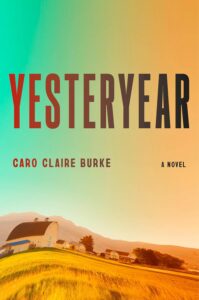 Caro Claire Burke, Yesteryear
Knopf, April 7
Natalie sells her followers a pioneer lifestyle in a rustic farmhouse, a handsome cowboy husband, and six delightful children. Of course, there are nannies, producers, her husband’s political dynasty, and an industrial-grade fridge and oven behind the scenes. One morning Natalie wakes up but things are different; it’s actually 1855! This debut promises to be both darkly funny, a brilliant satire, and a look at tradition, fame, and the “grand performance of womanhood.” –EF
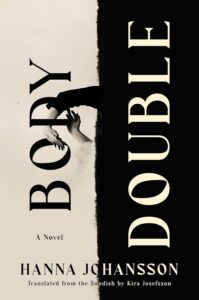 Hanna Johansson, tr. Kira Josefsson, Body Double
Catapult, April 7
Okay Persona… okay Ingmar Bergman… okay Scandinavian literature about lesbians who start turning into each other…. Body Double is a novel with two narratives: one about a woman whose girlfriend begins stealing her life, and another about a transcriptionist who becomes convinced she’s disappearing. In the grand tradition of All About Eve and Mulholland Drive and 3 Women, Johansson’s novel is a strange, twisty story about obsession and identity and how easy it can be to lose yourself completely. –MC
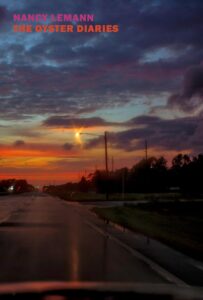 Nancy Lemann, The Oyster Diaries
NYRB, April 7
Lives of the Saints is one of those “writer’s writer” novels; literary friends like to gift it back and forth like secret treasure (it’s also being reissued by NYRB this month, but let’s assume you’ve read it). That’s because the New Orleans saint behind that book, Nancy Lemann, possesses a singularly fabulous voice. Droll, hectic, humane, hilarious. I’d follow that tune anywhere, but I’m especially excited to follow Delery Anhalt, the vexed hero of The Oyster Diaries, through a midlife crisis. –BA
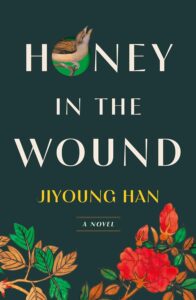 Jiyoung Han, Honey in the Wound
Avid Reader Press, April 7
Jiyoung Han’s sprawling, magical family novel follows generations of supernaturally-gifted Korean women as they grapple with the legacy of the Japanese occupation. With stunning, lyrical prose, Han follows these powerful women from ancient forests to modern-day Seoul. Honey in the Wound is a spellbinding debut about survival, family, magic, and the meaning of home. –MC
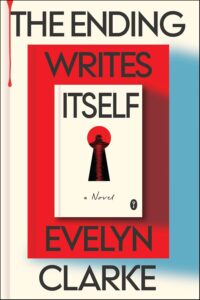 Evelyn Clarke, The Ending Writes Itself
Harper, April 7
Six writers are brought to a remote Scottish island to finish a beloved mystery novelist’s final book—but not all is what it seems! And there’s a ticking clock! The premise alone sounds delightful but when you learn that Evelyn Clarke is the pen-name for the duo of V.E. Schwab and Cat Clarke, you’re more or less guaranteed a page-turning treat. –DB
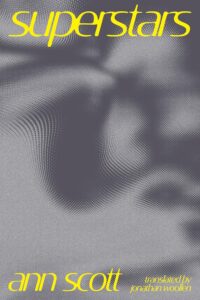 Ann Scott, tr. Jonathan Woollen, Superstars
Astra House, April 7
Reading cult literature you haven’t encountered before feels like joining a secret club or something. And Superstars centers on an early-30s identity crisis set between French techno and rock scenes in the 90s. I’ve said it already, but I love being dropped in a time and place that is so specific to itself. –OS
 Rachel Khong, My Dear You: Stories
Knopf, April 7
Rachel Khong is two-for-two with her novels Goodbye Vitamin and Real Americans, and I’m excited to see what she’s like in shorter form. These stories also look like they’re going to blur the lines of genre in the vein of Marie-Helene Bertino and Kevin Wilson, with ghost-conjuring cats and strange government technology alongside the deeply human questions of what it means to be alive in a world that might not love you back. –DB
 Ben Lerner, Transcription
FSG, April 7
At 144 pages, you can read Lerner’s latest novel in an afternoon, and you should: it’s a deeply pleasurable, absorbing book, a metafictional meditation on memory and influence, and the way technology has changed our relationship to both, but also a series of moving portraits: the anxious interviewer, the aging genius, the reflective son. Reading it, I had the experience that I so often do with Lerner’s books, this sense that what he’s doing really shouldn’t work, and that it wouldn’t, if it were in anyone else’s hands. But it’s not, and so it does. Thank goodness. –ET
 Emma Straub, American Fantasy
Riverhead, April 7
You can always count on Emma Straub for a big-hearted, yummy book, and this one sounds no different: the titular American Fantasy is a cruise ship, where a fifty-year-old woman sort of accidentally finds herself, along with her favorite boy band from the nineties (and a bunch of other women, of course). What will she find there? I must find out—Straub is one of those authors that it is a special joy to be aging alongside, and I want to hear all her thoughts. –ET
 Rabih Alameddine and John Freeman, eds., The Penguin Book of the International Short Story
Penguin Press, April 7
Some of the best short fiction from around the world, as selected by an acclaimed anthologist and a newly minted National Book Award winner. Haruki Murakami, Salman Rushdie, Han Kang, Ted Chiang, Colm Tóibín, and Ted Chiang are just some of the superstar names to be found within the pages of this stacked anthology, which aims “to provide a tour of modern fiction beyond the Western canon,” and promises to transport us far from the United States. If wishing made it so… –DS
 Julia Alvarez, Visitations
Knopf, April 7
There is something beautiful, I imagine, in having a record of one’s emotional life recorded in poetry written across decades. What a gift it must be to be able to go back, as Julia Alvarez does in Visitations, and trace those moments, both epic and intimate, that comprise a single life. We are lucky, then, to have one such document from a novelist and poet like Alvarez, who has said herself of the collection: As I approach the closing stanzas of a long life practicing my craft, I feel the need to collect the many loose poems I’ve been writing into a book that follows the many incarnations and voices of my writing selves over the years. –JD
 Ada Limón, Against Breaking: On the Power of Poetry
Scribner, April 7
Long a fan of her intimately observed poems—which unerringly capture those small moments in life that seem lit from within—I was thrilled when Ada Limon became the 24th Poet Laureate of these United States. Now, using the full power of her office, Limon is here to remind us (or convince us) of the importance of poetry. And while I, personally, need no such reminders, I am very much looking forward to Limon’s case for why poetry matters, and how it can heal us and connect us, and enrich our lives in ways we didn’t even think possible. –JD
 Leigh Lucas, Splashed Things
BOA Editions, April 7
Splashed Things is a searing, rambling, sprawling, at times even funny, collection of grief poems about how to come to terms with that which is impossible to understand. How to look forward instead of looking back. Or at the very least, in addition to looking back. How to keep living when a part of you has died. Leigh Lucas’ book of poetry reckons with the death of a lover. The suicide of a lover, specifically: having to reckon with the fact of his absence, as well as the fact that he chose it. He threw himself from a bridge into water. She can’t talk about it. She has to talk about it. She talks around it. Instead of the wound itself, the great gaping hole that he left in her heart, the hole he made in the water, she talks about the “splashed things”. She wasn’t there, but she got all wet anyway. Irrevocably changed from the experience, from knowing him, loving him, and losing him, Splashed Things doesn’t obey linearity or resolution, just a steady circling, honoring: a grand testament of love, and to the desire to keep on living. –JH
 Jules Wernersbach, Work to Do
University of Iowa Press, April 7
I’m stoked for this novel by one of the best booksellers in the nation: Jules Wernersbach, who I had the pleasure of working with back in my BookPeople days. The novel merges their long experience working crushing hours for local businesses on the cusp of unionization with the real-life saga of grocery cooperative workers fighting to earn a living wage. There’s a special kind of hell that comes from being exploited at a Cool Job—especially, in Austin, at a Cool Local Job. Much of the prestige of the position comes in the form of outside admiration, so to damage that admiration is to get rid of one of the few perks of the job.
And yet, there’s no better way to aura-farm than to have a unionized workplace, so I’m hoping the scrappy grocery workers at the heart of the novel achieve all their collective bargaining dreams! For those who can’t wait for the April publication date, check out Hive Mind Bookstore, a queer bookstore in Brooklyn, founded by Wernersbach and home to a curated collection and lively event schedule :). –Molly Odintz, CrimeReads Managing Editor
 J.W. Mason and Arjun Jayadev, Against Money
University of Chicago Press, April 13
The credit score was invented in 1989. One of the hottest political issues at the turn of the 20th century was whether the gold standard should give way to bimetallism; it didn’t, but the U.S. abandoned the gold standard entirely in the 1970s. All of which is to say that while cash might rule everything, major economic realities are much more mutable than they appear. So I’m prepared to dig into “a radically different way of thinking about money—imagining a hopeful future in which it no longer dictates the possibilities of our collective existence.” I never wanted a credit score in the first place. –CK
 Julia Langbein, Dear Monica Lewinsky
Doubleday, April 14
If anybody from the 90s is due for canonization, Monica Lewinsky sure is up there. Langbein’s second novel sounds absolutely bonkers [positive] as a woman reflecting on her own late-90s power-imbalanced love affair suddenly summons Saint Monica and the two set off on a memory journey back to 1998. –DB
 Anna Dorn, American Spirits
Simon & Schuster, April 14
Satirical novels about contemporary culture can age into awkwardness quickly. Commentary and humor are by definition responsive, and it’s difficult for a writer to pin something down when the cultural rate of churn moves at a rapid clip. But Anna Dorn has a knack for finding characters and relationships that offer a path through these strange and ephemeral moments, in particular in her 2022 novel Exalted, a very funny examination of astrology and social media. Her new book American Spirits turns to the world of music, and promises to be as funny and edgy as her previous work. A pop star, her producer, and a superfan turned assistant hide away to record an album during the pandemic lockdown. The overlapping relationships between the three, heightened by external narratives in the press and online, fester in isolation, eventually exploding into tragedy. –JF
 Marie NDiaye, tr. Jordan Stump, The Witch
Vintage, April 14
This new novel from the award-winning French novelist is described as “a William Faulkner novel set in modern France.” The novel follows “a mediocre witch” stuck in a bad marriage who passes her gifts to twin daughters. The matrilineal passage of power—made known by crying tears of blood—has been smothered and controlled by men, but thanks to their new abilities, the twins escape their mother and her malicious husband. It’s a story of inheritance and liberation centered around a very NDiaye protagonist: someone holding it together in situations teetering on chaos. –JF
 Gwendoline Riley, The Palm House
NYRB, April 14
Like many others, I was recently blown away by First Love, so I’ll follow Gwendoline Riley anywhere. Her seventh novel follows longtime friends Laura Miller and Edmund Putnam, both languishing in personal and professional troughs. Riley’s unsparing eye for the light tragedy and dark comedy of relationships will, I’m sure be on full display here, and I can’t wait for this one to break my heart. –JG
 Violaine Huisman, The Monuments of Paris
Penguin Press, April 14
In this autofictional novel, Huisman describes growing up in Paris with her beautiful, bipolar mother and iconoclastic, flamboyant father. Her father grew up in Vichy France and was obsessed with her long-dead grandfather, Georges, a Belgian Jew with a heroic and tragic life that became a family myth. “Violaine” returns to France after her father’s death, and, with the help of a local historian, seeks out the truth about her family. A story about exile and belonging also becomes a story about the lies and truths that hold a family together. –EF
 Solvej Balle, tr. Sophia Hersi Smith & Jennifer Russell, On the Calculation of Volume (Book IV)
New Directions, April 14
The saga continues! The world of November 18th has expanded in each previous book, from a personal loop to including more loopers—but now, the genre-pushing edges of the story blow outwards as Tara and the other loopers end up creating a headquarters of sorts in Bremen. Publicity copy promises a proper cliffhanger, with three more (literary) Nov 18ths to go… –DB
 Luke Goebel, Kill Dick
Red Hen Press, April 14
Goebel’s LA thriller comes packaged with not only an insane blurb from his wife, Ottessa Moshfegh (“If this book were any better, I’d cut my own head off.”) but also an apparently earnest one from none other than Anna Delvey, who says, “It’s like if Joan Didion and Hunter S. Thompson had a love child raised on Oxy and existential dread—impossible to look away from. The prose moves like stolen cash, the world is decadent and rotting at the edges. Honestly, if you’re not reading this book, what are you doing? Probably something dull and unpaid. Consider this your invitation to the party–just don’t expect to leave unscathed.” Ok, I’m intrigued. –ET
 Jeyamohan, tr. Suchitra Ramachandran, The Abyss
Transit Books, April 14
The giant of Tamil literature broke into the English-speaking world with last year’s Stories of the True; in this latest translation, of a novel billed as his masterpiece, a successful middle-class man funds his lifestyle by exploiting a group of physically deformed beggars. But, funny. Anything with this kind of Geek Love energy is always going to pique my interest. –ET
 Jennifer Acker, Surrender
Delphinium, April 14
I love a leaving New York book (not to be confused with a leaving New York essay), so Jennifer Acker’s second novel, about a New York PR flack who moves to rural Massachusetts to save her father’s goat farm sounds right up my alley. In addition to learning the ropes of running a farm Lucy Richard, 47, is contending with a crumbling marriage, health and financial woes, and an unexpected newfound intimacy with her childhood friend, Sandy. Richard Russo writes that the novel “provides what I crave from all stories: vividly drawn characters worth spending time with and a richly rendered place for them to inhabit.” Good enough for me! –JG
 Jonathan Cheng, Korean Messiah: Kim Il Sung and the Christian Roots of North Korea’s Personality Cult
Knopf, April 14
The insulated and seemingly impenetrable world of North Korea’s ruling Kim dynasty has surprising roots in American Christianity, according to this new book by The Wall Street Journal’s China bureau chief. Korean Messiah follows not only the family that rose to absolute power in Pyongyang, but also an American Presbyterian missionary who built a fervent following in the early 19th century. Two of his followers were the parents of Kim Il Sung, and Cheng tracks how a family’s faith and American proselytizing became the roots of Kimilsungism, the ideology elevating the rulers of North Korea to a nearly deified state of veneration. Cheng draws on new research for this book and promises to cut through the propaganda, innuendo, and mystery surrounding the Kims and North Korea.
 Ramona Ausubel, Unstuck: A Writer’s Guide
Tin House/Zando, April 14
I’ve been a fan of Ausubel’s since the early days, and as someone who is often stuck, I am very much looking forward to reading her craft book, which Karen Russell recently described as “a beautiful garden of forking paths and a great practical aid to anyone feeling blocked or lost.” That would be all of us, at least sometimes. –ET
 Lena Dunham, Famesick
Random House, April 14
Lena Dunham was a north star in my teens and twenties: Girls was a masterpiece, and Not That Kind of Girl, her memoir, was its own guide for me at the time. They were stories of coming up and into yourself, letting yourself be used and manipulated, stories of friendship, of breakups, of understanding the world a little more. Dunham is a master of narrative, of dialogue, of giving a peek into her intense and specific mind: always funny, always in your face, always demanding to be heard. A lot has changed since Girls and Not That Kind of Girl. Some successes, and many hardships. Heartbreak, loss, and chronic pain have been major themes in Dunham’s past decade, as well as new love, new stories, new homes. Famesick promises to be the kind of book we expect from Dunham: familiar yet surprising, funny yet bittersweet, vulnerable yet brave. For me at least, Dunham has always been the kind of girl who makes me sit up and pay attention, no matter what it is she wants to say. –JH
 Jayne Anne Phillips, Small Town Girls: A Writer’s Memoir
Knopf, April 21
I have long tried to avoid the faint praise of labeling someone a “writer’s writer” but based on the number of wonderful writers who’ve “confessed” to me their love of her short stories (and novels), I’d have to give that title to Jayne Anne Phillips (with the very best of intentions, of course). And now we are blessed with her memoir, which follows her journey from a childhood in rural West Virginia to her discovery of writing and the eventual life in letters it gave her (with a cameo by another “writer’s writer,” fellow West Virginian Breece D’J Pancake). As in her fiction, one can expect closely observed revelation, both intimate and expansive, delivered in that wry and open-hearted voice so beloved of so many. –JD
 Xochitl Gonzalez, Last Night in Brooklyn
Flatiron, April 21
Xochitl Gonzalez really knows how to render time and place, and this novel takes you back to Brooklyn in 2007 on the verge of massive change. It promises a story of class and gentrification and imagining different lives, and also a story about being a person who knows people in a way that feels valuable. –OS
 Sophie Mackintosh, Permanence
Avid Reader Press, April 21
I adore Sophie Mackintosh’s eerie, ethereal fictions. Gorgeous, psychologically fraught fever dreams that linger in the mind for days after reading. Her new novel, Permanence, is the story of Clara and Francis, a pair of clandestine lovers who one day wake up in an apartment they don’t recognize, with no memory of how they arrived there. It turns out that they’ve been transported to an unnamed sanctuary city where adulterous couples can live out in the open, devoting themselves to one another 24/7. A paradise…right? –DS
 Erin Van Der Meer, The Scoop
Grand Central Publishing, April 21
I’m excited for this debut, in which a journalist falls from grace (a glossy magazine job) to squalor (the clickbait mines at a tabloid), and tries not to lose herself in the process. (All of New York media is about to shiver in fear/recognition.) If it’s as funny as this promo suggests, we’re all in for a very good time. –ET
 Patrick Cottrell, Afternoon Hours of a Hermit
Ecco, April 21
A second novel that directly references, in a direct and meta way, the publication of an author’s first book is always going to thrill me (hello 10:04) but Patrick Cottrell delivers in spades with this ‘existential noir’ that follows the author of Sorry to Disrupt the Peace (here named Dan Moran) as he comes home to his estranged family on the eve of his late brother’s memorial and sets out to solve… some kind of mystery, even if it’s just the mystery of himself. –DB
 T.C. Boyle, No Way Home
Liveright, April 21
The latest novel from the uber-prolific short fiction maestro is a dark, surreal tale of sexual jealousy in the desert. It’s the story of an LA medical resident who travels to the depressed Nevada town where his mother has recently died, only to find himself drawn into a love triangle involving a “margarita-swilling receptionist” and a “vengeful middle-school teacher cocksure about his sexual prowess.” I love a good psychosexual descent into Lynchian madness in a desiccated American town (who doesn’t?), so I’ll be paying this one a visit in the Spring. –DS
 Fernando Pessoa, tr. Margaret Jull Costa, The Complete Works of Ricardo Reis
New Directions, April 21
I’m a big fan of writing that is formally and conceptually adventurous, and among writers of ambitiously experimental work, Fernando Pessoa is one of the greats. Throughout his career, Pessoa created a number of alter egos, other writers who he would embody and imbue with their own unique style and personality. This new collection gathers together the writing of one of Pessoa’s most notable creations, Ricardo Reis, a Portuguese doctor and Neoclassical poet obsessed with Latin and Greek, but who fled to Brazil after his participation in a failed monarchist revolt against the Portuguese Republic. New Directions has compiled “Reis’s” poems and prose in the original Portuguese alongside English translations and a new introduction about Pessoa and his work. –JF
 Maria Semple, Go Gentle
Putnam, April 21
I loved Where’d You Go, Bernadette, so I’m very excited for Maria Semple’s new novel, Go Gently. The story follows a divorced philosopher who lives by the principle that she can only want what she already has. Her guiding rule has given her a good life with her teenaged daughter, a job as a philosophy tutor, and a coven of friends. But when she finds herself wanting something—or in this case, someone—that she can’t have, her world is upended. Semple is great at writing women on the edge, characters with seemingly perfect lives who are secretly about to crack, so I can’t wait to see what she does with this one. –MC
 Vincent Delecroix, tr. Helen Stevenson, Small Boat
Mariner, April 21
This searing, first-person novel is an imagined account from a French naval officer struggling to defend her abdication of responsibility, after she wrongly tells migrants clinging to a capsized boat that they are on the British side of the English Channel. The ensuing delay in rescuaing the stranded people leads to the death of 27. Are the accusations that the officer failed to help correct? Or is she justified in refusing to take more blame than war, governments, or the ocean itself? Vincent Delecroix’s fictionalization of a horrible, all too real event was longlisted for the 2025 International Booker Prize, described as a “philosophical ghost story” imagining “ethics at crisis point.” It’s a difficult novel for a difficult world. –JF
 A.J.A. Woods, The Cultural Marxism Conspiracy: Why the Right Blames the Frankfurt School for the Decline of the West
Verso, April 21
I can’t remember exactly when I first encountered “cultural Marxist” in the wild as a term of abuse but oh boy was I ever confused. It must have been somewhere toward the end of George W. Bush’s first term and I do remember being struck by the un-meaning of it, by its emptiness… And then very quickly realizing that the emptiness of the term is the point, the better to fill it with whatever brand of far right paranoia is best suited to panic the masses at any given point. So who came up with this slur and how the hell did they attach it to the Frankfurt School? A.J.A. Woods has your answers… and much more. (I do love the idea of some suburban survivalist freaking out about Max Horkheimer while sat upon a pallet of end-times MREs.) –JD
 Caroline Bicks, Monsters in the Archives: My Year of Fear with Stephen King
Hogarth, April 21
Bicks is the inaugural Stephen E. King Chair at the University of Maine and the first scholar to have extended access to King’s papers, in his personal archive in Bangor. With King’s blessing, she dove into his early work and, with a playful eye that befits her history as a Shakespeare scholar, shows us how the king of horror built his crown. –DB
 Quinn Slobodian and Ben Tarnoff, Muskism: A Guide for the Perplexed
Harper, April 21
Slobodian is an academic historian and public intellectual. I look to him for accessible but probing takes on Cold War neoliberals, the failings of globalism, and–you guessed it, a certain world-cratering slimeball in Silicon Valley. Ben Tarnoff is a leading tech writer, known for his clarion call to deprivatize the internet. So these two feel like the perfect guides to help a layman understand the Musk phenomenon. –BA
 Yongyu Chen, Perennial Counterpart
Nightboat, April 21
Tracy K. Williams writes of Yongyu Chen’s debut collection, “I am astonished by the lyric conviction animating this poet’s work, and the ongoing dialogue—across time, lives, temperaments and texts—that gently yet adamantly stitches us to one another. A generous, exquisite debut.” I’m excited to get my hands on this one, and dare I say: It’s looking like 2026 will be a great year for poetry. So that’s something! –JG
 Jane Smiley, Lidie: The Further Travels and Adventures of Lidie Newton
Knopf, April 21
Lidie Newton is utterly alone in 1855 Illinois. Until, that is, she agrees to escort her actress niece abroad. The two women travel to England, where they take on new personas as a professional actress and her ladies’ maid. But will their new lives give them everything they hoped for? Pulitzer Prize-winning author Jane Smiley paints a vivid portrait of two complex, ambitious women trying to find their place in an uncertain time. –MC
 Tom Perrotta, Ghost Town
Scribner, April 28
A middle-aged writer looks back at One Fateful Summer—a summer of grief, Ouija, and heading into high school. It probably won’t crush you like The Leftovers, but it’ll definitely be a bit more melancholic than Election. –DB
 Emma Copley Eisenberg, Fat Swim
Random House, April 28
I love when stories in a collection share a universe: how do characters and events affect the reality from one story to another? How do they inform each other? And I so appreciate writing about the complex relationships we have with our own bodies and how we navigate them, particularly in a cultural moment when the rising aesthetics of fascism further attempt to dictate the ways we engage with ourselves. –OS
 Karen Tei Yamashita, Questions 27 & 28
Graywolf, April 28
This title comes from two questions on the “loyalty questionnaire” Japanese Americans were required to fill out to be considered for release from America’s WWII-era internment camps: Would they be willing to join the U.S. military? And would they renounce allegiance to the Japanese emperor? A new novel from the prolific Karen Tei Yamashita follows the surprisingly long-lasting repercussions to answering these questions. Through a mix of fiction and nonfiction, Questions 27 & 28 introduces us to three generations of characters who were all impacted by FDR’s internment, a novelistic investigation of a shameful American chapter. –JF
 Mary Lisa Gavenas, Selling Opportunity: The Story of Mary Kay
Viking, April 28
“Mary Kay” is a name that many readers will know: perhaps mainly those who were born, say, pre-1980, who had a mother or aunt who partook in a specific sort of beauty peddling. For the rest of us, it may still be familiar due to its sheer ubiquitousness in media set in that time. The brand Mary Kay is often used as a representation of a feminine quest for financial independence, in a time of domestic strappings: the American Dream for a certain kind of woman, in a certain kind of era. For the first time, there’s a biography of the woman behind the marketing juggernaut. Mary Lisa Gavenas has been working on this totemic character portrait for years: excavating the woman behind all the branding, behind the pink Cadillacs and many shades of lipstick, to reveal the true, rags-to-riches story. Ever gripping, wry, and immersive, this biography is for the many readers who love the specific cultural histories that reveal the grander truths of our time. –JH
 Anna Badkhen, To See Beyond: Essays
Bellevue Literary Press, April 28
Full disclosure: one of the essays in this sure-to-be wonderful collection first appeared here at Lit Hub. And you know why? Because Anna Badkhen is a wonderful essayist. In her forthcoming collection, To See Beyond, Badkhen employs her customary insight and empathy to investigate how it is we (you, me, the great us) navigate the near-ubiquitous calamity of modern existence, served as it is to each of us every day, on our tiny death screens. And if many of us don’t quite have the language to describe this endless scroll of despair, Badkhen does; and in giving name to what we face, she creates space for something we might call hope. –JD
MAY
***
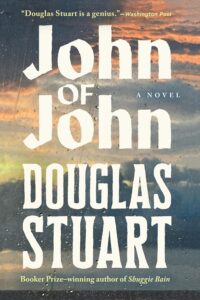 Douglas Stuart, John of John
Grove Press, May 5
Scottish fashion designer turned writer Douglas Stuart burst onto the literary scene in 2020 when his aching autobiographical debut novel, Shuggie Bain, won the Booker Prize and garnered a slew of rave reviews and award nominations. His follow up, 2022’s Young Mungo, was met with similar acclaim. John of John, Stuart’s third novel, follows a closeted young art student returning to his childhood home in Scotland’s Hebrides islands, where his unwell grandmother and conservative lay preacher father live uneasily under the same roof. –DS
 ‘Pemi Aguda, One Leg on Earth
W.W. Norton, May 5
The author of the celebrated 2024 collection Ghostroots is back with a debut novel about a young woman who arrives in Lagos to start a new life, and soon finds that she will be starting two: she is pregnant. “But an inexplicable force is haunting the pregnant women of Lagos,” and she soon “finds herself stalked by a presence she can neither ignore nore appease.” Sounds like pregnancy everywhere right now, which is no doubt (part of) the point. –ET
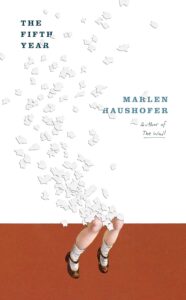 Marlen Haushofer, tr. Shaun Whiteside, The Fifth Year
New Directions, May 5
From the mid-century wizard who brought us The Wall comes another eerie offering. This a dispatch from childhood, following the five year old Marili over a year on her grandparent’s farm. But all is not what it seems in the countryside. Haushofer died in 1970, but she left a huge impression on German letters. (Her fans included Doris Lessing and Elfriede Jelinek.) This new release of an old title is excellent news for English readers. If you like prescient allegories, quiet dystopias, and sentences clean as a bone, pick this up. –BA
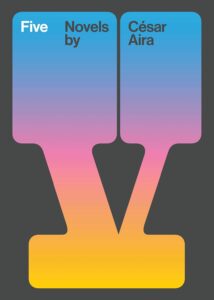 César Aira, tr. Chris Andrews, Five by Aira
New Directions, May 5
What a novelty: a thick Aira book. True, it contains five novels, which were selected from over 100 unpublished works to display “the many facets of Aira’s multifarious mind as he turns expectations inside-out and gleefully explodes genre convention.” As an Aira head, I’m thrilled, but for the uninitiated, it could be a good place to start… –ET
 Francine Prose, Five Weeks in the Country
Harper, May 5
This somewhat speculative historical fiction embroiders the real friendship between two stars in the literary firmament: Charles Dickens and Hans Christian Anderson. The prolific Prose has played in history’s sandbox before—as with 2014’s winning Lovers at the Chameleon Club, 1932. And throughout her project, she’s shown an interest in how artists form their practices. I’m hoping this one feels like Blue Moon. Just some great brains going round and round about how they make their art. –BA
 Julie Schumacher, Patient, Female
Milkweed. May 5
Schumacher is really funny (her hilarious novel Dear Committee Member won the Thurber Prize)! In this collection of short stories, there is a story as syllabus, a board game, middle school gamblers, generous dead neighbors, and a professional gynecology patient. With the perfect blend of dark humor and compassion for her characters, Schumacher writes of the absurdity of the human experience. –EF
 Harriet Clark, The Hill
FSG, May 5
Clark is a former Stegner fellow and graduate of the Iowa Writers’ Workshop. The Hill, her debut novel, has a log-line that calls to mind a certain PTA movie that may have also divided your group chat this year. When her radical mother is busted in a bank heist gone awry, Suzanna Klein is forced to spend her wonder years shuttling between prison visits. Meanwhile her old-school Communist grandmother sneers at the tactics her Red Diaper daughter employed. A politically engaging family story about women who wanted to change the world? Yes, please. –BA
 Hafeez Lakhani, Abundance
Counterpoint, May 5
Sakeena left her beloved India thirty years ago for pursuit of the American dream. Now she and her husband co-own a Dunkin franchise in Florida. On receiving a grim prognosis, this matriarch is forced to reconsider all the choices that have brought her to the panhandle. And her family must decide how they ought to support her final wishes.
This debut novel has most all of my favorite ingredients. We have an epic, multigenerational family story, imbued with a strong sense of place and philosophically specific characters. Check, check, check. –BA
 Avigayl Sharp, Offseason
Astra House, May 5
This voicey debut novel from a Paris Review contributor announces its wit on page one. Our bone dry narrator’s bound for a teaching gig at an all-girls boarding school. A creepy seatmate is squeezing her foot, but she’s the sort to allow it. An observer of catastrophes, come what may.
For her humanities-pilled erudition and delusional grasp of task, this narrator’s already inviting comps to misguided educators like Miss Jean Brodie or Professor Pnin. And in this century, Sharp has fans like Hillary Kelly and Catherine Lacey. –BA
 Kyle McCarthy, Immersions
Tin House/Zando, May 5
Kyle McCarthy’s second traces the relationship between two sisters, Charley and Frances, both modern dancers, in the aftermath of Charley decision to leave her company and join an enclosed convent in France and cut off contact with the outside world, including her family. In search of answers, Frances seeks out Charley’s wealthy ex-husband, who she believes to be somehow responsible. This one sounds gripping, dark, and more than a little sexy. –JG
 Elizabeth Strout, The Things We Never Say
Random House, May 5
Elizabeth Strout is as prolific as they come: just off Tell Me Everything from 2024, she’s back with a new, poignant, emotional look at relationships, conversation, and feeling less alone in the world. I always know I’m in steady hands when reading Elizabeth Strout, whether it’s a Lucy Barton book, or one from another of her multiverse. The Things We Never Say is not a Barton book: it’s about a man named Artie Dam, a recognizable Strout character in his relentless feeling of isolation amidst his bustling life. He’s plagued by wondering about the world, and about his place in it, until he finds out a secret that threatens to either topple his world entirely, or finally make it all make sense. Strout is consistent and satisfying: her writing is safe, trustworthy, and always delightful, and illuminates the world in new, brighter colors with every book she writes. –JH
 Fanny Howe, This Poor Book
Graywolf, May 5
The beloved poet’s final book, completed just before she died in July of 2025, selects multiple pieces from the last thirty years, and recombines them all into a a single book-length poem. Trust Howe to leave us with something brilliant, spectacular, and utterly new. –ET
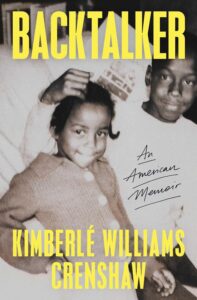 Kimberlé Williams Crenshaw, Backtalker: An American Memoir
Simon & Schuster, May 5
Crenshaw is one of the foundational scholars of contemporary critical race theory; she coined the term “intersectionality,” and in addition to her scholarship on civil rights, race, and feminist theory, is a law professor at both Columbia and UCLA. This memoir shows how she got there—by starting to talk back. Should be a fascinating account from one of our most important public intellectuals. –ET
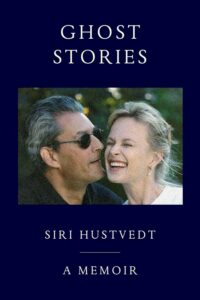 Siri Hustvedt, Ghost Stories: A Memoir
Simon & Schuster, May 5
Siri Hustvedt delivers a gorgeous elegy for Paul Auster, her husband of more than 40 years, in this wide-ranging exploration of grief, intimacy, and time. Apparently, it includes some glimpses at Auster’s unpublished last work, as well as their correspondence over their long marriage—a must-read for the legacy-minded among us. –DB
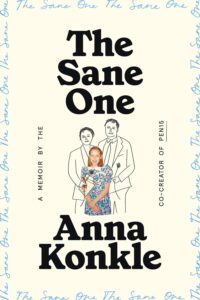 Anna Konkle, The Sane One: A Memoir
Random House, May 5
Along with Maya Erskine, we have Konkle to thank for Pen15–the best television show in recent history/ apex nostalgia object for elder millennials. The Sane One is a memoir, building on subjects Konkle’s loosely autobiographical teen avatar teased in the show– namely, stressful dads, and a traumatic divorce. If “Na’s” rollicking and vulnerable screenwriting voice is anything to go by, this true tale of tricky wonder years should be a hilarious shot to the heart. –BA
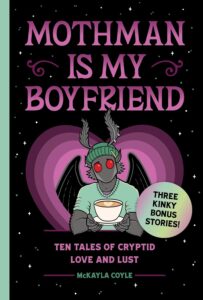 McKayla Coyle, Mothman Is My Boyfriend
Quirk Books, May 5
Lit Hub’s very own McKayla Coyle delivers a totally joyous collection of crypid erotica. It’s unapologetically horny, utterly charming, by turns hilarious and sweet, and featuring all your faves—like the Mothman, Sasquatch, the Jersey Devil, and more—in a cute little town, falling in love (or lust). If you are even vaguely wondering if this might be for you, let me tell you: yes, yes, it is. –DB
 Séamas O’Reilly, Prestige Drama
Cardinal, May 5
I really loved O’Reilly’s actually laugh-out-loud funny and heartbreaking memoir about growing up with ten siblings and a widowed dad in 90s Derry. In his debut novel, a Hollywood actress goes to Derry to research her role for a show about the Troubles—and then goes missing. With a desperate screen writer, a local psychic, and an ex-IRA member part of the story, Prestige Drama is “an indelible portrait of a community both obsessed with its past, and desperate to forget it.” –EF
 Nick Greene, How to Watch Soccer Like a Genius
Abrams Press, May 12
This book looks absolutely fascinating and no, it will not actually equip you to sit in a pub surrounded by Scotsmen watching their team lose 1-0 to Morocco in this summer’s World Cup (just trust me on this one). However, if you’ve ever wondered why it’s so soothing to take in the large green rectangle of the soccer pitch, or about the shared origins of soccer, rugby, and football, or about what happens to the human brain over the course of a 90-minute match, or about why we kick, then Nick Greene’s book is for you (or the soccer-lover in your life). –JD
 Vanessa Hua, Coyoteland
Flatiron, May 12
Who among us doesn’t enjoy a messy, layered family drama? When Jin Chang’s family thinks their move to an affluent California suburb means a new start—what they don’t know is that Jin has one last plot up his sleeve. As his family tries to settle into their new neighborhood, Jin’s plot creates fissures between him and his wife and daughters, as well as their white, liberal neighbor. Things quickly begin to spiral out of control, and a coyote attack puts Jin’s daughter and her friend on a quest for truth that could upset the balance of the entire town. Coyoteland promises to be as dynamic and explosive a suburban drama as Little Fires Everywhere. –MC
 Tove Ditlevsen, tr. Sophia Hersi Smith and Jennifer Russell, Vilhelm’s Room
FSG, May 12
The Danish writer Tove Ditlevsen’s final novel, published the year before she died in 1975, is finally getting a translation into English. Vilhelm’s Room has a strange plot, following a married couple whose life and marriage is upended by a trip to a psych ward and a personals ad. Like Ditlevsen’s incredible Copenhagen Trilogy, this short book is obvious autofiction, about a well known novelist struggling with substance abuse and addiction. Ditlevsen writes beautifully, and her sly and specific humor always manages to both undercut and deepen the madness and love in all of her books. And fittingly for a final novel, Vilhelm’s Room also delves into writing and its processes, a satisfying meta-textual move. –JF
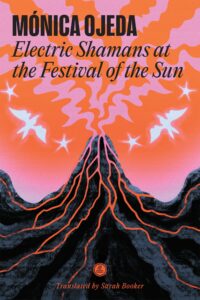 Mónica Ojeda, tr. Sarah Booker, Electric Shamans at the Festival of the Sun
Coffee House Press, May 12
This psychedelic novel follows two friends who travel to a drug-soaked and pleasure-seeking technoshamanistic festival in Ecuador, held at the foot of an active volcano. One friend fully dives in to the dissociative spirit of the event, while the other is more cautious, nagged by the feeling that something might not quite be right. The party warps into something stranger, and one of the women begins speaking in voices not her own. It’s a novel of friendship amidst hidden pasts, uncertain futures, and the supernatural from an exciting young writer. –JF
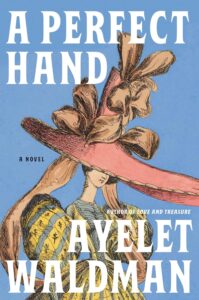 Ayelet Waldman, A Perfect Hand
Knopf, May 19
I refuse to be the last holdout refusing to read romance novels, but I’m going to do it on my terms. An upstairs-downstairs work of historical fiction with a premise farcical enough to fuel an Oscar Wilde play seems like a solid first step toward the genre. –CK
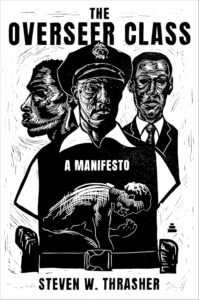 Steven W. Thrasher, The Overseer Class: A Manifesto
Amistad, May 19
Steven Thrasher is always a must-read, and not just when he’s writing for Lit Hub! His follow-up to The Viral Underclass looks at what happens when members of minority groups achieve some kind of institutional power and what can happen when those white-supremacist structures are inhabited by the very people they were designed to oppress. Think Black cops, think Clarence Thomas, and get ready to get mad. –DB
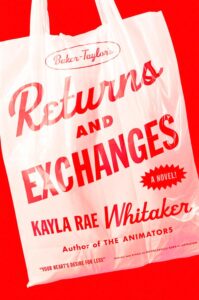 Kayla Rae Whitaker, Returns and Exchanges
Random House, May 19
I think that Whitaker’s The Animators is one of the best debuts of the century so far. I’ve been waiting for this follow-up for nearly a decade now, and what a follow-up it’s shaping up to be: a big family novel, about the trials and travails of a Kentucky family and their department store through the 1980s. I can’t wait to sink my teeth into it. –DB
 Ali Smith, Glyph
Pantheon, May 19
Smith’s follow-up to Gliff is described as “family to” that first novel, and other details are predictably hard to come by. Siblings, a ghost horse, an anti-war bent and an examination of our near-dystopic near-future are pretty much guaranteed—but beyond that, expect the unexpected, as ever. –DB
 Anna Burns, Mostly Hero
Faber & Faber, May 19
The first US release of Burns’ superhero novella! Not quite what you’d expect from the author of Milkman, but that novel was such a bolt from the blue that I can only imagine her take on superheroes and our modern culture of violence will be a romp and a half. –DB
 Paige Lewis, Canon
Viking, May 19
Calling it now: this is one of the best novels of 2026. Form-wise, I’ve never read anything quite like it—chatty, polyphonic, unabashedly meta—and content-wise, it manages to take a very old kind of story (chosen one sets out to stop evil warlord) and turn it upside down to see what kind of treats fall out of its pockets. Come for the talking whale, stay for the deep ruminations on belief and fate. This is going to blow your mind. –DB
 Djamel White, All Them Dogs
Riverhead, May 19
In this debut from Irish novelist White, a gangster called Tony Ward returns to Ireland after years of hiding out in London. But things have changed—his boss is dead, his best friend is out of the game—and as Tony finds his feet, he also finds Flute, with whom be begins a relationship both professional and, unexpectedly, personal. Ann Enright calls it “a stylish, adroit, and gritty debut,” but I’m also here for the slang. –ET
 Trevor Paglen, How to See Like a Machine: Art in the Age of AI
Verso, May 19
I used to be an editor at a now-defunct magazine that covered the intersection between art and technology, so I’ve spent an unhinged amount of time thinking about art and AI. As a culture we often consider the practical problems associated with AI (theft, environmental impact, etc.), but the theoretical and philosophical questions are just as important: How will people choose to interact with art in a world where AI can spit out any image desired? When digital platforms value hyperpersonalization over discovery and learn through user surveillance? AI is altering visual culture more insidiously than it even seems, far beyond slop and plagiarism, and we need to understand it. –OS
 Emily LaBarge, Dog Days
Transit Books, May 19
Almost 20 years ago, LaBarge and her family were held hostage at gunpoint. Years later, a therapist encourages her to lie in the same position, “just like how it happened, for as long as it happened, and for as long as it takes until the pain comes out.” Dog Days is a book about telling “the good story,” the version that doesn’t make anyone uncomfortable, the one with a moral, the one that’s easy to digest; combining memoir, criticism, and psychoanalytic theory, LaBarge “interrogates how language and institutional structures constrain and distort our understandings of trauma, violence, and care.” –EF
 Ada Ferrer, Keeper of My Kin: Memoir of an Immigrant Daughter
Scribner, May 19
Ada Ferrer, the Pulitzer Prize-winning author of Cuba: An American History, is back with a memoir about her family’s history: her mother, who fled Cuba with an infant Ada, leaving her brother Poly behind, the grandmother who raised him, the new life for Ada and her parents, the brother no one knew about, the new life Ada’s parents made in the US. Ferrer is a brilliant historian, and I’m looking forward to seeing her unpack her own family through her expert lens. –ET
 Jesmyn Ward, On Witness and Respair: Essays
Scribner, May 19
With 2013’s Men We Reaped, two-time National Book Award-winning novelist Jermyn Ward wrote one of the most powerful and devastating memoirs of the 21st century. On Witness and Respair is her first book of nonfiction since, and it brings together more than a decade’s worth of essays from a writer who has been lauded as “the heir apparent to Toni Morrison.” The devastating title essay, which recounts the death of Ward’s husband, the father of her children, on the eve of the COVID-19 pandemic, is worth seeking out this collection alone. –DS
 Emily Rapp Black, I Would Die If I Were You: Notes on Art and Truth Telling
Counterpoint, May 19
Rapp Black has written incredibly candid, difficult books—I often think about her memoir Still Point of the Turning World, where she describes the life and death of her young son, Rowan, who was born with Tay-Sachs; this year I happened to read her memoir, Frida Kahlo and My Left Leg, which weaves together Kahlo and Rapp Black’s bodies, amputations, and art. Her new book begins with the answers she must give to awkward questions like, “What happened to your body?” And the response she’s been told more times than she can count: “I would die if I were you.” Part memoir, part craft-book, here Rapp Black posits that grief and loss are part of the human condition, and that art making “can lead us to our fullest truths.” –EF
 David Sedaris, The Land and its People
Little, Brown, May 26
Love him or hate him, a new David Sedaris collection is a publishing event. What kind of biting humour and wild stories will this one contain? From the publicity copy: “He tries on the role of caretaker after his boyfriend Hugh’s hip-replacement surgery, and both succeeds and fails. He buys his sister a cape and discusses his brother with a jaded Duolingo bot. He walks dozens of miles with his friend Dawn and challenges her to eat a truck tire. . . . He is bitten by a dog. A train passenger vomits in his face. A woman on the street late at night either sexually harasses him or doesn’t. Look how hard it is to be alive!” Indeed. –ET
 Natalie Adler, Waiting on a Friend
Hogarth, May 26
Renata can see ghosts—and she’s seeing more and more of them as her friends are dying of a new, strange disease. Though when her best friend Mark dies of complications from AIDS, he sadly doesn’t seem to be one of the ghosts that visits her. Then, a police-like force rages through their East Village neighborhood, threatening Renata’s friends, lovers, and the memories of those who have died. This is a magical retelling of queer history, a celebration of NYC youth and friendship. –EF
 Missouri Williams, The Vivisectors
MCD, May 26
Williams’ first book, The Doloriad, was feted on the indie circuit for its macabre depravity. In her follow-up, a loner narrator haunts a university town that’s been overrun by a “contingent of rogue gardeners.” I’m keen to follow this fresh heart of darkness down a new rabbit hole. –BA
 Jorie Graham, Killing Spree: Poems
FSG, May 26
Do I really need to convince you that you should read a new Jorie Graham collection called Killing Spree? I assume not, but nevertheless, this description is extremely compelling: “In perhaps the most unflinching book of her long career, Graham explores how the human spirit, in the face of everything that threatens it, might navigate the rapids of extreme change.” –JG
JUNE
***
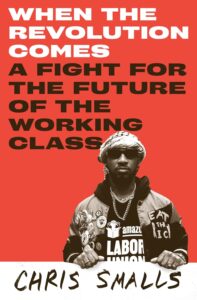 Chris Smalls, When the Revolution Comes: A Fight for the Future of the Working Class
Pantheon, June 2
American labor organizer and activist Chris Smalls rose to national attention during the pandemic when he was fired by Amazon for organizing a walkout to protest a lack of proper safety protocols around COVID-19 exposures at the warehouse in Staten Island. After his termination, Smalls went on to found the ALU, the first union of American Amazon workers, and achieve the first ever U.S. labor victory against the retail giant. In 2022, he was named one of Time‘s 100 most influential people. Like Greta Thunberg—another firebrand who refused to neuter her activism after being fêted by the liberal establishment—Smalls joined the 2025 Gaza Freedom Flotilla, attempting to break Israel’s blockade of the Gaza strip. Smalls is a true inspiration, and I’m excited to read his story. –DS
 Liaquat Ahamed, 1873: The Rothschilds, the First Great Depression, and the Making of the Modern World
Penguin Press, June 2
The latest book from financial historian Ahamed, the author of the Pulitzer Prize–winning Lords of Finance, chronicles the first Great Depression, with special emphasis on the Rothschilds, providing “a bird’s-eye reckoning with the full dimension of the crisis, from its buildup to its long aftermath.” Always relevant, and in 2026, it might just be even more so. –ET
 Alexander Starritt, Drayton and Mackenzie
Atlantic Monthly Press, June 2
This book is one of the first novels in over a decade to make it on to the longlist for the Financial Times’ best business book of the year. James Drayton and Roland Mackenzie are Oxford grads, management consultants moving through roles at McKinsey and eventually building a new startup in green energy. Set against the background of the global financial crisis, bailouts, and Brexit, it’s a novel about friendship, money, and ambition. In the UK, where it’s been out for a few months, they’re calling it a “punchy satire…Dickens meets The Big Short.” –EF
 Melissa Albert, The Children
William Morrow, June 2
From the bestselling YA author Albert, a first novel for adults that blends mystery, fantasy, and a sort of publishing world realism to create a twisty, delicious, and—I mean this in the best way—faintly sinister reading experience. Guinevere Sharpe’s mother died twenty years ago, leaving a beloved series of children’s books with protagonists modeled after her own children: Guin, of course, and her older brother Ennis. Now she and Ennis don’t speak, and Guin is flogging a ghostwritten memoir that makes her childhood like the fairy tale it wasn’t. But when Ennis opens a new art exhibit called Mother, Guin is determined to find him. It’s harder than it seems, but just like in the stories, there’s always a door somewhere, if you look properly. If you are a grown up who, at one time, believed that Narnia (or Neverland, or Oz) was real, this book is for you. –ET
 David Baerwald, The Fire Agent
Spiegel & Grau, June 2
The Fire Agent is one of those big, beautiful war novels about everything at the most important moment in history, and a story of the individuals that actually lived through it. Here, Ernst Baerwald works in Japan for what will become the German chemical company IG Farben—which provides pretext to his undercover work as a spy. From the origins of the Yakuza, the dawning of chemical warfare, and FDR’s spy shops, the novel treks across World War II to the dawn of the Cold War. Based on the life off Baerwald’s grandfather. –EF
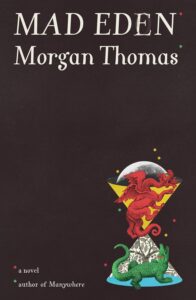 Morgan Thomas, Mad Eden
FSG, June 2
Did Morgan Thomas write this novel specifically for me? Definitely not, but they might as well have. I hate calling books “timely” or “relevant,” but this is timely and relevant to me, personally, so I’m doing it. I haven’t even read the book yet, but I can already see so many people I know and love reflecting back at me from it, which is very sweet and sad all at once. –OS
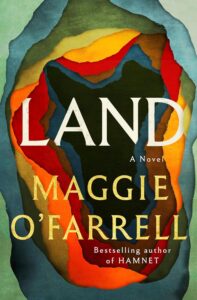 Maggie O’Farrell, Land
Knopf, June 2
After falling in love with the world she built so exquisitely in Hamnet, I’m here for whatever Maggie O’Farrell chooses to give to us, ever after. Thankfully, it’s always something rich, and historical: woven as densely and intricately as a tapestry. This new novel is titled Land, and tells the story of a father and son in 19th century Ireland, post Great Hunger, as they set out on the task of mapping the entirety of the country. It’s a novel of father-son relationships, rootedness, and loyalty. It’s about the human need to grapple with the ground on which we stand, in order to build a future. –JH
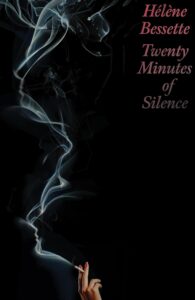 Hélène Bessette, tr. Kate Briggs, Twenty Minutes of Silence
New Directions, June 2
Certain words and phrases are mocked for being over-used in book blurbs, and rightfully so—I don’t think anyone’s ever gone into a bookstore or library and asked for something “luminous.” But it’s crucial to be able to interpret keywords in book jacket copy for your own purposes: i.e., if a novel is described as “sui generis,” that’s the marketing person admitting they’ve never encountered a book like this before and have no idea how to describe it. And that is the exact kind of novel I’m drawn to, and how the forthcoming Twenty Minutes of Silence is described. See also: the promise that, in Twenty Minutes of Silence “the detective novel is turned inside out and wholly on its head.” It doesn’t sound especially luminous, but that’s not what I’m looking for. –CK
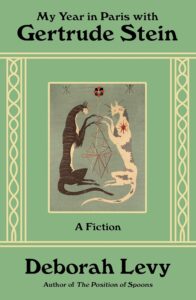 Deborah Levy, My Year in Paris with Gertrude Stein: A Fiction
FSG, June 2
Levy is one of few writers who find fresh ways to astonish with each project. Her memoir writing on the independent artist’s life has driven me to purchase silk sheets and lust after writing sheds, while novels like The Man Who Saw Everything glitter with ambitious formal turns. My Year in Paris…promises more of that Levy wizardry: bold structural swings and a freewheeling spirit. A woman in today’s Paris is trying to write about Gertrude Stein, but she keeps hitting walls. I can’t wait to see how they’re mounted. –BA
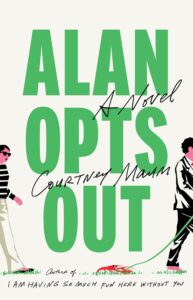 Courtney Maum, Alan Opts Out
Little, Brown, June 2
The eat-the-rich farce we need, from one of our funniest writers. The titular Alan, a successful and powerful advertising exec, has an epiphany on the heels of a failed pitch: that he shall renounce his capitalist ways! Of course, his family has some questions as does his affluent Connecticut community… but as readers of Maum’s Touch will know, sometimes the unexpected choice can lead to real change. Or at least we can have some fun along the way. –DB
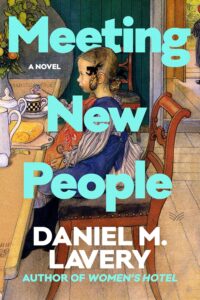 Daniel M. Lavery, Meeting New People
HarperVia, June 2
Both Daniel Lavery and his publisher describe this latest novel as “Nora Ephron-style,” which is an incredible endorsement and reason enough to check this book out. Lavery’s protagonist in Meeting New People is an acerbic older woman named Barbara, who is trying to optimize her next and potentially last friendship by analyzing what went wrong with failed best friendships in the past. Faced with a choice between two potential new pals, Barbara must decide whether to repeat the old or reinvent something new. Lavery is one of my favorite writers and one of the funniest prose stylists of his generation—I’m very excited for this one. –JF
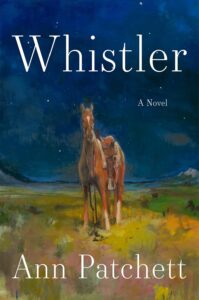 Ann Patchett, Whistler
Harper, June 2
New Ann Patchett is always a cause for celebration, and this latest is no exception. Following a middle-aged woman as she reconnects with her former step-father, it’s absolutely going to make you cry and probably make you feel a little better about the beauty of human experience in the process. –DB
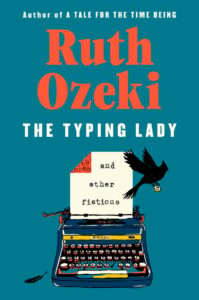 Ruth Ozeki, The Typing Lady
Viking, June 2
From bestselling novelist and Zen Buddhist priest Ozeki, a short story collection about “characters standing at life’s thresholds—grappling with faded ideals, evolving identities, and the inevitable compromises that shape a life.” True to form for Ozeki, it is also a book about books—my favorite thing. –ET
 H.W. Brands, American Patriarch: The Life of George Washington
Doubleday, June 9
2026 is going to be chock full of patriotic reflections on America’s founders, and I’m bracing myself for a year full of relitigation of what America has amounted to after two and a half centuries. Some histories and celebrations will not be worth our time (like the White House’s planned wrestling extravaganza), but I’m interested in this new biography of America’s first president, written by seasoned historian H.W. Brands. The best selling academic has written a number of impressive, one-volume biographies of famous Americans, notably Aaron Burr, Ronald Reagan, Ben Franklin, and Franklin D. Roosevelt. Brands latest portrait follows Washington from early life through his maturation as a general and leader, and situates the first president among his many allies and rivals. Brands’ books are always long but move along nicely—he’s skilled at synthesizing vast lives and complicated contexts into approachable, readable narratives. –JF
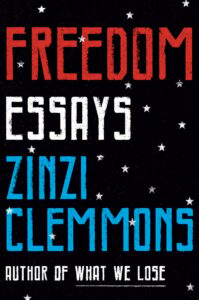 Zinzi Clemmons, Freedom: Essays
Viking, June 9
Clemmons is one of the smartest writers I know, and her first collection of essays (after her beautiful debut novel, What We Lose) showcases her ability to draw on the personal in order to understand the wider systems of power, struggle, and capitalism. The daughter of a South African mother who grew up in a white town in the Northeast, Clemmons uses her frequent travels to Johannesburg to contextualize the promises of freedom, the realities of entrenched inequalities, and consequences of violence. “Freedom is an incendiary exploration of race, sex, class, and inheritance”—an absolutely essential read. –EF
Carlos Barragán, The Yahoo Boys: Love, Deception, and the Real Lives of Nigeria’s Romance Scammers
FSG, June 9
Maybe the preponderance of right-wing grifters has made me nostalgic for a simpler kind of con: the romance scam. The Yahoo Boys promises to be an in-depth work of narrative nonfiction that explores the material conditions that make these scams profitable, and the lives of four such scammers in Lagos, Nigeria. All these years later, we may yet cycle back to sympathizing with the “Nigerian prince” spammers desperately emailing strangers for money. –CK
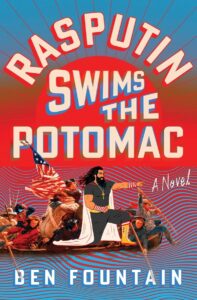 Ben Fountain, Rasputin Swims the Potomac
Flatiron, June 9
Fountain turns this scathing satire to the most relevant story of our time: the twists and turns of American democracy as it hurtles toward authoritarianism. We have reporter Clarence Thomas Jr., former country music teen star-turned White House employee Faith Spack, a two-term incumbent president campaigning for a constitutionally dubious third term, a new pandemic of “weeping sickness,” and the mystical pro wrestler Rasputin whose power is perhaps too real to control. –EF
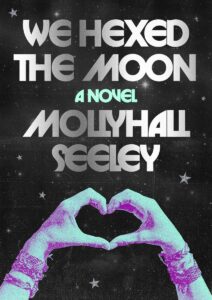 Mollyhall Seeley, We Hexed the Moon
S&S/Saga Press, June 9
Exactly what it says on the tin, and boy howdy what a blast! A group of teen girls decide to hex the moon and, wouldn’t you know it, the moon (in corporeal form) pops into their midst and chaos ensues. It’s a sticky-hot blast of summer-before-college nostalgia, humid and sweaty and euphoric. Oh, and it’s absolutely magical, too. –DB
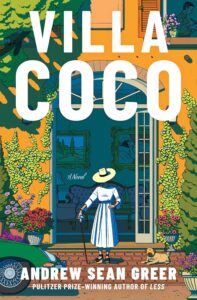 Andrew Sean Greer, Villa Coco
Doubleday, June 9
The Pulitzer-winner returns with what looks to be a giddy farce, about a young man who takes a role as caretaker to and for an eccentric older woman and her Tuscan estate as she tries to reconnect with the great lost love of her life. –DB
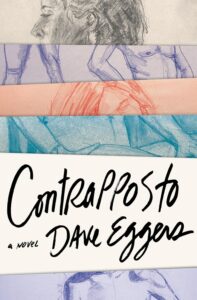 Dave Eggers, Contrapposto
Knopf, June 9
Have you ever put off watching a TV show until the final season, then caught up all at once? I don’t mean to suggest this will be Dave Eggers’s final book—that seems extremely unlikely—but he’s been prolific enough that now might be the time to start catching up on his oeuvre, starting with next year’s Contrapposto. Plus, I’m a sucker for any story about artists and fellow travelers who are aligned creatively and misaligned-but-entangled personally. –CK
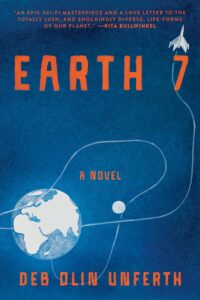 Deb Olin Unferth, Earth 7
Graywolf, June 9
Unferth’s follow-up to the hit Barn 8 sees her heading to the future, with a nearly empty Earth and attempts by those few who remain to create something new—and maybe even better. Unclear as to whether or not the burgeoning numerical sequence to her work has a hidden meaning, but there’s only one way to find out. –DB
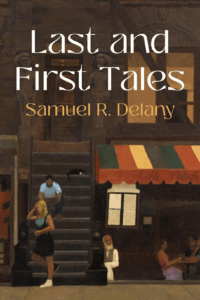 Samuel R. Delany, Last and First Tales
McNally Editions, June 16
Samuel Delany is one of the greatest and most unique sci-fi writers of all time and in his 65 plus years of writing, he’s established a fearless and iconoclastic voice. Last and First Tales is a collection of stories selected by the author, including some of his early writing and his more mature and celebrated work, some reworked into new versions. Delany completionists no doubt already have this on their TBR list, but for the uninitiated who are overwhelmed by Delany’s vast output, I imagine this survey will make for a great starting place. –JF
Joyce Carol Oates, The Frenzy
Hogarth, June 16
Our Literary Twitter Champion is not only a famously prolific tweeter, but a famously prolific writer (where oh where does she find the time?); her latest is a short story collection whose tales “evoke life at its most vivid and perilous, when fate and free will intersect, and one ominous encounter or bad choice can be the difference between an ordinary day and the point of no return.” –ET
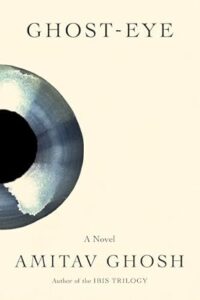 Amitav Ghosh, Ghost-Eye
FSG, June 16
Ghosh’s climate writing (The Great Derangement) brought the frightening future into close proximity. His fearlessness in the face of what most people find “unthinkable” has left me thrilled about the prospect of his fiction. Ghost-Eye is a time traveling odyssey involving reincarnation, environmental activism, and buried memories. I’m betting this is a climate novel worthy of the man who issued the gauntlet for same. –BA
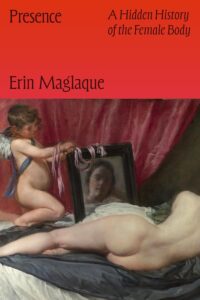 Erin Maglaque, Presence: A Hidden History of the Female Body
Astra House, June 16
A history of women’s bodies, presented in the form of a biography of the writer’s own: from girlhood to adulthood to motherhood to caretaker, which Sophie Gilbert describes as “an immersive, revelatory, and astonishing book about women, told through the distinct bodily experiences that punctuate our lives, and the history we’ve rarely been taught.” –ET
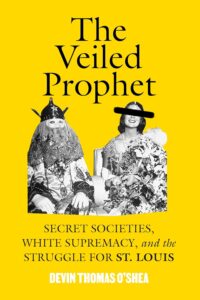 Devin Thomas O’Shea, The Veiled Prophet
Haymarket, June 23
A genuinely startling deep-dive into something that sounds like it should be a conspiracy theory but is, in fact, real: the secret society populated by monied elites that has controlled the heart and soul of St. Louis for over a century. It sounds like something out of Pynchon, but it turns out truth is stranger than fiction. –DB
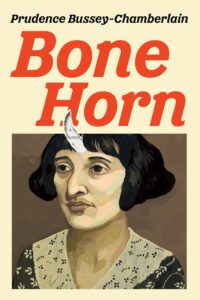 Prudence Bussey-Chamberlain, Bone Horn
Soft Skull, June 30
What if Alice B Toklas had a horn? And what if a private investigator went looking for it? This is the kind of mystery novel I want to read, straight up. We need more queer detective stories. –OS
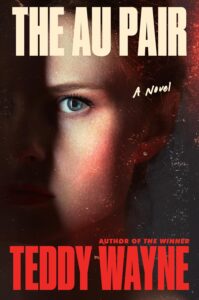 Teddy Wayne, The Au Pair
Harper, June 30
I first got to know Teddy Wayne’s writing through his short humor, and I love how his novels are able to pair his knack for a thrilling plot with his fluency with jokes and observational satire. Wayne’s newest book is about a writer whose career and marriage are struggling, and who gains a level of fame again after his infatuation with a Norwegian au pair explodes into scandal. A thriller with twists, erotic tension, and jokes about the Brooklyn literary scene, this sounds like a great early summer read. –JF
JULY & BEYOND
***
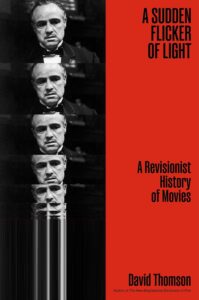 David Thomson, A Sudden Flicker of Light: A Revisionist History of Movies
Simon & Schuster, July 7
David Thomson has been writing about film for fifty years, so when he argues (as he does in this book ) that “movies have been a destructive force—responsible for creating an alternate reality and fantasyland that has only deepened the isolation and disconnection of our society over the course of a century,” I’m inclined to hear him out. (And not only because movies are too long to watch at night when I could be sleeping.) –JG
 Rachel Aviv, You Won’t Get Free of It: Stories of Mothers and Daughters
Knopf, July 7
Rachel Aviv writes the kind of nonfiction that sucks you in and holds you long after you finish reading. Her last book, Strangers to Ourselves, was one of the most complex and illuminating works I’ve read in recent years. I’d be anticipating this one—which explores mother-daughter relationships—even if it didn’t speak so directly to me. As both a daughter and a mother of daughters, thought, I’m on the edge of my seat. –JG
 Christian Wiman, The Dance
FSG, July 7
I love Christian Wiman’s poems and read them aloud whenever possible. Though his language is that of the every day his preternatural instinct for rhythm fills his lines with a bursting musicality. And though I am not, unlike Wiman, a man of faith, I share in his wonder of everyday holiness, for that ineluctable light that drags us from our solipsisms into a brighter way of being… even if only for a moment, even if for just the time it takes to read a poem. –JD
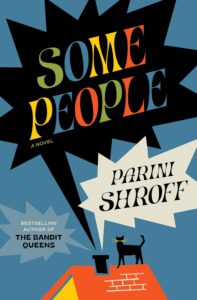 Parini Shroff, Some People
Algonquin, July 7
From the bestselling author of the delightful The Bandit Queens comes a novel that sounds unbearably awkward and just as good: Malti Patel finds herself forced to recuperate for an entire week, under the care of her daughter’s soon to be ex-huband, Nathan. Clearly, both have resentments, and things to unpack, though they will, one supposes, also discover that they have at least one thing in common. Shroff is hilarious and winking and sharp but ultimately large-hearted; I think she will knock this premise out of the park. –ET
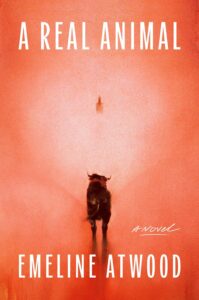 Emeline Atwood, A Real Animal
Catapult, July 7
I’d been hearing about this book through the grapevine for a long time before I got my hands on it, and once I did, I understood perfectly. This is a book that is a caliber above and beyond what we have come to expect from the young-twenties-girl-bildungsroman. There’s men, yes, and sex, a lot of it, and yearning to be understood, and for power and a place in the world, but A Real Animal is about the wild, deep, feral core of those themes. It’s about something subterranean, underneath one’s lived experience, underneath, even, one’s trauma. The book follows the protagonist from college, when she experiences a horrible sexual assault, through the next decade, as she builds and breaks relationships, as she builds and breaks a life. There is no straight line. There is no healing. But the book has this feeling about it, like there’s so much within the pages that’s just bursting to get out: a violent and powerful urge for something, for more survival, for more agency, to express one’s pain, to feel better. A Real Animal is as raw and visceral as an open-mouthed scream: you hear it in your bones. You can see its teeth. –JH
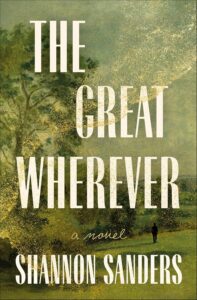 Shannon Sanders, The Great Wherever
Henry Holt, July 7
This book circles one of my favorite riddles for fiction: how do we carry ancestral expectations? When Audrey Lamb, an underpaid gig worker in D.C., inherits family farmland in Tennessee, she goes to claim her birthright—only to discover the property is ruled by four familial ghosts. An epic with supernatural and epigenetic overtones, this debut novel looks like a feast of a story. –BA
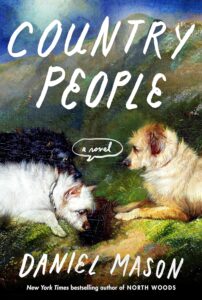 Daniel Mason, Country People
Random House, July 14
After his astonishing North Woods, I am a Daniel Mason fan for life. I’m beyond thrilled that we’re getting another novel so soon, especially one about a family decamping to Vermont to discover a cast of wild characters and a local legend (or local truth), which is being billed as “joyous, absurd, and life-affirming.” This is just what I need. –ET
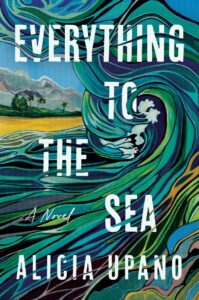 Alicia Upano, Everything to the Sea
William Morrow, July 14
This debut novel hinges on an epic premise. In Hawai’i, two lovers (Kenji and Jane) are drawn together for what’s supposed to be a summer fling. But when a tsunami rocks their island, profound tragedy ensues, and immediately ups the stakes of a brief encounter. This big-souled book considers the costs of leaving and staying, especially where rebuilding is required. Upano’s operatic scope and clean, elegant sentences really swept me off my feet. –BA
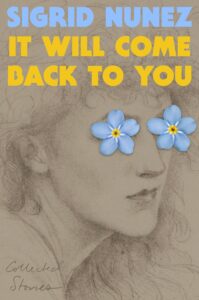 Sigrid Nunez, It Will Come Back to You: The Collected Stories
Riverhead, July 14
New Sigrid Nunez! Her first short story collection! “Moving from an inappropriate teenage crush to a therapist’s second chance at love, in this collection Nunez maintains her irrepressible humor, bite and insight, while exploring the philosophical questions we have come to expect from her writing.” Spanning her career, these stories promise the same brilliant writing from one of our best writers. –EF
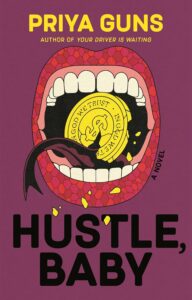 Priya Guns, Hustle, Baby
Doubleday, July 14
This second novel from the author of Your Driver is Waiting follows a family of precariously employed Tamil refugees just trying to make it work on the margins as Y2K looms. When a rizz-y day trader promises the world, it’s hard to say no. But chaos inevitably follows the golden goose. Guns is an actor and writer, known for her razor-sharp observations and riotous voice. This one looks like a thrill ride. –BA
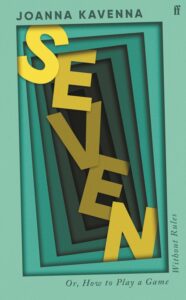 Joanna Kavenna, Seven
Faber & Faber, July 14
The latest novel from British author Kavenna, whose Zed was a Lit Hub favorite, concerns a philosopher seeking an ancient game box in Greece—but “the hunt for this small thing, among the countless lost things, becomes an absurdist quest through time and space: from the earliest human societies to the advent of AI.” Sounds like fun. –ET
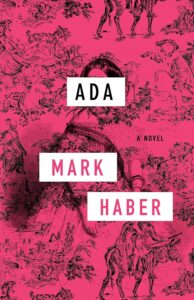 Mark Haber, Ada
Coffee House Press, July 14
Haber is one of my favorite contemporary novelists: a sky-highbrow absurdist with a scholar’s sensibility and an artist’s style. In his latest, a “petty tyrant” in “a remote country in Europe” will stop at nothing to be reunited with his (unfortunately married) beloved—you guessed it: Ada. I’ll read pretty much anything he writes, can’t wait. –ET
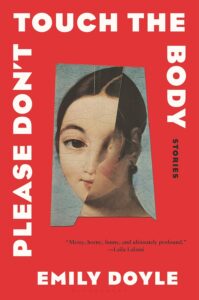 Emily Doyle, Please Don’t Touch the Body
Bloomsbury, July 14
I’ve had the pleasure of glimpsing Emily Doyle’s muscular, heart-forward fiction in a writing workshop, and all I can say is brace yourselves. The body is front and center in these uniquely brewed stories, which range from surreal to poignant. In one piece, a woman fearing fetishization finds agency by writing a sex column. In another, Ronald Reagan is reincarnated as a puppy, and forced to depend on the whims of his queer owners. This debut collection is thrillingly concerned with how we come to feel at ease in—or in power of—our meatsacks. –BA
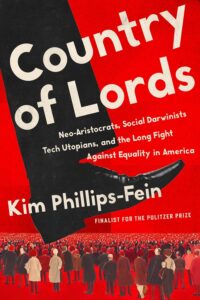 Kimberly Phillips-Fein, Country of Lords: Neo-Aristocrats, Social Darwinists, Tech Utopians, and the Long Fight Against Equality in America
Norton, July 21
From Pulitzer Prize-finalist Phillips-Fein, a book about an American tradition: fighting against equality. You read that right: within are the stories of figures like “John Adams, William Graham Sumner, Andrew Carnegie, journalist Lothrop Stoddard, Henry Ford, Harvard psychologist Richard Herrnstein, Peter Thiel, and others” who “represent this counter-tradition of hostility to democratic government.” You didn’t think it was an accident, did you? –ET
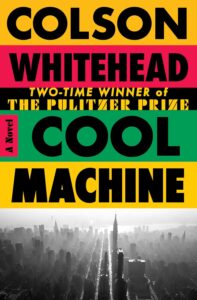 Colson Whitehead, Cool Machine
Doubleday, July 21
Whitehead caps off his Harlem Trilogy by bringing Ray Carney—business owner, former fence, family man—into the 1980s. The blurb promises a one-last-job kind of story, fitting for the conclusion to a modern classic of the crime genre. –DB
Julie Buntin, Famous Men
Random House, July 21
I love love loved Julie Buntin’s 2017 debut Marlena, so I couldn’t be more excited to read her second novel of obsession: in which a young woman, trapped in her hometown, finds solace in a poet from the same place—and sets off to find him. When she does, the result is a fraught, life-altering relationship, which happens to be Buntin’s forte. –ET
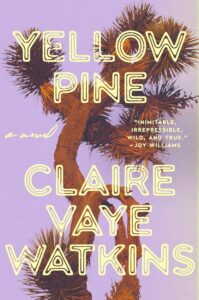 Claire Vaye Watkins, Yellow Pine
Riverhead, July 21
Claire Vaye Watkins has a gift for depicting the American desert and the people who find themselves there, so I’m very excited for her latest: a novel of intentional communities, fighting corporate power, single parenthood, and second-chance romance in the Southwest. –DB
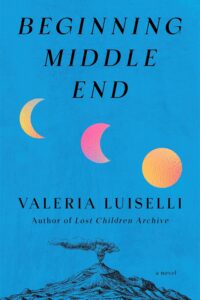 Valeria Luiselli, Beginning Middle End
Knopf, July 28
A mother-daughter duo land in Sicily after the collapse of the former’s marriage, setting off an exploration of their own family line as well as the possibilities (and pitfalls) of a changing world. Luiselli is one of the writers pushing fiction forward and wherever she goes, we would do well to follow. –DB
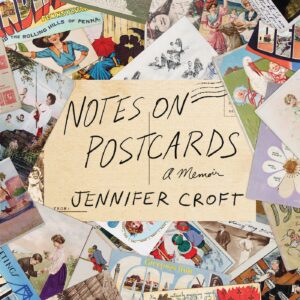 Jennifer Croft, Notes on Postcards: A Memoir
Catapult, August 4
There are far worse ways to measure out a life than by postcards. Though as a medium they may necessarily limit the depth and intimacy of what we write, they in turn free us of our writerly pretensions, and force us to get to the point. So as someone who once sent 300 postcards (over as many days) to someone very dear and very far away, I am eager to read novelist and translator Jennifer Croft’s memoir in very small parts, as she shares her collected postcard correspondence—with her grandmother, her husband—and muses on the medium itself, equal parts anachronism, archive, and analog delight. –JD
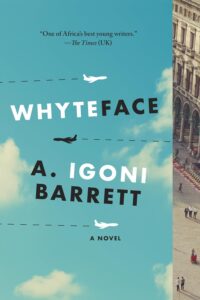 A. Igoni Barrett, Whyteface
Graywolf, August 4
Whyteface is a sequel to 2016’s Blackass, in which a Nigerian man named Furo Wariboko wakes up one morning to find that his skin has turned white—except for his ass. Four years later, Furo is gainfully employed, going by Frank Whyte, and ready for a vacation, to European capitals where at last he finds himself blending in, at least at first glance. Barrett is a genius of social satire, holding up a mirror to the subtle ways we interact with, judge, irritate, and delight one another. –ET
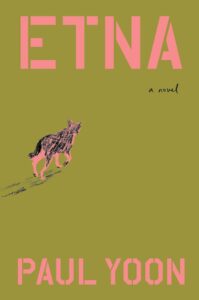 Paul Yoon, Etna
Scribner, August 4
If Homeward Bound and Au hasard Balthazar had a baby, it would be Etna. Yoon’s latest work is told through the eyes of an ex-military dog who decides to return home after years of war. On his journey, Etna revisits the places he worked during the war and finds them changed. He meets people and animals struggling to readjust after brutal battles upended their lives, and learns the complexities of life during “peacetime.” But Yoon’s novel offers more reasons for hope than despair as it asks challenging questions about loss, trust, and, of course, home. –MC
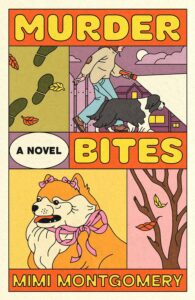 Mimi Montgomery, Murder Bites
Bantam, August 4
From Axios reporter Mimi Montgomery, a frankly delightful-sounding debut mystery about Margot, a D.C. transplant who finds herself in South Carolina, where all her neighbors are obsessed with a reality TV show about dog fashion, which is called Pawsh. Then “the local dog walker is killed in a bizarre incident involving an over-the-top Halloween display featuring multiple Home Depot skeletons,” and Margot finds herself in hot water. But never fear, she will asemble a quirky crew and solve this crime before she’s blamed for it. Fun. –ET
 Margrét Ann Thors, Freyja
Spiegel & Grau, August 4
I can feel that 2026 is the year I finally dive into the Nordic mystery genre, never to return. Freyja’s premise, re-opening an unsolved disappearance twenty years after the child went missing, is standard fare until you hit the kicker: “Unnur may finally have to face… the possibility that she might be responsible for the disappearance of her otherworldly friend Freyja.” If there’s even the slightest possibility Freyja is some kind of missing child-god, it’ll be worth checking out. –CK
Téa Obreht, Sunrise
Random House, August 4
I’ve been a fan of Obreht since her breakout 2011 debut The Tiger’s Wife; Sunrise will be her fourth novel, and she hasn’t disappointed me yet. I don’t expect her to start now, especially with a book that sounds this good: In 2024, a woman survives a plane crash in the Wyoming mountains. She’s alone, until she finds a strange town, apparently abandoned but almost plucked from the Old West: Sunrise. As the novel goes on, Obreht weaves three timelines together—Coll’s in 2003, Anton Vargas’s in 1902—to unravel the mystery of Sunrise, the ghost town to end all ghost towns. Sorry to fangirl but: YAY. –ET
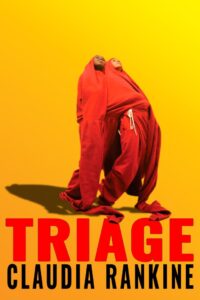 Claudia Rankine, Triage
Graywolf, August 4
How to define Claudia Rankine’s work? Poetry, essay, fiction, reportage, memoir… somehow all of the above and also something else altogether? Her latest follows “two composite characters, the narrator and the theorist” over decades of friendship characterized by deep engagement in this collapsing world around us… but also in a game, of sorts, where the two have to collapse to the ground whenever they see each other. –DB
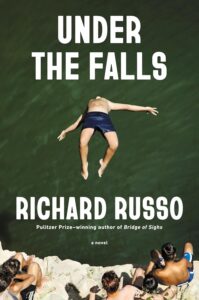 Richard Russo, Under the Falls
Knopf, August 11
If “sprawling literary page-turner” is your favorite genre, here’s one for you. Richard Russo is a master of creating an entire town full of heartbreakingly realized characters (with many secrets), and Under the Falls promises to be a perfect showcase for his talents. The wayward son of a small-town returns after finding fame and fortune and must confront the old friends eagerly awaiting his return for reasons of their own. Sounds like my ideal summer read. –JG
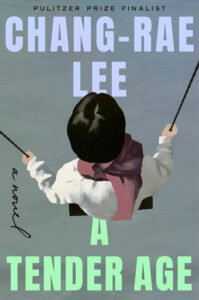 Chang-rae Lee, A Tender Age
Riverhead, August 11
Chang-rae Lee can do no wrong in my mind—I devoured Lee’s last novel, My Year Abroad, and I can’t wait for this one, a Bildungsroman that follows Korean-American Jeon-Gi as he tries to find his way through early adolescence. I can’t think of any writer better equipped to capture the horrors and hilarity of the middle school years. –JG
 Doortje Smithuijsen, tr. Erica Moore, Capitalism is Sexism
Simon & Schuster, August 11
Well, it’s right there on the tin. But for those who need more detail, Dutch philosopher and journalist Doortje Smithuijsen dives into the many, many ways in which capitalism perpetuates patriarchy and relies on the unpaid labor of women to contribute to its endless need for material growth. From trad wives to spin classes to caregiving, Smithuijsen reveals how late stage capitalism strips women of agency and traps them in endless cycles of empty consumption and thankless labor. –JD
 Malavika Kannan, Unprecedented Times
Henry Holt, August 18
A queer campus novel about a first year Stanford student who has burned out on climate activism and wants to escape her strict upbringing into a world of literature and sex. But as COVID scrambles everything, she and some classmates flee to a farm collective, where the small community starts to fray under the weight of global and personal pressures. I’ve been a fan of Malavika Kannan’s writing from around the ‘net, and am very excited to read her literary debut. –JF
 Katy Simpson Smith, The Maltese Version
FSG Originals, August 18
From the award-winning author of The Weeds and The Everlasting comes a novel about four women “forging their way across time, place, and language in search of desire, power, and connection.” When Max disappears to Malta (leaving a possibly pregnant Leonie behind) to translate wary poet Anna’s work, travel writer Rhoda is dispatched to track him down. Once there, however, Rhoda discovers more than Max’s indiscretions. Smith is beautiful storyteller, and this latest novel sounds like a knottily delightful exploration of love and desire. –DS
 Dorthe Nors, tr. Caroline Waight, Range
Graywolf, August 18
In the latest novel from Lit Hub favorite Dorthe Nors, an astrophysicist retreatst to the country to concentrate on the stars—but can’t seem to get away from the messy, compelling humanity that surrounds her, leaving her shifting her attention from the enormous to the minute and back again. –ET
 Anjet Daanje, tr. David McKay, The Song of Stork and Dromedary
FSG Originals, August 18
I love a chonky deep-dive into the life, art, and impact of a fictional author—this one, following three hundred years of various interactions with the single novel of a Brontë-esque recluse, sounds like just the thing for late summer immersion. –DB
 Ted Scheinman, Jolt: My Electric Journey Out of Darkness
Scribner, August 18
While nobody owes us the hard truths of their experience, it’s always an enormous gift when someone has the courage to share the trials and tribulations they’ve endured. So it is with Ted Scheinman’s Jolt, in which the Smithsonian magazine editor and author of the delightful memoir/travelogue Camp Austen, reveals his long and harrowing struggle with depression, and the steps he took to reckon with it. Namely, and as a last resort, Scheinman decided to undergo electroconvulsive therapy (ECT); and though the ECT worked—much to Scheinman’s relief—it came with a cost to his memory. Not only does Jolt provide an important window into the darker realities of mental illness, Scheinman’s willingness to share his story will no doubt help others who might be struggling. [Full disclosure: I once had a lovely experience with Ted Scheinman as an editor for a magazine feature of mine.] –JD
 Susan Stryker, Changing Gender
FSG, August 25
If there was a Mount Rushmore of trans historians, Susan Stryker would be on it twice. She literally wrote the book on transgender history. (It’s called Transgender History.) Any new publication of hers is mandatory reading, and not just because transgender Americans are under an obsessive, incessant series of assaults from the current administration and the right more broadly. Stryker is also uniquely gifted at explaining and contextualizing the history of transness as we know it in ways that are clear, accessible, enlightening, and entertaining. –CK
 Andrés Barba, tr. Lisa Dillman, Last Day of a Prior Life
HarperVia, August 25
I’ve been a Barba diehard since Such Small Hands; his writing is strange and beautiful and gothic. This one, which Mariana Enríquez described as a “ghost story without ghosts,” a woman follows an unfamiliar boy and discovers “a suspended time, a loop, and another life.” What that means, I can’t say, but I want to find out. –ET
Grace Krilanovich, Acid Green Velvet
Two Dollar Radio, September 1
I was a huge fan of Grace Krilanovich’s bizarro vampire novel The Orange Eats Creeps when it was published in 2010. I kind of can’t believe it’s been over 15 years since then (vampires indeed), but she is finally back with a second novel. I know absolutely nothing about it, but I am lying ravenously in wait. –ET
Chloe Benjamin, Under Story
Putnam, September 1
Benjamin blew us all away in 2018 with her genre-bending bestseller The Immortalists, but it seems she’s pushing things even further into the realm of the fantastic with her newest book, in which a biologist, hiding out on a remote base in Antactica (as you do), is confronted by a mysterious phenomenon which also draws her estranged husband to the end of the earth. But where—or when—might the phenomenon lead them? Count on Benjamin to ask the big questions—what makes a life worth living? What is the nature of time? Where do we belong?—and entertain us fully all the while. Cannot wait to read. –ET
Emily St. John Mandel, Exit Party
Knopf, September 10
An Emily St. John Mandel novel is always cause for excitement, and if you liked Sea of Tranquility, this one sounds like another kaleidoscopic, genre-and-planet-spanning jewel of a book: the description promises dopplegangers, disappearances, Paris, Greece, the future. Great. I’ll let her take me everywhere and anywhere. –ET
T. Geronimo Johnson, The Occidental Book of the Dead
William Morrow, September 15
Incredibly, it’s been over ten years since T. Geronimo Johnson’s bestselling satire Welcome to Braggsville, but now he’s back at last, with a novel in which a Black cop in Atlanta who finds himself patrolling the streets he grew up on—despite having “moved up” to the suburbs, where he lives with his (white) wife and stepson. But a sudden act of violence on the job splits his life in two, and the narrative itself along with it, “presenting two contrasting versions of the American experience as he’s forced to confront the history that shaped him and the compromises required of a good man in a broken system.” –ET
Ayad Akhtar, The Radiance
S&S/Summit Books, September 29
From Pulitzer Prize-winning playwright and author of American Dervish and Homeland Elegies comes a very intriging novel, in which a writer, after an accident on a country road “is caught between revelation and madness” and winds up drawn into scandal, secrets, and spiritual transformation. Mary Gaitskill herself wrote that the book is “a fantastic surprise, a novel made of oppositions: almost painfully intimate, culturally wide-angled, vulnerable, shrewd, compassionate and ruthless, tragic and well, radiant. Bordering at times on the ineffable, it is a unique and extraordinary reading experience.” Ok! –ET
Deesha Philyaw, The True Confessions of First Lady Freeman
Mariner, September 29
The way I actually gasped with delight when I saw this announcement! Philyaw’s Secret Lives of Church Ladies is one of my favorite collections of the last decade, and her podcast presence is a lesson in charisma. So anything she sees fit to print will zip right to the top of my TBR pile. Luckily for all of us, her debut novel imagines Scharisse Freeman, “the Beyonce of the mega-church world.” This intrepid empire builder is married to the pastor, and not here to make friends. But when scandal circles on the eve of the Mrs. First Lady USA pageant, Mrs. Freeman finds herself in troubled waters. As Philyaw’s a proven expert on the church lady’s myriad contradictions, I imagine we’re in safe, salacious hands with this one. Take me to church! –BA
Min Jin Lee, American Hagwon
Cardinal, September 29
Min Jin Lee, current New York State author laureate, whose bestselling masterpiece Pachinko turned her into a superstar, has been working on her third novel, American Hagwon, since at least 2018. She has described it as the final book in her diaspora trilogy: if Free Food for Millionaires is about Koreans in America, and Pachinko is about Koreans in Japan, American Hagwon “is focused on what is most important to Koreans around the world. I want to understand what thematically unifies Koreans who have experienced diaspora. For me, the answer is education. It’s the thing Koreans care about more than anything, so the locus of that book will be the tutoring center that a Korean American woman and man own together as partners, and also about the tutors, the students, and the parents.” –ET
Leigh Bardugo, Dead Beat
Flatiron, September
Hell yes: the Alex Stern trilogy, which Bardugo began with Ninth House, will be completed this fall. I know nothing about this book, other than Bardugo promising it will be “a wild one,” but that doesn’t really matter. Personally, as an adult reader of mostly literary fiction—but one raised on fantasy—these books come close to bringing me that childhood thrill of dissolving into another universe. Which obviously I need more than ever/in this economy, etc. etc. etc. –ET
Benjamin Moser, Anti-Zionism
Doubleday, September
Benjamin Moser is best known as the Pulitzer Prize-winning author of Sontag: Her Life and Work and Why This World: A Biography of Clarice Lispector, but he has also been, for many years now, one of the literary world’s most fearless and insightful critics of Zionism. Anti-Zionism is a deep dive into the history of this ethnonationalist movement, and an examination of how it came to be one of the defining, divisive quandaries of the last two centuries, told through the personal stories of the Jewish figures who “resisted Zionism at the cost of social exclusion, professional banishment, and even their lives.” –DS
China Miéville, The Rouse
Del Rey, September
Miéville’s first solo fiction effort in more than a decade should be one of the major events of the speculative calendar year. Details are thin on the ground, but we know it’ll be a doorstopper following a woman across the globe as she battles nefarious shady organizations and… well, what more do you need to know, really? –DB
SL Carroll, The Art of Conjuring
Terrazzo Editions, September
I arrived at this title via a series of begats. My love for Hanif Abdurraqib’s They Can’t Kill Us Until They Kill Us begat my following the output of the book’s publisher, Two Dollar Radio, which begat my picking up Gina Nutt’s essay collection Night Rooms, which begat my interest in Nutt as an author and now as the publisher at Terrazzo Editions. The Art of Conjuring is the first novella to be released by the press. This series of begats hasn’t let me down yet, and I expect that streak will continue with this title, too. –CK