Lit Hub’s Most Anticipated Books of 2026, Part Two
258 Books We're Looking Forward to Before the End of the Year
AUGUST
***
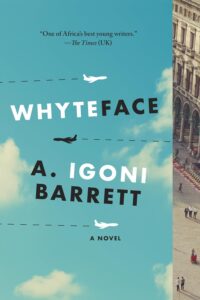 A. Igoni Barrett, Whyteface
Graywolf, August 4
As highlighted in our first half preview: Whyteface is a sequel to 2016’s Blackass, in which a Nigerian man named Furo Wariboko wakes up one morning to find that his skin has turned white—except for his ass. Four years later, Furo is gainfully employed, going by Frank Whyte, and ready for a vacation, to European capitals where at last he finds himself blending in, at least at first glance. Barrett is a genius of social satire, holding up a mirror to the subtle ways we interact with, judge, irritate, and delight one another. –ET
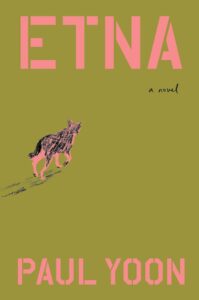 Paul Yoon, Etna
Scribner, August 4
As highlighted in our summer reading list: A spare, aching, beautifully rendered parable about an ex-military dog who sets off on a perilous voyage home through a war-ravaged landscape. Etna, a battle-scarred but kindhearted shepherd mix who was plucked from his home on the eve of an unspecified conflict in an unnamed country, has grown weary of war’s brutalities and longs to return to the coastal farm of his puppyhood. Yoon, the Story Prize-winning author of The Hive and the Honey, brings an exquisite tenderness to his depiction of this wounded canine Odysseus and the relationships he forms with survivors—both human and animal—along the way. –DS
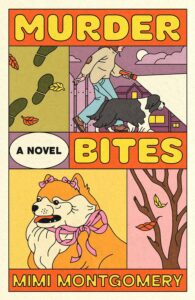 Mimi Montgomery, Murder Bites
Bantam, August 4
As highlighted in our first half preview: From Axios reporter Mimi Montgomery, a frankly delightful-sounding debut mystery about Margot, a D.C. transplant who finds herself in South Carolina, where all her neighbors are obsessed with a reality TV show about dog fashion, which is called Pawsh. Then “the local dog walker is killed in a bizarre incident involving an over-the-top Halloween display featuring multiple Home Depot skeletons,” and Margot finds herself in hot water. But never fear, she will asemble a quirky crew and solve this crime before she’s blamed for it. Fun. –ET
 Margrét Ann Thors, Freyja
Spiegel & Grau, August 4
As highlighted in our first half preview: I can feel that 2026 is the year I finally dive into the Nordic mystery genre, never to return. Freyja’s premise, re-opening an unsolved disappearance twenty years after the child went missing, is standard fare until you hit the kicker: “Unnur may finally have to face… the possibility that she might be responsible for the disappearance of her otherworldly friend Freyja.” If there’s even the slightest possibility Freyja is some kind of missing child-god, it’ll be worth checking out. –Calvin Kasulke, Associate Publisher
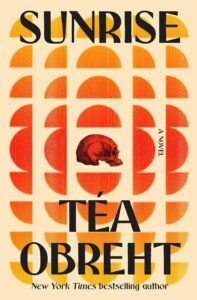 Téa Obreht, Sunrise
Random House, August 4
As highlighted in our summer reading list: Obreht’s latest novel is an unputdownable, metafictional, and nimble page-turner, which begins when a young woman named Nina falls from a plane into a lake in the middle of the Wyoming mountains. Miraculously, she survives, and manages to make her way to a town, only to find it utterly uninhabited, a ghost town in the wilderness. These scattered buildings will become the linchpin of the novel, which moves from Nina’s gripping story into another, almost as tantalizing, set over a hundred years in the past, when the town was still inhabited, and then still another, more recent, which begins to explain some of the mysteries Nina has encountered, before we head back in time yet again.
The book’s structure is part of its pleasure, as is Obreht’s uncanny ability to write convincingly, it seems, about everything and everywhere and everyone, her precise, generous prose like being dunked into a new reality; with every section I found myself both anxious to get to the next, to find out what happened, and equally reluctant to leave. But when we finally get back to Nina, her ending is worth the wait. The result of all this is an adventure novel about what we remember and why, a three-pronged fable about the myths we hold dear, both about ourselves and about men and women we’ve never met. –ET
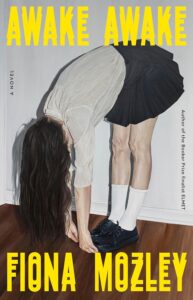 Fiona Mozley, Awake Awake
Algonquin, August 4
As highlighted in our summer reading list: There’s something pleasantly old-fashioned (i.e., assured) about Mozley’s third book. I experienced this story as a systems novel crouching in a memory play. Mary, our thirtysomething narrator, has recently boomeranged back to her hometown (York) after experiencing a break with reality that may or may not be psychotic. She’s come to believe that her grandfather murdered Hitler, contrary to all available evidence. In rhapsodic reflections, she reconstructs key moments of her adolescence in attempt to locate the origin of this possi-delusion. The result is a carefully observed coming-of-age chronicle set in the early aughts, in and among Mary’s cohort of three ride-or-dies.
The careful toggling act Mozley does in this book between a troubled interior world and a troubling wider one sometimes brought Sigrid Nunez and Deborah Levy to mind, in the best ways. Like the latter, Mozley’s interested in the slippery sides of our shared delusions: memory, and history. This makes for a fascinating structure, but I especially adored the way this book captured a generation whose personal and political consciousness was shaped in part by 9/11 and the war in Iraq. A deep, uncanny, surprising read. –BA
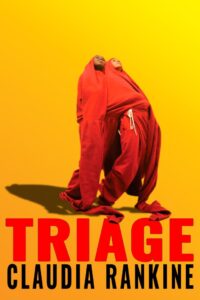 Claudia Rankine, Triage
Graywolf, August 4
As highlighted in our first half preview: How to define Claudia Rankine’s work? Poetry, essay, fiction, reportage, memoir… somehow all of the above and also something else altogether? Her latest follows “two composite characters, the narrator and the theorist” over decades of friendship characterized by deep engagement in this collapsing world around us… but also in a game, of sorts, where the two have to collapse to the ground whenever they see each other. –DB
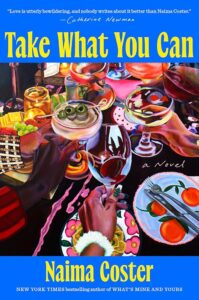 Naima Coster, Take What You Can
Pamela Dorman Books, August 4
The cover alone shot this book to the top of my TBR list, but when I read the description I was even more excited. A novel about female friendship spanning decades and exploring the different phases of life? Former best friends reuniting to raise their kids together? And the book is set between New York and France? I’m swooning. Coster’s new novel promises to be a tender, deeply-felt ode to love, friendship, and life’s many seasons. –McKayla Coyle, Publishing Coordinator
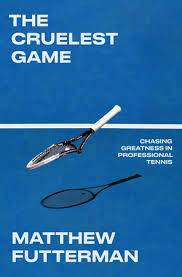 Matthew Futterman, The Cruelest Game: Chasing Greatness in Professional Tennis
Doubleday, August 4
Even the most casual sports fan understands that tennis is among the most punishing of athletic pursuits. While physically grueling it is the mental side of the game that takes the biggest toll on players, its hundreds of stops and starts creating near-infinite space for (self-induced) pressure to build—and break. Long-time tennis journalist Matthew Futterman uses unprecedented access to explore how the sport’s biggest stars overcome (and occasionally succumb to) the unavoidable stress of playing big-time tennis. –JD
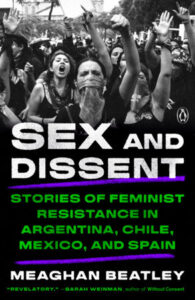 Meaghan Beatley, Sex and Dissent: Stories of Feminist Resistance in Argentina, Chile, Mexico, and Spain
Penguin Books, August 4
Meaghan Beatley has written a career-kindling firecracker of a book. Sex and Dissent is an invigorating and optimistic view of feminism and its movements, conveyed through the stories of uprisings and actions across Latin America. While the overview communicates the thrust of the work: an intimate and revelatory peek at a land and its women who have been fighting for their rights for decades, what it doesn’t convey is how unspeakably gorgeous the writing is within its pages. It has to be read to be believed. Beatley has proven herself both an artist and an activist, and I’d be hard pressed to find a reader that would be able to come away from this book without an entirely different view on collective action and the power of the human spirit. –JH
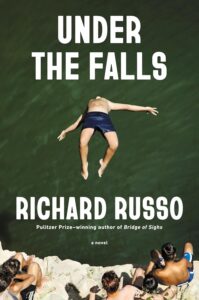 Richard Russo, Under the Falls
Knopf, August 11
As highlighted in our first half preview: If “sprawling literary page-turner” is your favorite genre, here’s one for you. Richard Russo is a master of creating an entire town full of heartbreakingly realized characters (with many secrets), and Under the Falls promises to be a perfect showcase for his talents. The wayward son of a small-town returns after finding fame and fortune and must confront the old friends eagerly awaiting his return for reasons of their own. Sounds like my ideal summer read. –JG
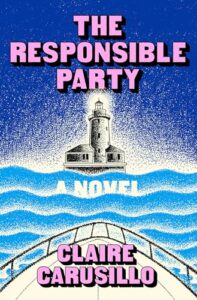 Claire Carusillo, The Responsible Party
Holt, August 11
As highlighted in our summer reading list: I’ve been a fan of Claire Carusillo since her Gawker days (RIP), and knew that it was only a matter of time before her debut landed on the scene. No more 300-word articles. We needed this girl to be unfettered. And unfettered she is, in The Responsible Party: it’s a complete unleashing of her mental acumen, and a totally off-the-wall addictive story that will have you shocked and guffawing.
The narrator of The Responsible Party, an ex-journalist with the perhaps now recognizable name of Claire Carusillo, is back home living with her parents, a bland father who matters not at all to this story, and a terrifying and powerful mother who is central to it. Carusillo just experienced a media cancellation of sorts, a consequence of blithely recommending a beauty treatment in one of her articles that ended up putting influencers in the hospital. C’est la vie. She’s home, and she’s bored, and one day two detectives come by the house. They say they’ve found a long-decayed body in the forest nearby, and there was DNA on his corpse that is associated with the Carusillo family, a connection discovered through Claire’s, again blithe, use of a mail-in DNA service. Her aforementioned mother, Kath, is furious with her. Unsurprisingly, Carusillo’s curiosity is piqued by the detective’s story, and by her mother’s rageful reaction.
What follows is a book-length story-telling by her mother: we flip back in time to accompany a young Kath on a rollercoaster chapter in her life, wherein she lived with her great-grandmother and great-aunt, two zany women whose main personality trains were that they each survived separate ship-capsizing disasters. Hijinks ensue. In fact, murder ensues. The book is bonkers, wild and hilarious and careening and absorbing, ridiculous and real, maximalist to the extreme. Every single sentence is one that, had I written it, I would beam at with pride and call it a day. But it’s 300-some-pages of stunning, shocking, swirling, and always hilarious words, countless comedic phrases coined by Carusillo that have, I’m sure, never been uttered or thought by anyone. Claire Carusillo is a clear force, a real, true talent that is surely here to stay: The Responsible Party is just the first stop on her epic writer’s journey. Everyone just needs to hop on board. –JH
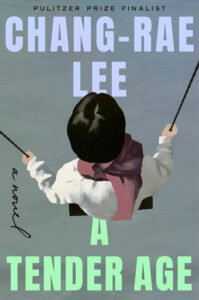 Chang-rae Lee, A Tender Age
Riverhead, August 11
As highlighted in our first half preview: Chang-rae Lee can do no wrong in my mind—I devoured Lee’s last novel, My Year Abroad, and I can’t wait for this one, a Bildungsroman that follows Korean-American Jeon-Gi as he tries to find his way through early adolescence. I can’t think of any writer better equipped to capture the horrors and hilarity of the middle school years. –JG
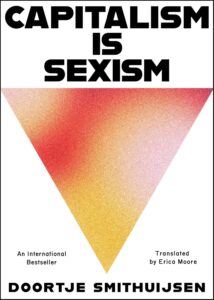 Doortje Smithuijsen, tr. Erica Moore, Capitalism is Sexism
Simon & Schuster, August 11
As highlighted in our first half preview: Well, it’s right there on the tin. But for those who need more detail, Dutch philosopher and journalist Doortje Smithuijsen dives into the many, many ways in which capitalism perpetuates patriarchy and relies on the unpaid labor of women to contribute to its endless need for material growth. From trad wives to spin classes to caregiving, Smithuijsen reveals how late stage capitalism strips women of agency and traps them in endless cycles of empty consumption and thankless labor. –JD
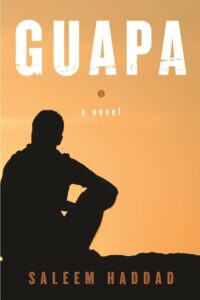 Saleem Haddad, Guapa
Other Press August 11
Saleem Haddad’s Floodlines is one my favorite books of the year so far, so I’m delighted that Other Press is reissuing his debut novel, which follows Rasa, a gay translator living in an unnamed Middle Eastern country over the course of 24 tumultuous hours. Haddad is a master of balancing sharp humor and surprising tenderness—my literary kryptonite. –JG
 Ana Paula Maia, tr. Padma Viswanathan, Bury Your Dead
Charco Press, August 11
Edgar Wilson, the slaughterhouse worker from the Cercador-winning Of Cattle and Men, is back and he’s now working on a Brazillian roadkill cleanup crew that finds a human body. Ana Paula Maia’s short, sharp novels are quickly becoming personal favorites off the generally incredible list from Charco. –DB
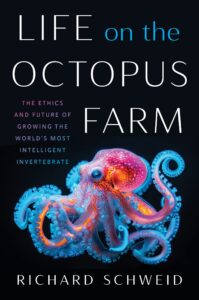 Richard Schweid, Life on the Octopus Farm: The Ethics and Future of Growing the World’s Most Intelligent Invertebrate
UNC Press, August 11
There has been a lot of ink spilled on the unique emotional and rational intelligence of the octopus (not to mention its freaky, alien-like RNA), but insofar as we’ve come to understand these creatures as profoundly sentient beings we have yet to grant them any particular rights. Which is why Richard Schweid’s immersive exploration of octopus farming, and all its attendant ethical problems, is so important right now. If you’re not sure what to think of this issue, this is the book for you. –JD
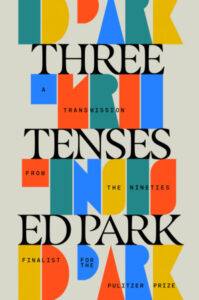 Ed Park, Three Tenses
Random House, August 11
A memoir from the beloved fiction writer, predictably playful: after unearthing a draft of a memoir he wrote in the 90s, Ed Park takes that old reflection of himself and shatters the mirror, creating something that reads like multiple snapshots of multiple moments across time and space. –DB
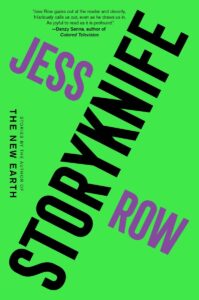 Jess Row, Storyknife
Ecco, August 11
Jess Row’s first story collection in fifteen years is full of stories about stories, dedicated to unpicking the narrative conventions that prop up the delusions of the educated, white, Northeastern intellectuals who love them. Prepare to be called out (and also surprised). –ET
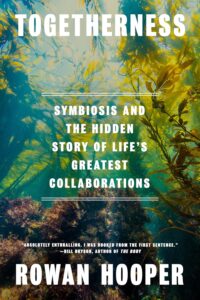 Rowan Hooper, Togetherness: Symbiosis and the Hidden Story of the World’s Greatest Collaborations
Knopf, August 18
Although we tend to take “survival of the fittest” as the ultimate law of nature, the reality is that nature is much more of a community than a competition. Hooper’s book illustrates the ways that symbiosis has shaped our planet, and how we can use it to shape our future. I’ll definitely be reading this thoughtful, illuminating book. –MC
 Joby Warrick, The Jackal: The Rise and Fall of Carlos, the World’s First Super-Terrorist
Scribner, August 18
If terrorism was ever “cool” (it wasn’t, really) then Carlos the Jackal was its first international superstar, a jet-setting “freedom fighter” for hire in big black sunglasses. But who was he, really? Vain and amoral mass murderer or a lethal but necessary antidote to global inequality? As Pulitzer Prize-winner Warrick reveals, with help from newly released archival material and a prison interview with the man himself, the answer is somewhere in between. –JD
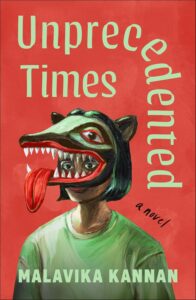 Malavika Kannan, Unprecedented Times
Henry Holt, August 18
As highlighted in our first half preview: A queer campus novel about a first year Stanford student who has burned out on climate activism and wants to escape her strict upbringing into a world of literature and sex. But as COVID scrambles everything, she and some classmates flee to a farm collective, where the small community starts to fray under the weight of global and personal pressures. I’ve been a fan of Malavika Kannan’s writing from around the ‘net, and am very excited to read her literary debut. –JF
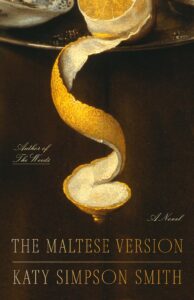 Katy Simpson Smith, The Maltese Version
FSG Originals, August 18
As highlighted in our first half preview: From the award-winning author of The Weeds and The Everlasting comes a novel about four women “forging their way across time, place, and language in search of desire, power, and connection.” When Max disappears to Malta (leaving a possibly pregnant Leonie behind) to translate wary poet Anna’s work, travel writer Rhoda is dispatched to track him down. Once there, however, Rhoda discovers more than Max’s indiscretions. Smith is beautiful storyteller, and this latest novel sounds like a knottily delightful exploration of love and desire. –DS
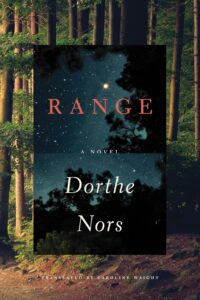 Dorthe Nors, tr. Caroline Waight, Range
Graywolf, August 18
As highlighted in our first half preview: In the latest novel from Lit Hub favorite Dorthe Nors, an astrophysicist retreatst to the country to concentrate on the stars—but can’t seem to get away from the messy, compelling humanity that surrounds her, leaving her shifting her attention from the enormous to the minute and back again. –ET
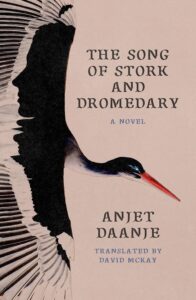 Anjet Daanje, tr. David McKay, The Song of Stork and Dromedary
FSG Originals, August 18
As highlighted in our first half preview: I love a chonky deep-dive into the life, art, and impact of a fictional author—this one, following three hundred years of various interactions with the single novel of a Brontë-esque recluse, sounds like just the thing for late summer immersion. –DB
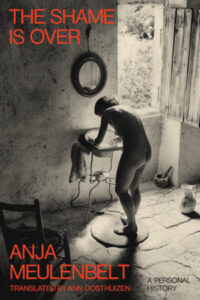 Anja Meulenbelt, tr. Ann Oosthuizen, The Shame is Over: A Personal History
Astra House, August 25
First published in 1976, Anja Meulenbelt’s memoir, which details her sexual, political, and maternal liberation, is “a cult classic of feminist literature” in the vein of The Years that I’m ashamed to say I’ve never encountered. Now seems like the right time to rectify that. –JG
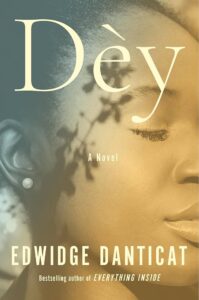 Edwidge Danticat, Dèy
Knopf, August 25
New Edwidge Danticat is always a cause for celebration. This novel, about a woman who finally begins to see her life clearly after surviving a traumatic event, is the perfect addition to your summer reading list. At once an exploration of grief and a paean to the many kinds of love, Dèy is a sparkling novel that feels both expansive and intimate. –MC
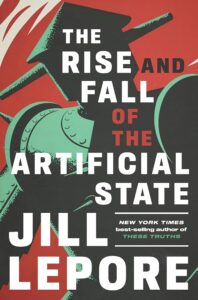 Jill Lepore, The Rise and Fall of the Artificial State
Liveright, August 25
The widespread acceptance of AI in nearly every aspect of our lives is alarming; convenience and speed seem to have trumped all other considerations (accuracy, not so much). But what happens, asks New Yorker writer Jill Lepore, when AI embeds itself so deeply into the machinery of the state that one day we wake up to a robot-run government? Five years ago this is the stuff of sci-fi. Not anymore. –JD
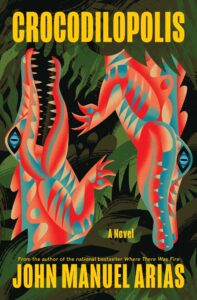 John Manuel Arias, Crocodilopolis
Bloomsbury, August 25
When Seth loses everything and goes from life as an elite politician in Costa Rica to living in exile in Washington, D.C., he blames his brother, Osario, for his fall from grace. And he’s willing to do anything to get back at his brother—including travel to Costa Rica to feed Osario to a river of crocodiles. Brotherhood! Masculinity! Unhinged, extravagant revenge plans! John Manuel Arias’s sophomore novel is sharp, hungry, and full of teeth. –MC
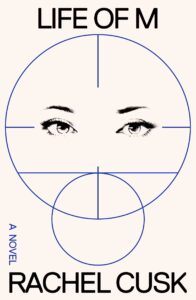 Rachel Cusk, Life of M
FSG, August 25
Fans of Cusk’s cool water prose will not be disappointed by her latest novel, which considers the life of a famous actress from shifting angles. There is something hypnotic here, as we are invited to peer into one space after another, and something profound too. –ET
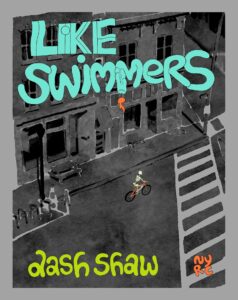 Dash Shaw, Like Swimmers
New York Review Comics, August 25
I found the use of texture and pattern so striking when I first saw preview pages of Like Swimmers, and this early COVID-era murder mystery seems so feverish and paranoid. I loved Blurry, so I’m excited to see what Shaw has coming next. –OS
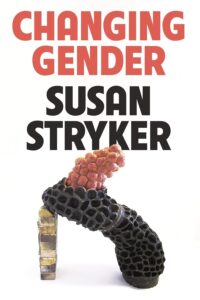 Susan Stryker, Changing Gender
FSG, August 25
As highlighted in our first half preview: If there was a Mount Rushmore of trans historians, Susan Stryker would be on it twice. She literally wrote the book on transgender history. (It’s called Transgender History.) Any new publication of hers is mandatory reading, and not just because transgender Americans are under an obsessive, incessant series of assaults from the current administration and the right more broadly. Stryker is also uniquely gifted at explaining and contextualizing the history of transness as we know it in ways that are clear, accessible, enlightening, and entertaining. –CK
 Andrés Barba, tr. Lisa Dillman, Last Day of a Prior Life
HarperVia, August 25
As highlighted in our first half preview: I’ve been a Barba diehard since Such Small Hands; his writing is strange and beautiful and gothic. This one, which Mariana Enríquez described as a “ghost story without ghosts,” a woman follows an unfamiliar boy and discovers “a suspended time, a loop, and another life.” What that means, I can’t say, but I want to find out. –ET
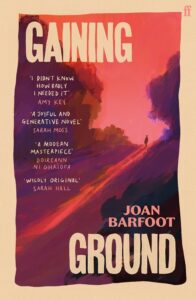 Joan Barfoot, Gaining Ground
Faber US, August 25
As highlighted in our summer reading list: Barfoot’s novel, reissued nearly 50 years after its initial publication, concerns a woman named Abra, who feels indescribably ill at ease in her comfortable, conventional life, and then, one day, leaves it. She abandons her family and absconds to a cabin in the woods, where she finally feels that she understands what it means to be herself, with no interference, no self-consciousness, and eventually no memories. When her daughter appears, having tracked her down after many years, Abra barely recognizes her, but is reluctantly forced to confront her own perceptions—is she mad? is everyone else mad? are such distinctions even relevant?—and choices.
I’d wager that the novel is not quite as shocking to read in 2026 as it might have been in 1978, but the shock of it really isn’t the point. This is a propulsive meditation on what we want and why we want it (or think we do), that wonders what might happen to the human mind when left entirely to its own devices, with no input from society. There is also plenty of beautiful writing about the natural world, and despite how little actually happens in the present action of the story, I felt I couldn’t put it down. –ET