The Medicalization of Madness: How Schizophrenia Was Treated Throughout the Ages
Justin Garson on the Influence of Psychoanalysis on Psychiatry’s Development
For Solomon Snyder, Freud’s best books, The Interpretation of Dreams and The Psychopathology of Everyday Life, read like fast-paced detective novels. Why did I forget the name of that town? Why did I just call my boss “Dad”? Why does my patient arrange her pillows into a diamond shape every night? Sol delighted in Freud’s ability to find reason, logic, and necessity in what lesser minds dismissed as random and accidental. Dreams meant something. Forgetting meant something. A slip of the tongue meant something. Madness meant something. A young girl compulsively arranges and rearranges her pillows as a distorted symbolic fulfillment of her desire to sleep with her father. For Freud, the simplest word or gesture was a complex puzzle to be solved.
Thanks to Freud, Sol decided to become a psychiatrist. It was the ideal solution to the problem of wanting to be a doctor but hating science. As he later recalled, “I rationalized that if I could stomach the science courses of college and medical school, I might become a psychiatrist that, to my naïve way of thinking, wouldn’t differ too much from a life in philosophy.” He was particularly intrigued by schizophrenia—the pinnacle of madness and the most complex puzzle of all. In his vision of psychiatry, he saw himself sitting quietly with schizophrenic patients and contemplating their unmapped inner worlds. He wondered if someday he might solve the riddle that had confounded Western medicine for over two thousand years.
*
Schizophrenia has always been psychiatry’s white whale, its cure an elusive Holy Grail. Even the ancient Greeks saw madness as one of medicine’s chief puzzles. Of course, they didn’t have the term schizophrenia, which was coined in 1911 by the Swiss psychiatrist Eugen Bleuler to describe the “splitting” of thought, emotion, and behavior that causes psychological pandemonium. But as early as 400 BC, followers of the sage doctor Hippocrates on the windy Greek island of Kos described in detail how the mind could break from reality like a ship unmoored from its dock. They called this unfortunate condition mania.
The history of the treatment of madness, far from representing the slow but steady march of science, was until recently a series of false starts, futile debates about method, and pointless, even cruel, interventions.
Yet the history of the treatment of madness, far from representing the slow but steady march of science, was until recently a series of false starts, futile debates about method, and pointless, even cruel, interventions. For the Hippocratic doctors, mania was a disease like any other, caused by an imbalance in the four humors: black bile, yellow bile, blood, and phlegm. These imbalances blocked the flow of air to the brain. Hallucinations, delusions, and unprompted terrors were the symptoms of an air-deprived brain. Its treatment? Restoring the balance of the humors through profusely bleeding the patient or inducing vomiting or diarrhea with the poisonous plant hellebore.
The Hippocratic doctors vigorously denounced the religious healers of the day, such as the priests toiling in the temple of Asclepius. The priests argued that madness was a punishment from the gods and that healing came through repentance, along with sacrifices that helped maintain the temple’s operations. Yet neither approach had any factual basis, and any success either group had was likely due to the placebo effect—merely giving a patient special attention and the hope of a cure can be healing in itself.
Debates about the treatment of madness persisted through the centuries but led to little progress. In early seventeenth-century England, doctors and priests often clashed over sensational cases; for example, that of young Mary Glover. In 1602, she was afflicted by a slew of symptoms, such as convulsions, fits, and terrors. For the priests, this was a case of demonic possession due to witch-craft, and Mary’s crabby, aloof neighbor Elizabeth Jackson was the prime witch suspect. For physicians, among them outspoken Edward Jorden, these were symptoms of a medical condition known as hysteria, or “wandering womb.” During Elizabeth Jackson’s trial, Jorden argued that Mary’s afflictions had nothing to do with witchcraft.
Rather, as her dislodged womb drifted from place to place, it pressed into various organs—the heart, the lungs, the liver—and caused her strange symptoms. Medical treatments for wandering womb were geared toward coaxing the womb back to its proper place by wafting pleasant aromas near the pelvic region; physicians also prescribed sexual intercourse and bleeding the patient.
In the 1800s, psychiatry finally started to become a proper branch of medicine. (The term psychiaterie to denote the branch of medicine that treats diseases of the mind was first introduced in an 1808 book by the German physician Johann Christian Reil.) Thanks to the population explosion in asylums in the 1800s, doctors were finally able to observe vast numbers of mad patients, classify them, and document the results of interventions.
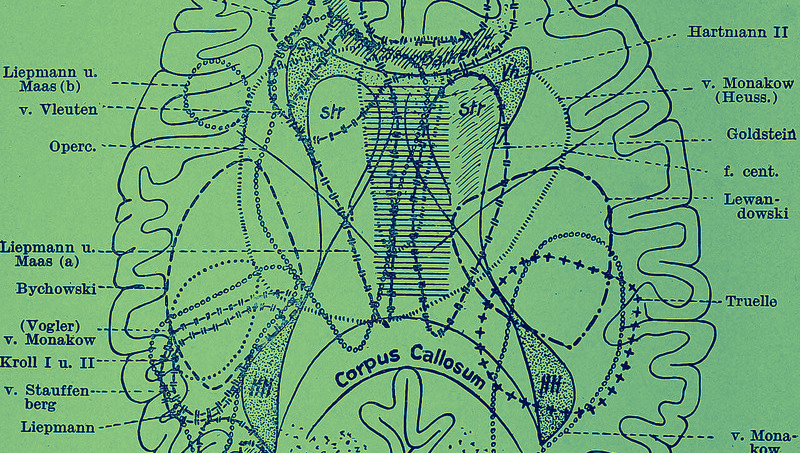
But doctors remained divided on the best way to cure patients. Advocates of the “moral treatment” of the insane, like Philippe Pinel in France and William Tuke in England, thought that patients would get better if you treated them as rational adults deserving of dignity and respect. They used drugs and restraints as sparingly as possible. In contrast, followers of the German physician Wilhelm Griesinger thought that madness would not be cured until the brain abnormalities that caused it were discovered. The moment a schizophrenic patient died, they quickly removed the patient’s brain, dissected it into thin slices, and analyzed them under micro-scopes for structural flaws.
The Germans also brought the art of classification to new heights of sophistication, culminating at the turn of the twentieth century with the pioneering work of Emil Kraepelin. Among other innovations, Kraepelin introduced the term dementia praecox for what we now call schizophrenia and manic-depressive illness for what we now call bipolar disorder. Today, doctors consider schizophrenia and bipolar disorder as the two chief categories of severe mental illness; the first ravages the mind, the second the emotions. Kraepelin also subdivided dementia praecox into three main types, types that are still recognized today.
The first type is replete with hallucinations and delusions—voices, visions, grandiose beliefs, paranoia. This is the kind my father had. The second happens when the cords of logic break entirely; these patients jump from idea to idea in a meaningless way, and their speech is nonsensical—what doctors call word salad. In the third, and most debilitating, patients withdraw from the world. They might sit for hours at a time maintaining bizarre postures or grimacing or repeating an action over and over, like lifting an arm and putting it down. By the 1950s, these three subtypes were known as paranoid, hebephrenic, and catatonic, respectively.
The Swiss Eugen Bleuler, a follower of Kraepelin, replaced the term dementia praecox, which implied hopeless deterioration, with the softer term schizophrenia. Though madness now had a proper name, its cause remained as elusive as ever. Examining brain slices under a microscope didn’t reveal what researchers now believe to be the subtle variations of brain function underlying schizophrenia. Consequently, at the time, the biological approach remained just one theory among others.
By 1955, when Sol graduated from high school, psychiatry had split almost perfectly into two camps. In one camp there were the psychoanalysts who followed Freud and believed in the power of talk therapy. In the other were the asylum doctors who experimented on patients’ bodies in hopes of finding a cure. At sixteen, Sol was firmly on the side of Freud.
While the psychoanalysts did occasionally use drugs, they saw them merely as tranquilizing agents that allowed talk therapy to proceed.
Psychoanalysis was launched in America in 1909 when the visiting Viennese doctor Sigmund Freud participated in a historic conference at Clark University alongside his younger protégé Carl Jung. (This was Freud’s only visit to America and one he later regretted.) Freud sought to trace the roots of all major mental disorders to unresolved childhood conflicts, particularly thwarted sexual longings—typically of the young boy toward his mother and the young girl toward her father. Primarily through his method of free association, with the patient supine on a couch and the doctor hidden from view, the doctor and patient would bring these unconscious conflicts to the surface and thereby break their power.
Thanks to World War I, during which psychoanalysis emerged as the foremost treatment for shell-shocked soldiers, this method came to dominate American psychiatry. A tenet of psychoanalysis was that you could find symbolic meaning and internal logic in the supposedly senseless ravings of madness. The American psychiatrist Harry Stack Sullivan, a follower of Freud who sought to cure schizophrenic patients with psychoanalysis, once described psychiatry’s whole job as being to “understand what the patient is trying to do.”
Then there were the asylum psychiatrists. In the first half of the twentieth century, a new spirit of unchecked experimentation swept through the wards of the major asylums of America and Europe as doctors devised increasingly bizarre and sometimes cruel interventions with almost no legal oversight. In the 1920s, doctors injected malaria-infected blood into schizophrenic patients in hopes of finding a cure. They also removed patients’ teeth, tonsils, and spleens. In the 1930s, doctors injected them with large doses of insulin to put them into hypoglycemic comas. They also shocked patients with high levels of electricity to stimulate epileptic fits. In the 1940s, lobotomies were all the rage. The scientific rationale behind these procedures was “at best shaky,” as Sol later put it.
Psychiatry had only recently discovered drugs. The antipsychotic drug chlorpromazine, derived from a clothing dye called methylene blue, was first tested on agitated and delusional patients in 1952. (In 1949, a French naval surgeon named Henri Laborit used promethazine, an earlier form of the drug, as a preanesthetic before surgery and noticed that it gave his patients a “beatific quietude” that he thought would help psychiatric patients.) Chlorpromazine seemed to calm patients down while still letting them think and talk. By 1954, hospitals throughout the world were using it, and by the late 1950s, numerous copycat drugs were in circulation.
Though the drugs dampened patients’ disturbing thoughts, they often caused movement problems. Some patients on chlorpromazine developed mild tremors or tics. Others would get restless and could sit for only short periods. Some developed uncontrollable repetitive movements that wouldn’t go away, even after they stopped the drugs. This is called tardive dyskinesia, a side effect that some doctors consider worse than schizophrenia itself. Still others slowed down or moved at a glacial gait, the so-called Haldol shuffle. Some developed masklike expressions that resembled those of patients suffering from Parkinson’s disease. A 1964 study showed that about a third of patients on antipsychotic drugs developed movement problems.
Doctors had no idea how or why the drugs worked. One doctor even celebrated them as a “chemical lobotomy.” At the time, they were just one more tool in the asylum psychiatrist’s toolkit. And while the psychoanalysts did occasionally use drugs, they saw them merely as tranquilizing agents that allowed talk therapy to proceed. The notion that these drugs reversed or neutralized an underlying disease process didn’t become widespread until the 1970s, and the fact that it did is due in part to Sol’s research.
__________________________________
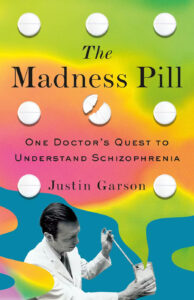
From The Madness Pill: One Doctor’s Quest to Understand Schizophrenia by Justin Garson. Copyright © 2026. Available from St. Martin’s Press, an imprint of St. Martin’s Publishing Group, a division of Macmillan.

Justin Garson
Justin Garson, Ph.D., is a philosopher and historian of science at the City University of New York. He’s written numerous scholarly books and articles on biology, mind, and madness, including Madness: A Philosophical Exploration. He lives in Connecticut with his wife and children.