On the Run and Underground: When Your Mom’s on the FBI’s Most Wanted List
Zayd Ayers Dohrn Remembers a Childhood Spent in Hiding With His Parents
One cold night in December, when I was not yet four years old, my mother woke me while it was still dark, pressing her face against my cheek and whispering, “We have to leave. Right away.”
I rolled off my mattress, stumbled blindly across our tiny apartment to pee, pulled on my jeans and sneakers, and followed her down the five flights of stairs without a word, walking on tiptoes so I didn’t wake the neighbors.
We stopped in the foyer. Outside, my father was already working under the streetlights, breath steaming through his beard as he chipped ice off the windshield and loaded our bags and boxes into the hatchback of a rusted blue station wagon.
I glanced up at my mom again. Under the bare bulb she looked pale, though her skin was still much darker than mine. Her hair, which she’d kept short and dyed red as part of her disguise, was finally starting to grow out, straight and dark, nearly black, down to her shoulders.
She stood still in the doorway, cradling my baby brother in one arm and holding my hand with the other, but her eyes kept flickering to the intersection—following each car that passed, tracing the shadows of the men outside the bodega by the corner, keeping a close eye on anything that moved.
My father whistled twice, and my mom led me out through the glass door into the cold air of the street and into the back seat of our car, arranging the baby on her lap, turning to see that I was settled, and then cranking the heat up as high as it could go to coax us both back to sleep.
You grow up and you start to see how much you don’t know about your own family….You begin to see your parents’ flaws and contradictions. You understand that not everything they told you could be true.
She nodded that we were ready. My father glanced back to see if anyone was following, winked at me in the rearview mirror, and swung our car onto Broadway, toward Interstate 80, heading west.
I was used to this routine. It wasn’t the first time we’d had to pack up all our things in the middle of the night and take off on another long cross-country drive. We ditched cars and apartments constantly, kept everything we owned in a few plastic milk crates by the door, and I carried my prized possessions in a backpack: a stack of comics, some crayons and paper, a couple of Star Wars action figures.
I liked to read comics while we drove—I couldn’t understand all the words yet, but I could at least look at the pictures—but that night, for some reason, my dad said it was too early to turn on the overhead lights; he couldn’t see through the glare on the windshield and had to watch for deer and hitchhikers by the side of the road. So the lights stayed off.
I lay back and looked out the window instead, the yellow lane markers swallowed up behind us, the tree line blurring over by the edge of the road, while my parents whispered to each other across the dark front seat of our car:
“Who should we call? Who’s going to meet us there?”
“They know where we’re headed now.”
“They don’t know where we are.”
The hum of the engine, the hiss of tires on asphalt, the warm air inside, and the constant sense of forward momentum made me feel like we were our own little world, sealed off from the outside—and if we just kept going, kept driving, no one would ever catch us.
It was the closest I ever came to feeling totally safe in my family.
But we had to stop eventually, for food and gas, to use the bathroom and to stretch our legs. So, the next morning, I found myself standing in a long line with my dad at a rest-stop Burger King, watching a group of kids my age roughhouse on the indoor playground of a Kids Club Fun Center, when a nice elderly couple started talking to me, just making conversation.
“Hey sweetheart,” the old man smiled down at me—I had shoulder-length blond hair at the time, and everyone always assumed I was a girl—“you all on a road trip?”
I nodded. I knew enough not to talk to strangers.
“Chicago?”
I nodded again.
“Visiting family? Or just on vacation?”
I looked up at my dad. He wasn’t paying attention now; he was busy ordering our food, and I felt like I had to say something, just to put an end to this awkward conversation.
“We’re going to Chicago,” I told them, “for my mom to turn herself in.”
I was half-distracted, watching the other kids in their gold paper crowns running around the Kid’s Club gym, hanging from the bright plastic monkey bars. But I noticed the woman was looking at me now more closely, a bit confused.
“How do you mean, hon?”
“We made a deal,” I tried again. “With the FBI. So I can go to school.”
This was something I’d been told in passing, or overheard, without ever fully understanding what it meant, but as soon as I said it I knew—from the way the couple glanced at each other, and then over at my father’s back—that I’d made a terrible mistake.
“Mister,” the man cleared his throat to get my dad’s attention. “Sorry. Your daughter here’s saying something about…The FBI is looking for you all?”
My dad turned, surprised, and glanced down at me, trying to catch up to what had happened while he was talking to the teenager at the cash register.
“Oh. He’s my son, actually.”
This was not an adequate explanation, and the woman was now looking back over her shoulder, as if searching for help. “I don’t know,” my father shrugged, forcing a chuckle. “Maybe something he saw on TV? Hey, Z, you need to use the bathroom before we go? Say bye.”
I waved. And before we even got our food, my dad picked me up and ran for our car.
My mom, nursing my brother in the passenger seat, looked up, instantly alert, as he pushed me into the back seat, slid behind the wheel, and peeled out onto the highway, his eyes locked on the rearview mirror.
“Hey. What’s wrong?”
“Nothing. Just thought someone might have recognized me back there.”
He was trying to protect me, I think; he knew I wouldn’t want to disappoint my mom, to admit I had broken the strict codes of secrecy in the underground. But she didn’t pursue it. She stayed calm and sharply focused, as usual.
“Slow down,” she ordered him, as she reached for the glovebox and pulled out our faded road atlas. “Get off at the next exit. We’ll switch to local roads.”
I remember watching her face in the rearview mirror as she scanned the maps and glanced up at the horizon. In our family, my father was usually the one driving, but there was never any doubt who was really setting our direction. I used to wonder what she was thinking about, whether she was also scared—though that seemed impossible. She was, and is, the most committed, fiercely determined person I’ve ever known—the animating force of our family, the fuel that kept us all moving forward.
I loved her. I admired her. I wanted to be like her.
As I got older, of course, that all got more complicated. You grow up and you start to see how much you don’t know about your own family. How much you assumed, or took for granted. You begin to see your parents’ flaws and contradictions. You understand that not everything they told you could be true.
*
Ten years earlier, and seven years before my birth, a dynamite bomb exploded in a women’s restroom at New York Police Department headquarters in Manhattan, crushing the three-foot cinderblock walls on both sides, blowing a tunnel through an empty elevator shaft, shattering windows for blocks around, and hurling sinks, toilets, and chunks of concrete across the street.
“It’s unbelievable,” Mayor John Lindsay told reporters at the scene. “Unbelievable. It’s a very sad thing when people turn on the police who have been so responsible for preventing violence in this city.”
A few weeks later, in July, another explosion shattered the glass and marble lobby of the Bank of America building, the international nerve center of the bank’s trading and finance operations. And the same day, all the way across the country, a bigger bomb shook the U.S. Army base in the Presidio near the Golden Gate Bridge, damaging a Nike missile on display and punching a hole through the Armed Forces Police headquarters next door.
Then, in October, the pace picked up; over just a few days, a series of explosions wrecked a police monument in Chicago, the Marin County Hall of Justice, a Queens courthouse, and the Harvard Center for International Affairs. Later that month, my mother became only the fourth woman in history on the FBI’s Ten Most Wanted list.
It turned her overnight into a symbol—a heroic outlaw to some, an un-American terrorist to many more. That mugshot—with her straight dark hair, motorcycle jacket, and flat, defiant stare—would come to represent a nation, and generation, in crisis; a startling declaration that America’s own sons and daughters had turned violently against their country.
Over the next eleven years, my mother would lead her small band of friends and fellow travelers into a running war against the U.S. government, targeting some of the most well-known, heavily guarded facilities on the planet: FBI headquarters, the Capitol, the State Department, and the Pentagon. She would team up with California drug cartels and Black urban guerrilla groups to rob banks, break friends out of prison, and smuggle fugitives out of the country. She would grow up, have two children, and adopt a third, all while evading a nationwide FBI manhunt for over a decade. I was born during that decade, and spent the first years of my life underground.
My parents never lied to me about any of this—except maybe by omission. I knew, from my very earliest memories, that the FBI was hunting for us, but I never truly understood who—or what—“FBI” was. What had we done wrong? Why did they—or it?—want to catch us? And what would happen if they did?
They always told me—and I believed, as one of the first tenets of my childhood faith—that my brother and I were their first priority, the center of their hopes and dreams for the future. And I was sure they would always protect us, no matter what.
I was too young to picture a government agency—a big concrete building full of hundreds of men poring over letters and photographs, wiretapping phones, breaking into apartments, all to catch our little family. Even if I’d been old enough to understand, it would have been impossible to believe. To me, the FBI was just a dark, abstract presence—a childhood bogeyman—pursuing us all the time like a shadow out of a nightmare.
Whenever my parents left me in the car to run errands, or in a booth at a diner while they went to use a payphone, I’d hold my breath, scanning the adult faces outside, watching the clock up on the wall, terrified—maybe most kids are?—that this time my mom might not come back to get me at all. Because I always knew, without even having to ask, that whatever was chasing our family was mostly after her. And my worst fear at the time wasn’t that we would all be caught but that “FBI” would find my mom when I wasn’t around, that they would take her away—and leave me behind.
*
But life in our family could be fun, too.
When I was just three years old, I learned to recognize plainclothes police officers and undercover agents in a crowd, to make our calls from payphones and speak in code, to walk a trajectory—the complicated mix of turns and switchbacks we used in a city to lose a tail—watching from a rooftop or a fire escape to make sure our aboveground friends weren’t being trailed as they walked their own trajectories: up the stairs onto the elevated tracks, wait two minutes, then double back again, through the park, across the basketball courts, around a corner. You won’t see us, but we’ll find you.
It was a bit like playing a game—a grown-up version of dress-up or make-believe—that only my family was good at, or knew all the rules.
And at every place we stopped for more than a week or two, my parents seemed to become different people. They found new jobs, dyed their hair strange colors, took on other names. Over the years, my mother went by Louise “Lou” Douglas, Rose Brown, Lorraine Anne Jellins, H. T. Smith, Sharon Louise Naylor, and Karen Lois DeBelius. My father, whom we all called Bill—part of his casual, anti-authority vibe—outside our family became Joe Brown, Tony Lee, Jules Michael Taylor, Hank Anderson, or Michael Joseph Rafferty, Jr. And like any kid, I wanted to be part of their grown-up world; I needed an alias. So even though no one knew my real name anyway, and I wouldn’t have a birth certificate until I was five, around strangers they started calling me Z.
It all seemed normal. In our circle, pretty much everyone we knew was a fugitive. And over the years, I met other kids whose parents were also on the run, like mine, and who had grown up in a familiar situation and with a similar perspective. It felt a bit like being in a club—full of kids who knew what it was like to grow up underground, living on the margins of society, under assumed names, with no school or regular place to call home, all to fight for ideals that were too abstract for us kids to begin to understand.
My parents tried to explain it so that it could make sense to a four-year-old child: we were part of a rebel alliance, like Luke Skywalker and Han Solo, fighting an evil empire. (Bill and I had watched the original Star Wars at a second-run drive-in movie theater in Nevada.) We were bandits and outlaws, stealing from the rich and giving to the poor, like Robin Hood. (We’d caught the animated Walt Disney classic on cable at a roadside motel.) So I knew, the way all kids “know,” that my parents were heroes. We were the good guys. And if we were also criminals and fugitives—if my mom and dad had done things in the past that were dangerous and illegal—I knew they had done them for the right reasons. To help people. To make the world a better place. And I trusted that they had stopped taking those terrifying risks after I was born.
Because they always told me—and I believed, as one of the first tenets of my childhood faith—that my brother and I were their first priority, the center of their hopes and dreams for the future. And I was sure they would always protect us, no matter what.
____________________________
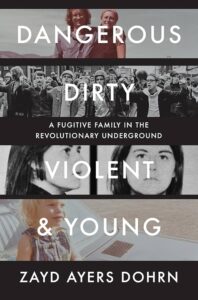
Excerpted from Dangerous, Dirty, Violent, and Young: A Fugitive Family in the Revolutionary Underground by Zayd Ayers Dohrn. Copyright © 2026 by Zayd Ayers Dohrn. Used with permission of the publisher, W. W. Norton & Company, Inc. All rights reserved.
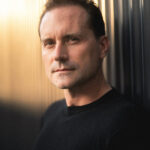
Zayd Ayers Dohrn
An acclaimed playwright and screenwriter, Zayd Ayers Dohrn is a professor and director of the MFA in Writing for Screen and Stage at Northwestern University. He is creator of the hit narrative podcast Mother Country Radicals and the rock protest musical Revolution(s).