On Copaganda, Pinkwashing, and the Time I Almost Became an NYPD Cop
Steven W. Thrasher Examines the Alluring Idea of the “Good Black Cop”
When I told my mother in 2003 that I was going to apply to join the NYPD, she had three reactions: relief, shock, and fear.
Relief because my father had recently died, I had zero job prospects of any kind (my film degree was meaningless, I had been rejected from teaching fellowships, and 5,000 cold resumes I had sent out were met almost entirely with silence), and at least someone was showing interest in hiring me.
Shock because I was living with her in California and she thought this was an extreme way to get my gay ass back to New York, a city she said I had said I had wanted to live in since I was a small child (because, she was too polite to say, she knew I was gay).
And fear that I would be ineligible to be a cop because my ass was gay (which she did say).
It was 2003, and “Don’t Ask, Don’t Tell” (DADT) had been the law of the land for a decade. It meant that personnel could only serve in the US military if they were closeted (though in reality, many people were discharged dishonorably while being outed by others). Since World War II, approximately 100,000 service members were ejected from the military for being gay, with more than 13,000 of them kicked out under DADT since Bill Clinton signed it into law in 1993.
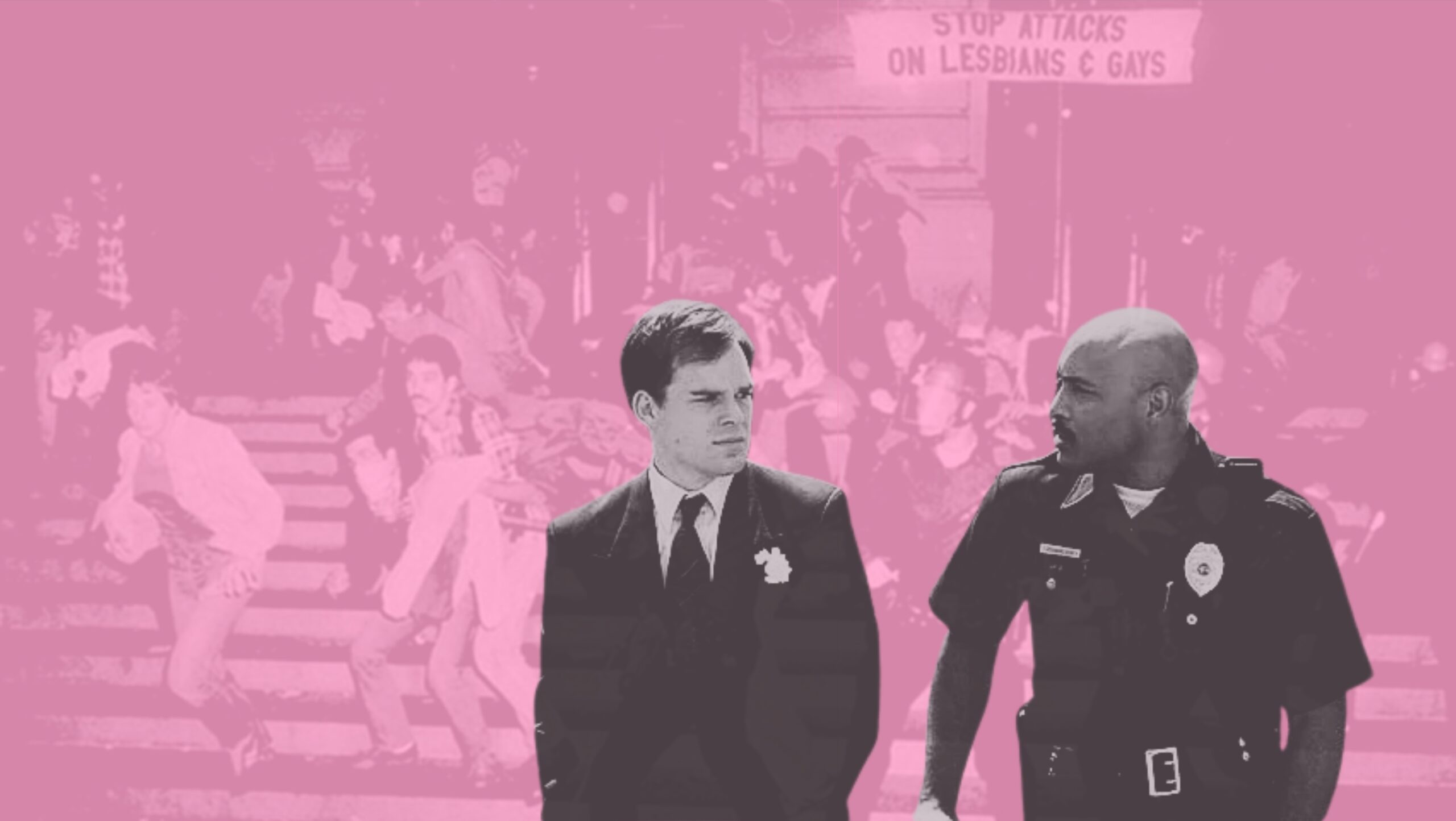
But no such law applied to the NYPD, I assured my mother. In fact, even though the 1969 Stonewall uprising was a riot against the New York Police Department when it arrested homosexuals in a mob-run bar, the NYPD was different now, I told her: it was gay-welcoming. The NYPD didn’t just protect the world’s biggest gay pride parade; its gay officers and even its straight commissioner marched in it! My application wouldn’t be a problem. (I imagine she was worried not just that I couldn’t get in or would be kicked out for being gay, but that my sissy self would get my ass handed to me by cops and criminals alike—because I would have made a terrible cop.)
If a Black cop—a homosexual, no less—had to shoot and kill a Black man, well, Black men must deserve to be killed by cops.
Two decades ago, I didn’t have the knowledge to know that gay cops riding around in rainbow-painted police cars were overseers—that their job was embedded closely within LGBTQ communities not to protect them better but to patrol and control them more intimately. As we shall see, municipal police departments didn’t begin hiring Black and Latino cops out of beneficence, but to fill gaps left when immigrant groups like the Irish “moved up” the economic ladder out of those jobs, and to get closer to communities of color than white cops ever could.
Similarly, “community policing” in the gay community meant male cops who liked to suck dick could get closer to gay miscreants than a straight cop ever could (such as the cartoonish fictional undercover officer Al Pacino played in the 1980 film Cruising). These “upright sodomites,” as queer theorist José Esteban Muñoz called them, could be a pole of righteousness in the sordid gay world.
When I talked to my mom about this, the show Six Feet Under (2001–2005) was on HBO and was popular Sunday-evening viewing in the prestige TV, pre-streaming era.
The show depicted life in the Fisher & Sons funeral home in Los Angeles, mostly run by two white brothers, including David Fisher, who was gay. Each episode began with the death of someone whose corpse would be processed for a tidy profit by Fisher & Sons. The show spoke to my mom and me because the pilot episode was about the death of the family patriarch, Nathaniel Fisher Sr. (My mom’s husband and my father had just died, and we’d had to negotiate with the Oxnard equivalent of the predatory Fisher funeral home, the vultures Jessica Mitford warned about in The American Way of Death.)
David’s partner was Keith Charles, an out Black man. In the pilot, Keith was in his blue policeman’s uniform attending David’s father’s memorial service without permission from David, who was deeply closeted. Despite it only having been a decade since the Los Angeles riots, which had been triggered by the acquittal of four white cops who’d beaten Black motorist Rodney King on video, Keith was a proud LAPD cop. But his career is uneven over the course of the series.
Early in Season 2, in a period while he and David were on the outs, Officer Charles goes on a call with his white LAPD partner, where they find a young Black man threatening a white woman with a gun. His own gun drawn, Keith yells “Drop the gun!” twice before the young man points his gun at Officer Charles, who shoots him dead. Keith is so upset by having killed this young Black man, he runs into the arms of his white ex-boyfriend for comfort, who assures him he did nothing wrong. Keith is absolved of any wrongdoing in the episode and is allowed to keep being a cop. His absolution is not just copaganda meant to make the audience feel that if a Black cop—a homosexual, no less—had to shoot and kill a Black man, well, Black men must deserve to be killed by cops. It was what I call copablanda,or Black copaganda, which is meant to make Black cops killing Black people so quotidian and “blah” as to be unremarkable. This copablanda is pablum: easily digestible and highly effective propaganda.
In fiction and nonfiction media, police from marginalized backgrounds in general have been used to police the American imagination and legitimize policing.
Later in Season 2, Keith beats up a white man while answering a domestic disturbance call. He is again on duty with a white officer and runs home to his white boyfriend for succor. But while he wasn’t fired for shooting a Black man who died, he is fired from the LAPD for beating up a white man who lived. In the series finale, in which every character meets their demise, Keith owns his own security company but is strangely still physically moving cash around in an armored truck when he is gunned down in the year 2029. A proper overseer to the end, he gives his life to prove that protecting property for capitalists is more important than protecting his own Black life. He is survived by David, his grieving white partner.
Whether the (straight) actor Matthew St. Patrick intended this or not, Keith Charles engaged in pinkwashing, causing impressionable viewers to side with the LAPD. (It certainly worked on me at the time.) Keith laundered the reputation of the LAPD, encouraging viewers to think policing was good as an institution for gay people as an employer and pinkwashing away the abuse which the rioters at Stonewall, ACT UP members, and queer Los Angelenos have taken at the hands of NYPD and LAPD cops—and pinkwashing over how members of LGBTQ+ communities are more likely to be discriminated against by cops than straight and cisgender people.
The fictional Officer Charles was meant to erase the revolutionary queer and trans history of anti-cop activists like Marsha P. Johnson, Kiyoshi Kuromiya, Cecilia Gentili, and Bill Dobbs—and to fuse LGBTQ identity with policing culture as intimately as cum on hotel sheets in a cheap West Hollywood motel.
In fiction and nonfiction media, police from marginalized backgrounds in general (and from Black communities specifically) have been used to police the American imagination to not just legitimize policing but to defend the structure of drivers and overseers in countless domains of life.
Or, to be blunt about what I did to myself in the early 2000s, characters like Officer Charles get impressionable people like young grieving me to police our own imaginations. Keith arrests our thinking, and cons us into suppressing our critical faculties with the same kind of internalized surveillance that philosopher Michel Foucault broke down to describe a prison’s use of the panopticon in Discipline and Punish.
To understand how even a pacifist pansy like me could dream of being a literal police driver or overseer, we must delve into the classist, racist, legal, and cultural history of cops in America and examine the kinds of narratives police anonymously tell interviewers, strategically tell journalists, and publicly tell the world about how they see themselves.
______________________________________
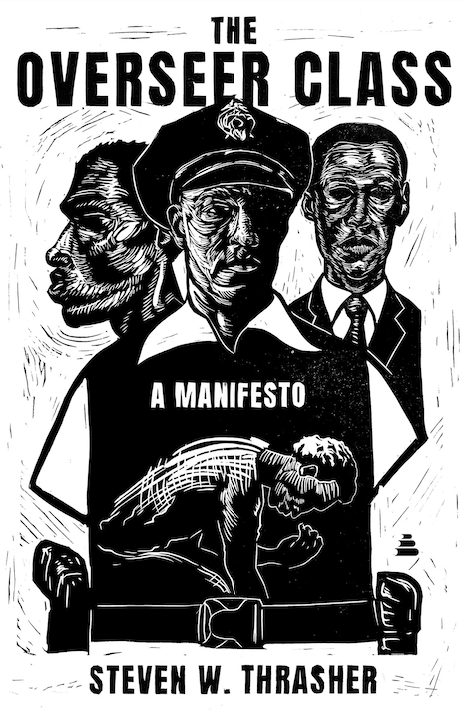
Excerpted from The Overseer Class: A Manifesto. Reprinted with the permission of the publisher, Amistad, an imprint of HarperCollins. Copyrighted © 2026 by by Steven W. Thrasher.

Steven W. Thrasher
Steven W. Thrasher, PhD, is the author of the critically acclaimed books The Viral Underclass: The Human Toll When Inequality and Disease Collide, which was longlisted for the 2023 Carnegie Medal for Excellence in Nonfiction and won Best in Literature at the 2022 POZ Awards, and of The Overseer Class: A Manifesto. A regular contributor to Literary Hub and the Intercept, he won a 2025 Pulitzer Center Global Reporting Fellowship to document how the second Trump administration’s cuts to public health funding were affecting HIV/AIDS and LGBTQ health in Africa, Europe and the Americas. You can find him on Bluesky and Instagram @thrasherxy.