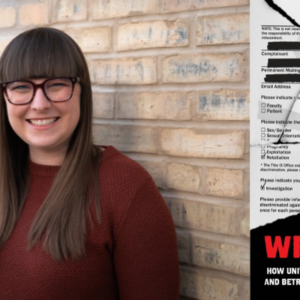
Heather Eng Recommends Six Books About the American Dream and Social Striving
Featuring Marisa Kashino, Susie Yang, Danzy Senna, and More
When I was a kid, I believed in the American Dream. In elementary school classrooms and on the streets of working-class Queens, New York, in the 1980s and ‘90s, the American Dream was our north star. “Upward mobility,” my teachers and elders said. “Each generation does better than the next.”
I dutifully followed the blueprint. I studied hard, juggled a part-time job with schoolwork the minute I turned sixteen, and applied for colleges while praying for financial aid. I was so far removed from wealth and privilege, I had no idea another way of life existed—one where college admissions were based on legacy, not grades. Where kids whiled away summers abroad, or at Ivy League enrichment programs—not serving coffee and sweeping floors for minimum wage. Where any career was within reach because your parents knew people—and would support you financially, well into adulthood, funding your apartment, clothing, and lifestyle.
Now, thirty years later, everyone knows the American Dream is a lie. The wealth gap is the widest it’s been since the Federal Reserve started tracking it in 1989; now, the richest one percent hold as much wealth as the bottom 90 percent of Americans combined. With social safety nets fraying and institutions increasingly catering to the rich, we’re all painfully aware of what money can buy: comfort. Safety. Peace of mind.
In my debut novel, Double Happiness, my main character, Mei, is hellbent on climbing the ladder at a morally questionable tech company—because the job provides her with the financial security she never had. I’m endlessly fascinated by how much agency wealth provides; I wanted to explore the tough decisions a working-class woman might make when faced with the chance to never worry about money again.
I’m pleased to be in good company. Over the last few years, more novels are smashing the myth of upward mobility. In many of them, the protagonists know the systemic obstacles designed to keep them down. Yet, they’re determined to claw their way into the upper or middle class by any means possible—no matter how dubiously ethical.
*
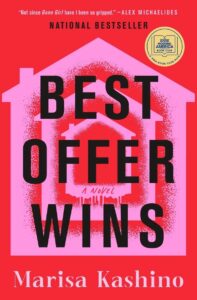
Marisa Kashino, Best Offer Wins
Margo Miyake is a 37-year-old publicist who believes that once she moves out of her depressing apartment and into the perfect home, she and her husband will fall back in love and have a baby. Too bad the hyper-competitive Washington, D.C. housing market keeps thwarting her plans. After losing eleven bidding wars, Margo starts to despair—until she stumbles upon her dream house and enmeshes herself with the family who lives there, in hopes of snatching up the home before it goes on the market.
Best Offer Wins is the real estate thriller I didn’t know I needed. With home ownership increasingly out of reach, and people more “cost burdened,” by housing, one can see why someone like Margo would go to absurdly extreme lengths to secure a home for herself and her family.
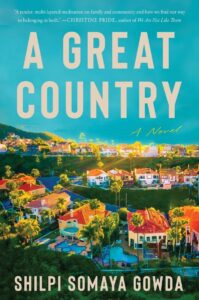
Shilpi Somaya Gowda, A Great Country
The Shah family has just moved from Irvine to Pacific Hills, a cliffside Southern California neighborhood with sprawling homes and ocean views. For Ashok, the patriarch, the move signals that he’s finally achieved the American Dream. His other family members are more conflicted, though. Ashok’s wife, Priya, and eldest daughter, Deepa, miss the diverse, mostly immigrant, old neighborhood they left behind. Middle daughter Maya is more open to her family’s change in fortune. But when twelve-year-old Ajay, the Shah’s youngest child, is arrested, the family must face whether their newfound social status will protect them—or whether they’re just another brown family in the eyes of the U.S. justice system. I was awed at how skillfully Gowda tackled race, class, and social striving in this deeply empathetic, page-turning novel. I recommend A Great Country to everyone I know—and everyone who’s read it loves it.
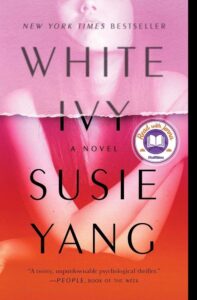
Susie Yang, White Ivy
People assume Ivy Lin is a quiet, obedient, young Chinese American woman. But that’s the problem with conflating stereotypes with reality: the truth is much more complex. In White Ivy, Ivy Lin is actually a dogged social climber who becomes infatuated with Gideon Speyer, a wealthy former classmate from an old-moneyed Boston family. Over fancy brunches and Cape Cod vacations, Ivy gradually integrates herself into the Speyer clan. But just when Ivy is on the brink of becoming Mrs. Gideon Speyer, an old flame from her working-class past threatens to dismantle the new life she’s created.I tore through this novel. Yang smashes the model minority stereotype by creating a deeply flawed antihero and deliciously twisty tale.

Danzy Senna, Colored Television
Jane is a struggling novelist on the verge of getting her life back together. As soon as she publishes her long-awaited second novel—a sweeping epic exploring centuries of biracial identity—she’ll resurrect her literary career and make tenure at the small college where she teaches. Financial stability can’t come soon enough; Jane dreams of moving her family to “Multicultural Mayberry,” a safe, diverse, middle-class neighborhood. Plus, now that Jane has gotten a taste of the good life—thanks to subletting her successful screenwriter friend’s bougie home—she’s not giving it up. Not even when her publisher rejects her novel and she partners with an eccentric screenwriter to reverse her fortune.
This is the kind of edge-of-your-seat novel you read knowing Jane’s cringe-worthy decisions won’t turn out well. (And they don’t.) With Jane’s story, Senna deftly explores class envy, the economics of making art, and who ultimately holds the power in our most creative industries.
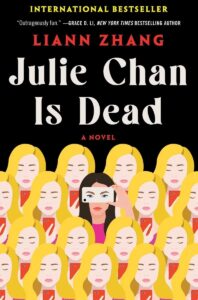
Liann Zhang, Julie Chan Is Dead
Julie Chan and her identical twin sister, Chloe, were separated at a young age. But while Julie was raised by her struggling, resentful aunt, Chloe was adopted by the rich VanHuusen family. The sisters never spoke, except for when Chloe, now a famous influencer, tracked Julie down to make a shock-and-awe viral video (“Finding My Long-Lost Twin And Buying Her A House #EMOTIONAL”). When Julie discovers Chloe’s dead body, she sees an opportunity, rather than a loss. Julie steps into her twin’s #luxe shoes—but soon discovers that Chloe’s life was not as Instagram perfect as it seemed. I love genre novels that offer smart social commentary, and Julie Chan Is Dead is one of them. Filled with dark humor, Zhang’s satire slyly weaves in observations about race, privilege, and social media.
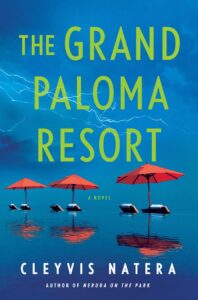
Cleyvis Natera, The Grand Paloma Resort
The Grand Paloma Resort is paradise in the Dominican Republic—but not for the locals who work there, catering to the privileged clientele. Despite the demeaning work, Laura, a local woman, has risen to middle management through unyielding determination. She’s thisclose to securing a promotion that’ll get her and her younger sister, Elena, off the island, and provide them with a life of middle-class opportunity. Then, a guest’s child gets seriously injured in Elena’s care, setting off a maelstrom of events that doom Laura’s meticulously crafted plans. Natera spares no detail depicting how the one percent vacations—and the incredible toll luxury tourism extracts from locales, environmentally, emotionally, and existentially.
__________________________________
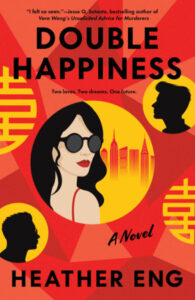
Double Happiness by Heather Eng is available from Tiny Reparations Books.

Heather Eng
Heather Eng is a third-generation Chinese American who grew up in Queens, New York. A lifelong writer, she graduated from Boston University with a journalism degree, and worked as a newspaper journalist, web editor, and senior marketing leader in the tech industry. Heather lives in Manhattan with her husband and daughter. Double Happiness is her first novel.