Lit Hub’s Most Anticipated Books of 2026, Part Two
258 Books We're Looking Forward to Before the End of the Year
The year is half over, if you can believe it. Time marches ever forward, into the abyss. Books, though, can smooth the passage. If you choose wisely, that is. To that end, here are the novels, collections, and works of nonfiction we’re keeping an eye on for the rest of the year. Let us know what you’re looking forward to most in the comments.
JULY
***
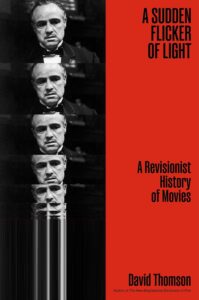 David Thomson, A Sudden Flicker of Light: A Revisionist History of Movies
Simon & Schuster, July 7
As highlighted in our first half preview: David Thomson has been writing about film for fifty years, so when he argues (as he does in this book ) that “movies have been a destructive force—responsible for creating an alternate reality and fantasyland that has only deepened the isolation and disconnection of our society over the course of a century,” I’m inclined to hear him out. (And not only because movies are too long to watch at night when I could be sleeping.) –Jessie Gaynor, Senior Editor
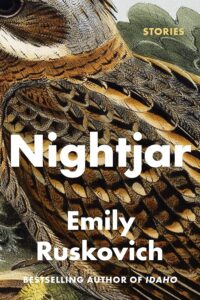 Emily Ruskovich, Nightjar
Random House, July 7
This debut short story collection from the International Dublin Literary Award-winning author of Idaho explores “how unexpected intuitions forever alter the lives of ordinary people.” Set against the lush, eerie backdrop of the Pacific Northwest, Nightjar includes the story “Owl”—about a fur trapper dealing with the terrible origins of his marriage after his wife is brutally injured by four teenage boys—which won an O. Henry Award in 2015. –Dan Sheehan, Book Marks Editor-in-Chief
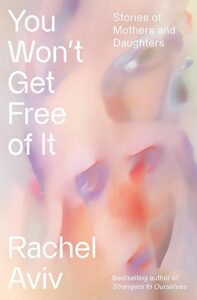 Rachel Aviv, You Won’t Get Free of It: Stories of Mothers and Daughters
Knopf, July 7
As highlighted in our first half preview: Rachel Aviv writes the kind of nonfiction that sucks you in and holds you long after you finish reading. Her last book, Strangers to Ourselves, was one of the most complex and illuminating works I’ve read in recent years. I’d be anticipating this one—which explores mother-daughter relationships—even if it didn’t speak so directly to me. As both a daughter and a mother of daughters, thought, I’m on the edge of my seat. –JG
 Christian Wiman, The Dance
FSG, July 7
As highlighted in our first half preview: I love Christian Wiman’s poems and read them aloud whenever possible. Though his language is that of the every day his preternatural instinct for rhythm fills his lines with a bursting musicality. And though I am not, unlike Wiman, a man of faith, I share in his wonder of everyday holiness, for that ineluctable light that drags us from our solipsisms into a brighter way of being… even if only for a moment, even if for just the time it takes to read a poem. –Jonny Diamond, Editor-in-Chief
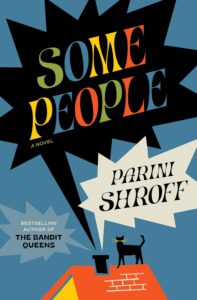 Parini Shroff, Some People
Algonquin, July 7
As highlighted in our first half preview: From the bestselling author of the delightful The Bandit Queens comes a novel that sounds unbearably awkward and just as good: Malti Patel finds herself forced to recuperate for an entire week, under the care of her daughter’s soon to be ex-huband, Nathan. Clearly, both have resentments, and things to unpack, though they will, one supposes, also discover that they have at least one thing in common. Shroff is hilarious and winking and sharp but ultimately large-hearted; I think she will knock this premise out of the park. –Emily Temple, Managing Editor
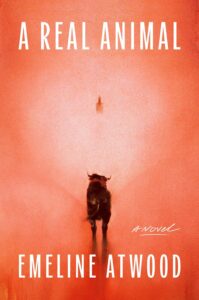 Emeline Atwood, A Real Animal
Catapult, July 7
As highlighted in our first half preview: I’d been hearing about this book through the grapevine for a long time before I got my hands on it, and once I did, I understood perfectly. This is a book that is a caliber above and beyond what we have come to expect from the young-twenties-girl-bildungsroman. There’s men, yes, and sex, a lot of it, and yearning to be understood, and for power and a place in the world, but A Real Animal is about the wild, deep, feral core of those themes. It’s about something subterranean, underneath one’s lived experience, underneath, even, one’s trauma. The book follows the protagonist from college, when she experiences a horrible sexual assault, through the next decade, as she builds and breaks relationships, as she builds and breaks a life. There is no straight line. There is no healing. But the book has this feeling about it, like there’s so much within the pages that’s just bursting to get out: a violent and powerful urge for something, for more survival, for more agency, to express one’s pain, to feel better. A Real Animal is as raw and visceral as an open-mouthed scream: you hear it in your bones. You can see its teeth. –Julia Hass, Book Marks Associate Editor
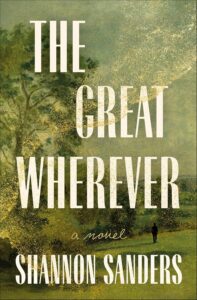 Shannon Sanders, The Great Wherever
Henry Holt, July 7
As highlighted in our first half preview: This book circles one of my favorite riddles for fiction: how do we carry ancestral expectations? When Audrey Lamb, an underpaid gig worker in D.C., inherits family farmland in Tennessee, she goes to claim her birthright—only to discover the property is ruled by four familial ghosts. An epic with supernatural and epigenetic overtones, this debut novel looks like a feast of a story. –Brittany Allen, Staff Writer
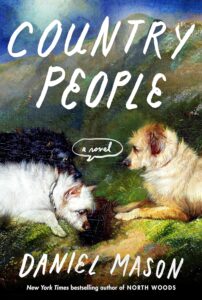 Daniel Mason, Country People
Random House, July 14
The question of how one could possibly follow up North Woods would be a real, pressing conundrum: the bestselling novel from 2023 felt as though it sprang directly from the earth itself, like a story that had been lying dormant, waiting to be told for centuries, until it finally found the way to emerge. But emerge it did, through Daniel Mason’s talents and intellect, and with that, he has earned our trust in all perpetuity. Country People is, albeit, a far more human tale: a (somewhat) realist novel about a family as they embark on a new chapter together in a faraway land totally unlike their accustomed surroundings. That is, Vermont, to their native California. It’s a roving and fairy-tale like story, told through the gaze of an idealist, though career-stymied, father as he raises his children, loves his wife, struggles through his ambitions, and finds solace in the unusual lives of his new eccentric neighbors, the “country people” themselves. Mason’s prose is as fantastic as ever, and it’s a treat to experience the magic in everyday life through his narrator’s rosy and ever curious gaze. –JH
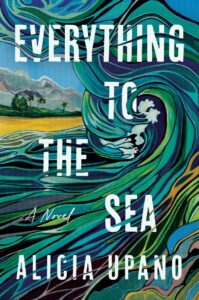 Alicia Upano, Everything to the Sea
William Morrow, July 14
As highlighted in our first half preview: This debut novel hinges on an epic premise. In Hawai’i, two lovers (Kenji and Jane) are drawn together for what’s supposed to be a summer fling. But when a tsunami rocks their island, profound tragedy ensues, and immediately ups the stakes of a brief encounter. This big-souled book considers the costs of leaving and staying, especially where rebuilding is required. Upano’s operatic scope and clean, elegant sentences really swept me off my feet. –BA
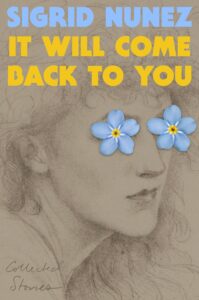 Sigrid Nunez, It Will Come Back to You: The Collected Stories
Riverhead, July 14
As highlighted in our first half preview: New Sigrid Nunez! Her first short story collection! “Moving from an inappropriate teenage crush to a therapist’s second chance at love, in this collection Nunez maintains her irrepressible humor, bite and insight, while exploring the philosophical questions we have come to expect from her writing.” Spanning her career, these stories promise the same brilliant writing from one of our best writers. –Emily Firetog, Deputy Editor
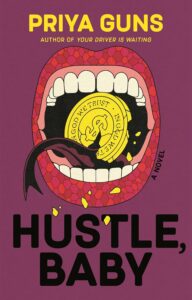 Priya Guns, Hustle, Baby
Doubleday, July 14
As highlighted in our first half preview: This second novel from the author of Your Driver is Waiting follows a family of precariously employed Tamil refugees just trying to make it work on the margins as Y2K looms. When a rizz-y day trader promises the world, it’s hard to say no. But chaos inevitably follows the golden goose. Guns is an actor and writer, known for her razor-sharp observations and riotous voice. This one looks like a thrill ride. –BA
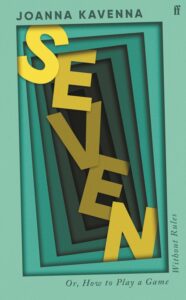 Joanna Kavenna, Seven
Faber & Faber, July 14
As highlighted in our first half preview: The latest novel from British author Kavenna, whose Zed was a Lit Hub favorite, concerns a philosopher seeking an ancient game box in Greece—but “the hunt for this small thing, among the countless lost things, becomes an absurdist quest through time and space: from the earliest human societies to the advent of AI.” Sounds like fun. –ET
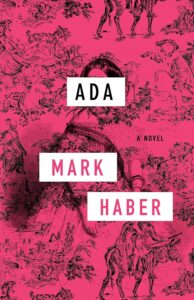 Mark Haber, Ada
Coffee House Press, July 14
As highlighted in our summer reading list: In Haber’s breathless, painfully funny latest, the beleaguered ruler of an obscure realm, whose assassination-minded citizens are either Bavarians or Saxons, awaits the arrival of the eponymous Ada, a woman with whom he spent a single night several years before. Happily, after said night, he fell madly in love with her. Unhappily, she is now married, and approaches his castle (and its safe and useful Sword Closet), with her annoyingly rich husband, if indeed she approaches at all.
Because, after all, as in all of Haber’s novels, the point is not really what is happening in the world but what is happening in the mind—in this case the mind of the pettiest of tyrants. There we find an ecstatic, recursive whir of self-recrimination and stalwart pride, desire and disgust, nascent hope and extreme vexation, and not a few concerns about poisoning. At a mere 90 pages, you can read it in one sitting, and should, for the full effect. Though probably, like me, you will have no choice. –ET
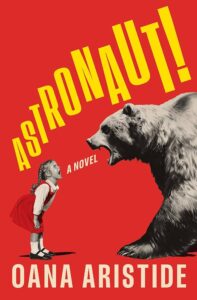 Oana Aristide, Astronaut!
W.W. Norton, July 14
As highlighted in our summer reading list: Set in 1989, in the months leading up to the fall of Nicolae Ceaușescu’s decades-long authoritarian grip over Romania, Aristide’s (almost-)comic novel about a series of brutal deaths (which may or may not be attributable to a bear) and how they intersect with the lives of everyday Romanians trying to survive the cruel absurdities of life in a fully metastasized dictatorship, is both cautionary tale and historical fever dream.
Told through the storylines of two principal characters—one, a world-weary detective who can’t help but follow the clues all the way to the top; the other, an imaginative little girl who gets tangled up in an improbable plot—Aristide’s expert conjuring of the atmospherics of totalitarianism calls to mind the absurdist brilliance and wry humor of dissident Czech writers like Hrabal and Klima. The final year of Ceaușescu’s regime cast an oppressive and paranoid shadow over the people of Romania: neighbors informed on neighbors, the state had total control over the flow of information, and Ceaușescu’s cult of personality was deeply embedded at every level of society. Importantly, what Aristide’s wonderful novel illustrates is that even in the darkest of timelines it is possible to find shelter—and something like freedom—within the vast spaces of the imagination; no matter how bad things get the mind finds a way of surviving what seems like an inevitable (and eternal) state of subjugation.
Astronaut! also reminds us that in all fascist systems of control there is a point when the grip gets so tight the mechanisms shatter and everything changes all at once. Something worth remembering in this long summer of 2026. –JD
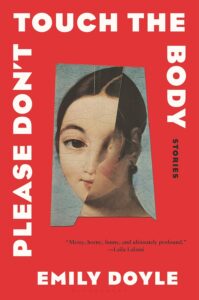 Emily Doyle, Please Don’t Touch the Body
Bloomsbury, July 14
As highlighted in our first half preview: I’ve had the pleasure of glimpsing Emily Doyle’s muscular, heart-forward fiction in a writing workshop, and all I can say is brace yourselves. The body is front and center in these uniquely brewed stories, which range from surreal to poignant. In one piece, a woman fearing fetishization finds agency by writing a sex column. In another, Ronald Reagan is reincarnated as a puppy, and forced to depend on the whims of his queer owners. This debut collection is thrillingly concerned with how we come to feel at ease in—or in power of—our meatsacks. –BA
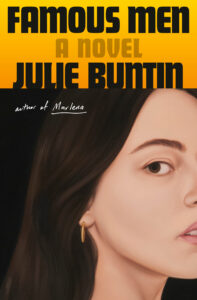 Julie Buntin, Famous Men
Random House, July 14
As highlighted in our summer reading list: It’s possible to feel a certain fatigue at the idea of another age-gap novel. I think the exhaustion I’ve felt is due to the often one-note, hit-you-over-the-head-with-a-hammer vibe of some of these books: older men bad. Young women good. (Which, while I’m here, I obviously usually agree.) But the thing one craves in good fiction is the eye-widening prompt to see things differently. Famous Men is such a book: it’s about an age-gap relationship, yes, and it is simultaneously one of the most subtle, nuanced, and realistic depictions of love, reliance, and power that I have ever read.
The protagonist, Will, is in college when she moves to New York and sets about forming a relationship with a famous poet, Nathaniel Fellow, a man forty years her senior. He is the reason she moved to New York in the first place: he’s one of the few successful writers to emerge from her small midwest hometown, and she also happens to suspect he may be her father. He’s not, thank God, but that suspicion hovers over the romantic relationship that ensues between them: she came to New York looking for a father. She didn’t get that, but what she did get both resembles and bastardizes the pure intent she had in that original urge. Her relationship with Nathaniel begins when she is 20 and he is 60, but it is long, and thus it is many things: she feels real care for and intimacy with him, she wants to protect him, love him, feed him. In fact, she often feels undeniably special for being chosen by the male genius, and yet throughout it all, there is a quiet, bone-deep rage for what he has done to her. Never will she be able to see something without looking at it through his eyes. Never will she be able to be just herself, without the shadow of his person lingering over her. The book beautifully captures the delicate line between love and hate, between victimhood and complicity. Life is never just one thing. Complex, intricate, and at all times realistic and humane, Famous Men is the pinnacle of the attempt to capture this specific and yet, all too universal, formative experience of enmeshment, devotion, and ego-death. –JH
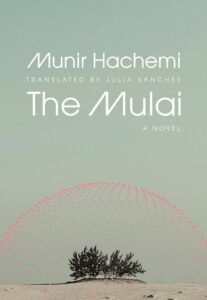 Munir Hachemi, tr. Julia Sanches, The Mulai
Coach House Books, July 14
As highlighted in our summer reading list: I have to be honest with you: I still don’t think I’ve entirely wrapped my head around this book. I don’t know if I ever will? The jacket copy promises “echoes… of Borges, Le Guin, and Calvino” and while those are some lofty comparisons… by god, they’re accurate. If Borges wrote hard science-fiction, it might well look like this; it also bears comparing to some of the lesser-known Le Guin works like Always Coming Home. I confess that I’m a sucker for an anthropological look at fictional civilizations and that’s what The Mulai does: builds and describes an entire civilization, one that left and then lost touch with Earth centuries prior. Some of this is told through the diary entries of the anthropologist sent to restart a connection with the society, but there are also pieces of folklore and interviews and even (quite wonderfully) an exploration of the translation of Calvino’s Invisible Cities (itself a book that I’ll likely never fully wrap my head around, by design) into the language of the Mulai. If this all feels high-flying, well, it often is—but Hachemi (in a lovely and undoubtedly exhausting translation by Julia Sanches) never loses sight of the play that is so important in writing good science-fiction. You can almost feel the author grinning at you as you read, and I daresay you’ll end up grinning back by the end. –Drew Broussard, Podcasts Editor
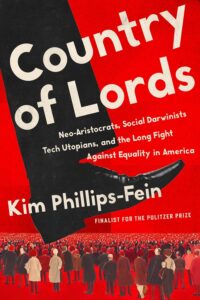 Kimberly Phillips-Fein, Country of Lords: Neo-Aristocrats, Social Darwinists, Tech Utopians, and the Long Fight Against Equality in America
Norton, July 21
As highlighted in our first half preview: From Pulitzer Prize-finalist Phillips-Fein, a book about an American tradition: fighting against equality. You read that right: within are the stories of figures like “John Adams, William Graham Sumner, Andrew Carnegie, journalist Lothrop Stoddard, Henry Ford, Harvard psychologist Richard Herrnstein, Peter Thiel, and others” who “represent this counter-tradition of hostility to democratic government.” You didn’t think it was an accident, did you? –ET
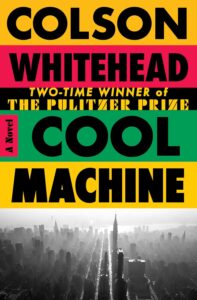 Colson Whitehead, Cool Machine
Doubleday, July 21
As highlighted in our first half preview: Whitehead caps off his Harlem Trilogy by bringing Ray Carney—business owner, former fence, family man—into the 1980s. The blurb promises a one-last-job kind of story, fitting for the conclusion to a modern classic of the crime genre. –DB
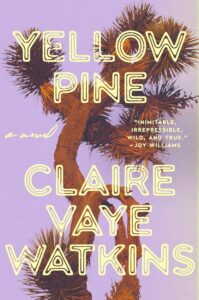 Claire Vaye Watkins, Yellow Pine
Riverhead, July 21
As highlighted in our summer reading list: Nobody writes about the Mojave like Claire Vaye Watkins. The author of Battleborn and I Love You But I’ve Chosen Darkness returns to the cosmic high desert with a story about a Sierra Club fundraiser and aspiring activist—on the cusp of her fortieth birthday—who decides that she wants another child. With a young daughter at school back East, a motley crew of eco warrior pals in her corner, and a long-lost love returned but not ready for fatherhood, Rose embarks upon a novel (and liberating) conception quest while contemplating the doomed majesty of her desert home. A wild, lush, lyrical, torrent of novel—both ode and elegy—that left me reeling. –DS
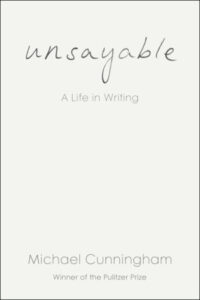 Michael Cunningham, Unsayable
Random House July 21
This intimate memoir from the Pulitzer Prize-winning author of The Hours considers a life devoted to the practice of writing fiction. Cunningham plucks small, formative autobiographical moments from decades past and considers how each helped shape the writer, and the man, he became. A quiet, contemplative book about trying to put into words the ineffable experience of living. –DS
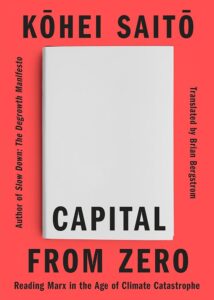 Kohei Saito, tr. Brian Bergstrom, Capital from Zero: Reading Marx in the Age of Climate Catastrophe
Astra House, July 21
Philosopher Saitō brings a pragmatic, eco-socialist’s approach to the problem of climate collapse and its inextricable connection to modern capitalism. Unsurprisingly the thinker behind “degrowth communism” excavates (and reconstitutes) aspects of Marx’s 19th-century ideas as solutions for 21st-century disaster. –JD
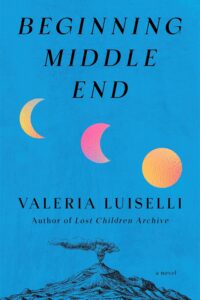 Valeria Luiselli, Beginning Middle End
Knopf, July 28
As highlighted in our first half preview: A mother-daughter duo land in Sicily after the collapse of the former’s marriage, setting off an exploration of their own family line as well as the possibilities (and pitfalls) of a changing world. Luiselli is one of the writers pushing fiction forward and wherever she goes, we would do well to follow. –DB
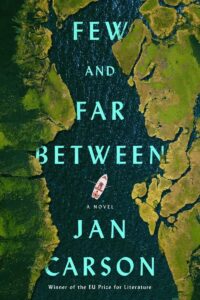 Jan Carson, Few and Far Between
Scribner, July 28
The new novel from the EU Prize for Literature-winning Belfast author Carson (The Raptures, Quickly While They Still Have Horses) has a fascinating premise: in an alternate north of Ireland, a group of people looking to escape the dangers of the Troubles established a utopian community within a drained Lough Neagh (the largest lake in Ireland). Decades later, the few remaining inhabitants of “The Ark” must contend with algae outbreak that is slowly destroying the landscape they love, and government plans to force them back to the mainland for the first time in fifty years. –DS
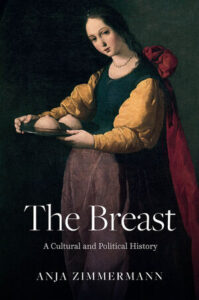 Anja Zimmermann, tr. Nicola Barfoot, The Breast: A Cultural and Political History
Polity, July 28
Boobs are a rich text, so I’m optimistic that art historian Anja Zimmerman’s exploration of the social and political construction of The Breast will be a fascinating read, and will arm me with enough interesting tit facts to make me absolutely insufferable at parties. –JG
AUGUST
***
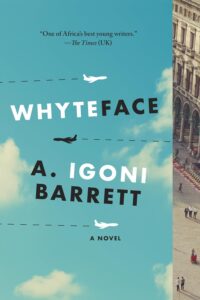 A. Igoni Barrett, Whyteface
Graywolf, August 4
As highlighted in our first half preview: Whyteface is a sequel to 2016’s Blackass, in which a Nigerian man named Furo Wariboko wakes up one morning to find that his skin has turned white—except for his ass. Four years later, Furo is gainfully employed, going by Frank Whyte, and ready for a vacation, to European capitals where at last he finds himself blending in, at least at first glance. Barrett is a genius of social satire, holding up a mirror to the subtle ways we interact with, judge, irritate, and delight one another. –ET
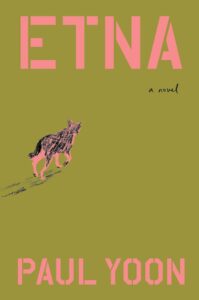 Paul Yoon, Etna
Scribner, August 4
As highlighted in our summer reading list: A spare, aching, beautifully rendered parable about an ex-military dog who sets off on a perilous voyage home through a war-ravaged landscape. Etna, a battle-scarred but kindhearted shepherd mix who was plucked from his home on the eve of an unspecified conflict in an unnamed country, has grown weary of war’s brutalities and longs to return to the coastal farm of his puppyhood. Yoon, the Story Prize-winning author of The Hive and the Honey, brings an exquisite tenderness to his depiction of this wounded canine Odysseus and the relationships he forms with survivors—both human and animal—along the way. –DS
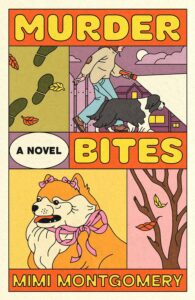 Mimi Montgomery, Murder Bites
Bantam, August 4
As highlighted in our first half preview: From Axios reporter Mimi Montgomery, a frankly delightful-sounding debut mystery about Margot, a D.C. transplant who finds herself in South Carolina, where all her neighbors are obsessed with a reality TV show about dog fashion, which is called Pawsh. Then “the local dog walker is killed in a bizarre incident involving an over-the-top Halloween display featuring multiple Home Depot skeletons,” and Margot finds herself in hot water. But never fear, she will asemble a quirky crew and solve this crime before she’s blamed for it. Fun. –ET
 Margrét Ann Thors, Freyja
Spiegel & Grau, August 4
As highlighted in our first half preview: I can feel that 2026 is the year I finally dive into the Nordic mystery genre, never to return. Freyja’s premise, re-opening an unsolved disappearance twenty years after the child went missing, is standard fare until you hit the kicker: “Unnur may finally have to face… the possibility that she might be responsible for the disappearance of her otherworldly friend Freyja.” If there’s even the slightest possibility Freyja is some kind of missing child-god, it’ll be worth checking out. –Calvin Kasulke, Associate Publisher
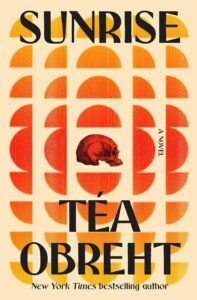 Téa Obreht, Sunrise
Random House, August 4
As highlighted in our summer reading list: Obreht’s latest novel is an unputdownable, metafictional, and nimble page-turner, which begins when a young woman named Nina falls from a plane into a lake in the middle of the Wyoming mountains. Miraculously, she survives, and manages to make her way to a town, only to find it utterly uninhabited, a ghost town in the wilderness. These scattered buildings will become the linchpin of the novel, which moves from Nina’s gripping story into another, almost as tantalizing, set over a hundred years in the past, when the town was still inhabited, and then still another, more recent, which begins to explain some of the mysteries Nina has encountered, before we head back in time yet again.
The book’s structure is part of its pleasure, as is Obreht’s uncanny ability to write convincingly, it seems, about everything and everywhere and everyone, her precise, generous prose like being dunked into a new reality; with every section I found myself both anxious to get to the next, to find out what happened, and equally reluctant to leave. But when we finally get back to Nina, her ending is worth the wait. The result of all this is an adventure novel about what we remember and why, a three-pronged fable about the myths we hold dear, both about ourselves and about men and women we’ve never met. –ET
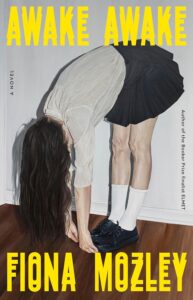 Fiona Mozley, Awake Awake
Algonquin, August 4
As highlighted in our summer reading list: There’s something pleasantly old-fashioned (i.e., assured) about Mozley’s third book. I experienced this story as a systems novel crouching in a memory play. Mary, our thirtysomething narrator, has recently boomeranged back to her hometown (York) after experiencing a break with reality that may or may not be psychotic. She’s come to believe that her grandfather murdered Hitler, contrary to all available evidence. In rhapsodic reflections, she reconstructs key moments of her adolescence in attempt to locate the origin of this possi-delusion. The result is a carefully observed coming-of-age chronicle set in the early aughts, in and among Mary’s cohort of three ride-or-dies.
The careful toggling act Mozley does in this book between a troubled interior world and a troubling wider one sometimes brought Sigrid Nunez and Deborah Levy to mind, in the best ways. Like the latter, Mozley’s interested in the slippery sides of our shared delusions: memory, and history. This makes for a fascinating structure, but I especially adored the way this book captured a generation whose personal and political consciousness was shaped in part by 9/11 and the war in Iraq. A deep, uncanny, surprising read. –BA
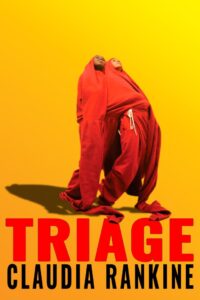 Claudia Rankine, Triage
Graywolf, August 4
As highlighted in our first half preview: How to define Claudia Rankine’s work? Poetry, essay, fiction, reportage, memoir… somehow all of the above and also something else altogether? Her latest follows “two composite characters, the narrator and the theorist” over decades of friendship characterized by deep engagement in this collapsing world around us… but also in a game, of sorts, where the two have to collapse to the ground whenever they see each other. –DB
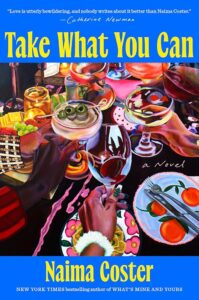 Naima Coster, Take What You Can
Pamela Dorman Books, August 4
The cover alone shot this book to the top of my TBR list, but when I read the description I was even more excited. A novel about female friendship spanning decades and exploring the different phases of life? Former best friends reuniting to raise their kids together? And the book is set between New York and France? I’m swooning. Coster’s new novel promises to be a tender, deeply-felt ode to love, friendship, and life’s many seasons. –McKayla Coyle, Publishing Coordinator
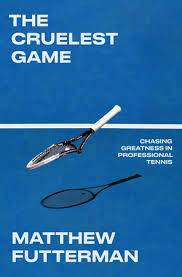 Matthew Futterman, The Cruelest Game: Chasing Greatness in Professional Tennis
Doubleday, August 4
Even the most casual sports fan understands that tennis is among the most punishing of athletic pursuits. While physically grueling it is the mental side of the game that takes the biggest toll on players, its hundreds of stops and starts creating near-infinite space for (self-induced) pressure to build—and break. Long-time tennis journalist Matthew Futterman uses unprecedented access to explore how the sport’s biggest stars overcome (and occasionally succumb to) the unavoidable stress of playing big-time tennis. –JD
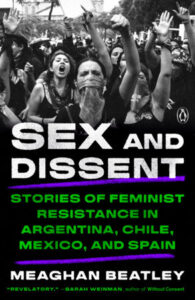 Meaghan Beatley, Sex and Dissent: Stories of Feminist Resistance in Argentina, Chile, Mexico, and Spain
Penguin Books, August 4
Meaghan Beatley has written a career-kindling firecracker of a book. Sex and Dissent is an invigorating and optimistic view of feminism and its movements, conveyed through the stories of uprisings and actions across Latin America. While the overview communicates the thrust of the work: an intimate and revelatory peek at a land and its women who have been fighting for their rights for decades, what it doesn’t convey is how unspeakably gorgeous the writing is within its pages. It has to be read to be believed. Beatley has proven herself both an artist and an activist, and I’d be hard pressed to find a reader that would be able to come away from this book without an entirely different view on collective action and the power of the human spirit. –JH
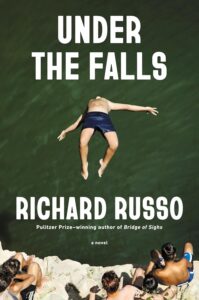 Richard Russo, Under the Falls
Knopf, August 11
As highlighted in our first half preview: If “sprawling literary page-turner” is your favorite genre, here’s one for you. Richard Russo is a master of creating an entire town full of heartbreakingly realized characters (with many secrets), and Under the Falls promises to be a perfect showcase for his talents. The wayward son of a small-town returns after finding fame and fortune and must confront the old friends eagerly awaiting his return for reasons of their own. Sounds like my ideal summer read. –JG
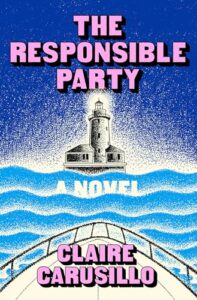 Claire Carusillo, The Responsible Party
Holt, August 11
As highlighted in our summer reading list: I’ve been a fan of Claire Carusillo since her Gawker days (RIP), and knew that it was only a matter of time before her debut landed on the scene. No more 300-word articles. We needed this girl to be unfettered. And unfettered she is, in The Responsible Party: it’s a complete unleashing of her mental acumen, and a totally off-the-wall addictive story that will have you shocked and guffawing.
The narrator of The Responsible Party, an ex-journalist with the perhaps now recognizable name of Claire Carusillo, is back home living with her parents, a bland father who matters not at all to this story, and a terrifying and powerful mother who is central to it. Carusillo just experienced a media cancellation of sorts, a consequence of blithely recommending a beauty treatment in one of her articles that ended up putting influencers in the hospital. C’est la vie. She’s home, and she’s bored, and one day two detectives come by the house. They say they’ve found a long-decayed body in the forest nearby, and there was DNA on his corpse that is associated with the Carusillo family, a connection discovered through Claire’s, again blithe, use of a mail-in DNA service. Her aforementioned mother, Kath, is furious with her. Unsurprisingly, Carusillo’s curiosity is piqued by the detective’s story, and by her mother’s rageful reaction.
What follows is a book-length story-telling by her mother: we flip back in time to accompany a young Kath on a rollercoaster chapter in her life, wherein she lived with her great-grandmother and great-aunt, two zany women whose main personality trains were that they each survived separate ship-capsizing disasters. Hijinks ensue. In fact, murder ensues. The book is bonkers, wild and hilarious and careening and absorbing, ridiculous and real, maximalist to the extreme. Every single sentence is one that, had I written it, I would beam at with pride and call it a day. But it’s 300-some-pages of stunning, shocking, swirling, and always hilarious words, countless comedic phrases coined by Carusillo that have, I’m sure, never been uttered or thought by anyone. Claire Carusillo is a clear force, a real, true talent that is surely here to stay: The Responsible Party is just the first stop on her epic writer’s journey. Everyone just needs to hop on board. –JH
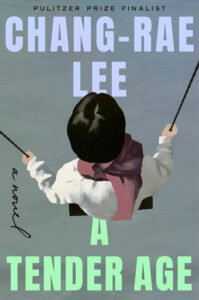 Chang-rae Lee, A Tender Age
Riverhead, August 11
As highlighted in our first half preview: Chang-rae Lee can do no wrong in my mind—I devoured Lee’s last novel, My Year Abroad, and I can’t wait for this one, a Bildungsroman that follows Korean-American Jeon-Gi as he tries to find his way through early adolescence. I can’t think of any writer better equipped to capture the horrors and hilarity of the middle school years. –JG
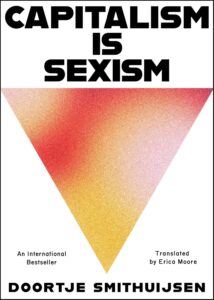 Doortje Smithuijsen, tr. Erica Moore, Capitalism is Sexism
Simon & Schuster, August 11
As highlighted in our first half preview: Well, it’s right there on the tin. But for those who need more detail, Dutch philosopher and journalist Doortje Smithuijsen dives into the many, many ways in which capitalism perpetuates patriarchy and relies on the unpaid labor of women to contribute to its endless need for material growth. From trad wives to spin classes to caregiving, Smithuijsen reveals how late stage capitalism strips women of agency and traps them in endless cycles of empty consumption and thankless labor. –JD
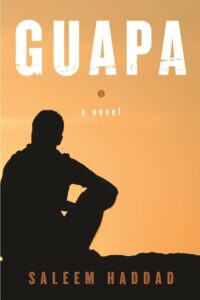 Saleem Haddad, Guapa
Other Press August 11
Saleem Haddad’s Floodlines is one my favorite books of the year so far, so I’m delighted that Other Press is reissuing his debut novel, which follows Rasa, a gay translator living in an unnamed Middle Eastern country over the course of 24 tumultuous hours. Haddad is a master of balancing sharp humor and surprising tenderness—my literary kryptonite. –JG
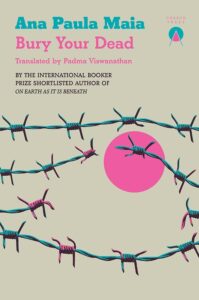 Ana Paula Maia, tr. Padma Viswanathan, Bury Your Dead
Charco Press, August 11
Edgar Wilson, the slaughterhouse worker from the Cercador-winning Of Cattle and Men, is back and he’s now working on a Brazillian roadkill cleanup crew that finds a human body. Ana Paula Maia’s short, sharp novels are quickly becoming personal favorites off the generally incredible list from Charco. –DB
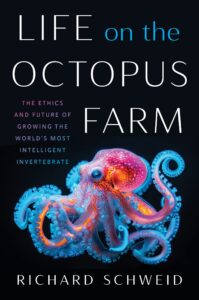 Richard Schweid, Life on the Octopus Farm: The Ethics and Future of Growing the World’s Most Intelligent Invertebrate
UNC Press, August 11
There has been a lot of ink spilled on the unique emotional and rational intelligence of the octopus (not to mention its freaky, alien-like RNA), but insofar as we’ve come to understand these creatures as profoundly sentient beings we have yet to grant them any particular rights. Which is why Richard Schweid’s immersive exploration of octopus farming, and all its attendant ethical problems, is so important right now. If you’re not sure what to think of this issue, this is the book for you. –JD
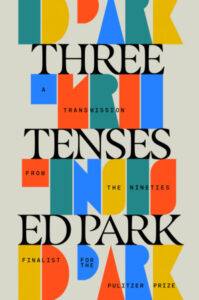 Ed Park, Three Tenses
Random House, August 11
A memoir from the beloved fiction writer, predictably playful: after unearthing a draft of a memoir he wrote in the 90s, Ed Park takes that old reflection of himself and shatters the mirror, creating something that reads like multiple snapshots of multiple moments across time and space. –DB
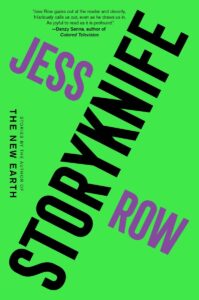 Jess Row, Storyknife
Ecco, August 11
Jess Row’s first story collection in fifteen years is full of stories about stories, dedicated to unpicking the narrative conventions that prop up the delusions of the educated, white, Northeastern intellectuals who love them. Prepare to be called out (and also surprised). –ET
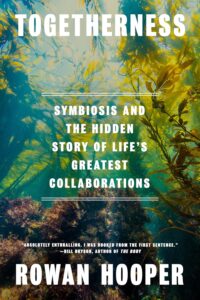 Rowan Hooper, Togetherness: Symbiosis and the Hidden Story of the World’s Greatest Collaborations
Knopf, August 18
Although we tend to take “survival of the fittest” as the ultimate law of nature, the reality is that nature is much more of a community than a competition. Hooper’s book illustrates the ways that symbiosis has shaped our planet, and how we can use it to shape our future. I’ll definitely be reading this thoughtful, illuminating book. –MC
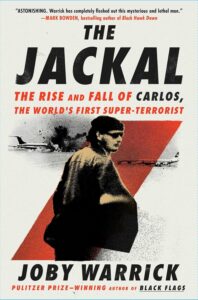 Joby Warrick, The Jackal: The Rise and Fall of Carlos, the World’s First Super-Terrorist
Scribner, August 18
If terrorism was ever “cool” (it wasn’t, really) then Carlos the Jackal was its first international superstar, a jet-setting “freedom fighter” for hire in big black sunglasses. But who was he, really? Vain and amoral mass murderer or a lethal but necessary antidote to global inequality? As Pulitzer Prize-winner Warrick reveals, with help from newly released archival material and a prison interview with the man himself, the answer is somewhere in between. –JD
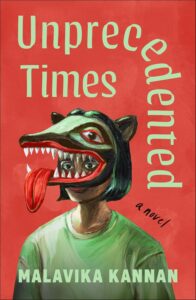 Malavika Kannan, Unprecedented Times
Henry Holt, August 18
As highlighted in our first half preview: A queer campus novel about a first year Stanford student who has burned out on climate activism and wants to escape her strict upbringing into a world of literature and sex. But as COVID scrambles everything, she and some classmates flee to a farm collective, where the small community starts to fray under the weight of global and personal pressures. I’ve been a fan of Malavika Kannan’s writing from around the ‘net, and am very excited to read her literary debut. –JF
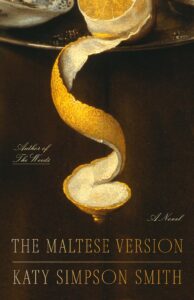 Katy Simpson Smith, The Maltese Version
FSG Originals, August 18
As highlighted in our first half preview: From the award-winning author of The Weeds and The Everlasting comes a novel about four women “forging their way across time, place, and language in search of desire, power, and connection.” When Max disappears to Malta (leaving a possibly pregnant Leonie behind) to translate wary poet Anna’s work, travel writer Rhoda is dispatched to track him down. Once there, however, Rhoda discovers more than Max’s indiscretions. Smith is beautiful storyteller, and this latest novel sounds like a knottily delightful exploration of love and desire. –DS
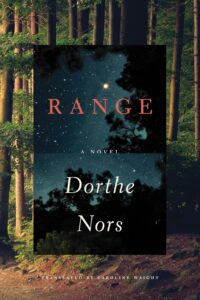 Dorthe Nors, tr. Caroline Waight, Range
Graywolf, August 18
As highlighted in our first half preview: In the latest novel from Lit Hub favorite Dorthe Nors, an astrophysicist retreatst to the country to concentrate on the stars—but can’t seem to get away from the messy, compelling humanity that surrounds her, leaving her shifting her attention from the enormous to the minute and back again. –ET
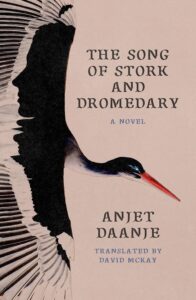 Anjet Daanje, tr. David McKay, The Song of Stork and Dromedary
FSG Originals, August 18
As highlighted in our first half preview: I love a chonky deep-dive into the life, art, and impact of a fictional author—this one, following three hundred years of various interactions with the single novel of a Brontë-esque recluse, sounds like just the thing for late summer immersion. –DB
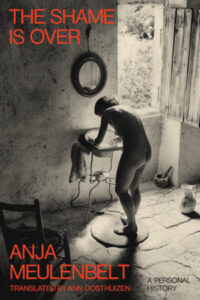 Anja Meulenbelt, tr. Ann Oosthuizen, The Shame is Over: A Personal History
Astra House, August 25
First published in 1976, Anja Meulenbelt’s memoir, which details her sexual, political, and maternal liberation, is “a cult classic of feminist literature” in the vein of The Years that I’m ashamed to say I’ve never encountered. Now seems like the right time to rectify that. –JG
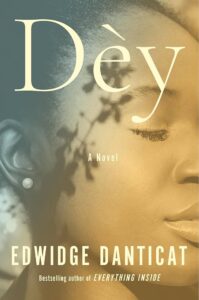 Edwidge Danticat, Dèy
Knopf, August 25
New Edwidge Danticat is always a cause for celebration. This novel, about a woman who finally begins to see her life clearly after surviving a traumatic event, is the perfect addition to your summer reading list. At once an exploration of grief and a paean to the many kinds of love, Dèy is a sparkling novel that feels both expansive and intimate. –MC
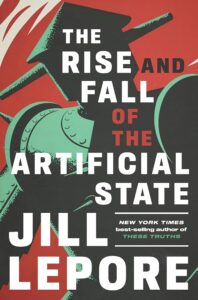 Jill Lepore, The Rise and Fall of the Artificial State
Liveright, August 25
The widespread acceptance of AI in nearly every aspect of our lives is alarming; convenience and speed seem to have trumped all other considerations (accuracy, not so much). But what happens, asks New Yorker writer Jill Lepore, when AI embeds itself so deeply into the machinery of the state that one day we wake up to a robot-run government? Five years ago this is the stuff of sci-fi. Not anymore. –JD
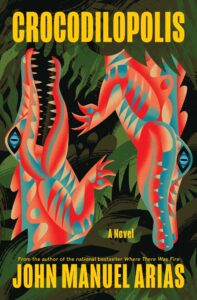 John Manuel Arias, Crocodilopolis
Bloomsbury, August 25
When Seth loses everything and goes from life as an elite politician in Costa Rica to living in exile in Washington, D.C., he blames his brother, Osario, for his fall from grace. And he’s willing to do anything to get back at his brother—including travel to Costa Rica to feed Osario to a river of crocodiles. Brotherhood! Masculinity! Unhinged, extravagant revenge plans! John Manuel Arias’s sophomore novel is sharp, hungry, and full of teeth. –MC
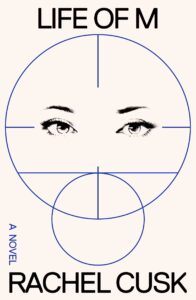 Rachel Cusk, Life of M
FSG, August 25
Fans of Cusk’s cool water prose will not be disappointed by her latest novel, which considers the life of a famous actress from shifting angles. There is something hypnotic here, as we are invited to peer into one space after another, and something profound too. –ET
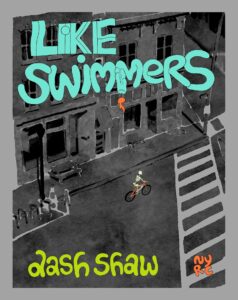 Dash Shaw, Like Swimmers
New York Review Comics, August 25
I found the use of texture and pattern so striking when I first saw preview pages of Like Swimmers, and this early COVID-era murder mystery seems so feverish and paranoid. I loved Blurry, so I’m excited to see what Shaw has coming next. –OS
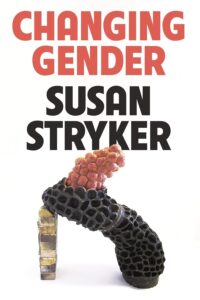 Susan Stryker, Changing Gender
FSG, August 25
As highlighted in our first half preview: If there was a Mount Rushmore of trans historians, Susan Stryker would be on it twice. She literally wrote the book on transgender history. (It’s called Transgender History.) Any new publication of hers is mandatory reading, and not just because transgender Americans are under an obsessive, incessant series of assaults from the current administration and the right more broadly. Stryker is also uniquely gifted at explaining and contextualizing the history of transness as we know it in ways that are clear, accessible, enlightening, and entertaining. –CK
 Andrés Barba, tr. Lisa Dillman, Last Day of a Prior Life
HarperVia, August 25
As highlighted in our first half preview: I’ve been a Barba diehard since Such Small Hands; his writing is strange and beautiful and gothic. This one, which Mariana Enríquez described as a “ghost story without ghosts,” a woman follows an unfamiliar boy and discovers “a suspended time, a loop, and another life.” What that means, I can’t say, but I want to find out. –ET
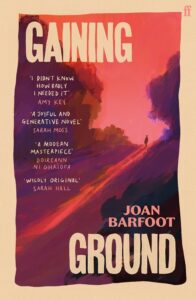 Joan Barfoot, Gaining Ground
Faber US, August 25
As highlighted in our summer reading list: Barfoot’s novel, reissued nearly 50 years after its initial publication, concerns a woman named Abra, who feels indescribably ill at ease in her comfortable, conventional life, and then, one day, leaves it. She abandons her family and absconds to a cabin in the woods, where she finally feels that she understands what it means to be herself, with no interference, no self-consciousness, and eventually no memories. When her daughter appears, having tracked her down after many years, Abra barely recognizes her, but is reluctantly forced to confront her own perceptions—is she mad? is everyone else mad? are such distinctions even relevant?—and choices.
I’d wager that the novel is not quite as shocking to read in 2026 as it might have been in 1978, but the shock of it really isn’t the point. This is a propulsive meditation on what we want and why we want it (or think we do), that wonders what might happen to the human mind when left entirely to its own devices, with no input from society. There is also plenty of beautiful writing about the natural world, and despite how little actually happens in the present action of the story, I felt I couldn’t put it down. –ET
SEPTEMBER
***
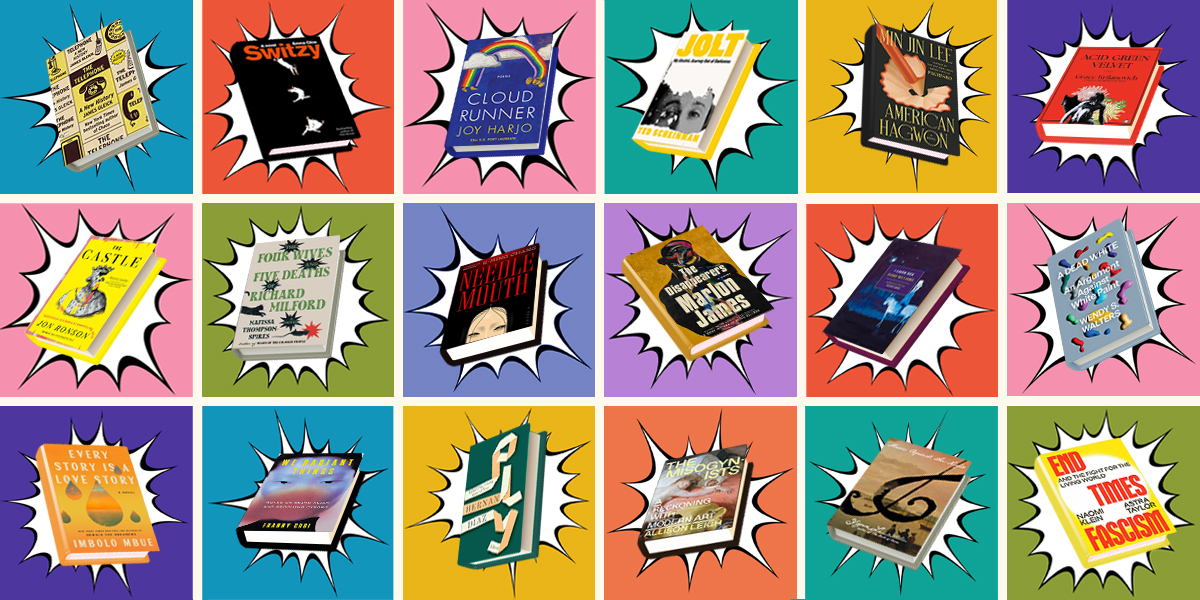
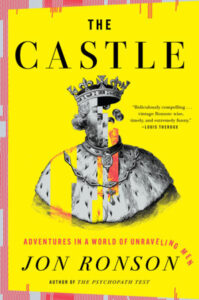 Jon Ronson, The Castle: Adventures in a World of Unraveling Men
Riverhead September 1
I think Jon Ronson’s So You’ve Been Publicly Shamed is one of the defining texts to explain the 2010s—and I’ve been waiting to see where his puckish explorations would go next. Turns out, he’s ready to tackle one of the defining crises of our era: what’s up with the men? And while I can’t imagine a concise answer or a particularly soothing one, I’ll bet whatever Ronson digs up will be worth the ride. –DB
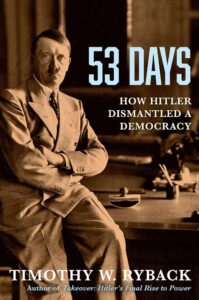 Timothy W. Ryback, 53 Days: How Hitler Dismantled a Democracy
Atlantic Monthly Press, September 1
If you think the second term of Donald Trump has been a dizzying violation of American norms, may we refer you to Germany in 1933 and the eponymous 53 days? As we learn from lauded historian Ryback, immediately upon becoming chancellor Hitler set about destroying the free press, stuffing as many Nazis as possible into the civil service, imposing tariffs on trading partners, demonizing the marginalized, and attacking the judiciary. And it worked. (Sounds familiar, right?) –JD
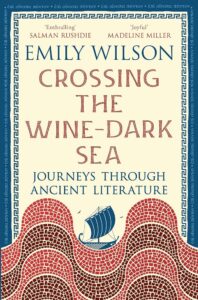 Emily Wilson, Crossing the Wine-Dark Sea: Journeys Through Ancient Literature
Liveright, September 1
The latest book from the pre-eminent classics scholar Wilson—a MacArthur and Guggenheim Fellow whose bestselling translation of the Odyssey has converted many to the pleasures of the Greek epic—explores both the world of ancient literature the contemporary translator’s craft. Read it after you go see the Christopher Nolan movie? –ET
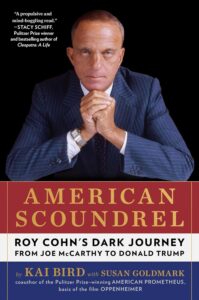 Kai Bird, American Scoundrel: Roy Cohn’s Dark Journey From Joe McCarthy to Donald Trump
Scribner, September 1
You may remember Kai Bird from his gargantuan, Pulitzer Prize-winning 2005 biography of Robert Oppenheimer, American Prometheus, which served as the inspiration for one half of Barbenheimer back in 2023. Bird’s latest doorstopper is a biography of the notorious lawyer, fixer, Donald Trump mentor, and “Zelig of the dark side,” Roy Cohn, whose malign influence on American political life stretched for more than 30 years. –DS
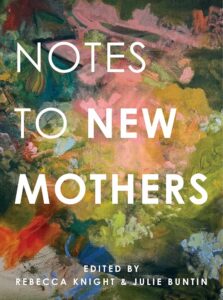 Julie Buntin & Rebecca Knight, eds., Notes to New Mothers
W.W. Norton, September 1
There is nothing more lovely, terrifying, exhilarating, and lonely than new motherhood. In this collection of sixty-five letters, your favorite writers and artists share stories of breastfeeding, career shifts, victories, and insecurities. The anthology features pieces from Julia Phillips, Kirstin Valdez Quade, Liana Finck, Jenny Slate, Naima Coster, and Lit Hub’s own Emily Temple. What a perfect opportunity to revel in the “singular and communal experience” of loving a new human. –EF
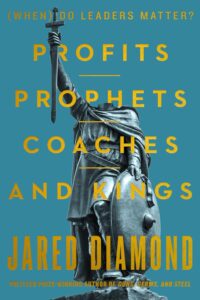 Jared Diamond, Profits, Prophets, Coaches, and Kings: (When) Do Leaders Matter?
Mariner Books, September 1
Diamond, author of the Pulitzer Prize-winning bestseller Guns, Germs and Steel, is back with a study of leadership which seeks to answer the question: can one person truly change the world—for good or ill? I’m almost afraid to find out. –ET
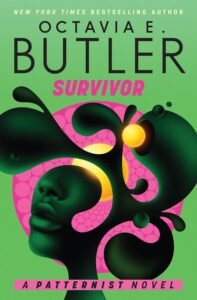 Octavia Butler, Survivor
Grand Central Publishing, September 1
Butler called this installment in her Patternmaster series “my Star Trek novel” [derogatory] and had it taken out of print during her lifetime. There’s absolutely a question of whether or not we should be getting it back, seemingly against the late author’s wishes, but honestly, I cannot wait to read it as I have been trying to find a copy (that doesn’t cost hundreds of dollars) for almost twenty years. –DB
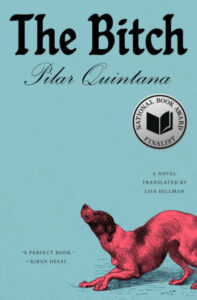 Pilar Quintana, The Bitch
Riverhead, September 1
Like most people, I’m a sucker for stories about humans who find some kind of fulfillment through caring for an animal, but The Bitch also centers on questions of womanhood, motherhood, and a very specific kind of loneliness and isolation. I also love a book under 200 pages, especially when it seems poised to pack so much substance into something so small. –OS
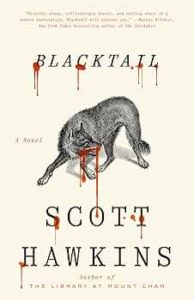 Scott Hawkins, Blacktail
Crown, September 1
There’s a true IYKYK cult following around Hawkins and his decade-old debut novel, The Library at Mount Char, and the cult’s only going to grow with this long-awaited follow-up. It’s the story of a wolf journeying to meet a god, across a very human landscape—and it’s going to change how you think about animals, I guarantee it. –DB
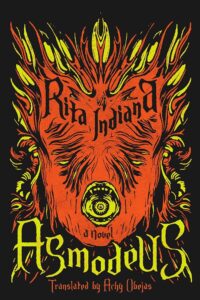 Rita Indiana, tr. Achy Obejas, Asmodeus
Graywolf, September 1
I love a demon novel, especially one that hops point of view. One that’s written by Rita Indiana, taking us along for a demonic ride through Santo Domingo? Fist-pumping rock-and-roll, baby, let’s go. –DB
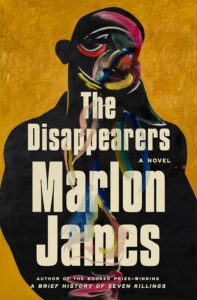 Marlon James, The Disappearers
Riverhead, September 1
Marlon James wowed the world with a previous opus: A Brief History of Seven Killings. His forthcoming novel looks about as ambitious as that Booker winner. Set in the late 80s in Jamaica, The Disappearers follows a group of eight queer actors who are attacked by a savage mob during play rehearsals. I’m alarmed but intrigued, and more than prepared to follow the man known for his incisive social critique, formidable language play, and breathtaking sense of scope back to a pre-Y2K Caribbean. –BA
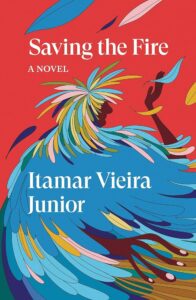 Itamar Vieira Junior, tr. Johnny Lorenz, Saving the Fire
Verso, September 1
Village rumors, religious hypocrisy, and family secrets rank high when it comes to themes I want to read about, and Saving the Fire weaves all of that together with histories of colonization that can’t be separated from nation-states and the people who live in them. –OS
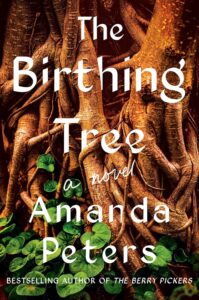 Amanda Peters, The Birthing Tree
Catapult, September 1
On the heels of her wildly successful The Berry Pickers, Amanda Peters is already back to deliver another grounded, glimmering, earthy yet mystical novel. The Birthing Tree is about family, heritage, and the potency of magic and meaning laced into the land. It revolves around a woman named Aliet, a descendant of the Mi’kmaq women who is destined to continue the tradition of Indigenous midwifery that her foremothers engrained in her—until the tradition and her community are ripped apart by prejudice and controversy. Aliet’s life veers down a different path, until years later, she returns home and begins piecing the puzzle of her life back together. Sure to be another satisfying stunner, The Birthing Tree will enchant readers with its resplendent portrait of heritage, tradition, and home. –JH
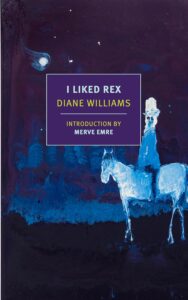 Diane Williams, I Liked Rex
NYRB Classics, September 1
As a huge fan of flash fiction (super short fiction, partway between a story and a prose poem), I’m beyond excited for a new Diane Williams collection! Her stories are little shards of magic, her pieces etched into glass rather than scribbled on paper. Having a copy of I Liked Rex on your bookshelf is a surefire way to impress all your coolest and most literary friends. –MC
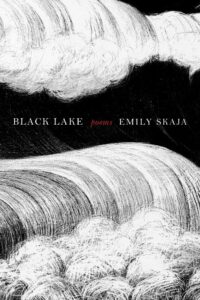 Emily Skaja, Black Lake
Graywolf, September 1
I was a big fan of Skaja’s furious, glorious Brute, a collection, ultimately about rage. Her latest book, seven years later, is instead about grief: about miscarriage, darkness, and despair. But I’d follow her anywhere, and certainly into the abyss. –ET
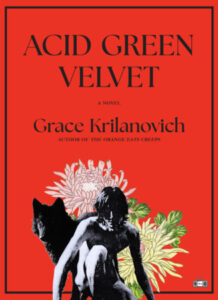 Grace Krilanovich, Acid Green Velvet
Two Dollar Radio, September 1
As highlighted in our first half preview: I was a huge fan of Grace Krilanovich’s bizarro vampire novel The Orange Eats Creeps when it was published in 2010. I kind of can’t believe it’s been over 15 years since then (vampires indeed), but she is finally back with a second novel. I know absolutely nothing about it, but I am lying ravenously in wait. –ET
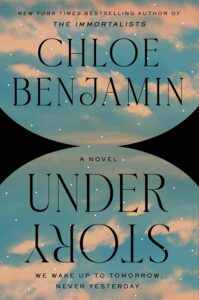 Chloe Benjamin, Under Story
Putnam, September 1
Benjamin’s third book, her first since her bestselling The Immortalists, is an ambitious, heady novel about parenthood, time, and grief. In it, two people attempt to find a way to turn back time after unimaginable tragedy, and find themselves in a curious mirror world, mysteriously connected to yet cut off from the one they left. This is intentionally vague, because there’s a lot going on in this novel, and it’s all best encountered in the reading, not in the reviewing. But I’ll say this: Under Story is a big swing from a talented writer, and I absolutely love to see it. –ET
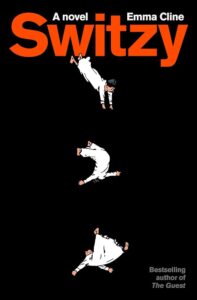 Emma Cline, Switzy
Random House, September 8
Switzy has all the markings of another cool-as-a-cucumber Emma Cline novel. The Guest inaugurated the decisive beginning of her foray into the spare, distanced prose that she continues in spades here: the book begins with a man gliding through the air in his private plane. There is little he understands, few things he knows for sure. He can no longer recognize his handwriting, he can’t remember the small moments of his day, but he knows his final destination, on this trip, in his life, is Zurich. Cline can always be counted on to deliver a sharp portrait of an uneasy mind; Switzy promises to be incisive, empathetic, and searing as it burrows into the last moments of a man suddenly coming to terms with mortality and consequence. –JH
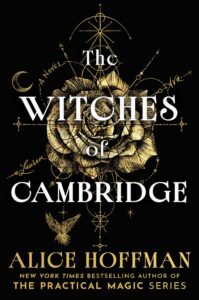 Alice Hoffman, The Witches of Cambridge
Scribner, September 8
Coming out the same week as Practical Magic 2, the great Alice Hoffman kicks off a brand-new witchy series: this time, taking us to Radcliffe and a secret society of witches in the 1950s. This is so deeply my kind of comfort reading and I cannot wait. –DB
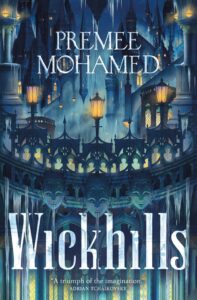 Premee Mohamed, Wickhills
Tor, September 8
One of the absolute best secondary-world fantasy writers working right now, a new Premee Mohamed book is not to be missed. Her latest novel sounds like a fantasy le Carré joint, with defecting scientists and shady intelligence agencies alongside apocalyptic magic. –DB
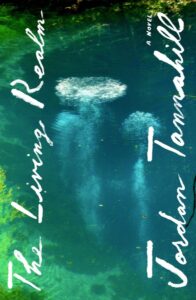 Jordan Tannahill, The Living Realm
FSG, September 8
I met Tannahill as a playwright first. The Canadian writer/director landed on my radar last year, when I got to catch the riveting, vulnerable Prince F*ggot in New York. That play imagined a near future where an openly gay man sits on the British throne. This novel follows a British archaeologist who may or may not cruise his dead ex-lover(s) at a magical forest on the outskirts of Berlin.
We applaud a project this inventive about queer desire across space and time. And if Tannahill’s theatrical work is anything to go by, readers can expect a poetic, sumptuous sensibility. –BA
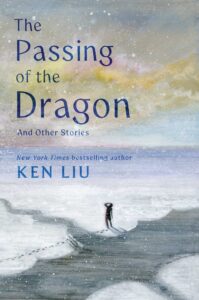 Ken Liu, The Passing of the Dragon and Other Stories
S&S/Saga Press, September 8
Nebula, Hugo, and World Fantasy Award-winning writer and translator Ken Liu’s The Paper Menagerie was one of our favorite short story collections of the last decade; his latest is sure to hold more strange and stirring delights. –ET
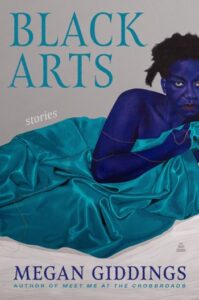 Megan Giddings, Black Arts
Amistad, September 8
Giddings is one of our great living speculative fiction writers. Her novel Lakewood explored America’s history of medical racism through the form of a dystopian, psychological thriller. Stories in her forthcoming collection likewise promise to pair the supernatural with the dismally real in fresh, lucid prose. Longing is on the thematic menu this time. Readers are told to expect husbands that fall apart and ghosts that seduce. (Yikes; yay!) –BA
 Samuel Stein, A Right to Housing?
Verso, September 8
It should come as a surprise to no one that the cost of housing has far outpaced growth in wages since 2000—it’s nothing short of an economic catastrophe for the idea of an American middle class. So, how can we unravel a tangled system that exists at local, state, and federal levels? Stein, a policy researcher and housing advocate writing in the wake of Zohran Mamdani’s historic political victory, has some worthwhile ideas, both practical and aspirational. –JD
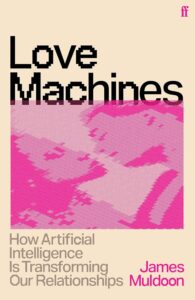 James Muldoon, Love Machines: How Artificial Intelligence is Transforming our Relationships
Faber US, September 8
Like anyone with a soul, I hate AI. I hate every single thing about it, and I think less of you if you use it. I do, however, feel genuine sympathy for anyone us so beaten down or isolated by the techno-curdling of modern society that they turn to large language models as replacements for core human relationships—AI friends, lovers, therapists, and even children. James Muldoon’s “journey to the frontier of human-computer interaction” explores these new forms of love, intimacy, and companionship, and ponders what social conditions gave birth to this brave new world. –DS
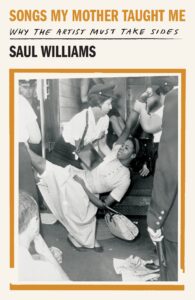 Saul Williams, Songs My Mother Taught Me: Why the Artist Must Take Sides
Haymarket, September 8
Saul Williams has been one of the strongest and most consistent voices calling out the Israeli genocide in Palestine, calling out the overreach of imperial America, calling out injustice wherever it may be found. He’s a sterling example of why an artist can, should—and even must—take sides, so I can’t wait to see how he distills that energy here. (Plus, the polymath has a new album out at the end of August! A killer time to be a fan of Mr. Tardust.) –DB
 Brian Dillon, Ambivalence: An Education
New York Review Books, September 8
I love the way Brian Dillon’s mind works, especially the way he thinks about language and about art. In his latest book, a memoir, I am looking forward to discovering how he thinks about himself, and how he came to the literary life. –ET
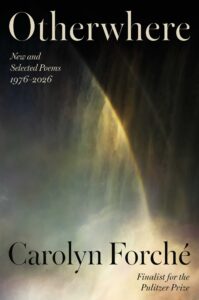 Carolyn Forché, Otherwhere: New and Selected Poems 1976-2026
Scribner, September 8
A half-century of Carolyn Forché’s best poems—gathered here, with some brand new work—is reason to celebrate, and definitely something to look forward to. –JD
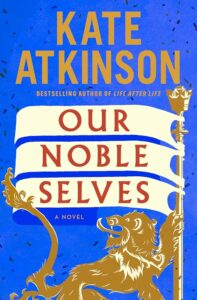 Kate Atkinson, Our Noble Selves
Doubleday, September 15
Harry Flynn returns to Britian in 1945, leaving his war-correspondent role behind for an “ordinary life” with “the Festival of Britain,” a summer carnival aimed at celebrating the nation’s creativity, grit, and ingenuity. But when a woman goes missing, Flynn seems to be the likely culprit, even possibly a murderer. Atkinson is a brilliant historical novelist, with the ability not only to juggle a large cast of characters but also to take the temperature of an entire nation – a country reconstructing its identity in the aftermath of war. –EF
 Kate Zambreno, Foam
Semiotext(e), September 15
Kate Zambreno continues their form-defying, genre-exploding career with what sounds like… well, if Kate Zambreno wrote an Ali Smith novel? Inspired by the art of Eva Hesse (and potentially featuring a great many Eva Hesses), strap in for a brilliantly strange time. –DB
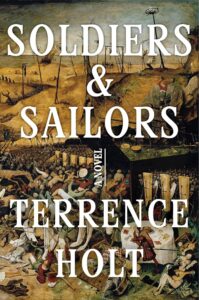 Terrence Holt, Soldiers & Sailors
Liveright, September 15
Maybe I’ve been reading too much mid-century literary criticism, but I feel like a flourishing society needs to produce a certain amount of lush, harrowing fiction about the horrors of war and their devastating aftermaths. Holt is also a medical doctor, which is a (surprisingly robust) sub-category of writers whose work is always made richer for their professional knowledge and experience. In our current era of rising global fascism, it’s good to return to the memory of WWII and remember how that tide has turned back before—and how what remained unfinished after the war has led us to where we are today. –CK
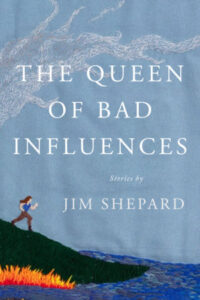 Jim Shepard, The Queen of Bad Influences
Knopf, September 15
Catastrophe fiction isn’t all doom. At its best, it reminds us not only of humanity’s flaws, but also virtues like love, community, and friendship. As these stories span entirely different times and places, and they remind us of how we fail, but also what we can do to fix our mistakes. –OS
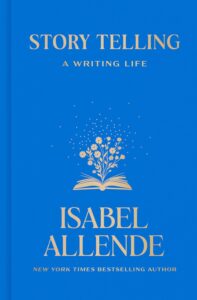 Isabel Allende, Story Telling: A Writing Life
Ballantine, September 15
There is no single way to be a writer: everyone who takes up the craft, for better or worse, has their own daily approach, their own unlikely motivations, and their own weird little quirks, all of it in aid of getting words on the page. Which is why Isabel Allende’s memoir-cum-craft book, Storytelling, is so valuable as a craft-adjacent work: it’s neither proscriptive nor didactic, it shows rather than tells, gifting us with the story of how one great writer happened to make her art. –JD
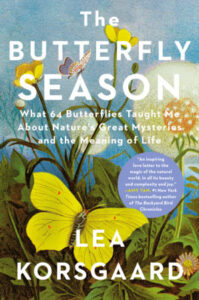 Lea Korsgaard, tr. Sherilyn Nicolette Hellberg, The Butterfly Season: What 64 Butterflies Taught Me about Nature’s Great Mysteries and the Meaning of Life
Knopf, September 15
There’s something so satisfying about a quest memoir, particularly one that blends personal and nature writing. Lea Korsgaard’s story of tracking every native butterfly species in Denmark (despite having no background in lepidopterology) was a number-one best-seller there, and I look forward to discovering what struck such a chord. –JG
 Elizabeth Alexander, Signals Across Vast Distances: Essays and Tales
W.W. Norton, September 15
From examinations of works by June Jordan and Audre Lorde to Alexander’s own experiences of family and creation, these essays center on what we can draw from art and community and how we can use those resources at the service of action and seeking truth. –OS
 Casey Gerald, The Great Refusal: A New Vision of Resistance
Little, Brown, September 15
Americans know something has gone badly wrong. They might blame different people, and have differing ideas on how to fix it, but we all know things are bad. So too does acclaimed memoirist Gerald, who has written an urgent and lyrical call to resistance, an observed manifesto of sorts that sets out his own deeply personal reflections on surviving the day-to-day of this darkest timeline, while also making space for dreaming of a better world to come. –JD
 Naomi Klein and Astra Taylor, End Times Fascism: And the Fight for the Living World
FSG, September 15
These two public intellectuals have been some of my guiding stars over the past six years. Klein is a sharp, elegant thinker with deep insight into our current polycrisis. And Taylor, as an organizer, filmmaker, and author, offers a beautiful model for how we can put political education into direct action (and art). They’ve respectively tackled in print the rise of conspiracy theories, debt as an economic structure, the ethics of solidarity, and the psychological origins of reactionary politics. I can’t think of better wizards to weigh in on the subject of end times fascism. (Especially: how we survive it.) –BA
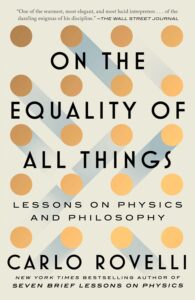 Carlo Rovelli, tr. Simon Carnell, On the Equality of All Things: Physics and Philosophy
Scribner, September 15
Physicist-philosopher Carlo Rovelli (aka the thinking man’s Neil deGrasse Tyson) has long been a thoughtful, ego-less popularizer of profound things, applying a deep knowledge of the very small (quantum physics) and the very large (the origins of the universe) to the meaning of human existence. But as our observed understanding of the universe changes, so too must we reexamine our place in it, as Rovelli undertakes in this latest book. –JD
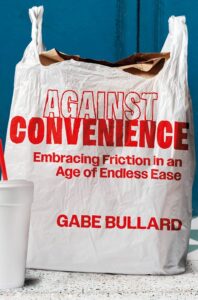 Gabe Bullard, Against Convenience: Embracing Friction in an Age of Endless Ease
Hanover Square Press, September 15
The title of this book is pretty close to my personal these days, so I’m extra excited to read someone else’s carefully considered arguments about why inconvenience is an essential part of the human condition so I can spout the off the next time someone tells me how much ChatGPT helps them tell their kids bedtime stories/find the best place to get a sandwich/write a deeply embarrassing LinkedIn post. (Yes, I’m insufferable!) –JG
 Susan Neiman, Call It Evil: Understanding the Trump Era
W.W. Norton, September 15
Possibly the best book title of 2026, I couldn’t agree more with philosopher Susan Neiman’s rehabilitation of the word evil, a very useful and necessary descriptor for the times we are living through. Setting millennia of moral philosophy against the livestreamed degradations of the 21st century, Neiman calls it as she sees it, and in so doing traces the dark path that has led us to this evil moment in history. –JD
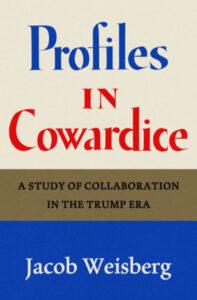 Jacob Weisberg, Profiles in Cowardice: A Study of Collaboration in the Trump Era
Penguin Press, September 15
I’ve long been an advocate for bringing the term “collaborator” back as the dirtiest of epithets so I was happy to see this book’s subtitle, “A Study of Collaboration in the Trump Era.” And this is no cataloguing of the usual suspects, all those camera-hungry grifters who occupy the swampier nether regions of the far right ecosystem; rather, Weisberg looks closely at the rich and powerful Americans who should know better—Jeff Bezos, Stephen Schwarzman, Brad Karp—but have acted out of pure self-interest in abetting a corrupt and senescent authoritarian. These are the real collaborators in the decline and fall of American democracy, and they should wear that label forever. –JD
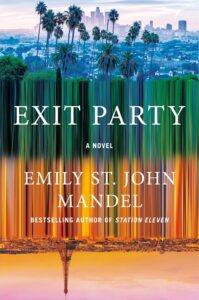 Emily St. John Mandel, Exit Party
Knopf, September 15
A futuristic, fluctuating tale of doubleness and disaster: Emily St. John Mandel’s Exit Party is a heart-shuddering dystopic for the ages. One night in California in 2031 (a year disturbingly close to our present) a party is thrown, and the United States government has fallen. There is a crazed joy in the air, in celebration for the absence of active war, but also a corresponding sense of ruin: what has, what will, the world come to? That night, some guests disappear, others, inexplicably, double. It’s a story of shifting structure and ephemeral sturdiness, meanings falter, while glimmers of truth and resolution sparkle in the distance: there’s no one who can write a surrealist and apocalyptic universe so firmly, and horrifyingly, rooted in reality. –JH
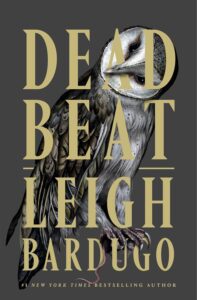 Leigh Bardugo, Dead Beat
Flatiron, September 15
As highlighted in our first half preview: Hell yes: the Alex Stern trilogy, which Bardugo began with Ninth House, will be completed this fall. I know nothing about this book, other than Bardugo promising it will be “a wild one,” but that doesn’t really matter. Personally, as an adult reader of mostly literary fiction—but one raised on fantasy—these books come close to bringing me that childhood thrill of dissolving into another universe. Which obviously I need more than ever/in this economy, etc. etc. etc. –ET
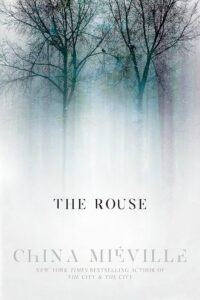 China Miéville, The Rouse
Del Rey, September 15
A titan of speculative fiction (and modern Marxism), Miéville hasn’t written a full-length novel of his own creation since the early 2010s. This one’s tightly under wraps, but it sounds like it’s a globe-hopping conspiracy thriller that takes place in our world? Except it’s probably going to be far more complex and stranger than that. It’s also 1260 pages—and those who were already excited just got even more excited. –DB
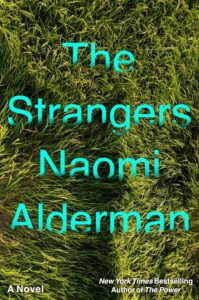 Naomi Alderman, The Strangers
Little, Brown, September 22
Because I’m leading a one-man boycott of all gender-based apocalypse/dystopic fiction, I have to admit that I skipped Alderman’s bestseller The Power. (The boycott will continue until one of those novels is normal about trans people.) With that said, I love a speculative fiction set-up that’s deceptively simple. “What if there was a new animal all of the sudden?” Great question! What if! Considering The Power’s immense popularity, I’m looking forward to reading the result of Alderman’s talents turned to themes not subject to my hyper-niche boycott. –CK
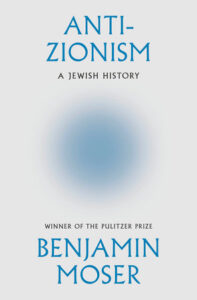 Benjamin Moser, Anti-Zionism
Doubleday, September 22
As highlighted in our first half preview: Benjamin Moser is best known as the Pulitzer Prize-winning author of Sontag: Her Life and Work and Why This World: A Biography of Clarice Lispector, but he has also been, for many years now, one of the literary world’s most fearless and insightful critics of Zionism. Anti-Zionism is a deep dive into the history of this ethnonationalist movement, and an examination of how it came to be one of the defining, divisive quandaries of the last two centuries, told through the personal stories of the Jewish figures who “resisted Zionism at the cost of social exclusion, professional banishment, and even their lives.” –DS
 Chuck Klosterman, Rock* A Mainstream Alternative History of Alternative Mainstream Music
Da Capo, September 22
Everybody knows that The Beatles’ Sgt. Pepper is the greatest and most important album of 1967—but what this book presupposes is, what if it was The Velvet Underground & Nico instead? Part alternate history, part genuine exploration of musical culture over the last 60 years, it’s the latest and most intriguing experiment yet in the burgeoning field of speculative non-fiction. –DB
 Akbar Shahid Ahmed, Crossing the Red Line: Biden, His Advisors, and Israel’s War in Gaza
W.W. Norton, September 22
The Biden Administration’s aiding and abetting of Benjamin Netanyahu’s genocidal assault on Gaza will long be a deep moral stain on the Democratic establishment; here is the deep reporting that reveals just how bad it was, as Ahmed shows again and again how Biden’s failure to act—at the advice of his inner circle—led to thousands of preventable deaths. –JD
 Paul Theroux, True North: On the Road in Canada
Mariner Books, September 22
I’ve now lived outside of Canada, the place where I was born and raised, longer than I did within its borders. Which makes me particularly susceptible to Theroux’s 21st-century version of travel writing, combining history, memoir, and ethnography, as applied to my home and native land. Tracing his 17th-century French roots back to Quebec, Theroux proceeds to travel around America’s large, polite neighbor, from the small towns of French Canada to the suburbs of Toronto and all the way to the beautiful Pacific coast. –JD
 Elvira Navarro, tr. Christina MacSweeney, Blood Is Dripping onto the Courtyard
Two Lines Press, September 22
I trust Two Lines unreservedly: they’re publishing some of the best work in translation around and with a title like Blood is Dripping onto the Courtyard, how can you go wrong? Short stories, and weird ones! –DB
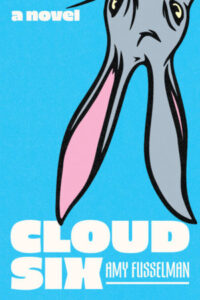 Amy Fusselman, Cloud Six
Catapult, September 22
An original and comic novel about one of the most un-comic of topics: death itself. In this impressively upbeat and hilarious novel, a couple finds that, surprise, they’ve died! Not only that, there’s more bad news. They’ve found themselves in the “lowest tier of heaven”, with a slumlord instead of God, and a skeleton bunny as their only friend and guide. This fresh and unusual premise creates the perfect backdrop for their poignant, humane, and always funny quests through the afterlife, as they try to make peace with their life and its sudden, brutal ending. We’ll laugh, we’ll cry, we’ll wish we had a bunny as our guide through life too: Cloud Six is as divine and rambunctious as the heaven depicted in its pages. –JH
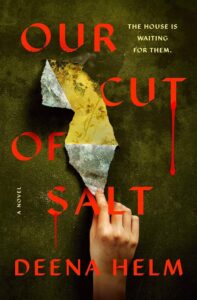 Deena Helm, Our Cut of Salt
Tor Nightfire, September 22
All this pitch needs, really, is four words: Palestinian haunted house novel. Might be my most anticipated horror novel of the fall. –DB
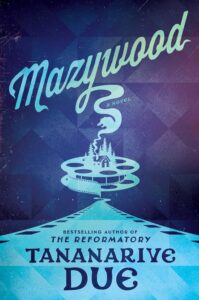 Tananarive Due, Mazywood
S&S/Saga Press, September 22
A thriller set in the mountains of California that’s also a multi-generational family story? Plus it’s sprinkled with plenty with old Hollywood glamor? Count me very, very in. Mazywood is a mountain retreat built by the Black starlet Mazelle Woods during the height of her fame in the 1940s and ‘50s. When her grandson, a filmmaker, visits the home to learn more about his grandmother’s life, he uncovers a dark secret and awakens something in the woods. Mazywood is an eerie, twisting story of ambition, grief, and rage. –MC
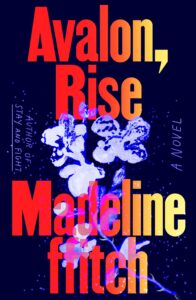 Madeline ffitch, Avalon, Rise
FSG, September 22
The Boygenius-approved author of Stay and Fight is back with another Appalachian punk banger! Avalon, Rise is a novel about a town on the edge of a local revolution, pulled between a rising socialist movement and an influx of white nationalism. Filled with eccentric characters and tangled relationships, this is a community story that invites every member of the collective to join in the telling. –MC
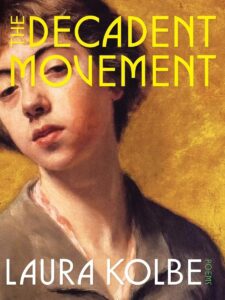 Laura Kolbe, The Decadent Movement
University of Pittsburgh Press, September 22
Laura Kolbe’s debut collection, Little Pharma, traversed the landscape of illness and care (Kolbe is also a medical doctor) with a wit, precision, and compassion that made me hungry for more. In The Decadent Movement, she plumbs the depths of motherhood: a worthy subject for her substantial talents. –JG
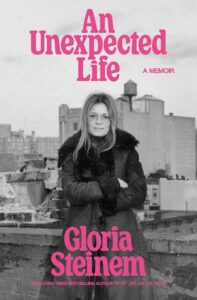 Gloria Steinem, An Unexpected Life
Random House, September 22
Whatever you think of Steinem in 2026 (her CIA connections, her second-wave blindspots in terms of race and class) you cannot deny her historical importance. Nor can you ignore the massive influence she had as the public face of American feminism, and the work she did—and risks she took—to get there. This new memoir is an open and honest accounting of that very public, and political, life. –JD
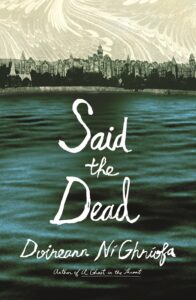 Doireann Ní Ghríofa, Said the Dead
FSG, September 22
Like her genre-bending memoir A Ghost in the Throat, Ní Ghríofa’s new book explores the history of a now-derelict Irish psychiatric hospital that is being turned into modern apartments. The book explores the lives of the patients (mostly women) who lived and died there—a place where she herself might have been sent in a different time. Through the research, imagined realities, and ever-present ghosts—anchored in part by Lucia Strangman, the first woman qualified as a psychiatrist in the British Isles, who joined the asylum—this is a ghost story and a reclamation. –EF
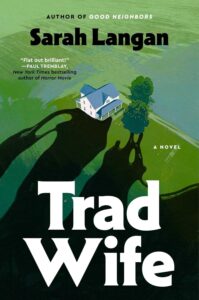 Sarah Langan, Trad Wife
Atria, September 29
Sarah Langan’s Good Neighbors was a deeply unsettling read (complimentary), which is, I think the exact energy a novel about trad wives requires. A journalist is poised to write a profile/takedown of the influencer who helms Black Swan Farm, but when she arrives on the property, she finds more to fear than terrible gender politics. I have no doubt Langan has the chops to balance horror and social commentary. –JG
 Sarah Blakely-Cartwright, Heavy Cream
Simon & Schuster, September 29
Like her debut novel Alive Sadie Celine, Blakley-Cartwright again brings readers to the world of women—how generations bond together, love each other, and break apart. In her new book, teenage Gerry is abandoned by her mother in New York and finds herself in the care of three different women—her mother’s chic college friend Bonnie; her mother’s estranged sister Nell, an ambitious and successful artist; and old-money socialite Finley. Each woman introduces Gerry to new, possible realities as she copes with questions of love, mental illness, and inheritance. –EF
 Ben Eastham, The Floating World
Astra House, September 29
I love a novel about art running into the wants of billionaires (Ryan Chapman’s The Audacity, C Pam Zhang’s Land of Milk and Honey) and this debut novel (from an art critic!) should be just the ticket, with comps to Ballard and Bioy Casares. –DB
 Douglas Smith, The City Without Jews: Life and Death in Nazi Vienna
FSG, September 29
We like to think that civilization moves in a straight line, aimed always at refinement and improvement, at the appreciation of what is good in life: art, justice, happiness. But one look back at the fall of cosmopolitan Vienna, from its cultural heyday at the end of the 19th century, when it was home to such luminaries as Gustav Mahler, Stefan Zweig, and Ludwig Wittgenstein, to the eradication of its Jewish population by the Nazis in the 1930s, and you’ll see that’s not the case. We can go backwards. Following the close accounts of a Jewish nurse named Mignon Langnas, Smith shows exactly how a people—and a civilization—can be destroyed. –JD
 Catherine Liu, Traumatized: The New Politics of Public Suffering
Verso, September 29
In her follow-up to 2021’s Virtue Hoarders, a critique of the faux-progressivism of the professional managerial class, Catherine Liu charts the rise of trauma as a “tool of social control,” which she argues is “surveillance capitalism’s greatest coup.” I’m always seated for a sharp breakdown of any of the many ways powerful people turn the masses against each other (and what we masses can do about it). –JG
 W. Jason Miller, Don’t Let Me Be Misunderstood: Nina Simone, Langston Hughes, and the Birth of Black Power
UNC Press, September 29
In something like a biography of a friendship, Hughes takes a deep, historical look at the relationship between two heavyweights of American culture, Langston Hughes and Nina Simone, and how their virtuosic moral and artistic talents were foundational to the mass-cultural power of the Civil Rights movement. (It should come as no surprise that the term “Black Power” derives from their collaborations.) –JD
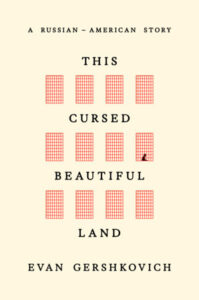 Evan Gershkovich, This Cursed Beautiful Land
Crown, September 29
There was a time when we were seeing Evan Gershkovich’s name and visage almost daily: the grueling, horrific 491 days that the Wall Street Journal reporter was held imprisoned in Russia. There was a stoicism, always, in his demeanor behind glass in the Russian courtroom: one could almost hear the whirring of his journalist’s brain committing it all to memory to lay it all out at a later date. That day has arrived at last, as he releases his memoir about the year he spent in the Russian prison system, as well as his days in Moscow for the years preceding his arrest. Written with empathy and care for the Russian people as well as a sharp critique of the governments that have wreaked havoc on the country, This Cursed Beautiful Land is sure to be one of the most celebrated nonfiction releases of the fall. –JH
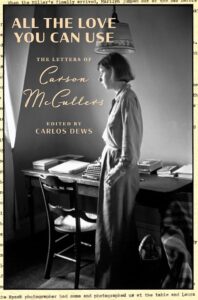 Carson McCullers, ed. Carlos Dews, All the Love You Can Use: The Letters of Carson McCullers
Mariner Books, September 29
I love stories by Carson McCullers, her characters and creations, but something I love even more than those fictionalized narratives, is reading about McCullers herself. She was a true writer, capital W, no other life available than the one she created for herself. As she said once, after remarking that she was fired from every other job she ever had: “I had a perfect record.” She was wry and tortured and obsessed with creation, she was queer, an alcoholic, a woman living outside of her times. For all these reasons, I can’t wait for the release of her letters: to experience the direct rough-and-tumble quality of her writing, witness her friendships, her love affairs, her struggles and triumphs. There’s nothing quite like the potent rawness of a letter, and here we get a whole kaleidoscope trove of them. –JH
 Mahmoud Khalil, No Land to Stand On: Notes from Detention
Metropolitan Books, September 29
It’s a name I wish we didn’t have to know so distinctly: Mahmoud Khalil doesn’t deserve the ire and fixation the government has leveled at him, and the ensuing, relentless media coverage. At the very, very least, he has managed to have his voice heard through the racist, Zionist din: Khalil has always presented himself as an eloquent and empathetic activist, a man with a mission and a message for his fellow young people, immigrants, and Americans. The ICE detention and deportation orders he’s faced have been clearcut cases of a movement against dissent, and his forthcoming memoir, No Land to Stand On, promises to elucidate and inspire those who refuse to accept our current government’s hateful stringency. –JH
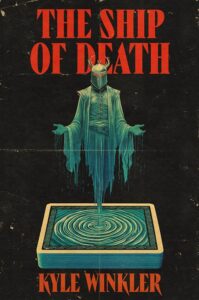 Kyle Winkler, The Ship of Death
Avon a, September 29
I’ve been reading Kyle Winkler since his dinosaur-cosmic-horror novel The Nothing That Is and I’m so stoked to see him jump to a major press—and the book itself sounds like a total blast: mixed-media/found-document horror about a cursed tabletop game?! And just in time for spooky season! –DB
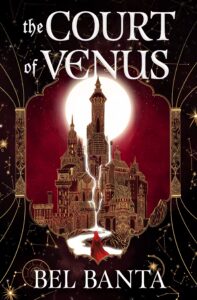 Bel Banta, The Court of Venus
Tor Books, September 29
I loved Banta’s Honey but I love even more that she’s following it up by writing (by her own admission) the fantasy novel she’s always truly wanted to write. Those who aren’t romantasy people, don’t be fooled: this is a truly great palace intrigue novel, sure to delight anybody who loves divination fantasy and Tudor-esque drama. –DB
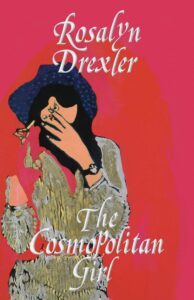 Rosalyn Drexler, The Cosmopolitan Girl
Hagfish, September 29
The latest reissue from Hagfish is their second Rosalyn Drexler and I truly cannot wait to read this. A woman pretends her dog is a man in order to keep him in her apartment… only for them to fall in love. It sounds like a Mrs. Caliban sort of situation, except that this book predates the Ingalls by nearly a decade. I’m expecting wild things. –DB
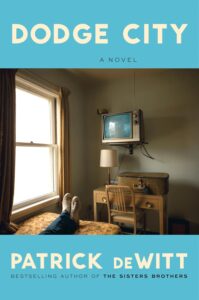 Patrick deWitt, Dodge City
Ecco, September 29
I’m a proud Patrick deWitt superfan and have been ever since that iconic Sisters Brothers cover caught my eye in a Dublin bookstore fifteen years ago. deWitt’s latest is 1960s-set road trip novel about young Los Angeleno Lee Clarke, recently expelled from college, who lights out for Canada to escape the Vietnam draft. With nothing in his possession but a single suitcase and a bag of amphetamines, Clarke endeavors to pay one last visit to each of his four wayward family members before fleeing across the border. –DS
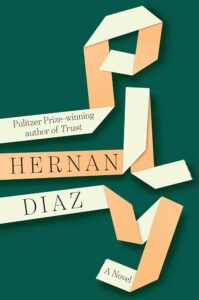 Hernan Diaz, Ply
Riverhead, September 29
The latest novel from the Pulitzer Prize-winning author of Trust and In the Distance promises to be a big, ambitious novel about technology, music, and quantum physics. Ply takes us centuries into the future, where a young woman makes her living as a “pincher,” stealing and selling electricity. But someone is paying too much attention to her… –ET
 Anand Giridharadas, Man in the Mirror: Hope, Struggle, and Belonging in an American City
Knopf, September 29
Some tragedies are larger than the lives contained within them, as we discover in the case of Jordan Neely and Daniel Penny. In case you’ve forgotten, Penny, an ex-Marine recently moved to New York City, choked Neely to death on a New York City subway car in 2023 when the former, an erstwhile street performer, was behaving erratically (some say dangerously) and could not be restrained. Giridharadas’s deeply researched and reported book sheds new light on the case itself while also examining what it reveals about the politics of fear at the heart of contemporary American society. –JD
 Bobby Finger and Lindsay Weber, I Want to Be Famous
Crown, September 29
As the Lit Hub staff’s premier Wholigan, I am potentially biased in my anticipation for this book, in which Finger and Weber, longtime hosts of the excellent podcast Who? Weekly (tagline: “Everything you need to know abou the celebrities you don’t”) unpack the shifting parameters of celebrity in These Times. Well, is good taste—or bad taste for that matter—bias? (Maybe these two could answer that.) Either way, this good-taste-having-person can tell you with certainty that this book will be guaranteed fun for anyone who cares about pop culture even a little bit. Crunch crunch! –ET
 Emily Ogden, Darkness Becomes Bright: On the Brief Life and Immortal Art of Edgar Allan Poe
Viking, September 29
Why do we still love Edgar Allen Poe? Ogden, who taught an introductory course on the macabre poet and novelist at the same university where he himself was once a student, interweaves stories from Poe’s mysterious and tragic life (tortured romances, opium) with those of his most famous readers and translators. –EF
 Ayad Akhtar, The Radiance
S&S/Summit Books, September 29
It’s been six years since Ayad Akhtar’s Homeland Elegies, the New York Times bestselling novel about an immigrant’s experience in a post-Trump American, and Akhtar has returned with another piercing look at the culture that surrounds us. The Radiance is set on a campus: after a professor experiences a life-altering car accident, his perception of truth and experience shifts, along with his relationship towards his subject, students, and one colleague in particular. While Homeland Elegies captured the post-2016 political tornado, The Radiance aims to puncture the campus-war, post-MeToo climate. There’s no one I’d trust to do it as much as Akhtar. –JH
 Deesha Philyaw, The True Confessions of First Lady Freeman
Mariner, September 29
This debut novel sits next to Nafissa Thomson-Spires’s on a shelf I have called “The Way I’ve Been Waiting For This Book!” Philyaw, the author of 2020’s excellent collection, The Secret Lives of Church Ladies, here unleashes her insight and ear for dialogue on the wife of a megalomaniacal pastor. Scharisse Freeman, our dubious hero, leads a business empire and runs her husband’s religious ship—but when a scandal threatens her perfect legacy, all hell breaks loose.
I signed a pledge long ago to read everything Philyaw puts on paper. And a good thing, too; this novel looks terribly funny. –BA
 Delio Vasquez, Huey P. Newton: I Am We
Polity, September 29
An intellectual history of the co-founder of the Black Panther Party who left behind dozens of unpublished manuscripts—analyzing politics, feminist thought, education, philosophy, evolutionary biology, and theology—upon his assassination in 1989. Vasquez draws on these texts to expand our understanding of a revolutionary whose legacy and legend has been flattened and distorted in the decades since his murder. –DS
 Min Jin Lee, American Hagwon
Cardinal, September 29
Lee’s latest epic follows the Kohs, an upwardly mobile Korean family whose lives are upended by the IMF crisis of 1997. We zing from Seoul to Sydney to SoCal over eleven subsequent years, honing in on the family’s three children. An animating question: will the family regain their economic footing, and in the process redeem their governing faith in education and hard work? Or will that dream prove fallible in America?
Lee’s bestselling Pachinko really took my breath away. But this contemporary novel, her latest entry in a promised quartet about the Korean diaspora, appeals for its smaller aperture. I’m so excited to see how this masterful systems novelist traces epigenetic pain and power through just a few generations. –BA
OCTOBER
***
 David Treuer, The Savage Mind: An American Legacy
Little, Brown, October 6
Following up on The Heartbeat of Wounded Knee, his incredible, far-ranging history of this country’s treatment of Indigenous First Nations, Treuer’s latest is a personal and historical exploration of America’s tradition of frontier violence, that bloody legacy of settler-colonialism that continues to manifest in the 21st century, from the streets of Minneapolis to the tent cities of Gaza. –JD
 Kawai Strong Washburn, The Names of the New World
MCD, October 6
I loved Washburn’s debut novel Sharks in the Time of Saviors for its stirring evocations of Native Hawaiian myth. This time, we’re in Minneapolis, where a mythically large, climate-induced superstorm brings together Hawaiian-born lawyer Naomi, MMA fighter Amaré, investment banker Raheem, and a blue-collar mechanic who’s been injured in the storm. From D.C., where policy can be made, to the Pacific Islands, which faces the most immediate threat from ignoring our climate reality, Washburn writes a story of “ambition, migration, family, and survival in modern America.” –EF
 Adam Wilson, Fail Sons
Soho Press, October 6
Scott and Nick must retrieve their father’s body from the soon-to-be-shuttered Cryo Center, where it has been frozen since the nineties. But the brothers aren’t exactly on the best of terms, and Scott is pretty focused on his wife, who’s about to go into labor, and wearing his KN95 mask as they pilot the U-Haul through every red state in America. Wilson always knows how to frame satire and grief, the high and the low, and this 21st-century version of As I Lay Dying promises to be both clever and heartfelt. –EF
 Imbolo Mbue, Every Story is a Love Story
Random House, October 6
Three years after Wolo’s pregnant wife is killed in a car accident, he recieves a letter from the woman who was behind the wheel of the other car—the woman who killed his wife and changed his life forever. His family wants him to ignore it, but he can’t help himself; he agrees to meet with her. The latest from the author of Behold the Dreamers promises to be a complicated, moving novel about the nature of grief, and of love. –ET
 Lydia Millet, Fair Ones: A Double Novel
W.W. Norton, October 6
Millet’s latest novel Fair Ones is in fact two novels: Fair, in which Mara and her friend Jen reel in the immediate aftermath of the death of a close friend, and Ones, in which Jen and her friend Mara continue to wrestle with it a year later. Millet’s a weird, wry genius; can’t wait to read. –ET
 Annie Ernaux, tr. Alison L. Strayer, Hotel Casanove: And Other Brief Texts
Seven Stories Press, October 6
Sometimes a book comes into existence because the mind behind it is unique in their perspective, intellect, and ability to give voice to both. Ernaux’s forthcoming Hotel Casanove promises to be the kind of book you pick up during an idle moment at a friend’s house or bookstore, read a few pages of it, and realize you have to finish the whole thing—not because of a propulsive plot, but because you feel like you’ve just introduced to a smart, interesting friend, and you want to hear the rest of what they have to say. Plus, I always enjoy a collection of stories and nonfiction that hang together without a unifying theme; would that more writers could publish their best work and trust readers to parse it themselves. –CK
 Barbara Kingsolver, Partita
Harper, October 6
Kingsolver’s post-Pulitzer novel sounds right in her wheelhouse: a woman gets a request from a former lover, asking to meet, and the call (not to mention the question of whether or not she’ll say yes) throws her back into her past as a concert pianist. Beauty is guaranteed. –DB
 T. Geronimo Johnson, The Occidental Book of the Dead
William Morrow, October 6
The name alone thrills me, but I think this could be one of the big conversation books of the year, about a Black cop in Atlanta whose “façade of white alliance” falls apart in the late 90s and early 00s. Johnson’s first, Welcome to Braggsville, got plenty of comps to Paul Beatty and Percival Everett—but I think this one will plant Johnson firmly in their company. –DB
 Rioghnach Robinson, Bad Words
St. Martin’s Press, October 6
This romance novel is already causing quite a bit of chatter in the literary world, not least because it happens to be about the literary world (yes, thank you, Lit Hub is mentioned): things kick off when a disgruntled author confronts the critic he believes has ruined his career (at Cipriani, no less)—and someone catches it on video. Cue the firestorm (and some uncomfortably close-to-home subplotting about the Death of Literary Media). Luckily, they’re both good looking, which rather takes the edge off. –ET
 Tom McCarthy, The Rhyl Poster
New York Review Books, October 6
I love Tom McCarthy’s weird, glitchy brain (ask me about Remainder sometime), and will read pretty much anything by him. But I am particularly curious about his latest novel, a political thriller described by its publisher as “a hallucinatory landscape in which the literary descendant of Dostoevsky’s Raskolnikov and Conrad’s Razumov is cast adrift in the gamespace of Grand Theft Auto, the spirit of Kafka’s Franz or K. amidst the environs of Bad Lieutenant.” Can’t miss that. –ET
 Stephen King & Peter Straub, Other Worlds Than These
Scribner, October 6
The fact that King and Straub not only wrote one novel together (The Talisman) but came back together years later to deliver the equally thrilling Black House is astounding. Even more astounding: their long-rumored third collaboration is here, despite Straub having passed in 2022. Word on the street is that it is fully a return to Mid-World, the universe of King’s titanic Dark Tower sequence, for perhaps the last time. I am so very seated. –DB
 Brenda Iijima, Shelter is Necessary for Existence
Two Dollar Radio, October 6
I would’ve looked forward to this release even if I hadn’t recently caught a screening of Do The Right Thing, but following that up with a satire focused on the gentrification of Brooklyn, and the social unrest those changes cause feels thematically appropriate. That the brownstone at the center of the novel is itself haunted—both metaphorically and literally—should make this an excellent read when it’s out this October. –CK
 Cassandra Khaw, Find Me Where It Ends
Tor Nightfire, October 6
You might be familiar with the black dog from folklore, or from Churchill’s coining of it as a metaphor for depression—maybe you have your own black dog haunting your days. I know I do. So what do you do when they show up at the door, waiting to take you away? Life is a choice, one we must make consciously, and we can trust Cass Khaw to deliver an elegy for just how hard—and necessary—that choice can be. –DB
 Patricia Lockwood, Agate Head/Stone Soup
Penguin Books, October 6
Ring the bell! It’s Patricia Lockwood’s first new collection of poetry in over a decade—and I cannot wait for all the people who’ve gotten into her other writing (fiction, essay, memoir, tweet) to discover the joys (and sucker-punches) of her verse. –DB
 Jasper Fforde, Dark Reading Matter
Soho Press, October 6
It has been almost fifteen years since we last saw Thursday Next! I’ve loved Fforde’s alternate England (pet dodos, an ongoing Crimean War, the ability to jump into books and travel to a world populated entirely by literary characters) since I was a teenager and can avow: if you’re a reader of this website and like British humor, this series is for you. Pick up The Eyre Affair as soon as you read this, so you’ll be done with book 7 by October. –DB
 Barbara Trapido, Brother of the More Famous Jack
NYRB Classics, October 6
Brother of the More Famous Jack could be the book I recommended most often last year. It’s one of those magic finds, a happy curse. A bookseller at Three Lives pressed it onto me, infecting me with the mission to press it on to others. Now the fine folks at NYBR have taken up the cause—and given her a hip new cover.
Following a young woman who falls into mid-century bohemia’s lap thanks to a charismatic professor and his charismatic family, this gem captures a quick-witted woman’s coming-of-age. For fans of Helen Garner, Deborah Levy, Tessa Hadley, maybe Susie Boyt—all the brilliant bards of chosen mid-century squalor, in thrall to the erotic intellect. –BA
 Nathaniel Philbrick, The Rush: California Gold, the Civil War, and the Making of the Modern World
Viking, October 6
As someone who grew up in Alaska, I’ve always been very interested in the Gold Rush—which means I’m really looking forward to this decisive history of the California Gold Rush. Philbrick explores this foundational event in great detail, exploring the myriad ways in which America was changed by gold fever. From antebellum political tensions to labor disputes to stolen land, The Rush is a book that recharts a trigger point in American history. –MC
 Franny Choi, We Radiant Things: Notes on Being Alien and Becoming Cyborg
Ecco, October 6
The debut essay collection from celebrated poet Franny Choi is full of cyborgs. Choi looks at the film Ex-Machina and the Japanese maid/robot Kyoko, unpacking what these stories about beautiful and obedient representations of Asian women in sci-fi reveal about “race, gender, sexuality, disability, labor, technology, and language.” –EF
 Tracy Daugherty, Cormac McCarthy: A Legacy Revisited
St. Martin’s Press, October 6
Having already won a Pulitzer for his biography of that other great chronicler of the American west, Larry McMurtry (who is grossly underrated as a “literary” writer, whatever that means, exactly), Daugherty, who’s also written about luminaries like Donald Barthelme and Joan Didion, is one of our best literary biographers. So why not tackle the one of our best writers, a man whose life of hardscrabble literary devotion mirrors some of the tougher characters in his novels? –JD
 Luiz Schwarcz, tr. Alison Entrekin, The First Reader: On Writers and Editors
Penguin Press, October 6
I love talking about the collaborative nature of writing. People think it’s such a solitary act, but (much like everything else) it really does take a village! The First Reader offers a special insight into the relationship between writers and editors from celebrated literary publisher Luiz Schwarcz, founder of Brazil’s Companhia das Letras. Schwarcz’s book promises to be an insightful, inspiring, and unique look at the nature of creative collaboration. –MC
 Eric C. So, The Collision: What AI Does to Us
W.W. Norton, October 6
It is hard at this point to find an industry untouched by AI (we here at Lit Hub are, so far, relatively lucky in our freedom to not use it, intentionally at least). In a dizzyingly rapid timeframe a majority of Americans have taken up the daily use of AI; and a majority of them are doing so in a completely passive, unthinking way. For So, a professor of global economics and behavioral science, this is bad, very bad. But rather than preaching abstinence, which is impossible for just about any white collar worker, So suggests we learn how to “reinvest the cognitive surplus” AI creates, rather than letting our brains turn to slop. (I am personally sticking with abstinence, though, thank you.) –JD
 David Byrne, Sleeping Beauties: Why Good Ideas Go Dormant and How They Wake Up
Penguin Press, October 6
David Byrne (yes, exactly) explores the phenomenon of stalled innovation across disciplines, from technology to art. A fascinating premise on its own, but the real draw here is getting inside the mind of one of our most curious and creative contemporary artists. –JG
 Laura Fernández, tr. Alexis Almeida, There’s a Monster in the Lake: The World as a Fantastical Place
Graywolf, October 6
As Lit Hub’s resident monster expert, it’s my duty to put this book on your radar. Fernández’s book-length essay explores the many lives of the Loch Ness monster. Fernández travels to Scotland to meet the monster at the source. While there, she considers the meaning of monsters in pop culture, literature, and history. There’s a Monster in the Lake is a playful investigation into the human imagination, full of tenderness and wonder. –MC
 Jonathan Silvertown, Nature’s Magicians: How Leaves Conjure Up Our World
Scribner, October 6
Did you know that more water is transpired through the planet’s leaves than flows in all its streams and rivers? Yes, leaves are a kind of magic—as Silvertown, an evolutionary biologist tells us—responsible for what we eat and the air we breathe. Oh, and they’re also “a solar panel, rainmaker, lunch box, chemistry set, shapeshifter, soil maker, and geometric designer.” It’s past time leaves got their due. –JD
 Murray Hill, Showbiz! My Life as a Middle-Aged Man
Gallery Books, October 6
Murray Hill is a fixture of New York cabaret-comedy nightlife scene (triangulated to Joe’s Pub), and starred on one of the funniest and tenderest shows in recent memory, Somebody Somewhere, so I have no doubt he has lived a life full of memoir-worthy anecdotes. If you’re a sucker for an unconventional career path story told with the charm of a showman, this one’s for you. –JG
 Sarah Perry, Death of an Ordinary Man
Mariner Books, October 6
Sometimes everything is fine until suddenly it isn’t. One day you see a loved one, and a few weeks later, he’s dying. There’s a specific type of grief that comes with watching death come so abruptly, and Perry explores it in real time. –OS
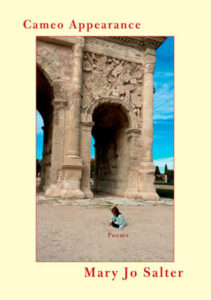 Mary Jo Salter, Cameo Appearance
Knopf, October 6
Salter, one of our great recorders of life’s details, small and beautiful and imperfect though they may be, returns here with her ninth poetry collection. As ever, she brings her signature mix of profundity and humor to these poems, some brief and lyric, others long and narrative-driven. May she publish nine more collections. –JD
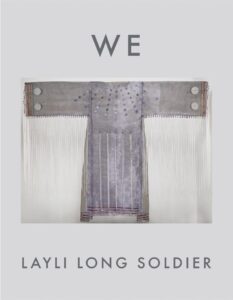 Layli Long Soldier, We
Graywolf, October 6
I plan to celebrate America’s 250th birthday by re-reading Long Soldier’s Whereas…, perhaps the great poetic excoriation and interrogation of this country’s fundamentally violent and oppressive spirit—but I’m even more excited to read this new collection, which focuses on community. “A war of language,” she promises, and that’s exactly what we need. –DB
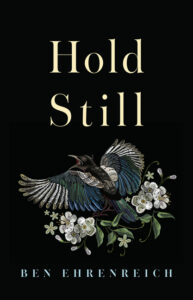 Ben Ehrenreich, Hold Still
City Lights, October 13
After his mother—the celebrated writer and activist Barbara Ehrenreich—died in 2022, Ben Ehrenreich set a goal to deal with his grief: he would write a story every day. This project forms the basis of this book, part short fiction, part memoir, about dealing with the loss of a parent while becoming one yourself. –ET
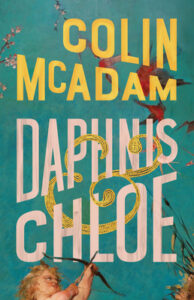 Colin McAdam, Daphnis & Chloe
Biblioasis, October 13
A retelling, perhaps, of the titular myth—but spun through a modern Kelly-Link-sounding lens. Bring me myth, bring me love, bring me beauty! Plus, it has a Max Porter stamp of approval. –DB
 Julie Orringer, Luna, Phoenix, Queen
Knopf, October 13
Orringer’s multi-perspective story of marital and artistic betrayal across decades features academics, a stolen manuscript, and a dog—all elements of a perfect novel. Dava and Barr are married professors, but Dava is in love with Svetlana, the Russian Studies professor, and spends her evenings writing a novel about two women in love. After her devastating diagnosis, Barr, alone in the house, finds her manuscriypt and suspects his wife’s affair as described in the novel. He, in turn, rewrites her novel and publishes it as his own to wide acclaim. It’s a stori with reverberations from a writer everyone should read. –EF
 Bonnie Garmus, Peck & Peck
Scribner, October 13
Lessons in Chemistry remains one of the most common books I witness people reading in public spaces, even four years after it was released. I take that to mean that the people love a zingy, feminist historical novel, but that they are also hungry for another Bonnie Garmus hit. Thankfully Peck & Peck is here to feed those gaping mouths. This time, the book is set in New York City in a current day landscape, revolving around a young man working to find himself. Batter Gray is a misfit who’s never quite known his true path, and finds himself where so many like-minded people before him have: working in publishing. As the myriad hardships of his life swirl around him, the fact of his brother’s death, and his careening doubt about his existence in the world, the poetry that he publishes through his company, Peck & Peck, remind him of the meaning that can always be found in darkness. With the trappings of the literary world, and the heart of a bildungsroman, Peck & Peck vows to fill the void in all our hearts with a needed dash of wit and poignancy. –JH
 Bonnie Jo Campbell, The Spirits
W.W. Norton, October 13
In Bonnie Jo Campbell’s own words, she set out to write a happy book. So she began writing a sweet little book about Christmas, but, unfortunately, it was all quite out of her hands, she found that the daughter in her story had murdered her own father. What to do next? In this retelling of the Christmas Carol, Campbell has orchestrated a symphony of human personality and inter-family dynamics that strike the heart with their realism, their dread, and their eventual hard-won resolution and salvation. It all comes to a head at a dreaded Christmas dinner, where the daughter and her family members must come to terms with the histories they’ve absorbed and the futures they’ve wrought. Campbell manages to find a way to make this story both things: hard and brutal, and yet with a gleam of salvation in its linings. –JH
 Will Maclean, Solace House
Grove Press, October 13
Haunted houses are one of my favorite literary subjects, and Solace House promises to be a very cool entry in the haunted house genre. In 1993 a group of college students is cleaning out a dilapidated Victorian mansion. But when the students find the previous owner’s journals, they learn that there was more going on in the house than they previously believed. An eerie gothic tale of obsession and other realms, Solace House sounds like the perfect book to start your autumn reading off right. –MC
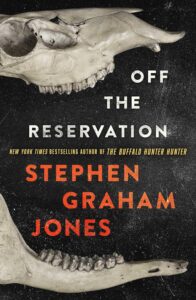 Stephen Graham Jones, Off the Reservation
S&S/Saga Press, October 13
Hot off his Stoker and Nebula wins for The Buffalo Hunter Hunter, the modern king of horror returns to the characters and location of his breakout hit The Only Good Indians. This time, an attempt at repatriating the bones of a child from the notorious (and real!) Carlisle Indian Industrial School brings something horrible to a Blackfeet reservation in Montana. –DB
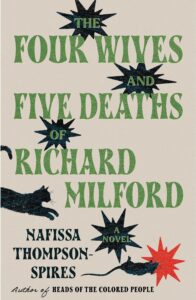 Nafissa Thompson-Spires, The Four Wives and Five Deaths of Richard Milford
Scribner, October 13
This is another novel I’ve been jonesing for, basically ever since I set down Thomson-Spires’ debut story collection in 2019. Heads of the Colored People is easily one of my favorite reads of the last decade. So it’s no small treat to bask again in the author’s powerfully witty sensibility.
This novel plops us into a Black Oklahoma township at the tail end of reconstruction, where a tyrannical farmer has been found dead—possibly thanks to his coven of four disgruntled wives. With a rotating cast of saucy narrators and a finely wrought sense of place, the mythic-tinged setting calls up Toni Morrison or Brit Bennett in places, but via a razor-sharp voice all its own. –BA
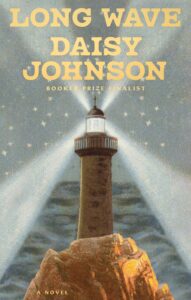 Daisy Johnson, Long Wave
Riverhead, October 13
A girl named Ori is found abandoned on an island. She’s too young to remember who left her, and why, but she will wonder, always. When Ori has her own child, that wondering turns into something else entirely: through her sleeplessness, her panic, her questioning of her roots, she begins to travel in her mind, back to that original island where she was abandoned by her mother. She has visions of her mother, visions of her grandmother, of the layered and devastating heritage that has coursed through her and into her own offspring. She wonders if she will be able to break the spell that winds its way through mother and daughter. Primordial and powerful, Long Wave is a spellbinding journey through the depths of motherhood. –JH
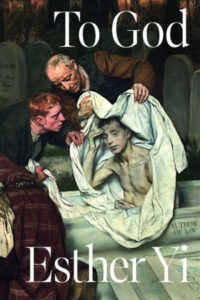 Esther Yi, To God
Astra House, October 13
Esther Yi’s much-feted debut novel about the universal longing for transcendence took up fan-fiction and celebrity culture with a Kafkaesque spirit that turned out to be uniquely suited to these unhinged subjects. Her follow-up is similarly interested in the bonkers contradictions inherent to modern life, and her ear for the odd is still (and happily) just plain…bonkers.
The absurd, philosophical stories in this collection are set against a backdrop of urban decay. From this electric and original new voice, we can expect missives from a marionette city, a condor commune, and a horny boxer. –BA
 Yiyun Li, Music Against the Night
FSG, October 13
Pulitzer prize-winner Li’s new novel starts in 18th-century Dublin. John Field could be the next Mozart. Meanwhile in Pondicherry, Adelaide Percheron’s only hope of escaping her un-aristocratic life is the pianoforte. The novel follows these two aspiring musicians, who are destined wed, in a story featuring “rival prodigies, irate tutors, begrudging guardians, and the true-to-life masters of the trade,” and along the way explores what it means to live a life fueled by art. Li’s historical fiction is especially vivid, emotionally stirring, and a must read. –EF
 Brian Evenson, Phantom Limb
Coffee House Press, October 13
Last Days is one of the best novels of the century so far, a perfect noir-horror—and now, quite unexpectedly, Evenson returns to his hardboiled detective Kline and the strange mutilation cult he thought he’d finished off. But there has been… another schism and nothing is quite what he’d believed. What ensues is even stranger than what came before, and very very Evenson. –DB
 Hermione Lee, Anita Brookner: Art and Life
Knopf, October 13
Dame Hermione Lee is sort of the biography wizard, at least where continental literary citizens are concerned. I adored her close reads of Tom Stoppard and Edith Wharton, and have designs on her Virginia Woolf doorstop. (Someday!) But first, let me pause to geek out about this upcoming Anita Brookner bio. The famously private novelist and art historian behind three of my favorite novels didn’t leave a lot of personal material behind after her death in 2016. But with Dame H on the case, a fresh portrait of the artist—origin story and all—is in the offing. I’m glad for the excuse to revisit two incredible writers for the price of one. –BA
 Wendy S. Walters, A Dead White: An Argument Against White Paint
Scribner, October 13
I loved Walters’s last essay collection, Multiply/Divide (published in 2015, in what seems like a truly different era) and said as much at the time, marveling at her “mode of impressionistic observation that can be both broadly political and deeply personal.” So I am eager to read A Dead White, in which one of our best essayists sets her keen eye to the seeping ubiquity of white paint, from art and architecture to politics and pop culture… What does its constant coloring (or uncoloring) of our lives say about how we see ourselves (or don’t, as the case may be). –JD
 Shawn Gude, American Socialist: The Life and Legacy of Eugene V. Debs
Simon & Schuster, October 13
Socialism is back, baby, and it’s sweeping the nation. A recent Gallop poll found that Democratic voters favor socialism over capitalism 66% to 42%, and DSA candidates just stormed to victory up and down New York City. But before Zohran crushed Cuomo, before AOC ascended, before Bernie ran in Burlington, the godfather of US socialism, Eugene V. Debs was showing Americans that a better world is possible. The man who was handed down a decade-long prison sentence for opposing WWI, and who then received almost one million votes for president from behind bars, deserves a magisterial biography, and Gude’s book certainly looks like one. –DS
 Enda O’Doherty, The Dark Side of France: The History of the French Far Right from the 1890s to the Present
Liveright, October 13
You don’t actually have to dig that deep to reveal the toxic roots of fascism and xenophobia in France: from the antisemitism of the Dreyfus Affair and the fascism of Vichy collaborators, onward to the white nationalism of the Le Pen family and the widespread Islamophobia of the nation’s institutions. O’Doherty mines this grim history showing how quickly “France for the French” can turn into the worst kind of hateful politics. –JD
 Lauren Michele Jackson, Back: Essays on the Soul and Spine of America
Amistad, October 13
My interest in Lauren Michele Jackson’s brain verges on the parasocial. Every time I see her byline in The New Yorker, where this audacious critic is on staff, I have to stop what I’m doing and go worship for a few grafs. (See also: the Letterboxd reviews; always a pleasure or provocation.)
A Northwestern professor, Jackson’s musings on everything from cultural appropriation to the end of humor tend to scan as rowdy/intellectual. She’s a voicey critic with a mind of her own in an era when this figure is tragically endangered. Her latest collection takes the human back as synecdoche for a suite of subjects, ranging from America’s bodybuilding obsession to Gone With the Wind. Call me seated. –BA
 Natasha Lennard, On Un/Certainty: The Uses of Doubt in Dangerous Times
Verso, October 13
Lennard, a public intellectual and critic who teaches at the New School and writes an excellent column for The Intercept, returns with a sophomore essay collection. On Un/Certainty seeks to name and so unseat “pernicious certainty in action,” and call for a different paradigm around the “truths” we take for granted–specifically as they pertain to what pundits are calling the “polycrisis.”
To abet this rangy exploration, Lennard enlists dead philosophers like Wittgenstein, and alive sociologists like Melinda Cooper. But if I’m making the book sound dry, I’ve failed. Lennard’s got a knack for making the heady feel approachable, even to a layperson. This promises to be a most topical intervention for the thinking human. (Bonus: it’s slim enough to take on the subway.) –BA
 Richard Cooke, The Last Best Place on the Internet: A Human History of Wikipedia
W.W. Norton, October 13
I’m old enough to remember when Wikipedia was decried as an untrustworthy and corrupting outlet of misinformation… Oh how the internet has changed (for the worse). As outlined in Cooke’s lively history of the first digitally crowd-sourced encyclopedia, Wikipedia has evolved into a vital bulwark against the AI-powered bots of the online hellscape, relying on legions of dedicated editors to sift through fact, fiction, rumor, and speculation, creating the largest repository of human knowledge in the history of the world. Let’s just hope it can survive… –JD
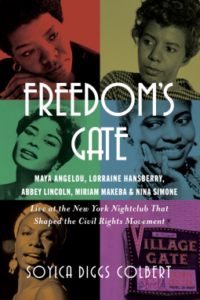 Soyica Diggs Colbert, Freedom’s Gate: Maya Angelou, Lorraine Hansberry, Abbey Lincoln, Miriam Makeba, and Nina Simone Live at the New York Nightclub that Shaped the Civil Rights Movement
W.W. Norton, October 13
If you’ve ever heard a single Nina Simone song, you already understand why learning about her early days as a performer is compelling. But to find out that all of these luminaries developed their craft alongside one another feels more like the stuff of fanfiction than a civil rights history; how fortunate for all of us that it actually happened. –CK
 Ghassan Kanafani, Palestinian Resistance Literature Under Occupation, 1948-1968
Verso, October 13
Ghassan Kanafani was a Palestinian resistance writer and revolutionary politician who produced some of the Arab world’s most celebrated works of fiction before he was assassinated by Mossad in 1972. In this seminal extended essay, published in English for the first time, Kanafani expands on his theory of literature as an act of resistance and gives a powerful account of life under Israeli occupation. –DS
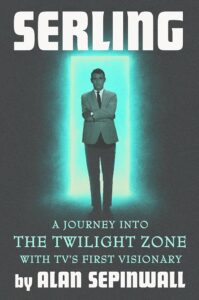 Alan Sepinwall, Serling: A Journey into The Twilight Zone with TV’s First Visionary
Grand Central Publishing, October 13
Serling was a professor at my alma mater long before I was a student there, but his presence still loomed large roughly a half-century after he last graced the premises. So monumental was his cultural impact that, decades later, a college where he once briefly taught was still bragging about having employed him. The original Twilight Zone is probably the oldest TV show that still feels somewhat modern; try watching any other programming from the same time period to see how stark the contrast is. And though the Twilight Zone has been endlessly aped and remade over the years, Serling himself is somewhat less well-chronicled than his counterpart in groundbreaking genre television, Gene Roddenberry. If it’s surprising that it took this long for a “definitive” biography to be written, I expect the wait will be well worth it. –CK
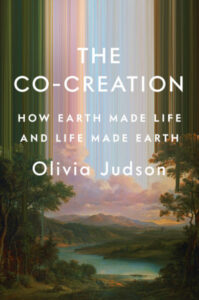 Olivia Judson, The Co-Creation: How Earth Made Life and Life Made Earth
Penguin Press, October 13
With a title destined to enrage America’s good Christians, Judson’s fascinating natural history of the world—and all the life on it—suggests that Earth’s many lifeforms have had a reciprocal impact on the evolution of the planet: insofar as it seems miraculous that the conditions for life manifested on Earth, the resulting lifeforms themselves have in turn changed the very planet that brought them into existence. Divided into historical eras of rock, light, oxygen, flesh, and fire, Judson’s hypothesis offers a new way of thinking about how we got here, what came before, and why the incredible ecosystems that sustain us are so very important. –JD
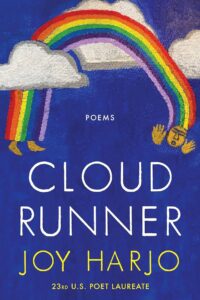 Joy Harjo, Cloud Runner
W.W. Norton October 13
Joy Harjo, one of our great writers and poets, lost her daughter to cancer in 2023. This collection, though it covers a wide range of topics and themes, is a tender and heartbreaking example of how art can help us process grief, that we might at least move forward and carry it with us. From the title poem:
I am Cloud Runner, you whispered, as I rinsed dishes and looked
out the window, the sun flaring dusky gold through our story. I
dried my hands and went outside to read the clouds.
Remember me in my children and their children, you sang.
Remember me in poetry.
Remember me when it rains, when the plants rise up in
green to drink.
Remember me in butterflies.
And then, you were gone. –JD
 Rachel A. Shelden, The Political Supreme Court: A Forgotten History
UNC Press, October 20
Given the recent actions of the Supreme Court and the possibility that issues like court packing gain more steam in the near future of American politics, this forthcoming history of the Court is especially timely. The facts implied in the title of the book—that the Court and its justices were previously openly political, and the increasingly-thin patina of neutrality was introduced in the 20th century—were new to me, which makes for a promising read. –CK
 Zaina Arafat, Our Arab: On Longing, Belonging, and Hope
Little, Brown, October 20
The author of You Exist Too Much turns her keen eye to the essay in this heart-forward collection, which seeks to diagram a diasporic Palestinian experience up to and during the ongoing genocide. Taking up the question of what it means to be witness, survivor, and victim all at once, these personal essays are frank, earnest, and often wrenching. Certain contributions, like “Angry American Woman” and “Witnessing Gaza Through My Instagram Feed,” hold the moment’s contradictions in a welcome cauldron of rage and nuance. –BA
 Helen Betya Rubinstein, Feels Like Trouble: Provocations on Writing, Teaching & Power
University of New Orleans Press, October 20
I think writing on writing works best when it forces you to question the methods writers as a group commonly accept as process. In short, I want the kind of discourse we would have included on our What Was Literary Twitter Bracket, especially when the cover design is so slick. –OS
 Thaddeus Russell, Savior and Seducer: A Renegade History of the United States in the World
Atlantic Monthly Press, October 20
The never boring Thaddeus Russell, best known for A Renegade History of the United States, is back with a sweeping and provocative account of American Empire, arguing that the export of American culture—the good, the bad, the weird—has had more global impact on human freedom than any of the nation’s overtly imperial designs. For Russell, it is the destabilizing and subversive power of US pop culture that makes and unmakes nations, not the unrivaled power of its massive military. (I don’t know if I agree but what a fun thing to debate!) –JD
 Thomas Frank, The Creativity Con
Penguin Press, October 20
I’m so glad that Thomas Frank has turned his old-fashioned American skeptic’s eye on the “move fast and break things” crowd. Long one of this country’s finest critics of the demography of power, Frank applies his well-earned erudition and acid wit to the endless post-war gallery of conmen and hucksters who’ve used “innovation” as cover for a quick-fix, cliche-ridden approach to progress that siphons wealth from the bottom to the top, and leaves most of us worse off than before. –JD
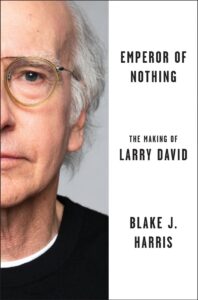 Blake J. Harris, Emperor of Nothing: The Making of Larry David
Dey Street, October 20
Who is Larry David? We all think we know him because we’ve watched his fictionalized self for years on the small screen, saying the wrong things, acting like a selfish asshole… but also really trying to do the right thing in the end. Well, Harris’s authorized biography, based on five years of research and multiple interviews with the man himself (and the people around him) should help us understand where the character stops and the real man begins. (Also, don’t get mad but: Larry David for president? IT COULD BE WORSE.) –JD
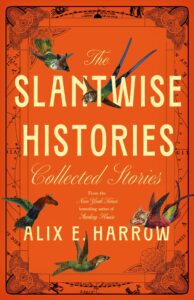 Alix E. Harrow, The Slantwise Histories
Tordotcom, October 20
The author of my favorite novel of 2025 keeps the streak going with her first story collection, which contains some of her best-known stories (like “The Six Deaths of the Saint” and “A Witch’s Guide to Escape: A Practical Compendium of Portal Fantasies”) alongside brand-new tales. Harrow’s imagination dazzles and delights and this collection is no exception. –DB
 Alex Woodroe, Tatratea
CLASH, October 20
The editor-in-chief of the upstart weird-fiction outlet Tenebrous Press delivers an eco-horror novel for the ages, set in the Transylvanian countryside with Area X-esque flora and a ticking clock. Woodroe’s taste at Tenebrous is unerring; I can’t wait to see how this chills me. –DB
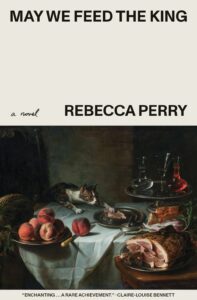 Rebecca Perry, May We Feed the King
Transit Books, October 20
This might be my favorite book of the year? Definitely top three. A curator works on staging a palace with the life of a footnote of a king—and then the novel conjures up, perhaps, that king’s life. A hypnotic novel about obsession, art, history, story… it’s got everything, in a trim and flowing package. I’ll go even further out on a limb and put this in Booker contention, too. –DB
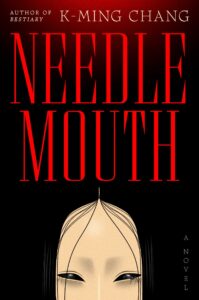 K-Ming Chang, Needlemouth
Simon & Schuster, October 20
New K-Ming Chang!!! I’m so excited for this lush and unsettling girlhood horror novel. When three cousins spend the summer at their grandmother’s unusual old house, they anticipate boredom. What they get instead is a hungry demon who drags them into the demon realm and forces them into a plot to kill a man. Chang is the queen of strange girlhood and I’m personally very grateful for her reign. –MC
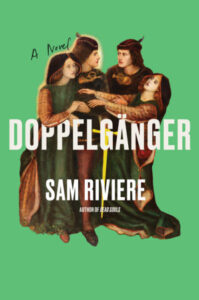 Sam Riviere, Doppelganger
Catapult, October 20
I loved Riviere’s debut novel Dead Souls and have become a tremendous fan of his poetry since. All of that alone makes this an auto-read for me, but this would’ve caught my eye anyway: a near-future campus novel about art students finding themselves doubling one another, intentionally or not, sounds like a tricksy delight. –DB
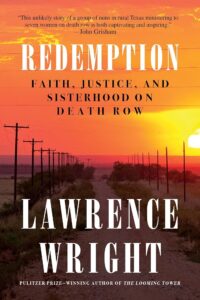 Lawrence Wright, Redemption: Faith, Justice, and Sisterhood
Knopf, October 20
Lawrence Wright is one of the great narrative journalists of our time so it is fitting—and important—that he now turns his attention to one of America’s most urgent moral issues: capital punishment. Writing about the unlikely relationship between a group of nuns and the women on death row at a prison in Gatesville, Texas (the former seeing to the spiritual and emotional needs of the latter) Wright, among other things, reveals the contradictions and injustices at the heart of the American legal system. –JD
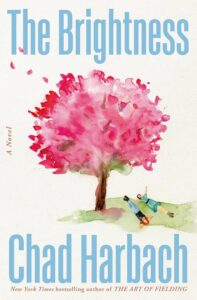 Chad Harbach, The Brightness
Little, Brown, October 27
Gosh, remember when The Art of Fielding was THE Book of 2011? For a whole minute there, Harbach’s luminous debut got me into baseball. (Of all things!) I digress, but fans should note The Brightness is a long-awaited follow up. Harbach’s been cooking this semi-sequel, which returns us to the world of Wisconsin’s Westish College, for fifteen years.
But, plot twist! Rather than the baseball team, The Brightness follows the artsy girls at this tiny liberal arts school as they navigate a tumultuous political climate in 2016. With prose that is characteristically assured, detailed, and wise, this doorstop (brace for 600+ pages, friends) is sure to be the Big Cozy Read of the autumn. You heard it here first. –BA
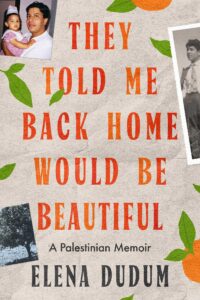 Elena Dudum, They Told Me Back Home Would Be Beautiful: A Palestinian Memoir
Atria/One Signal, October 27
In this thoughtful memoir of the Palestinian diasporic experience Dudum examines her stark awakening, as a second-generation American, to the realities of the Occupation of Palestine. Raised on her father’s stories of a lost Palestinian homeland, Dudum captures the unique pain of seeing the destruction of one’s heritage livestreamed and rendered forever out of reach by the intractable forces of empire. –JD
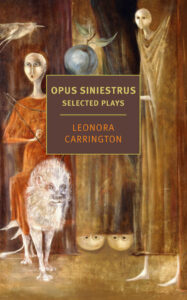 Leonora Carrington, Opus Sinestrus
NYRB Classics, October 27
The Carrington renaissance continues as the NYRB brings yet another work back into print—this time, a collection of Carrington’s surrealist plays. Read more plays! Plays are literature too! –DB
 Yoon Ha Lee, Code and Codex
S&S/Saga Press, October 27
Imagine if Alan Moore wrote The Locked Tomb books and you might start to approach the insane word-drunk joys of Yoon Ha Lee’s latest, about a space-faring empire that functions by using language itself—to change history, to subjugate its people, to lock away a prisoner whose very gaze could send stars supernova. –DB
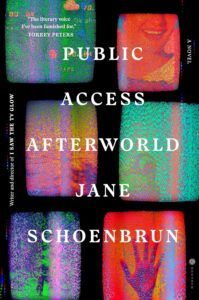 Jane Schoenbrun, Public Access Afterworld
Hogarth, October 27
I’ve been a fan of Jane Schoenbrun’s since their surrealist, allegorical film I Saw The TV Glow blew my Millennial mind last year. Their debut novel appears to pick up where that movie left off, in a realm that may be spiritually familiar to nerdy/queer/suburban latchkey kids who grew up in the 90s, nurtured on Buffy marathons and inchoate yearning.
Following two basement teens who experience an extra-strange analog-to-digital transition—care of the pirate TV network that gives the novel its name—this one looks thrillingly original. And Torrey Peters, one of the novelists I most admire today, compared its genre-bending hijinks to those of David Mitchell. You’ll find me this fall bouncing between this page-based adventure and Schoenbrun’s latest film: the slasher homage, Teenage Sex and Death at Camp Miasma. –BA
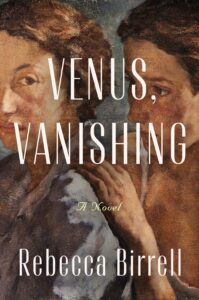 Rebecca Birrell, Venus, Vanishing
Henry Holt and Co., October 27
It’s Berlin in 1929, and Hannah Sherman is leading a subtly revolutionary life: she is not a mother, a wife, or anything close. She’s decided to be an artist, and has left her previous life behind to do it here, in raucous and dynamic Berlin, where she’s allowed to work and exist in the way she longs to. When she is hired to do a series of portraits for a wealthy woman in town, her relationship to her muse, her art, and her name, all begin to merge and shift into something stronger. That feeling is desire, for ambition, for fame, for love: all the things a young woman is told she should never dream of. Other-worldy, compelling, and quietly virtuosic, Venus, Vanishing promises to be a meditation on queer desire, the kernel of artistic ambition in a young woman’s heart, and how to survive one’s own life. –JH
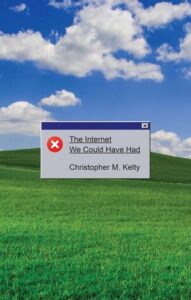 Christopher M. Kelty, The Internet We Could Have Had
Polity, October 27
If you were not a regular internet user prior to the first George W. Bush administration, go find someone who was. Ask them about their time online: the way they communicated with people, the connections they were able to make, and information they were able to find. It was a more primitive technology then, certainly, but it held boundless possibilities. Crucially, far fewer corporations had their hands in what users had access to. It’s not for nostalgia’s sake that I’m looking forward to The Internet We Could Have Had, but for looking at the ways things went wrong and the possibility of carving out a better internet in the future. –CK
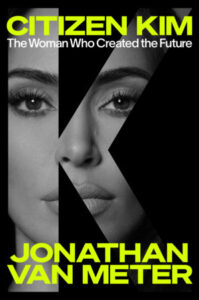 Jonathan Van Meter, Citizen Kim: The Woman Who Created the Future
Viking, October 27
An event for the ages: it’s the official, authorized biography of Kim Kardashian. At this point, we’re all well acquainted with the name Kim Kardashian and the various current-day businesses and media ventures she’s involved in—there sure is a lot of footage! But for the first time, we’re treated to the journalist’s gaze on the comprehensive, meaty backstory of the Kardashians, without the filter of their Kardashian-produced television show and social media posts. Citizen Kim reveals the full context of the Los Angeles that Kim and her siblings grew up within, and the myriad, juicy-as-hell controversies and dramas to which they were at times central, and at other times, tertiary. It wasn’t their choice that their father was embroiled in the biggest murder trial the world has ever known; it wasn’t their doing that their mother had affairs, and married America’s favorite athlete who then later transitioned. The drama has followed them, and then they started following the drama. The biography is fascinating and immersive: it’s best-case scenario, combining behind-the-scenes conversations with the woman who has masterminded her own jaw-dropping success with an objective look at the world that made her. –JH
NOVEMBER
***
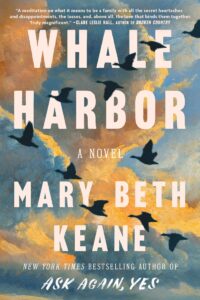 Mary Beth Keane, Whale Harbor
Scribner, November 3
Maureen Corrigan called Mary Beth Keane’s Ask Again, Yes “unpretentious and profound,” which perfectly sums up my feelings about her work. She writes deeply satisfying novels about the complexity of family life. Whale Harbor is a family saga that follows the eleven sons of an Irish family in the wake of tragedy. In her hands, I expect this sprawling multi-generational novel (one of my absolute favorite micro-genres) will be, to borrow a phrase from every overburdened blurber in history, compulsively readable. –JG
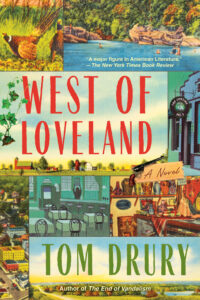 Tom Drury, West of Loveland
Grove Press, November 3
A new Tom Drury novel calls for celebration among anyone who loves extremely funny, arrestingly beautiful novels (and if that’s not you, why?). To anyone who’s heard me fervently recommend The End of Vandalism over the last year or so: here you go. You’re welcome. –JG
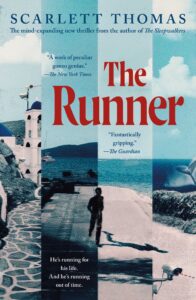 Scarlett Thomas, The Runner
Simon & Schuster, November 3
Scarlett Thomas remains, on this side of the Atlantic anyway, one of fiction’s best-kept secrets. Her brain-bending early work (The End of Mr. Y, PopCo) has matured into equally ambitious thrillers and The Runner—about a man on the run who meets another targeted woman—should, if there’s any justice, break her out in the States. –DB
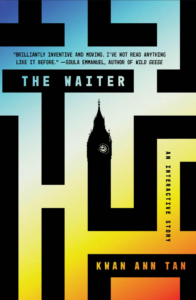 Kwan Ann Tan, The Waiter
Union Square, November 3
This one had me at “choose-your-path novel for grown-ups.” Eleven possible endings! A dystopian future where people’s identities can disappear! Let’s have some fun, yeah? –DB
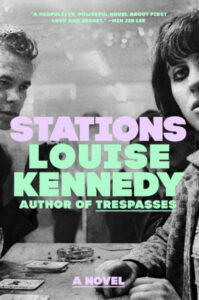 Louise Kennedy, Stations
Riverhead, November 3
In the follow-up to Trespasses, her beautiful, intimate novel of a forbidden love affair during The Troubles, Louise Kennedy returns to the subject of romance tinged with regret. Stations tells the story of Róisín and Red, who bond as teenagers in 1980s Ireland and reunite years later, only to drift apart again. I can’t wait to inhale it. –JG
 Karen Olsson, Dear Thorns
Astra House, November 3
Lora works at a wildlife refuge in Texas studying the Texas ocelot. She’s always put her career before everything else—until a younger man starts interning at the refuge. Lora becomes fascinated with him, and as the two become closer, Lora’s understanding of the world begins to change. Part cli-fi, part character study, Dear Thorns promises to be as sharp as its title suggests. –MC
 Allison Leigh, The Misogynists: A Reckoning with Modern Art
Abrams Press, November 10
It should come as no surprise that the early history of modern art was not a friendly place for women. But as Leigh’s deeply researched cultural history of the careers of six art world giants—Delacroix, Courbet, Degas, Renoir, Gauguin, and Picasso—reveals, it was, in fact, absolutely awful. The misogynistic exploitation endured by women at the hands of these still revered icons was shocking even to their contemporaries, showing us once again just how awful the man behind the art we love can be. –JD
 James Gleick, The Telephone: A New History
FSG, November 10
These are my favorite sort of biographies: stories of objects and tools that are so ubiquitous we rarely stop to consider their origins or appreciate their true significance. Yet as James Gleick’s engaging new book shows, the legacy of Alexander Graham Bell’s 1876 experiments is both long and incredibly far reaching, not just yielding up a new invention—the telephone—but seeding a “continuous revolution” in the way humans communicate. Gleick recounts the coining of the new words ‘hello’ and ‘goodbye,’ the creation of a class of professional operators, the minting of the largest monopoly in history, and the transformation of social life in innumerable ways, from wiretapping to booty calls. Along the way, he has something profound to say about “the primacy of information and the need for connection.” –EF
 Lauren Elkin, Vocal Break: On Women, Music, and Power
FSG, November 10
Elkin, long a favorite around these parts, brings her personal perspective as a former soprano to this fascinating cultural history of women’s voices. With a look at the lives and careers of icons like Édith Piaf, Maria Callas, PJ Harvey, Beyoncé, and Billie Eilish, Elkin examines the power of a woman’s voice to reclaim space and defy a patriarchal system that for so long has demanded silence and obedience from half the planet. –JD
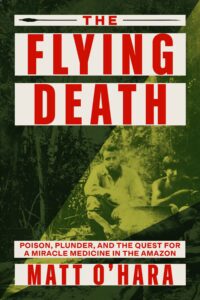 Matt O’Hara, The Flying Death: Poison, Plunder, and the Quest for a Miracle Medicine in the Amazon
FSG, November 10
An American explorer racing his Russian counterpart to acquire a rare poisonous plant deep within the jungles of the Amazon that may hold the cure to countless diseases? On the eve of WWII? For someone like me, this tale of swashbuckling botany, and the pharmaceutical breakthroughs it led to, is absolutely the beach read we need. –JD
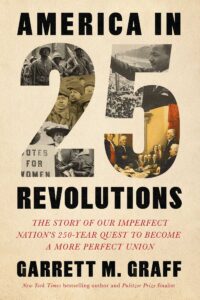 Garret M. Graff, America in 25 Revolutions: The Story of Our Imperfect Nation’s 250-Year Quest to Become a More Perfect Union
Avid Reader Press/Simon & Schuster, November 10
The United States’ early dream of itself—as a revolutionary, egalitarian nation built on principles of universal justice—has always been deeply detached from reality. But even as it’s easy to catalogue the systemic iniquities at the heart of the American experiment, historian Garett M. Graff reminds us that the story of this nation is filled with courageous individuals—from the labor movement to Civil Rights—who’ve sacrificed so much to actually see its principles realized. –JD
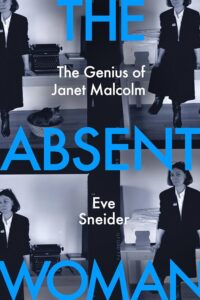 Eve Sneider, The Absent Woman: The Genius of Janet Malcolm
W.W. Norton, November 10
“Every journalist who is not too stupid or too full of himself to notice what is going on knows that what he does is morally indefensible,” Janet Malcolm wrote in her book The Journalist and the Murderer. Always interested in the ethical questions involved in the creation of true-to-life profiles, Malcolm herself is a fascinating subject for a biographer. In her new book, Sneider (who wrote of her experience with Malcolm’s archives for Lit Hub) uses manuscript drafts, photographs, correspondence, and interviews with those who knew Malcolm to paint a portrait of the notoriously private writer and show the ways in which she understood herself through her writing. If you also love books about writers, definitely one to add to your TBR. –EF
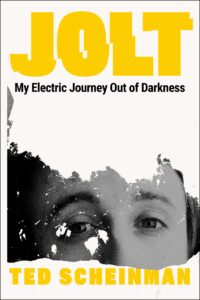 Ted Scheinman, Jolt: My Electric Journey Out of Darkness
Scribner, November 10
As highlighted in our first half preview: While nobody owes us the hard truths of their experience, it’s always an enormous gift when someone has the courage to share the trials and tribulations they’ve endured. So it is with Ted Scheinman’s Jolt, in which the Smithsonian magazine editor and author of the delightful memoir/travelogue Camp Austen, reveals his long and harrowing struggle with depression, and the steps he took to reckon with it. Namely, and as a last resort, Scheinman decided to undergo electroconvulsive therapy (ECT); and though the ECT worked—much to Scheinman’s relief—it came with a cost to his memory. Not only does Jolt provide an important window into the darker realities of mental illness, Scheinman’s willingness to share his story will no doubt help others who might be struggling. [Full disclosure: I once had a lovely experience with Ted Scheinman as an editor for a magazine feature of mine.] –JD
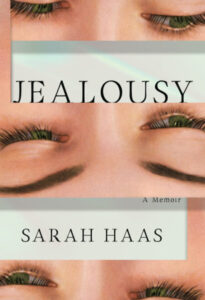 Sarah Haas, Jealousy: A Memoir
Catapult, November 10
I have to be honest: my initial interest in this memoir was based entirely on the title. Sarah Haas’ memoir follows the unraveling of a relationship, and the self, amid a “the history of the recorded image and its consequences.” Sounds both gripping and deeply uncomfortable—immediately sold. –JG
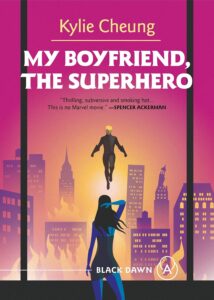 Kylie Cheung, My Boyfriend, the Superhero
AK Press, November 10
AK Press continues their Black Dawn series of speculative fiction with this deconstruction of the superhero genre that also doubles as a steamy romance novel. Cheung, who has written extensively about gender and politics, makes her fiction debut here and early reads are suggesting a hot time indeed. –DB
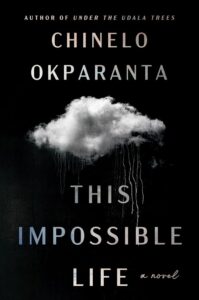 Chinelo Okparanta, This Impossible Life
Mariner Books, November 10
Siblings Alohan and Ivie are orphaned when their rainmaker father can’t hold back the rain on a wedding. Alohan has to provide for and protect Ivie, and the two are bound together—although they forge very different paths. A story of loss, power, privilege, crime, and betrayal that travels from Nigeria to the United States, Okparanta’s beautiful new book is the work of a writer with a keen eye for the emotional bonds between family. –EF
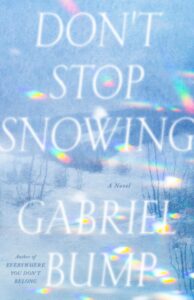 Gabriel Bump, Don’t Stop Snowing
Algonquin, November 10
Two cousins must take care of one another in cold snowy Buffalo in the latest from Bump, who is carving out a space for himself as one of our finest chroniclers of the modern age. –DB
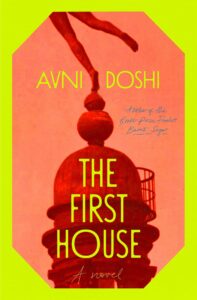 Avni Doshi, The First House
S&S/Summit Books, November 10
Avni Doshi’s debut novel Burnt Sugar was probably my favorite novel I read in 2020 (it was also shortlisted for the Booker), so I’m thrilled that she’s back. Her sophomore effort follows a woman after her husband of thirteen years leaves her with no warning, but is no mere tale of despair: instead it is a sharp, surreal investigation into the details and delusions of being a person—a wife, a mother, a daughter—that promises to leave you somewhere completely different from where it picked you up. –ET
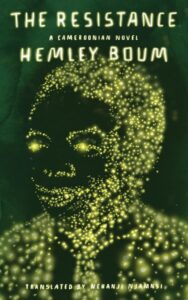 Hemley Boum, The Resistance
Two Lines Press, November 10
A Cameroonian novel that spans years and traces the path of a revolution, The Resistance is going to be the historical fiction novel of the fall. Beginning at the advent of WWII, the novel follows a pair of young lovers whose paths diverge—one goes to fight for France in the war while the other becomes an important priestess. Years later, their daughter returns to the place where her parents met in order to plan a revolution. A meditation on freedom and community, The Resistance is heartbreaking and powerful. –MC
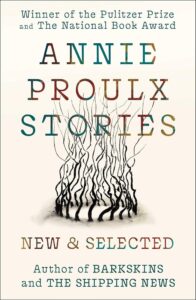 Annie Proulx, New and Selected Stories
Scribner, November 10
Perhaps (definitely) most famous for her iconic short story “Brokeback Mountain,” Proulx has long been one of our most tender realists, depicting at once the vivid, lived details of American life, often in the West, while also granting her characters a particular kind of grace that redeems us all. This collection gathers her most beloved stories alongside new work. –JD
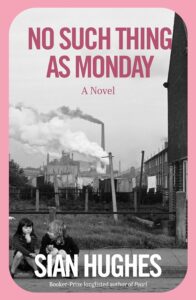 Siân Hughes, No Such Thing as Monday
Henry Holt and Co. November 10
I love how complicated sibling relationships lend themselves so well to stories about asking for forgiveness and making amends, and they tend to draw out the best and worst in all characters involved. No Such Thing as Monday looks at two sisters whose relationship was fractured by an abusive father, and what happens between them after his death. –OS
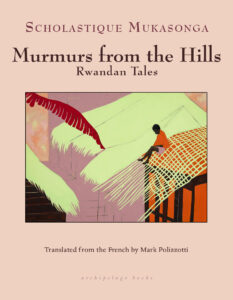 Scholastique Mukasonga, tr. Mark Polizzotti, Murmurs from the Hills: Rwandan Tales
Archipelago, November 10
I like the idea of looking at the future by considering the past, and the stories in Murmurs from the Hills reach deep into pre-colonial Rwandan history. How can distant times inform a nation and a people? Through connections to stories told over centuries, both real and fantastical. –OS
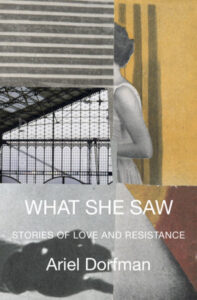 Ariel Dorfman, What She Saw: Stories of Love and Resistance
Other Press, November 10
This latest collection from the legendary Chilean American novelist, playwright, academic, essayist, and human rights activist is about “human connection in the face of cruelty, injustice, and uncertainty” and contains a story set in a witchcraft trial during the 100 Years War, another in the present-day United States, and even one narrated by a bullet. How’s that for range? –DS
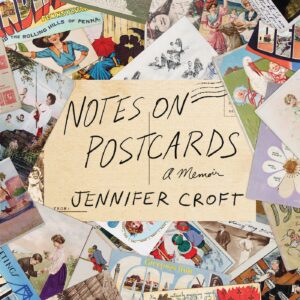 Jennifer Croft, Notes on Postcards: A Memoir
Catapult, November 10
As highlighted in our first half preview: There are far worse ways to measure out a life than by postcards. Though as a medium they may necessarily limit the depth and intimacy of what we write, they in turn free us of our writerly pretensions, and force us to get to the point. So as someone who once sent 300 postcards (over as many days) to someone very dear and very far away, I am eager to read novelist and translator Jennifer Croft’s memoir in very small parts, as she shares her collected postcard correspondence—with her grandmother, her husband—and muses on the medium itself, equal parts anachronism, archive, and analog delight. –JD
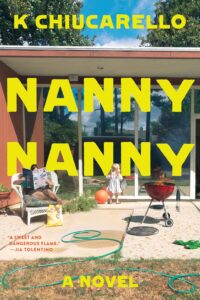 K Chiucarello, Nanny Nanny
Ecco, November 17
When a single woman in her 30s who has been working as a professional nanny decides to have a child of her own, she starts by taking stock of everything that’s led her to this point—her childhood, her abusive ex, the rich people she works for, and more. Surprisingly funny, tremendously thoughtful, this is a debut to watch out for. –DB
 Yuri Andrukhovych, tr. Mark Andryczyk, Radio Night
New York Review Books, November 17
Does anything confer more instant credibility than a release from NYRB? Beyond my faith in the publisher behind Radio Night, the promise of a character whose job during the revolution was “barricade pianist” is enough to get me fired up; ditto the menacingly-capitalized Regime and criminal Mob the hero is fleeing from. The description sounds unlike anything I’ve ever read—I’m not entirely sure how a novel can be said to be “enveloped in music”, but I’m looking forward to finding out. –CK
 Gary Shteyngart, The Sensualist: Adventures in Pure Pleasure
Random House, November 17
It’s kind of hard to believe that this is Gary Shteyngart’s first essay collection! Expect humor, expect pathos, expect watches and martinis probably. You’ve undoubtedly read some of these essays (he’s been in Best American Essays nine times) but some of these are brand new and should be a hoot and a half. –DB
 Tahmina Anam, Uprising
Scribner, November 17
Love a novel about revolution and solidarity! Uprising considers its action from multiple angles: the experiences of children, women sex workers, the threat of ecological disaster. There’s so much happening, and seeing all of it come together feels exciting. –OS
 Michelle Tea, Free Love: Adventures in Marriage and Polyamory
Harper One, November 17
On the outside, polyamory can seem like a liberating and fun-filled existence (sex! flirting!) but as Tea’s deeply researched and immersively (ahem) reported narrative reveals, it also takes a lot of work, and levels of gut-checking honesty that don’t come easily to most of us. As someone who has lived the lifestyle herself Tea is uniquely qualified to investigate the good, the bad, and the ugly of the polyamorous experience. –JD
 Gerald Martin, Mario Vargas Llosa: A Life
Bloomsbury, November 17
I’m fascinated by figures who, like Mario Vargas Llosa, undergo dramatic shifts in politics, and this book is (to my knowledge) the first English-language biography of the complicated Nobel Laureate, drawing from his archives and papers. –OS
 Chuck Thompson, Sasquatch Country: Death, Myth, and Truth in the New American Wilderness
Counterpoint, November 17
Billed as Twin Peaks meets Into the Wild, this latest true crime wilderness narrative tells the story of two dead hikers discovered deep in the forests of Washington State around Christmas 2024, in an area common to so-called Tenderfoots, inexperienced Bigfoot enthusiasts in search of everyone’s favorite furry cryptid. But is that what happened to Dean Pommerville and Eric Straughter, whose families were obviously devastated by their loss, or was something else going on? –JD
 Daniel Duane, Yosemite Falls: Reckoning with California History and the Gospel of John Muir
North Point Press, November 17
John Muir, who famously walked all over this country, eventually falling in love with the California wilderness, is something like a saint to American nature-lovers, revered for his reverent and awe-filled accounts of life under the stars. So it was for Daniel Duane and his family, whose secular devotion to Muir was ritualized in regular visits to Yosemite National Park, as close to a cathedral of the American west as you can get. But as Duane reveals, through a mix of personal memoir and historical research, Muir’s Victorian worldview was far from perfect, dismissing as it did the generations of First Nations people who’d called California home for millennia. An engaging and necessary corrective to the hagiographic record. –JD
 Paul French, The Last Emperor of China: Twilight of the Forbidden City
St. Martin’s Press, November 17
If I’m curious about a region of the world or a particular era I’m largely unfamiliar with, a biography is often the most compelling entry point into that period of history. And if the description of that biography includes the key words “previously unpublished” or any indication that the author has been in the archives, it’s a good sign that the work is going to produce new insights instead of retreading previous histories on the same topic. The Last Emperor of China ticks both those boxes, which is why it’s high on my list when it comes out later this year. –CK
 Meena Kandasamy, Fieldwork as a Sex Object: A Novel
Soft Skull, November 24
An Indian woman living in London tries to repair her reputation (and her life, really) after a deepfake sex tape explodes it all. Everything about this screams Soft Skull, so I’m betting on a sharp wit and explosive prose. –DB
 Bob Woodward, Secrets: A Reporter’s Memoir
Simon & Schuster, November 24
Reporter Bob Woodward clearly knows how to get people to talk—even when they should know better. Watergate, his most famous reporting work, changed a nation and set the bar for generations of investigative journalism to come. As Woodward turns his reporter’s eye on his own life, and the vocation he’s pursued for over 50 years, readers learn—among other things—the fine (and disappearing) art of cultivating sources not over months or years, but decades. We could use more courageous young Woodwards these days. –JD
DECEMBER
***
 Ryan Schreiber, Weird Era: How Pitchfork Changed Music Forever
MCD, December 1
Ryan Schreiber was nineteen years old when he started Pitchfork on the family desktop in his Minnesota home, employing a quirky little decimal scale from 0 to 10 to rate new albums. In 2015, the site sold to Condé Nast for an undisclosed sum. The decades in between were a revolution for music criticism, digital media, fandom, and the way in which musicians interacted with their fans and critics. If Pitchfork was also your homepage when you were in college, this history-of will be a must read. –EF
 Matthew Salesses, To Grieve Is to Carry Another Time
Little, Brown December 1
Matthew Salesses’ debut memoir explores his relationship with his wife, Cathreen, and her subsequent death from cancer. Salesses’ fiction and his craft writing are consistently revelatory, and I expect his writing on consumptive and transformative experience of grief will be consuming, wrenching, and essential. –JG
 Colm Tóibín, The Bridge
Scribner, December 1
I’m eager to read this brand-new novella from the always brilliant Tóibín (Brooklyn, The Master), which serves as a sequel of sorts to his 2006 novella A Long Winter. In The Bridge, a young man named Miquel lives in a house with his father in the Catalan Pyrenees. The year before, his mother left home in a drunken rage and froze to death in a winter storm. Miguel’s younger brother then abandoned the family when he returned home from the army to news of his mother’s death. Now, a new bridge is opening which promises to end the isolation of these Pyrenees villages, but a series of mistakes, betrayals, and bad luck lands Miguel and his father a transformative two-year prison sentence. –DS
 Olga Tokarczuk, tr. Antonia Lloyd-Jones, Primeval and Other Times
Riverhead, December 1
Primeval and Other Times, Tokarczuk’s third novel, was originally published in Poland in 1996, and first in English in 2010. It is a postmodern account of a mythical village, told in 60 anecdotes. Some are about mushrooms. Personally, I miss the fragment novel, so I’m happy to see Riverhead reissuing it now. –ET
 Zachary Mason, Fabrications
Grove Press, December 1
Mason’s publisher promises that “Fabrications is… influenced by Borges and Calvino, and for readers of Kazuo Ishiguro and Emily St. John Mandel,” which is quite a quartet! If the book fulfills even half of that promise, it’ll be my favorite read of the year. –CK
 Sara Baume, Opening Night: A Story of Art and Friendship
FSG, December 1
Irish writer Sara Baume attended a party for an exhibition by artist Mollie Douthit and was particularly struck by two small paintings. It turned out that Mollie, an American artist who was living and working in Ireland, lived alone in a cabin only a few miles away from Sara. Their quick friendship, fueled by soup and a monthly swim in the Atlantic, turned into an artistic partnership as well, with Sara writing the text for Mollie’s new exhibition. Opening Night is an intimate story of what it means to live as an artist, musing on creativity, memory, as well as the complexities of health, love, family, and artistic failure. –EF
 Kim Stanley Robinson, The Best Journey in the World: An Antarctic Story
Little, Brown, December 1
As a sci-fi writer Kim Stanley Robinson is a great storyteller AND a prodigious describer of geological phenomena (just crack into any of the Mars trilogy books). So it makes sense that he’d tell his own true story of visiting Antarctica (inspired largely by an early account of the continent’s exploration called The Worst Journey in the World) to research the reality of life in inhospitable conditions for the aforementioned trilogy. –JD
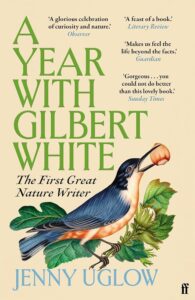 Jenny Uglow, A Year with Gilbert White: The First Great Nature Writer
FSG, December 1
If you’ve been wanting to spend more time in nature, reading this book is a great first step. A Year with Gilbert White follows the journals of the “father of ecology” as he observes the natural world in his Hampshire village. It kind of sounds like a nonfiction version of North Woods—which means it’s going straight to the top of my TBR. –MC
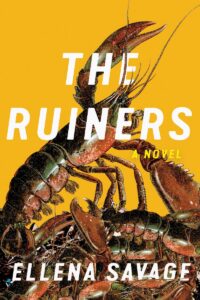 Ellena Savage, The Ruiners
Catapult, December 1
When I hear a book described as a “sexy, cerebral eco-thriller” my ears immediately prick up. This comic debut novel from Australian author Savage is the story of a young couple—he a brooding Balkan fiction scholar, she a frustrated Melbourne waitress—who use her surprise inheritance to purchase a decrepit house on a remote Greek island. Once ensconced, the couple and their friends find themselves “enmeshed in an environmental struggle that brings the mistakes of the past—and new betrayals—into sharp relief.” –DS
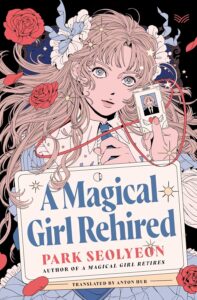 Park Seolyeon, tr. Anton Hur, A Magical Girl Rehired
HarperVia, December 8
Our own McKayla Coyle’s blurb for A Magical Girl Retires sold me on that book and I’m delighted that we’re getting a sequel, with more magical girls and strange bureaucracy and zippy manga-inspired delights. Now to wait for the matching Nomad Edition paperback… –DB
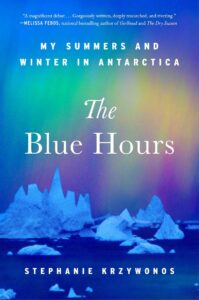 Stephanie Krzywonos, The Blue Hours: My Summers and Winter in Antarctica
Washington Square Press, December 1
Who amongst us is not fascinated by Antarctica, that mysterious, unforgiving desert at the end of the earth? In the wake of her best friend’s tragic death, Xicana writer Stephanie Krzywonos left her entire life behind and moved, for six polar summers and one pitch dark winter, to the White Continent. There, she traced “the stories of female, queer, and BIPOC explorers often left out of the annals of Antarctic history to ask: Who truly belongs in Antarctica?” –DS