Lit Hub Daily: February 23, 2026
THE BEST OF THE LITERARY INTERNET
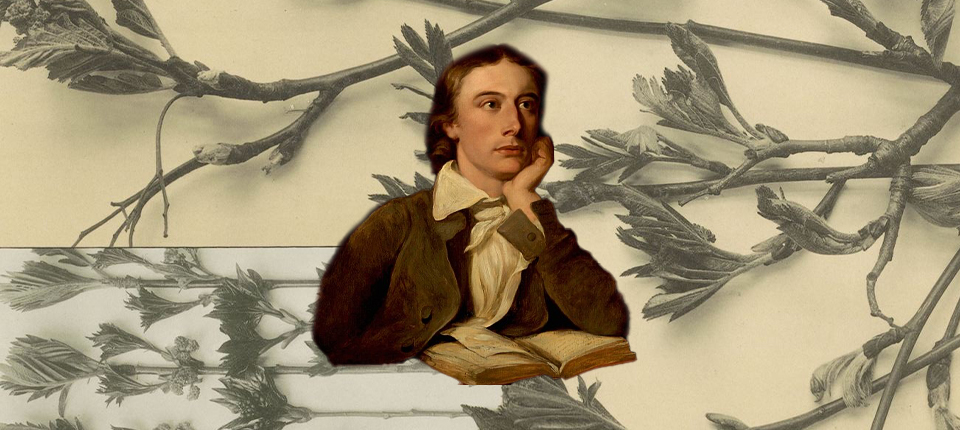
TODAY: In 1821, John Keats dies.
- Eunsong Kim on the relationship between art and capitalism (and the reading crisis as class warfare). | Lit Hub Politics
- “You just do language.” Lauren Groff on craft, reading, and her new collection, Brawler. | Lit Hub
- Jamie Holmes traces the forgotten history of the American government’s war against the Seminole. | Lit Hub History
- “Grief is not a problem to be solved, but an essential human passage to be honored.” Nancy Cobb on her book, In Lieu of Flowers, and the importance of naturalizing grief. | Lit Hub Memoir
- Ej Dickson recommends books about bad mothers by Philip Roth, Rachel Hochhauser, Nick Hornby and more. | Lit Hub Reading Lists
- Anastasiia Fedorova on the power, safety, and ritual of a latex fetish. | Lit Hub Memoir
- This week in literary history, The Gutenberg Bible is published. | Lit Hub History
- “Her shell is her way of feeling and saying it: mother-of-pearl, daughter of water.” The secret life of the awabi abalone. | Lit Hub Nature
- “And on that day he walked the dirt road from the patch past the colliery toward the entrance of the shaft, the only light visible coming from the breaker with its multitude of filament bulbs inside and outside and along each apparatus…” Read from Andrew Krivak’s new novel, Mule Boy. | Lit Hub Fiction
- “Morrison writes about suffering and survival, always, but with the insistence that suffering does not ennoble and survival is not a clean thing. One might come through but not necessarily intact.” Parul Sehgal on Toni Morrison’s novels of the unthinkable. | The New York Times Magazine
- Carlos Manuel Alvarez contemplates exile: “Whatever I said about Cuba in the future, it would come from the conscience of someone who no longer lived there.” (Tr. Will Noah.) | Equator
- Jynne Dilling remembers Michael Silverblatt: “The miracle of holding a galaxy of details in one single brain, to see meaning, entanglement, and instruction knitted across that vastness—it’s one way to explain the singularity of Michael Silverblatt…” | n+1
- Elsa Pearl considers both literary and real rattlesnakes. | Oxford American
- “This isn’t because screens are inherently attention-destroying. It’s because the dominant platforms have been deliberately engineered to fragment attention in service of advertising revenue.” How capitalism engineered the reading crisis. | Aeon
Article continues after advertisement