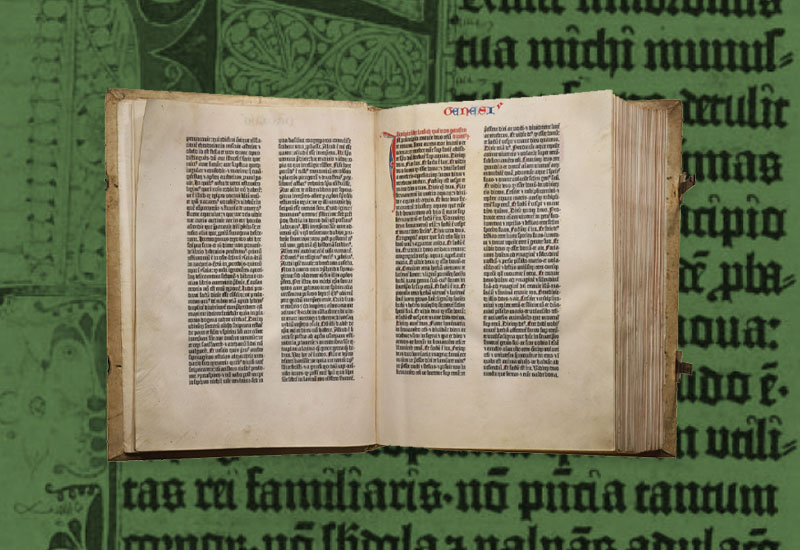
This Week in Literary History: The Gutenberg Bible is Published.
“Previously, manuscripts had to be printed and copied laboriously, by hand, making them rare objects for the wealthy and important.”
This first appeared in Lit Hub’s Literary History newsletter—sign up here.
On February 23, 1455 (or so), Johannes Gutenberg published an edition of the Vulgate Bible in what is now Mainz, Germany. Now known as the Gutenberg Bible, it was one of the earliest books produced in Europe using moveable type. Gutenberg published it using an updated printing press (though contrary to public belief, he didn’t actually invent the printing press), and his innovations sparked what is now known as the “Gutenberg Revolution,” which would soon make printed books widely accessible throughout the West. Previously, manuscripts had to be printed and copied laboriously, by hand, making them rare objects for the wealthy and important; once Gutenberg’s technology spread, knowledge suddenly became available to all who could read it.
Gutenberg published between 160 and 180 bibles in 1455; less than 50 of these survive, in whole or in part, today. Three of these are at the Morgan Library in New York City; you can enjoy a video tour of them here.