What Objects Can—and Should—Reveal About Their Owners
Rachel F. Seidman on the Importance of Material Culture in Constructing Oral Histories
Not long ago, I decided spur of the moment to attend an estate sale in my Washington, DC, neighborhood. As I walked the few blocks to the address I’d seen advertised, I admired the beauty of the late-nineteenth-century row houses that line the streets where I live. I love their bay windows, turrets, and decorative brickwork. I didn’t really need to buy anything; mostly, I wanted the chance to see inside one of these historic homes. As I ambled down the sidewalk, I hoped that the house hadn’t been renovated too much—as a historian, I always regret it when the original moldings and fireplaces and other pieces of charming old architecture have been stripped away.
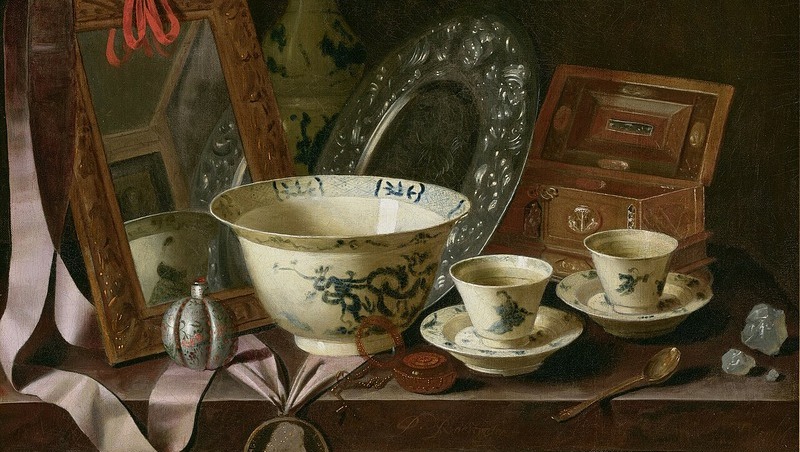
As soon as I climbed the front steps and went in through the door, I understood this estate sale had not been quickly thrown together by a bereaved family member—clearly, professionals had been called in, and for good reason. In the kitchen alone, there were hundreds of plates, cups, bowls, platters, glasses, pitchers, vases, and cutlery, impressively organized by type and boxed up in sets, with prices neatly marked on matching labels. I was stunned by the sheer volume of table settings, but the kitchen was just the beginning—in every corner of the old house, there were many neatly arranged piles of somebody’s worldly possessions, obviously amassed over many decades, if not passed down for generations.
I thought about how much better it would have felt if the objects had not just price tags but story labels attached to them.
As I joined the two dozen other people who were peering at furniture and opening cupboards, I tried to imagine the individual through whose home I was traipsing. She must have liked to entertain, I thought.
I descended down creaky, narrow stairs into an unfinished basement that featured an impressive if somewhat quirky wine collection on open wooden shelves. From their labels, I sensed someone who liked to acquire a wide variety of bottles on their travels to faraway places. Back upstairs in the living room and hallways, art was stacked, leaning against the walls, and in a bedroom and home office, piles and piles of books spoke to a lifetime of collecting by someone with a wide-ranging and curious mind.
The staircase to the second floor had a stair lift, and into my head drifted an image of an elderly widow, slowly ascending to her bedroom after eating alone, her kitchen overflowing with porcelain and crystal reminders of dinner parties long ago. Suddenly, I was overcome with sadness. My afternoon walk down the block had given me an almost too intimate peek into the corners of an anonymous person’s life, yet I had no real knowledge about who she was or how she lived or what her laugh sounded like. A life’s worth of possessions that once meant something well beyond their monetary value were now displayed to strangers’ eyes, ready to be sold off, detached from their context. Each piece of furniture, each knickknack had a story, but I couldn’t hear what it had to say. It was all too much for me, and I left in a hurry.
As I walked home, I thought about how much better it would have felt if the objects had not just price tags but story labels attached to them. I should say that, in addition to my work as an oral historian, I am also a curator at a history museum, and so I’ve had some practice writing labels about objects. That day, I made up a character in my mind and imagined the possibilities. She liked to entertain, to travel, to learn. At one point, she needed help to get up the stairs. “This is the cake stand Mrs. Navarro inherited from her grandmother, which she brought out for special family occasions. She was especially known for her chocolate coconut cake.” “Whenever one of her grandchildren turned ten years old, they got to drink sparkling apple cider from one of these crystal glasses for the first time.” “Mrs. Navarro’s best childhood chum brought this small painting back from a trip she took to Vietnam and gave it to her as a testament to their long friendship.” “A secret admirer sent Mrs. Navarro this bracelet on Valentines Day in 1969, but she never found out who the person was.” I created Mrs. Navarro out of thin air, but it got me thinking about how connected our stories often are to objects.
I started to imagine what I might have learned had I had the opportunity to interview my former neighbor. Even though I’d never met her—in fact, I should say I don’t really know for sure whether the former owner of that house was a woman or a man—I was curious. My Capitol Hill neighborhood has its own long-running oral history project, where local volunteers interview other people who live “on the Hill.” They share the interviews online, and before I moved here, I had spent hours reading and learning about my new neighborhood, past and present. If I could have interviewed Mrs. Navarro, I might have sat with her in her sunny kitchen at the back of her house and asked her about when and how she had come to live in it. I could have asked her to tell me about the pretty china that she was serving tea and cookies on—did she purchase it, or had she inherited it? Did it have special meaning to her, and if so, why? Did she entertain often? For fun or for work? What were some of her most memorable dinner parties? Who taught her to cook, to set a table, how to arrange flowers in those pretty vases she displayed on her shelves?
I might have asked her to tell me about the trips on which she collected artwork, or to talk to me about the large collection of wine bottles in the basement. I would love to have asked her to talk to me about the piles of books that were overflowing her bookshelves—what had her formal education been like, and how did she decide what to read next? Did she participate in book clubs, or did she prefer to read on her own? Was she influenced by things like bestseller lists, or booksellers’ recommendations, or did she have an internally guided approach to what appeared to be a voracious reading habit? What did she think about the rise of social media—did she participate at all? Why or why not? What did she think about the state of the world today, and how did it compare with her memories of growing up, coming of age, and her many years of living in Washington, DC? By starting with questions about the material objects with which she surrounded herself, I could explore avenues into her personal history—her family, her work, her travels, her attitudes and values, and her insights into the world around us.
Learning what we can about those layers of meaning is a window into learning about our loved ones and the stories they hold dear.
Our homes are filled with objects that can help us learn about the past—whether dishes in the china cabinet, bicycles and toys in the garage, tools in the basement workshop, record albums in the den, linens in the closet, Christmas decorations in the attic you get the idea. Many of these objects hold stories; they are imbued with meaning because of who gave them to us, or how we felt when we used them, or with whom we’ve shared them over time. Museum people call these objects material culture.
It was too late for me to ask my neighbor about all the amazing things she had collected. The experience in that house made me think about the one in which I grew up, and my mother, who, now in her eighties, has been enthusiastically engaged in the process of “Swedish death cleaning” over the last few years. In this practice, described by Margareta Magnusson in her book The Gentle Art of Swedish Death Cleaning: How to Free Yourself and Your Family from a Lifetime of Clutter, the goal is to clear out things that are not important to you before you die, to lessen the burden on your surviving family.
I’m grateful to my mom for taking on this task—as an archivist herself, she has long had the instinct to hold on to things, and the house she and my dad have lived in for over fifty years has many closets and basement shelves and cupboards full of stuff. It truly is a gift to my brother and me for her to begin the sorting process.
What I started to think about, though, is not what she let go of but what was left. How everything that remains must be important to my mother—there must be a story to it, a reason she kept it. My goal now is to learn more about the decisions she made and to have her pass on to us as many of those stories as possible before it is too late. I’m eager to hear her tell me about the linens her mother, grandmother, and aunts sewed and embroidered. At our wedding, my husband and I stood under a chuppah—a wedding canopy signifying the new home a Jewish couple will create together—that my mom crafted from a lace tablecloth her grandmother had sewn. My brother and then, decades later, my daughter were married under the same chuppah. Sometimes objects collect more and more layers of meaning as they get passed down through generations. Learning what we can about those layers of meaning is a window into learning about our loved ones and the stories they hold dear.
What would I have asked Mrs. Navarro, and what will I ask my mom when the time comes? What might you ask your family members when you sit down with them?
__________________________________
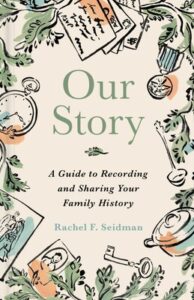
Excerpted from Our Story: A Guide to Recording and Sharing Your Family History by Rachel F. Seidman. Copyright © 2026 by Rachel F. Seidman. Reproduced by permission of Simon Element, an imprint of Simon & Schuster. All rights reserved.

Rachel F. Seidman
Rachel F. Seidman is an award-winning curator and a professional oral historian who works at the Smithsonian American Women’s History Museum. Previously, Seidman directed the Southern Oral History Program at the University of North Carolina Chapel Hill, where she also taught history. She has also taught at Duke University and at Carleton College. In 2019 Seidman was a Fulbright Scholar at the University of Turku, Finland. She holds a PhD in history from Yale University, and a BA from Oberlin College. She is the author of Our Story and Speaking of Feminism.