Ten Memoirs That Explore the Nuances of Family Estrangement
Jenny Bartoy Recommends Harriet Brown, Stephanie Foo, Nick Flynn and More
Family estrangement is a touchy topic, currently prominent in the zeitgeist. Celebrity family rifts are splattered across headlines daily; op-eds have labeled estrangement an “epidemic” and a “crisis”; and even Oprah recently explored the “rising trend” of going no contact on her podcast. The subject is rampant on social media too, pitting the so-called “Doormat Moms” against the proud #nocontact crowd, all mediated by a throng of Instagram-savvy therapists and influencers.
Estrangement affects an enormous segment of the population. According to recent studies and surveys, between a quarter to a half of the population is estranged from at least one family member (it’s unclear whether these numbers are rising or simply have now become acknowledged). And for many estranged individuals, like me, our experience is far more nuanced than the current discourse might suggest. The button-pushing takes, though they may garner clicks, often misconstrue a deeply personal and painful phenomenon, one that is still widely taboo.
Social media has done wonders to expand the conversation around estrangement and provide analysis, connection, and validation. On the other hand, mainstream media coverage and Hollywood narratives still frequently dismiss or simplify family rupture, underlining traditional beliefs such as “Blood is thicker than water” to promote shame and reconciliation. But estrangement often is a good choice—or the only choice. Evidence shows that cutting or losing contact with close relatives typically stems from deep, long-standing issues. Estrangement is born of abuse, addiction, mental illness, divergent values, abandonment, and myriad other reasons, sometimes in combination. We may grieve our living relatives, but cutting ties can be a positive shift, offering relief from discordant or even dangerous family dynamics. Like much of our human experiment, the reality of estrangement is messy: part sad, part glad, not always within our control.
I’ve hungered for depth in representations of estrangement, and I’ve found it in literature. Classics jump to mind, such as Educated by Tara Westover, The Glass Castle by Jeannette Walls, and With or Without You by Domenica Ruta, but a significant amount of memoirs join that canon. Each explores the realities of estrangement with the vulnerability and nuance it deserves, providing a powerful counterpoint to pervasive and reductive sociocultural talking points. The titles below are just a few great ones.
*
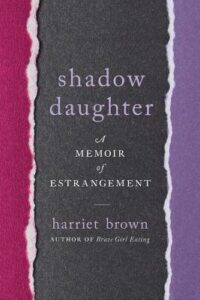
Harriet Brown, Shadow Daughter
This book holds a special place in my heart because it changed my life. Never had I read something so validating about cutting ties with a problematic parent—I felt seen. Writing just before estrangement hit the zeitgeist, Brown tackles head-on the stigma and secrecy that have long surrounded the topic. Shadow Daughter opens on the day of Brown’s mother’s funeral, when the author is in Hawaii hiking with her family, having resolved not to attend. Brown frames the memoir with an investigation of her complicated on-and-off relationship with her narcissist mother until their eventual rupture, and weaves in dozens of interviews and research. The book is lyrically written and highly informative, diving deep into the common threads and tropes of estrangement in search of clarity. Brown writes, “We don’t talk about the fact that for some people, staying connected with family is far more destructive than stepping away. That sometimes estrangement is the healthiest option.” This quote alone is a balm for the no-contact crowd.
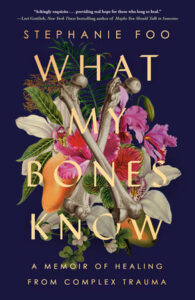
Stephanie Foo, What My Bones Know
In this best-selling memoir, Foo investigates the repercussions of complex PTSD (C-PTSD) caused by her abusive parents and her subsequent estrangement from each of them in turn. The book describes both her research into C-PTSD and her extensive efforts to heal. This is a rich, complex memoir in which Foo explores her familial roots, the impact of intergenerational trauma in Asian-American immigrant communities, the failures of American healthcare, and the patriarchal erasure of women’s suffering. While trauma is its focus, at heart the book wrestles with the concept of parent-less identity and the question of deserving to be loved. “Trauma isn’t just the sadness that comes from being beaten, or neglected, or insulted. That’s just one layer of it. Trauma also is mourning the childhood you could have had,” Foo writes. “Trauma is mourning the fact that, as an adult, you have to parent yourself.” At times heartwrenching, at others darkly funny, this story provides a vivid and layered glimpse into the perspective of a no-contact adult child.
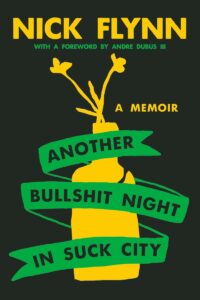
Nick Flynn, Another Bullshit Night in Suck City
Flynn’s seminal memoir, which was adapted into a film starring Robert DeNiro, recently celebrated twenty years in print. When he was twenty-seven, Flynn worked at a Boston homeless shelter where one day he ran into his father—their third-ever encounter and the beginning of a tenuous reconnection. During his adolescence, Flynn had received letters from his father, a hard-drinking con artist who’d served time in federal prison, but he had remained a stranger. Their rekindled relationship illustrates the dissonance of familial expectations and intimacy with a parent one barely knows. Flynn is a poet by trade and this memoir is neither linear nor prescriptive. Instead, vignettes provide a meandering exploration, connecting past and present and sketching parallels between father and son. Absent parents, especially fathers, represent a significant cause of estrangement; mental illness is often a factor too. Touching on both, this memoir beautifully conveys the haunting presence of an estranged relative and the blurry line between longing and reluctance toward reconnection.
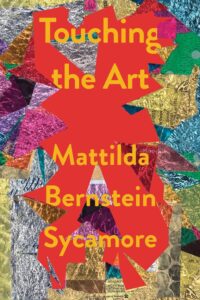
Mattilda Bernstein Sycamore, Touching the Art
Blending memoir, criticism, social history, and more, Touching the Art peels back the layers of legacy and trauma that form a person. Sycamore examines her complicated relationship with her late grandmother Gladys, a renowned Baltimore artist, and begins by literally touching her paintings and collages. Sycamore writes, “This book wouldn’t exist if Gladys were alive, because I wouldn’t have realized I missed her.” This desire to find connection in loss hints that death can often be more tangible to process than estrangement. Sycamore’s story is told in short bursts that immerse the reader into the present moment, creating a sense of urgency in the exploration of self, art, and family. Through exploring her grandmother’s art, the author navigates degrees of estrangement from family members: Gladys herself, whose reluctance toward Sycamore’s queerness engendered a growing distance; the author’s father whose sexual abuse precipitated a rupture of contact; and Sycamore’s mother and other relatives. Degrees of estrangement are common in dysfunctional families, and this book depicts their slippery, progressive nature. Touching the Art also delves into erasure and gaslighting, illustrating the all-too-common silencing that occurs when a family member speaks up about violence or abuse.
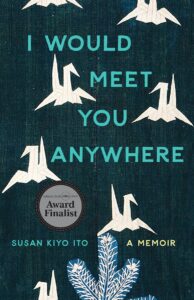
Susan Kiyo Ito, I Would Meet You Anywhere
Ito’s memoir is first a story of adoption, but adoption is by nature an estrangement, even if we rarely lump the experiences together. This notion is complicated by Ito’s turbulent relationship with her birth mother. Determined to get answers about her identity and Japanese-American heritage, and despite a closed adoption, in her twenties Ito finds and meets her biological mother, Yumi. There begins a decades-long rollercoaster of intermittent connection with the deeply reluctant but charmed Yumi, with whom Ito forges a series of tender alliances only to see them crumble when she crosses hazy boundaries. Yumi wants to keep Ito’s existence a secret, she refuses to introduce her to her other children or reveal her father’s identity, but Ito— gently, doggedly—insists, in a veritable tug of war for recognition. Ito’s “constant flux of connection, disconnection, rejection, denial, with Yumi” is a form of estrangement we rarely discuss, an existential yoyo that estranges one from their own self in the despair to be seen and known. This heartfelt, heartbreaking memoir offers an unusual angle into the experience of estrangement: when a family member we desperately love keeps us at arms’ length.
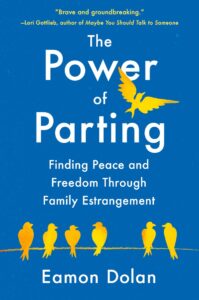
Eamon Dolan, The Power of Parting
A hybrid work of nonfiction, part memoir, part self-help, The Power of Parting provides a how-to guide for disentangling oneself from toxic family relationships. Dolan dissects his estrangement from his mother after forty years of attempts at peace, and weaves in research and reportage about child abuse and trauma. Growing up in an Irish immigrant family, Dolan was frequently beaten by his mother who consistently mocked and berated him. As an adult, after setting repeated boundaries, he finally decided to save himself from her tyranny and cut contact. By vulnerably sharing his journey of estrangement and analyzing its errors and successes, Dolan crafts a helpful roadmap, rife with both personal and expert advice. Broken down into digestible sections with titles such as “The Myth of Duty” and “In Praise of the Clean Break,” this book gives the reader permission to liberate themselves from harmful relatives and move on with hope.
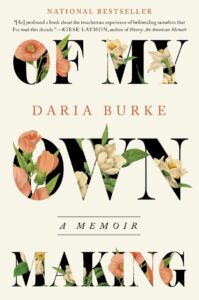
Daria Burke, Of My Own Making
Burke grew up in poverty and neglect, then, estranged from her long-addicted mother and absent father, went on to become an award-winning fashion executive and keynote speaker. Of My Own Making opens when, after a decade of productive therapy, Burke discovers a photo of the car accident that took her beloved grandmother’s life, and thirty years of unprocessed grief and trauma come tumbling out. In this thoughtful memoir, Burke dives into the science of neuroplasticity, epigenetics, and early childhood brain development as she seeks to process her past and forge her destiny on her own terms. Throughout, she doesn’t waver on her estrangement, instead asserting firm boundaries that put the onus on her parents to address their problematic behavior, but the wounds of her upbringing haunt her. Feeling shame from craving love and connection, she writes, “This neglect wasn’t just the absence of care—it was the presence of a pervasive belief that I was unworthy of it.” Part rags-to-riches narrative, part healing strategy, this memoir is foremost a story of determination, at first a brave drive to overcome and succeed despite the odds, then later a methodological rewriting of her own brain, to reclaim the life she deserves. Burke’s memoir is a beautiful and hopeful reminder that while trauma changes the brain, so does healing.
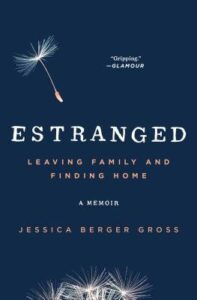
Jessica Berger Gross, Estranged
Gross’s memoir explores a nuance of estrangement that is rarely explored: cutting contact with family who to an outside eye may seem perfectly nice, but who to the narrator has become intolerable. Gross grew up in a typical middle-class Jewish household in Long Island, but her father often flew into violent rages which her mother enabled. Financially dependent on her parents throughout her youth and confused by waves of calm or small kindnesses, Gross wrestled with distancing herself for some time before cutting contact with her parents and brothers as an adult. Both unsentimental and lyrical, this memoir conveys the exhausting hypervigilance that comes with abuse—“But I couldn’t control my father’s moods, and I never knew when a good day would take a dangerous turn.”—and the relief found in cutting contact—“The estrangement was my way of saving myself.”
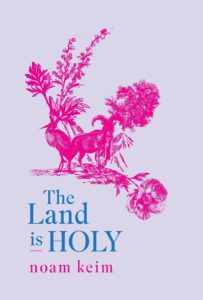
noam keim, The Land Is Holy
In this collection of personal essays, keim explores estrangement from family in parallel to estrangement from land and ancestry. The author was born a queer Arab Jew in a settler family in occupied Palestine then raised in eastern France, before escaping across Europe and to Asia, and finally finding chosen family in Philadelphia. Throughout this intimate and urgent book, keim aims to reconcile their sense of self with a dual estrangement from their mercurial, manipulative mother and from their countries of origin. “I am continuing a lineage of migration spanning generations; I am giving up my relationship to family to build myself anew,” keim writes. The Land is Holy is rooted in flora and fauna—birds give omens and metaphors, flowers bring healing— as it contends with a deep disconnect from place and geopolitics. Its fragmented essays investigate the inherited traumas of the diaspora and the impacts of colonialism and capitalism on land, peoples, and self. This lyrical memoir tugs at the importance of place and ancestry in our identity and what it means when cutting ties with family severs our connection to our roots—both figurative and literal.
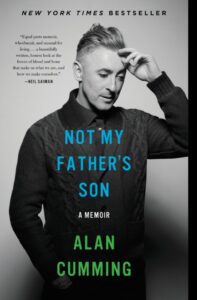
Alan Cumming, Not My Father’s Son
In this beautifully written celebrity memoir, the queer Scottish actor explores his genealogy and his traumatic youth at the hand of a violent father. Cumming was inspired to write this story when his cruel estranged father told him he was not his son, spurring a desire to get to the truth of his genetics and come to terms with his abusive upbringing. With warmth and wit, Cumming moves back and forth on the page, from his grim childhood in rural Scotland to his glamorous life on stage and film, as he navigates the complicated path to estrangement, fraught with loyalty and fear. This memoir poses perplexing questions about the meaning of family and belonging when shared genes don’t equate kinship, when blood doesn’t mean love. Cumming’s unraveling of the truth and his identity resonates, and his journey is a triumph of resilience and authenticity.
__________________________________
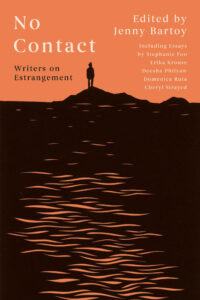
No Contact: Writers on Estrangement, edited by Jenny Bartoy, is available from Catapult.

Jenny Bartoy
Jenny Bartoy is a French American writer, developmental editor, and critic. She's the editor of No Contact: Writers on Estrangement (Catapult, 2026). Her work appears in several anthologies and in such publications as The Boston Globe, The Seattle Times, Under the Gum Tree, Room, Chicago Review of Books, CrimeReads, and The Rumpus, among others. She holds a master's degree from Columbia University and lives in the Pacific Northwest.