I used to think I was in control of my life. But I don’t believe that any more. Learning about hormones changed everything.
The illusion of our autonomy, though, can be persuasive, because when all is functioning well, we barely notice our hormones, the chemical signals that carry messages within the body. By animating every aspect and every moment of life, it is our hormones’ control over us that defines our very idea of what a normal life feels like. We expect to wake up refreshed, to maintain a stable weight, to be in a reasonable mood, while perhaps overlooking that these processes are governed by the body’s hormones far more than by our behaviour, agency or willpower. Yet when this network of hormone signals and the endocrine glands that transmit them breaks down, we see with hindsight how precarious, how precious that expectation of a normal life was.
Endocrinology is the medical specialty concerned with these diseases of the body’s hormones. In the outside world, when I tell people I’m an endocrinologist, most will say, “What’s that?”
“Hormones,” I’ll reply.
“Oh, like HRT,” they’ll say. “My wife’s on HRT.” And they are right: we do deal with HRT, or hormone replacement therapy, but menopause is just one example of the potency of our hormones, which choreograph every phase of life.
In my professional life, I don’t usually encounter hormones when they are working beautifully like this.
Hormones build a new human being in utero, before engorging the mother’s breasts with milk to nourish the baby. Hormones grow the helpless newborn into a rough-and-tumble toddler who gains height through the hormones that lengthen the bones. Hormones take the child’s body at puberty and conjure from it the adult form, directing the ovaries to mature their eggs or the testicles to produce sperm, each of these gametes containing the potential to create new life.
Meanwhile, aside from these big-ticket life events, day-to-day, minute-to-minute our hormones are controlling our morning get-up-and-go and daily energy levels; how we cope with stress, from a rush-hour traffic jam to the splintering of a broken heart; whether libido is flourishing or going through a fallow patch; the weight flashing up on the bathroom scales and the amount we need to eat to feel full.
In my professional life, I don’t usually encounter hormones when they are working beautifully like this. Instead, if you sit with me, on my side of the desk, you’ll hear stories of living in a body that feels uneasy, out of sorts, destabilized by some unknown, out-of-control internal factor.
‘There’s something wrong with my hormones, they aren’t right, I can just feel it,’ the patient says. We are sitting in a large, tired-looking consulting room. The last of the daylight is gathering at windows that are too high to see out of and which were painted shut years ago. So many stories have been told in this room—“There’s something wrong with my hormones . . .”—which one has just unfolded? Is rapid weight gain the cause of the patient’s distress? Maybe they are suffering the pain of infertility? Or perhaps they’re feeling so anxious that they have also been referred to a psychiatrist?
Any of these stories and many more besides could be this patient’s. Any of these accounts of a life upended could have brought them to this London teaching hospital today—in from the squally February weather, through the main entrance revolving door and up to the first floor, then straight ahead to Outpatients, following the signs and arrows that lead to the endocrinology clinic. The clinic’s waiting room has begun to thin out for the day.
At two o’clock, all but three of the interlocked plastic chairs were filled. Now there is space for the remaining patients to occupy their seats without the self-conscious drawing-in of arms and legs that comes from sitting too close to a stranger. Some rest their coats, bags and umbrellas on the empty chair next to them. In the third row is an exceptionally tall young man, still wearing his postman’s uniform. Ten minutes ago, he stooped to pass through the doorway into the waiting room, his remarkable height driven by a childhood pituitary gland tumour that produced too much growth hormone. In the paediatric clinic, he was diagnosed with “gigantism.” Now his case notes list his condition as the less evocative “acromegaly.” But the other patients look medically unremarkable, nothing about them suggesting that something in their internal signalling system is broken.
Just over a hundred years ago, these patients’ conditions could not be explained. They were considered to have strange physical afflictions or weak mental attitudes, and some people with endocrine diseases were even dismissed as ‘freaks’ and heckled in circuses or locked away in institutions. The breakthrough came in 1902, when one of our body’s messages, a dispatch sent from the gut to the pancreas, was discovered by the University College London physiologist Ernest Starling and his brother-in-law, William Bayliss. But what to call these internal communications? Starling had been considering the matter when he was invited to Cambridge to dine at Caius College, and the question came up over dinner. The classicist William Vesey was seated nearby. “Ormao,” suggested Vesey—from the Greek meaning “to excite or arouse.”
“Ormao,” Starling jotted down in his notebook, and in that chance conversation the body’s signals known ever since as our “hormones” were named.
Three years later, before a packed lecture theatre at the Royal College of Physicians, Starling laid out his discovery of the “Chemical messengers which, speeding from cell to cell along the
bloodstream, may coordinate the activities . . . of different parts of the body.” His insight would prove to be the very essence of endocrinology. A hormone signal produced by an endocrine gland is carried away in the blood to deliver a message to distant cells. This could be the postprandial transmission of the gut hormone glucagon-like peptide-1, or GLP-1, which signals fullness to the brain, or oestrogen from the ovaries, which is sent to pubertal breast tissue, stimulating it to grow.
That hormones shape our moods and feelings, wire our brains and guide numerous, diverse processes throughout the body means that the practice of endocrinology is not based around any particular organ.
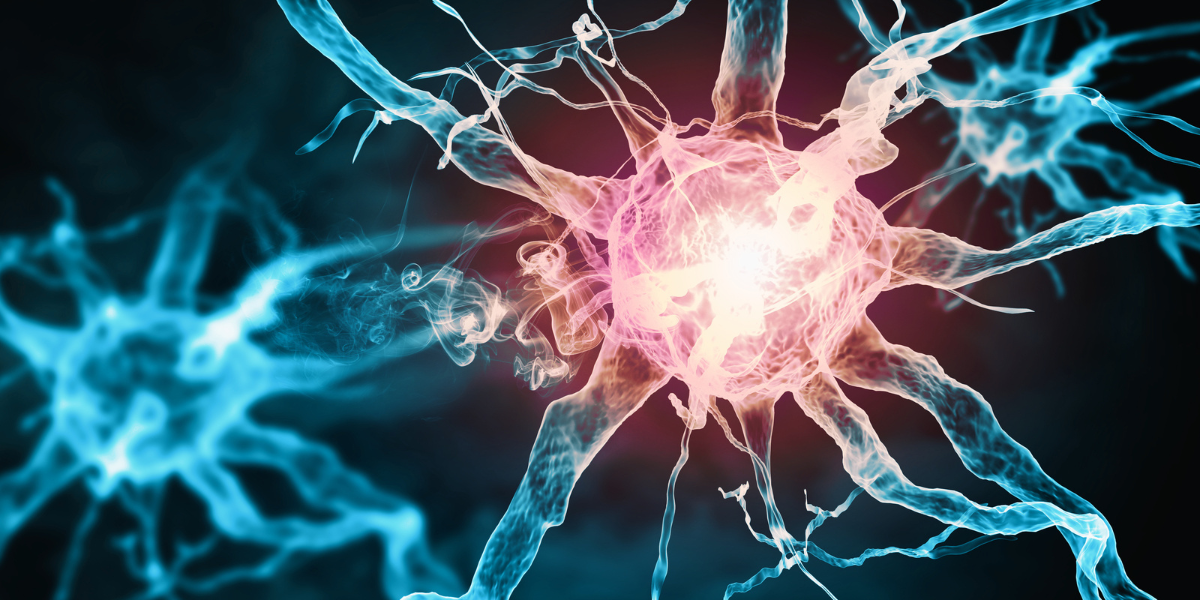
The diversity of hormone function, from milk to mood, hunger to height, does not occur through the action of any single part of our anatomy. Instead, hormone signals and the glands that produce them are part of a communication system that organises every cell, turning collections of independently functioning cells, tissues and organs into an interconnected human body.
Even the brain is an endocrine organ, receiving hormone messages sent from the rest of the body as well as transmitting its own signals. Hormones influence our emotions and how we feel about ourselves and the outside world. We like to believe that we are in control of our feelings and behaviour, yet the energising morning cortisol boost set to just before our usual wake-up time or the soporific progesterone surge of early pregnancy suggest otherwise.
Hormones also modulate long-term brain function, shaping new synapses and circuits that leave a lifelong blueprint for behaviour. In early neonatal life, for example, the hormone leptin, released by a baby’s body fat, engineers the brain’s appetite centre in the hypothalamus, building connections that govern how much we tend to eat. Similarly, adverse early life experiences will write a code for hypervigilance in the amygdala, the brain’s fear generator, under the direction of the adrenal “stress hormone” cortisol. In later life, this formative programming can increase the risk of not only mental illnesses like depression, but physical diseases too, such as cancer and obesity.
That hormones shape our moods and feelings, wire our brains and guide numerous, diverse processes throughout the body means that the practice of endocrinology is not based around any particular organ. Cardiologists look after hearts and dermatologists look after skin, but since every cell in the body responds to hormones, endocrinology is a whole body—whole mind—whole person specialty, and one less subject to the Cartesian mind–body dualism that was still a feature of medical education when I was a student in the 1990s.
I decided to become a doctor based on the imperfect advice that, because I was good at science, medicine was likely to be a suitable career. What I subsequently found was that everyday medical practice is less about high-brow or difficult science and more about understanding our patients’ stories. Once we have gathered enough of these, we try to cross-pollinate one case history with another.
“She reminds me of our nice Iranian lady,” I might tell a colleague, “the one who presented with baldness and ended up having adrenal cancer.” Details vary, but at heart the stories told in the endocrinology clinic are often as much about the anguish and complexity of navigating the outside world as they are about a misfiring hormone system: the agony of a couple seen during the Covid pandemic whose frozen embryos are stored in a shuttered fertility clinic; a man so ashamed of his overdeveloped breast tissue that he will only conduct client meetings on Zoom.
A few years ago, a medical student observing my clinic asked why I had chosen endocrinology. “I like talking to people,” I told him, “and finding out about their lives. I like the diagnostic challenge of connecting a patient’s history with the underlying disease and then looking after them in a trusted relationship that sometimes lasts for years.” He shrugged. “That would be my idea of hell,” he replied. “I want to be an anaesthetist.”
I didn’t hold it against him, and he had made a good point. There are doctors, like anaesthetists, who want to do things to patients. But after a six-month surgical house job, I had concluded that I was temperamentally unsuited to doing things to people and instead had chosen a consultation-based career.
A “rebalancing” tea, for instance, will not reduce the “stress hormone” cortisol, but taking a break and sitting down with a friend to drink it will.
Endocrinology is referred to as a “non-craft” specialty because we don’t do things with our hands, such as operations or procedures. Our theatre is the consulting room or hospital ward. Of course, we use blood tests, scans and other diagnostics, but we have no special piece of equipment that is essential to endocrine practice, and by far the most important tool of our trade is our ability to listen to a patient’s story, gathering the clues that speak of a hormone illness. Almost every endocrine case is a piece of detective work. We have to stay alert through the narrative twists or else we might miss the key reveal: the downplayed detail submerged in a sea of other symptoms; the turn of phrase that suggests the lead you’ve been waiting for. In the endocrinology clinic we combine specialist knowledge with the art of coaxing from a patient the tell that reveals faulty hormone transmission masquerading as life’s ordinary wear and tear.
Some patients are clearly and unquestionably ill, but part of the diagnostic dilemma is that many others present with symptoms that are simply an exaggeration of most people’s ordinary lived experience: tiredness, weight concerns, fluctuating libido. The patient’s history is necessarily subjective. What is your expectation of a ‘normal’ libido? Is your bone-crushing fatigue something that I would find tolerable? Sometimes, too, there are parallel plotlines, because while you have been comfort-eating since the divorce, it turns out in the final denouement that most of the weight gain has been driven by endocrine disease.
The patients you will meet in this book do not have unusual or rare hormone conditions. Instead, these are the stories of people I have seen and remembered because of both the detective work that went into the case and the profound impact of the disease—and its treatment—on the patient’s life. Stories of glitching signals manifesting as symptoms and feelings, which are often so private that we may not easily acknowledge them to ourselves, let alone in a consulting room—“I have never told anyone this before . . .”
The doctor–patient relationship is also frequently beset by dilemmas and decisions beyond the pathology at hand. How we face the fraught question of what constitutes illness in a system funded by general taxation, where resources are necessarily finite—is a woman with infertility as “deserving” a patient as a boy with a brain tumour? How the “four pillars” of medical ethics inform our day-to-day practice far more than cutting-edge breakthroughs. How we decide what a “normal” test result is and what we do (or fail to do) when a ‘normal’ patient still doesn’t feel well. How we fix the body’s signalling when it has been broken by our way of life itself.
And lately, there’s another issue to grapple with: how the new hormone zeitgeist has the potential to inform but also to overpromise. It is the inherent power of our hormones over our everyday lives that makes the idea that, like a light’s dimmer switch, we can turn our signals up or down instinctively appealing—one more supplement, one more shift in our habits, and we’ll be thinner, livelier, happier.
By applying first principles, it is usually possible to sort through the hype—eating seafood, for example, will supply the dietary iodine needed to efficiently produce thyroid hormone. Sometimes, though, a basic tenet can get lost in translation, so that in a bid to rev up our metabolism, say, we take so many iodine gummies that the mineral either drives unregulated hormone release or jams up the system, resulting in an underactive thyroid gland. As with many things, the answer usually lies somewhere in the middle: we cannot control our hormones, but we can live considerately alongside them. A “rebalancing” tea, for instance, will not reduce the “stress hormone” cortisol, but taking a break and sitting down with a friend to drink it will.
Two decades ago, when I became an endocrinologist, the prospect that “hormones” would one day be the mot du jour was unimaginable. Now, even some of my colleagues in other fields ask me about the “hormone hacks” suggested by their social media feeds. We are living in the “Information Age,” yet, like trying to spot a friend at a packed party, the extraordinary wonder of the body’s signals is easily lost in the teeming digital crowd. We could keep on doing circuits of the room or, alternatively, consider whether the true power of our hormones can instead be found elsewhere: in the hard-won breakthroughs of the great endocrine pioneers, in the interrupted lives of the patients you will read about, in fixing the body’s faulty signalling and recalibrating a life—in the understanding that to be ‘hormonal’ is in fact the default state of a human being.
“A doctor should end his life as a philosopher,” ran the obituary of one of the great deans of our medical school at St Mary’s Hospital. He had been Churchill’s physician and confidant, but most of us, when we have donned the costume and played the part long enough, will also try to see beyond the routine of the daily performance to ask, “What is the point of medicine?”
Perhaps this fundamental question will ultimately be answered by the artificial intelligence that is said to be on the cusp of replacing us. When I started at medical school, I didn’t even have an email address, but now the tide of AI is rising and will soon be lapping under the consulting-room door. Yet there will still be a place for us because, as you will see, many of the seismic breakthroughs in the history of hormones speak as much to the courage and perseverance of the human heart as to spectacular, soaring science. While in the clinic, behind the gee-wizardry of the modern diagnostics and next-generation medications, the practice of endocrinology remains rooted in one person telling their story and the other trying to interpret it.
It is not always a perfect system. Important parts of a patient’s history can be too hastily discounted as red herrings; test results can come back that don’t easily fit with the story that has been told. There can be a high noise-to-signal ratio. But when we are at our best, and if only for a moment, we are able to tune out the noise and instead listen in to the signals—to the powerful hormone life force and how the body talks to itself.
__________________________________
From Signals: The Hidden Power and Secret Language of Hormones. Used with the permission of the publisher, Harper. Copyright © 2026 by Dr. Saira Hameed

Dr. Saira Hameed
Dr. Saira Hameed is a Consultant Endocrinologist at Imperial College Healthcare NHS Trust, a Senior Tutor at Imperial College London and a prizewinning teacher in the Imperial College School of Medicine. She studied medicine at Oxford University and University College London and was a visiting medical student in endocrinology at the Mayo Clinic. She has been a Medical Research Council Training Fellow and National Institute for Health and Care Research Clinical Lecturer. Dr Hameed holds a PhD from Imperial College London and in 2024 was elected a Fellow of the Royal College of Physicians. She lives in London with her husband and four children.