Maria Semple Thinks Abandoning a Novel is One of Life’s Great Feelings
The Author of Go Gentle Takes the Lit Hub Questionnaire
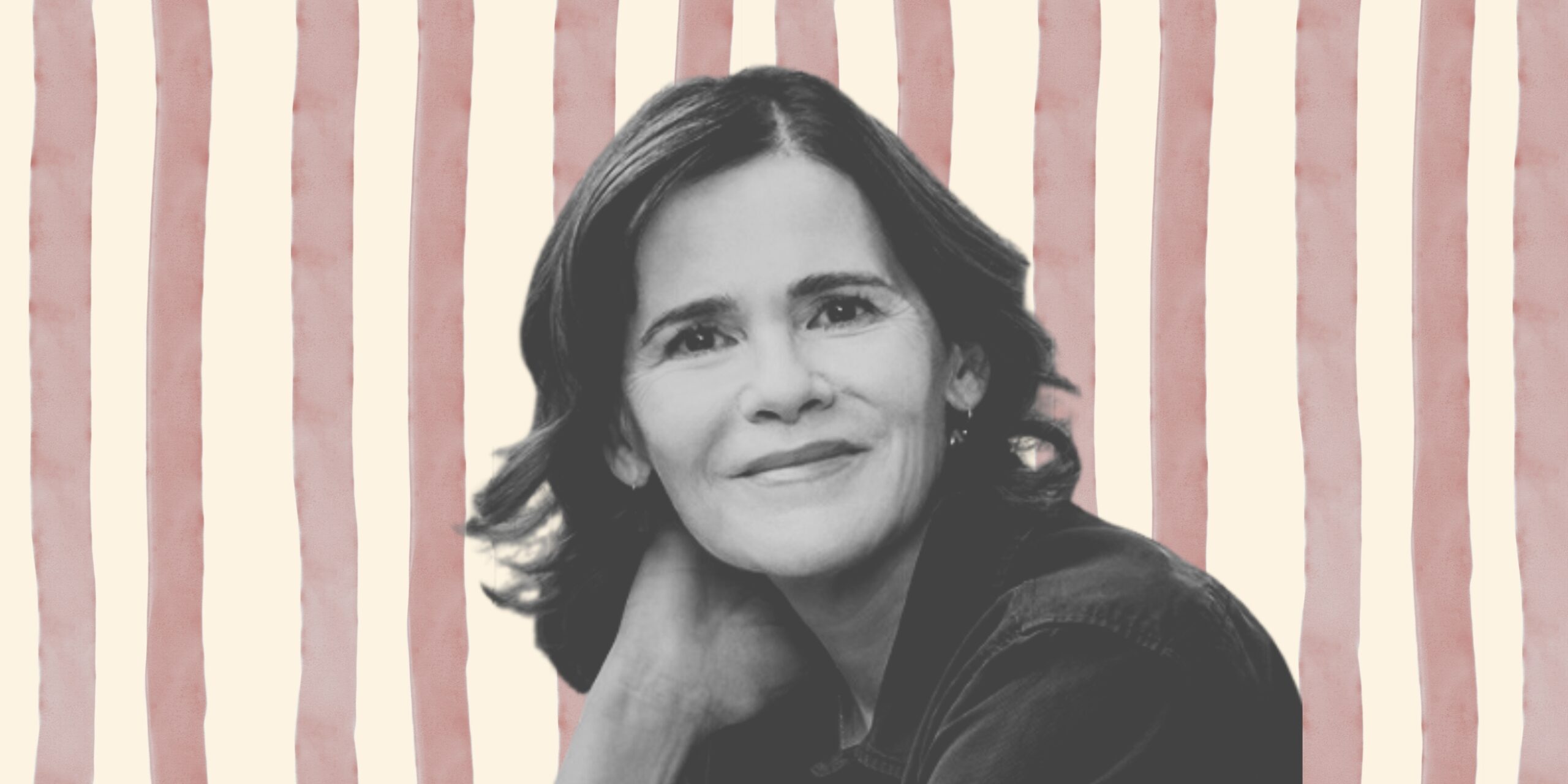
Maria Semple’s novel, Go Gentle, is available now from G.P. Putnam’s Sons, so we asked her a few questions about writer’s block, first literary loves, and more. This conversation has been condensed and edited.
*
How do you tackle writer’s block?
I don’t really believe in writer’s block. I believe that there are books that don’t want to be written. And I believe it might take a really long time to figure that out. I happen to love writing. It’s never a problem for me to sit down and start writing. But I will definitely write the wrong book.
And it might take me months or literally years to find out that I’m working on the wrong book. While you’re working on the book that’s not coming together, it’s a real mindfuck. Because you don’t know if it’s just honest hard work and it’s an honorable struggle and you’re going to get there.
I’ve written many drafts of Go Gentle and abandoned it many times only to go back to it. With the drafts that weren’t working, the writing process felt like I was trying to strangle the life into something. And when I went back to it, I remember being agonized, saying, what is it that’s making me go back to this? Is it just that I don’t want to waste work? Is it that I can’t accept reality? Or is there something in there that’s calling me back to it that I need to honor?
But also sometimes there are things that just like you start writing and quickly the souffle collapses in such an unequivocal way that you don’t go back to it. And it’s funny because with abandoned books, whenever I say I’ve abandoned a novel, people will ask oh God, are you okay? But it’s actually one of the great feelings in life, abandon a novel.
What’s best or worst writing advice you’ve ever received?
My father’s best friend was the novelist James Salter. When I wrote my first book, and I started reading Jim’s stories and novels, I realized I had this great resource. I thought I would sit down and talk to him, writer to writer, which now feels quite arrogant. But he was kind enough to entertain me in his kitchen. And when I finished my first novel, and I was writing my second I said something like, I feel like it’s going to be like my first novel.
Jim told me that every novelist is always writing the same novel. And it really freed me. I think it’s a way of saying that what you do is unique and it’s deep. It comes from deep within you. And that’s what you should always only do. You’re going to have your concerns, and even though you mature and your concerns become different, they’re always rooted in something that is uniquely you.
I’m now very open and proud that I write the same novel over and over.
What’s something you always want to talk about in interviews but never get to?
I always want to talk about what a great plotter I am. I’m very proud of my plotting. And I think that that’s my great strength as a novelist. And I feel like nobody wants to talk about that.
Plotting kind of my most fiendish, happy, mad scientist state. I always have a beat sheet going, nothing as formal as an outline, but I write beats of the order of how I think things should happen. I also keep a timeline. I really love rewriting my timeline every day. I rewrite it and make sure that I’m on top of it. I really try to compress the time because I think that makes for better reading, that there’s like an urgency to everything. But you also have to make sure that it makes sense, that people can literally get from A to B. So I know the date, and what the weather needs to be outside on that date. It’s soothing for me to just keep reworking the timeline.
Plot is a real sleight of hand, and I’d say that that almost takes more work than anything. I think it was E.M. Forrester who talked about the surprise and inevitability in one moment. That what you’re trying to do—create that surprise and the inevitability. And it takes an enormous amount of work to make it seem like it’s just tripping along.
What was the first book you fell in love with and why?
The Great Gatsby was the first book that kind of blew things open for me in terms of symbolism and deeper meaning and language. Prior to that, I had been a reader, but I thought of books as their plots. I went on to become an English major, and I think I’ve remained one at heart. I’m in a book group, and I like to find experts on books and have them come in and speak to us about them. That kind of thing turns you on or it doesn’t, but I love those conversations.
What’s one material possession you need to write?
My industrial grade pencil sharpener. I write with pencils, and I like them extremely sharp. I always start the day with a mug of 30 or so extremely sharp pencils. I’ll write maybe a half a page with one and then put it back in the mug, tip down. Getting up to sharpen the pencils is part of the meditative act for me. So I might have even spent $200 on my pencil sharpener—really expensive, as pencil sharpeners go. But it’s fantastic. It instantly sharpens a pencil. When I went to Paris as I was researching for Go Gentle, I brought my gigantic pencil sharpener with me.
______________________________________________
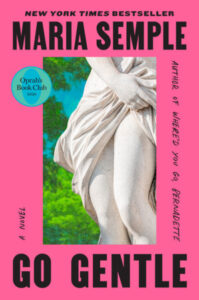
Go Gentle by Maria Semple is available via G.P. Putnam’s Sons.