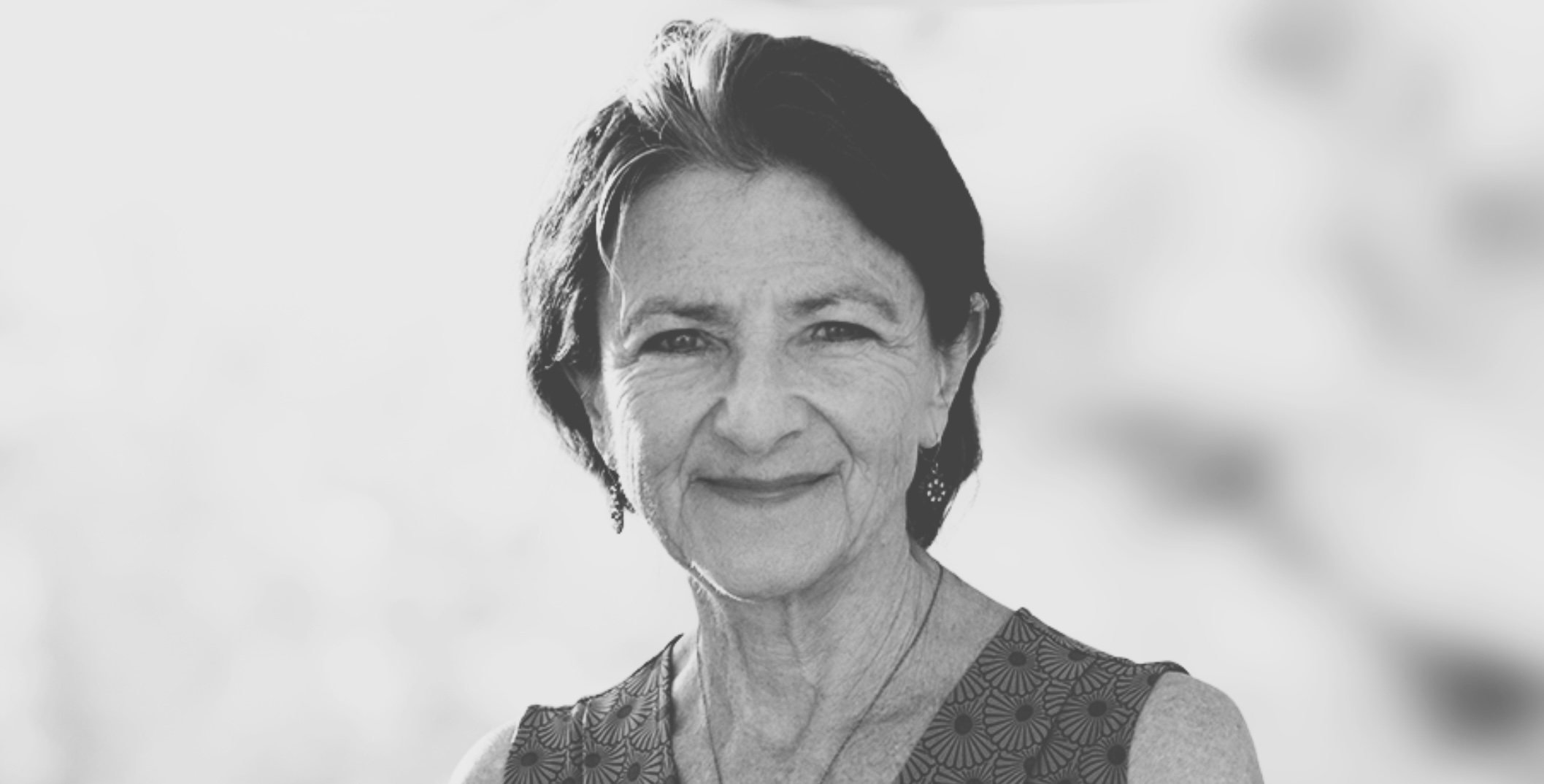
Helen Benedict on Chronicling the Legacy of the Iraq War In Fiction
Jane Ciabattari Talks to the Author of The Soldier’s House
Helen Benedict’s 2009 nonfiction book, The Lonely Soldier: The Private War of Women Serving in Iraq, revealed not only what it was like to be a woman at war, but the abusive treatment of women who served in Iraq between 2003 and 2006 by their fellow soldiers and supervisors, including rape and gang rape. This book inspired the 2012 documentary The Invisible War. Both The Lonely Soldier and The Invisible War were in the forefront of reporting on this injustice. I wondered why Benedict turned to fiction to expand upon this ongoing narrative.
“Almost all the many women I interviewed for The Lonely Soldier had not only endured the horrors of war, but had been relentlessly sexually harassed or assaulted by their own comrades while they were serving,” she explained. “These double-traumas were so dreadful that frequently, during our interviews, the women would fall silent, their hands shaking and their eyes filling with tears; while at other times they would deflect my questions with humor. Those moments haunted me. I came to believe that, as open as these women were with me, another story lay in those silences and jokes: the private, internal story of war hidden deep inside every soldier’s heart; the real story of war.”
She wanted to tell that hidden story, Benedict continued, “but I knew much of it lay beyond what these women were willing or even able to say aloud. Some couldn’t speak because they didn’t have the words, some were too ashamed, others too afraid. Military culture is fiercely self-protective, and soldiers who criticize it are usually treated as traitors.
“This is why I turned to fiction, where, without exploiting, retraumatizing or endangering anybody, I could fill out what was hidden behind the silences, tears and jokes of those soldiers—those secret places in the human soul that have always been the territory of novelists.
“D.H. Lawrence once wrote, ‘War is dreadful. It is the business of the artist to follow it home to the heart of the individual fighters.’
“I turned to fiction because I, too, wanted to follow a war home to the heart.”
*
Jane Ciabattari: How does fiction tell the story in a new way?
Helen Benedict: Whenever the US, or any other country goes to war, the government will wage another war of propaganda alongside it. During the Iraq War, the popular narrative was that our heroic soldiers and marines were going in to liberate the people, free women, and topple a brutal dictator—the same nonsense we are fed now about Iran. (See my essay about these parallels here.) Many a film, TV show, book and news article promulgated this view, ignoring the truth of how cruel the war was, let alone how it felt to the civilians we were decimating. Even novels and feature films that criticized the war were being told from the American point of view, as though Iraqis barely existed. This is a familiar trope in American war—to ignore the side of the civilians we are bombing and starving, especially when those civilians are not white, and focus on our heroic, absurd, or suffering soldiers instead. We did it in Korea and Vietnam for years, and we did it in Iraq.
I wanted to tell a different story, to portray the Iraqi view, and show that war is never glamorous or glorious, but only wounds its victims, collaborators and perpetrators, both physically and morally.
JC: The Soldier’s House, set in 2010, is the middle volume of the trilogy you call Reparation about the 2003-2011 Iraq War. How does it fit into the other two novels? Are there more novels in the works?
HB: The Soldier’s House follows all the main characters from my first novel in the series, Sand Queen: Kate, the young soldier from small-town rural New York; Jimmy, a fellow soldier who is in love with her; and Naema, an Iraqi medical student whose father and teenaged brother are arrested for no reason by American soldiers. Sand Queen is set at the start of the war, so by the time The Soldier’s House opens, seven years have passed, and Naema is arriving to live in the States. The final novel in the trilogy, Wolf Season, follows Naema’s life through 2011, the year of Hurricane Irene.
I wanted to tell a different story, to portray the Iraqi view, and show that war is never glamorous or glorious, but only wounds its victims, collaborators and perpetrators, both physically and morally.
Naema is the protagonist whose story threads throughout the whole trilogy, even as other characters come and go. That said, I wrote each novel to stand alone because I didn’t want readers to feel they had to read all three in order to follow the story. I have no plans to continue the series, but of course, one never knows.
JC: Can you describe what sort of research went into developing the story of Kate, the military veteran and wife of Jimmy, the soldier whose house is central to your narrative?
HB: Kate came out of the research I did for The Lonely Soldier, when I spent hours, months and years interviewing women veterans of the Iraq and Afghanistan Wars. I watched videos that soldiers had taken during the war (Iraq was the first war to be covered by its own combatants, thanks to smartphones), read their blogs, looked at their photographs, and read every memoir and account about the war I could find. I also delved deep into surveys and studies of how women fare in the military. By the end of all that, those stories had soaked deep into my blood, to the point where I was dreaming of being in war almost every night. This is what gave me the courage, and knowledge, to tell Kate’s story both in Iraq during the war, and when she comes home afterwards.
JC: In The Soldier’s House, Jimmy saves Naema by helping her relocate to his home in the U.S. with her five-year-old son, Tariq, and mother-in-law, Hibah. Naema expects Kate, whom she knows, to be there, but Kate leaves Jimmy without explanation just before Naema arrives in the U.S. What inspired you to develop this novel about Naema’s complicated entry into a little-known culture, where she does not feel she belongs, and in fact considers Jimmy responsible for her husband’s death.
HB: When I was interviewing Iraqis for this novel, I kept wondering how they felt about living in the land of their enemy. So I asked them. Their answers were surprisingly forgiving, which touched me deeply. But even more inspiring was their determination to overcome enormous losses and difficulties to try to make new lives for themselves. So even as I imagined how Naema would feel about being rescued by the man she considers responsible for her husband’s death, let alone living in the nation that killed half her family and destroyed her country, I also knew she would want to forge a future for her son and herself free of war and persecution. How she strives to reconcile her anger with these hopes makes up the essence of her struggle as a mother and a refugee. That struggle is what I wanted to explore through writing about Naema and her family.
JC: What made you decide to shape this novel with multiple points of view? How did you develop those perspectives, especially those of Naema and Jimmy?
HB: As a reader, I like fiction that pulls me back and forth between sympathies, allowing me to see all points of view and feel the tensions between them. I also like the intimacy of first person, as if the character is whispering in my ear, so that’s why both Jimmy and Naema have several chapters in their voices. Furthermore, when I write in first person, it helps me inhabit characters and understand them, even when they are very different from myself.
I often liken fiction writing to controlled dreaming, where you live an experience that feels utterly real even as it is not.
Sometimes, however, I wanted to hop between the thoughts of several characters in this book, so chose to write those chapters in third. As for how I developed the perspectives of my characters, that is the task of research and imagination together. We writers shed our own skins and step into that of others, using everything we have learned about who they might be and everything we know about what it is to be human to try to create characters as real as ourselves. I often liken fiction writing to controlled dreaming, where you live an experience that feels utterly real even as it is not.
JC: Your portrayal of Naema’s ambivalence, her pride, her shame at being unable to use her medical degree and skills in this new country, her anger at Jimmy and also her appreciation of his saving her life, and her son and mother-in-law, is masterful. What sort of research went into this portrait? And her experience as a refugee, starting over in an unknown country?
HB: After I finished writing The Lonely Soldier, I moved on to interviewing Iraqis who had settled here as refugees, usually on the special visas the US used to give to those who worked with Americans in the war. (I say “used to” because Trump has shamefully put a stop to that.) I watched videos Iraqis had taken during the war; read Iraqi blogs, including the brilliant Baghdad Burning by an anonymous young Iraqi who called herself Riverbend; and soaked up every translated book of poetry, fiction and nonfiction by Iraqis available. I also read some brilliant books about and by other refugees. And then I live in New York, city of immigrants, where every other taxi driver and shopkeeper had a life of more dignity and accomplishment at home—you only have to ask. Later on, I also spent several years interviewing refugees in a camp in Greece, whose stories are in my book, Map of Hope and Sorrow, and informed my last novel, The Good Deed. All this taught me to understand the daily humiliations one experiences as an exile and refugee in a world where nobody wants you.
JC: Jimmy’s connection with Tariq, who is missing a leg due to a bomb that also scarred his mother’s face, is rooted in his brotherly love for his father Khalil, Jimmy’s translator, who was killed because of his work with the Americans. How did you sort out Jimmy’s complicated feelings of affection and guilt toward Khalil’s family?
HB: Jimmy and Khalil, who are both innately good-hearted men, worked together every day under extremely dangerous circumstances. They endured attacks together, as well as the long, tension-filled waits that are characteristic of war, during which they talked a lot and grew as close as brothers. So when Khalil is killed and his family targeted exactly because of this work, Jimmy is torn by guilt and grief. He tries to do what he can to make amends, but never quite gets it right, for how can one make amends for death and an unjust war? So I didn’t so much sort out his feelings, as feel them myself.
JC: American veterans Jimmy and Kate, and Iraqi citizens Naema and her family, all experience PTSD. How were you able to gather intimate details on their symptoms?
HB: I witnessed the symptoms of war trauma myself while I was interviewing Iraqis and soldiers. The Iraqi child who showed me his drawing of a sky raining with bombs. The soldier who had to stop our interview because she was having a panic attack and couldn’t breathe. Another soldier who cried in my kitchen because she remembered being willing to shoot a child. The Iraqi mother who looked at me stonily as she recounted the murder of her 15-year-old son. I also researched—a lot has been written and filmed about PTSD. In essence, PTSD is a normal reaction to an abnormal horror. I just imagined that.
JC: Is the setting of this novel—near Albany, with forays into Catskill and Cairo—based on reality for refugees?
HB: Yes, some 400 Iraqi refugees were settled in and around Albany during the war. This is how I found the people I interviewed, as I live near there part time.
JC: In the course of The Soldier’s House, Tariq has gained a prosthetic leg, which gives him and his mother and the others great joy. I’m curious how you researched the medical aspect of Tariq’s journey.
HB: I spent a long afternoon in a prosthetics clinic in New Jersey, gleaning the details I needed for the novel. I also watched videos of children who had lost limbs to the war and landmines—a common tragedy in Iraq—and was astonished by the alacrity with which they maneuvered their bodies. Finally, and sadly, I consulted a young man I’ve known since his babyhood called Steven Attewell, who had lost a leg to cancer. He generously told me what it was like to learn to walk on a prosthetic, how it worked, and how it felt. Steven died much too young, which was utterly heartbreaking.
JC: What are you working on now/next?
HB: I am working on a very different novel, set in post-WW2 London, New York and Paris, which is more about love than war. But the plight of the displaced today, whether from war, genocide, persecution or prejudice, will always call to me as a subject.
__________________________________
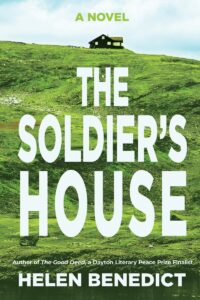
The Soldier’s House by Helen Benedict is available from Red Hen Press.

Jane Ciabattari
Jane Ciabattari, author of the short story collection Stealing the Fire, is a former National Book Critics Circle president (currently on the Advisory Board ) and a member of the Writers Grotto and Page Street. Her reviews, interviews and cultural criticism have appeared in NPR, BBC Culture, the New York Times Book Review, the Guardian, Bookforum, Paris Review, the Washington Post, Boston Globe, and the Los Angeles Times, among other publications.