What’s with all the nostalgia for Obama-era New York?
Why the 2000s are dominating books, music, and movies today.
On a recent episode of Anne-Helen Peterson’s Culture Study podcast, the author Xochitl Gonzalez waxed nostalgic for the end of the Bush years. Working in New York at the time, the author of Last Night in Brooklyn recalled edgy fun in public parks, livable working conditions in media, civil political discourse, and a robust, creative nightlife.
“When was the last time that the economy felt so hopeful, and the country felt so hopeful, and everything felt abundant?” Gonzalez mused. Then she answered her own question. In 2007, “you really could have a life.”
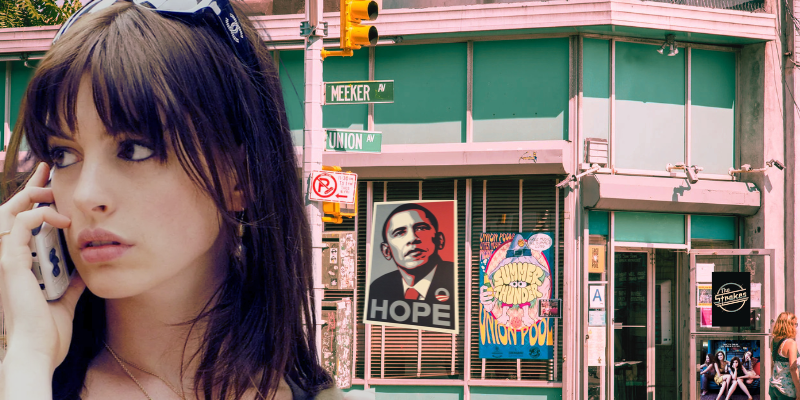
This was all by way of introduction. Last Night in Brooklyn, the third book in the author’s “informal Brooklyn trilogy,” is set at exactly that moment when the air was thick with #Hope. But given the invitation to remember the mid-aughts, I couldn’t help but notice Gonzalez isn’t alone on her cultural branch. For those with eyes to see, Obama-era city nostalgia is everywhere in pop culture right now.
Behind door number two, we’ve got the feeds buzzing with Lena Dunham takes again(!) on the heels of her second memoir’s publication. And Famesick is a pure time machine, conjuring a moment (c. 2012) when Girls ran Greenpoint, and Jack Antonoff held tyranny over the airwaves. Meanwhile, on the big screen, we’re shimmying back into cerulean accent pieces for another shot at the Devil last glimpsed in 2006.
I could go on. Geese, the rock band of the moment, has incurred arguably unfair yet incessant comparisons to The Strokes, another fraught era signifier. And in The Cut, Gonzalez recently made the case for a real aughts-coded behavior: smoking. Because “before we stood around staring down at our phones, we used to stand around staring at each other.”
And here we get to the broom of the yearning. If you take recent cultural studies at face value, the middle aughts were a last bastion for a certain kind of authentic connection. It’s not just those darn livable working conditions we miss; it’s idiosyncrasy, risk, and the idea that one genius taste-maker might puppet our desire, instead of a bajillion anonymous servers. I think all this mid-aughts nostalgia is about longing for just that: the unencumbered time before The Algorithm.
*
To keep it material for a minute, it certainly scans that everyone who can recall a pre-housing-crisis economy and a certain flavor of political optimism would be seduced at this moment by Better Days theory. Much of my daily life in 2026 is structured by unfeeling, unasked-for technologies. And it’s true, we used to stare at each other more. I remember. But to simmer in wist feels beside the point.
In general, we do well to suspect nostalgia. It’s a reactionary position that’s also useless; it’s not like we can re-box the iPhone. Most germane for the culture vultures, those rose-colored glasses tend to blunt the big picture. Because as Lena Dunham points out in Famesick, that quest for authenticity often extracted a high price.
Girls affirmed a kind of lust for life that was often at the expense of personal health and safety. A lot of this was youth-coded. (“Who doesn’t act a fool when they’re 25” is basically the show’s tagline.) But some of what got played for laughs in 2012 is mighty squeamish to revisit with a post #MeToo sensibility.
For every bit of backstage gossip we get in Famesick, there’s a less glamorous revelation—like the fact that Adam Driver the actor may have shared some toxic traits with his character, Adam-the-boyfriend. Such anecdotes amount to an indictment of the times. I left Dunham’s memoir full of itchy memories, remembering all the ill treatment from romantic partners and friends that some of us just accepted. As a matter of course, back in the day.
Aline Brosh McKenna, the screenwriter behind The Devil Wears Prada (1&2) is also interested in exposing the un-shiny side of the middle aughts, even as she laments better days for big media. The Miranda Priestly of 2026 is not rewarded for her cruelty. In the years since we’ve seen her, she’s been chastened by HR. In one scene from the sequel, Miranda struggles to hang up her own coat in a bit of hapless slapstick that serves to defang the dragon lady. Because in 2026, the queen is dead.
All this complicates a tug toward pure nostalgia. Maybe your life was richer in the middle aughts—that is, if “you” is a media worker living in New York City. But was it really, purely better when lovers were all chaotic evil, and God was a (mean) woman?
Or was it that you were just young? In 2006, allegedly broke Andie Sachs lived in a loft with exposed brick and could afford to turn down Jarlsberg sandwiches for a nourishing dinner of morals instead. In 2026, the same character is gagging over a grim condo, and tasked to whip up puff pieces after being mass-fired from her newspaper. But she’s not going gentle against the rising tides of capital. She’s fighting to write.
In 2026, Lena Dunham, a voice of my generation, is on the other side of a media scourge that almost ate her alive. But she actually seems pretty happy these days. That’s life.
What should we resuscitate then, from the mid-aughts? Skinny jeans and side parts? Cerulean? Hope? I’d sure like to chuck my phone in a fountain. (Or even just the sink, to bring another era-appropriate literary bard into the mix.) But I confess I worry about the cost.
Meanwhile, like Gonzalez, I’m still living and writing in Brooklyn. And I am here to tell you there are still kids having edgy fun in parks. The Algorithm may have squashed some of our collective spirit, but to quote another aughts band: what can we do but live through this?

Brittany Allen
Brittany K. Allen is a writer and actor living in Brooklyn.