What We Talk About When We Talk About the Weather
Ella Frances Sanders Explores Words About Weather
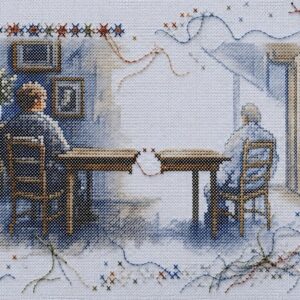
I’ve always found the idea of accurately trying to predict incoming weather using technology slightly strange, somehow off-kilter. Useful and practical, I’m sure, but something about the standing of a lone, smartly suited person in front of a blindingly bright digital screen gesturing to this or that sits uncomfortably for me, sits impersonal. Our preference to harness and thereby control weather is only one of many impositions inflicted on natural systems, but as with other things, it marks and consistently ingrains a kind of separation between patterns of weather and our daily choices. We want to carry on with plans regardless of rainfall, regardless of extreme winds, regardless of a large snowfall. To many, weather is an inconvenience to be overcome rather than an ever-changing astonishment to be experienced.
For something that reaches into and impacts every single crevice of the planet, we use relatively few words day-to-day to describe it. It rains, or it doesn’t. It might be noted as raining either heavily or lightly, but that is about it, and wind is generally only commented on when there is either an eerily complete lack of it or it’s causing trees to fall groundward with nests being ripped from their branches. It is cold, or very cold, or unseasonably warm. The sun is unobstructed by clouds or it isn’t, and there will always be someone to declare there is either too much or too little of it.
Have you ever noticed though how seabirds flying in high winds can look like small torn-up pieces of paper, as if tossed from a window, or how crepuscular rays appear to point toward earthly things, or how animals turn their stoic faces toward the warm sun, or how owls don’t like to fly in rain, that everything is made greener by it, or how the heads of flowers will follow the sunlight, or how a covering of ice can cause you to second-guess yourself, or how it could take only a single day of strong wind for a cherry to lose every last blossom, or how much kinder people tend to be when they are warm?
At some point, we stopped shaping our days and needs in a close association with weather, stopped being able to sense it.
At some point, we stopped shaping our days and needs in a close association with weather, stopped being able to sense it. As animals like any other we could certainly know it more deeply, wordlessly even, but this knowledge cannot be stumbled upon or prescribed, and there are so few communities left who live knowing their senses fully in this way. Weather used to be one of the most consistent patterns of this planet, and therefore a daily opportunity to notice the changing sensations of one’s physical body. Our fluctuating temperatures, our comfort, the securing of a place in which to shelter or the lack of one, the tendency to seek out warmth.
The harshness or relentlessness of weather can turn friends to lovers, can cause others to lose their minds, can provoke travel across continents, can cancel plans, can reroute rivers, can flood civilizations, can incite both panic and delight, can wash away a life’s work, can set fire to forests. It provides us with both fear and fascination, with an excuse, with something to say to those we only ever encounter as strangers. We want to be out in it, but we also want to know what it wants from us. Out in a rainstorm because sometimes that can be just as appealing as watching it from behind warm windows—there is a natural craving for weather to confirm one’s aliveness, and as with storms the same can be true of being out in strong winds, or heavy snowfall, or dense mist. We want to feel alternately held by weather, lost in it, safe from it, overwhelmed by it, in cahoots with it, favored by it, protected from it.
I dream of monsoons because I’ve never experienced them, because I’m certain that such a thing would mark some irreversible change in me, and because I want to know the word for “monsoon” in twenty different saturated tongues.
And the always shadows, the shadows always. Made long by the weak winter light, made by the moon at its very brightest, made brief by birds flying across the sun, forever made by that sun even though it is ninety-three million miles away. Wind that moves the shadows of clouds slowly or swiftly across mountain ranges, shadows that ask nothing of you except to notice. Shadows that seem crisp at their edges and some that seem as though they are bleeding blurred into the ground. All more evidence of aliveness and the ever-changing nature of every last atom.
We talk about the weather because in doing so we are talking about being alive, and fleeting, and flawed.
We talk about the weather because in doing so we are talking about being alive, and fleeting, and flawed. We talk about weather because we want people to know that we, too, can be changeable and varied and nourishing. The following words provide more ways to notice both oneself and the weather that constantly surrounds, makes light and dark of us. We need more words for weather because through the planetary destruction wrought we’ve altered its most essential and ancient patterns, perhaps in ways that now cannot be reversed or fully mended, and being able to recognize and name that which is abnormal seems an important minimum of going forward toward something. Rain will come, clouds will part, the sun will burn, and we will dream not only of monsoons but of a better and more beautiful world in order that we may one day live in it.
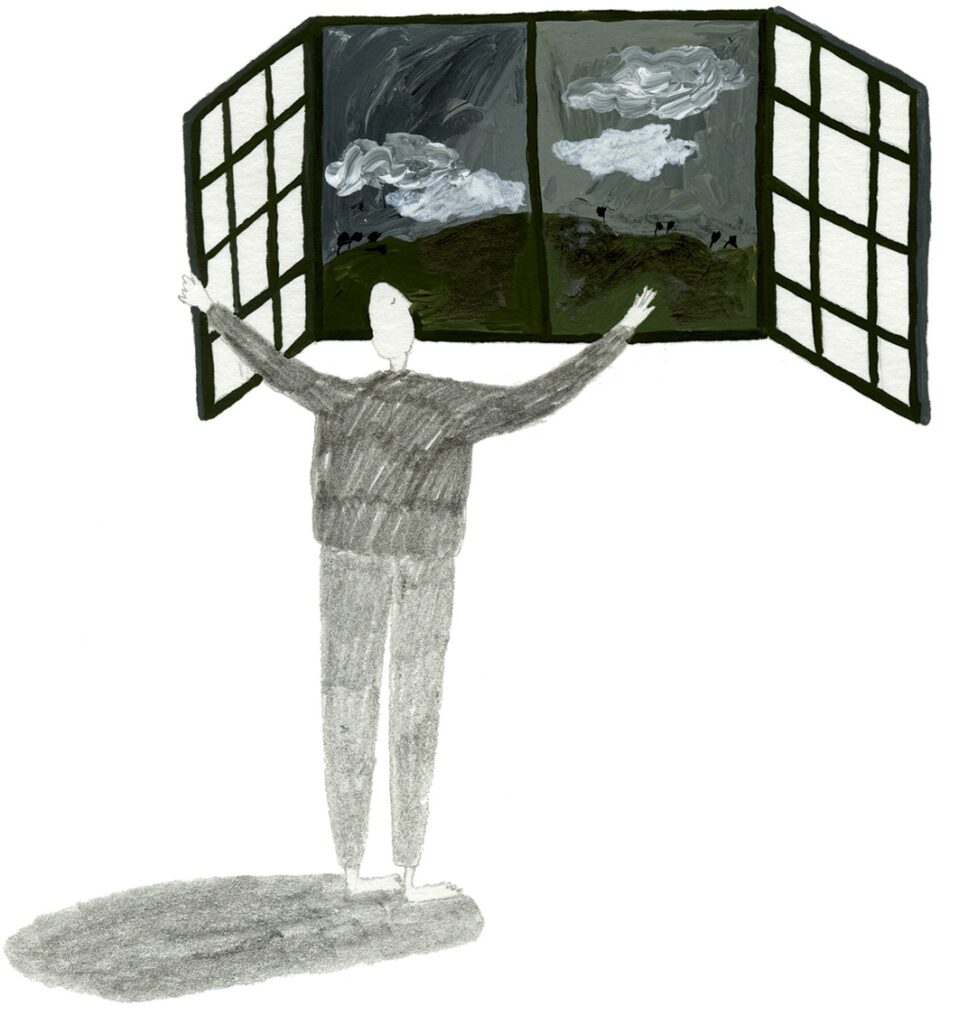
oogly
adjective
Cornish
OOG-lee
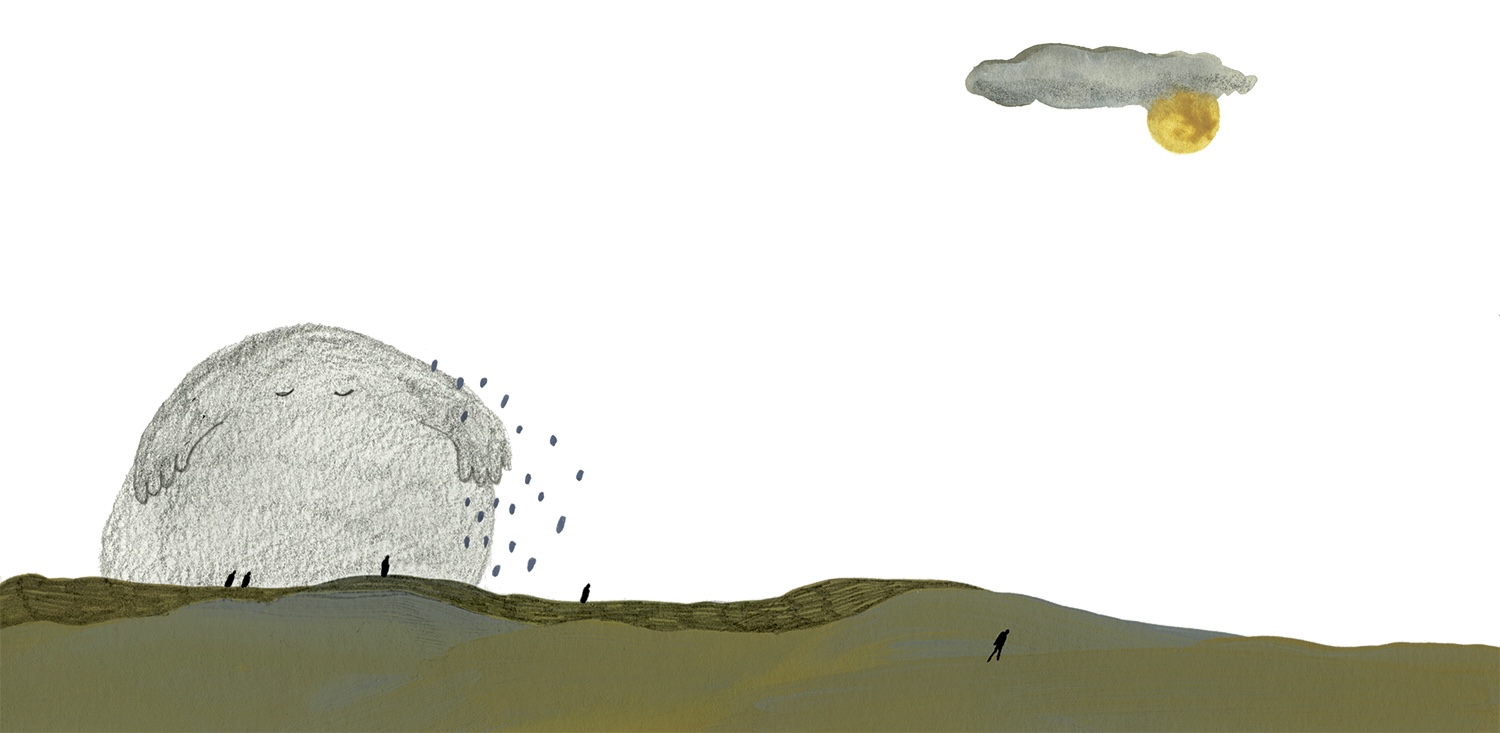
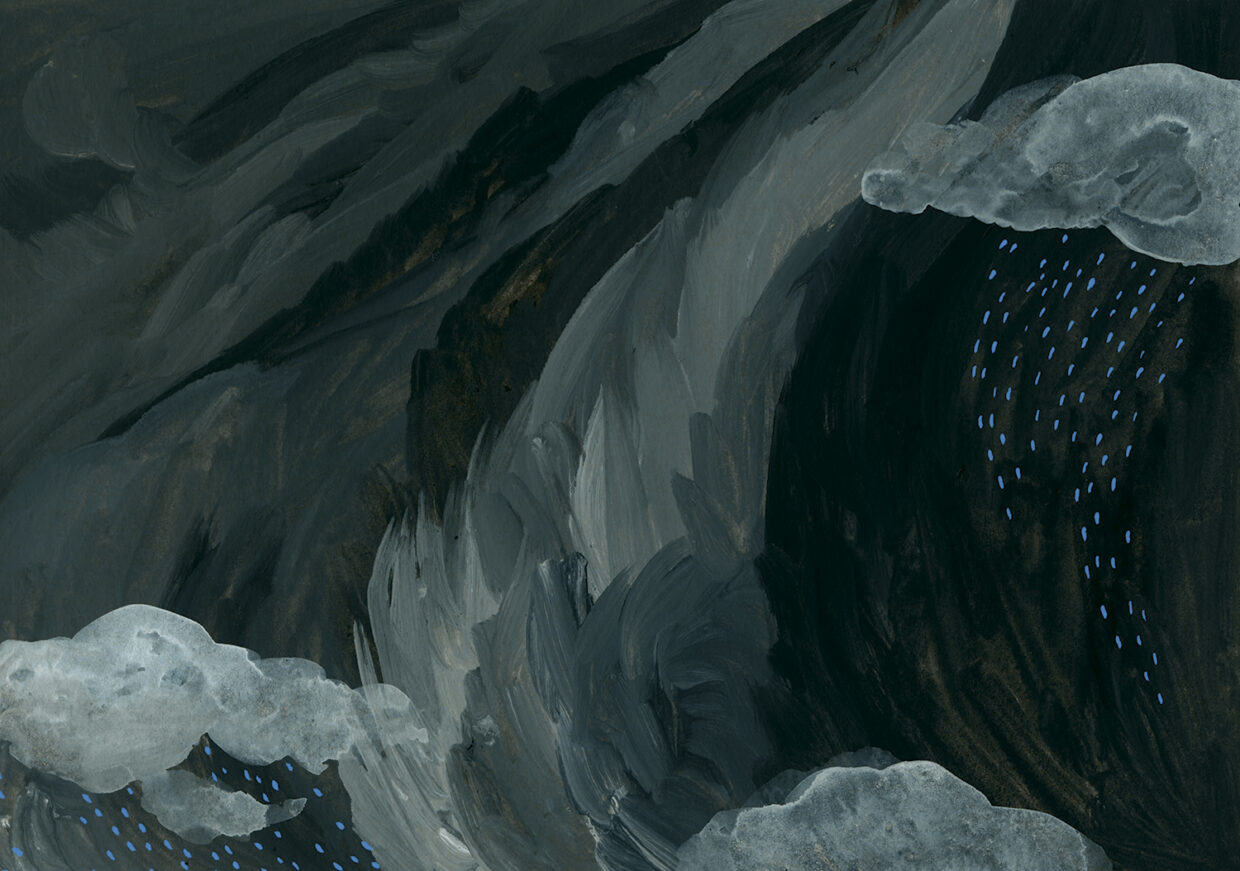
A word for how the sky looks when wild, dark, powerful weather is incoming.
gluggaveður
noun
Icelandic
GLUGG-ah-ve-thur
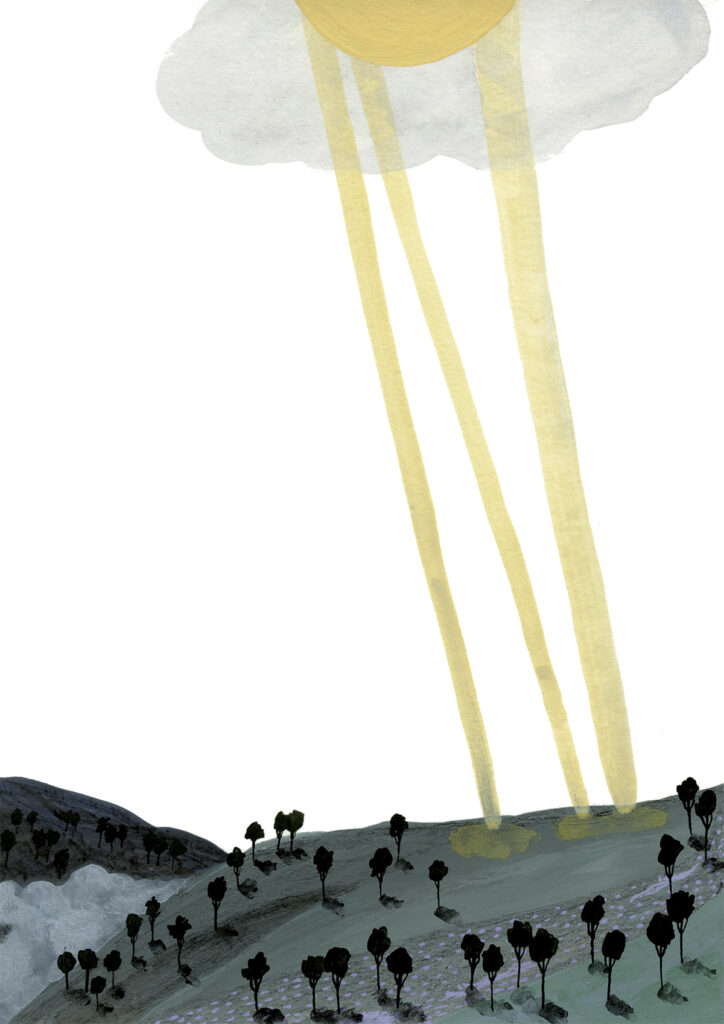
Literally translates as “window weather” and refers to the sorts of weathers that are pleasant to look at from inside but, depending on how one feels about such weathers, perhaps less pleasant to actually be outside in. A not uncommon phenomenon to be found in Iceland, a place of some unpredictable and harsh weathers, and the language features a long list of different words—possibly as many as one hundred eighty if including dialectical variations and compound words—to describe various types of wind and its characteristics, or wind-related weather.
die Füchse kochen Kaffee
phrase
German
dee FOOK-se KOCH-en KAF-ee
A regional German phrase for mist, literally translated as “the foxes are making coffee,” and particularly referring to the kind of early morning mist that sits low and persistent in cold valleys.
初雪 / hatsuyuki
noun
Japanese
hah-tsoo-yoo-kee
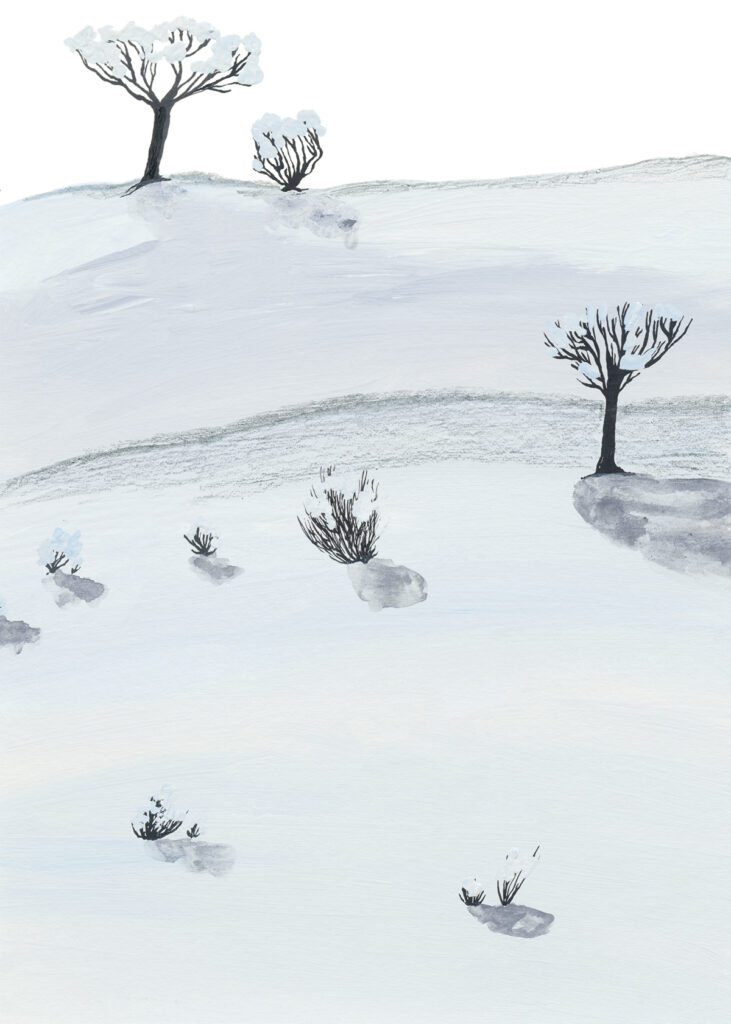
A word specifically for the first snow of the year, formed of kanji 初, meaning first or beginning, and 雪, meaning snow.
les bruixes es pentinen
phrase
Catalan
les BRU-sheses PAN-ti-nan
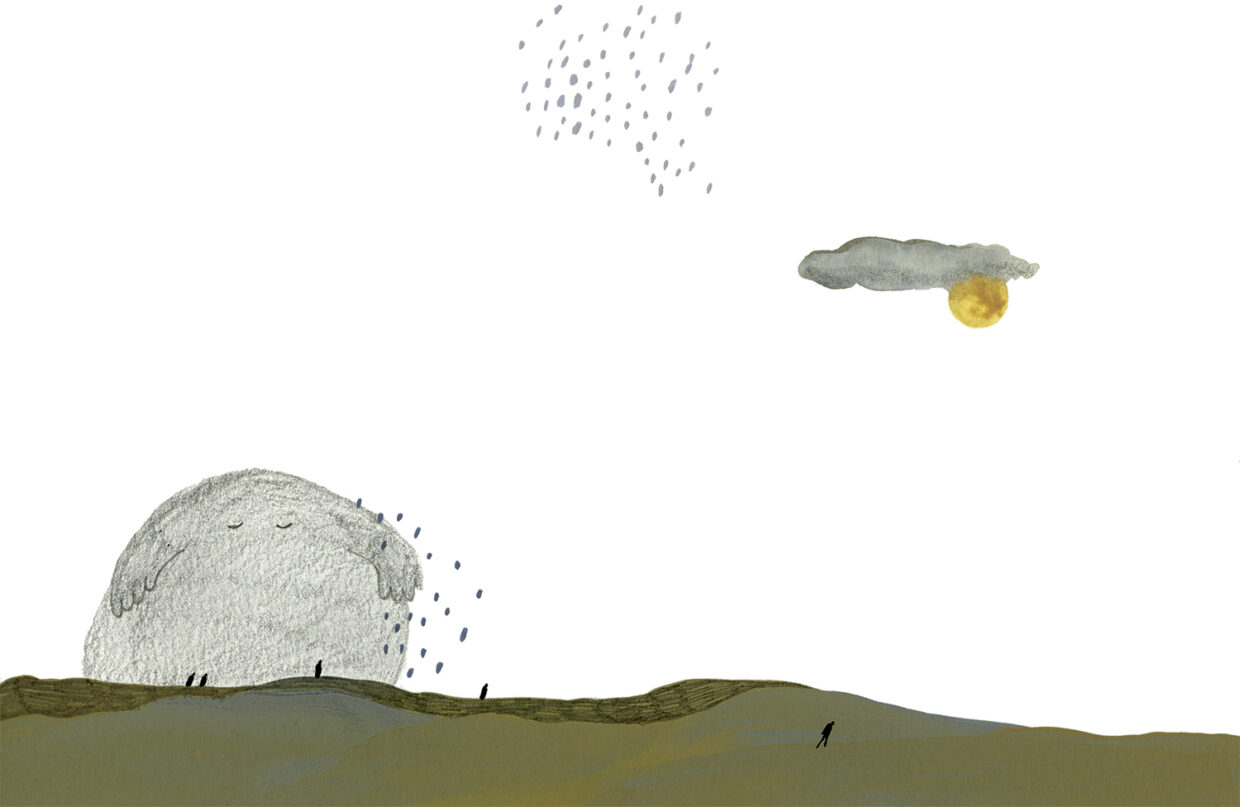
Literally translating as “the witches comb their hair,” les bruixes es pentinen is a Catalan phrase referring to a sun-shower, a rain falling while the sun is still shining. Meanwhile in French, a sun-shower is called a mariage de loup, literally a “wolf wedding.”
____________________________

From Love a Planet: An Illustrated Lexicon of Landscape, People, and Possibility by Ella Frances Sanders. Used with permission of the publisher, Andrews McMeel Publishing. Copyright 2026 by Ella Frances Sanders.

Ella Frances Sanders
Ella Frances Sanders is an internationally-bestselling author and illustrator of five books about language, science, and beauty. She is both a columnist and designer for Orion magazine, and resides in Scotland.