Retracing the Steps of Sylvia Plath in Paris (and Rome, and Cape Cod, and Wellesley...)
Helen Bain on Taking a Plathian Pilgrimage
The train pulled into Nice at 11:20pm. It was December 31st, 2021, and after I had found my small pension-hotel to drop off my bag, I went out into the streets. There was a flurry of excitement; groups of people carrying bottles of sparkling wine were rushing down to the sea. I was swept along by the crowd, and at midnight on the Promenade des Anglais, corks were popped, fireworks let off, and everyone toasted the new year.
I had arrived too early. In 1955, the train from Paris took all night, and Sylvia Plath and her then-boyfriend, Richard Sassoon, saw the new year in half-asleep in a shared third-class compartment before eating bacon and eggs and pulling into Nice in time to see, in Plath’s words, “the red sun rising like the eye of God out of a screaming blue sea.” (Today, there are sadly no dining carriages on French trains, but my simulated journey extended to bringing and consuming the exact picnic they picked up at Lyon: ham rolls, red wine, peanuts, tangerines and—very Plathian—dried figs.)
I was researching a novel about Plath’s life in the town of North Tawton, Devon, where she spent just fifteen months in the early 1960s. But even though my book would be almost exclusively set in Devon, with none of the chapters narrated by Plath herself, I nevertheless wanted to try to see that world from her perspective. We are all made up of the sum of our experiences, and I did not think that I could properly understand Plath’s sightline of the packed rows of terraced houses in North Tawton unless I had seen the manicured lawns and well-spaced-out white clapperboard houses of her childhood suburb of Wellesley, or been able to compare the jagged black coastal rocks at Hartland with the long yellow shorelines of Cape Cod, where she spent many summers.
Perhaps what she really loved was transit itself: stimulation, novelty, the heady potential of change.
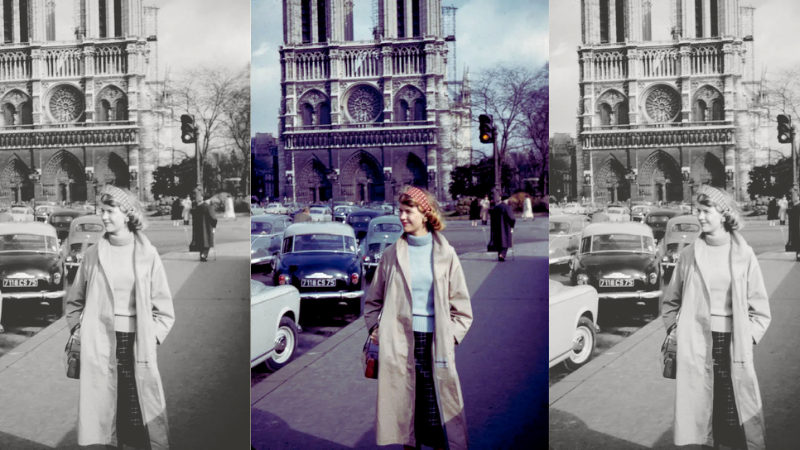
And so I resolved to make as many journeys as possible in Plath’s footsteps—preferably at the exact time of year she took them—so I could view the small, postwar world of North Tawton through the prism of her lived experience. And I began in Paris, in December, where Plath arrived for the first time in 1955, instantly falling in love with it.
Plath had a tendency to fall in love with wherever she tipped up, invariably declaring it to be the place she had always been seeking. At first, this was France. Docking briefly at Cherbourg on the way to England in September 1955, she claimed, “I felt I’d come home.” The following summer, traveling from Paris to Madrid on honeymoon with Ted Hughes—and sharing a third-class compartment with “two dear Spanish soldiers, rifle-men” and various others, one of whom passed around a leather wine-flask—she throws France off in favour of Spain: “At last I have found my native country.”
She particularly loved the effects of the dry heat on her sinuses (Plath’s sinuses were a problem, not helped by the damp winds in Cambridge that blow straight off the Fens). But Spain palled. By the end of August, she is relieved to be back in Paris’s “subtle gray weather after the blank blazing sun.” And the following week she is in Yorkshire for the first time, meeting her in-laws in “the most magnificent landscape in the world […] Ted and I are at last ‘home.’”
Perhaps what she really loved was transit itself: stimulation, novelty, the heady potential of change. When Plath and Hughes were preparing to return to England for good in 1959, she writes in her journal of an “odd elation […] as if the old environment would keep the sludge and inertia of the self, and the bare new self slip shining into a better life.” And she loved the delicious sensations of motion, recording across 1955 the “ecstasy” of a plane flight from New York to Boston; of dancing nightly on a ship “in the midst of great tilts and rocks”; of a Cambridge ride on a runaway horse that reminds her when she broke her leg skiing: “Never has every fiber of my mind & body been so passionately concentrated.”
Many of the poems she was to write in Devon revel in velocity—the energy and acceleration of “Ariel,” the passionate avowal of “Years” (“What I love is / The piston in motion…”), the bees of “Wintering” taking flight to end the collection on a heady note of conquering the air itself.
In four years, while I was researching and writing my book, I followed Plath as far as I could. There were journeys I was not able to make, because of time or money or because they no longer existed. I couldn’t take a boat from America to Europe, nor camp in Yellowstone National Park, nor use the defunct railway station in North Tawton. But I could follow her around Paris, walking along the Champs-Elysees at night, along the Seine for miles, up the steep hill to Montmartre. In Rome I sat by the Spanish Steps, eating dates. I took a choppy Channel crossing from Dieppe to gritty Newhaven, looking down at the lumpy green water which had caused 20 schoolgirls on Plath’s corresponding ferry to vomit copiously and simultaneously. Where Plath’s 1956 Paris to Madrid journey took 24 hours, in July 2022 it took just ten, and involved putting on face masks as we crossed the border (Covid regulations at the time differed in France and Spain). But as we shot through the flat plains of the northern part of the country I saw, exactly as Plath had described, that it was all “blazing yellow” and “light green,” with huge concentric skies.
“Life is so much heightened by contrasts,” she wrote to her mother on returning from Spain.
Staying in Northampton, Massachusetts, to work in the archives at Smith College, every day I cycled past the house where Plath and Hughes lived, by the parks where they walked and picked roses, the college buildings where Plath had first been a student and later returned to teach. In New York, I walked the endless grid back to what was once the Barbizon Hotel on a scorching hot summer’s night, counting blocks just as Plath did in 1953 before she gave it to Esther Greenwood in The Bell Jar. I met friends in Boston, the hotel turning out to be the former Ritz-Carlton where Plath drank martinis with Anne Sexton and George Starbuck, and we dutifully drank martinis ourselves. And I took a ferry to Cape Cod, where I waded into the “bean green” Atlantic to swim, the water so salt that it dried in patterns on my skin (shark sightings had been reported that day, and it’s fair to say that I only went in up to my knees).
All the time, I could contrast those worlds against each other. The cathedral square in Reims in the morning sunlight. The North Devon cove with its slab of orange-tinted rock where I was certain Plath had taken her brother blackberrying. The crescent bay of water by her grandparents’ house at Point Shirley, Winthrop. The hard wet sand of St Ives under a full moon. And in this way I could better understand not only her work but also how, in life, we invariably compare one thing with another in order to build our understanding of the world.
And filter this into my novel in tiny touches, ways that the reader might not even actively notice but would nevertheless intimate what it was to be an educated 28-year-old girl from Massachusetts who had a passion for motion, for signs in foreign languages, for third-class train compartments full of strangers, who found herself somehow landing in a small town in Devon in 1961 and set about building a life there.
By the end of 1962 Plath was sick of North Tawton. She longed to fly to Morocco where her friend Ruth Fainlight was living. Instead she moved back to London, to a rented flat in Primrose Hill. She packed and travelled in a flurry of excitement. But when the exhilaration of change had ceased, London was no good. She had intended to live between London and Devon, and perhaps switching between two places would have suited her. “Life is so much heightened by contrasts,” she wrote to her mother on returning from Spain.
In 1962, her work was garnering interest abroad; a radio station in Oslo, Norway, had requested permission to broadcast “Three Women.” But Plath never got the chance to visit northern Europe.
By the spring of 2025 my novel was finished. I made a weekend trip to Oslo, visiting the Munch museum on the harbour where the pragmatic Norwegians have built communal saunas out of recycled materials, with ladders descending into the icy water and a good deal of friendly chat. I took a bracing dip, and thought of how much Plath would have liked both the pragmatism and the conviviality. The air in Norway is exceptionally dry. I was certain that she—and her sinuses—would have felt instantly at home.
__________________________________

The Daffodil Days by Helen Bain is available from Scribner.

Helen Bain
Helen Bain received her PhD in creative writing from King’s College London and has master’s degrees in modern and contemporary literature and creative writing from Birkbeck, University of London. She was selected for The London Library Emerging Writers’ Program 2020–21 and The Genesis Foundation Emerging Writers’ Program 2022–23. In 2024, she won The People’s Friend Comedy Fiction Prize. Currently at the Financial Times, she has worked for British Vogue and The Guardian, and she also teaches creative writing at the university level. Helen lives in Sussex. The Daffodil Days is her first novel.