Lit Hub Weekly: March 9 - 13, 2026
THE BEST OF THE LITERARY INTERNET
- Thirteen essential books by trans and queer writers, reviewed by trans and queer writers, that the New York Times Book Review neglected to cover between 2013 and 2022. | Lit Hub Criticism
- “But white settlers’ hatred of Indians and desire for their lands percolated on the American frontier, while visions of territorial expansion reigned among national leaders.” How Benjamin Franklin (and other American colonizers) spread genocidal propaganda about indigenous peoples.| Lit Hub History
- Why are there so many Jane Austen adaptations? And why do we keep watching? | Lit Hub Film
- “She gives herself room to revel in the playfulness and re-invention of a new genre, defying expectations of Black women just as hip hop was becoming the dominant sound of radio.” Jessica Lynne praises Missy Elliott’s sonic world. | Lit Hub Music
- Vauhini Vara dives into the unlikely (or maybe very likely?) collaboration between James Patterson and MrBeast. | Bloomberg
- Parker Henry wants to know why no one’s talking about Iris Murdoch. | The Point
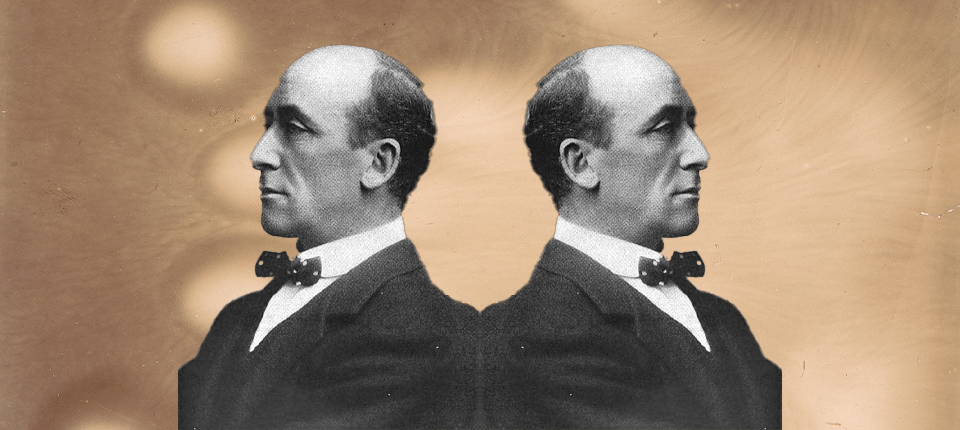
- Lauren J Joseph considers the prevalence of doppelgängers, in literature and real life. | The Guardian
- “Grief is the real life, and the reprieves of peace are just places we visit in between. To treat a woman in mourning as something special, extraordinary? It would be harder to find one not in mourning.” Haley Mlotek on reading Marguerite Duras’ The War. | The Nation
- Andrew Holter considers Mary McCarthy’s (confrontational, extraordinary) war reporting in this new era of “fantasies and illusions of American men.” | The Boston Review
- “When Clavicular avows that the B-list actor Matt Bomer is the closest thing we have to a True Adam… he sounds even more ridiculous than those dusty mid-century guides to literature that promise to provide definitive rankings of the classics.” Becca Rothfeld looks into Looksmaxxers. | The New Yorker
- From Hamlet to Hamnet, Dana Stevens considers the inevitable “gaps in a historical figure’s life story.” | Yale Review
- “Morrison’s work was not meant to be a palatable salve. Instead, surprise and provocation are the ingredients of her fiction.” In praise of Toni Morrison’s difficulty. | The New Republic
- What Seamus Heaney and Dante have in common. | The Hudson Review
- Your senators might be using generative AI for “drafting and editing documents, summarizing information, preparing talking points and briefing material, and conducting research and analysis.” What could possibly go wrong? | 404 Media
- “Gout is a master translator. She compensates constantly, balancing the system with ruthless internal logic. She takes what the body offers — last week’s wine, last year’s weight gain, yesterday’s skipped meds — and translates it into her own idiom.” Jan Steyn considers the literary lessons of gout. | The Dial
- “If Kendi is right that detractors magnify his shortcomings to discredit his scholarship, the biggest test will be his new book, which seems destined to be judged less by its content than by Kendi’s own baggage.” Zak Cheney-Rice profiles Ibram X. Kendi. | New York Magazine
- “Sometimes, when I’m lost and feeling less-than, being taken care of—being shown care by a gentle hand—is the only thing that returns me to myself.” Marcus Wicker on writer’s block, Nate Dogg, and Black barbershops. | Poetry
- Kalyn Gensic writes an ode to her high school librarian: “Mr. Fondersmith embodied intellectual freedom, trusted his teenage students with the grittiest and richest of books, and infantilized no one. He was a badass librarian, and what could be more Texan than that?” | Texas Observer
- Why the North American School Scrabble Championship is “serious business.” | Defector
Also on Lit Hub:
Money as an overlooked language • Embrace nostalgia (by baking banana bread) • The time Tolkien stopped W. H. Auden from writing a book about him • Six essential books about birds • What being a professional athlete can teach you about writing • Robert Morgan remembers reading War and Peace • Love, loss, and the impact of jazz • Jeannine Cook on why she opened Harriett’s Bookshop • On writing about family archives • Six books (and a movie!) about bad fathers • Literary tradition, Trump, and writing multiple points of view • On writing a post 9/11 cruise novel • Chronicling Millennial malaise • Mental health and Christian faith in 19th-century Prussia • Authors answer our burning questions about literary life • On Jane Austen’s Period Drama, the Oscar-nominated short • Logan Scherer remembers Michael Silverblatt • Why gossip helped Juliet Izon become a better writer • Books about friendship breakups • On translating Vicente Luis Mora’s Centroeuropa • What we do (and don’t) learn about our parents • Who really killed Roe v. Wade? • Alice Hoffman remembers a once-in-a-lifetime dog • 5 book reviews you need to read this week • This week’s Independent Press Top 40 Bestsellers for fiction and nonfiction • Lessons learned from Night of the Living Dead • The most literary video game • Making a doc Beryl Bainbridge as her grandson • Katherine J. Chen on Hinge as a muse • The best reviewed books of the week • Am I the asshole? • Andrew Martin on writing exposition • Women and the animals they love • Read “Talking Dog,” a poem by Danniel Schoonebeek