Lit Hub Daily: July 13, 2026
THE BEST OF THE LITERARY INTERNET
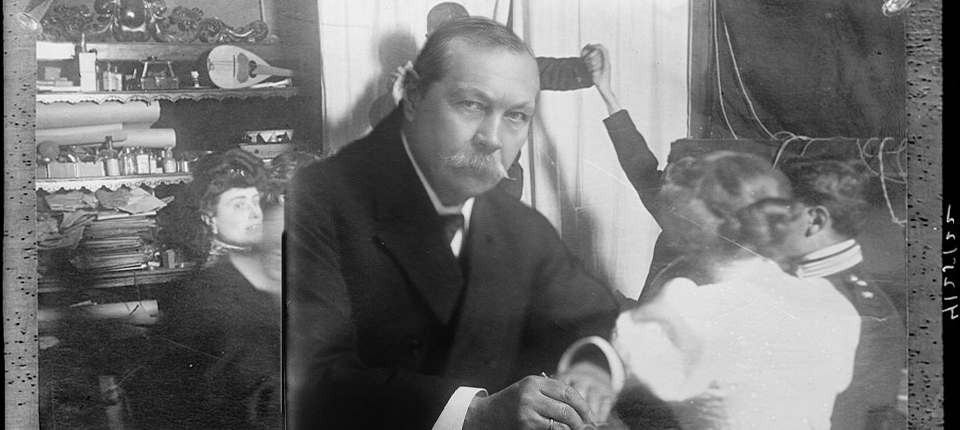
TODAY: In 1930, Almost 6,000 spiritualists gathered in the Royal Albert Hall for a memorial to Sir Arthur Conan Doyle, attended by his relatives. The medium Estelle Roberts relayed a private message to Doyle’s widow which she affirmed to be genuine.
- How cell phone novels became the iconic genre among young writers on the Y2k internet. | Lit Hub Criticism
- “To drink is to enter of a labyrinth of romantic, thrilling, even glamorous myths; to give up drinking is to give those up too.” Jack Parlett explores the queer writer’s experience of sobriety. | Lit Hub Memoir
- André Aciman considers intimacy as art in Eric Rohmer’s Élisabeth: “Rohmer’s characters… could all be on time-out and exist on an entirely different planet… But be under no illusion; it is still our world.” | Lit Hub Criticism
- Why writers need to steal time whenever they can (even if it means waking up really, really early). | Lit Hub Craft
- How Grace Paley imbued the roles of both artist and activist with love. | Lit Hub Criticism
- “It was winter when Laura left her husband without warning, and summer when she returned.” Read “The Rival,” a story by Sophie Mackintosh from the new issue of Kismet. | Lit Hub Fiction
- “There have been more than a few times lately when I wanted to throw my laptop across the room, drop everything, and go live in the woods. This was one of them.” Monica Potts confronts the extent of AI theft of her work. | The New Republic
- Nitsuh Abebe explores the rising (“almost camp”) use of “degenerate.” | The New York Times Magazine
- Even if Sarah Wynn-Williams was supposed to stay silent, Meta still looks like a bully “pursuing a personal agenda.” | Wired
- Why workplace AI use could shove more people towards the gig economy. | Jacobin
- J. D. Vance’s Communion is “a stone-cold free bin classic.” | The Baffler
Article continues after advertisement