Why My 85-Year-Old Friend Has Devoted the Last Years of Her Life to Reading the Ancient Classics
Seth Kaplan on Encountering True Devotion to Art, For Its Own Sake
Joan is eighty-five years old, and I fell a little in love with her on Thanksgiving.
She was sitting on our couch reading a copy of The Aeneid that she had plucked from the bookshelves that line our family room. Around us, Thanksgiving did what Thanksgiving does: football on television, laughter colliding with panic from the kitchen, young children screamlaughcrying in the next room. And there was Joan, in the middle of all of it, considering Virgil’s pages, turning them gently the way you handle something hallowed. I sat next to her. I asked her and she told me.
I didn’t fall in love with Joan the way you’re thinking, or maybe it’s exactly the way you’re thinking. I fell the way you fall for someone who shows you, without meaning to, what you’ve been missing for decades.
I began to bring her other books. I presented Roman Civilization, Volumes I & II and my annotated Fagles and Fitzgerald Odysseys: the spines cracked and pages dog-eared by some younger version of myself who had once cared enough to underline, write in the margins, highlight. I brought them like offerings. I didn’t know yet that’s what they were.
Joan is the mother of a dear friend. She is nearing the end of her days—her words, not mine—and she had decided to spend whatever time she had left trying to understand where everything came from. She had lived through the Beat poets, postmodernism, the entire arc of twentieth-century literature. She chose instead to go backward.
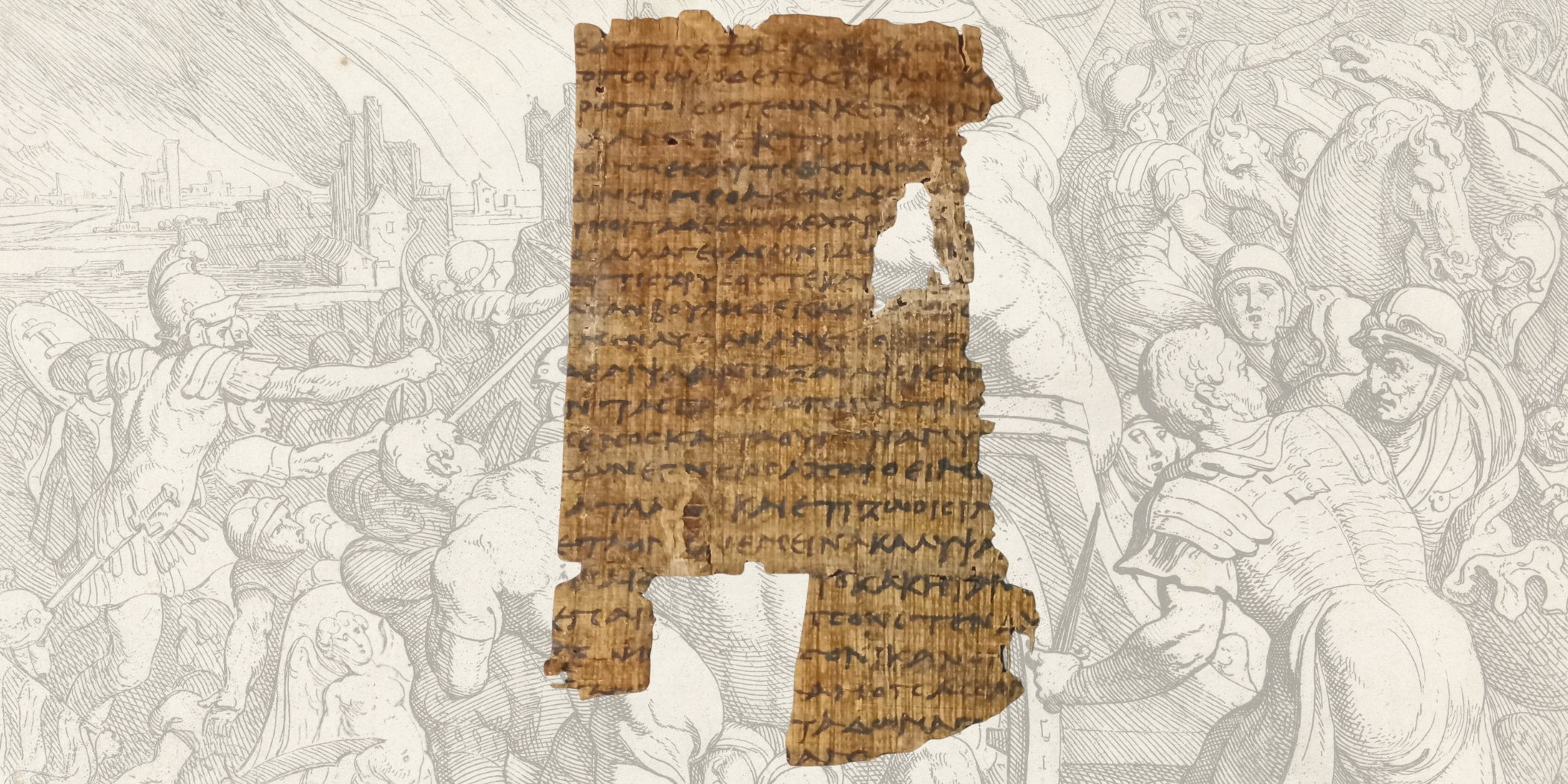
Joan spends four to five hours every day reading Homer and Virgil and Sophocles in their original languages. I asked her why. Why not something alive and evolving? Clutching the books, she said flatly: “Everything comes from this. Western civilization, our ideas about beauty and morality and what it means to be human. It all starts here.” She said it the way you state something obvious with no need for performance or persuasion, only with certainty arrived at through years of sitting with difficult, ancient things.
What would it feel like to love something the way Joan loves Ancient Greek and Latin poetry? To wake up with that hunger. To have your voice lift like that when you try to explain what moves you.
Her hands, reddened and veiny, moved through the pages as she spoke. The hands of someone who has spent years reading and writing, who knew how to rotate a pencil to keep it sharp, and how to flip it to erase. She wore an oversized scoop-necked blouse, sleeves billowing when she gestured. Her earlobes long-weighted by gold bangled earrings that swayed as she talked.
When she described Agamemnon, pausing to find the right phrase, her face transformed into something younger, incandescent. “Very difficult,” she said. “But amazing poetry.” Later, I would have to Google Aeschylus, the playwright who wrote it. Joan spoke about him like an old friend. She described the characters—Clytemnestra, Agamemnon, Iphigenia—the way you speak about people you know, people whose choices and suffering matter to you. These weren’t just stories.
She mentioned, almost apologetically, that she leads two reading groups, as if it were excessive, though her posture straightened as she went on. One has been working through The Aeneid for three years. The other is translating Euripides’s Iphigenia at Aulis in Ancient Greek, learning along the way.
“It all connects,” she said. “The hymn tells how Aphrodite seduced the mortal Anchises and became pregnant with Aeneas, and we’re reading about Aeneas in The Aeneid! Then in Iphigenia we see young Clytemnestra, before she becomes the woman who murders Agamemnon.” All of it, she went on, part of the vast web these ancient writers wove together.
She explained how Emperor Augustus, rising to power after Julius Caesar’s assassination, commissioned Virgil to create a Roman epic connecting Rome’s origins to the defeated but magnificent Trojans. She said commissioned with weight, as if she could feel the pressure on Virgil creating art under imperial patronage.
“Augustus wanted propaganda,” she said, leaning forward, her eyes locked on mine. “Virgil gave him art.”
“At this rate, we’ll finish The Aeneid eventually.” She smiled. “And then maybe we’ll read it again.”
I asked why she didn’t write about what she was discovering, share her insights with a broader audience. She looked genuinely surprised, as if the question had never occurred to her.
“Oh, I’m not a scholar. I’m just a student. I’m learning for the wonder of it. It’s like touching something sacred.”
She continued to slowly move through the pages, her fingers finding annotations penned by that younger version of myself that felt very far away. And further back than that—the child my mother still describes, devouring books one after another, genre irrelevant. I hadn’t thought about either of those boys in years.
Reading through my annotated books, she made appreciative sounds as she turned the pages, studied the Post-its, traced the underlines with her fingers. She held each book the way I had brought them to her. Like something worth holding.
Watching her face as she talked, following her hands as they moved in the air, her eyes glassy when she tried to describe to me what moved her, I felt something. Not romantic, not familial, but the love you feel for someone who shows you what’s possible. Someone who sits on your couch and transforms the space around her just by speaking about her passion. Someone generous enough to invite anyone in who wants to witness it alongside her. I didn’t want the conversation to end. I wanted to stay there with her.
*
Around us, the abundance of Thanksgiving filled every room. Endless football, someone raving about artichoke dip, young parents discussing nap schedules. Normal, beautiful, purposeful noise. And Joan, still, in the middle of all of it, inside her small halo of wonder.
Would I like the Zoom link for Thursday nights? Would I like her weekly letters to the Latin group? Did I want to join? Initially, I said yes to everything. I walked away from that couch knowing something had shifted. I just didn’t know yet whether I was brave enough to let it.
An email arrived a few days later. She had been reflecting on our conversation, elaborating on Virgil and Augustus, on the Trojans’ reputation, on Livy’s power of description. She described herself as someone who had always considered herself a dilettante, who never thought she’d be able to concentrate on anything in such depth.
I replied, eventually. I told her how jealous I was of her passion, asked what I might find that could match it. I declined the Zoom calls. Work, obligations, not enough time. But I asked for the weekly letter. The lower-commitment option. And then, almost without thinking, I included a link to my own published work. Yes. I sent an eighty-five-year-old woman who reads Virgil for the wonder of it a link to my writing.
*
My whole life has been organized around stakes. The right college so I could get the right job. The right career moves to support my family. Writing that might get published, read, acknowledged. Even my reading serves purposes now: research, keeping up with cultural conversations, gathering material. Not to mention my work as an attorney on which it all rides. Everything in service of something else. Those two boys—the one who penciled in the margins and the one who devoured book after book before he knew what stakes even were—would not recognize any of it. And maybe that’s the hole. Not the absence of reading, but the absence of reading for love.
Even reaching out to her, I could not stop performing. That link I included, that I sent almost without thinking, was reflex in its purest form. What would it take to change that? Is it courage, the willingness to devote yourself to something with no payoff? Is it patience, the ability to stay with difficulty without needing to show anything for it? Or is it something simpler: the ability to quiet the voice that asks what’s the point?
I’m fifty-four years old, the same age at which Joan started her serious study of the Ancients. I’ve been sitting with that symmetry for weeks, the universe arranging itself to show me something I’m not sure I’m prepared to see.
What would it feel like to love something the way Joan loves Ancient Greek and Latin poetry? To wake up with that hunger. To have your voice lift like that when you try to explain what moves you. To cry, at eighty-five, over lines written two thousand years ago, and feel it as joy rather than loss.
Joan’s email arrives regularly now. The Latinists, she calls the group. Last month’s letter was about a Greek warrior who finally understood that conquest wasn’t worth the effort. That victory extracts a debt. I read it at my desk at work, between emailscallszooms, and thought about that for a long time.
I also keep thinking about her hands on my books. The way her voice was so close but far far away when she talked about things dead for two thousand years as if they were alive right in front of her. As if time were something you could simply step across, if you loved something enough to stay.
I fell in love with Joan that Thanksgiving, but not in any way that needs a name. The love you feel for someone who shows you what’s still possible. She sat on my couch in the middle of all that beautiful, purposeful noise and created, just by speaking carefully about what she loves, a small halo of wonder and offered to make room in it for anyone who wants to witness it alongside her. Even me.
I want to find my way inside one of those halos. I will. Joan started at fifty-four.

Seth Kaplan
Seth Kaplan is a writer, attorney, and former educator whose essays examine parenthood, masculinity, responsibility, and the accumulation of irreversible choices. His work has appeared in Hobart Pulp, River Teeth, and Write or Die, among others. He serves on the board of Off Assignment and lives in Evanston, Illinois, where he is at work on his debut essay collection while growing beautiful tomatoes. Find him on Instagram @sethkaplanwriter.