Stealing Time: In Praise of Writing at Dawn, at Midnight or Whenever We Can
Sara Lippmann: “Honor the time when you are at your most receptive and curious. Protect it with everything you’ve got.”
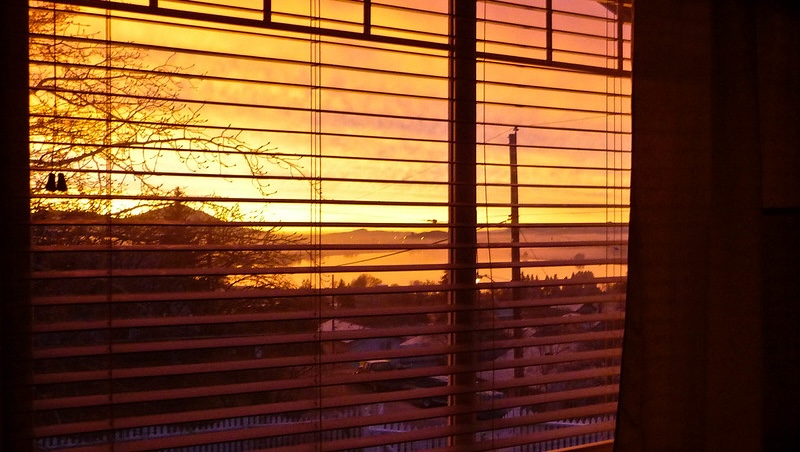
At 5 AM and it’s me and the birds. This is how I like it: when the house is asleep. Outside, the slow rumble of a sanitation truck. A lone scooter screams down the block. Sometimes a helicopter hovers. A different sort of writer might pause to name the local birds (mourning doves, blue jays), might open an ornithology app, but technology has no place here, and research could derail the whole hour. Birds, okay? Sweet tweets, soft moans, the distant caw of a shore bird piloting toward the sea, spirited and hopeful, daylight already breaking through. In winter, the tenor of their song is tinged with desperation, a pleading in the dark, accompanied by the radiator’s heavy breath, but other than these temporal shifts, this is what I’ve come to expect regardless of the season, the sounds a comfort as an early morning writer for god knows how long.
Tired? Sure, but I’m not sleeping much these days anyway, as I’m at the age where the body’s gone rogue, jolting awake at 3 AM, skin on fire, soaking the sheets with sweat. The body is a Gremlin, but this is not a menopause essay. If anything, exhaustion is integral. Lidded eyes, shoulders slumped over the kettle, I’m up but barely, teetering along the line between wakefulness and sleep, that tender liminal space where the magic happens. Who am I kidding? There’s no magic. Writing can be a slog. But it’s either now or nowhere, in this pocket of time or no pocket, my dog trailing me downstairs, clacking on the hardwood, before settling into his post by the window to watch the world and wait for his turn.
All I have to do is show up, be here, stealing time, savoring it, trusting in its possibility, staying open and curious to whatever comes.
It’s my turn now. Coffee in hand I bypass my office, forgoing anything upright or serious, settling into my daughter’s room now that she’s away at college. Bed writing has an appeal. In her bed I am reminded of how and why this habit first took hold, my grown kids then toddlers, my mothering brain so frayed I griped to Meg Wolitzer, my teacher at the time, prattling on about not writing, about not this and not that, until Meg looked at me, ragged, on the cusp of tears, spent from sleeplessness and steady need, from the chasm between who we are and who we want to be, and replied with her measured cool and endless kindness, in what would become the best advice I’ve ever received: “Steal it. If writing matters to you, you’ve got to find a way to steal time. No one is going to give it to you.”
So began the great steal. Five minutes on a playground bench. In the nursery pickup line. Outside the dojo, on the soccer sidelines, in a packed subway car, stroller braced between the knees, wherever. Parents know. Another episode of Octonauts is worth every sentence.
Until I arrived here: upon the wild expanse of the ungodly hour.
Everyone has their time when they are at their most creative. Mine happens to be with the birds, so the one thing I could do for my writing was to show up for it. This is when I am least harsh, least self-conscious, unconcerned with gunk like marketplace or a variety of “shoulds.” The critical brain is still zonked, and along with it, its pesky sidekicks, self-doubt and anxiety. The to-do list hasn’t yet been written. Teeth brushing can wait. All I have to do is show up, be here, stealing time, savoring it, trusting in its possibility, staying open and curious to whatever comes.
It’s hardly a revelation. Countless writers practice at dawn. Katherine Anne Porter. Hemingway, Vonnegut. Murakami. Of her morning habit, Toni Morrison said: “It’s not being in the light, it’s being there before it arrives.” My writerly next-door neighbor is at it long before me, the glow of her office lamp catching me like a thief as I stumble down for coffee.
Early morning writing removes the pressure, lowers the stakes. Keeps things honest. Something about the prefrontal cortex: a softness conducive to creation, to spontaneity, this porous gateway to discovery. Early mornings are not the time to edit or evaluate, to interrogate the work. I am not second guessing. Hell, I’m still half asleep, tangled in the thick of dreams, swept up in the muzzy logic of the dreamscape, with nothing but the mystery of intuition to guide me. Like this, I fall and keep falling.
I do it with pen and paper. Old school, perhaps. In the notebook I get out of my own way, tricking myself through a practice of play; as anyone who’s ever done morning pages knows, this is the private place where language loosens and voice springs forth, intimate and urgent. There’s no hedging, no holding back. No safety net. My scribbling is barely legible (making this transcription challenging) but that’s the point: longhand pushes the work forward. As someone who can beat a single sentence to death, morning movement counters that impulse, offering a freedom unfound in the cold screen of my laptop where I’ll spend the rest of the day screwed into the editor’s cap.
Early mornings are when I’m most hopeful. I haven’t checked the news. The world is not yet royally screwed. I’m not thinking about a reader, not wondering what so and so will say (“hmmm why all the sex, huh, Lippmann?”) I am only instinct and rhythm, thrumming to an inner beat, grateful for my third grade teacher Mrs. Spry whose bangled arms clacked against the blackboard as she painstakingly taught us cursive because it’s the only way to keep pace with the spate of images, scattered bits that accrue like magnetic shavings, and take on a sort of Woolly Willy shape.
As a child, I was the kid up at the ass-crack of dawn, reading courtside with a bag of Cheerios as my father chased his forehand at his 6:30 AM tennis game. In college, the lure of a dark room had me pulling all-nighters, drafting papers at ungodly hours not merely because I was a slacker who needed the immediate heat of a deadline, but because there was a particular pleasure, an illicit sort of joy in being awake when my roommates were unconscious, a buzzy sort of thrill to it all. Of course, in college, 4 in the morning was not something I was waking up for but still awake to, but the hour was still the hour, waiting for me when I returned to it years later. After all, who are we if not creatures of habit. Everything I’ve written since has been drafted before dawn.
Writing is a solitary act, true. But there is a palpable energy in knowing you are alone yet not alone. Like this, we hold each other to it.
The hour keeps stretching. Much of my first novel was written between 4 and 4:30 AM. As my kids grew and started sleeping better, I could push it to 5 AM, enough time to eke out an hour before making breakfast or school lunch. Now that they are out of the home I start at 5:30. Luxuriate until 6.
The extent of the ritual: Coffee. Notebook. Lately: my daughter’s bed. No lucky pen, no meditative sit. Sometimes it’s hard to grasp where the time has gone. No one’s crying in the crib. The only whimpering comes from my dog, as he tracks a dazed horsefly, eager to go out already.
Jennifer Egan has said, “You can only write regularly if you’re willing to write badly. You can’t write regularly and well. One should accept bad writing as a way of priming the pump, a warm-up exercise that allows you to write well.”
I do lots of heinously bad writing early in the morning but anyone who’s ever been cornered at a party by that guy with “an amazing idea for a book” knows: You ain’t got shit until it exists. Only once it’s on the page can you begin to reckon with the great divide between how a story feels in the head and how it lives on paper. That’s where revision begins.
Sometimes I host a zoom, welcoming others online to write silently alongside me. Cameras off. No chatting. No pants. If showing up for ourselves is tough, perhaps we’re less inclined to hit the snooze button if we’re also showing up for each other. Writing is a solitary act, true. But there is a palpable energy in knowing you are alone yet not alone. Like this, we hold each other to it.
Take Louise Erdrich’s iconic poem Advice to Myself. I am a better person—editor, teacher, mother, partner, daughter, etc.—because I’ve devoted this hour to writing. It’s not looming over me. Now, life. When the story’s going well—and especially when it’s not—the puzzles of the page stay with me, and I’ll continue to turn over phrases or character choices throughout the day, eager to meet them again in the morning.
Whatever it is, find your hour and hold fast to it. Maybe it’s lunchtime at your desk. Maybe it’s 10 PM. 1 AM. Whenever it is, honor the time when you are at your most receptive and curious. Protect it with everything you’ve got. In the words of EB White: “A writer who waits for ideal conditions under which to work will die without putting a word to paper.” Don’t wait. Steal it. Keep stealing it.
____________________________
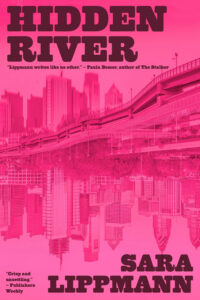
Hidden River by Sara Lippmann is available from Tortoise Books.

Sara Lippmann
Sara Lippmann is the author of the novels Hidden River (Tortoise Books; May 5, 2026) and Lech (Tortoise Books; 2022) story collections Jerks (Mason Jar Press; 2022) and Doll Palace (rereleased by 7.13 Books; 2021). Her fiction has won the Lilith Fiction Prize and has been honored by the New York Foundation for the Arts, and her essays have appeared in The Millions, The Washington Post, Lit Hub, and elsewhere. With Seth Rogoff, she co-edited the anthology Smashing the Tablets: Radical Retellings of the Hebrew Bible from SUNY Press. She is a co-founder of Writing Co-lab, an artist-run online teaching cooperative, and the editor-in-chief of Epiphany magazine. She lives in Brooklyn.