







5 Book Reviews You Need to Read This Week
"'Babe, I’m a whore': four words that touch American bedrock. Put them in a folk song."
Our bevy of brilliant reviews this week includes Amy Davidson Sorkin on Joe Biden’s Promise Me, America, Anahid Nersessian on Edith Hall’s Medea: A Life, George Packer on Bob Woodward’s Secrets: A Reporter’s Memoir, Dan Piepenbring on Michael Douglas’s One Helluva Ride, and Nick Tabor on Anand Giridharadas’s Man in the Mirror.
Brought to you by Book Marks, Lit Hub’s home for book reviews.
*
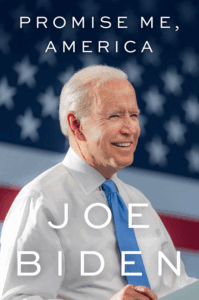
“By any reckoning, the question of Biden’s general competency during his Presidency is a crucial one; doubts about his fitness ended his campaign for reëlection, after all. But Promise Me, America treats all such inquiries as extraneous and gratuitous…Biden allows that his June, 2024, debate with Donald Trump (who had his own issues with classified documents) had ‘gone badly’ but adds that ‘debates had gone badly for lots of incumbent Presidents.’ He sees no qualitative distinction between his frightening and heartbreaking lack of focus that night and Barack Obama’s subpar performance against Mitt Romney, or George W. Bush being ‘caught with a scowling face’ in his debate with John Kerry.
…
“The news of the memoir, in short, is that there is no real news: Biden is as stubbornly in denial as ever. And that assessment risks making the book sound more interesting than it is. Apart from the few, frustrating stretches on his reëlection decision (from which one would never know that he had once referred to himself as ‘a bridge,’ a phrase widely understood to mean that he would serve only a single term), most of Promise Me, America is startlingly dull. Much of it has the feel of something written by a committee—and a committee of which Biden himself need not have been a member. Even the headline-making detail, from an early excerpt, in The Atlantic, that on entering the White House in January, 2021, Biden found a note from Trump that was more friendly and circumspect than one would expect from a man who had been trying to overturn the election—’I know how much you love the American people’—is of marginal interest, and really about Trump, not Biden. The advance Biden received for the book was reportedly about ten million dollars.
…
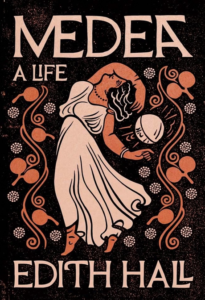
“We claim to be mystified when people kill their children, but the real mystery is why more people don’t. Statistically speaking, filicide—the murder of a child of any age—is rare, accounting for around two and a half per cent of annual murder arrests in the United States. Somehow, no matter how many sleepless nights we endure, how many diapers we change, how much food we clean off the floor, how often we are bitten, smacked, scratched, and kicked, some indomitable mechanism keeps us from putting a stop to it for good. Call it genetic self-interest, or love; whatever it is, it works. When it doesn’t, nothing captures our collective imagination like the spectacle of a murderous mother.
…
“The urge to understand terrible acts in psychological terms is decidedly modern. We are quick to turn diagnosis into explanation—[Lindsey] Clancy killed her children because she was mentally ill—or to locate the roots of present dysfunction in an unhappy childhood. In the ancient world, by contrast, misfortune, absurdity, and madness were seen not just as fundamental aspects of human life but often as its driving forces. This is the lesson of Greek tragedy, in which people find themselves doing all sorts of evil for which they are, in a strange way, blameless.
…
“We tend to use the word ‘tragedy’ to describe a catastrophe that, in hindsight, was avoidable. For the Greeks, however, real tragedy was that which could not be prevented. It is almost cartoonish, like a wrecking ball swinging in from outside the frame to crush an unsuspecting Wile E. Coyote. So it goes with Euripides’ Medea, a mother who murders her two sons. Her ostensible reason is to get revenge on her unfaithful husband, but her actions seem so curiously beyond her control that it is hard to fault her for them; at the same time, she keeps such a cool head that it is equally difficult to see her as a sympathetic figure, one driven past her breaking point by jealousy and grief. She also gets off even more lightly than Oedipus: at the end of Euripides’ play, Medea escapes in a flying chariot given to her by the sun god Helios, leaving her enemies, including her bereaved husband, in the dust.
…
“Marketed as a biography, Medea: A Life is more akin to what the scholar Saidiya Hartman calls a ‘critical fabulation’: a narrative about a person who has slid almost entirely out of the historical record, and whose story, pieced together out of multiple sources, must therefore be partly made up. Hall, a professor of classics and ancient history at the University of Durham, follows Medea from birth to death, borrowing the basic outline of her life from Apollonius and Euripides and then using her own knowledge of Bronze Age culture to fill in the details, such as what it would be like to be a young princess growing up in a backwater colony and how the people of the ancient world dressed, ate, worshipped their gods, and recited their poetry.
…
“As the great biographer Richard Holmes points out, life-writing is by necessity a ‘mongrel art,’ laced with speculation and conjecture and requiring many imaginative leaps, not all of which will land. Yet the tensions between historical reconstruction and modern adaptation are on particularly awkward display in Hall’s book, which offers a well-informed, occasionally vibrant picture of the ancient Mediterranean world populated by characters who behave as if they are on an episode of The White Lotus—getting drunk, having sex, and committing crimes—while spouting psychobabble with an underlying view of human nature that would be unrecognizable to the Greeks themselves.
…
“To call contemporary interpretations anachronistic is beside the point: myths endure because they are transformed over time. But applying therapeutic categories to ancient stories obscures their insights into the unpredictable and unaccountable nature of human suffering. It also undermines what Aristotle maintained was one of tragedy’s essential lessons: eleos, which is often translated as ‘pity’ but more rightly means ‘compassion.’ Compassion entails a respect for the fact that there are limits beyond which our understanding can’t go, and extremes of experience that cannot be broken down into bite-size morsels of analysis and opinion. The great heroes and heroines of antiquity shouldn’t have their complexity amputated by armchair diagnosis. But, really, none of us should.”
–Anahid Nersessian on Edith Hall’s Medea: A Life (The New Yorker)
“Throughout most of Woodward’s career, several criticisms of his journalism have recurred: It provides little or no analysis; he’s a pawn of his sources, telling the story they want told; and he’s dangerous to talk to, because he privileges scoops above all else. These might seem to contradict one another, but in fact few people can survive stenography. Long quoted scenes stripped of context and meaning are almost always the cause of the damaging controversies in Woodward’s books. Once, during a panel on Iraq War reporting, the investigative reporter Seymour Hersh—perhaps the only comparable figure in American journalism, Mr. Outside to Woodward’s Mr. Inside—was asked what he thought of Woodward’s latest book about George W. Bush. The questioner was clearly baiting Hersh to denounce Woodward for shilling for the president. Instead, Hersh replied that he valued Woodward’s books because they reliably told him what was going on in the inner sanctum from which he and the rest of us were shut out.
Like clockwork over the course of half a century, a Woodward book has appeared and Washington has descended into a temporary frenzy, which sometimes even resulted in political change, not least the end of a presidency. If his many best sellers endure beyond their historical moment, their relevance will be as an epic court chronicle, a contemporaneous record of an age of almost unbridled presidential power. But as his work nears an end, his kind of journalism is seeing its influence disappear. The taboos that once shamed his subjects have fallen.
At 83, Woodward has had an important and interesting life, so why not write about it? But a memoir is a treacherous undertaking. ‘Autobiography is only to be trusted when it reveals something disgraceful,’ Orwell warned. It requires an unnatural ability and willingness to explore your own dark corners, failures, humiliations. Half a century of hunting for presidential secrets didn’t prepare Woodward to be his own quarry. In Secrets: A Reporter’s Memoir, he tells a few unflattering truths about himself—major stories he missed, friends he burned. But he doesn’t always grasp their full significance. Scrupulous with facts but famously unable or unwilling to reflect, he’s not a completely satisfying narrator of his own story.
…
“Woodward tells this story of extreme methods with an engaging mix of pride and self-mockery—which is not the same thing as true self-knowledge. Even as we admire his astonishing work ethic and dedication to prying loose the last fact, we recoil at his manipulations. Woodward is a killer. Does he see himself that way? He describes his technique and purpose with the earnest naivete of a boy from Wheaton, writing at one point, ‘I believe my approach is straightforward and my manner forthright,’ and at another, ‘For me journalism has always been about getting the public the best obtainable version of the truth.’ Yes—but it’s also about self-aggrandizement. Woodward’s readers and some of his sources understand this better than he does, and because a memoir depends so much on honest self-scrutiny, this gap is more damaging than an incorrect fact.”
–George Packer on Bob Woodward’s Secrets: A Reporter’s Memoir (The Atlantic)
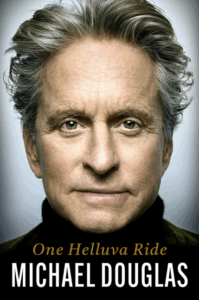
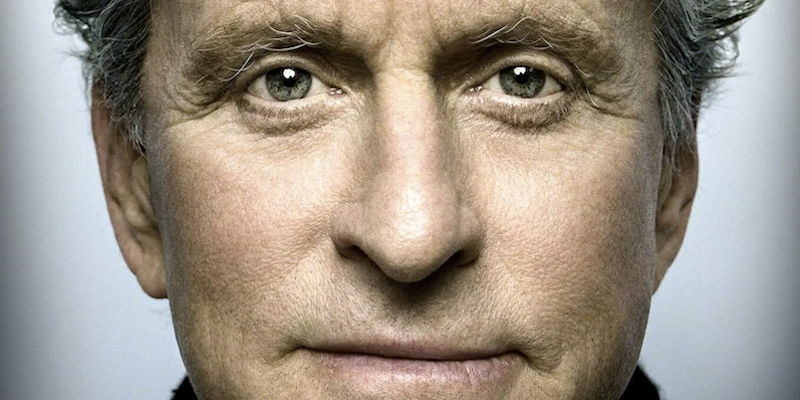
“Ride, which credits two co-writers, feels more brokered than authored. From another actor it might not come across as restrained, but from Douglas it does. The book never boils over the way he does onscreen, where he’s been a fearless presence, lubricious, lickerish, unctuous, rapacious, resentful—and somehow never entirely loathsome. Bare-assed or in suspenders and cuff links, he is the boomer Pan to [Jerry] Garcia’s boomer Buddha. His roles in Wall Street, Basic Instinct, and Falling Down, among others, were a guttural retort to the Deadheads who fancied themselves reformed family men. You thought your ego died? It was just resting its eyes for a second.
Douglas’s life informed his craft, plainly, but only slivers of that darkness make it into the book, storm clouds through venetian blinds. ‘I always wanted to make a film about lust and how lust destroys a man’s life,’ he writes of Fatal Attraction, noting that being an adulterer helped him play an adulterer. Maybe it was as simple as that, but there’s something about the erotics of filmmaking that he treats superficially. As a teenager, working a summer job in a Universal Studios editing bay, Douglas spent his lunch hours watching outtakes of Psycho’s shower scene, ‘frame by frame,’ because Janet Leigh’s breasts were sometimes visible in them. Leigh was a friend of his father’s. The scene ends, of course, with her character’s brutal murder. There would seem to be enough here for a psychoanalytic monograph.
And what about daddy? It was tough growing up under Spartacus. One of Kirk Douglas’s movies was named, aptly, Cast a Giant Shadow, with Michael on set as a lowly production assistant. The elder Douglas was hot-tempered, vengeful, and seldom around; he made up for it by installing a soda fountain in his house and paying neighborhood boys to play with his sons. It wasn’t long before Michael was carrying baggage—Italian leather suitcases, in fact, which his father had given to him, and which he used to traffic enormous quantities of marijuana from California to New York. In the Sixties, when Michael lived in a nudist commune outside Santa Barbara (because of course he did), his visiting father had to pee off the balcony like everybody else; the shack didn’t have a bathroom. ‘This is what I tried to get away from my whole life,’ Kirk said.
Their relationship gives the book more intimacy than either of Douglas’s marriages do, so it’s disappointing that Kirk’s death rates barely more than a footnote. Someone who lived to 103 should die in at least as many words. But Douglas is always pitching toward the rote pleasantries of the daytime talk show.
…
“Maybe I’m alone in wanting more interiority. The gossip is there—lines of blow with O. J. Simpson, an affair with Kathleen Turner, George Harrison’s dog lapping at pearls of caviar. And when Douglas pulls back the curtain on, say, Basic Instinct, he pulls it back good and far: we now know that his stubble chafed Sharon Stone’s thighs. But glimpses of the authentic Douglas are rare, and some absences are glaring. He mentions offhand that he believes in reincarnation—say more, Michael! Why does he disclose nothing about Disclosure, whose sexual-harassment paranoia made it a key text of the Nineties? Why does he ignore his notorious claim, in 2013, that cunnilingus gave him throat cancer, and that ‘cunnilingus is also the best cure for it’? He shouldn’t flinch from such tawdriness, he who has left such a long and elegant grease slick in his wake. We almost get there in his account of Fatal Attraction, which originally ended with the suicide of Glenn Close’s bunny-boiling mistress. A test audience hated it, feeling that her erotic transgressions mandated a stronger punishment. She ‘had to be killed so that the nuclear family could survive and be restored.’ Douglas agreed to reshoot the finale, but Close
was livid. She turned to me and said, ‘What if they did this to you? How would you feel if this were your character?’
I felt her pain, but all I could think of to say was, ‘Babe, I’m a whore.’ I will never forget the way she looked at me after I said that.
‘Babe, I’m a whore’: four words that touch American bedrock. Put them in a folk song.”
–Dan Piepenbring on Michael Douglas’s One Helluva Ride (Harper’s)
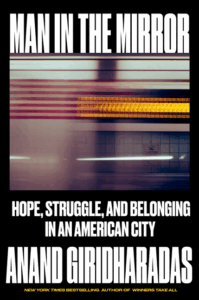
“The book is at once an examination of the events that led to the killing, a study of the government policies that failed Neely, a narrative account of the trial, and a portrait of the divisions that have taken hold in American society. In its intensive reporting and its focus on the lives of normal people—from the streets of Manhattan to the suburbs of Long Island—it represents a turn for Giridharadas, who is best known for his 2018 bestseller Winners Take All, a polemic focused squarely on the rich and powerful (though his first two books were also traditional works of narrative journalism).
Ultimately The Man in the Mirror ends up being too panoramic. Instead of tracking closely with Neely and Penny’s lives, the perspective shifts between dozens of characters, some of whom appear for just a few pages. Nor does Giridharadas make any explicit argument, though the narration often calls out for one. However, at its most illuminating, the book’s efforts to show the longer story of Neely’s life help restore a sense of Neely as an individual, far beyond the awful events of that day on the subway. It also gives glimpses, here and there, of what a better system—one that could have saved Neely’s life—might look like.
…
“The Man in the Mirror is principally about two themes: first, the ways in which our society has failed people like Jordan Neely, the homeless and the mentally ill; and second, the polarization that has taken hold in our country. In a recent New York Times essay, Giridharadas brought these themes together in a pithy thesis statement. ‘A death on the subway that seemed to prove that Americans now inhabit perfectly sealed, irreconcilable moral universes,’ he wrote, ‘actually revealed one of the last things we have in common—abandonment.’ But for whatever reason, Giridharadas doesn’t engage in this kind of interpretation in the book itself. There’s no thesis statement, and even teasing out the main themes requires some discernment on the reader’s part. Resisting interpretation was clearly a deliberate choice by Giridharadas, who is fabulously skilled at pressing arguments when he wants to.
The author has said he drew inspiration from two classic works of narrative journalism: Adrian Nicole LeBlanc’s Random Family, which was published in 2003, and Katherine Boo’s Behind the Beautiful Forevers, from 2012. Neither of those books makes an explicit argument either; instead the takeaways emerge naturally from the storytelling. But that doesn’t happen as successfully in The Man in the Mirror. The narration in this book is diffuse. We find ourselves inhabiting the perspectives of many different characters—from unhoused people to social workers, from defense lawyers to prosecutors. Giridharadas’s empathy is commendable, and there’s value in this kind of sweep; but ultimately the book fails to say enough about anything in particular.”
–Nick Tabor on Anand Giridharadas’s Man in the Mirror: Hope, Struggle, and Belonging in an American City (The New Republic)

Book Marks
Visit Book Marks, Lit Hub's home for book reviews, at https://bookmarks.reviews/ or on social media at @bookmarksreads.