







ZZ Packer and Nafkote Tamirat on France’s Ongoing Student Protests
In Conversation with Whitney Terrell and V.V. Ganeshananthan on Fiction/Non/Fiction
American writers ZZ Packer and Nafkote Tamirat join co-hosts V.V. Ganeshananthan and Whitney Terrell from Paris to talk about recent mass demonstrations across France. They explain how the movement originated at the start of the academic year, with high school students protesting the state of education, and subsequently snowballed to include broad agitation with trade unions and others over poor socioeconomic conditions. Packer and Tamirat discuss the history and structure of the French education system and trace how students came to contend with crumbling buildings and old textbooks. The writers reflect on narratives around property damage versus harm to people and share stories of navigating teargas and confusion amidst the protests. Packer, who was on a brief stint at the American University of Paris, and Tamirat, who is also affiliated with the university and lives in France full-time, also talk about the role of the police in escalating violence. They respond to questions about the protests’ potential impact on spring elections and assess the possibility of real change.
To hear the full episode, subscribe through iTunes, Google Play, Stitcher, Spotify, or your favorite podcast app (include the forward slashes when searching). You can also listen by streaming from the player below. Check out video versions of our interviews on the Fiction/Non/Fiction Instagram account, the Fiction/Non/Fiction YouTube Channel, and our show website: https://www.fnfpodcast.net/ This podcast is produced by V.V. Ganeshananthan, Whitney Terrell, Eric Thong, Archer Walsh, and Elizabeth Willis.
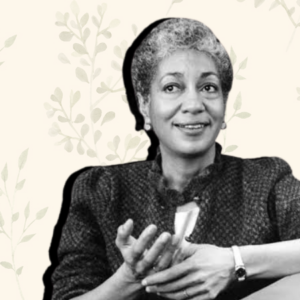
ZZ Packer
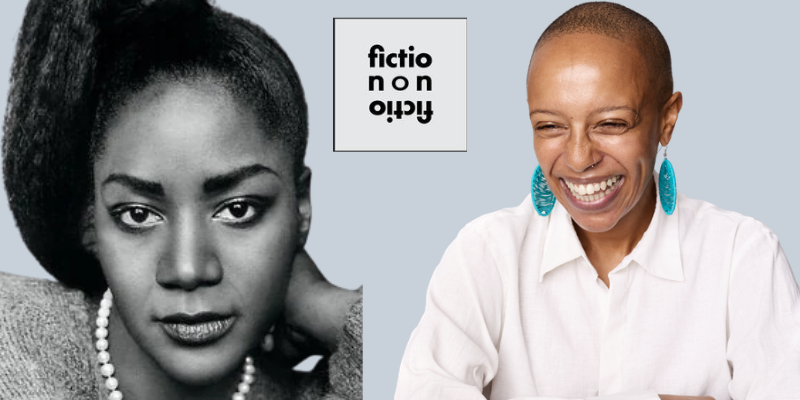
Nafkote Tamirat
The Parking Lot Attendant • Teret Teret (forthcoming)
Others
Fiction/Non/Fiction Season 7, Episode 29: Jen Silverman on Generational Divides in American Politics • Fiction/Non/Fiction Season 9, Episode 45: Aruni Kashyap on India’s Cockroach Youth Movement • Hundreds of Thousands Join Another Round of Protests in France | The New York Times • The American University of Paris
EXCERPT FROM A CONVERSATION WITH ZZ PACKER AND NAFKOTE TAMIRAT
Whitney Terrell: I have one thing I don’t understand about the French system that maybe you can clarify for me. At least I think I understand, [but] I want to make sure I’m right about this. My understanding is that there’s not a private school and then public school system like there is in America. Is that true? And that’s one reason why I think, when I say it’s less expensive, I imagine that you can send your kids to the public schools. You don’t have to pay for them. My child goes to a private school here in Kansas City, and it’s very expensive, and I would prefer not to pay for that.
ZZ Packer: I want Nafkote to speak to this, but I will say that one of my first encounters with the French system is just the understanding that the suburbs of France, which we in the United States kind of think of “the suburbs” as being the place where you have the high property values, et cetera, et cetera. It’s just the reverse, in Paris, at least. And the suburbs, and you’re gonna have to say the word, I always say it wrong.
Nafkote Tamirat: Banlieue.
ZZP: The infrastructure is crumbling even more than you would have in Paris, and you have a large immigrant population. In Paris itself, you have one of the most diverse, multicultural kinds of cities you could ever hope to have. But in the banlieue, you have a greater immigrant population, some of whom are North African, and some… I don’t really use the word Middle Eastern that much anymore, but what people would have called Middle Eastern. And from all parts of the world, the Francophonie, and then those who aren’t Francophone, who just have come for the opportunities—that population suffers greater economic deprivation than they would have in the city. And so those are largely the schools that are crumbling even more so than the ones that are in Paris, within the Paris 20 arrondissement.
NT: Just on that point, there are also suburbs around Paris that are wealthier and predominantly white, but I think the word banlieue has become shorthand for the kinds of areas you’re talking about, ZZ, which is so different from an American context. And just to go back to what you’re saying, Whitney: yes and no. The public-private school system, as we see it in the U.S, doesn’t really exist in France, but what they do have is public schools that are extremely famous, but you have to apply to them, and there are hidden costs.
So, for example, and we might get into it later, one of the complaints, or the requests, of the students is that the way that admission to higher education institutions is being done was changed in 2018. There’s a different web portal that’s being used, and there’s a lot of contention over that. But the old system wasn’t working.
ZZP: How do you pronounce it, “Parcoursup?”
NT: I have no idea how to pronounce it because I’ve only read it, but yes, that’s the one. But before, what would happen is you would take these long exams to get into these really big schools, but your parents had to pay for preparatory school, and some prep schools are considered much higher than others. So there were always hidden costs to get into [them]. Even if they’re not private institutions, they’re the equivalent in terms of quality of education.
But what you do have in France is you have some schools that are allowed to exist outside of national French education. And so they can decide their own curriculum. Some of them are considered good, some of them are considered really wacky. It just depends on—instead of it being quality of education, it’s more the tenor of education you get, or what values are emphasized. There’s one school, I forget the name now, unfortunately, but it’s really focused on practical skills. It’s, I think, quite religious as well, but it’s off the national education system, so they can decide their own curriculum.
V.V. Ganeshananthan: That’s so complex. I also want to mention in here that as I was reading about this, one consequence of education and the economy being poor [is] that youth unemployment is high, which is also a source of frustration for these protesters, and then I was fascinated to realize that France spends 14% of its GDP on pensions, and that 32% of the Department of Education’s budget goes to pensions. And so my understanding is that there’s considerable resistance to changing this, which would be where the funding for the schools would come from.
I was reminded of ZZ talking to me, when I was her student, about the value of the dilemma in narrative. And I was like, “Ahhh! Irreconcilable problem!” Anyway, these protests are, in this way, now expanding beyond a critique of just the educational system to broad socioeconomic issues. The students are joining up with trade unions and protesters from the gilets jaunes.
Transcribed by Otter.ai. Condensed and edited by Eric Thong, Archer Walsh, and Elizabeth Willis. Photograph of Nafkote Tamirat by Rachelle Simoneau.

Fiction Non Fiction
Hosted by Whitney Terrell and V.V. Ganeshananthan, Fiction/Non/Fiction interprets current events through the lens of literature, and features conversations with writers of all stripes, from novelists and poets to journalists and essayists.