Zohran Mamdani Understands the Precarity of Middle Class American Life
Alissa Quart on the Lessons From Mamdani’s Campaign
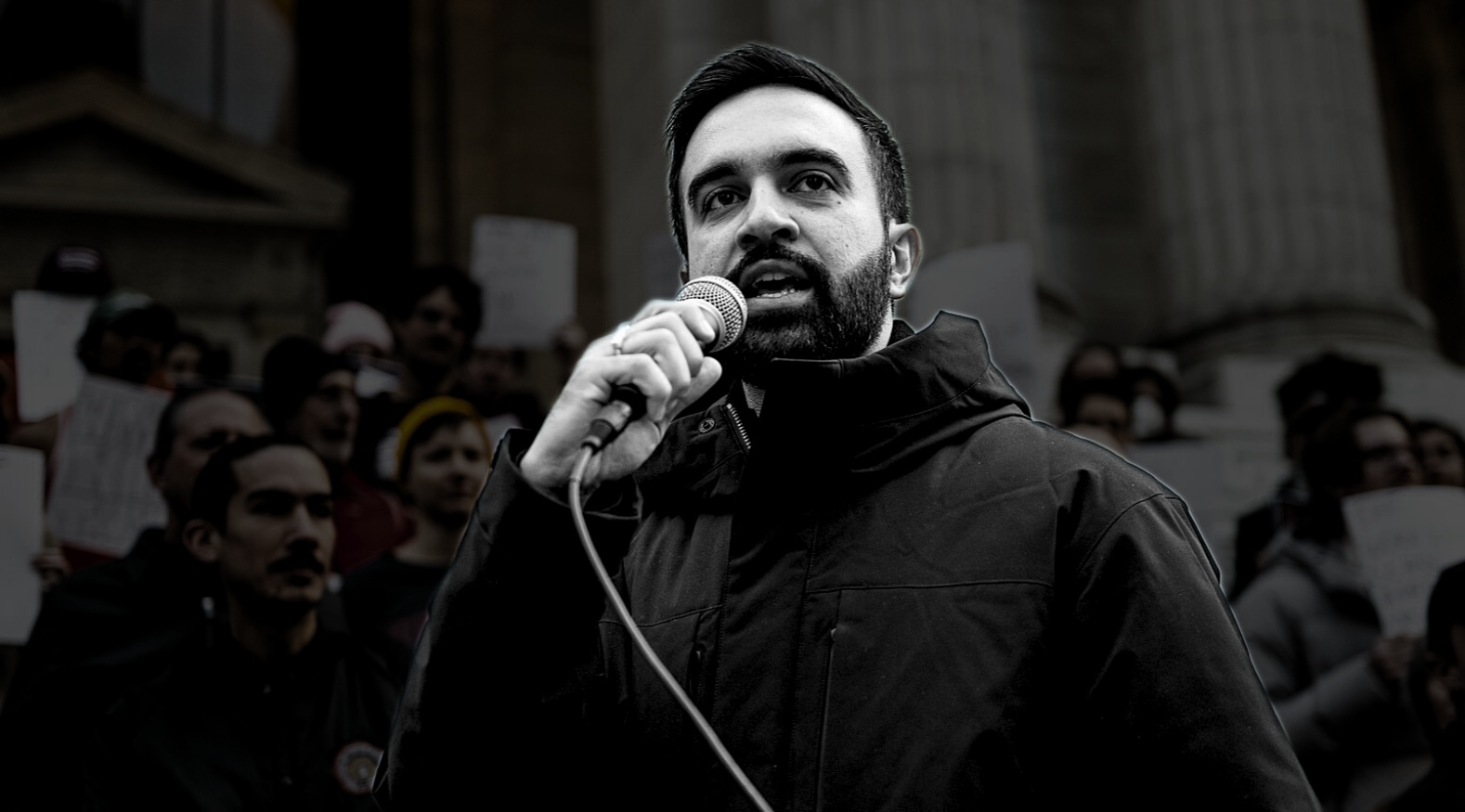
“We will replace the frigidity of rugged individualism with the warmth of collectivism,” the newly elected Mayor of New York Zohran Mamdani said, in his invigorating inauguration speech yesterday, that praised ordinary New Yorkers.
Mamdani’s speech, like his wildly successful campaign, recognized both New York’s working class and that ever-growing group of voters that so often goes unacknowledged in political rhetoric: the precarious middle class. The latter are voters who have worked hard and done most of what America expects of its people, but they haven’t quite been able to live comfortably. For a decade, I have called them the “Middle Precariat” (i.e. the precarious middle-class ). It seems that perhaps 2026 is their year, at least in terms of political messaging.
Mariano Muñoz, 46, a parent coordinator at a school in Brooklyn with a seven-year-old and a newborn, is one such New Yorker. He “resonated” with Mamdani’s affordability message because “we feel the squeeze of everyday life, trying to raise our kids in Brooklyn.” What these constituents are looking for is a combined sense of emotional and economic safety—what some theorists call “affective security.”
Twenty years ago, professors, tech workers, scientists, authors, and unionists might not have seen themselves as having much in common. Now, despite being middle class on paper, they share an insecurity that has created its own form of political energy. We can see how this proletarian-ized middle class can have an outsized political effect not just in New York City but in Democratic political wins from Washington state to Georgia, including that of Mayor Katie Wilson in Seattle. They’ve also factored in wins in Virginia and Georgia—see Governor Abigail Spanberger—and a 2026 mayoral contest in Maine.
Tara Fannon, 50, is part of this “middle-class-ish.” A New York-based government contractor, Fannon was laid off due to DOGE cutbacks. “New Yorkers like me have been hit hardest by Trump’s policies, the tax giveaways, the hollowing out of our political institutions,” she says.
“My peers in public education, arts, in climate, have all been impacted by funding cuts and that further activates us.” Fannon voted enthusiastically for Mamdani, for this reason. Ditto for Peter Donahue, a 60-year-old electrician who supported Seattle’s new democratic socialist Wilson. Donahue says people like him may “make a lot of money on paper, like 70K to 100K a year,” but the Puget Sound metropolis is so expensive that only a few hundred electricians in his craft union, he says, still live within city limits. “We wonder, ‘Can I survive or am I going to be a homeless person?’ That’s why left and right are coming together and voting over wages and affordability.”
Voters want this economic gaslighting to end and for their lived experience to be seen: the Middle Precariat no longer wants to be dismissed as mere neurotics imagining inflation on their daybeds.
In the first Trump era, the precarious middle class seemed like a provisional or transient category. Pundits liked to suggest that their financial concerns were just a matter of bad vibes. Now it’s clear that voters want this economic gaslighting to end and for their lived experience to be seen: the Middle Precariat no longer wants to be dismissed as mere neurotics imagining inflation on their daybeds. There are indeed many threats to their future. The cost of home ownership has gone up by 50 percent in the last five years nationwide and middle-class workers are suddenly seeing their jobs replaced by AI.
Muñoz says he wouldn’t describe his family as middle class anymore. “What’s middle class?” the father of two young children asks. “Not on food stamps?” If he and his wife “hadn’t landed a rent-stabilized apartment years ago, we couldn’t stay here: we have a weekly conversation about what we are still doing in New York City, living paycheck to paycheck.”
Economist Thomas Ferguson, research director of the left-leaning economic think tank Institute for New Economic Thinking (INET), says that this economically charged politics is not just related to voters with limited incomes but also comes in response to the rapidly rising cost of public goods, like electricity, up 30 percent since 2021, and the rising cost of state colleges.
Tariffs have also made everything harder, according to a new report published by Yale’s Budget Lab, causing a loss of an average of $2,400 for most households, and $1,700 for households in the 20th percentile. Real income growth is weak in 2025, especially for younger workers. According to the think tank EPI, nominal wage growth “has been far below target in the recovery.” As state funding for education disappears, says the economist Ferguson, the cost has been thrust onto parents—yet anotherexternal burdern the Middle Precariat has had to internalizeas a family expense.
When Wilson appeared on CNN, she acknowledged this saying, “I ran for mayor in Seattle because we are in a moment where we have an affordability crisis, just like many cities around the country, people are struggling with the cost of housing, with the cost of childcare…” Even corporate Democrat and sibilant soothsayer James Carville recently mused that his party should go all in on “economic rage,” as if financial ire was a hot new stock pick.
Then Trump started throwing around the idea of sending out tariff rebate checks as if he were deciding to deliver every family a pizza. In other words, political dinosaurs—or monsters—must at least give lip service to affordability. At the same time, political prodigies like Mamdani actually understand how to signal their allegiance with the a coalition of the working class and the Middle Precariat (for example, by having Bernie Wagenblast, the famed voice of New York City’s subway system’s refrain, “Stand clear of the closing doors, please” be the emcee of his inauguration).
In 2026, the political elite must continue to put its sometimes newly discovered sympathetic—and sociological—imagination to work, recognizing the struggles and fortunes of those who may on paper be middle class but no longer feel that way. At the same time, this year, one can only hope that the precarious middle class continues to recognize its electoral strength—call it “precariat power.”

Alissa Quart
Alissa Quart is the author of five acclaimed books of nonfiction including Bootstrapped: Liberating Ourselves from the American Dream (Ecco, 2023, out now in paperback). They Are Squeezed, Republic of Outsiders, Hothouse Kids, and Branded. She is the Executive Director of the non-profit the Economic Hardship Reporting Project. She is also the author of two books of poetry Thoughts and Prayers and Monetized. She has written for many publications including The Washington Post, The New York Times, and TIME. Her honors include an Emmy, an SPJ award and a Nieman fellowship. She lives with her family in Brooklyn.