Writing About Life in America Before Roe v. Wade, in Fiction and in Memoir
Tracy Clark-Flory and Kate Schatz Discuss the Research Process, Reuniting With Their Siblings, and Trying to Capture the History of Reproductive Rights
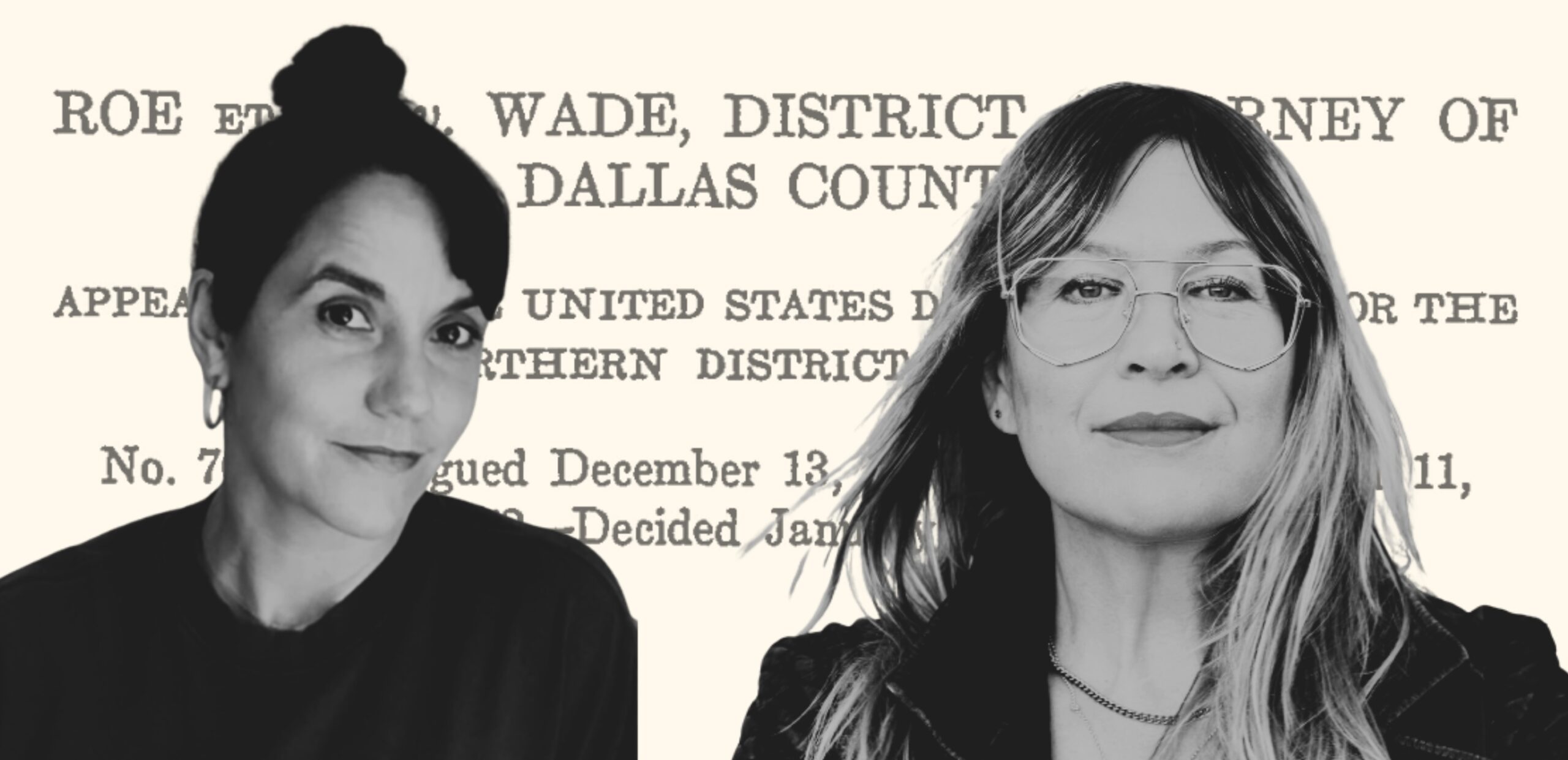
Last fall, a mutual friend told Tracy Clark-Flory and Kate Schatz that they desperately needed to know each other. They both were feminist writers who lived in the Bay Area and had books coming out just a couple months apart that circled around the pre-Roe history of homes for unwed mothers.
Clark-Flory’s was a memoir, My Mother’s Daughter, about a DNA test connecting her with her sister, who her mom placed for adoption as a teenager at a home for unwed mothers in the 1960s. Schatz’s was a novel, Where the Girls Were, that was inspired in part by her own mom’s story of being sent away in that same era.
Over coffee, they swapped notes on their respective experiences being raised by women with remarkably similar stories and discovered overlaps between their own careers. Clark-Flory is a longtime journalist and essayist who has written about feminism, sex, and gender, and the author of the sexual coming-of-age memoir Want Me. Schatz is the NYT Times bestselling author of the “Rad Women” book series, and Do the Work: An Antiracist Activity Book, which she co-authored with W. Kamau Bell.
Their conversation hasn’t stopped since—over brunch, via text, and in front of audiences at book launch events. Here, they chat about memoir versus fiction, the research process, reuniting with their siblings, and how writing these books changed their understanding of themselves and their moms.
*
Tracy Clark-Flory: We have these strikingly similar experiences of having moms who were sent away in the 60s to homes for unwed mothers where they placed their babies for adoption, long before we were born. You took that personal story as inspiration for a novel. I took it as inspiration for a memoir. What drew you to fiction as opposed to memoir?
Kate Schatz: The short answer is that I’m a fiction writer, not a memoir writer! The more interesting answer is that by exploring this story through fiction I could take some of my mom’s experiences and put them in a whole new world. I could give my characters experiences that my mom didn’t get to have. My mom was pregnant twice in the 1960s, back to back, and gave up both babies for adoption. But she wasn’t sent into a home for unwed mothers like the one in my book, and the one that your mom went to. She was sent to a series of private homes, and she was really isolated in her experience. She was never able to talk to or meet another young woman who went through this, and after she gave birth and returned home nobody ever talked about it. She never talked to any of her friends about it, her family didn’t talk about it. So by creating this fictional home and having this protagonist who gets to be in there and meet other young women and find a kind of community…that was something that my mom never got to have.
TCF: I love that because one of the best parts of your book to me is that sense of solidarity that your protagonist finds in the home. My mom passed away many years ago, so as I set off on the journey told in my book of trying to understand what had happened to her back when, I had to try to piece it together by reading all these essential histories, like Ann Fessler’s The Girls Who Went Away and Rickie Solinger’s Wake Up Little Susie. I also dove into library archives and was able to find the resident run newspaper at the home where my mom was sent.
KS: That is so incredible. Good job, researcher!
TCF: Well, what a gift. Librarians are the best. I just sent off an email and then this librarian at the University of Chicago Library went off into some back room and pulled out a box with all these papers that had been hidden away in there for decades. By finding copies of the resident-run newspaper, I was able to piece together what that world felt like in these women’s own words.
Part of what I was doing in my work was trying to write against what had happened to my mom, but also to continually confront shame in hopes of inoculating myself to it, almost like a form of exposure therapy.
There was this incredibly endearing gallows humor in the newspaper, where they were wryly making light of their predicament and making jokes about how their rooms were overrun with “unwed mother mice.” I got a real sense of the solidarity that was sometimes found within these homes, which existed alongside the horrific circumstances and just how traumatizing these homes were. But that newspaper was this bright, shining moment in the midst of a lot of very dark research.
KS: What an incredible thing for you to find. It’s a real challenge to research these homes, in large part because they don’t want to be researched. Their whole purpose was to be full of secrets and to keep people hidden, right? Most of the adoption records were closed. None of the homes exist now in the way they did then. That newspaper feels like a magical little historical nugget.
TCF: It’s just so lucky, too, that it happened that this real exception of a well-kept historical record from one of these homes happened to be the home that my mom had been sent to. It felt like serendipity. I also happened to be a journalist and have this inclination toward research.
KS: Right. My mom is still alive, and I’ve been able to ask her a lot of questions. But she doesn’t remember a lot. It was over 60 years ago, and also, it was so traumatic. There are big chunks of the experience that she really effectively blocked out. I know she’s not alone in that. The only way that a lot of these young women could function afterwards was to compartmentalize and suppress the experience. They were instructed to forget about it and move on.
TCF: That was one of the reasons that these histories, especially the first-person narratives, really helped me. I was able to come to better understand my mom in retrospect. I saw that a lot of what I experienced of her growing up was just her trying to manage the trauma of the adoption—which took place when she was a teenager, and nearly twenty years before she had me. I started to see how she had turned to alcohol as a source of numbing her pain. It was exactly what you said—stuffing it down, as people often do with traumatic events.
I write a lot in my book about reckoning with what I inherited from my mom’s past. Her story of being sent away in shame animated so much of my life, including my work as a writer, without me even realizing it. I’ve been a feminist blogger, a personal essayist writing about my sex life on the internet, a journalist covering the sex beat and exploring all these taboo arenas. And it was only after digging into her past and the histories that I started to see a connection between our stories.
Part of what I was doing in my work was trying to write against what had happened to my mom, but also to continually confront shame in hopes of inoculating myself to it, almost like a form of exposure therapy. I’m curious how you think about your own inheritance around your mom’s past, especially as a feminist writer yourself.
KS: After my mom’s first pregnancy, in 1966, she was told by the family doctor that “it wouldn’t happen again” because “she’d learned her lesson.” It did happen again. And so when I was born a little over 10 years later, I was the baby she finally got to keep. And that really showed up in her parenting of me. My mom’s wonderful. She was really loving and devoted and also intense and could be overbearing and all of those things that moms often are. But for me to see it in retrospect, it made a different kind of sense.
In your book you write about this feeling you always had as an only child that you had a secret sibling. I didn’t quite have that, but as a kid, I was definitely obsessed with mysteries. I wanted to be Nancy Drew, I would make up, like, fake mysteries and then go on quests to look for “clues.” And I’d write it all down in a notebook.
From a young age, I think I sensed that there was something in my family and in my house that I wasn’t being told. There were times over the years where a family member would make a comment or reference what had happened to my mom, the kind of things adults say when they don’t think the kid is in earshot. But I was paying attention. Once I snooped in my mom’s drawer and I found a newspaper clipping of an advice column—Anne Landers or Miss Manners or whatever—about a woman who had reunited with a child she’d given up for adoption. And I was just like, “Why would my mom have that?” I think I was always looking for clues and trying to figure out the stuff they weren’t telling me.
So yes, to think about it as my inheritance in terms of being a writer, it’s kind of what I’ve been trying to do in all of my books, but I’d never really connected it to my mom, and to this story. But I clearly have a fascination with hidden histories and secrets and the things we don’t learn about, finding those stories and bringing them into the light!
TCF: I relate to so much. I didn’t find out about my sister until I was a teenager, when my mom sat me down and told me only the vaguest sketch of her story. Much earlier as a kid, though, I concocted this story about a “secret sister” that my parents were keeping from me and who lived down the hall in our house. This made no sense—like, there was no extra bedroom down the hall. But it was this fantastical story that I told myself. I’d lay in bed at night and hold my breath and try to hear my sister breathing.
It felt like no less than a spiritual revelation, in terms of it challenging my sense of what was possible in this world.
I picked up, like you did, on the tiniest little hints, like when I was begging my mom for a sister as a little kid, and I saw how she suddenly fell silent. I saw how my dad looked at her in those moments, and I think that revealed plenty. I felt the secret at the heart of my family, even if I couldn’t make out all of its contours. It’s not a surprise that I then ended up becoming a journalist, that I turned out to be very oriented towards seeking out the truth, all of which is very similar to your Nancy Drew detective work.
KS: We’ve both connected with our siblings in real life, and have had really positive experiences. That’s not part of my book at all, but it’s certainly a big part of the fabric of me as a writer. Whenever I talk about it, I feel very careful to acknowledge that it’s a pretty exceptional experience to have a reunion story that goes so well. But I wanted to ask about what it was like to meet your sister and connect with her.
TCF: I found my sister Kathy through a DNA test. When we first connected, I brought all of that little kid energy that I had from when I was laying in bed at night, holding my breath, trying to hear her breathe. There was all this stored up longing, right?
She lives in Atlanta and I live in the Bay Area, so we connected through email and texts and phone calls, and gradually got to know each other. I was very anxious during that period, because it wasn’t clear what kind of relationship we would have. I wanted nothing more than for her to be my sister, to have a meaningful relationship. But I was also very aware that she might not want that.
In a way, that initial coming together reminded me of my experiences dating in my 20s, because it sparked this feeling of, you know, “I haven’t heard from her in a couple days, did I say something weird? Did I come on too strong? Is she just not that into… being sisters?” You’re feeling each other out. Will this go anywhere? But, eventually, a bond started to build.
And then I finally flew to Atlanta and met her. At the end of that visit, we told each other “I love you” for the first time. I got that same stomach-flipping feeling that I’ve had with past declarations of love. We don’t even have language around this kind of non-romantic falling in love—as an adult and with a virtual stranger. I had no precedent for this feeling of intensity and connection. It was unlike anything I’d ever experienced before.
It completely rearranged me as a human being, too. It felt like no less than a spiritual revelation, in terms of it challenging my sense of what was possible in this world. Suddenly, my sense of family was expanding exponentially. Also, the idea that such beauty can emerge from tremendous pain and shame. Like you, I feel very lucky. I wonder if our happy reunions are part of why we were willing to tackle these stories.
KS: Absolutely! I’ve been working on this novel on and off for nearly 15 years. I was working on other books during that time, so that’s part of what took so long, but also, to some degree, I think I needed the resolution in real life to finish the novel. It’s not part of the book’s narrative, but in terms of the real, lived experience of my mom’s story…it didn’t feel complete until we had and found them—it’s funny, sometimes I still refer to them as babies when they’re grown men! For all those years my mom worried: were they mad at her? Were they alive? Were they ok, did they have good lives like she was promised? We connected with them in 2019 and then 2020, and finally, she had answers. Then in 2022, the Dobbs decision came down. That’s when I locked in, and finished the book.
It’s beautiful—and it’s a lot to hold.
I love the way you write about those initial moments of communication with your sister. It was so similar for me with my brother, Dave. It was during the pandemic and I was on the beach when I got the message through 23andMe and I immediately wrote back and gave him my number. He called and boom, we were talking. Like you, I felt self-conscious about my enthusiasm. Was it too much? But his excitement matched mine. It’s been really cool.
Do you and your sister have quirks or traits or physical things or vocal things that were similar, that tripped you out?
TCF: Yeah, we noticed on that trip that we had a similar way of crossing one leg over the other so that it bisected the thigh, and we had the same way of dancing in our seat after taking a bite of good food. What about you?
KS: Absolutely. We’re all left-handed, which is funny because I was always the only lefty in my family. All three of us are big music nerds. They’re both these old guitar-playing, vinyl-collecting rock-and-roller punks. We have really similar taste in music and we share a strikingly similar pop cultural language, even though they were raised by really, really different families.
TCF: That’s amazing. I’ve noticed in talking with people about my book ahead of publication that almost everyone has a DNA test story—whether it’s their own immediate story or second hand.
KS: Now that my book is out, I’ve been hearing other people’s stories—about women they know who were sent away, about family secrets and adoption and abortion, about their own mothers, about themselves. I anticipated this, and it’s been beautiful and so moving when people in the audiences at my events, and in the signing lines, and via email, share their stories. It’s beautiful—and it’s a lot to hold. I’m wondering how you’re thinking and feeling about that aspect.
TCF: I’ve encountered it a little bit already. One of my mom’s good friends was also sent to a home for unwed mothers in that era. She has read an early copy of the book and was very honest about needing to take her time to get through it, because it was bringing up a lot for her.
KS: I’ve had similar responses from a few women of that generation. I’ll be honored if they do decide to read it, but I also understand why they might not.
TCF: I don’t know exactly what I might encounter when I’m out there in the world sharing this book. I anticipate that it could feel very emotional and overwhelming to tap into these wells of pain that are out there, right? I’ve had the experience as a journalist, especially writing about sex, that you interview someone, you ask them about a taboo topic, this thing that we’re not supposed to talk about, and it all comes pouring out, because they’ve never before had the experience of being able to sit with someone who wants to hear about it. I could imagine that this might be similar.
__________________________________
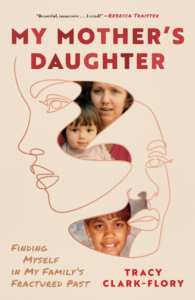
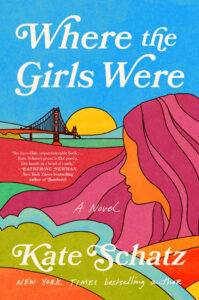
My Mother’s Daughter by Tracy Clark-Flory is available from Gallery Books. Where the Girls Were by Kate Schatz is available from Dial Press.

Tracy Clark-Flory and Kate Schatz
Tracy Clark-Flory is the author of the forthcoming memoir MY MOTHER'S DAUGHTER. Also: WANT ME. She is a journalist, essayist, and co-hosts the podcast Dire Straights. Her weekly newsletter, TCF Emails, covers sex, pop culture, and feminism. Kate Schatz is a feminist author from California. She’s the New York Times bestselling author of Do the Work: An Anti-Racist Activity Book, with W. Kamau Bell, and the “Rad Women” book series (including Rad American Women A-Z, Rad Women Worldwide, and Rad American History A-Z). Her book of fiction, Rid of Me: A Story, was published as part of the cult-favorite 33 1/3 series.