What Do Arthurian Legend and All My Children Have in Common?
John Glynn Explores the Similarities Between Soap Operas and Medieval Epics
Down the street, my coffee shop’s windows glowed with the baleful warmth of an Edward Hopper painting. This was where I liked the write—a third place, before dawn, when the city was quiet and my thoughts were sharp.
I was a few weeks into drafting something, but “novel” wasn’t the right word, not yet. In a folder labeled “Arthurian legend idea,” I saved scattered word docs with notes and research, character sketches, family trees, scenes trickled out in fits and starts.
“That’s not writing, it’s typing,” Capote famously (and unfairly) said of Kerouac.
I was typing, yes, but I was also seeking a way in. I’d read Madeline Miller’s The Song of Achilles and the story, for me, was a light switch. Queer-coded love stories had always been with us, as far back as antiquity, further, lurking in plain sight. Patroclus and Achilles led me to other myth systems, and from there I reconnected with Lancelot, King Arthur’s most famous knight.
This was the narrative framework, I realized with a shock, that illuminated my summers and ensconced me in its warm glow on cold winter afternoons home sick from school.
I’d always enjoyed Arthurian legend, but up until that point my touchpoints were limited. Growing up I’d pored through T.H. White’s The Once and Future King and Sir Thomas Malory’s Le Morte d’Arthur. I’d read Sir Gawain and the Green Knight and Tennyson’s poem The Lady of Shallot. Oh, and as a kid I’d rented Disney’s The Sword in the Stone on VHS from Blockbuster. Not exactly medieval bona fides. But I was surprised to learn that a prominent version of Arthurian legend contained a love story between Lancelot and a fellow knight named Galehaut.
If you’ve never heard of Galehaut, you’re not alone. His story mostly exists in the 13th century version of Arthurian tales known as the Vulgate Cycle. Wouldn’t it be cool to write a novel about them, to restore this queer dimension of the narrative? I thought. But I knew it couldn’t be me. I wasn’t an academic. I’d never written historical fiction. I’d never so much as eaten a turkey leg at a Ren Fair! The one book I had published was a memoir about a summer I spent finding a chosen family in Montauk. More Bravo’s Summer House than an Arthurian Call Me By Your Name.
Still, I shelled out for a copy of the Vulgate Cycle. It spans ten volumes and thousands of pages, and, confusingly, includes a revised version called The Post Vulgate Cycle, which was written some twenty years after the original, all of it by a group of anonymous writers. Only one reliable English translation exists, a compendium edited by Norris J. Lacy. It’s divided into five romances. The History of the Holy Grail, The Story of Merlin, Lancelot, The Quest for the Holy Grail and The Death of Arthur. At the coffee shop that morning I had with me the first three volumes of Lancelot.
Over an iced coffee I quickly discovered what scholar E. Jane Burns—paraphrasing the seventeenth-century poet Chapelain—sums up in her introduction: “The Arthurian Vulgate Cycle lacks focus, rambles, gives you a headache, and puts you to sleep.” Her own assessment is equally withering, namely that within The Vulgate’s “seemingly endless proliferation of chivalric adventures, its repeated narrative expansions and extensions, it’s elaborate genealogies of ancestors, origins, and putative authors, this wandering, disjointed narrative records a struggle without resolution…the size of which might somehow tie competing and disparate elements together.”
Duly forewarned, I rappelled in, but what I found surprised me. In the first few pages we move from an opening scene with Lancelot’s parents, to a scene featuring their nemesis King Claudas, to one with Lancelot’s cousins, before hopping over to Lancelot’s surrogate mother, the Lady of the Lake. At the end of each narrative beat we get neat sign posts like this: “Lancelot thus remained in the care of the damsel, and he grew in size and attainments as you can hear. But the story now leaves off speaking about him and turns back instead to his cousin Lionel and Lionel’s brother Bors.”
I rested my iced coffee on a paper napkin. The weaving felt familiar, a bone-deep chime. I knew this structure. Had known it since I was a kid. This was the narrative framework, I realized with a shock, that illuminated my summers and ensconced me in its warm glow on cold winter afternoons home sick from school.
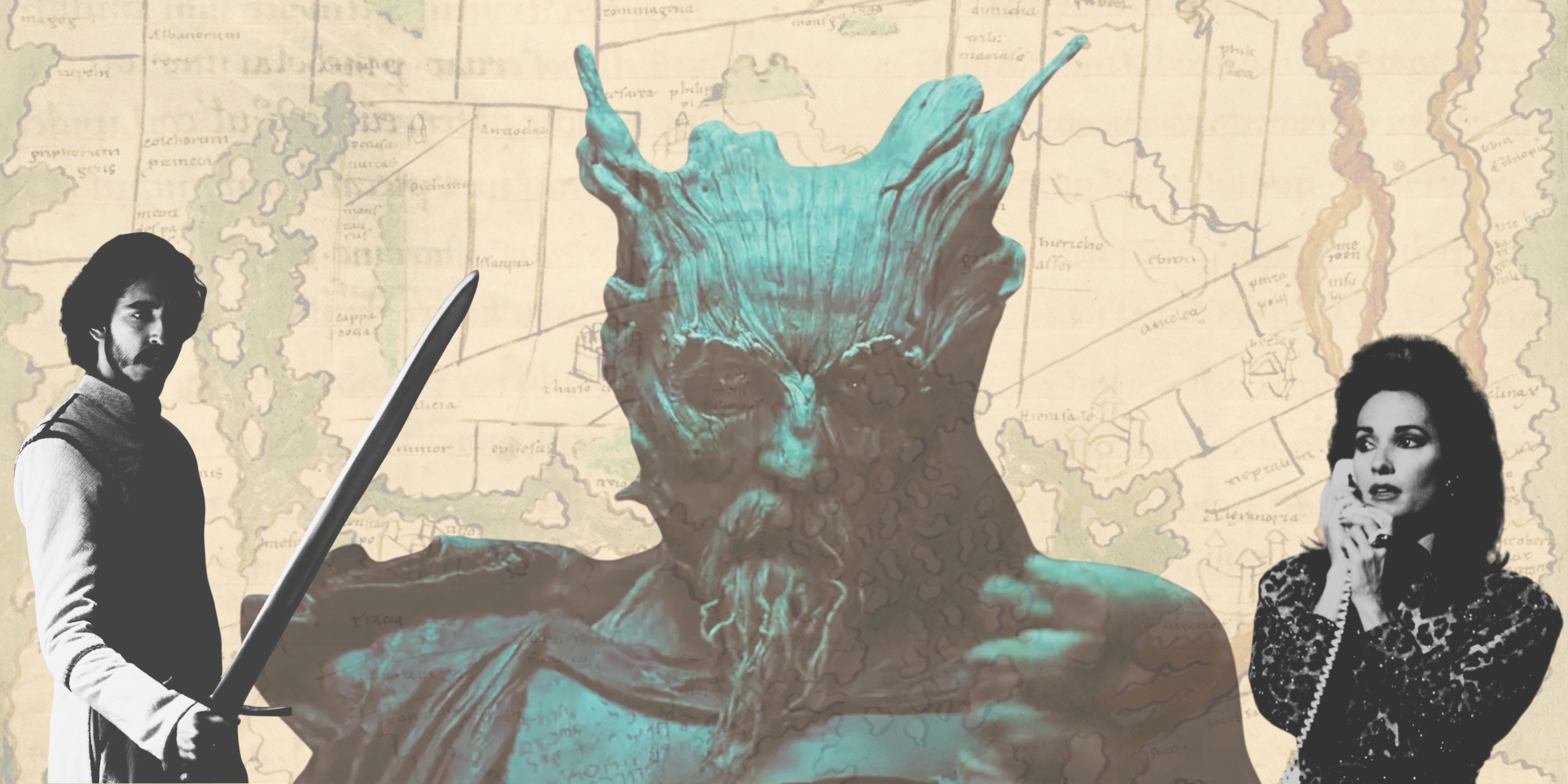
The Vulgate Cycle was a medieval All My Children.
I had found my way in.
My love for soap operas was so foundational that it felt hard-wired into my cellular structure. In a way it was. In the 1950s my grandmother watched the soaps while ironing. Her “stories” were background company during domestic tasks, a momentary diversion from the never-ending duties of life as a mother of six. She passed them down to my mother and aunts, all of whom began watching All My Children when it premiered in 1970. In that era, daytime television occupied a bigger space in the cultural firmament. Top-rated soaps could draw over ten million views a day, and there were many to choose from.
But by the time my cousins and I came along, there was always just one. All My Children was a forward-thinking, socially conscious soap set in the fictional town of Pine Valley, Pennsylvania. It featured a knowable community of core families and interconnected characters, most notable Susan Lucci’s Erica Kane. When my cousins and I first tuned in, Erica had already been married six times (depending on how you count), and the soap opera as a genre had reached a bit of a zenith. “Today men as well as women are involved in watching them, people from the ages of 8 to 80,” creator Agnes Nixon told an audience at The Summer of Soaps retrospective in 1991, “We are more sophisticated than ever before. We inform as well as entertain.”
As I moved through the Vulgate, I could see the echoes. Just as various characters in Pine Valley might get front-burner stories for weeks at a time, so too did the Vulgate shift its gaze from one character to another. From Lancelot’s parents, we shuttle to the young knight himself, before pivoting to Arthur, Guinevere and Gawain. In the 90s, on All My Children, those pivots involved super-couple Tad and Dixie, magazine mogul Brooke English, business titan Adam Chandler, and Kelly Ripa and Mark Conseulos’ Hayley and Mateo.
Those names might ring a bell or they might not, but when my cousins and I were young and spent our summers herded as a pack, the residents of Pine Valley were as real to us as our next door neighbors. There were eight of us in a three-year age range, and after swim lessons at the town pool, we’d go to one of the aunt’s houses, where, over PB&J’s we’d tune in to All My Children at 1 pm sharp to find out what was happening with Natalie, who had been thrown down a well by her evil twin sister Janet, who wanted Natalie’s husband Trevor.
I couldn’t help but think of this plot line, which had so enthralled us as kids, when I came to the Vulgate’s False Guinevere episode. Guinevere, just like Natalie from All My Children, has an evil sister who attempts to step into her life and seduce her husband.
The sun would rise, the streets would fill, and I’d pack up my medieval volumes and head to work. But as I walked out, I’d think of another tome, the iconic red book from All My Children’s opening credits.
The “repeated narrative expansions and extensions” are a cornerstone of the soaps. Natalie did get rescued that summer, by Dimitri Marick, a new character who opened up an entire new canvas on All My Children. We followed them to Dimitri’s estate, Wildwind, where, less Vulgate and more Jane Eyre, his wife Angelique lays hidden away in a years-long coma. Eventually Erica Kane meets Dimitri, and they get married and divorced and married again. We also meet Edmund Gray, the son of Dimitri’s employees. When Dimitri learns Edmund is his half-brother, he’s not happy.
“Elaborate genealogies” is an understatement. Again and again in Arthurian legend, we see knights and kings, Lancelot, Gawain and Arthur among them, raised like Edmund Gray, outside the court, only to learn of their true lineage as adults. This was the same motif that animates the arrival of Erica’s long lost daughter Kendall Hart (played originally by Sarah Michelle Gellar, and then for years by Alicia Minshew). Kendall leaves behind her adopted parents in the swamps of Florida to descend on Pine Valley like a tornado. That is, before an actual tornado sweeps through Pine Valley, right in the middle of a black-tie event and in time to boost summer ratings.
As I waded through the early pages of the Vulgate, I learned that Lancelot matured faster than a normal child, another phenomenon that All My Children had prepared me for. Babies of core characters, like Adam Chandler’s JR and Tad Martin’s Jamie, were aged up for narrative purposes, a narrative function playfully known by soap fans as Soap Opera Rapid Aging Syndrome or SORAS.
I would give Lancelot a slippery relationship to time in my own rendering. And I’d ultimately rely on some of my favorite conventions of the soap opera to build his narrative. It’s perhaps no coincidence that All My Children featured the first same-sex kiss in a soap opera, involving Erica’s daughter Bianca, a scene I would watch as a high schooler with my mom.
“Make ‘em laugh, make em cry, make ‘em wait” was Agnes Nixon’s storytelling philosophy, and it’s the waiting part, the planting of seeds with the promise of future bloom, that creates true emotional payoff. I knew I wanted my big cast characters to fall in and out of love, discover hidden lineages, come back from the dead. The interlacing technique, though I only use it sparingly in my novel’s last act, can accelerate narrative tension. In the end, I have Pine Valley to thank for the framework.
Inevitably, on those coffee shop mornings, the sun would rise, the streets would fill, and I’d pack up my medieval volumes and head to work. But as I walked out, I’d think of another tome, the iconic red book from All My Children’s opening credits. Even its embossed gold letters were written in a vaguely medieval script. I’d think of those summer days with my cousins, the improbability of a group of sports-loving boys congregating for an hour of stillness, ready for the pages of All My Children to unfurl. That book was our Vulgate cycle, our ur text. Pine Valley, our narrative home.
__________________________________
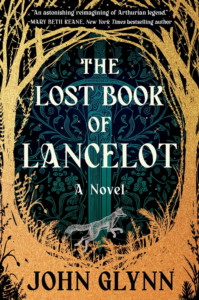
The Lost Book of Lancelot by John Glynn is available from Grand Central Publishing, an imprint of Hachette Book Group.

John Glynn
John Glynn is the Editorial Director of Hanover Square Press, an imprint of HarperCollins. His acclaimed nonfiction debut, Out East: Memoir of a Montauk Summer was an Indie Next pick, an Oprah, The Magazine “Best LGBTQ Book of 2019,” a Cosmopolitan Best Book of 2019, a Refinery29 Outstanding LGBTQ+ Book of 2019, a Newsweek Best Book of Summer among other accolades. His writing has appeared in Oprah Daily, The Millions and The Daily Beast. Originally from Longmeadow, Massachusetts, he lives in New York City with his partner and dog. The Lost Book of Lancelot is his debut novel.