Why We Still Love Mr. Darcy, 200 Years Later
Susan Moore in Praise of the Model For Self-Aware Romantic Heroes
Two centuries after Jane Austen wrote him into existence, Mr. Darcy remains one of the most enduring figures in romantic fiction. The more interesting question than why we love him—that part is already well established—is what it says about us that we continue to return to a character whose most celebrated quality is his capacity to change.
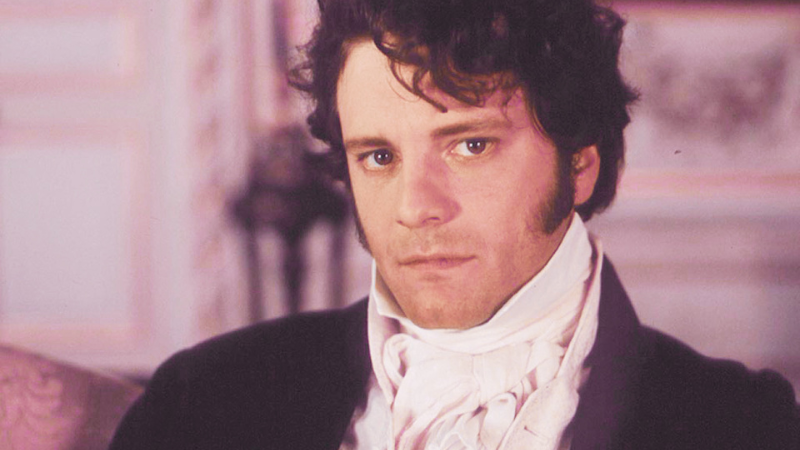
Fitzwilliam Darcy is not, at the outset of Pride and Prejudice, particularly lovable. He is proud, socially contemptuous, and delivers what must be one of the most insulting declarations of love in the English literary canon: confessing his feelings while carefully itemizing all the reasons the match is beneath him, all the ways Elizabeth Bennet and her embarrassing family have complicated his better judgment. He offers Lizzie his hand as though it were a concession. She refuses him on the spot, and readers have been applauding her ever since.
Yet this is precisely the moment that made Darcy immortal.
What separates Darcy from the parade that followed him is that his arc is genuinely moral, not merely emotional. He is not softened by love. He is corrected by it, and he chooses to be.
Austen understood something that contemporary romance still exploits, not always gracefully: we are not drawn to characters who begin worthy. We are drawn to characters who are forced to reckon with themselves. Darcy’s first proposal is a humiliation—for him, not her—and his transformation in the novel’s second half works because Austen is unsparing about what Elizabeth’s rejection actually reveals. Darcy does not change to win her back. He changes because, replaying her refusal in his mind, he comes to recognize that she was right.
There is a long tradition of romantic heroes who are difficult, cold, or cruel—Edward Rochester, Heathcliff, half a century of brooding figures on book covers with artfully unbuttoned shirts—and most of them do not change at all. Rochester is reshaped by circumstance; Heathcliff is consumed by it. What separates Darcy from the parade that followed him is that his arc is genuinely moral, not merely emotional. He is not softened by love. He is corrected by it, and he chooses to be.
The “Darcy list” that generations of readers carry in their heads—intelligence, steadiness, a confidence that does not need to announce itself—is understandable but slightly misses the point. These qualities make Darcy attractive, certainly. But what makes him worth wanting is something harder to name and harder to find: the willingness to hear that he has been wrong, to sit with the discomfort of it, and to change.
His greatest act of love in the novel happens almost entirely offstage. When he quietly intervenes in the scandal of Lydia Bennet’s elopement—paying Wickham’s debts, arranging a marriage that rescues the entire Bennet family from social ruin—he does so anonymously, asking for nothing in return. Austen delivers this information to Elizabeth secondhand, through a letter from her aunt. The man who once catalogued Elizabeth’s social deficiencies while proposing marriage is now protecting her family’s reputation without an audience. That gap between who Darcy was and who he becomes is the whole novel.
This is an unfashionable idea. Contemporary romantic culture—self-help-inflected, attachment-theory-aware, understandably wary of the “fix the difficult man” fantasy—tends to suggest that the healthy thing is to look for someone who already has their emotional house in order. Someone secure, communicative, consistent. Someone who has done the work. And this is reasonable advice. The fantasy of transforming a cold or contemptuous man through the sheer force of one’s love has caused real harm, and the critique of it is warranted.
But Darcy’s story is not quite that fantasy, and this is why he survives it.
Elizabeth Bennet does not fix him. She refuses him, dismantles his character with precision, and walks away. She does not wait for him to improve. And Darcy—crucially, essentially—does not require her to. He goes home, thinks about what she said, and writes her a letter that is, at its core, an act of accountability. Not self-justification. Not wounded pride. Accountability.
That is the rarer thing. That is what the list is really for.
It is perhaps this element that feels most quietly radical in Austen’s novel. The world of Pride and Prejudice expects women to accommodate male pride as a social fact, to smooth over awkwardness, to accept that status and wealth compensate for coldness or indifference. Elizabeth Bennet refuses to do any of this. She critiques Darcy to his face, refuses his position, and he takes her seriously. Not immediately—there are wounded feelings and defensive explanations—but eventually, genuinely, he takes her seriously. He revises himself in light of her criticism the way one revises an argument when confronted with a better one.
Elizabeth Bennet does not fix him. She refuses him, dismantles his character with precision, and walks away. She does not wait for him to improve. And Darcy—crucially, essentially—does not require her to.
In the landscape of literary romance, this remains remarkable.
Two hundred years later, the entailments and estate politics of Austen’s world belong firmly to the past. The romantic calculus has shifted. Wealth and social rank, once near the top of any imagined list, have slipped quietly down the rankings. In their place, we claim to value kindness, emotional honesty, and the steadiness that comes from actually knowing who you are. The list has been revised.
And yet something essential about Darcy refuses to become obsolete.
Readers still reach for him—or for the figures he has shaped: the reserved man who turns out to run deep, the character whose truest qualities emerge through action rather than declaration, the love interest who becomes worthy rather than arriving that way. The template persists. The setting shifts—from Regency drawing rooms to law firms, coastal towns, or imagined worlds—but the emotional structure remains recognizable.
What that structure asks, beneath the surface, is a more difficult question than romance usually admits: not whether someone is good, but whether they are capable of discovering that they are not—and doing something about it. Whether being truly known by another person is something they can tolerate, or whether they need the story they tell about themselves left intact.
Darcy can tolerate it. More than tolerate it; he invites it. The letter he writes after Elizabeth refuses him is not a defense, but the beginning of self-examination. It costs him something. And that cost—more than the estate, the income, and fine eyes—is what has kept him alive in the imagination for two hundred years.
Not the fantasy of perfection. Not the fantasy of rescue.
The rarer thing: someone who can be shown who they are and not look away.
____________________________
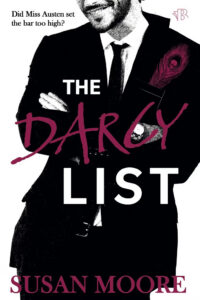
The Darcy List by Susan Moore will be published by Bloodhound Books in July 2026.

Susan Moore
Susan Moore is the author of The Darcy List, published July 2, 2026. Find out more at www.thedarcylist.com.