Why “Shifting Baseline Syndrome” Makes It Harder to Save the Planet
Jason Dove Mark on the Ways Environmental Amnesia Influences Our Perception of the Natural World
When she was growing up, Mia Monroe remembers, monarch butterflies were a natural part of the rhythm of life. This was in the 1960s, and Mia and her family lived in San Carlos, California, at that time a bedroom community of redwood bungalows and postwar cottages located south of San Francisco. She was a “nature kid,” and from a very early age, she recalls, monarchs shaped her emotional landscape.
She gathered the milkweed that grew in clumps along the railroad tracks near the town’s train station, then took the plants home to rear sets of caterpillars. Fall was marked by the arrival of migrating monarchs making their way to their rainy-season homes on the coast. Winter meant going with her grandmother to the famed butterfly clustering site at the Monarch Grove Sanctuary in the town of Pacific Grove.
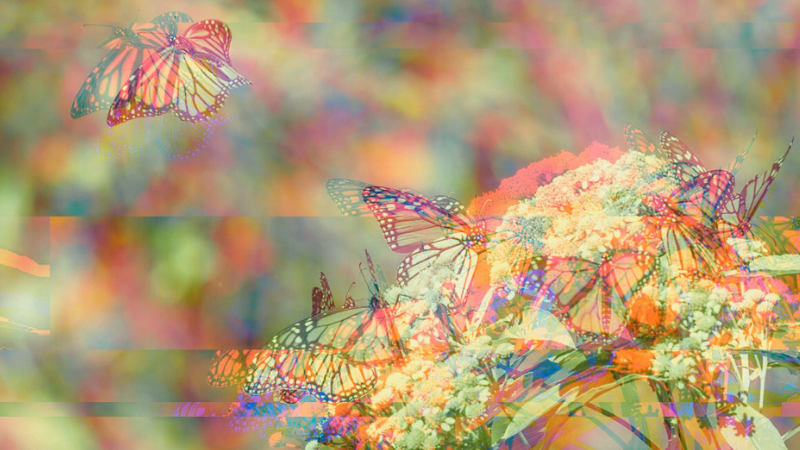
Pacific Grove—a cute little seaside village on the southern lip of Monterey Bay—had long been a tourist destination for monarch-spotting. A 1914 monograph, The Butterfly Trees, celebrated how the monarchs came to town each winter to “hang in masses from the boughs, thousands upon thousands…absolutely countless.” There in the stands of pine and eucalyptus, Mia and her grandmother would stare upward, their eyes working to pick out the patterns of folded wings in the overstory. Whole limbs were frocked with ochre insects like coppery Christmas-tree decorations. The clusters dripped earthward: orange-and-black bangles dangling from needle and leaf.
Sometimes, as the air warmed, a group of butterflies would alight into the air all at once, a tangerine explosion. “It was amazing,” Mia said. “So I grew up with monarchs. I grew up with tying them to the signals of the turning of the seasons, and to the beauty of the world, and things I did with special people.”
She brought that childhood passion into adulthood. As a teenager, she began volunteering with environmental groups like the Sierra Club and then spent virtually her whole career as a park ranger at Muir Woods National Monument, the stand of old-growth redwoods just north of the Golden Gate Bridge. In the nineties, the National Park Service staff were contacted by the World Wildlife Fund and the Xerces Society, an organization dedicated to the conservation of invertebrates, to see if they could help with a census of monarchs. Mia immediately volunteered. “I raised my hand because I was already very familiar with monarchs—I was already paying attention.”
Shifting baseline syndrome puts a name on something that most of us have experienced—the ways in which the fog of forgetting veils experience. We live in an invisible present, blinded by the glare of now.
Among other amateur butterfly afficionados and biologists who were likewise paying attention, a whisper of disquiet was spreading. Monarch numbers in both the East and the West appeared to be declining. But no one was sure by how much, and scientists wanted hard numbers.
Mia and some friends and colleagues formed what would become the Western Monarch Count, a volunteer-driven, community science initiative to track the number of the monarchs that spend the winter in coastal California. Nineteen-ninety-seven marked the first year of the Western Monarch Count and it helped demonstrate that the suspicions were right: butterfly numbers were dropping. That year, volunteers counted more than 1.2 million monarchs at the overwintering sites—a figure that’s never been equaled since.
During the last quarter century, Mia has watched the monarch population figures trudge downward, part of a larger disappearance in which butterfly numbers in the United States have plummeted by 20 percent. In 2000, volunteers counted some 400,000 monarchs. The following year, they counted half as many. For a while, the counts bounced between 100,000 and 200,000 butterflies. But in 2018 and again in 2019, fewer than 30,000 overwintered in California—less than 1 percent of their historic totals. At the famed monarch sanctuary in Pacific Grove, volunteers counted only 815 butterflies in 2018. The next year, the count fell by a fifth. “People like me, because I was involved in this community science effort, noticed the steady decline,” Mia said. “Each of those years, I was still very worried, because I wasn’t seeing them at some of the big sites.”
Then the pandemic winter of 2020-21 arrived, and the butterflies did not. Across coastal California, the tallies were a string of zeroes. Zero butterflies were spotted in the Pacific Grove sanctuary. Zero butterflies were seen at Monarch Lane in the town of Los Osos, where just a few years before more than 4,000 had appeared. The youth hostel in the Marin Headlands didn’t host a single butterfly. Statewide, only 1,914 monarchs were recorded that winter.
Mia was besieged by volunteers looking for solace. Her decades-long dedication and her infectious passion had earned her rock-star status in butterfly circles, and many people came to her desperate to know the reasons for the collapse. She has a weakness for jewelry (broaches, earrings) depicting monarchs and a high-pitched voice that fizzes with excitement when she talks about monarchs. Some people call her “the monarch czar.”
That fearful winter, she did her best to buoy others’ spirits. “I felt like I was a kind of courier sharing information,” she recalled. “So-and-so planted milkweed. So-and-so is working in their neighborhood garden.” Even the smallest of sightings became cause for celebration: “You begin to appreciate one or two. Each one became very special. Say—there’s four! And you’d cheer on those four. You want them to represent hope for the future.”
Privately, though, she was depressed. To try and stay positive, she worked in her native plant garden and did Zoom presentations for the neighborhood kids on naturalist topics. She re-read some of the classics of environmental literature: Rachel Carson, John Muir, Gary Snyder. But having spent years, as she said, “sounding the alarm,” she was now experiencing a crisis of faith. “Oh, is this what the shifting to the real dark days are? Who knew it would be this way for this beautiful insect?”
Monarchs had always been part of her life. What would the world be without them?
Then something close to miraculous happened. The monarchs came back—or at least some of them did. In the winter of 2021-22, the western monarch community experienced a surge of relief as butterflies once again swarmed to the pine and eucalyptus groves. The volunteer monarch monitors counted some quarter million butterflies at the height of the overwintering gatherings. The following winter of 2022-23 was even better: that Thanksgiving Count tallied about 335,000 monarchs in California, the highest figure in more than a decade.
Journalists who just a year or two before had reported on the collapse in the grim tones of an undertaker now rushed to write a happy story. “California’s Western Monarch Butterflies Are Making a Comeback,” the New York Times reported. “The Monarch Butterfly Beats Extinction in Triumphant California Come-back,” Los Angeles Magazine trumpeted. The San Francisco Chronicle declared, “Environmentalists Cheer as Monarch Butterfly Numbers Continue to Rebound in California.”
Even though Mia and other butterfly advocates were encouraged by the uptick in the monarch numbers, the public response to the tentative rebound unsettled them. The monarch population in the West was only a fraction of what it had been in the late nineties, yet the media was popping champagne corks. A decimation had been greeted with a celebration. Decades of diminishment seemed to have shrunk people’s ideas of abundance and flattened their expectations of environmental wellbeing. Much of the public had lost the plot.
In conversations with her volunteers and the general public, Mia could spot people’s paltry, ahistorical notions of what a robust monarch population was supposed to be.
“Yeah, there’s a couple in the yard,” people would say to her. “But I got to give you difficult news,” she would tell them. “It’s not like it was back in the day.”
And people would respond, “There’s monarchs all over.” “Like, tens of thousands?” she would say.
“Oh, I saw a few.”
“OK. Do you remember when you used to see ten thousand?”
*
There’s a name for the sort of amnesia that Mia Monroe witnessed among people trying to grasp the plight of the butterflies—the way in which the present swallows the past, what it’s like for destruction to blend into the background, how each of us every day grows a little more accustomed to a natural world a little less vibrant. Scientists call it shifting baseline syndrome.
Here’s how it works. Each of us has our baseline expectations—usually forged in youth—for how the world is supposed to work, how it’s supposed to look. Then the world morphs and the baseline shifts. But either we forget how the world originally appeared, or else a new generation comes along and establishes a whole new baseline based on the conditions of its youth. With diagnostic precision, shifting baseline syndrome puts a name on something that most of us have experienced—the ways in which the fog of forgetting veils experience. We live in an invisible present, blinded by the glare of now.
Shifting baseline syndrome has a clinical ring to it, like something from psychiatry’s official manual of mental disorders. But it’s a commonplace malady. You’ve experienced environmental amnesia anytime you’ve struggled to remember what summers were like before the nonstop, sizzling heat, in those years before fire season was an annual Armageddon. You’ve been caught in shifting baseline syndrome if you’ve ever tried to tell a younger person what a beloved place was once like—there used to be red-winged blackbirds at this pond—only to be greeted by a look of confusion.
Once one recognizes shifting baseline syndrome, it appears everywhere, like a pattern emerging from the forest understory. Just think of the speed of technological progress, and how difficult it is to remember social life before social media. Or maybe, to prove the point, you’re young enough to not remember pre-social media life at all. Consider the changes in fashion, or cars, or music. Look the steady coarsening of American civic and political culture and the ways in which the once-outrageous—the bilious, hateful rhetoric and the creeping authoritarianism—have become almost ordinary.
The invisible present befuddles each generation in every age. The passenger pigeon, the chestnut tree, and bison by the million once defined the American landscape, but they’re long gone—and by now that’s seemingly how it’s always been. The absence just feels normal. Think about how difficult it can be to recall exactly what the farm country looked like before the sprawling suburbs shoveled it under. Baby boomers remember that they paved paradise and put up a parking lot; their Gen Z grandkids have only ever known the parking lot.
’Twas ever thus. “It never failed that during the dry years, the people forgot about the rich years, and when the wet years returned, they lost all memory of the dry years,” John Steinbeck wrote in East of Eden. “It was always that way.” The world changes and we change with it. The ancient wisdom is right: you can never step in the same river twice.
But the pathology of shifting baseline syndrome is especially acute—especially worrisome—when it comes to our twenty-first-century relationship with nature. We now live on a planet that is becoming unrecognizable, an Earth that is different from any ever experienced by humans. With that fact comes another: how easy it is, even amid global transformation, to forget the way things used to be and get used to the way things are. Change is the one constant of life on Earth; that constancy is exactly what makes change so difficult to spot.
The human aptitude for adaptability is one of our most celebrated traits. As a species we’re great at adjusting to new circumstances. We accommodate ourselves to novel conditions. We acclimate to new climates. The mind is a prediction-making organ, and as an instinctual survival technique we tailor our expectations to fit today’s circumstances. We normalize and muddle through.
Adaptations, however, don’t always confer advantages. When conditions change, a once useful feature can become a bug. Our knack for accommodation increasingly looks like what evolutionary biologists call a maladaptation. What if our habits of normalization lead us to accept super storms and skimpy winters as normal? “Man is a creature that can get accustomed to anything,” the Russian novelist Fyodor Dostoyevsky once wrote, “and I think that is the best definition of him.” The dour Dostoyevsky probably didn’t mean this as a compliment to human nature; the line appears in a book, The House of the Dead, about life in a Siberian prison camp.
Shifting baseline syndrome warps our understanding of the world. It threatens to leave us—individually, collectively—unable to tell the difference between impoverishment and plentitude. The invisible present obscures how much we’ve lost, all that we’re still in the process of losing.
Shifting baseline syndrome was initially considered an evocative parable of humans’ estrangement from wild nature—a warning in the form of a hypothesis.
The salmon: Where did they all go? The constellations of sea stars: Didn’t there used to be more of them in the tidepools? We once captured fireflies in the cool summer evenings. Now, fireflies have become scarce, the July nights have grown too hot for comfort, and the summer skies are often blotted out by smoke. Or maybe it was always like this. It’s hard to recall.
*
The concept of shifting baseline syndrome was coined in a one-page essay written in the mid-1990s by a fisheries scientist, Daniel Pauly, who was attempting to describe a collective amnesia he had perceived among fishermen. Pauly noticed that each generation of fishermen looks to the catch at the beginning of their fishing career to establish their sense of normal—without recognizing that their normal, their baseline, would be considered meager by previous generations. Pauly described this as “a gradual accommodation of the creeping disappearance of species.”
For an awfully short article—the author banged it out in a single afternoon to help a colleague fill a hole in an academic journal—Pauly’s essay has had a very long influence. The idea of shifting baseline syndrome has been referenced in at least two thousand research papers, on topics ranging from the perceptions of bushmeat hunters in Africa, to the quirks of cultural preservation in Australia, to the loss of ethnobotanical knowledge worldwide. Shifting baselines have been cited as a complicating factor in ecosystem management: Should we be trying to restore a landscape to how it looked a century ago, or five centuries ago?
Researchers have investigated the ways that shifting baseline syndrome influences how—or even whether—children develop a commitment to environmental protection. If a kid only knows a despoiled environment, how could they possibly be expected to realize that the pollution they’re exposed to once would have been thought of as abnormal? “Across generations, the baselines shift downward for what counts as healthy nature,” writes Peter Kahn, an environmental psychologist who coined the term environmental generational amnesia at about the same time that Pauly came up with the idea of shifting baseline syndrome.
Here’s where things get more worrisome. Scholars have shown that collective landscape amnesia can occur not just across generations, but within the space of a single lifetime. One experiment, conducted in England, looked at how people understand the diminishment of ordinary bird species like the common cuckoo and the house sparrow. It concluded that some people struggle to see environmental loss because they never noticed environmental abundance in the first place. Even though bird numbers had gone down, younger study participants didn’t catch onto the losses. Researchers have an unsettling term for this: “knowledge extinction.”
Shifting baseline syndrome was initially considered an evocative parable of humans’ estrangement from wild nature—a warning in the form of a hypothesis. At this point, environmental amnesia’s implications for our ability to preserve and protect the planet have been firmly established. This isn’t a drill: the syndrome is real.
“Shifting baseline syndrome is no longer a cautionary tale,” one group of researchers have concluded, “but instead is a real problem for those using human perceptions of change to inform conservation policymaking.” According to Kevin Gaston and Masashi Soga—a pair of academics who have researched the phenomenon more than anyone else—environmental amnesia is a universal phenomenon. It affects people in rich countries and poor countries, across age groups, throughout different cultures. Shifting baseline syndrome, they warn, is “one of the fundamental obstacles to addressing a wide range of today’s global environmental issues.”
Kahn, the psychologist, cautions: “It’s not simply that we adapt to diminished nature, don’t know it, and do fine. Rather, we adapt, we don’t know it, and unknowingly do not flourish as individuals and as a species.” This blindness, he has said, is “one of the central psychological problems of our lifetime.” It is also among the central ecological problems of our time.
One of the most poignant illustrations of shifting baseline syndrome comes courtesy of researcher Loren McClenachan. She got the idea of reviewing dockside photos of recreational anglers off Key West, Florida, where for years people have made a ritual pause at the docks to have themselves photographed with their catch. Looking at photos taken between 1956 and 2007, McClenachan established that over those five decades the average length of what people considered a trophy fish shrank by more than half. The average weight decreased by nearly 90 percent. The types of fish also changed. In the 1950s, people were hooking mammoth groupers, marine goliaths that could be six feet in length. By the early 2000s, the groupers were gone, replaced by tiny snapper barely a foot long. Fish that once would’ve been tossed back in the sea had come to be seen as trophies. Small fry were now a big deal.
Yet although the fish shrank, the smiles of the people in the photographs stayed the same size. The ocean’s abundance had been dramatically diminished, but few recreational fishermen noticed; their expectations had been downsized, too. They kept on grinning even as the sea drained of life. They had no idea what they were missing.
____________________________
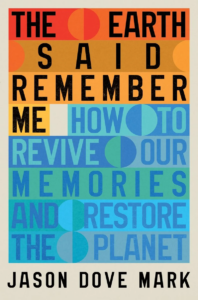
Adapted from The Earth Said Remember Me: How to Revive Our Memories and Restore the Planet by Jason Dove Mark. Copyright © 2026 by Jason Dove Mark. Used with permission of the publisher, W. W. Norton & Company, Inc. All rights reserved.

Jason Dove Mark
Jason Dove Mark has served as editor-in-chief of Sierra and editor of Earth Island Journal. He is the author of Satellites in the High Country, and his writing has appeared in The New York Times, Los Angeles Times, San Francisco Chronicle, and The Atlantic. He lives in the Pacific Northwest.