When Persistence Pays Off: On Translating and Publishing the Work of Kanako Nishi
Allison Markin Powell Recounts Her Experience Introducing a New Japanese Voice to Anglophone Readers
This is one of those publishing stories where the author—and in this case the translator too—waited for years, certain that their work deserved a wider audience, and was forced to stand patiently by while other authors and their books found readers, until it was finally her chance to do the same.
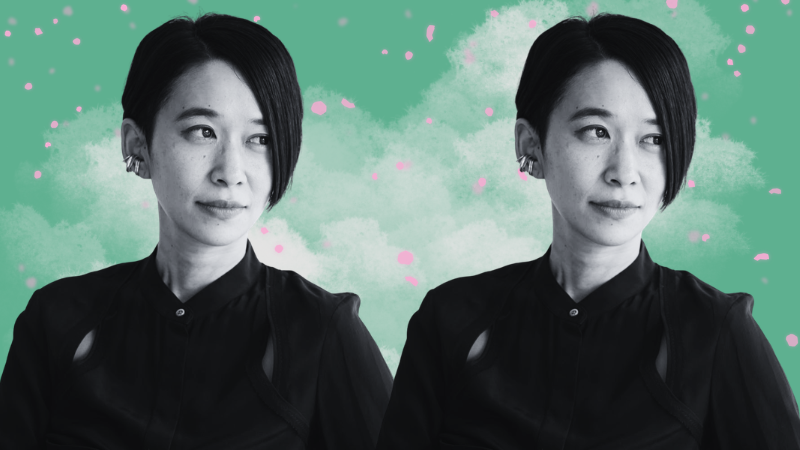
When Kanako Nishi won the Naoki Prize in early 2015, she was just over ten years into her career; she had written over a dozen books including novels, short stories, essay collections, and children’s books. A couple of her books had even been made into feature-length films. Her work had already received the Oda Sakunosuke Prize and the Kawai Hayao Story Prize. But winning the prestigious Naoki Prize for her epic Saraba! solidified her place as a literary luminary. Readers were undeterred by the novel’s length—732 pages, divided into two hardcover volumes—and it went on to sell over 460,000 copies, one of the top five bestselling titles of that year.
This is when I met Kanako.
This is one of those publishing stories where the author—and in this case the translator too—waited for years, certain that their work deserved a wider audience.
I had been contacted by an editor who was looking for someone to write an opinion essay about the murder of two Japanese hostages by ISIS militants. I reached out to a mutual friend who had recommended Kanako’s books to me years earlier to ask if she wanted to respond. The resulting essay, “Merry Christmas,” was our first collaboration. I was astonished by the way that this short piece managed to pack in a macro and micro outlook on religion and geopolitical events, all through the prism of a childhood memory.
Kanako was born in 1977 in Tehran, where her father was posted for work, but the Iranian Revolution there prompted her family to return to Osaka before she was two years old. When she was in elementary school, they moved again, this time to Cairo, where the family lived for four years. Perhaps because of this peripatetic early childhood, or perhaps the result of an encounter with Toni Morrison’s The Bluest Eye at a pivotal moment later in her adolescence, Kanako’s reading habits were deeply influenced by international literature alongside her formal education in Japanese literary tradition.
She’s a fan of Chimamanda Ngozi Adichie and John Irving as well as Jun’ichiro Tanizaki and Kuniko Mukoda. Saraba! is an excellent example of the I-novel, an early twentieth-century literary form in which the author writes in a naturalistic, confessional style. Kanako dared to take on this genre that had been dominated by male writers such as Osamu Dazai and Yukio Mishima, but turned the convention on its head—still hewing to its semi-autobiographical style by giving her protagonist the same formative experiences that she had in Iran and Egypt, even the same birthday as hers, she flipped the gender, making the narrator male instead of mirroring herself as female.
*
In 2016, fellow Japanese literary translators Lucy North and Ginny Tapley Takemori and I formed the collective Strong Women, Soft Power to promote the work of Japanese women writers in translation. As part of a series initiated by a conclave of translators that year at the London Book Fair and published here on Literary Hub, we compiled a list (just ten!) of books by Japanese women writers we’d love to see in English—needless to say, Saraba! was included. It’s worth mentioning that books by eight of these ten authors have now been translated into English and published, with a ninth first-time-in-English title forthcoming.
The English-language publishing market began to catch up with the Japanese literary landscape, where women writers had already been the cultural zeitgeist for some time. In the first three years after the National Book Awards relaunched the category for Translated Literature, Yoko Tawada won in 2018 for The Emissary, translated by Margaret Mitsutani; Yoko Ogawa was shortlisted in 2019 for The Memory Police, translated by Stephen Snyder; and Yu Miri won in 2020 for Tokyo Ueno Station, translated by Morgan Giles. Add to that the phenomenal success of Convenience Store Woman by Sayaka Murata, translated by Ginny Tapley Takemori—proving that novella-length books could succeed as standalone volumes—and editors were clamoring for more Japanese women writers in translation.
Perhaps it seemed like a risky moment to introduce a new voice with such a monumental and door-stopping tome like Saraba! But Kanako and I persisted. In 2020 I received a fellowship from the National Endowment for the Arts for the book. The attention from these grants often leads to a publishing contract but, unfortunately, not for us. I kept submitting the book to editors, all the while still translating her work, placing stories and essays in Freeman’s, Granta, Words Without Borders, and here on Literary Hub.
All the while, Kanako’s renown and reputation continued to grow. She was invited to international literary festivals—occasionally I got to go along too. We won a Pushcart Prize for the story, “My Ass,” published in Brick. But I still struggled to find a home for her books with an English-language publisher, even as more and more Japanese women writers like Hiroko Oyamada, Mieko Kawakami, and Emi Yagi were coming onto the scene in translation.
In 2023, Kanako published her first memoir くもをさがす (Kumo o sagasu; Looking For Spiders and Clouds), which is about moving with her family to Vancouver, BC, shortly before the pandemic and then in 2021 being diagnosed with breast cancer. Kumo o sagasu is a literary memoir, an illness diary, a lyrical exploration of cultural difference and similarity all in one volume. The book won the Yomiuri Literature Prize for Nonfiction, the Japan Booksellers’ Award, and has been the bestselling nonfiction book of the Reiwa era (2019 to present). This catapulted her to another level of success and visibility. However, given the aforementioned considerations when introducing an author in translation, it seemed like even more of a risk to attempt to do so with a work of nonfiction, however successful it may have been in Japan.
*
I often say that a book getting published in translation is like capturing lightning in a bottle. It can seem miraculous for any book to make it to publication but for an author’s work in another language, there are even more variables—the publisher and agent in the original country, often another agent working in the U.S. or U.K., the English-language editor, and of course, the translator, who may enter into the process at almost any point along this prospective line.
There is something of an art to curating a writer’s work in another language.
In our case, Kanako and I were lucky enough to meet Alexa Frank, a rising-star editor at HarperVia, an imprint of HarperCollins that is dedicated to publishing international voices. Alexa is herself a Japanese translator—a huge advantage for us since Japanese is a market few editors can access personally, without having to rely solely on reader reports or book synopses provided by the agent or publisher. Alexa was of course familiar with Kanako’s work and knew how much potential there was to being able to introduce her books to English-language readers.
Sometimes a writer will be discovered soon after they debut in their original language, and their books can be translated and published around the world along a similar timeline and in the same order as in their country. Other times there is more of a lag, a few years or a few books into an author’s career. Kanako’s case is even more unusual—with a backlist of books spanning twenty years, where do you even start? At the beginning? Or work backward, from her most recent publication? Go with her bestselling title? Or the book that is most beloved by readers in Japan? There is something of an art to curating a writer’s work in another language. Then again, why shouldn’t readers have access to an author’s full oeuvre so that they can appreciate the breadth of a writer’s talents, and judge for themselves?
After much deliberation, Alexa proposed introducing Kanako Nishi in English by starting with her debut novel Sakura, a meticulously plotted comic and tragic family drama narrated by the middle child Kaoru, who is caught between a hero brother and a turbulent sister, all of them protected by their doting parents and everyone united by their love for the eponymous family dog, Sakura.
With this selection, readers can have an experience similar to readers in Japan in encountering this fresh new voice, inflected with Kanako’s distinctively Osakan warmth and wit (the adorable Shiba Inu mutt at the center of the story certainly may be part of the appeal too). This early novel showcases the writer as she broke onto the scene decades ago, while already hinting at some of the increasingly complex themes she would revisit as her talents developed and her confidence grew. We already know that there are plenty more daring and ambitious books that await translation—hopefully you’ll have the opportunity to appreciate how Kanako’s literary style evolves and to keep up with her prodigious body of work as well.
__________________________________

Sakura by Kanako Nishi, translated from the Japanese by Allison Markin Powell, is available from HarperVia, an imprint of HarperCollins Publishers.

Allison Markin Powell
Allison Markin Powell is a literary translator, editor, and publishing consultant. She received the 2020 PEN America Translation Prize for The Ten Loves of Nishino by Hiromi Kawakami. In addition to Sakura by Kanako Nishi, her other translations and co-translations include works by Osamu Dazai, Shiori Ito, Ryunosuke Akutagawa, and Kaoru Takamura, among others.