What’s Next For Nation-States? On the Past, Present and Future of the World As We Know It
Rana Dasgupta Considers Old and New Possibilities For the Organization of Geopolitical Power
“[Revolutionary tracts tend] to become mere annals of complaints about existing conditions…I thought, on the contrary, that a revolutionary paper must be…a record of those symptoms which everywhere announce the coming of a new era, the germination of new forms of social life, the growing revolt against antiquated institutions…To make one feel sympathy with the throbbing of the human heart all over the world, with its revolt against age-long injustice, with its attempts at working out new forms of life… It is hope, not despair, that makes successful revolutions.”
–Pyotr Kropotkin, 1899
*Article continues after advertisement
You almost certainly live in a nation-state. Like 99.75 per cent of our species.
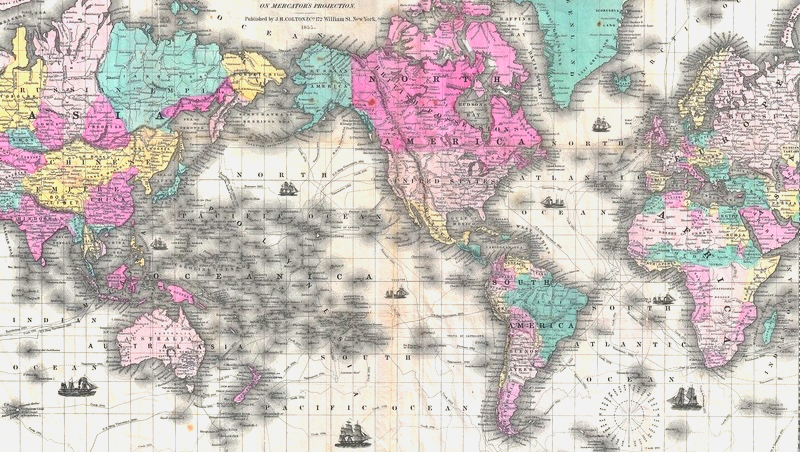
This is recent. In 1900, only about 25 per cent of the world’s population lived in a recognizably ‘national’ state, of which there were no more than fifty (compared to nearly two hundred today). These were concentrated in Europe and Latin America. In Asia, we might count six—Japan, Siam, Nepal, Bhutan, Afghanistan and Persia—though the last two had lost much of their sovereignty to imperial powers. Africa boasted two: Liberia and Ethiopia (though the latter had been a multinational empire, and was still in the early stages of setting up the institutions of a modern state).
The rest of the world comprised colonial possessions of the European states and Japan, a few large land empires, and many small principalities. Technically, the destiny of eight-tenths of humanity was controlled by just eleven rulers: the Chinese, Russian, Austro-Hungarian and Ottoman emperors, and the political heads of Britain, France, Germany, the Netherlands, Italy, Japan and the United States.
The nation-state has consumed our politics. Whatever freedoms it offers are founded in this primordial unfreedom: we cannot not belong to a nation-state.
That situation was in many respects more “normal” than what we know today. The last five millennia have typically seen a great diversity of co-existing political forms—sometimes overlapping and symbiotic, sometimes divided and incommensurable. Within that diversity, the most conspicuous large-scale formations were always transnational empires.
But everything changed in the twentieth century. Under the especial influence of the United States, the political system was standardized, and a single administrative form extended to the world. With very few exceptions, an end was declared, not only to empires, but also to city-states, duchies, principalities, emirates, sultanates, caliphates, khanates, agencies, princely states, colonies, suzerains, dependencies, mandates, tributaries, condominia and protectorates.
Recent though it is, the takeover is projected backwards in history—for, at their very moment of creation, nation-states present themselves as antique. Even long-extinct animals are ascribed nationality: Thomas Jefferson regarded mastodon fossils from the Hudson Valley as prophecies of the United States of America’s (established 1776) mammoth destiny. National museums deploy human relics in such a way as to suggest that ancient societies were already, say, “Mexican” (1821) or “Syrian” (1946). The Arab Republic of Egypt (1953) stakes a natural claim to the Rosetta Stone, which was commissioned in 196 BCE by a Greek-speaking pharaoh of Macedonian descent, and unearthed near Alexandria by French engineers in 1799. Leonardo da Vinci is described as an “Italian” humanist, and Luther a “German” theologian; those nations (1861 and 1871) were not dreamed of in their day. On postage stamps, Rabindranath Tagore lends his face to the Republic of India (1947), though the poet lived all his life in the British empire and disparaged national attachments: “Patriotism cannot be our final spiritual shelter,” he wrote; “my refuge is humanity.”
The nation-state has consumed the past; it has also consumed our hearts. Shortly after children learn their difference from birds and animals, they are taught they are Chilean or Thai, and emotionally constituted in a way only other Chileans or Thais may understand. For Lord Byron, one of the pioneers of modern Western feeling, this national spirit was the most heroic poetic subject; his desire for eternal Greece to be liberated from transitory Ottoman subjugation continues to pulsate in so many other contexts today: “I dream’d that Greece might still be free.”
In the century and a half following Greek independence (1830) many of the world’s peoples cultivated a similar pathos, which was operationalized into anti-colonial struggle; the feeling was subsequently enshrined at the heart of their new states, and turned into national poetry, music, art and cinema. Many people still associate these feelings of modern belonging with the loftiest human possibilities; hence the powerful emotions that are generated when they are brought together—at the Olympic Games, for instance, or the United Nations headquarters in New York.
Most of all, the nation-state has consumed our politics. Whatever freedoms it offers are founded in this primordial unfreedom: we cannot not belong to a nation-state. We cannot reject the nation’s citizenship or taxes; we cannot decline its law in favor of some other. We cannot step outside its territorial circuits: a Mexican may not vote in a US election (though she may have as much justification as any US citizen); French taxpayers do not dispense unemployment benefit in Niger (though they may bear much responsibility for that country’s disarray). We certainly may not refuse the nation’s security apparatus, and mobilize instead our private army. All our political capacities are given over to this one monopoly of the nation-state, which has stripped us of every other kind.
*
In 2018, that monopoly was assailed by signs and portents. I was living between four countries—the United States, India, France and the United Kingdom—all of which were consumed by questions about unscrupulous or malevolent leadership, about the wrecking of hitherto sacred customs and contracts, and about the state’s inability to manage such growing issues as economic inequality, ecological degradation and the technological manipulation of ‘truth.’ I was studying other countries too, and teaching in yet more; everywhere there seemed to be a sense, not only that state purposes were becoming sterner and more removed from popular needs, but also that political conversation was increasingly designed to distract from that reality.
Professional commentators tended to see these developments in so many local terms—turning, for their explanations, to national histories, cultures and institutions. But that did not explain the conspicuous parallels between countries, and it ignored the fact that our nation-state system was just that—a single, integrated political and economic system. As I watched the reorganization of power within and between nations, I came to believe we were passing through, not a set of disconnected national crises, but a transition, rather, in our global arrangements. The most conspicuous symptom of this transition, certainly, was the contortion of the nation-state, and the resulting unravelling of political cultures built up over many decades. To move beyond symptoms, however, it was necessary to consider the grand unity of the nation-state system itself. How did this system arise, what purpose did it serve, and—above all—where had it reached in its life-cycle?
Nation-states acquired significant moral prestige in the decades following the Second World War, when political theory emphasized the welfare and protection of citizens, when states tended to enjoy authentic control over their national realities, and when many populations experienced startling improvements in their condition. This was the era of decolonization, when nation-states delivered one-third of humanity from the humiliation of imperial rule, restoring political autonomy and dignity where they had long been removed. In the West, nation-states produced an astonishing expansion of equality, democracy and material security.
Those developments were so mesmerizing that many believed we had reached an ecstatic end-state, when the travails of history would finally cease. A condition so stable and permanent that political philosophers could close their books: there was no next chapter. This naïve view tended to overlook the searing violence of the ‘Cold’ War, and the ever-increasing inequality between nations. It owed much of its credibility to the fact that the international system, the leading schools of government, and the most influential media organizations were still controlled, largely, by the West—where the nation-state was invented in the first place, and where its most spectacular rewards were enjoyed. By now, however, that view is fading. It is clear, in fact, that the decades following 1945 constituted an exceptional period in world history—one that is well and truly at an end.
In the late 1970s, there began a set of processes which restored the autonomy of financial capital, reset the purpose of politics, and generated a number of formidable new competitors to the nation-state. What these processes were, and where they will lead, forms the core of this book. Here we need only say that, nearly five decades later, the nation-state is unable even in theory to manage reality as once it did. Its capacity to deliver progress and human welfare has been significantly undermined. It has lost the technological supremacy on which its monopoly rested; in many areas, it is outclassed by giant corporations with their own, rival, visions of social and political arrangements. Even rich states have forfeited their primordial power over money; as a result, they struggle to uphold their commitments to their peoples. They begin to embark, indeed, on projects which seem to have nothing to do with those commitments—theocratic caprices, persecutions of minorities, foreign invasions, criminal escalations. Meanwhile, the resurgence of Eurasian empires—notably China and Russia—strikes at the heart of the cellular order established under American hegemony.
It is clear, in fact, that the decades following 1945 constituted an exceptional period in world history—one that is well and truly at an end.
To survive these transformations, rich states have resorted among other things to the ever greater exploitation, not only of poor states, but also of the human and ecological capital housed within them. This exacerbates already-shocking gaps: wealth and security are further concentrated in some places; poverty, war and natural destruction in others. The grid of international borders must therefore be ever more militarized, or else the system of states—which is now explicitly a class system, whose functioning depends on mass immobilization—cannot work. As a result, the nation-state system falls short of the most common-sensical conceptions of equality and justice; if it were a single state, it would be despised.
But like many morally bankrupt systems, it is also becoming unsustainable. It was built on the dubious assumption that humanity is, in its “normal” state, sedentary; today, hundreds of millions of people are finding that their best course of action is to break the laws of nations and travel “illegally” abroad—in the hope of collecting the freedoms and protections they were once promised at home. Their hand is also forced by climate change, war and the accelerating rush for timber and minerals. The existing political infrastructure has no way of accommodating migration on the coming scale, which will evacuate departure economies, and overwhelm destination societies.
The nation-state is a constantly changing commercial engine, whose interests coincide only sometimes with those of human beings. As a result of the transformations which are the focus of this book, that engine has departed very far from the euphoric expectations of the previous era. This does not mean states themselves will collapse: as our history will reveal, despotic nation-states have often enjoyed great success. It does mean they may cease to be dependable as platforms for thriving human societies. That presentiment lies behind the many present expressions of apocalypse. Our nation-state system has lost its Byronic pathos: in a remarkably brief period, its demented extraction from the earth, and from human minds and bodies, has caused the sensation of progress to be replaced with the anxiety of futurelessness.
Perhaps we are not stuck with a rigid and ravenous political architecture designed in the era of horse transport and slavery; perhaps we can reimagine it. Not so that we destroy what exists: we are already sick of destruction. No, our purpose is to supplement, extend and update, so our politics may match the scale and speed of contemporary information and commerce, migration and ecology. Present technologies offer stunning opportunities in this respect. We are now able to envision new political capacities, which might either be absorbed into nation-states, so giving them a new lease of life, or else form a parallel system—cosmopolitan, frugal and flexible—to complement what we have today. Perhaps we will come to realize that the present crisis offers a major opportunity to the many who never benefitted in the first place from the hegemony of the nation-state—a structure whose achievements have always been more limited, and more local, than we acknowledge.
____________________________
From After Nations: The Making and Unmaking of a World Order by Rana Dasgupta. Copyright © 2026. Available from Viking, an imprint of Penguin Publishing Group, a division of Penguin Random House, LLC.

Rana Dasgupta
Rana Dasgupta is the author of two novels and a non-fiction portrait of twenty-first century Delhi. Dasgupta was a visiting fellow in the humanities at Princeton University and has taught as a visiting lecturer at Brown University. His essays have been published in The Guardian, New Statesman, and BBC.com, and his writing has won the Windham Campbell Prize, the Commonwealth Prize, and the Ryszard Kapuściński Award. He lives in Delhi.