What to read next if The Testament of Ann Lee was your favorite movie of 2025.
I’m speaking to you, freaky ecclesiastical femmes. If you left Mona Fastvold’s strange epic singing hymns at the top of your lungs, and spent last week shaking with anger at the Academy’s oversight, please come testify by me.
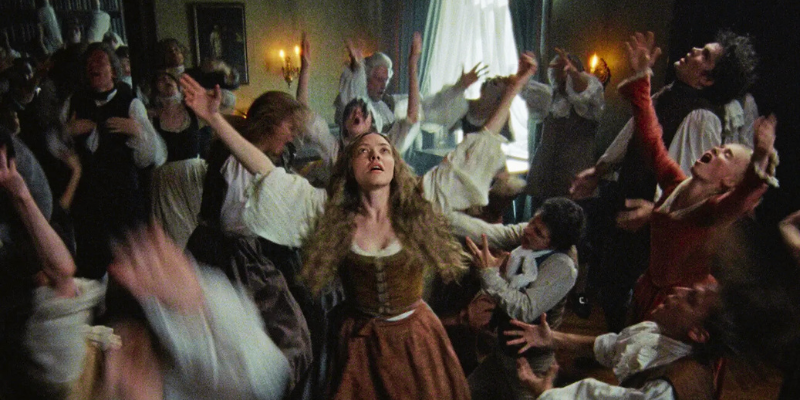
The Testament of Ann Lee is a sincere hagiography centering the leader of the American Shakers. The film depicts an early utopian experiment by elevating the religious community’s practices. Their famous furniture making, yes, but mostly the involving dances.
Here are a few book recommendations if you left the theater hunger and thirst-ing for more.
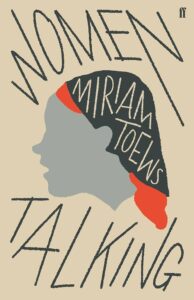
Miriam Toews, Women Talking
A friend praised the way violence was depicted in The Testament. Though extremely painful to watch at times, Fastvold pays attention to the trauma of birth in a way very few films have bothered to.
We also see a more banal everyday violence throughout the picture, via the handling of women’s bodies. But the joy in Ann Lee comes from watching people literally shake off their oppressor’s—spiritual and physical.
Toews’ brilliant, unsettling masterpiece—which was also made into a feature film—takes women’s pain just as seriously, and is just as inventive about responses to it. Women Talking, like The Testament, is also centered around a cloistered religious community: the Mennonites.
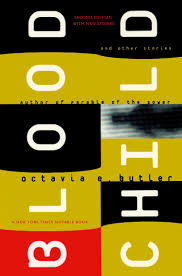
Octavia Butler, Bloodchild and Other Stories
Utopia’s a hop skip and a jump from dystopia, as every attempt at the former has made plain. No one knows this better than Octavia Butler. The eerie parables in this collection reimagine the relationships between host and parasite, and leader and led.
“Bloodchild,” the titular story, proposes a society where men bear children via painful ritual—an inversion that certainly has something to say to the Shakers’ abstinence rationale.
Butler’s also curious about what how gender roles shape society. Accordingly, these stories are as strange, vivid, and sensual as the shaker’s dances. If you’re interested in the space where religious ecstasy bumps against freedom, reach for these.
Bonus content! If you left the undersung Ann Lee interested in the Shaker phenomenon, there are plenty of great histories. To jumpstart your quest, author Jordan Kisner, of Thresholds, recently wrote a swell profile on the last American Shakers.
And if you’re curious about feminist utopian experiments more generally, consider Charlotte Perkins Gilman’s Herland (1915), a first of its kind spec-fic in which women reproduce asexually and relish a man-less world.

Brittany Allen
Brittany K. Allen is a writer and actor living in Brooklyn.