What Our Ideas About Ugliness Reveal About Our Anxieties Surrounding Gender
Stephanie Fairyington Considers How the Stigmatization of Queerness Influences Beauty Standards
I was assessing my face against my mother’s from my earliest memories, or rather the world around me was, and it was consistently communicating—in a quizzical glance or a compliment withheld or a hostile blank face—that I was falling short, way short. In fact, I remember the exact moment my ugly sense of self went from a hazy half thought to a bright hue of certainty.
*
On a sunny day in 1986 on Cord Street in Downey, California, where I grew up amid a caricature of ’80s paraphernalia and cultural touchstones—Cabbage Patch Kids, Garbage Pail Kids, Little League, crappy fast food (McDonald’s, Burger King, Swanson TV dinners), CCD (bible study), talk shows (Jerry Springer, Oprah, and Donahue), sitcoms (Family Ties, The Facts of Life, Growing Pains), and regular trips to Blockbuster for movies we watched on repeat (John Hughes films, The Karate Kid, The Goonies, too many to name)—I was lost in a reverie of fun.
Ten years old, standing in the middle of the street in a swirl of chlorine-soaked kids running through the sprinklers on my parents’ front lawn after a dip in our pool, I was showing my first-series Garbage Pail Kids trading cards to Jimmy when a gray minivan disrupted the dreamy flow of fun, taking full residence in the middle of the road. The window on the driver’s side rolled down so the mother of a kid we were playing with could talk to Jimmy’s mom, Sharon, the sweet den mother to us all. The woman, with a messy bun and wisps of hair framing her narrow face, looked straight at me and contemptuously said: “That’s Chrysí’s daughter?” Her mouth jutted open longwise, like an exclamation point.
She didn’t just see a face cut up, unpretty—she saw disordered sexuality and gender, the specter of moral depravity and social dissolution.
It landed as she intended it to—with blunt force. Standing next to my thirteen-year-old brother, Andreas, who did inherit our mother’s good looks, only seemed to amplify my ugliness. Tall and blond with a chiseled face and green eyes, he gained the affections of nearly all my childhood girlfriends—and even had a secret affair with my best friend in high school.
But it wasn’t just my face that made me unattractive to her—it was also the legibility of my queerness.
Girls like me who clung to their prepubescent gender ambiguity, even as our bodies morphed into young women, lost their “tomboy” appeal as soon as their breasts formed. You couldn’t inhabit a woman’s figure and dress in the same thoughtless array of printed T-shirts and surf shorts, showcasing your scabby knees from bike and skateboard spills, with mounds of flesh taking shape under your shirt—and not receive looks of suspicion and disdain from the conservative churchgoing denizens of Downey: the people who voted for Reagan, who watched talk shows to feel morally superior, who believed that HIV was a judgment on homosexuality from God, as did I when I was a child trying to stop the drip, drip, drip of my homosexual urges, a leaky faucet I couldn’t wrench shut.
Doubling my confusion and inner unrest was the feeling that my internal and external genders were misaligned—just like Enrique, your classmate, whom you ardently defend against anyone who misgenders her, even though you sometimes mix up her pronouns yourself. “The boys at school keep calling Enrique ‘he,’ especially one boy, who won’t call him,” you slipped, “ ‘she’ even when the teacher said he has to.” (I suggested that some might accidentally misgender her, telling you about two incidents at work when I did the same, inflicting harm where I didn’t intend to, but you believed it was done with intentional meanness.)
Your classmate’s refusal to accept Enrique extended from his same refusal to accept our family. Your school’s principal called Sabrina and me one morning, concerned about an incident that took place in your first-grade classroom that even now you pretend didn’t happen:
“What’s something that makes you feel special?” a substitute teacher asked each kid in class.
“I have two moms,” you offered proudly, not realizing how that might land in a school largely composed of religious and socially conservative families.
“You can’t have two moms. You have to have a dad,” your classmate said over and over again, refusing to concede the point.
The principal said the substitute pulled you outside the classroom right after the incident, so you must have been upset. She let you know that all families are welcome at the school, but that was only theoretically true; you were a minority, awash in cultural and religious condemnation meant for us—your queer parents—not you. A social worker from the school called to affirm our welcome at the school. “The student who made the comment said that your family goes against his religious beliefs,” she said apologetically, “but we let him know that there is no legitimate basis for discrimination and bigotry in our school”—an ethos that may begin to radically shift with arguments handed down from Trump’s Supreme Court allowing people to appeal to religious justifications for their prejudices toward LGBTQ people.
When I picked you up that day, you charged at me with your usual puppylike affections and didn’t mention it, so neither did I. When I tried to tease it out of you in play, and when your beloved teacher, who also grew up with two moms, tried to address it with you, you kept it locked up. Did it embarrass you? Were you trying to protect our feelings? Was it a nonissue, or did such things happen so frequently that it failed to register as anything out of the ordinary? Either way, Sabrina and I started thinking about transferring you to a different—more queer literate—school near Park Slope, which was once known as “Dyke Slope” because so many lesbians lived there at one time.
*
Unlike Enrique, who is growing up in a world with greater gender fluidity, trans literacy, and acceptance, I didn’t have the language to make sense of my inner conflict and confusion. I still don’t, really. I just know that I didn’t feel like a girl in my early youth. I felt like a boy in female flesh. Womanhood came to me later. Maybe I was compelled into gender submission as I grew up, maybe my sense of self shifted, or maybe my desire to be a boy extended from my reluctant lesbianism or the fact that my brother received the larger share of love and affection in the world, but looking in the mirror at that time was a jarring and withering experience. My exterior gender and interior one were out of alignment, and every attempt to sync them—with corresponding clothes, a rich fantasy life, and standing up over the toilet bowl to pee, messily—ultimately failed.
*
Were I seen as the boy I was in my mind, I might have been perceived as cute in an off-centered sort of way—the way that all boys, just by virtue of being boys, are—with their mismatched dirty clothes, bad haircuts, and smears of pizza grease lining the sides of their goofy smiles. Being the kind of girl I was, even “cute” was unattainable, especially in contrast to my mother.
My face juxtaposed beside Yia Yia’s elicited cruel double takes so frequently in my childhood that I dreaded being introduced as her daughter; I could always hear the silent disbelief. “How could that woman have made that child?”
The many iterations of ugly in which I was cloaked—my genetic constitution, my burgeoning sexuality, my more masculine affect—were visible to the mom in the minivan. She didn’t just see a face cut up, unpretty—she saw disordered sexuality and gender, the specter of moral depravity and social dissolution.
As it’s often been fabricated in various Western historical contexts, one could say that I was the definition of ugly.
My ugliness sat in the middle of the organizing dichotomies on which society rests…threatening its collapse.
According to research collected by Gretchen E. Henderson in a book called Ugliness: A Cultural History, while the “classification of ‘ugly’ proves unruly,” continually shifting and morphing over time in various historical settings, the common thread running through the ages is that those deemed ugly conjure unease and angst, even terror, in the eyes of their beholder. Tracing the etymology of the word, she notes that ugly’s Middle English roots meant that which was “ ‘frightful’ or ‘repulsive’” and derived from the Old Norse word uggligr, meaning “ ‘to be feared or dreaded.’” By the eighteenth century, it more commonly connoted deformity and moral depravity. (Does this etymological history help explain why genderqueer lesbians— morally “crooked” girls—aren’t legible as attractive?) Through the Enlightenment era, when “practices of investigation, classification and display” proliferated, Henderson writes, “bodies who refused to fit categories seemed to demand attention.”
I was a body like that. I existed, on multiple fronts, as “matter out of place,” a phrase Henderson takes from social anthropologist Mary Douglas’s 1966 book Purity and Danger. Douglas was referring to the cultural relativism that determines that which we see as dirty or impure, as a violation of “a set order of relations.” On my body one could see the collapsing social structure, binaries colliding and shattering, a mess, confusion. I was a girl who was a boy who desired girls. Like Julia Pastrana, the Mexican-born singer and performer in the nineteenth century who traveled across America and Europe in exhibitions that billed her as “The Ugliest Woman in the World,” my ugliness sat in the middle of the organizing dichotomies on which society rests—normal and pathological, male and female, feminine and masculine, homosexuality and heterosexuality—threatening its collapse.
Even my elementary school peers perceived my incongruities:
“Lez alert! Lez alert!” my friend Sharon yelled as she and our fifth-grade crew ran crazily in all directions away from me on the playground at recess one day. I’m not sure who originated the game, but it was a form of tag in which the tagger (aka the Lez) could pass her lesbianism on to another girl with one touch until that girl could pass it on to another.
Being called a lesbian was a uniquely harsh insult.
Culturally, the word is synonymous with ugly, not just for the ways lesbians defy traditional gender roles in the popular imagination but for their disinclination toward and unavailability to men. By patriarchal design, there is nothing less desirable and less attractive than a woman who refuses to be the vessel of men’s pleasure, literally and metaphorically—lesbianism is the ultimate rejection of the role prescribed to us as women. I believe, controversially perhaps, it’s part of the reason some women opt for the word queer as opposed to the word lesbian, even if they are exclusively attracted to women. By foreclosing our accessibility to men, we lose social and cultural currency. Queer keeps that possibility—and our desirability—intact.
__________________________________
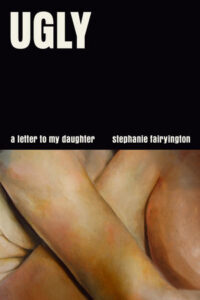
From Ugly: A Letter to My Daughter by Stephanie Fairyington. Copyright © 2026. Available from Pantheon Books, an imprint of Knopf Doubleday Publishing Group, a division of Penguin Random House, LLC.

Stephanie Fairyington
Stephanie Fairyington is a journalist who writes on gender, sexuality, family, and parenting. A former contributing writer for The Advocate and former senior staff writer at Arianna Huffington’s Thrive Global, her work has appeared in The New York Times, The Boston Globe, online for The Atlantic, and elsewhere. She lives in Brooklyn with her spouse and daughter.