How Medieval Doctors, Christian and Muslim, Treated the Black Death
Thomas Asbridge Considers the Influence of Religious Tradition on Medical Practice in the Middle Ages
Many physicians sought to treat patients struck down by the Black Death. These doctors typically turned to the extant body of medical knowledge, derived from the ancient world and Arabic texts written between the ninth and the twelfth centuries; they tried to fit this new plague into the established framework of Galenic Humoral Theory; and they employed traditional therapies, including bloodletting and cautery. Their efforts proved to be wholly ineffective.
Many who lived through the pandemic—and witnessed this inability to combat the lethal pestilence—developed scornful opinions of the medical profession. In the mid-1350s, after the pestilence had died down, Petrarch launched a scathing attack on doctors, classing them as “the very dregs” of society, and portraying them as liars who “despoil [patients] of both their money and their health.” Such criticism was not only expressed after the fact. The young Byzantine official Demetrios Kydones wrote in a letter of his profound shock and disappointment at the behavior of his friend Georgios, a physician, who fled Constantinople once the scourge hit “without telling us at all,” and went on to state that “the remaining doctors have nothing useful to say, but hide themselves and write their wills.” Meanwhile, in Italy, the Sienese shoemaker Agnolo di Tura declared that “no medicine or any other defence helped” during the pandemic, adding that “any remedy tried only brought a quicker death.”
The Florentine chronicler Marchionne di Coppo Stefani later sought to explain these systemic failures (while also reflecting the belief that more than one disease was at work), noting that “there appeared to be no remedy, either because those illnesses were not yet recognised, or because doctors had never previously had cause to study them properly.” He went on to cast physicians as acquisitive and lacking in compassion, explaining that “those [doctors] who could be found wanted exorbitant fees cash-in-hand before entering the house, and having entered, they took the patient’s pulse with their heads turned away, and assayed the urine samples from afar, with aromatic herbs held to their noses.” Nonetheless, even Marchionne had to admit that the difficulty in securing medical treatment during the Black Death was also partly caused by an acute shortage of physicians, as “they were dying like everybody else.”
Many who lived through the pandemic—and witnessed this inability to combat the lethal pestilence—developed scornful opinions of the medical profession.
For all of this voluble criticism, it is clear that many medical practitioners did stay in their posts, striving to aid the sick, even at the risk of their own lives. Although Paris’s Hôtel-Dieu was quickly overwhelmed during the pandemic, with one eyewitness observing that “500 bodies a day were being taken from the [hospital] for burial” by the summer of 1348, the institution’s nursing staff of “saintly sisters” apparently refused to be cowed by fear and instead “worked sweetly and with great humility,” such that “a great number” of them died. As we have seen, a similar situation was said to have played out in Cairo’s renowned Mansuri bimaristan, where the noted Iraqi doctor Ibn al-Akfani died while treating Black Death patients. The following case studies demonstrate that this type of selfless dedication was far from unique.
Gentile da Foligno in Perugia
Italy was one of the few regions in Latin Christendom where physicians organized into guilds in the fourteenth century and thus routinely treated the general populace, rather than merely the wealthier mercantile and aristocratic classes. Perhaps the most revered luminary of the profession in the mid-fourteenth century was the venerable Gentile da Foligno.
Born in a small central-Italian town near Perugia, Gentile pursued a medical education (probably following in his father’s footsteps), almost certainly studying at Bologna University and teaching for a time in Siena, before securing a post in Perugia’s own school of medicine around 1326. In the course of his career, Gentile developed a close familiarity with the works of Galen, al-Razi, and Ibn Rushd, but he became most famous for his grasp of Ibn Sina’s (or Avicenna’s) writings, producing an exhaustive commentary on the Persian scholar’s seminal Canon. This led to Gentile becoming known in his own lifetime as the “soul of Avicenna” (as well as a “second Galen” and “the prince of medicine”), while in later years he was lauded as “the most subtle investigator of Avicenna’s teachings.” His commentary continued to be used as a core medical text until the early sixteenth century.
In terms of his own specializations, Gentile was particularly intrigued by the nature and treatment of fevers, but his wider interests (and renown) saw him consulted as an expert on paternity—where he ruled that children born just seven months after marriage were still legitimate—and ophthalmology, on which he wrote a special casebook for the physician serving Cardinal Giovanni Colonna, the noted patron of both Petrarch and Louis Sanctus. In spite of these many professional successes, Gentile also found time to establish a thriving family. He married Giacoma di Giovanni Bonimani and together they raised at least four children—Giacomo, Francesco, Ugolino, and Roberto—in their home in Foligno, though Gentile also maintained a residence in neighboring Perugia.
By the time the Black Death struck Italy in 1347, Gentile was probably in his early seventies, though he seems to have lost none of his energy. Somewhat fortuitously, he had a pre-existing interest in plagues, having begun to write a treatise dedicated to this topic back in the 1330s, and once tidings of a new lethal scourge started to circulate, he seems to have hurriedly completed this text. In this work, Gentile offered advice without having had any direct experience of the pestilential outbreak, and initially judged that this current affliction was not “so great in its evil” as some of the historical epidemics he had studied, including the 430 BC Plague of Athens recorded by Thucydides (which is now thought to have been caused by either smallpox or typhoid).
As the crisis deepened, however, Gentile wrote two further tracts focused on the pandemic. The first, which must have been composed in either late 1347 or early 1348, immediately after the plague broke out in mainland Italy, he dedicated to his “learned colleagues” in the Genoese “college of physicians.” The second—now known as the Short Casebook—was written after the Black Death reached Perugia in the spring of 1348 and was completed by that same June. It offered practical guidance on the “evils of the pestilence” to doctors working in Perugia, based on Gentile’s own “hard-won experience” (which included treating patients and perhaps even performing autopsies on victims), alongside advice to the general populace. In this text, he radically revised his earlier appraisal, declaring that no previous disease was “comparable in [its] malice to this pestilence.”
These texts provided some of the most detailed medical descriptions of the Black Death recorded in western Christendom. When it came to the disease’s fundamental nature, Gentile classified the plague as “the most poisonous of all poisons”—a scourge that attacked the body directly, “oppress[ing] the heart and lungs,” rather than simply causing a humoral imbalance. He also concluded that this highly contagious malady could “infect everyone,” because the afflicted expelled “a poisonous vapor that is a danger to those in the vicinity and those with whom one converses,” and which could be absorbed either “by the breathing out and breathing in of the air,” or through the pores of the skin.
On this basis, Gentile predicted that “there will be much spreading and passing of this plague by means of contagion, not only from man to man but also from region to region.” He therefore recommended the preventative measure of avoiding areas where an outbreak had occurred and even taking flight from an affected locality if necessary. However, in his treatise to the Genoese, he additionally emphasized the importance of protecting those tending to patients, “lest those who become sick find themselves neglected beyond all inhumanity and abandoned…in a manner usually accorded to brute beasts”—a warning that suggests he might already have heard reports of abandonment. Furthermore, in the hope of stemming the crisis, Gentile encouraged local authorities to consult with physicians on various public health measures, including the use of open fires to ward off poisoned air, clearing out “filth” from the streets, and banning anyone arriving from “contaminated regions” from entering their city.
Gentile also proffered detailed advice on how to treat a patient suffering from the Black Death. Like many physicians of the day, he believed that the buboes which commonly appeared on victims deserved particular attention. Some doctors employed wildly improbable cures when treating these pestilential tumors. In northern Spain, for example, the Christian physician Jacme d’Agramont recommended that one should “pluck the rump of a cock or a hen and hold it on [these swellings] to draw out the poisonous matter” held within. However, Gentile suggested the less fanciful, but admittedly more agonizing, practice of lancing buboes to release the corrupt matter they contained, prescribing “a great cupping” directly onto the swelling on the second day, followed by “deep scarification by cutting open the bubo with an iron [knife],” alongside the administering of a sedative “late in the day…for the pain.” It is not clear whether this form of treatment improved survival rates.
In addition, he indicated that cautery might likewise be used to rupture such swellings, listing nineteen “incendiary medicines” that could be applied directly to the bubo. Some of these, like arsenic and ground cantharides beetles (also known as “Spanish Fly”) would certainly have been highly caustic, but others, including mustard and warm bird excrement, must have had little effect.
To ward off the disease or lessen symptoms, Gentile also suggested a range of therapies. These included the ingestion of Lemnian earth—a reddish clay originally from the Greek island of Lemnos that induced vomiting, thereby expelling the poison that was apparently causing the illness—or Armenian Bole (also known as terra sigillata or “sealed earth”), which Galen had recommended as a treatment for pestilence, though Gentile admitted that authentic sources of either might be difficult to find in Italy. He also recommended wearing a specific type of gold ring, inset with an amethyst bearing the image of “a man on bended knee encircled by a serpent,” contending that this talisman would “preserve [patients] from any poison [and] from the darts of pestilence.”
Above all else, however, Gentile was a proponent of theriac. This universal antidote, whose name derived from the Greek for “relating to wild beasts or poisonous reptiles,” dated back to the ancient world. It was thought to cure fevers, heart problems, and epilepsy, heal wounds, and counter all forms of poisonous bites and stings, and was concocted from a bewildering array of up to eighty different rare and refined ingredients, including snake skin, cinnamon, juniper, nutmeg oil, French lavender, white honey, black pepper, and, perhaps most importantly of all, the milky fluid from opium poppy seedpods (from which morphine and codeine, as well as heroin, are now derived). The finest theriac was produced, with great ceremony, by the Venetians, and this so-called “Venice Treacle” was left to mature for twelve years before being sold for exorbitant sums, but other forms of theriac were widely available across the medieval world.
As Gentile knew well, this “divine” substance had been recommended by the likes of Ibn Sina and Ibn Rushd, while Galen himself had written of a “certain wise physician” in the northern Syrian city of Antioch who advocated its use when a “pestilential disease” hit, and had added that in this instance, those who took the cure survived, while “those who did not take it died.” Gentile concluded that theriac was “suitable for those illnesses in which other medicines are found to be ineffective” and ought to be capable of “break[ing] down the poison” of the Black Death.
The only danger was that theriac was thought to heat the body and thus could supposedly render an individual more susceptible to corruption by the plague. To combat this potential problem, Gentile advised that it should only be “administered in very small amounts” and taken alongside other substances deemed to be cooling, such as pomegranate wine or rose water. He recommended that theriac should be taken orally “at least two or three times a week” by men between the ages of fourteen and thirty-one, and women aged “fourteen to thirty-and-a-half,” while “for babies in their first year, who should not take these doses,” he noted that, “it will suffice to rub their chest, stomach and nose” with the concoction.
Given what we now know about pharmacology, it is clear that theriac would have been one of the only plague treatments capable of actually impacting a patient’s wellbeing, because it contained opium. Though it could not cure the Black Death, it would have relieved some of its symptoms: alleviating pain, nausea, and diarrhea; easing coughing and a sore throat; and calming anxiety.
When compiling his Short Casebook in the spring of 1348, Gentile took the unusual further step of specifically addressing the needs of poorer patients. Recognizing that not everyone could afford to buy theriac, he listed a range of cheaper alternative remedies, including the use of prasium (white-hedge nettle), hyssop, scabiosa (a type of honeysuckle) or elecampane (horse-heal), all of which could be eaten raw, or mixed with wine or water. He also answered direct “questions posed by the common people” regarding the efficacy of garlic, which he maintained could be employed as a medicine by “ordinary and rustic men” and had “some effect against disease,” but was not particularly useful when treating plague, and the drinking of vinegar, which could be mixed with wine “provided that the wine is good.”
Eventually, Gentile’s own “constant attendance on the sick” in and around Perugia seems to have caused him to contract the Black Death. He fell ill on June 12, 1348, and was taken to the church of San Giovanni Profiamma in a small hamlet, just north of Foligno, where four doctors supervised his care. Sensing that the end of his life was near, he had a codicil added to his will two days later, specifying that, while his lands and vineyard were still to pass to his surviving sons, a new chapel dedicated to Santa Maria Nuova should also be built in the middle of that same vineyard. That night, he was carried to his family home and it was there that he died on June 18. Gentile’s battle against the Black Death ultimately cost him his life and, although his efforts must have brought some succor to the afflicted, he is unlikely to have cured many (if any) of the plague.
Gentile’s body was buried in a small local church dedicated to St. Augustine, where his tomb was sealed with an inscribed marble slab marking the resting place of the “eminent physician Doctor Magister Gentile de Foligno, a citizen of Perugia.” One of his children, Giacomo, drew up his own will on June 23 and may have also succumbed to the plague, but Gentile’s wife, Giacoma, survived the pandemic, living on till at least 1373, while their youngest son, Francesco (who studied with Gentile and became a noted physician in his own right), dutifully oversaw the enactment of his father’s will. Many centuries later, the University of Perugia decided to commemorate Gentile’s selfless contribution to the field of medicine, immortalizing him in a monumental bust that was unveiled in the Great Hall of the School of Medicine and Surgery in 1911, where it remains to this day.
Ibn Khatima in al-Andalus
Even as Gentile da Foligno was striving to treat the lethal pestilence in Perugia, 900 miles away across the Mediterranean, in the Muslim-held port of Almeria, perhaps the most acute observer of the Black Death’s medical nature—Ibn Khatima al-Ansari—was living through his own local outbreak. Like many Andalusi intellectuals, Khatima was a highly educated polymath. While working as a religious teacher in Almeria’s mosque (and perhaps also serving for a time as secretary to the port’s governor), he wrote more than thirty books on subjects ranging from history to grammar and poetry, but his deepest and most abiding fascination was with medicine. During his formative years, he acquired a strong foundation in Galenic theory, and also delved into more recent Arabic treatises, including those composed by Ibn Sina and Ibn Rushd.
Ibn Khatima was perhaps in his late thirties when the pandemic reached the Nasrid kingdom of Granada in June 1348 (though the date of his birth is unclear). Over the following months, he personally treated many patients afflicted with the disease and delivered a morale-boosting sermon to a crowd of wealthy citizens and commoners in Almeria’s Grand Mosque, explaining that he was seeking “a remedy that could bring about a cure.” Once the scourge began to subside, in February 1349, he decided—supposedly at the encouragement of his friends and patrons—to write an account of the “plague that arose in Almeria” that is commonly known as the Description of, and Remedy for, the Plague (though a more accurate translation of its rather elaborate title would be: Attainment of the Goal of the Seeker for Information Concerning the Epidemic).
This perceptive and sophisticated text offered the most informative medical account of the Black Death written by an eyewitness. Hoping that it would serve as a practical guide for other physicians, Khatima structured his treatise as a response to ten fundamental questions about the plague, and, while he sought to adhere to the precepts of orthodox Islamic theology when writing, his descriptions and analysis were also informed by his own deeply inquisitive nature.
Far from simply relying on textual authorities, Ibn Khatima insisted on detailing his own direct observations, affirming that “medicine is an art that proceeds from science and experience.” He explained that his statements had been “verified by treatment and [medical] practice,” as they were based on the “notes and summaries” he had made during the crisis. He also sought to garner knowledge of the pandemic’s broader history and impact, exploiting Almeria’s status as a thriving international port by interviewing visiting merchants, including Christians, who had plied the waters of the Mediterranean Sea and seen the plague’s wider effects for themselves. This combined approach imbued his treatise with both a remarkable precision and a notable breadth of vision.
On the basis of what he had seen and heard, Ibn Khatima concluded that the Black Death was a truly epochal catastrophe, because it “extended itself throughout the whole world,” outstripping any disaster “in the history of Islam, [or] in the times that preceded it.” He knew something of the pandemic’s origins, having been told by “trustworthy Christian traders” that it initially spread westwards from China, rearing its head at a recently besieged Genoese fortress in the Black Sea (though he did not name Kaffa), before striking Constantinople and surging out into the Mediterranean.
When it came to the Black Death’s essential nature, Ibn Khatima, like Gentile da Foligno, conceived of the scourge as a form of poison, though he suggested that it worked by “alter[ing] the air,” and he theorized that once particles of this poison were absorbed by an individual they would attack their heart—the crucial organ that “governs and protects the whole of the body” in the same way that “a king protects the city and the master the house where he lives.” If the heart was overcome, the poison would then surge through the rest of the victim’s body, “weakening [its] inner heat and expulsive force” so that its “natural defences [and] constitution [were rendered] powerless.” However, Khatima also maintained that the four humors played a role in determining the plague’s course. Those with a hot, moist temperament, such as the young and fat, as well as youthful women who possessed a passionate nature, were apparently particularly vulnerable, but he also claimed that, on rare occasions, “a body devoid of any predisposition is absolutely immune [to the disease], in spite of long contact with [infected] neighbors and even those with whom he is living.”
Ibn al-Khatima also described the Black Death’s pathology—that is to say, its symptoms and progression—in exacting detail. On day one, he noted, most patients suffered from “anxiety [and] localised sweating,” but exhibited no overall change in body temperature. However, by day two they might begin to experience “spasms; coldness in the extremities; frightful, bilious, recurring vomiting; various ulcers on the skin or tightness in the chest; difficulty breathing…headache; fainting; dizziness; nausea and nauseating diarrhoea,” while also developing a “blackened tongue or swelling of the throat.” Khatima claimed, furthermore, that the disease could present in three “common” manners: “the bubonic and blood-spitting, [and] the one in which black ulcers are formed.”
For all of this voluble criticism, it is clear that many medical practitioners did stay in their posts, striving to aid the sick, even at the risk of their own lives.
In the first of these, “glandular swellings” or “pestilential buboes” appeared because the body’s remaining “expulsive force” drove the “corrupt part of the blood to the nearest places that are most apt for collecting it…namely, behind the ears, in the armpits, and on the groin”—regions of the body that Khatima likened to “the [open] gutters in front of houses, into which one throws sweepings and refuse that the dwelling must disgorge.” He explained that this theory had been confirmed by the testimony of a “reliable Christian merchant from Mallorca,” who told him that when doctors on the island conducted an autopsy of a plague victim, they “laid bare to the light of day the blood vessels that brought blood from the heart [to the buboes].” According to Khatima, these buboes could be extraordinarily painful—indeed, he recounted the story of one unfortunate sufferer who developed “an agonising abscess…at the base of the thigh” that was so excruciating, he elected to operate on himself, attempting to cut the bubo open “with his knife.” Sadly, when he failed to make a sufficiently precise incision, “the blood flowed out and he immediately died,” presumably after severing his femoral artery.
In the second, highly lethal variant of the Black Death, patients typically exhibited no initial symptoms, such as the onset of a fever or the appearance of buboes, but instead would suddenly begin to vomit up blood (that was usually dark in color) and typically died soon thereafter. This “blood-spitting” form was invariably fatal, with death generally occurring within a single day, and Ibn Khatima only knew of one “extraordinary case” in which an individual survived this type of plague. He also suggested that it was exceptionally communicable, writing that “those who have been in contact with a victim [who died after spitting blood] are exposed to very great danger.”
Khatima also identified a third distinct form of pestilential infection, in which the afflicted developed dark blistering pustule-like sores, which he described as “black ulcers,” that released watery fluid when broken. These could appear on “various parts of the body, but especially on the back or the neck, and sometimes also on the limbs.” He maintained that this manifestation of the disease “kills suddenly, without showing the symptoms of one of the [other] forms of the plague that we have described.”
Having catalogued the Black Death’s horrifying effects, Ibn Khatima went on to outline a series of preventative measures and active treatments designed to combat this merciless scourge. He variously urged those hoping to stave off the threat posed by the disease to seek fresh air; live in a north-facing house, surrounded by the cooling fragrances of flowers like myrtle and eastern aspen; sprinkle their homes with a mixture of rosewater and vinegar; rub their faces and hands with lemon juice; and burn sandalwood. Rapid movements that might speed up breathing were to be avoided, as was the consumption of fine breads and corn, mushrooms and cheese (though eating pears and pomegranates was encouraged). Khatima also promoted the importance of maintaining a positive mental and emotional outlook, helpfully suggesting that sensations of hope and relaxation might be cultivated by quietly reading the Quran, or other texts including comical works and love stories.
If these measures failed and the pestilence was contracted, a number of cures could be attempted, though Ibn Khatima acknowledged that these medical interventions would often prove to be “useless and fruitless,” as the Black Death was usually fatal. Like Gentile da Foligno, Khatima noted the efficacy of cutting open buboes, but warned that this procedure should not be performed “before [the bubo] ripens,” usually on the fourth day, and must only be carried out by a skilled physician, as he had heard of patients dying almost immediately from sudden blood loss when an “ignorant practitioner” attempted the operation.
Ibn Khatima was even more enthusiastic about the value of bloodletting, which he classed as the most “rapid and effective” plague treatment and “the key to safeguarding [the] health” in one struck down by the scourge. To justify these claims, he explained that when a victim absorbed corrupt, pestilential air it made their heart burn more strongly, thus producing an unmanageable mass of blood that threatened to overwhelm the body. Citing the fact that that Ibn Sina himself had recommended bloodletting for those suffering from fever and an excess of blood, Khatima exhorted physicians to immediately employ this form of therapy when confronted by an ailing patient, acting with “no hesitation” and “before the heat [of the initial fever] wins over the rest of the body” and other symptoms appeared.
Ibn Khatima himself used this approach when tending to a male patient from Baggana (a northern suburb of Almeria), who “complained of a violent headache, difficulty in breathing, and arterial cramps.” He bled the individual twice over two sittings on the same day, extracting first twenty-two ounces and then eighteen ounces of blood, and thereafter, “the fever ceased, and the man complained of nothing more than slight weakness.” In the days that followed, he reportedly made a full recovery and duly “returned home [completely] cured.” Meanwhile, the rest of his community, who had not undergone the therapy, apparently “succumbed to the disease in about a week.” According to Khatima, “countless” people were successfully treated with bloodletting during the pandemic and he claimed to have personally witnessed some having more than six pints of blood drawn over a number of months. He added, furthermore, that even if this procedure did not save a patient’s life, it could at least lead to a feeling of “repose and refreshment,” thus providing some measure of relief before death. This comment suggests that even Khatima was aware that the treatments he prescribed were primarily designed to bring comfort—and perhaps increase a patient’s chances of fighting off the Black Death—rather than effecting a direct cure.
When it came to the controversial issue of contagion, Ibn Khatima steered a cautious line. According to the strictures of Islamic doctrine, plague did not spread from person to person like other diseases, but was instead disseminated according to God’s will, either as a punishment or blessed martyrdom. Nonetheless, Khatima recorded a series of facts which indicated that the Black Death actually was communicable. He noted that anyone “who is in frequent contact with a sick man stricken by this epidemic becomes himself the victim of an identical illness and presents the same symptoms.” He also observed that merchants working in Almeria’s second-hand clothes market, the Souk el-Haik, “who sell the clothes and bedding of the dead,” were prone to perish in particularly large numbers. And he described how some communities managed to impose an effective cordon sanitaire during the crisis, writing that in these “areas…the inhabitants kept watch in order to protect themselves [from the disease], so that no one entered who came from a region where the plague raged,” and “in this way [they] were able to remain safe for a time.”
On the basis of “testimony and experience,” Ibn Khatima concluded that “one cannot hide nor ignore [the fact that] the ravages of this disease spread and cross borders,” but he also sought to reconcile this reality with the dictates of religious dogma, arguing that while the pestilence was evidently contagious, it was not passed on independently of God’s will, but rather in accordance with His intentions. Carefully maintaining an orthodox stance, Khatima bluntly declared that “we reject the beliefs of those who…in error” deny God’s primary role in this process, and he also made no move to recommend flight from plague-ridden areas. Instead, like the chronicler Ibn al-Wardi in Aleppo, Ibn Khatima affirmed his trust in God’s will, conceding that while a physician might attempt to treat the Black Death, they were ultimately “powerless before [God’s] destiny” because “only the Immense God himself can vanquish the immensity [of the plague].”
______________________________
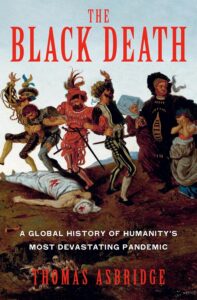
From The Black Death A Global History of Humanity’s Most Devastating Pandemic by Thomas Asbridge. Copyright © 2026. Available from Random House, a division of Penguin Random House, LLC.

Thomas Asbridge
Thomas Asbridge is a historian of the Middle Ages, previously specializing in the study of the crusades, knighthood and chivalry, and is Reader in Medieval History at Queen Mary, University of London. He is the author of The Crusades: The Authoritative History of the War for the Holy Land and The Greatest Knight: The Remarkable Life of William Marshal, the Power behind Five English Thrones. He also wrote and presented the landmark three-part BBC television series The Crusades.