We Need More Geriatric Heroines: Seven Books About Actually-Old Women
Laurie Frankel Recommends Susie Boyt, Tove Jansson, Zadie Smith and More
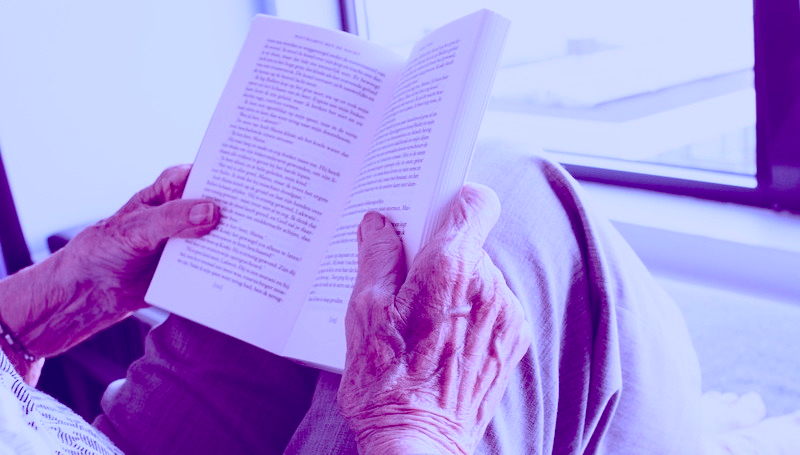
Some of the greatest literature in, well, literature is about old men—King Lear, Ebenezer Scrooge, Dracula—but literature about old women is harder to find. They’re heralded all the time, stories about “older women” or “women of a certain age,” but often that age is middle age. Recently, Miranda July’s All Fours and Fran Littlewood’s Amazing Grace Adams both received much well-deserved attention for their insights into the too-little told lives, emotions, and resentments of older women. But like so many other so-called “older” female protagonists (Mrs. Dalloway is fifty-one!), these forty-something mothers of school-age children are decades away from old age.
These characters aren’t old, but they are older—older than we usually get to read about or see on our screens. Because we live in a society that stops valuing or even noticing women who are “past their prime” then defines “prime” within parameters only achievable by (some) women in their twenties and thirties, female characters beyond middle age mostly are no age—they disappear altogether. I’m here for the female midlife reckoning and the perimenopausal, of course. All hail the telling of untold and undertold stories, for sure. But this doesn’t make characters in their forties and fifties old. (It should, however, make us consider at what age we euphemistically label female characters “older” vs. male ones.)
Myself, however, I was seeking actually-old female characters. My new novel, Enormous Wings, is about a seventy-seven-year-old who moves into a retirement community, falls in love, falls ill, then finds out she’s not sick; she’s pregnant. I wasn’t surprised that searches for novels about geriatric pregnancies turned up books about women in their late thirties and early forties. What was shocking was that searches for novels about geriatrics period almost exclusively turned up women not very much older.
Actually-old women sometimes figure as dynamite secondary characters—I’m thinking of the grandmothers, both named Baby, in Toni Morrion’s Beloved and Arundhati Roy’s The God of Small Things. Sometimes old women feature as joyful ironies—I love Richard Osman’s Thursday Murder Club series, but few women of really any age get by on their skills as retired MI-5 agents. But actually-old women behaving as actually old? Harder to find than you’d think. Here are some great ones:
*
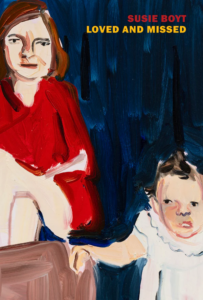
Loved and Missed by Susie Boyt
To begin at a beginning—the cover—this might be the most perfectly titled book I’ve ever read. (I wouldn’t dare spoil the eponymous moment, but it moved me to tears.) Its protagonist, Ruth, takes over caring for her granddaughter Lily as it becomes clear—gradually and then all at once—that her drug-addicted daughter Eleanor cannot. Ruth is an extraordinary heroine, rock-solid strong in a completely unshowy, sincere, vulnerable way. Her relationship with Lily is central—and it’s striking, smart, and unusual—but her relationship with Eleanor is also astute, heartbreaking, and beautifully explored. This novel is simultaneously quiet, stripped down, hyper focused AND can’t-stop-turning-pages tense, and that’s owing to how deeply you feel for Ruth and this family. Boyt gives us much needed, different-than-usual takes on grandmothering, family, and addiction. Moving, harrowing, and mind-blowing.
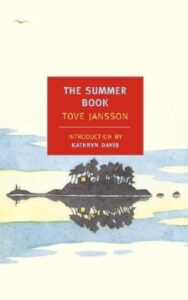
The Summer Book by Tove Jansson
Speaking of quiet books, this collection of twenty-two vignettes paints summer on a tiny, isolated island in the Gulf of Finland. We follow six-year-old Sophia and her eighty-something grandma as they observe storms, friends, bugs, forests, beaches, boats…the everything and nothing of summer. Sophia is a whip-smart six-year-old, lovely but familiar. Her grandmother though is amused and amusing, fierce and surprising, allowed to be acerbic and to talk to her granddaughter about (literally) life and death topics rather than just dolls and baking and memories. She’s an atypical grandmother in an atypical situation and setting, and following her around the island is intimate and not unimpressive.
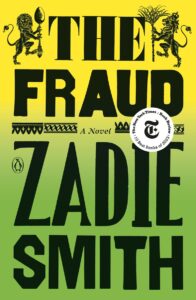
The Fraud by Zadie Smith
The beating heart of Zadie Smith’s first historical novel is a character for the ages. I’m not sure I can do her justice in a paragraph, but I’ll try. Eliza Touchet is smart, funny, resilient, observant, and basically over it (but not quite). She’s almost a cheat for this list—she’s somewhere in her sixties, so not old old—except that it’s the 1870s, so she’s definitely in the winter of her years. She’s complicatedly queer, a writer, an intellectual, an abolitionist, thoughtful in a sea of reactionaries, female in a world built by, for, and around men. She’s long suffering while refusing to suffer fools. She’s living as housekeeper and muse to her cousin and sometime lover (he’s her cousin by marriage) (but still), the bumbling, also aged, novelist William Ainsworth whose art and reputation she maintains along with his home and the maidservant he’s recently knocked up then promoted. Mrs. Touchet is also our guide to the talk of the town and trial of the century, the Tichborne Case, but it’s really her relationships with everyone else in the novel and observations of, especially, the star witness, a formerly enslaved man from a Jamaican plantation, that make the book. Her amused, introspective grace juggling a vast cast of (wonderful) characters and (fascinating) relationships means the true story at the center here ends up playing second fiddle. Never mind the timely history lesson, this novel is worth reading for Mrs. Touchet alone.
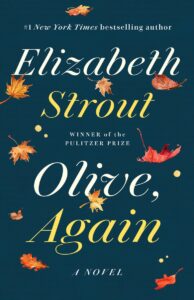
Olive, Again by Elizabeth Strout
In the first Olive book, Pulitzer Prize winning Olive Kitteridge, we see Olive struggling with retirement, her adult son and his family, her sick husband, the death of old friends. She’s cantankerous certainly, but we sense this has been true of Olive since childhood and has little to do with aging. But the sequel, Olive, Again, takes Olive well into genuinely old age. In this one, by the end of which Olive is in her mid-eighties, we get widowhood, elderly romance, disappointing grandchildren, incontinence, round-the-clock nursing, and an assisted-living facility. The writing is beautiful and elegant, in contrast with Olive herself who is stark, raw, unapologetic, angry, and, usually, absolutely right.
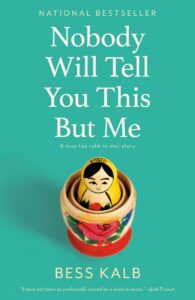
Nobody Will Tell You This But Me by Bess Kalb
The subtitle here is “A True (As Told To Me) Story.” This sort-of-memoir is the author’s grandmother telling her life story to the author. From the grave. Grandma Bobby is well-read and well-traveled, glamorous and opinionated (speaking of usually-right old women), the old-school, no-nonsense daughter of a girl who walked out of a pogrom and emigrated to New York. On her own, Bobby is the colorful Jewish grandmother you didn’t know you needed to accompany you from Depression-era Brooklyn to high tea at the Plaza, with jaunts to homes in Martha’s Vineyard and Palm Beach thrown in for good measure. But it’s her devoted, besotted, unconditionally-loving relationship with the author that takes this book from a character study and (fascinating) experiment in form to a portrait of a grandmother-granddaughter relationship to treasure. (Added bonus: The audiobook is read by the author, laugh-out-loud funny, and very well done.)
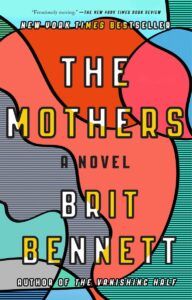
The Mothers by Brit Bennett
While the main action of this novel pertains to young love and teen pregnancy, it’s narrated—in the plural first person—by the elder mothers of the church. They long to warn Nadia about what she can’t see coming but they—and we—absolutely can, even as they know there’s no way to tell her and she wouldn’t listen anyway. “What did a bunch of old ladies know? We would’ve told her that all together, we got centuries on her. If we laid our lives toe to heel, we were born before the Depression, the Civil War, even America itself. In all that living, we have known men.” This chorus of old women, with all their hard-won knowledge of men and love and human nature and everything else, both forms and strengthens the backbone of this novel and invites the reader right into this story by their sides.
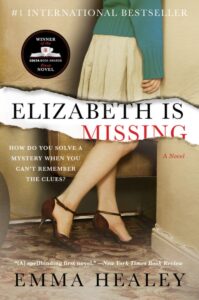
Elizabeth Is Missing by Emma Healey
Another great title plus the ultimate unreliable narrator. Octogenarian Maud suffers from severe and worsening dementia, and we get two mysteries via her mighty but compromised mind. Her friend Elizabeth is missing, disappeared. (Or is she? We’re not sure because Maud’s so confused.) And as if that weren’t enough, sixty-some years ago, in the aftermath of WWII, Maud’s older sister also disappeared. Maud is determined to solve both. She doesn’t come across as weak and addled. Instead we see the incredible strength required to take on incredible mysteries, as well as ordinary ones, when your brain doesn’t work as well as it used to. How Maud manages to live her life—how she negotiates and copes and does hard things and faces up to her limitations then finds a way around them—is both impressive and inspiring.
__________________________________
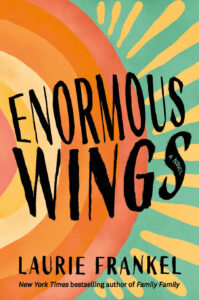
Enormous Wings by Laurie Frankel is available from Henry Holt and Co., an imprint of Macmillan.

Laurie Frankel
Laurie Frankel is the New York Times bestselling, award-winning author of the novels Family Family, One Two Three, Goodbye for Now, The Atlas of Love, and the Reese’s Book Club Pick This Is How It Always Is. Frankel lives in Seattle with her husband, daughter, and border collie.