Virginia Woolf Thought Katharine Mansfield Stank Like a “Civet Cat Taken to Streetwalking”
Gerri Kimber on the Literary Legacy of an Early Master of the Short Form
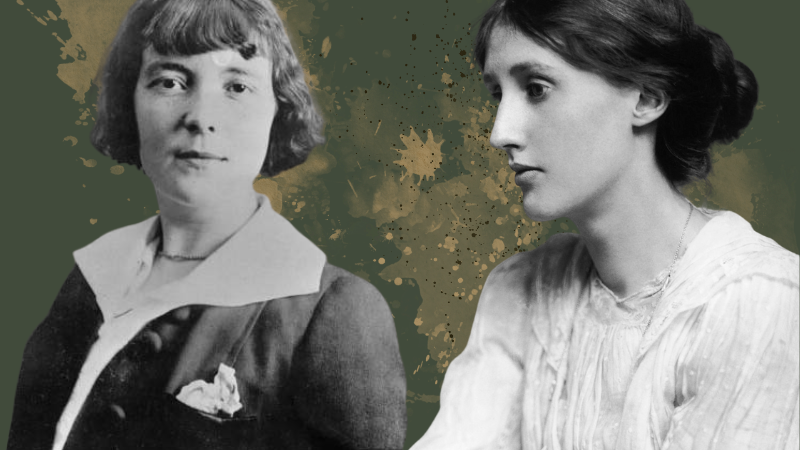
The long weekend that Katherine Mansfield spent at Garsington Manor, the home of Philip and Lady Ottoline Morrell near Oxford, from July 13-17, 1916, was a hectic one, with numerous literary and artistic visitors. One such visitor was the writer Lytton Strachey, who wrote the following letter to his Bloomsbury Group friend Virginia Woolf on July 17:
There were 16 souls here for the week-end that’s just over: from Friday onwards the door seemed to open every two hours and new arrivals appeared in batches of five or seven. […]
Among the rout was ‘Katherine Mansfield’—if that’s her real name—I could never quite make sure. Have you ever heard of her? Or read any of her productions? She wrote some rather—in fact distinctly—bright storyettes in a wretched little thing called the Signature, which you may have seen, under the name of Matilda Berry. She was decidedly an interesting creature, I thought—very amusing and sufficiently mysterious. She spoke with great enthusiasm about the Voyage Out, and said she wanted to make your acquaintance more than anyone else’s. So I said I thought it might be managed. Was I rash? I really believe you’ll find her entertaining. But just now she’s in the recesses of Cornwall, so it must be later on, if at all. I may add that she has an ugly impassive mask of a face—cut in wood, with brown hair and brown eyes very far apart; and a sharp and slightly vulgarly-fanciful intellect sitting behind it.
This was the first time Mansfield was discussed by Bloomsbury proper, and it wasn’t altogether a flattering portrait. She, of course, was enacting her normal levels of dissembling and pretending, while deciding which of these new acquaintances would be worth cultivating. And she may well have spoken enthusiastically about Woolf ’s first novel, The Voyage Out, but the truth was she hadn’t actually read it. After her visit, she took Ottoline Morrell’s copy home with her, returning it a month later. In that sense, Strachey’s portrait of Mansfield as amusing, mysterious and sharp is perceptively accurate.
She was risqué, she was modern, she was entertaining. But more than any of that, she had a supreme gift for storytelling that has rarely been equaled.
A little over a year later, with Bloomsbury gossipmongers divided over whether they liked her or not, Mansfield dined at Virginia and Leonard Woolf ’s house in Richmond. Virginia happened to have started keeping a regular diary and the entry for October 11, 1917 thus records:
The dinner last night went off: the delicate things were discussed. We could both wish that one’s first impression of K.M. was not that she stinks like a—well civet cat that had taken to street walking. In truth, I’m a little shocked by her commonness at first sight; lines so hard & cheap. However, when this diminishes, she is so intelligent & inscrutable that she repays friendship.
Mansfield was indeed rather fond of an expensive French perfume called “Genêt Fleurie”—”Flowering Broom”—but scent was not approved of in the rarefied air of Bloomsbury, and she could not have known that a little spray of perfume would so upset the delicate olfactory balance of the woman who would famously become her literary sparring partner. Mansfield shortened her hems as soon as she was able. She wore brightly colored clothes and scarlet stockings, and cut her hair in a bob when other women were still only vaguely thinking about it. She was risqué, she was modern, she was entertaining. But more than any of that, she had a supreme gift for storytelling that has rarely been equaled—and indeed it was a gift that started at an early age. Between the ages of fifteen and eighteen, she and her two elder sisters had been educated at Queen’s College in London. Many years later, she recalled one of her first lessons at the school:
[A teacher asked] any young lady in the room to hold up her hand if she had been chased by a wild bull & as nobody else did I held up mine (though of course I hadn’t). Ah, he said, I am afraid you do not count. You are a little savage from New Zealand—which was really a trifle exacting—for it must be the rarest thing to be chased by a wild bull up & down Harley Street, Wimpole Street, Welbeck Street, Queen Anne, round & round Cavendish Square.
The essence of Mansfield is encapsulated in this quotation: the fabricator, dissembler—and born entertainer. As Leonard Woolf recalled, many years after her death,
By nature, I think, she was gay, cynical, amoral, ribald, witty. When we first knew her she was extraordinarily amusing. I don’t think anyone has ever made me laugh more than she did in those days. She would sit very upright on the edge of a chair or sofa and tell at immense length a kind of saga, of her experiences as an actress […] [T]he extraordinary funniness of the story was increased by the flashes of her astringent wit. I think that in some abstruse way [ John Middleton] Murry corrupted and perverted and destroyed Katherine both as a person and a writer […] Her gifts were those of an intense realist, with a superb sense of ironic humour and fundamental cynicism.
This, then, in brief, is the person who is the subject of this biography: a feisty, charismatic, highly intelligent young woman who lived life to the full, who, as we shall see, experimented with all sorts of ways of living and who paid bitterly for her mistakes later in her life. But above all else, her main raison d’être was always her writing; nothing else was truly important.
*
Katherine Mansfield is that rare thing—a writer exclusively associated with the short story. Anthea Trodd pointed out that at the time she was writing, “the brevity and relative marginality of this still, in English, fairly new form, offered her a refuge analogous to that of children’s fiction.” For many readers and critics, the perception was that Mansfield was almost writing children’s fiction, since most of her stories are deceptively easy to read, although her themes are entirely adult in both form and content. Yet this notional superficiality of her stories, together with the premise that the short story is perceived to be a lesser form than the novel, meant that for many years Mansfield was viewed as a minor writer, though “marginal” would be a more appropriate term. The development of her own particular free indirect discourse form of writing culminated in her position as an early exponent of the Modernist short story. Indeed, critic Peter Childs goes so far as to state that she became “the most important Modernist author who wrote only short stories.” Her themes incorporate violence, war, death, childbirth and relationships—especially in marriage—together with feminist and sexual issues. Her stories develop over the course of time into “slices of life”—glimpses into the lives of individuals and families, captured at a certain moment, frozen in time like a painting or a photograph. On the whole, a single “main” event is revealed and developed, and no case is presented for or against the characters’ actions or their life; they simply “are.” Above all, Mansfield developed a mastery of the art of being brief: there is nothing superfluous in her stories.
Above all else, her main raison d’être was always her writing; nothing else was truly important.
Mansfield, ever the innovator and seeker after new experiences, was fascinated with the then-new medium of the cinema. Her narrative art reflects this interest in the deliberate cinematic impression of so many of the stories; it is as if the narrator has a moving camera, panning across, and then focusing in, something that provides so many of the stories with their unique “pictorial” quality. Indeed, in the last weeks of her life she even spoke about having been a camera in her quotidian observations: “I’ve been a selective camera,” she said, but now she wanted “to widen […] the scope of my camera.” One technique—in medias res—which acts as a marker for these particular stories is the way they begin, cutting straight through to the action from the very first line, as if a stage or film direction is being given, with the use of temporal constructions implying a prior knowledge of the event being described.
A famous example is the beginning of “The Garden Party”: “And after all, the weather was ideal.” In that “And after all,” the reader is left to fill in the gap—the endless conversations and concerns about whether the weather would be fine for the Sheridan family’s garden party. The theatrical/cinematic tone is also enhanced in some of the longer stories by their division into episodes or “scenes:” “Prelude,” “At the Bay” and “The Daughters of the Late Colonel” are each divided into twelve “scenes.”
In free indirect discourse, we are never told which thoughts belong to which character: instead, the narrative moves between a more conventional narrator and a character’s conscious thoughts. The result is an intimate method of storytelling, where, for certain moments, we become the character on the page. This use of free indirect discourse would become a hallmark of Mansfield’s narrative technique, together with the episodic nature of certain stories and their theatrical quality; as Mansfield remarked in a letter discussing one of her most famous stories, “Prelude:” “What form is it? you ask. […] As far I know its more or less my own invention.” Some years later, she referred to it as “the Prelude method—it just unfolds and opens.”
Mansfield’s use of Joycean “epiphanies,” or, to use her own words, the “blazing moment,” is another prominent technique in her narrative art, exemplified in the title of one of her most famous stories, “Bliss,” although the sense of “bliss” in this story underlies more uncomfortable feelings of self-discovery. Mansfield herself uses the word “blissful” in the following letter, talking of the epiphanic moment:
God forbid that another should ever live the life I have known here and yet there are moments you know, old Boy, when after a dark day there comes a sunset—such a glowing gorgeous marvellous sky that one forgets all—in the beauty of it—these are the moments when I am really writing—Whatever happens I have had these blissful, perfect moments and they are worth living for.
Mansfield’s narrative technique is characterized by a focus on the inner lives of her characters, a willingness to experiment with form and structure, and a deep engagement with the complexities of human experience. Her symbolism is constant, echoing recurrent themes. Mansfield challenges her reader to look beyond mere appearances, to confront superficiality, to despise cruelty, to deny false values, to revert to the notions and viewpoints of children, and, through this reversal, to overthrow the rules of society and to recreate laws governing life that are more spontaneous and less bigoted. While never offering a direct theoretical manifesto, her stories nonetheless reinforce her status as possibly the twentieth century’s most gifted short-story writer.
__________________________________
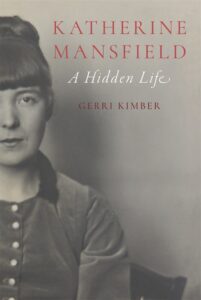
Reprinted with permission from Katherine Mansfield: A Hidden Life by Gerri Kimber. Published by Reaktion Books Ltd. Copyright © 2025 by Gerri Kimber. All rights reserved.

Gerri Kimber
Gerri Kimber is Visiting Professor in the Department of English at the University of Northampton. She was president of the Katherine Mansfield Society for ten years (2010-20) and has published extensively on Mansfield’s life and work.