Violaine Huisman on Confronting a Father and Grandfather’s Legacy of Infidelity
“These were not secrets in our family. They were simply the weather. They were the condition of life.”
My father described his infidelities “playfully, with only a dash of contrition.” That is a sentence I wrote in my novel The Monuments of Paris, and it is also, as closely as I can render it, something he actually said to me—sitting in his mechanized recliner in the sixteenth arrondissement, in his final years, as I sat on an ottoman beside him and held his knotty, bluish hand. He seemed to feel, he told me, that the intensity of his desire was sufficient justification for his exploits. How could he have suppressed such a need for conquest?
I wrote it down. I still don’t know what to do with it.
My father married four times. He fathered eight children, of which I was the last. He was a philosopher, an editor, a maker of institutions, a man whose vanity was inseparable from his charm and whose charm was inseparable from his damage. He was what the French call a Balzacian character: not a type, exactly, but a force of nature given human form, overscaled and undeterred. He was my father, who called me his “little angel,” who raised my wrist to his lips when I came to visit him, who asked me who I was and then, when I reminded him, covered my arm in kisses and said, “Of course, my beloved darling. How awful to have to put up with such a senile old fool.” He made me laugh until the end.
I grew up in Paris with these stories the way one grows up with furniture—aware of them, shaped by them, never quite stopping to ask what they meant.
He also told me, in those same months, about the mistresses he had shared with my mother—their propensity, as he put it, for cross-dressing, threesomes, excess. I stopped him. He forgot, or didn’t notice, that he was talking to his daughter.
And then there was his father. My grandfather Georges. Born in 1889, the year the Eiffel Tower was inaugurated. Senior civil servant. Director of Fine Arts under Jean Zay. Founder, with others, of the Cannes Film Festival. A man my grandmother described, in the memoirs she wrote in her nineties, in terms so hagiographic they amounted to mythology—a legendary hero, a national monument. The memoirs were more or less accurate about his public life. About his private life, they said almost nothing.
What they did not say was this: that during the exodus from Paris in June 1940, when the Nazi invasion made flight an emergency, my grandfather chose to bring his mistress along in the car. The trunk was too full for my father’s collection of Dinky Toys. The toys were left behind. My father, a boy, sat in the back seat with his brothers and Choute—Duchess of Montmoreau, née de Troguindy, a beautiful and aristocratic woman who went by this single childhood nickname. On Choute’s lap rode her Siamese cat, Vergère, who wailed throughout the journey. My grandfather drove south through the staggering throng of dispersed soldiers and civilians on foot. He was fifty years old. He had been conducting this affair for years.
My father told me this story a hundred, a thousand times. Choute was always its star.
I grew up in Paris with these stories the way one grows up with furniture—aware of them, shaped by them, never quite stopping to ask what they meant. My grandfather’s relationship with Choute, my father’s “innumerable infidelities” and baroque theatrics of desire—these were not secrets in our family. They were simply the weather. They were the condition of life. The intensity of desire, sufficient justification.
As soon as I finished high school, as soon as I could leave home, I put an ocean between myself and my parents. I spent a summer in New York for an internship and then decided to stay. I was nineteen. I had no grand plan. What I had was the instinct that I needed to be elsewhere, that the distance would allow me to breathe. I did not yet have the vocabulary for what I was escaping, or whether escape was even possible.
I have lived in New York for more than twenty years now. I named my elder daughter George, after our family hero, and two great women writers, in the two languages I speak. Her sister, Sissi, acquired her name from the biopic of my youth on the Empress of Austria. They call my father “Doggy,” a nickname passed down across generations whose origin is obscure, and which they find increasingly disturbing as Doggy loses his stature. They adore the fanciful stories I tell them about him—Doggy at the bakery, Doggy at the butcher, ordering in quantities that no household could absorb, because abundance was his religion and excess was his idiom of love. In these stories, which I told at bedtime as they were growing up in Brooklyn, Doggy is always old but charmingly so—without shit or suffering. He is the monument, not the man.
When my grandfather’s portrait arrived at our apartment in Brooklyn—a large, gilded-framed canvas, painted before the war by a French artist whose daughter had once greeted Georges upon his arrival in New York, a chain of connection so circuitous it seemed like invention—I hung it in the living room. It dominated the room like an aristocrat of old. My daughters looked up at it. I looked up at it too, and tried to see clearly.
What I was trying to see was this: the structure. Not the individual failing, not even the generational one, but the architecture of permission that organized the emotional lives of everyone within its radius. Georges had a wife. He had a mistress who loved him across decades, who reshaped her existence around him, who, during the chaos of the exodus, received from him—in a modernist apartment in Bordeaux where he had stashed her for safekeeping—a sobbing, desperate plea on the floor at her feet: “I beg you, Choute. Don’t leave me.” This man who had overseen the protection of national artworks from the advancing German army—this man wept like a child on the floor and begged his mistress not to abandon him. She stroked his hair. Or so I imagined in the fictional private life of Georges Huisman. It is also possible that, as my father said, Georges had had affairs with all the dancers of corps de ballet of the Opéra de Paris. I preferred to imagine he had had one great love to a thousand lovers. Even if it wasn’t his wife, even if he betrayed his family for her. At least I could fantasize a romance as “sufficient justification.”
The love affair I created at the heart of the novel is based on my father’s tales of the story of Choute. Choute, the mistress whom his father had threatened to leave with in the middle of the war. Maybe? This story was unverifiable. It was never consigned in writing. I made up every detail of Choute’s biography. In my mind, Choute is the heroine of the story. She is also a stand-in for my mother, whose lack of social or political achievements made her invisible to posterity. Growing up in Paris among statues of great men, monuments erected by great men, history made by great men, streets named after them, the eighth of my father’s children, it was amply clear that being a girl didn’t put me first in line for making a name for myself. Women, in the stories that shaped my upbringing, were objects of male desire, a desire exempt from the ordinary demands of accountability. In France—in a certain version of France, the bourgeois Parisian version I grew up inside—this exemption has deep roots. It is not simply that infidelity is tolerated; it is that it is, in some circles, aestheticized, even admired, as evidence of a rich interior life. To be a great man, in this tradition, is to be ungovernable by small rules.
What I know is that the act of writing it changed something. Not the past. You can’t change the past. But the story I tell about it. The permissions I grant.
I did not understand how profoundly I had absorbed this until I tried to raise my daughters somewhere else.
America has its own mythologies of masculine desire, and many of them are worse. But the specific French dispensation—the idea that a man’s erotic life exists outside the moral world of his other obligations, that the wife and the mistress are a civilized arrangement, that desire is sovereign—this mythology did not make the crossing with me, or did not survive it intact. In New York, raising two girls, I found myself thinking differently about what gets handed down. Not the big decisions, the dramatic ruptures, but the quiet transmission of assumptions: about what men are permitted to want and to take; about what women are expected to absorb; about which kinds of suffering don’t require an apology because they aren’t technically anyone’s fault.
My father’s library—eight tons of paper, thirteen pallets of books—was eventually donated to Cheikh Anta Diop University in Dakar. The president of the university wrote to my brother to say that he had been introduced to philosophy through the Vergez & Huisman manual, that the name Huisman was that of a personal hero, the person to whom he owed his vocation, his entire career. So there it is again, that Huisman scale, that outsize reach across continents and generations, that insistence on being more than ordinary life-sized.
I dedicated this novel to my daughters. “For the girls,” it says in the front.
Not only “for my daughters”—for the girls. All the girls. Choute, waiting in a Le Corbusier apartment in Bordeaux with her cat, for a man who wept at her feet and then left. My mother, made a prisoner in the apartment he rented for us, financially and emotionally dependent on the father of her children, the man she loved despite herself. The women who came and went through my father’s successive households, each one absorbing the doctrine that the intensity of his desire was sufficient justification. My daughters, who have grown up with a grandfather they call Doggy, in a country that would not quite recognize him, holding in their American hands the beautiful and broken inheritance of our family name.
I wrote this book to see clearly what I had grown up too close to see. Whether I have succeeded—whether any of us can truly see the structure we were born inside—I remain genuinely uncertain. What I know is that the act of writing it changed something. Not the past. You can’t change the past. But the story I tell about it. The permissions I grant.
__________________________________
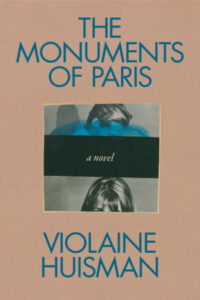
The Monuments of Paris by Violaine Huisman is available from Penguin Press, an imprint of Penguin Publishing Group, a division of Penguin Random House, LLC.
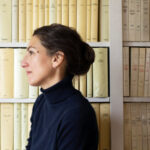
Violaine Huisman
Violaine Huisman was born in Paris in 1979 and has lived and worked in New York for twenty years, where she ran the Brooklyn Academy of Music’s literary series and also organized multidisciplinary arts festivals across the city. Originally published by Gallimard under the title Fugitive parce que reine, her debut novel The Book of Mother was awarded multiple literary prizes including the Prix Françoise Sagan and the Prix Marie Claire.