Villains Are Just More Interesting Than Heroes (and More F*ckable, If We’re Being Frank)
Natalie Zina Walschots on Why We‘re More Drawn to the Bad Guys
The first character I ever became obsessed with was Captain Hook.
I couldn’t have been more than three or four, though I was already weird; I saw the 1953 Disney version of Peter Pan and immediately fell in love in only the way that tiny children can. I read the cardboard-backed children’s book story over and over, until the binding disintegrated. The copy I had was the adaptation by mystery writer Mary V. Carey, titled Peter Pan and Captain Hook. For most of my early childhood I believed this was the true and proper name of the story, which the film had truncated for simplicity’s sake. This made perfect sense to me, since Captain Hook, as the primary villain, deserved equal billing, and was at least as important as the protagonist.
The bewildered adults in my life often asked me why I liked Captain Hook so much. I couldn’t articulate it very well; I just liked him. He was fascinating, and held my attention the way the other characters didn’t. He was also the first character I remember being curious about outside the confines of the story of Peter Pan, what his life as a pirate had been like before he came to Neverland, what the daily business of running a pirate ship would have been like, what his relationship was to members of his crew. I wanted to know more than the story had given me.
Villains usually end up with the narrative permission to be much, much more interesting than the heroes do.
When I was old enough to pick up J. M. Barrie’s original book, Peter Pan; or, The Boy Who Would Not Grow Up, I could not for the life of me understand why both halves of the title had to belong to Peter; he wasn’t even that interesting! He was selfish and arrogant and frankly did not respect Wendy the way that I felt she deserved. Even the abridged version was Peter and Wendy, which was better, but still didn’t feel right. Peter and Hook were the obvious narrative binary in the story, the two opposing forces locked in combat, balancing and sharpening each other into the most interesting versions of themselves. There is no Hook without Peter feeding his hand to a crocodile; there is no Peter without Hook to define himself against as the thing he refuses to grow up into.
These days, when I am asked about my proclivity for writing about the bad guys, the framing of the question has changed. “Why do you like villains so much” has transformed into “why do we like villains so much,” and I appreciate it every time someone implicates themselves in a shared fascination with the adversaries and antagonists lurking in our fiction.
The most obvious, and defensible answer is that villains usually end up with the narrative permission to be much, much more interesting than the heroes do. Protagonists tend be bound to and by their stories much more than the villains are; they have the quest to complete, they have archetypal values to uphold, they have personal codes that curtail their choices. Motivation is the engine of storytelling the same way the mitochondria is the powerhouse of the cell: the ubiquity of the cliche doesn’t make it any less true. Heroes often find their genuine motivations co-opted, warped or straight up set aside to do the Right Thing or complete the Quest, whereas villains get to do whatever the fuck they want, and someone doing what they unashamedly want to do is deliciously more interesting.
Villains also get to do uglier things, a lot of which contain more potential for catharsis than the restricted actions of the hero. While the hero has to turn down revenge for some reason, the villain can gleefully indulge. While the hero has to force themselves to forgive someone who absolutely does not deserve it for character growth or moral purity, the villain is allowed to hold a justified grudge for as long as they want to keep that particular emotional muscle clenched. I—and I suspect a lot of people—find this infinitely more satisfying and authentic, because sometimes forgiveness is for suckers. Villains don’t have to go the high road, they never have to be the bigger person, they can keep all of their trauma and personality flaws visible to everyone and extremely unhealed, and I find that very comforting.
I am much more comfortable when a villain can do something awful, allow that thing to be awful, and move on, without the moral hangover of some twisted justification to try and make it into something else.
(Do not mistake me, I am not saying that this is definitely the best way for someone to live their real human life. James Hook would have benefitted immensely from therapy to deal with his PTSD and anxiety disorder; though it would have made him a fundamentally different person. But I don’t think any of us can say that holding a grudge against the little shit who cut off his hand and fed it to a fucking crocodile was unreasonable, or even something that should be overcome. That anger is valid and justified, and should always be his to keep, as should all of our similarly righteous anger. Villains do seek out healing, but it’s because they want to, not because someone else wants them to, not because healing would make them easier to be around. And that feels important.)
Villains are also allowed to be, well, evil. They can do something horrific and have it labelled correctly as such. When they throw someone into a lava pit, we can all agree (usually) that the action was abhorrent. But when a hero does something terrible, often equally if not more brutal than the actions of the villain (I’m looking at you, Batman—I have run the numbers and it is fucked up), the narrative goes through a series of psychic gymnastics to justify those actions. Because when the hero does something bad, a rupture is created; and since the hero can’t become worse, their actions have to transform instead.
A hero threatens to make even their most loathsome actions heroic just by sheer proximity; as though the horrific act passing through the heroes hands cleanses it, so any violence is justified, even sanctified. The cognitive dissonance here is jarring at best and revolting at worst; I am much more comfortable when a villain can do something awful, allow that thing to be awful, and move on, without the moral hangover of some twisted justification to try and make it into something else.
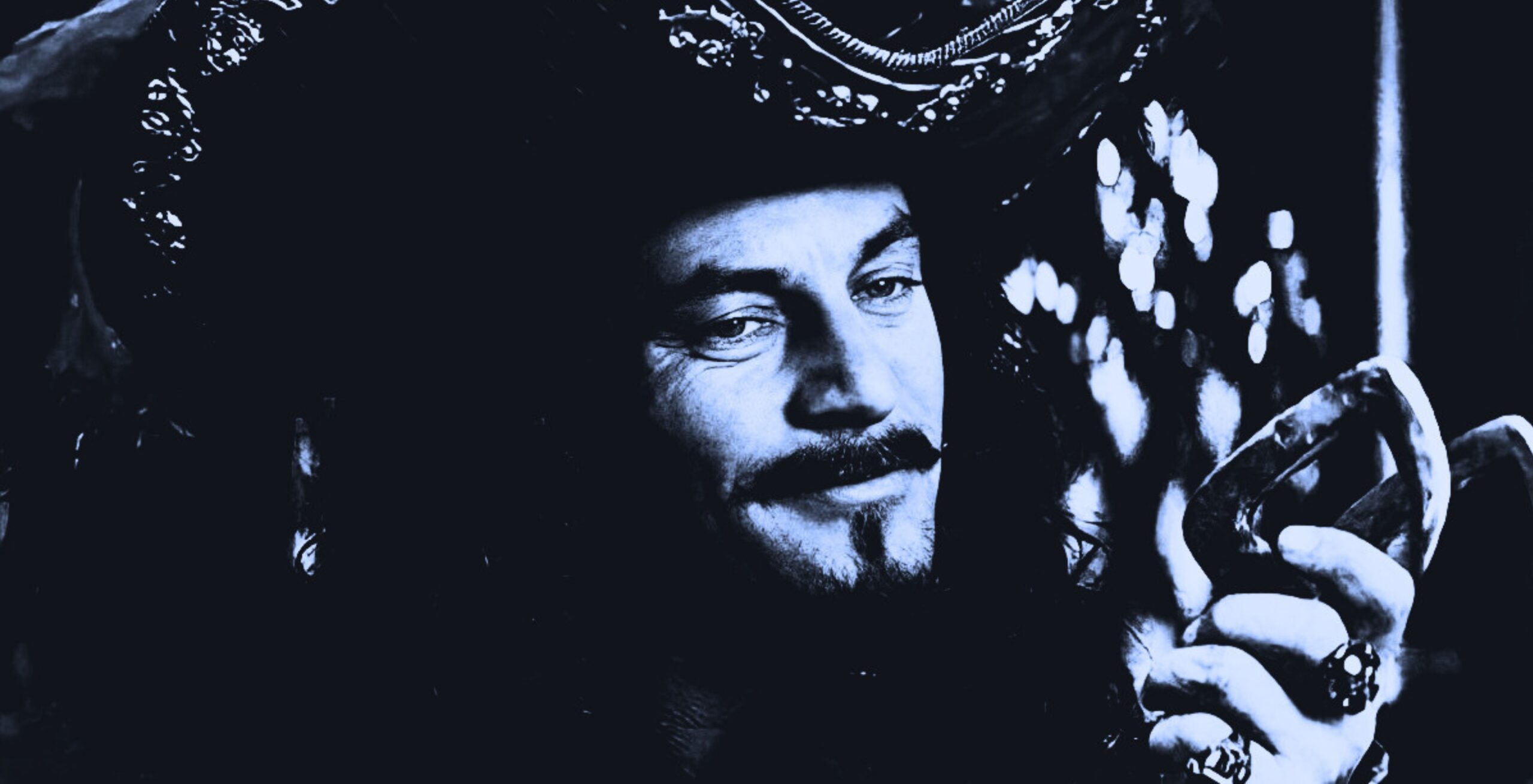
These reasons are all good and real and part of the larger answer, but we aren’t completely there yet. Some parts of it are fuzzier and harder to define. When I try and reach back into my baby brain and remember what made me look at an evil pirate in an excellent hat and latch on to him for imaginative dear life, I find new reasons there too. Some are purely aesthetic; villains tend to be much, much more stylish than heroes, and the fashion or other choices made to emphasize their sinister nature or make them seem more intimidating often have the pleasant side effect of looking cool as hell.
Villains have much better senses of humour than their comparatively dour and boring counterparts. They are more fun to talk to or spend time with, even if that time is dangerous. They are often incredibly charming; Captain Hook’s manners were so impeccable he was able to entrance Wendy completely, and kidnapped her simply by tipping his hat, offering her his arm and inviting her along, rather than trussing her up like one of the lost boys. Barrie writes of her reaction that “she was too fascinated to cry out. She was only a little girl.” When I read those lines for the first time, I understood them completely.
My deep love for villains might have begun when I was basically a toddler, but it was cemented the summer I turned 13. Two things happened that year that ruined any possibility that I would be won over by a hero again. In June, for my final 8th grade field trip, my class went to see The Phantom of the Opera at the Pantages Theatre in Toronto, a rite of passage a lot of elder millennials will probably recognize. Later that summer, an older girl who lived on my street gave me a VHS tape of the Jim Henson film Labyrinth. Between the Phantom and David Bowie’s Goblin King, my prepubescent little brain imprinted on these characters in a way that would ruin my romantic preferences for the rest of my life.
We love them because they are compelling and imperfect, because they allow themselves to do and be things that heroes won’t.
As my fellow villainfuckers know well, villains are just hotter than heroes, full stop. A lot of this has to do with the aforementioned style and charm for sure, but we’re not just talking about attractiveness here. We are also talking about fuckability, and the quality of said fucking, and frankly villains are better by every measurable metric.
Let’s engage in a little thought experiment to prove my point here. I want you to think about the thing you like; no, the thing you really like, the one you have never told anyone about because you don’t know how or are too mortified by the prospect of being known that way or are just afraid that it’s too weird. Got it? Hold it in your head for a minute, really marinate in all of the complicated feelings that gives you.
I want you to imagine yourself in a room with a partner who fits your preferences, who you genuinely like and are attracted to. First, imagine that person is a hero of any description. Unquestionably, unassailably good. Beloved by the community. The smile and the cape and the self-sacrificing personality, the whole thing. Can you imagine telling them about your sex thing? Can you imagine asking for it? Can you picture their face, their reaction, what they might say to you in response? I am, frankly, mortified on your behalf. I am squirming for you at the prospect.
Now I want you to picture the same scenario, but this time your imaginary partner is a villain. This can mean whatever you like in this context; they can be of the moral, principled, Magneto-was-right persuasion if you prefer, or someone completely irredeemable, All that matters is that they are a villain, and that is not a debatable point. I want you to imagine telling them about your thing. How does that conversation go? How do they receive this information you’re sharing with them? What do they do in response?
Yeah. That’s what I thought.
There is no one answer to the question of why we like villains, why we as readers (and writers and viewers and listeners and everything else) find them so fascinating. We love them because they are compelling and imperfect, because they allow themselves to do and be things that heroes won’t. We love them because they are profoundly damaged and aren’t necessarily compelled to fix that trauma — and certainly not because fixing it will make them easier to deal with, or fit in better with society at large. We love them because they are just really goddamn cool and their fashion sense is almost universally better. But I think we love them most of all because we can imagine a villain as someone who could see us at our most vulnerable and disgusting, and not look away.
In 1927, J.M. Barrie published a speech he has delivered to the First Hundred at the elite boarding school Eton College on graduation day; the same institution he claimed James Hook had attended. The entire speech is amazing for a lot of reasons, but it contains the following description of Hook that I have fallen in love with: a man catches sight of a visiting Hook outside of Eton, says that he is “in a word, the handsomest man I have ever seen, though at the same time, perhaps slightly disgusting.” The observer is instinctively terrified of this figure, leaning against a stone wall and smoking two cigars at once in a custom designer holder. My emotions, and my reactions, are a little different.
__________________________________
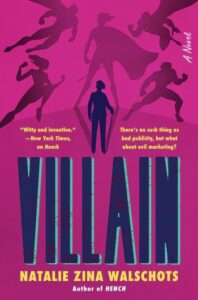
Villain by Natalie Zina Walschots is available from William Morrow, an imprint of HarperCollins.

Natalie Zina Walschots
Natalie Zina Walschots is a writer and game designer whose work includes LARP scripts, heavy metal music journalism, video game lore, and weirder things classified as "interactive experiences." Her writing on the interactive adventure The Aluminum Cat won an IndieCade award, and her poetic exploration of the notes engine in Bloodborne was featured in Kotaku and First Person Scholar. She is (unfortunately) the author of two books of poetry: Thumbscrews, which won the Robert Kroetsch Award for Innovative Poetry, and DOOM: Love Poems for Supervillains. Natalie sits on the board of Dames Making Games, a space for queer and gender-marginalized people to create games freely, where she hosts interactive narrative workshops. She plays a lot of D&D, participates in a lot of Nordic LARPs, watches a lot of horror movies and reads a lot of speculative fiction. She lives in Toronto with her partner and five cats. This is, arguably, too many cats.