This Week in Literary History: Virginia Woolf’s Mrs Dalloway is Published.
The Origin of a Masterpiece
This first appeared in Lit Hub’s Literary History newsletter—sign up here.
In August 1922, Virginia Woolf turned to a blank page in one of her notebooks to take a few notes on “a book to be called, perhaps, At Home: or The Party.” From her notebook:
This is to be a short book consisting of six or seven chapters, each complete separately, yet there must be some sort of fusion.
And all must converge upon the party at the end My idea is to have some very [ ] characters, like Mrs Dalloway much in relief: then to have interludes of thought, or reflection, or short digressions (which must be related, logically, to the rest) all compact, yet not jerked.
Then follows a list of potential chapters, beginning with “Mrs Dalloway in Bond Street,” a short story which she had recently finished (and in the first line of which Mrs. Dalloway decides to buy herself gloves), and then this note: “One, roughly, to be done in a month: but this plan is to allow of some very short pages: intervals, not whole chapters. There should be some fun —”
“But if the modernist writers have taught us anything it is that our experience of time is rarely linear, that beneath the surface of every present moment the currents of memory run deep,” wrote Mark Hussey in his book Mrs Dalloway: Biography of a Novel.
Therefore, although that outline in her notebook represents Woolf starting to plan her next novel, pulling together ideas that had been brewing for a while, it would not be accurate to see it as ‘the’ beginning of Mrs Dalloway. . . . We can identify many sources for the world created by Woolf in her fourth novel, but no specific original inspiration.
Still, by August 1923, a year later, she was in the thick of it. “I’ve been battling for ever so long with ‘The Hours’ [Woolf’s working title for Mrs. Dalloway], which is proving one of my most tantalising & refractory of books,” she wrote in her diary.
Parts are so bad, parts so good; I’m much interested; can’t stop making it up yet — yet. What is the matter with it? But I want to freshen myself, not deaden myself, so will say no more. Only I must note this odd symptom; a conviction that I shall go on, see it through, because it interests me to write it.
The next day, she added:
You see, I’m thinking furiously about Reading & Writing. I have no time to describe my plans. I should say a good deal about The Hours, & my discovery; how I dig out beautiful caves behind my characters; I think that gives exactly what I want; humanity, humour, depth. The idea is that the caves shall connect, & each comes to daylight at the present moment — Dinner!
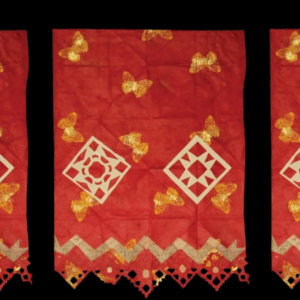
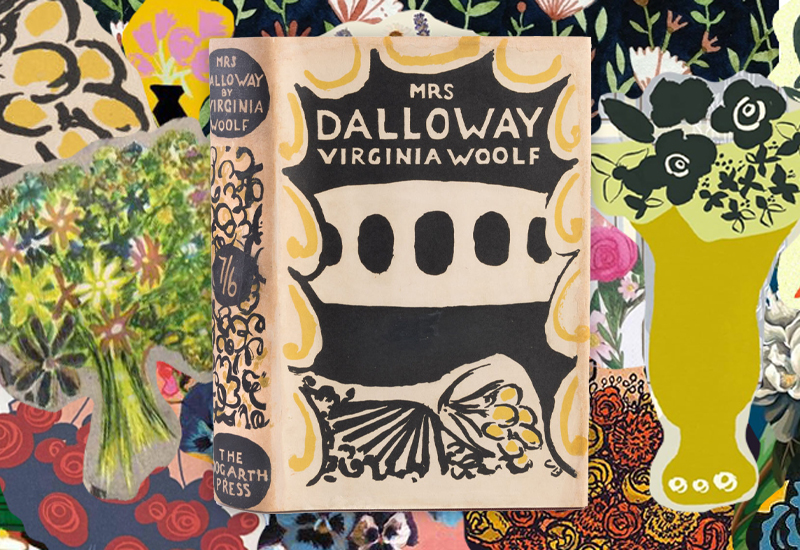
The beautiful caves bore fruit. Mrs Dalloway was published on May 14, 1925 by Hogarth Press, the publishing house Woolf ran with her husband, Leonard Woolf, with a now-iconic book cover created by Woolf’s sister Vanessa Bell. It sold modestly, but has since become one of the most celebrated—and influential—works in the English literary canon.