The Real Technofascists of Silicon Valley: Why Big Tech Oligarchs Hate Democracy
Gil Durán and Amy Westervelt Discuss the Threat That Peter Thiel, Elon Musk and Others Like Them Pose to the Collective Good
When I first started seeing coverage of what seemed like a deranged plan from the Trump administration to take over Greenland, I felt like I was losing my mind. Not because I didn’t understand the plot, but because none of the coverage of it seemed to grasp what was really going on. How had every large media outlet somehow missed the very public way in which the “PayPal mafia”—a crew of Silicon Valley founders and investors that orbits around Peter Thiel and Elon Musk—had been talking about buying Greenland in the years leading up to Trump’s second term? Or the celebration from Dryden Brown, founder of the Thiel-backed company Praxis, on X when Trump appointed PayPal co-founder Ken Howery as his ambassador to Denmark? “According to plan,” Brown had written atop the news of Howery’s appointment. Praxis had tried to “buy Greenland” just a year or so prior and was still planning to build a techno-utopian, deregulated city there.
According to plan. https://t.co/qB8fg5aMiG
— Praxis (@praxisnation) December 22, 2024
Yes, there are critical minerals in Greenland, and yes, it is strategically important in a melting world, but equally as important, it has been a touchstone for the “Network State” movement for years. And no one was mentioning it! Which is why I was so relieved to come across Gil Durán’s “The Nerd Reich” newsletter and corresponding series in The New Republic. Durán had been writing for a year about the Network State—the idea that democracy has run its course and that we’d all be better off living in “special economic zones,” little fiefdoms ruled by tech CEOs. Disrupt democracy with feudalism! He had also written about the role Silicon Valley had played in warping the information ecosystem, a story central to the book I was working on. So I reached out to him to talk about it and we’ve traded messages ever since. I was thrilled to see the announcement of his book by the same (great) name, The Nerd Reich, announced last year and even more thrilled to see it become a bestseller this year. Suddenly, even mainstream media seems to be waking up to the fact that the tech billionaires might not be the good guys.
While Gil’s book tells the story of the Nerd Reich’s ideology and approach to amassing political capital, my book, Brought to You By: How Corporations Warped the Truth, Conned the Public, and Broke Democracy, looks at how they’ve warped and weaponized the information ecosystem to accomplish their goals, using many of the same tactics other industries have used over the past century. It felt like a good time to talk about where the two intersect.
Here is a snapshot of our conversation, lightly edited for length and clarity.
*
Amy Westervelt: Let’s talk about this weird little book, The Sovereign Individual, that shaped so much of Peter Thiel’s thinking. I learned from your book that The Sovereign Individual was really a dumbed down knock off of previous writings, which is so funny. It reminded me of another guy, Antony Fisher, who had started this global network of “free market” think tanks called the Atlas Network and how he had also been inspired by a book—Friedrich Hayek’s The Road to Serfdom—but had never read the actual book, just the Reader’s Digest version.
There’s this idea, this apocalyptic idea that instead of digging their own personal bunkers, the billionaires have to create new territories that will be designed to protect them and empower them in this terrible future they’re creating.
Gil Durán: That’s all it takes is a summary of the ideas sometimes, you know?
AW: Too true! Anyway, you and I focus on different aspects of The Sovereign Individual and ideas Thiel took from it. What stands out to you about it?
GD: In researching the radicalization of Silicon Valley billionaires, it’s hard not to come across The Sovereign Individual. It’s this 1997 business doom book. I think Quinn Slobodian called it an “apocalypse business book” that counseled investors how to prepare for the coming collapse of democracy and the entire world order. It specifically said that two technologies, “cyber currency,” or crypto, and “advanced automation,” what we would call AI, would lead to the collapse of nations like the United States, but that savvy investors could profit by making the right choices ahead of time. It really became a guidepost, a prophetic text for some influential Silicon Valley billionaires, even though it’s a pretty schlocky, apocalyptic tome.
AW: The Sovereign Individual includes this “public choice theory” notion in it as well, the idea that, in a nutshell, no one really cares about the common good or things like the public interest, and anybody who says otherwise is actually just using that idea to try to sell you something. I’ve always thought of it as something that helps these guys explain their sociopathy to themselves.
GD: They hate the public and the common good, and so they think everyone else shares this idea. But I think most people don’t. You run across this a lot with this type of ideology, some call it libertarian, or anarcho-capitalism—it has definitely morphed into fascism—this idea that none of this democracy stuff works and nobody wants it, so we’re just gonna do something different. But it’s simply not true. The democracy we have, as imperfect as it is, comes out of thousands of years of trial and error, all the way back to the Greeks, who were categorizing what works and what doesn’t. And oligarchy and tyranny don’t work! You need a society, you need…You know, our entire country and the wealth of all these billionaires was built off of a robust private sector that invested in technology, that invested in defense. I mean, that’s where Silicon Valley comes from.
AW: Right! They’ve benefited immensely from democracy and subsidies. This reminds me of Fisher again because he railed against government programs in the agriculture sector and then his cattle got sick and he got a big ol’ government check for it and that’s what funded his first trip to the U.S. to meet with some of the early think tank founders, and learn about factory farming, which he took back to England with him and made a fortune off of. He never saw the disconnect.
GD: You don’t get to get rich off of democracy and society and then decide you want to opt out. Now you’re rich, and you don’t wanna pay taxes, and you think you can survive on your own? As a species, we can’t survive on our own! These guys have a mythology that somehow they did it all themselves when most of them are government welfare kings.
AW: I like to joke that I discovered the band of hating Elon Musk because as a cleantech reporter in San Francisco back when Tesla first got going, everything we’re seeing now was pretty clear back then too. I wrote a story in 2015 about how Tesla was claiming it could do “closed loop” battery recycling and back then it was still pretty rare to see a story that was critical of Tesla or Musk, but I had a really good source at Panasonic who complained to me that Musk was overselling what they could do and it was unhelpful and unnecessary. They tried to get me fired for that story but I had everything on tape. Back then it was really hard to convince anyone that Musk might not be operating in good faith and even harder to say he might not be a genius. Even with everything we’ve seen today, I still see a lot of people clinging on to the idea that these guys are brilliant and really refusing to believe that they’re anti-democracy, even though they say it out loud all the time. Do you encounter that resistance too? What do you think that’s about? Why is it so important to people that these guys remain unique geniuses?
GD: On the last part, there’s an old Yiddish saying that captures it well: If you’re rich, you’re also smart, handsome, and can sing.
AW: That’s a good one!
GD: I think that, people think that rich people are good at everything and they’re not.
AW: Right, it’s just the whole meritocracy thing again. Okay what about people’s resistance to believing these guys are stone-cold weirdos?
GD: Well, first, I think most of the general public actually hasn’t heard this stuff because the mainstream press refuses to talk about it for the most part. Maybe in little dribs or drabs here and there, but as some oddity on the margins of Silicon Valley society. What’s happened, however, is these ideas have moved into the center of our politics through J.D. Vance. Crypto, which very few Americans use, has become the biggest player in our political system, the biggest donor. Why is that? Why is this weird, scammy product now the biggest monster in the room? Well there’s this whole ideology behind it, and the idea of crypto is that it’s gonna destroy the government and replace the government. So I think the media has tried to ignore that. I think on one level, editors think, “Well, we’re not gonna give those stupid ideas any attention. We’re not gonna give them any oxygen.” But that’s based on the presumption that newspaper editors and TV editors decide reality. Billionaires have the power now to just impose these ideas through culture, through social media, through politics, and so on one level, it’s that. I also think there’s an allergy to complicated narratives, and an allergy to ideology.
AW: Oof, yeah that last part. My book gets into this parallel media ecosystem that these guys have built that allows them to really do an end-run around traditional media and journalists that might be skeptical of them, but it also gives them a huge amount of control over information flow, which in turn gives them enormous power to shape public opinion or like you put it, impose these ideas. I hear a lot of people talk about how digital and social media has eroded the business model for journalism as though it was an accident, or an unintended consequence, but I don’t think it was.
GD: It definitely wasn’t. That’s what they call it, too, a parallel system, a parallel media. Parallel education is another big point for them. They understand how influence and persuasion work in society. They understand how opinions and brains are shaped by information, by words, by stories, by narratives, and they want to control that. They hate that the media has so much power, and they want to destroy that power and replace the press with propaganda that serves their own interests. They’re very explicit about that, and look, that’s why they’re trying to buy up all the channels, CBS, CNN, or creating their own media channels.
AW: Okay, let’s talk about the Network State, because I had been following this for a while, and I was in San Francisco when all the tech bros were getting into “seasteading,” but I hadn’t connected the two until I read your book!
GD: Yeah, so the basic idea of seasteading is that you could escape from democratic governments, laws, and regulations by establishing your own territory out in the middle of the ocean. It was an idea funded by Peter Thiel back in the late 2000s, early 2010s, to establish the Seasteading Institute, which would start creating these projects around the world. However, the idea didn’t really pan out because nobody really wants to live out in a rusted oil barge in the middle of the ocean. It’s like being on the cruise from hell. You know, a lot of the time these guys don’t really understand how people in society work. There’s a reason we’re in cities! It’s funny, I was just watching Going Clear, Alex Gibney’s documentary on scientology, and L. Ron Hubbard’s whole thing was to try to do stuff on boats to avoid rules and laws. So they didn’t even invent anything new with seasteading. But then seasteading becomes an idea to create these things on land instead. So evolving from the ocean to the land, just like any primordial creature would.
AW: Let’s talk about how Greenland features in this idea. Peter Thiel had funded this company Praxis that was trying to buy Greenland a couple years back. What are your thoughts on why Greenland?
GD: At the heart of the network state ideology, which basically proposes that tech billionaires should seize power in the twenty-first century using technology, is colonialism, the idea of claiming more land, of creating a new frontier, and hoarding resources for yourself. Greenland has a lot of different resources, rare earths, shipping lanes that might melt with climate change…
AW: Right and then Dryden Brown, who runs Praxis, has talked about “terraforming” it and using it as sort of a testing ground for this whole Mars expansion. And he’s also really into this whole colonialism thing, and this vision of being “real men,” being pioneers and forging the frontier or whatever.
GD: You know, everywhere you look, you see the same group of people, kinda lining up to be a part of this, and you’re starting to always see as well the idea for some kind of weird new billionaire-funded city. And that is the network state idea. In fact, they’re proposing to build one on the ruins of Gaza. Jared Kushner, Trump’s own son-in-law, is pushing that. So there’s this idea, this apocalyptic idea that instead of digging their own personal bunkers, the billionaires have to create new territories that will be designed to protect them and empower them in this terrible future they’re creating with technology where you won’t be able to live in countries like the United States or regular cities anymore.
AW: Okay, I want to talk about J.D. Vance because you have quite a bit about him in the book and I think that there’s a lot of people still who are really, really convinced that if we just get rid of Trump, then that solves all of the problems, and everything will go back to “normal” right? They are not seeing this bigger picture, or that Vance is so much scarier than Trump. And people will say things like, “Oh yeah, but he can’t get elected ’cause he’s so weird and unlikable.” And I’m like…it’s cute that you think electability is still a thing. This guy has the infinite money cheat behind him and is very dangerous.
Despite their insistence that they are “disrupting” old institutions and paving a path to the future, they are just another generation of elites who hate democracy because it means they can’t be 100 percent self-interested.
GD: We need to wake up to where we really are, y’all. Like, we are not in a place where logic and reason are the overriding concerns for a large subset of voters. Vance is very dangerous. The tech bros, these billionaires will do anything to get him elected because he’ll do whatever they want. He’s a radical extremist who has said that Donald Trump should purge the government and defy the courts if they try to stop him. This is a guy who’s a Yale-trained lawyer saying that the President of the United States should defy the justices of the Supreme Court. If you get this guy in there, he’ll go all the way. He’ll go full Nazi. He will try his best to make sure we have an emergency that means that he now has full power. He’ll finish the job where Trump didn’t. I don’t discount the harm that Trump has done, but Vance is a zealot, is an ideologue, and is not obsessed with money, he’s obsessed with power. And he is almost entirely a creation of Peter Thiel. At every step of his career, it’s been Peter Thiel. It was Thiel who made him a venture capitalist instead of a lawyer, who funded his own venture capital firm, even though Vance was not much of a venture capitalist. He made Vance a Catholic, even though Peter Thiel is not a Catholic. He made him a senator by getting Donald Trump to endorse him, and he poured $15 million into that race, which changed the whole dynamic. Vance was losing that Senate race until Thiel and Trump jumped in.
AW: Alright Gil I’m gonna let you go soon, but first we have to talk about Thiel’s obsession with the antichrist and also why he hates the climate movement–or at least Greta Thunberg–so much.
GD: Peter Thiel’s been obsessed with the Antichrist for a while. It’s now come to be his defining obsession, I would say. He’s literally traveling the earth giving four-day lectures on the Antichrist. He’s done this in Austin, at Harvard, at Oxford, in San Francisco, outside the gates of the Vatican, and in Austria. This is not theology. It’s some kind of do-it-yourself apocalypse rhapsody he’s saying. Basically, what Thiel’s doing in his Antichrist speeches is portraying our current predicament as an existential battle between good and evil. The tech bros are on the side of God, and everyone else who’s against them is on the side of the Antichrist. And anybody who tries to stop tech acceleration toward this maximal AI eat-the-world universe is threatening the continuation of humanity. I think on the other hand, it’s an effort to make the strange ideas coming out of Silicon Valley about the creation of an AI godlike force that’s gonna give us eternal life and multi-planetary travel and create this super abundance…It’s trying to put a Christian mask on those ideas, right?
AW: Right. And the whole calling Greta the antichrist thing…I mean that’s nothing new. The Atlas Network folks tried all sorts of things to pain environmentalists as a huge threat. One of their spinoff groups created this whole series called the “Green Dragon” that was targeted to evangelicals and warned about environmentalism and climate activism being a slippery slope to paganism. They reminded me of old anti-drug ads from the 1990s. Very weird!
GD: They hate all political philosophies that call for action in the service of the collective good, right?
AW: Right, anything that’s not super individualistic is a problem for them.
GD: They should be able to maximize their self-interest even if it comes the detriment of everyone else. Even if it destroys the Earth, nothing should stand between these capitalists and their profits and their ambitions for power. And some of these people believe, “Well, we gotta become multi-planetary anyway, so this is the thing that will force us to leave Earth in order to survive.” And the problem with that is that there are no other planets where we can live, as far as we know. Again, this is an apocalyptic fantasy they’re living in, and they really cannot see past their own greed and self-interest, and they hate the idea that the continued survival on Earth will require us to act in the best interests of the majority of people here, to save the planet, to stop burning fossil fuels and pursuing destructive economic goals. And so they feel very threatened by the climate movement. This is also why they hate democracy, by the way, because democracy gives everybody a vote, and they don’t want that. They think that they should be able to destroy the Earth in order to profit from it and achieve this AI-fueled transcendence which, by the way, is nothing but an apocalyptic religious delusion.
AW: Yes, despite their insistence that they are “disrupting” old institutions and paving a path to the future, they are just another generation of elites who hate democracy because it means they can’t be 100 percent self-interested. They’re disrupting colonialism, I guess? Cue confetti!
GD: It’s true, the guys who claim they’re gonna take us into the future seem to wanna take us into the past more than anything else.
*
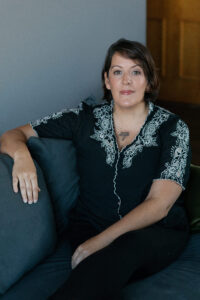
Amy Westervelt is an award-winning investigative climate journalist who has been on the climate beat for more than 20 years, reporting for a wide range of outlets over the years, including Inside Climate News, The Washington Post, The Guardian, The Nation, The Intercept, NPR, and more. She is also the founder and executive editor of the Critical Frequency network, which includes the award-winning podcasts Unfinished: Short Creek, This Land, and Drilled. Drilled has expanded from a podcast into a climate-focused global newsroom, co-publishing with The Guardian, ProPublica, Rolling Stone, and more. In 2023 Amy was named a Covering Climate Now’s Journalist of the Year. She is based in Spain.
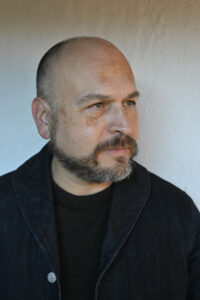
Gil Durán was born in Tulare, California, in 1976. The grandson of Mexican immigrant farmworkers, he got his first taste of work in the fields, but took an interest in journalism after winning the local newspaper’s “My Mom Is the Best” contest in the fifth grade. In the tenth grade, his family moved from California to Kentucky, where he dropped out of high school for a year, then returned and befriended an English teacher who encouraged him to apply to college. He graduated DePauw University in 1998 and started his journalism career at the San Jose Mercury News. As the newspaper industry hit turbulence, he pivoted to politics and spent ten years as an advisor to politicians including Jerry Brown, Dianne Feinstein, and Kamala Harris. In 2018, he returned to journalism as California opinion editor of The Sacramento Bee, and then became editorial page editor of the San Francisco Examiner. Now an independent journalist, he publishes two newsletters: The Nerd Reich, focused on extremist tech politics, and FrameLab, focused on political language.
______________________________
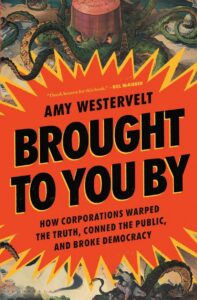
Brought to You By: How Corporations Warped the Truth, Conned the Public, and Broke Democracy by Amy Westervelt is available from Bloomsbury Publishing.
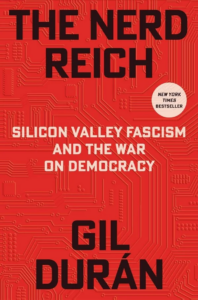
The Nerd Reich: Silicon Valley Fascism and the War on Democracy by Gil Durán is available from Avid Reader Press, an imprint of Simon & Schuster.

Amy Westervelt
Amy Westervelt is an award-winning investigative climate journalist who has been on the climate beat for more than 20 years, reporting for a wide range of outlets over the years, including Inside Climate News, The Washington Post, The Guardian, The Nation, The Intercept, NPR, and more. She is also the founder and executive editor of the Critical Frequency network, which includes the award-winning podcasts Unfinished: Short Creek, This Land, and Drilled. Drilled has expanded from a podcast into a climate-focused global newsroom, co-publishing with The Guardian, ProPublica, Rolling Stone, and more. In 2023 Amy was named a Covering Climate Now’s Journalist of the Year. She is based in Spain.