







Eight Books That Help Us Understand Multiracial America
Karabi Acharya Recommends Barack Obama, Jose Antonio Vargas, Jhumpa Lahiri and More
My mother’s ancestors arrived in the US during the late 1700s from Germany and England. I’ve held an American passport since birth. My first language is English which I speak with an American accent. Despite all of this, I never felt American growing up. My father is from India and from him I inherited brown skin, thick black hair and an unpronounceable name. In all the ways that culture is soaked in, I knew I wasn’t American, that I was a guest in this country, that I didn’t fully belong.
As a kid, the quintessential American to me was Marcia Brady of The Brady Bunch. I ached to be Marcia, with her long straight blonde hair and perfect outfits. Everyone knew that Americans lived in big houses, ate hamburgers grilled by dads in the backyard, and watched football on Sunday afternoons. Americans didn’t have names like Karabi Bhattacharyya, didn’t eat rice and dal at home, and didn’t make yearly trips to India. Americans didn’t have dads who had accents.
Growing up, nothing connected my story to the story of this country. Even now, multiracial people are almost invisible in literature, pop culture, the media or even research. In, Multitudes: The Multiracial Experience and How to Forge a Culture of Absolute Belonging, I write about the importance of seeing (and ensuring) our individual stories are part of the larger story of the United States. Each of the books on this list widened my understanding of who could be American. I learned there is no single story of what it is to be American, as Chimamanda Ngozi Adichie reminds us in her viral TED talk. Americans can be multiracial, undocumented, speak English as a second or third language. Americans can hate football or love cricket. These books, and so many more, helped me understand that perhaps I am American after all, not just through my mother but also through my father.
*
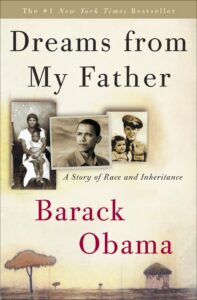
Barack Obama, Dreams of My Father
Written before his presidency, this is about Obama’s search for his absent Kenyan father and what that search means for his own racial identity in a country that insisted he choose a single box. Obama’s honesty about not fully belonging to either “Black America” or “white America” as a child makes it one of the most influential multiracial coming-of-age narratives. This was the first book I read about a multiracial person, before I knew that I was looking for such a book. This book sparked an awareness of my own multiracial identity and I wanted answers. I remember being so frustrated that by choosing to identify as Black, he didn’t give me a way forward. I could never choose only one side of my heritage, both are integral to who I am.

Jose Antonio Vargas, Dear America: Notes of an Undocumented Citizen
In this memoir, Vargas, a Pulitzer Prize–winning journalist, reveals he has lived and worked in the US illegally since he was a teenager. He traces the decades he spent passing as documented while building a career as a journalist. His memoir distinguishes legal status from identity and reframes the definition of who counts as American. I vividly remember the day that Vargas “came out” as undocumented in a piece in The New York Times. I read his book, wanting to understand both where he came from and how he had the courage to speak out.
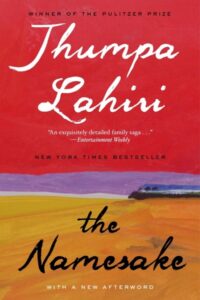
Jhumpa Lahiri, The Namesake
The novel opens with the Gangulis’ arrival in Boston from India, then follows the life of their American-born son, Gogol. His discomfort with the name his parents gave him is symbolic of his negotiation between his Bengali inheritance and American upbringing. This was one of the very few books about the immigrant experience that captures the specificity and nuance of Bengali Hindi immigrants like my father. The vivid details, beginning with using Rice Krispies as a substitute for traditional puffed rice, were scenes from my own home. At times, it hit too close to home, shining a light on images of my own life that I’d worked very hard to hide.
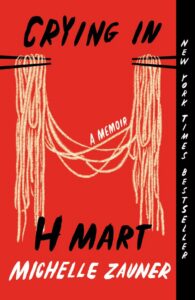
Michelle Zauner, Crying In H Mart
Zauner, the musician behind Japanese Breakfast, traces losing her Korean mother to cancer at twenty-five and the rocky relationship she had with both her mother and her own Korean identity. It’s a book about how cooking became the way she kept her mother, and her Korean heritage, alive after her death. I read this not long after my own mother had died. Zauner put words to the feelings I had of my Americaness slipping away after my mother’s death. This was an aspect of grief I hadn’t expected and I found myself upholding my mother’s traditions to maintain connection not only to her but my own American heritage.
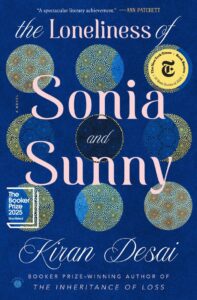
Kiran Desai, The Loneliness of Sonia and Sunny
In this stunningly beautiful novel, Desai captures the complexity and nuance of living across cultures. Readers follow Sonia and Sunny, who are both raised in India and spend long periods of time in the US, and captures how they navigate their identities, cultural expectations and their own relationship across continents. Desai paints scenes, both in the US and in India, that I have lived myself. Perhaps the most poignant message that I took is that you can never really go back home, because by the time you try, you’ve already changed.
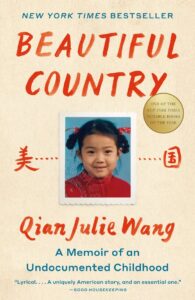
Qian Julie Wang, Beautiful Country: A Memoir of an Undocumented Childhood
Wang writes of her childhood as an undocumented immigrant from China, growing up in poverty and secrecy in New York’s Chinatown in the 1990s. From a child’s perspective, Wang captures the poverty, hunger, fear of exposure, and family dynamics deftly. Reading about a childhood spent so carefully trying not to be seen, I recognized something of my own instinct to blend in, even though Wang and I were hiding for different reasons and entirely different stakes. It’s a reminder that precarity, not just heritage, shapes what a child learns “American” is allowed to mean for her.
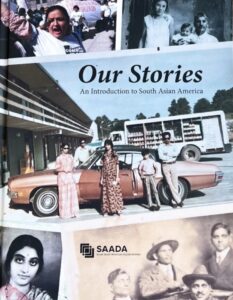
South Asian American Digital Archive, Our Stories: An Introduction to South Asian America
This beautiful book is a collectively authored history that documents how the history of South Asians in America is American history, not an addendum to it. The book is filled with photographs, primary sources and community-submitted stories. The images and stories were so familiar that I found myself looking to see if I recognized anyone. Growing up, I knew only one other Indian family in our city in Illinois and there was no book, archive, or class that told me that people like my father had a place in this country’s story.
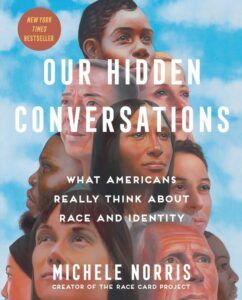
Michele Norris, Our Hidden Conversations: What Americans Really Think About Race and Identity
I think it is the most important book on race in America. This book is built from Norris’s Race Card Project, where people distill their experience of race into six words, resulting in an archive of experiences that are heartbreaking, enraging, but also at times hopeful. If you want to understand the incredibly wide range of experiences of race in the US, this is the anthology. This is the kind of book you get lost in, each story transporting you somewhere and then back to yourself. Norris ends with “America is a freight train of a word—a locomotive with many cars and many degrees of class, comfort, and service. But everyone on board, whether they are in first class or steerage, whether stoking coal or secretly scrambling inside a boxcar like a stowaway, are nevertheless fellow travelers.”
______________________________
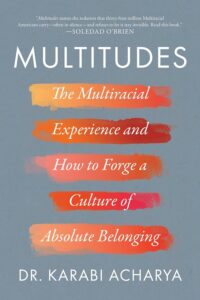
Multitudes: The Multiracial Experience and How to Forge a Culture of Absolute Belonging by Karabi Acharya is available from Apollo Publishers.
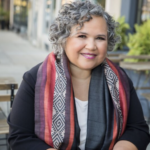
Karabi Acharya
Dr. Karabi Acharya is a leading global public health practitioner. She has lived and worked in more than twenty countries across Europe, Africa, and South Asia with organizations that include the World Health Organization, UNICEF, the World Bank, the Ford Foundation, and USAID. She is currently senior director at the Robert Wood Johnson Foundation, largest philanthropy in the United States devoted to health, where she leads the Global Ideas for US Solutions portfolio. Dr. Acharya lives in Pennsylvania.