Before you are anything, you are a daughter.
You are there in the water when it rises above her ankles, haunches, stomach that’s grown to shocking proportions. The master bathroom is dark, only half‑lit by the moon, and with her body submerged she closes her eyes, water steaming her skin. Every night she yearns for this, to be buoyed, feel something other than her body. For almost a year now, everything has been expanding: new home, new extended family, her body getting larger, you the bandleader marching her organs into corners. She is already long‑limbed, and now her hip bones press right up against the porcelain walls of the tub. A nauseous spell overtakes her, and she knocks back her head, steadying her hands over her taut, round stomach. She can feel you beneath the skin, growing inside her, but when she looks down, all she sees is a lock of her black hair falling from the lilac plastic barrette clipped above her ear.
She towels off, balancing her weight on the dresser with one hand. Her feet mash into the holes of the long underwear she insists on for modesty, even though the winter months have nosed into spring. She takes one step, then another, around the enormous square frame of the bed, where she lowers her body next to your father, careful not to wake him. In the darkness, she pulls up the covers and lies stiffly on her back, waiting for sleep to shroud her. She inhales, exhales, the heavy mound of you sinking her abdomen into her pelvis. She was born in ’68, into Korea’s bleak, wretched postwar decades that had known famine, and hardship, citizens of all classes taught to value diligence and endurance as the utmost qualities. In bed, she silently tells herself what she’s been told all her life: Endure, mortify the body.
Just as she falls off the edge into sleep, you tug at your umbilical cord. Ring‑a‑ding‑ding. Fermented beans. Pickled cucumber spangled with spice. Peaches so ripe they’re about to burst. She clutches her hand over the sharp pang, buried deep where you are wired to her organs. Your yearnings whet the underside of her tongue, as familiar as the thrum of her own pulse. Her spit thickens as she gulps it down the gullet to the stomach, where it passes through small intestines churning for you both. “I will ask him tomorrow,” she tries insisting, but you continue to kick, sensing the false promise: language between you, obviated. “I will ask him,” she repeats, meaning it this time and appeasing you with hollow pulses until your attacks diminish and her wide, stricken eyes close.
When they reopen in the morning, you see the world through her eyes: wan blue light awash on the paisley wallpaper of the bedroom. She cranes her neck toward your father, still fast asleep, the bedsheets crumpled beneath his limbs, his face coated in a dewy layer of film as though he isn’t thirty-one, but seventeen and carrying over features from boyhood. Her sweat‑sopped clothes plummet to the floor as she changes, splashes water on her face, and then takes slow steps into the kitchen. She hits the switch and the room lights up: her favorite place in her new home, white, gleaming, and all hers. Her slippers glide over the tiles and she runs her fingers over the ridged aluminum cabinets and glass surfaces, pleased at all the new appliances.
From the fridge, she removes ingredients: chili peppers, tofu, bean paste, sacks of red roe, and a silver‑tailed croaker, which she rinses under cold water and salts generously. She keeps the water running and washes zucchini, fresh peppers, and the day’s batch of rice. It is her morning meditation, feeling the clean water stream into the wooden bowl and the hard kernels shift between her fingers. She turns on the stove and slices the tofu into blocks of even smallness, stirring it with vegetables before pouring in the broth. She prepares everything in a precise, logical order until the hour passes, and she is setting the table: quaint batches of side dishes arranged around the baked croaker, and two bowls on the placemat in front of your father’s seat, steaming rice on the left, and bean paste soup on the right, the misty surface bobbing with sliced zucchini and tofu.
Your father strides into the dining room, harried, shiny black hair parted to one side, his fingers buttoning the cuffs of his starched white collared shirt. He drags out his chair, sitting with his gaze still fixed on the last button. “Mashitgetne,” he says without looking. His compliment invigorates her, and she sits across from him, dissecting the croaker length-wise, her chopsticks maneuvering nimbly around the white flesh to cleanly remove the spine. She picks up the largest piece, placing it on his spoon. “Eat this,” she says gently. He looks into her clear black pupils, pleased by another breakfast his wife has set in their first year of marriage. He places the second‑largest piece atop her rice. They eat together until she raises a spoonful of the bean paste soup to her mouth and the pungent smell rouses her morning sickness.
Her spoon clatters to the table as she bolts to the kitchen sink, holds the counter edges, and turns to face out the window. She sees the neighboring apartment building across the busy asphalt parking lot, another fourteen floors of sand-colored concrete and slabs of glass the same as theirs, one of many stacked like dominoes, silently armed in the urbanizing city of Seoul.
“Guenchana?” your father calls from the dining room, and she hums yes, stepping back from the sink and pulling herself upright by the kitchen’s sliding door. She walks to the refrigerator, reaching inside to pull out a firm tomato. She twists the blender and it erupts into life, ripping the fruit in an oozy red she empties into a tall glass, downing it with pinched nostrils—she’s read somewhere it will give you fair skin.
Back at the table, he spoons up the last of the rice kernels floating in the bottom of his soup bowl, and she is reminded of her own mother’s agility with the knife and intuition for how much of any ingredient to add. She understands now: There is no feeling like watching her food being eaten eagerly, and she watches as he lifts the bowl to his mouth, tipping his head back to gulp the last remaining swig. He sets the bowl down on the lacquered placemat, checks his wrist-watch, and gets up from his seat.
“Yeobo,” she calls out, and he devotes all his attention, surprised to hear his demure wife speak. “Do you think . . . would it be trouble finding peaches on the way home? I’ve been having this craving ”
“Peaches?” he laughs, nodding eagerly. “Geugeh dah‑ya? Tell me anything else you’re craving. There must be something more precious I can get for my wife.” He insists she now remain seated, to rest, and makes two trips to carry the side dishes to the refrigerator, adding their empty bowls to the sink. He returns to the table with jaunty steps, tossing a peanut into his mouth. His thumbs slide over her shoulders to give a quick rub. “I won’t return home tonight until I find the roundest, juiciest peaches. Jinsim‑iya.” He strokes her soft black hair. She sits back, allowing herself this pleasure, then looks up when his hands drift away, leaving a coolness the width of his fingers. She follows him to the front door, which he opens up to the metallic corridor’s blinding sunlight. His hand fans out into a wave, then the door slams shut. She waits until hearing the last rumble of the elevator doors, then turns around, facing her lone shadow on the wooden floor slats extending into the empty corners of the apartment.
*
Night after night, he returns empty‑handed: He looks everywhere, but it is 1998 and fruits are dependent on weather. For three full days it is hazy outside, brown‑gray from fine dust particles blown in from China. Then, on the fourth day, a hard rainfall smashes it all to the ground, and when she looks out the windows she can once again see the neighboring apartments clearly. Each morning she prepares breakfast, dinner, then breakfast, while on the other side of the river your father anticipates the stock market in the city’s tallest, sixty‑three‑floor office building. Once, when she is standing in front of the rice cooker, he calls to apologize about a last-minute work dinner. He hangs up, and in silent anger she waits for the fresh batch to finish cooking, then scoops the opal‑white kernels into storage containers. Inside her, you kick around with sharp elbows and knees, and she plants her hands firmly, making her first demand: Mortify; control your body.
Then she relieves the pressure, feeling a surge of sympathy. Her earliest memory: being three years old and wailing behind a closed window as her mother rushed to pack the car for a trip to Busan, the southern seaside, taking along her two older sisters, but leaving her, the baby, behind. Now grown, she sympathizes with her mother: It was her vacation too. A reprieve from the around‑the‑clock managing of needs of her businessman husband and their three children, her devotion to the household approaching the point of the sacred, castigating herself, even in the brief lapses between working, with an abiding sense of shame.
She cleans the apartment using a vacuum with removable parts, steam‑mops, rolls the laundry bin into the kitchen corner, and as the clothes tumble in the washing machine, she scrubs the dirty dishes in warm, soapy water before loading them in. From the refrigerator she takes out a carrot, an onion, and a quarter‑cut cabbage, which she rinses one leaf at a time under running water until she unloads the dryer. She wields the iron over wrinkled spreads and shirt collars, hangs them over all the doors, and ties her blue‑checkered apron around her waist. At times she feels breathless, small discomforts and twinges, but she endures them, telling herself to revere the pain.
*
You grow bigger, heavier, and walking begins to feel like wading through deep water.
In the mornings, she rinses the rice. He leaves for work, occasionally returning near midnight, reeking of beer and the smoke of pork belly grilled over charcoal. The window-cleaning man pulleys himself up at daybreak, balancing dangerously outside their floor as she twists the blender, ripping tomato after tomato.
One morning, she wakes to a vacant half of the bed. In a hurry, she follows the harsh light into the kitchen, where she spots your father at the griddle with a spatula, amid a whirl-wind of bowls containing ingredients or ringed with egg yolk, or batter. They are well‑meaning signs of his labor, but in the raw shock of morning, the soiled dishes seem nothing other than a needlessly added chore. Flour particles dust surfaces she likes to keep spotless, and next to a pile of discarded roots and crumbled, red‑rust onion skins, a pile of fried meat pancakes oozes oil onto her precious china. “Jagiya,” he whispers. His left eye bulges, the way it does when he is caught surprised, or in need of explaining something, but in the unexpected sight of her reticence, the silence is white as the ceramic plates. They stand regarding each other until she makes a cumbersome walk to sweep a handful of bowls into the sink.
*
When the appointed day arrives, she buckles herself into the car and drives to the maternity wing, where she is undressed layer by layer and slipped into a thin paper gown. She is laid out on a gurney, breathing in and out as the nurse flicks the needle, shooting oxytocin, prostaglandins into her blood-stream. The nurse leaves. She rests her eyes on a single orchid in the room and plants her hands over her mountainous stomach, thinking bravely, I’m going to have a baby. Within minutes, she surrenders to biology, hands gripping the iron railings. By the time your grandmother rushes in through the double doors, her head is rolled to one side, mouth agape.
Halmuni wastes no time, slamming her large quilted bag over the bedside counter and sticking her arm inside to rummage for a canteen: the bitter reek of decoction, medicinal herbs wafting immediately through the room. She pours the drink into the lid, brings it to her daughter’s shaky lips. The orchid doubles in her view, the room around her distorting. The contractions come quicker and stronger, and when she tries to speak her voice sounds full of spit.
The nurse reenters. “Guenchan‑ayo? It’s time to check your dilation,” she says gently, snapping on latex gloves and sticking two fingers into her cervix. “Can you feel this? Eguhneun?” Her body jolts up on the gurney and she mutters, “Oh, oh.” She wants to vomit, but can only rotate her chin halfway toward the door. “I think you’re fully dilated.” The nurse rubs circles on her lower back, clucking at the struggle of turning the pregnant body to the side like a lopsided gourd. “Jamshi shuil‑leyo?” asks the nurse, and, receiving no answer, proceeds to brush orange ointment onto her back, stinking of camphor and paralyzingly cold. Halmuni doesn’t notice that the doctor has stridden in until abruptly she yells, “Mohaseyo!” nearly swatting the long epi needle drawn in his hand. The drug is still new in Korea, deemed by word of mouth to be for whores or simpleminded women from dishonorable families. Her mother’s eyebrows knit so tightly that the folds in between bulge white. It is settled: She will feel the pain, all of it, how far her body can go.
They cart her into a deep‑bleached OR, where above blinking machines her legs are raised into stirrups. Overhead lights flip on, penetrating her skull like three angry white eyes. The doctor rushes in last‑minute, barking orders for medical instruments as he dives underneath the blue curtain. “Ja, heem juseyo”—he orders her to push. Out comes a guttural groan, her exertion a tight whip cracking open a black hole of pain. There is no time to be brave. It is a violence that shocks her. Her mind goes blank, going under: breath catching in her lungs as in the battle before drowning, nose hovering just below the surface. After a steep succession of pushes, her body unclenches and she breathes unevenly: the calm before, she senses, the portending stages. “Please,” she whispers, but the nurses don’t hear her, and she sees them exchanging glances, evoking feelings of conspiracy. Then she feels it, the second coming, a dry burn stinging the backs of her eyes, the tailbone straining as she begins to push.
Invisible hands strap her legs onto the stirrups, an iron fist plunging her through a tunneling, gravity‑bending, black underground. Erratic sounds escape her—her body turns inside out, fingers extending and touching nothing. She asks for your father, for an epi, hardly able to speak. The doctor’s black shadow engulfs her as he reaches, fiddling with the position of the overhead light, once again blinding her. She is unable to get loose, and out of nowhere a nurse’s darkened face hovers over her, and a large palm is planted on her forehead.
Again, the darkness takes hold, and when she blinks open again, the nurses and doctor appear blue‑blurred, underwater. Death is no longer a suspicion. Pain separates from her body, then blackness again. She is somewhere deeper than consciousness, a cave where there is no sight or sound, only her cold feet moving toward what she knows to be a blue glass cube locked inside her head: six sides of thick, real, and physical walls. She slow‑blinks and sees the hovering nurses, the doctor nodding emphatically at her, saying, “Muliga boyeo‑yo. The baby is crowning. You must get her out in this push.”
The rest is a quick‑tug, oxygen flow snapping from the mangled green cord to the set of fresh lungs, her body’s final push beckoned by the forceps and rasp of scissors on the side of cruel brightness, a narrow and overwhelming rush that ends before it starts, the doctor’s strong hands suddenly making the final snip, carefully raising you above the curtain. A miraculous cry rings out, piercing her eardrums in a sound that’s stark as the blood of delivery. The doctor’s gloved hands bring you to her wrapped in a stained bundle. He places you in her arms and she looks, training her eyes on your wet, jet-black hair as slick as fish.
By the time your father arrives, it is over. The sky has twice changed color, now as black as your pupils he stares into. His head floats above your bassinet, drowning out the punishing hospital light, and you squint into his eyes. He swallows a lump in his throat to ease the eerie feeling that somehow you’ve been watching him this entire time. In the private ward in the maternity wing, everything is quiet, all the surfaces immaculate and clean as if nothing at all has happened, your mother still hazy with the blur of oxytocin and carbetocin, staring out the open window.
__________________________________
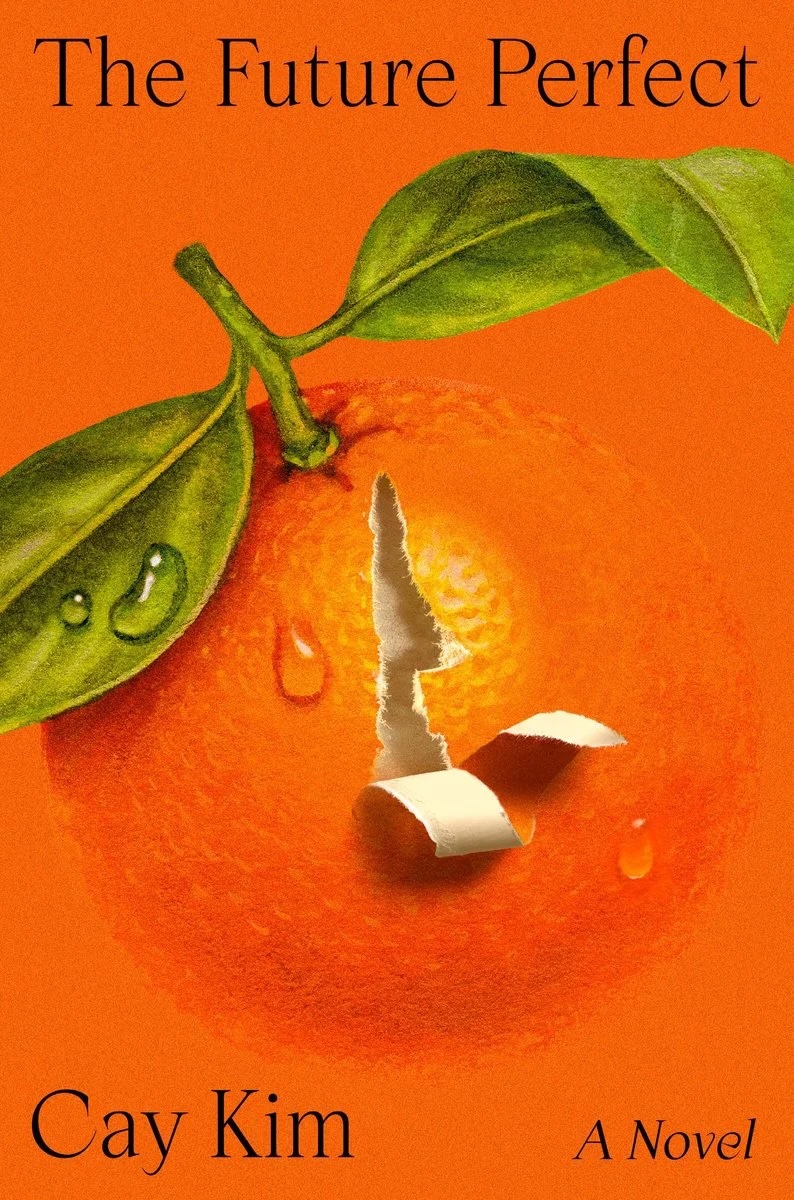
From The Future Perfect by Cay Kim. Published by arrangement with Riverhead Books, an imprint of Penguin Publishing Group, a division of Penguin Random House LLC. Copyright © 2026 by Cay Kim.